·6/12/2026
from
Pounded Roasted Peppers with Century Egg
**Pounded Roasted Peppers with Century Egg** *(擂辣椒皮蛋)*
---
**Ingredients**
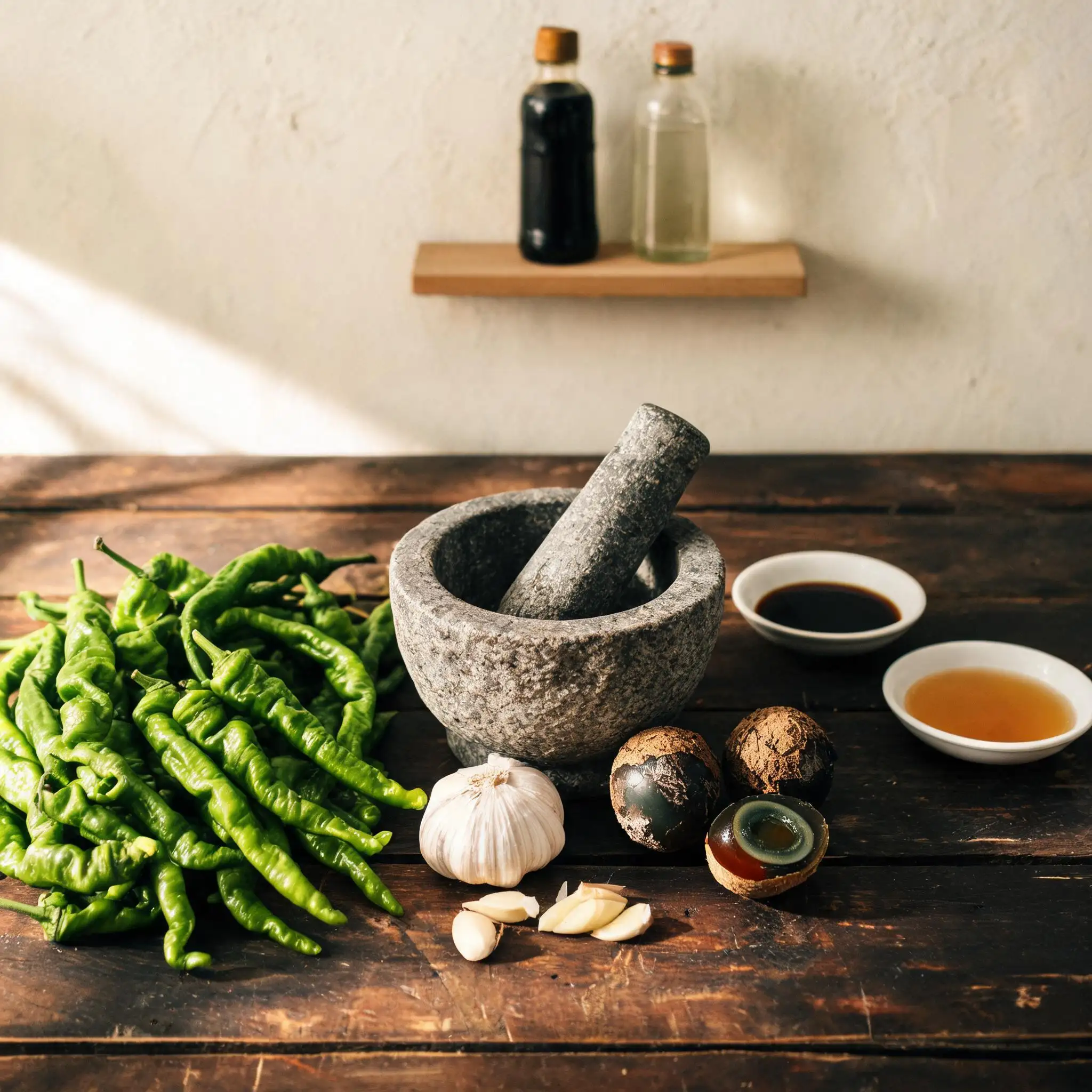
Green finger chilies — four or five, roasted whole directly over an open flame until the skin is fully charred and black all over, then cooled and peeled; the soft smoky flesh inside is what you're after
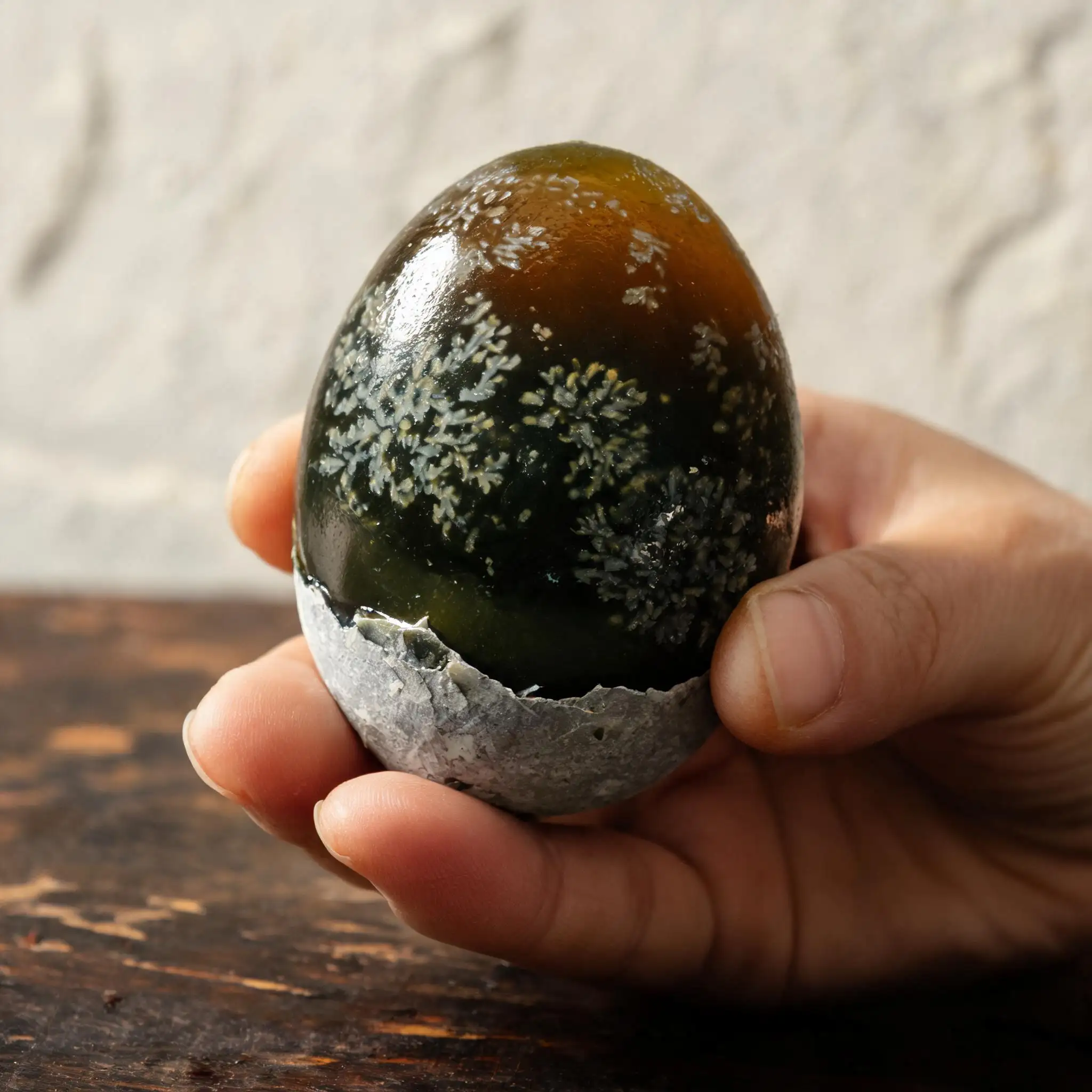
Century eggs — two, cut into rough quarters or sixths, the dark translucent olive-black egg white and layered grey-green yolk fully exposed
Garlic — three cloves, lightly smashed flat with the side of a knife
Light soy sauce — a small splash
Sesame oil — a drizzle, added at the end
Salt — a pinch, to taste
---
**How it's made**
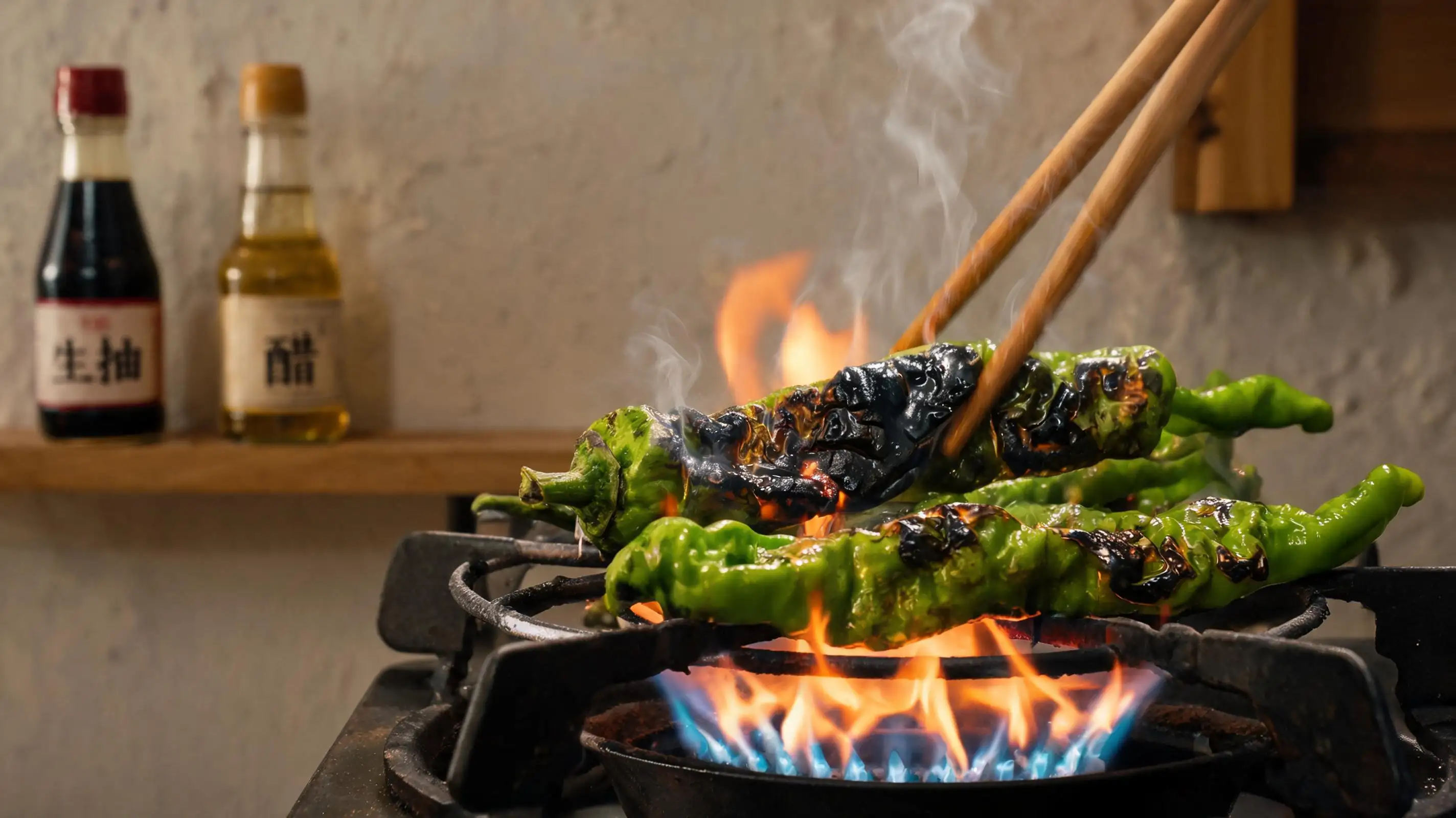
Set the chilies directly over a gas flame, or hold them one at a time with tongs above the burner. The skin blisters almost immediately where the flame touches it, then starts to blacken. The chili softens as it sits in the heat, the flesh gently steaming while the outside turns to char. Keep turning them — the goal is even blackening all around, not just one side. You'll smell the smoke, the slightly sweet edge of the chili flesh starting to cook through underneath the char. Pull them off when the whole surface is dark.
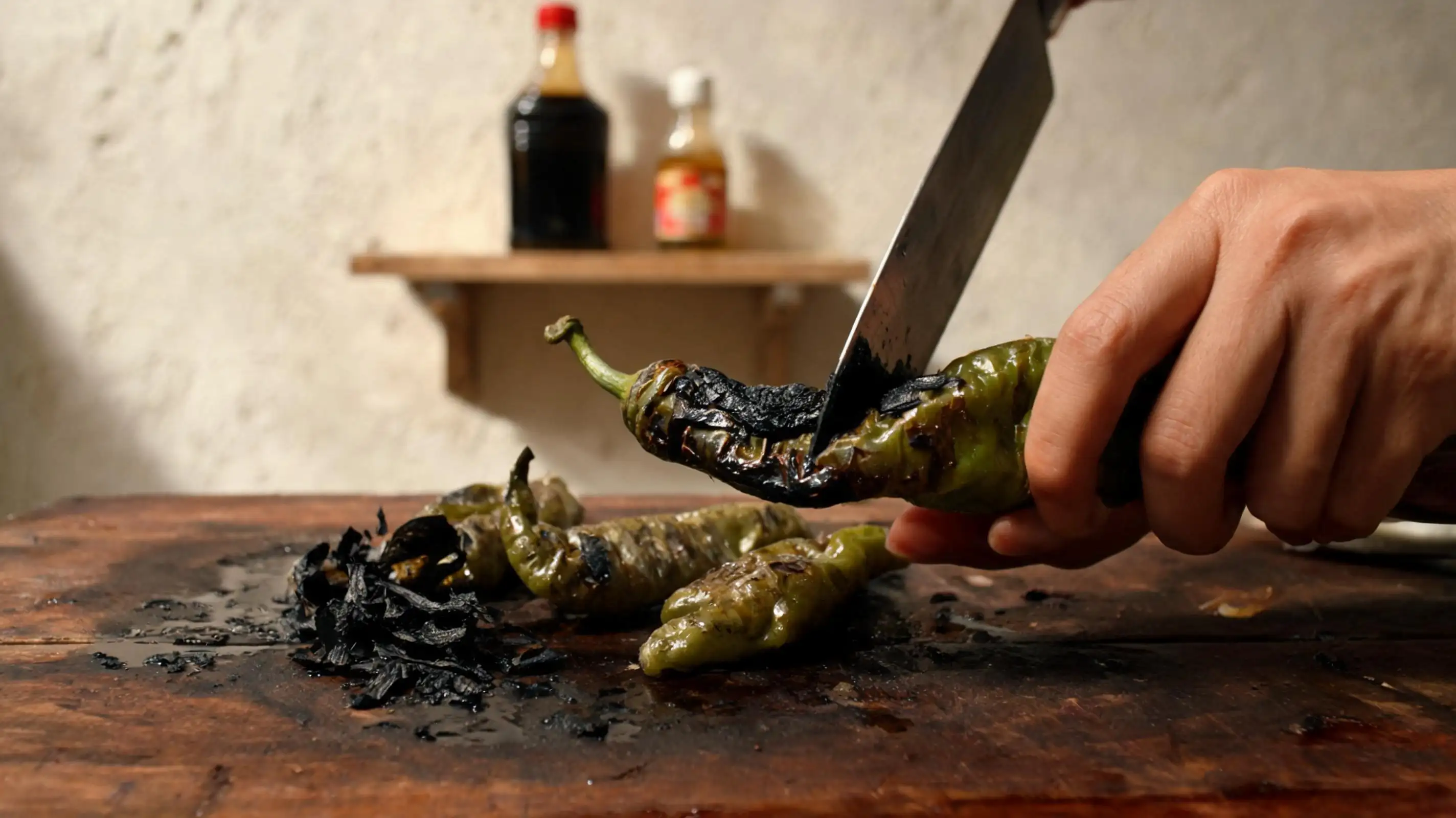
Let them cool on a board for a few minutes. Once they're cool enough to handle, peel the charred skin off with the back of a spoon or your fingers — it comes away in loose flakes. Some people rinse the peeled chilies under running water but you lose the smoke that way, and the smoke is the whole point. Wipe your hands instead. What's left is the soft inner flesh, grey-green, slightly limp, with that faint fire smell still clinging to it.
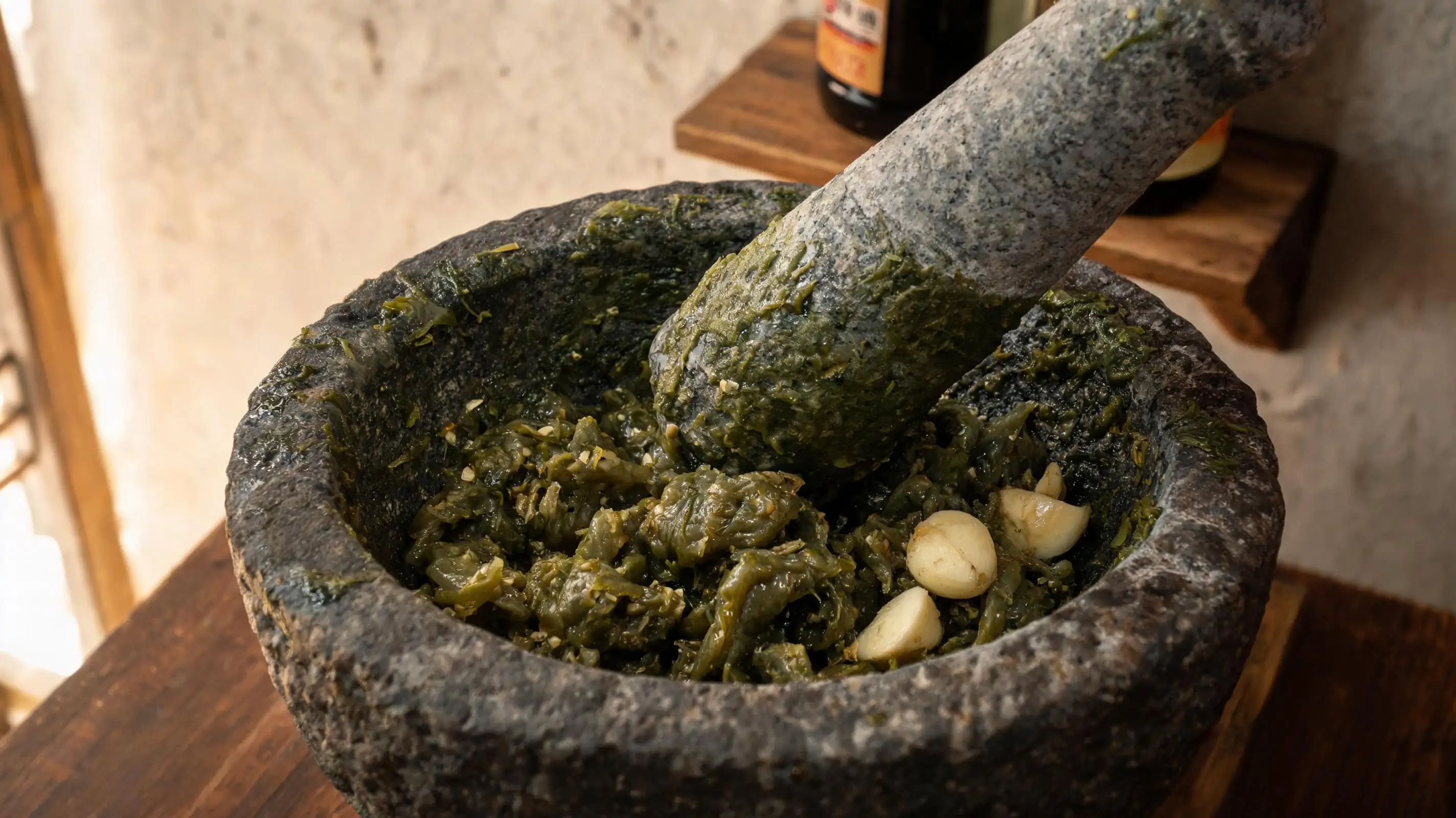
Drop the smashed garlic into the stone mortar first and give it a few good strikes with the pestle until the cloves start to flatten and break apart. Then add the peeled chili on top. Now pound in earnest — not trying to make a smooth paste, but to break the flesh down into rough uneven pieces. The pestle comes down and the chili tears rather than crushes, leaving some larger fibrous chunks alongside the finer bits where you've struck harder. It takes a couple of minutes of steady work. The inside of the mortar stains green-grey with the chili juice.
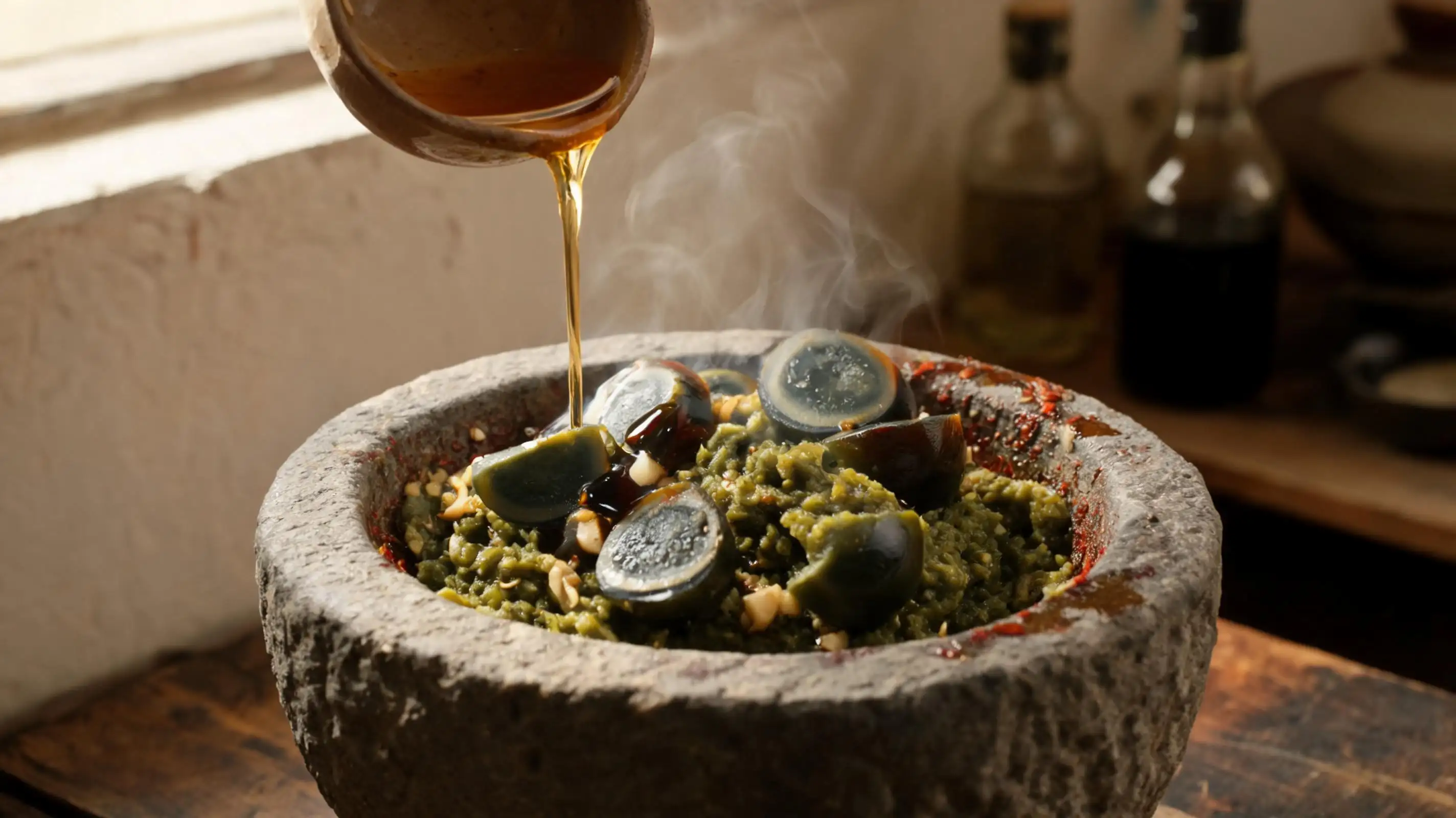
Cut the century eggs into quarters and nestle the pieces down into the pounded chili. Pour a small splash of soy sauce over everything, then drizzle the sesame oil. Use the pestle to fold rather than pound — just enough to pull things together without mashing the egg further. The dark egg pieces should stay mostly intact, sitting in the rough chili with the garlic worked through it.
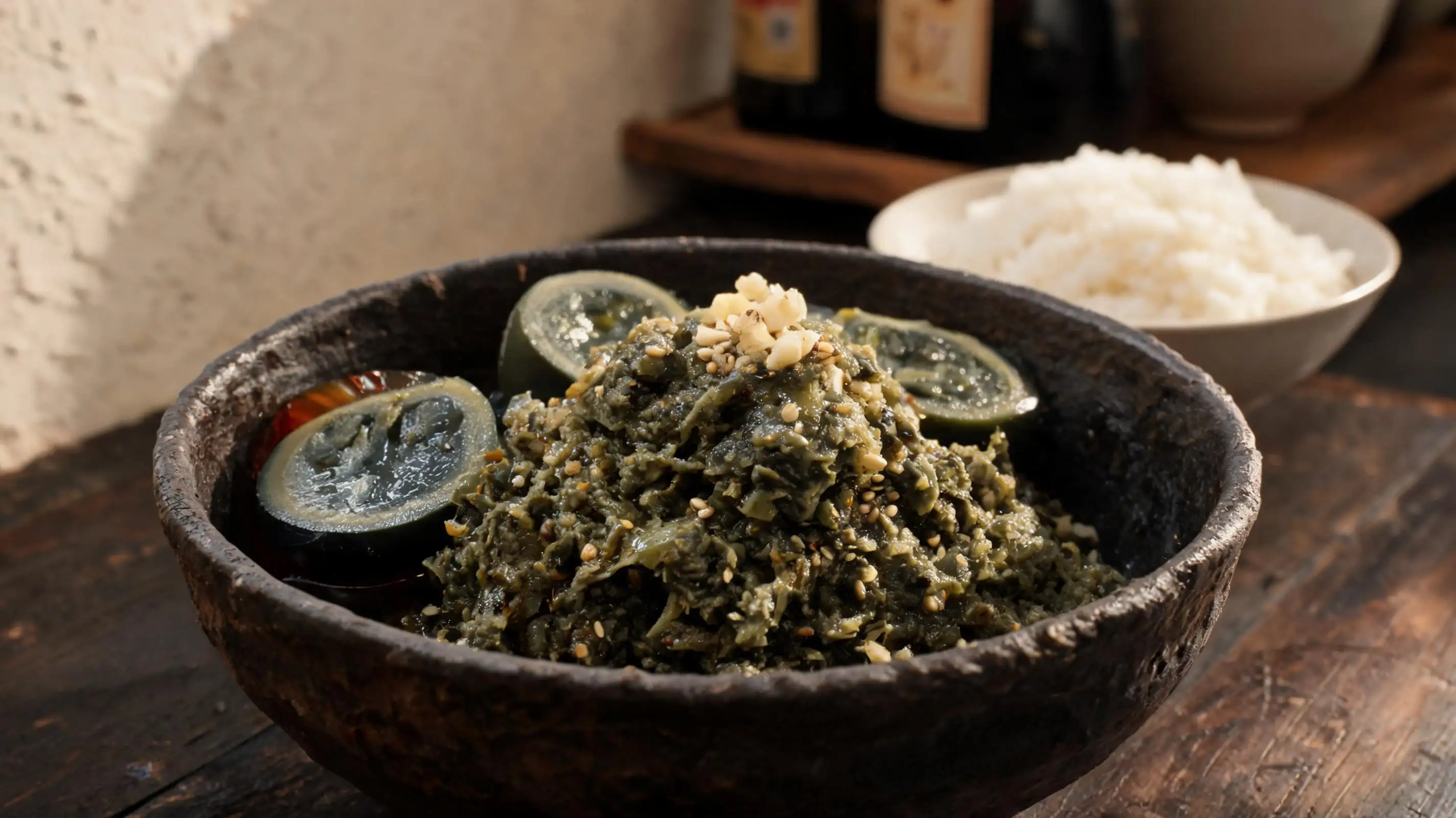
It's served at room temperature, most often alongside plain white rice. The smoke from the roasted chili, the mineral depth of the century egg, the raw garlic edge, the sesame — nothing is sharp enough to overwhelm the others.
The character 擂 (*léi*) means to strike or beat with force. It appears in 擂鼓, beating a war drum, and in old expressions for issuing a battle challenge. In the kitchen, it names this specific action: the stone pestle coming down into the mortar, heavy and deliberate. The dish is named for the motion that makes it. Not sliced, not fried, not simmered — pounded.
---
---
**Ingredients**
Green finger chilies — four or five, roasted whole directly over an open flame until the skin is fully charred and black all over, then cooled and peeled; the soft smoky flesh inside is what you're after
Century eggs — two, cut into rough quarters or sixths, the dark translucent olive-black egg white and layered grey-green yolk fully exposed
Garlic — three cloves, lightly smashed flat with the side of a knife
Light soy sauce — a small splash
Sesame oil — a drizzle, added at the end
Salt — a pinch, to taste
---
**How it's made**
Set the chilies directly over a gas flame, or hold them one at a time with tongs above the burner. The skin blisters almost immediately where the flame touches it, then starts to blacken. The chili softens as it sits in the heat, the flesh gently steaming while the outside turns to char. Keep turning them — the goal is even blackening all around, not just one side. You'll smell the smoke, the slightly sweet edge of the chili flesh starting to cook through underneath the char. Pull them off when the whole surface is dark.
Let them cool on a board for a few minutes. Once they're cool enough to handle, peel the charred skin off with the back of a spoon or your fingers — it comes away in loose flakes. Some people rinse the peeled chilies under running water but you lose the smoke that way, and the smoke is the whole point. Wipe your hands instead. What's left is the soft inner flesh, grey-green, slightly limp, with that faint fire smell still clinging to it.
Drop the smashed garlic into the stone mortar first and give it a few good strikes with the pestle until the cloves start to flatten and break apart. Then add the peeled chili on top. Now pound in earnest — not trying to make a smooth paste, but to break the flesh down into rough uneven pieces. The pestle comes down and the chili tears rather than crushes, leaving some larger fibrous chunks alongside the finer bits where you've struck harder. It takes a couple of minutes of steady work. The inside of the mortar stains green-grey with the chili juice.
Cut the century eggs into quarters and nestle the pieces down into the pounded chili. Pour a small splash of soy sauce over everything, then drizzle the sesame oil. Use the pestle to fold rather than pound — just enough to pull things together without mashing the egg further. The dark egg pieces should stay mostly intact, sitting in the rough chili with the garlic worked through it.
It's served at room temperature, most often alongside plain white rice. The smoke from the roasted chili, the mineral depth of the century egg, the raw garlic edge, the sesame — nothing is sharp enough to overwhelm the others.
The character 擂 (*léi*) means to strike or beat with force. It appears in 擂鼓, beating a war drum, and in old expressions for issuing a battle challenge. In the kitchen, it names this specific action: the stone pestle coming down into the mortar, heavy and deliberate. The dish is named for the motion that makes it. Not sliced, not fried, not simmered — pounded.
---