·6/12/2026
from
Three-Cup Chicken
**Three-Cup Chicken** *(三杯鸡)*
---
**Ingredients**
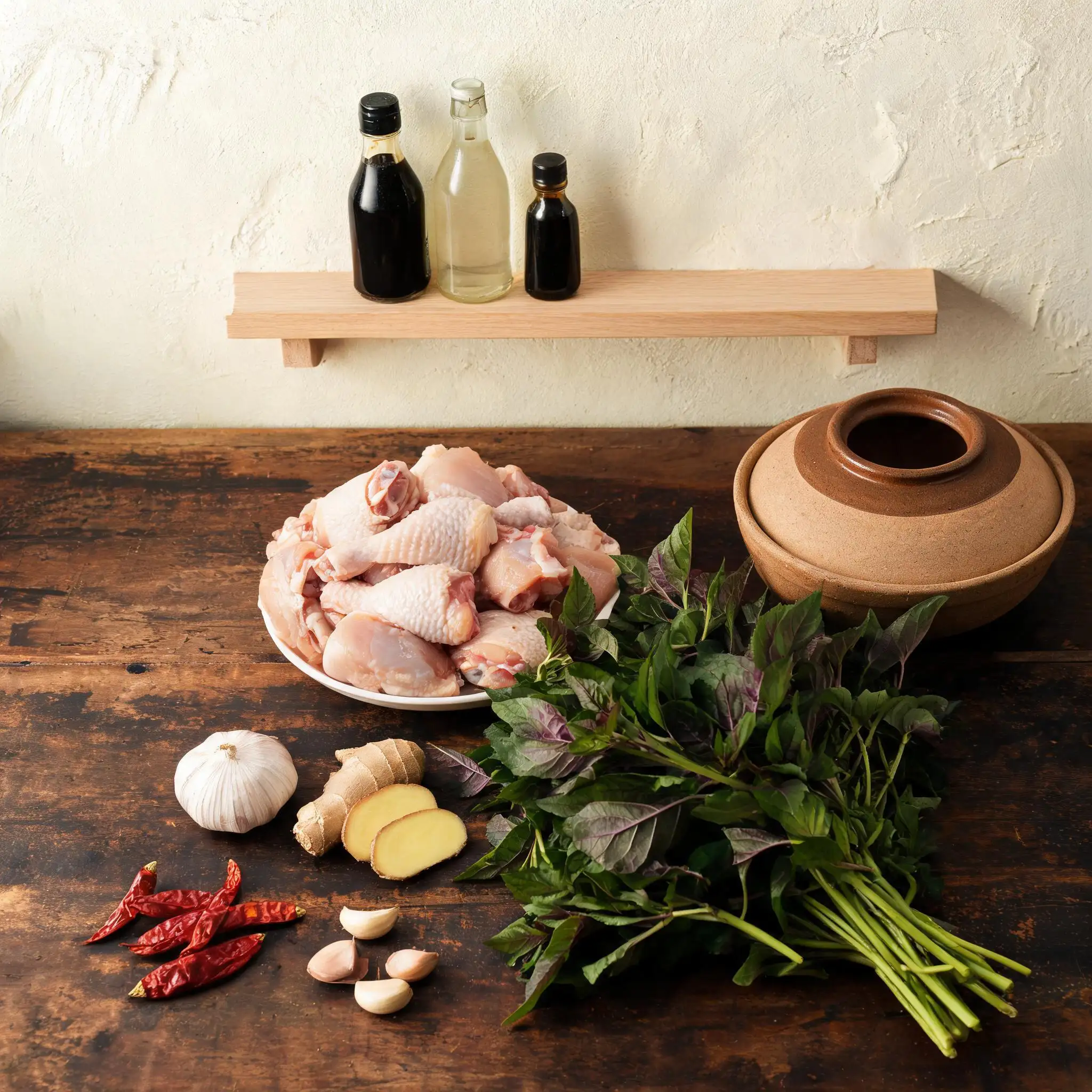
bone-in chicken pieces (drumsticks and thighs, skin-on) — about 800 grams
fresh Thai basil (九層塔) — a very large handful, at least 40 to 50 grams, the soul of the dish
whole garlic cloves — one full head, smashed and peeled
old ginger (老姜) — one large knob, cut into thick slices
light soy sauce — one cup (about 60 ml)
Taiwanese rice wine (米酒) — one cup (about 60 ml)
sesame oil (麻油) — one cup (about 60 ml)
dried red chilies — three or four
neutral oil — one tablespoon
---
**How it's made**
The name explains itself. One cup of soy sauce, one cup of rice wine, one cup of sesame oil — three equal parts, poured together into the pot with nothing added. No stock, no water. The chicken cooks in this and nothing else. This is either the most minimal thing or the most confident thing, depending on how you look at it.
The dish comes from Taiwan, though there are versions across southern China that claim earlier origins. The Taiwanese version is the one most people know — the one with the Thai basil, which is called 九層塔 here, and which is not optional. Using regular Italian basil would make a different dish. 九層塔 has a sharper edge to it, a note of cloves and anise that intensifies dramatically when it hits a hot pan, which is what you want at the end when the sauce has almost completely reduced and the heat is still high.
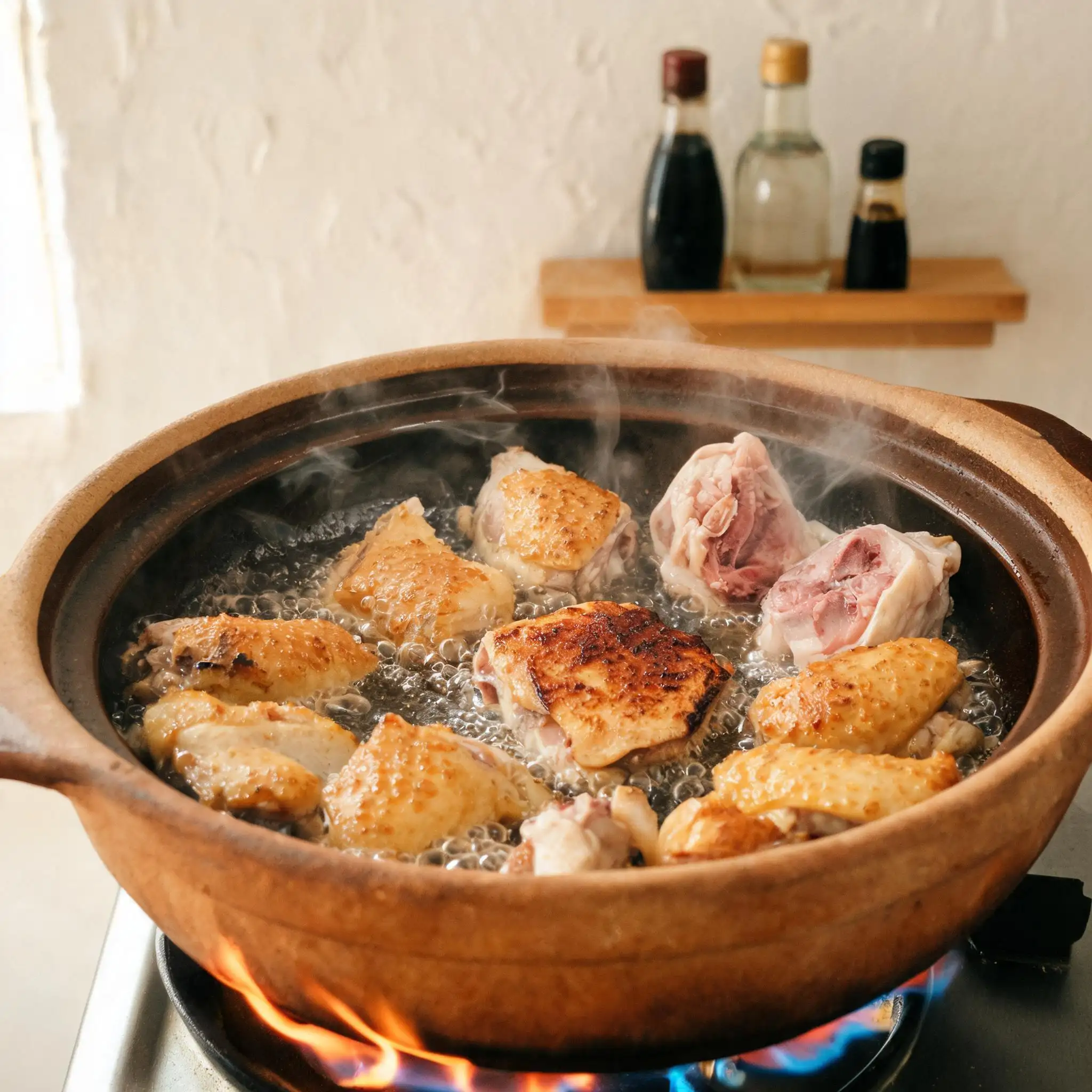
The chicken goes in first, skin-side down in a clay pot with a little sesame oil. The clay pot matters. It holds heat differently from a wok — slower to respond, more even, and when it comes to the table still bubbling and hissing, the soy sauce smell rising in a wave, it does something to the appetite. The skin crisps and browns, the fat rendering into the oil already in the pot.
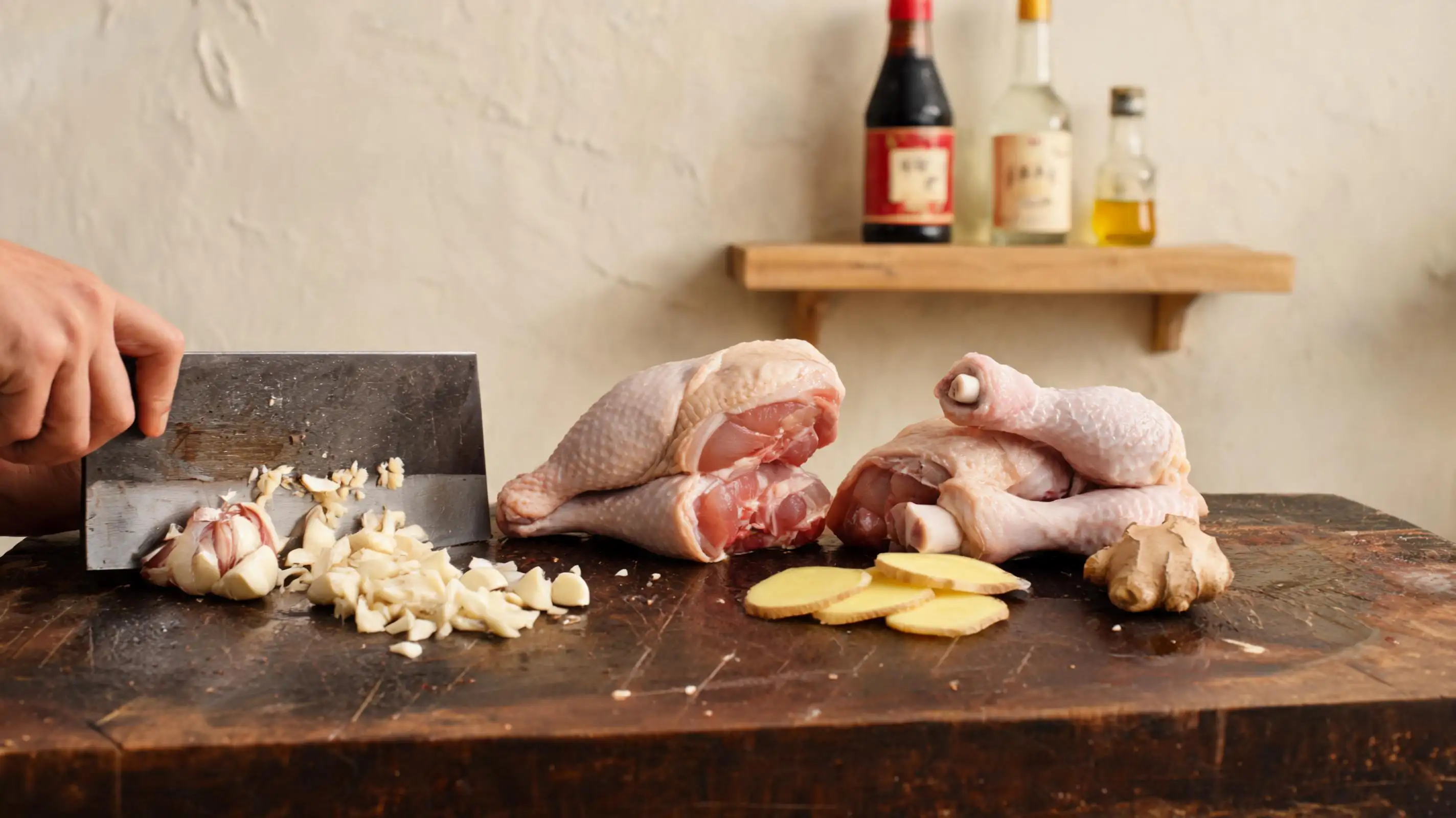
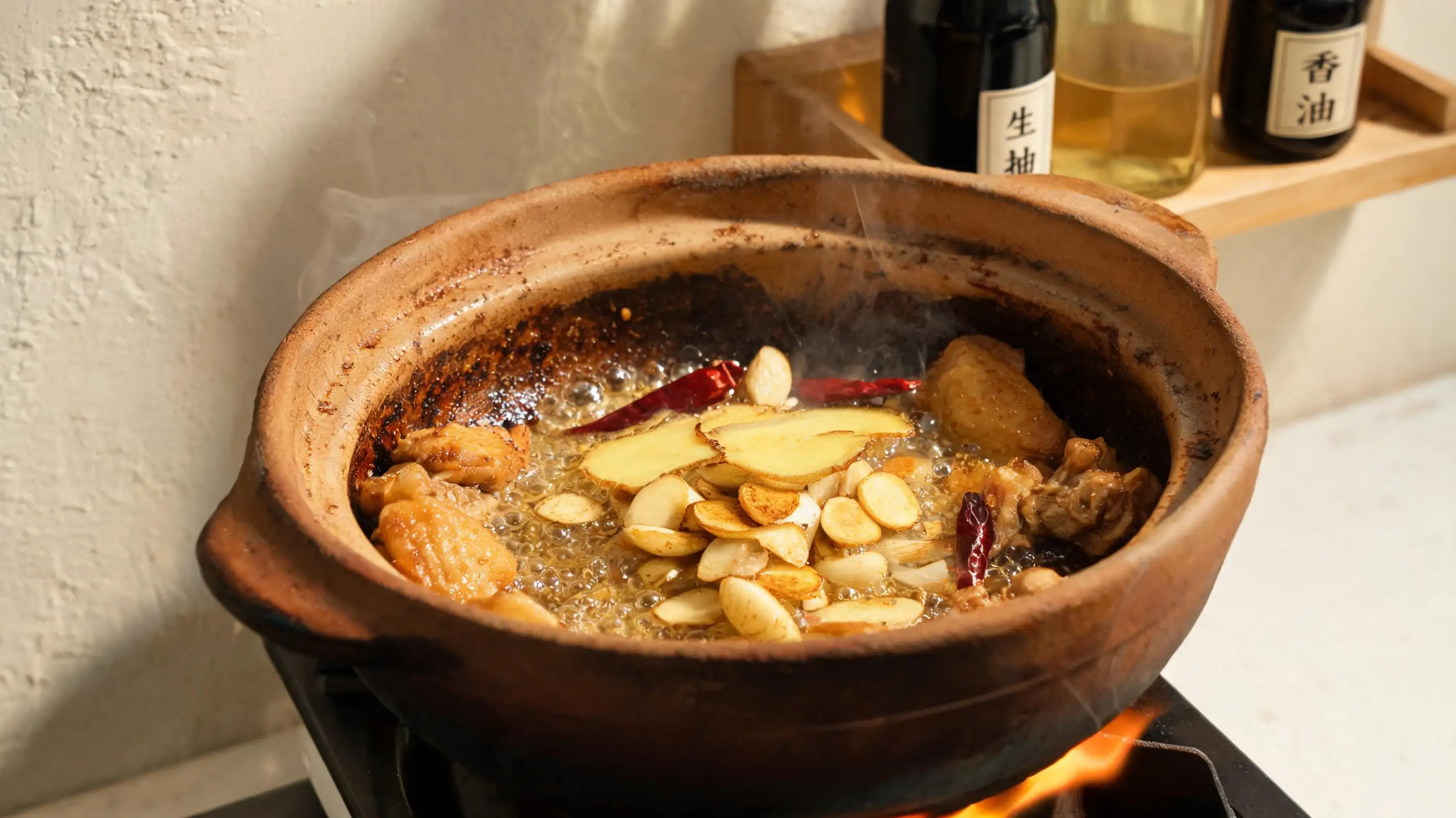
Then the garlic and ginger. Whole cloves, smashed just enough to open them up, and thick slices of old ginger — not the young tender kind but the proper fibrous stuff that can stand up to the long braise without disintegrating. They go in and immediately begin to color in the chicken fat, the garlic edges caramelizing, the ginger strips curling slightly at the edges.
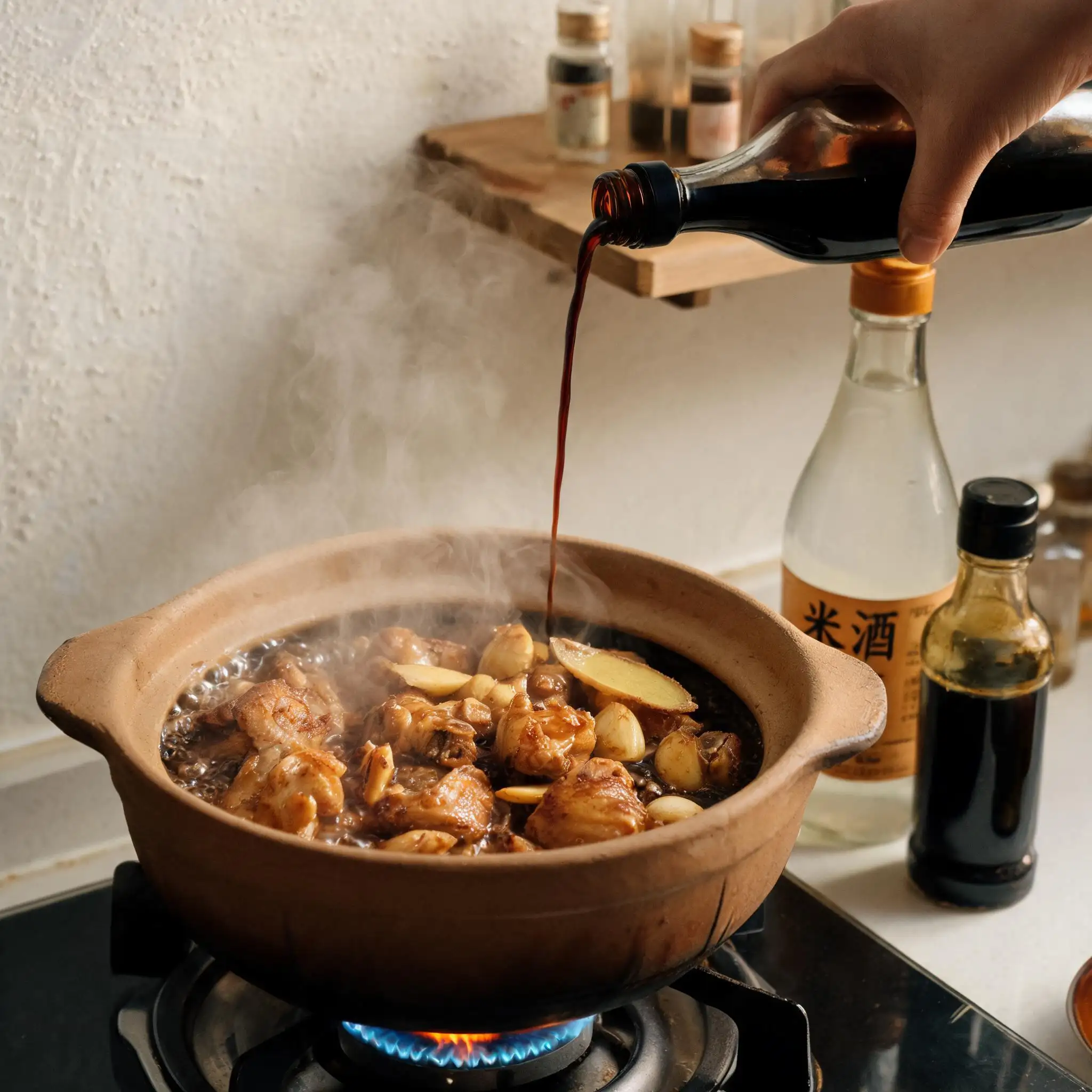
Then the three cups go in.
The liquid comes up around the chicken but doesn't cover it. The pot lid goes on, the flame stays high. The sauce reduces. This is the step that takes patience — the rice wine needs to cook off, the soy needs to concentrate and deepen from thin and sharp to thick and complex, the sesame oil needs to lose its rawness and become something richer. Twenty minutes, maybe thirty. The chicken is turning the color of good lacquerware, each piece coated in a glaze that clings.
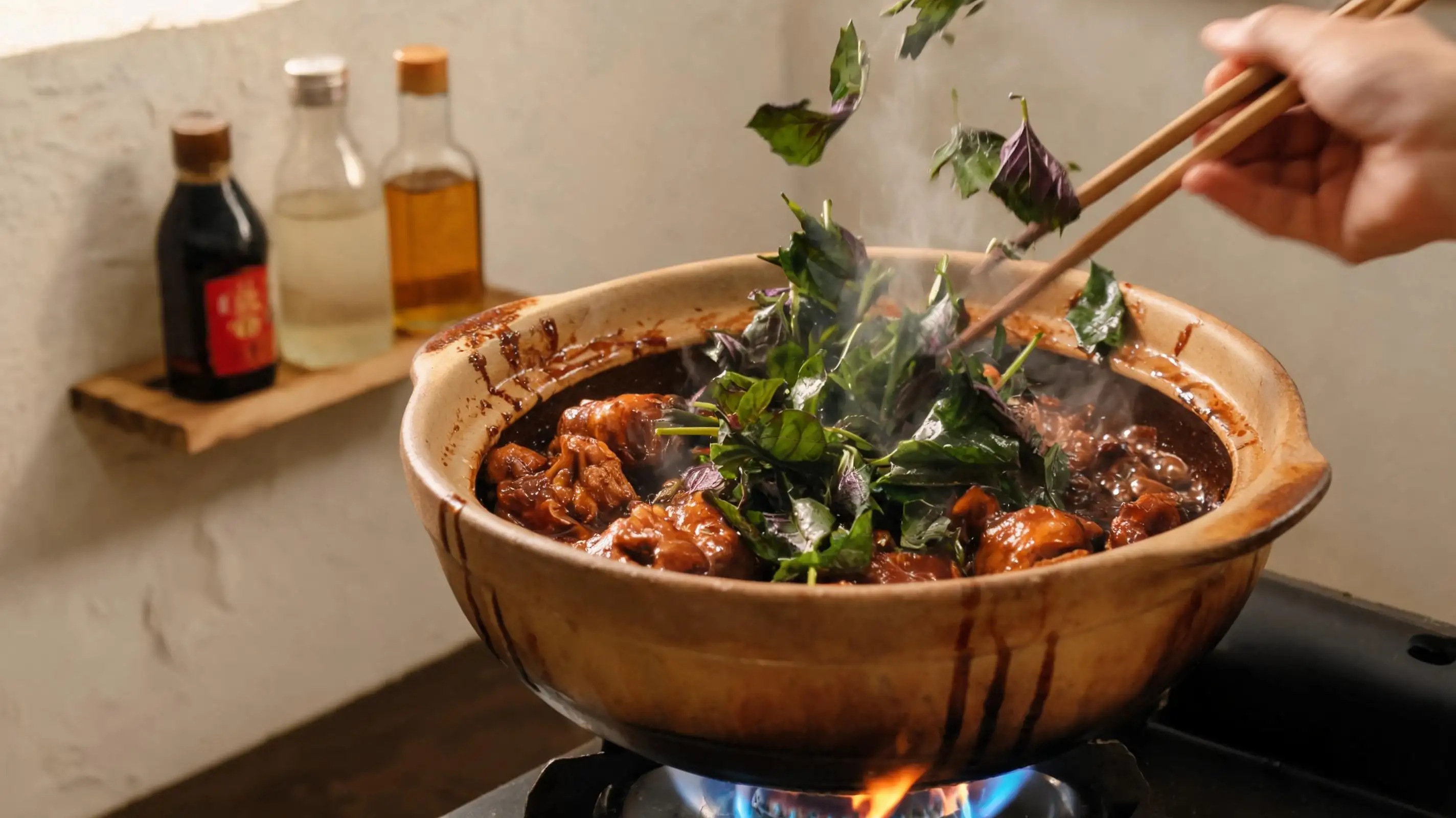
The basil goes in at the very end, when the sauce has reduced to nearly nothing and the flame is still high. A large handful — more than you think. It wilts in seconds, the leaves darkening and softening, releasing that sharp fragrant oil that smells completely unlike anything else in cooking. Everything gets tossed together once. The pot comes off the heat.
The garlic cloves, by this point, have become something worth eating on their own — soft all the way through, sweet and rich, the exterior caramelized by the sauce. Some people fish them out before serving. Others leave them in and let guests find them. Either way, they're part of the dish.
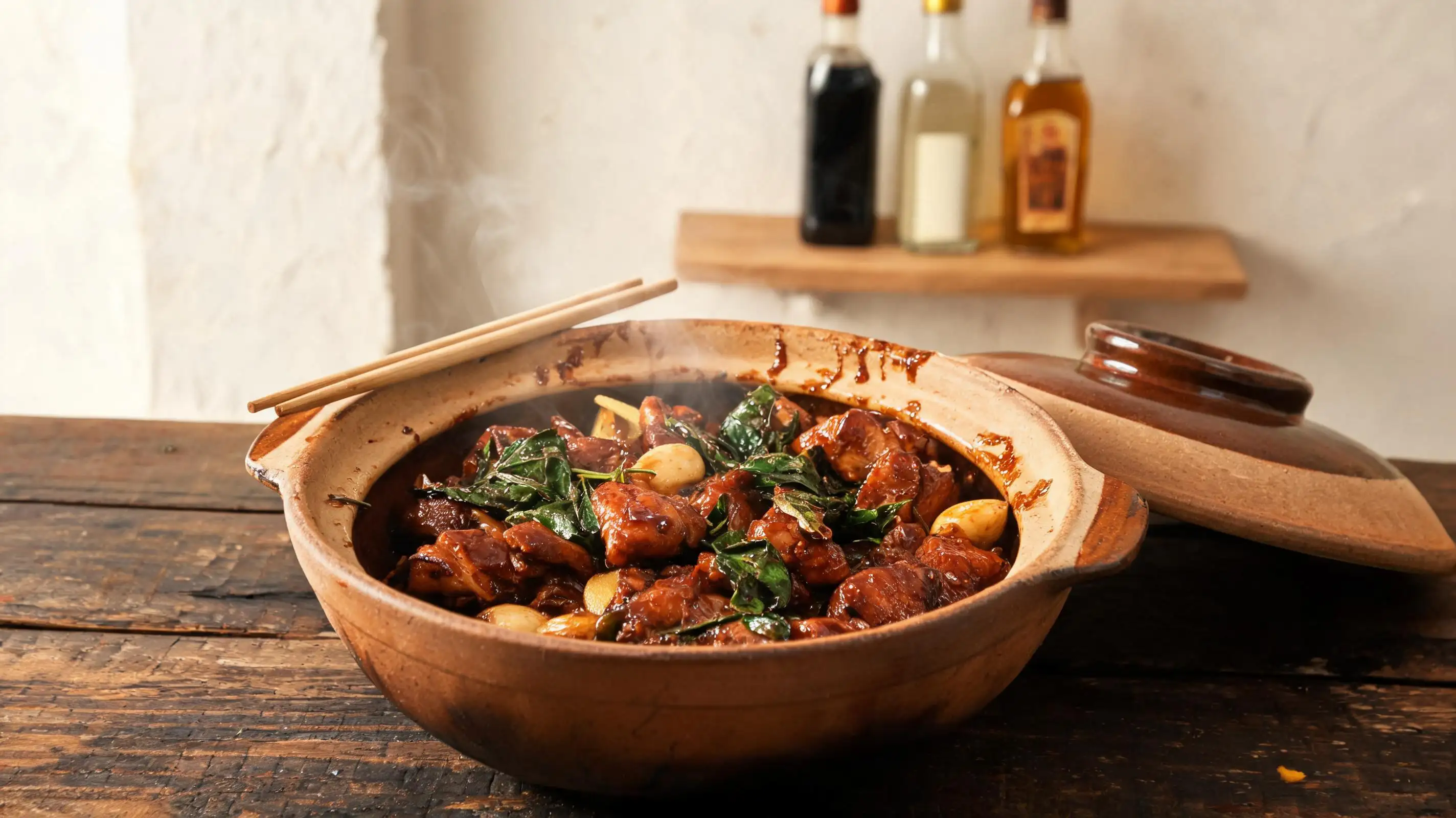
The clay pot goes to the table still hot, still making noise. There is no plating involved. The dish is the pot.
---
**Ingredients**
bone-in chicken pieces (drumsticks and thighs, skin-on) — about 800 grams
fresh Thai basil (九層塔) — a very large handful, at least 40 to 50 grams, the soul of the dish
whole garlic cloves — one full head, smashed and peeled
old ginger (老姜) — one large knob, cut into thick slices
light soy sauce — one cup (about 60 ml)
Taiwanese rice wine (米酒) — one cup (about 60 ml)
sesame oil (麻油) — one cup (about 60 ml)
dried red chilies — three or four
neutral oil — one tablespoon
---
**How it's made**
The name explains itself. One cup of soy sauce, one cup of rice wine, one cup of sesame oil — three equal parts, poured together into the pot with nothing added. No stock, no water. The chicken cooks in this and nothing else. This is either the most minimal thing or the most confident thing, depending on how you look at it.
The dish comes from Taiwan, though there are versions across southern China that claim earlier origins. The Taiwanese version is the one most people know — the one with the Thai basil, which is called 九層塔 here, and which is not optional. Using regular Italian basil would make a different dish. 九層塔 has a sharper edge to it, a note of cloves and anise that intensifies dramatically when it hits a hot pan, which is what you want at the end when the sauce has almost completely reduced and the heat is still high.
The chicken goes in first, skin-side down in a clay pot with a little sesame oil. The clay pot matters. It holds heat differently from a wok — slower to respond, more even, and when it comes to the table still bubbling and hissing, the soy sauce smell rising in a wave, it does something to the appetite. The skin crisps and browns, the fat rendering into the oil already in the pot.
Then the garlic and ginger. Whole cloves, smashed just enough to open them up, and thick slices of old ginger — not the young tender kind but the proper fibrous stuff that can stand up to the long braise without disintegrating. They go in and immediately begin to color in the chicken fat, the garlic edges caramelizing, the ginger strips curling slightly at the edges.
Then the three cups go in.
The liquid comes up around the chicken but doesn't cover it. The pot lid goes on, the flame stays high. The sauce reduces. This is the step that takes patience — the rice wine needs to cook off, the soy needs to concentrate and deepen from thin and sharp to thick and complex, the sesame oil needs to lose its rawness and become something richer. Twenty minutes, maybe thirty. The chicken is turning the color of good lacquerware, each piece coated in a glaze that clings.
The basil goes in at the very end, when the sauce has reduced to nearly nothing and the flame is still high. A large handful — more than you think. It wilts in seconds, the leaves darkening and softening, releasing that sharp fragrant oil that smells completely unlike anything else in cooking. Everything gets tossed together once. The pot comes off the heat.
The garlic cloves, by this point, have become something worth eating on their own — soft all the way through, sweet and rich, the exterior caramelized by the sauce. Some people fish them out before serving. Others leave them in and let guests find them. Either way, they're part of the dish.
The clay pot goes to the table still hot, still making noise. There is no plating involved. The dish is the pot.