·6/11/2026
from
Ginger Pork Stir-Fry
**Ginger Pork Stir-Fry** *(姜丝炒肉)*
---
**Ingredients**
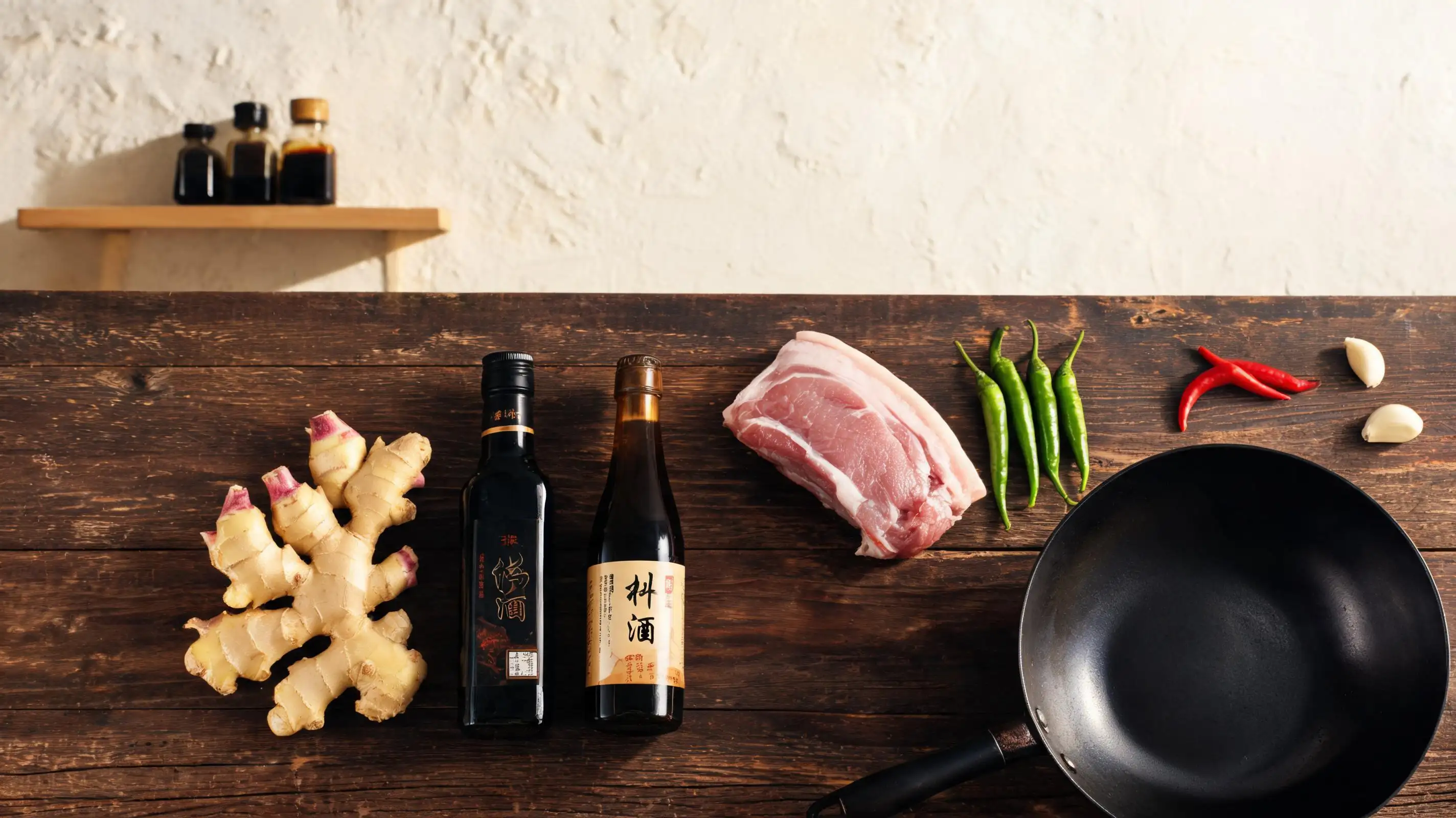
young ginger (子姜 / tender ginger) — two or three large knobs, about 150 to 200 grams, the real subject of the dish
pork belly or pork loin — 200 grams, sliced thin
green chili peppers — three or four, sliced diagonally
red chili pepper — one or two, for color
light soy sauce — two tablespoons, divided
cooking wine — one tablespoon
cornstarch — half a teaspoon, for the marinade
neutral oil — two tablespoons
salt — to taste
---
**How it's made**
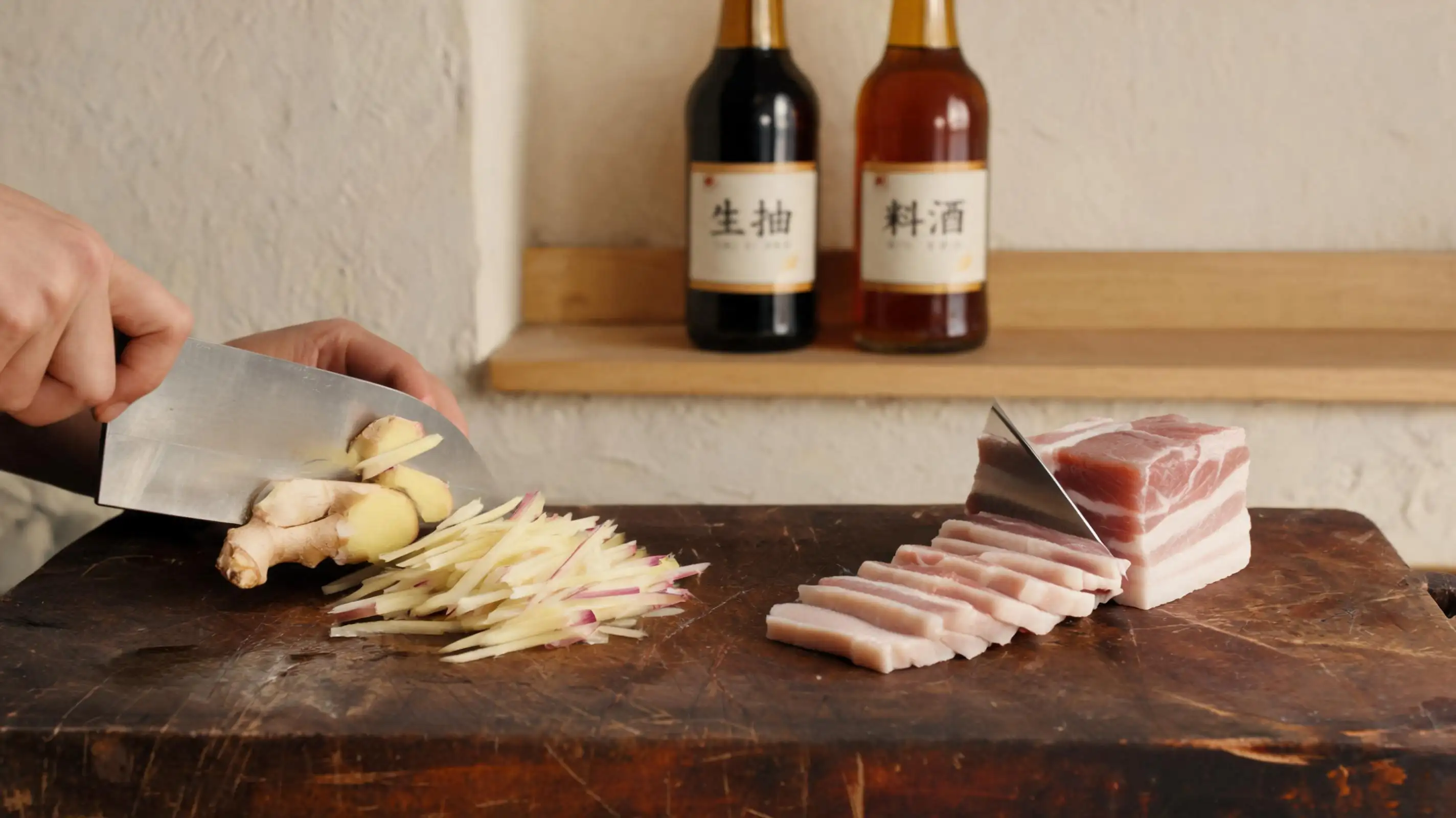
The ginger here is young ginger, not the hard knobbly kind sitting in the back of the spice drawer. Young ginger — what the Chinese call 子姜 — is pale yellow-white with faint purple-pink tips, the skin thin enough to scrape off with a fingernail. Its heat is different: brighter, less aggressive, with a faint sweetness underneath. Cut into fine julienne strips, it barely looks like ginger at all. It looks like something delicate.
This distinction matters because young ginger is not a flavoring in this dish. It is the dish. The pork is the supporting cast.
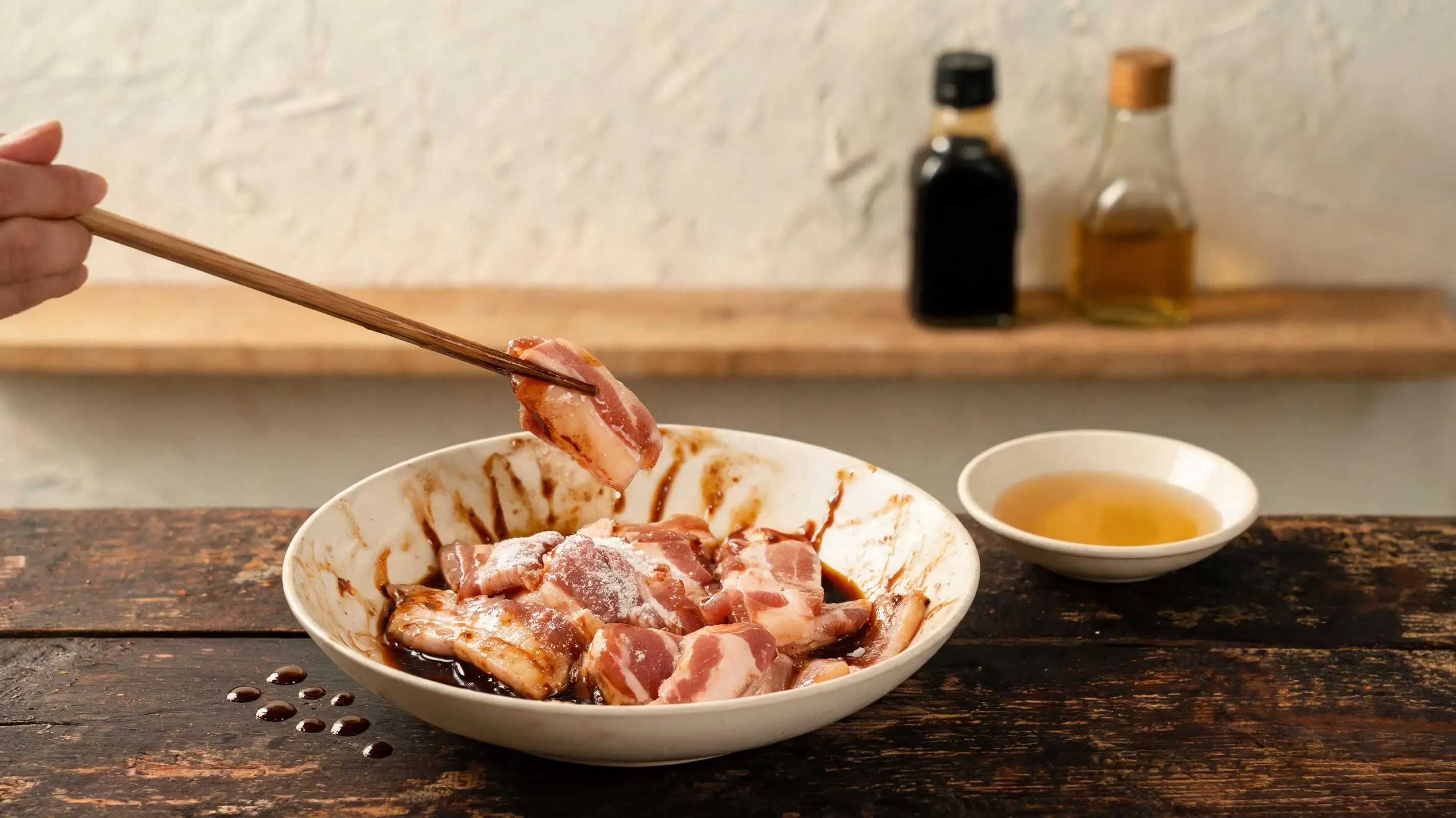
The pork slices — thin enough to be almost translucent — get a short marinade: soy sauce, cooking wine, a half-teaspoon of cornstarch. Ten minutes. This is not about deep flavor penetration. It's about surface protection and ensuring the slices move as individuals in the wok, not as a clump.
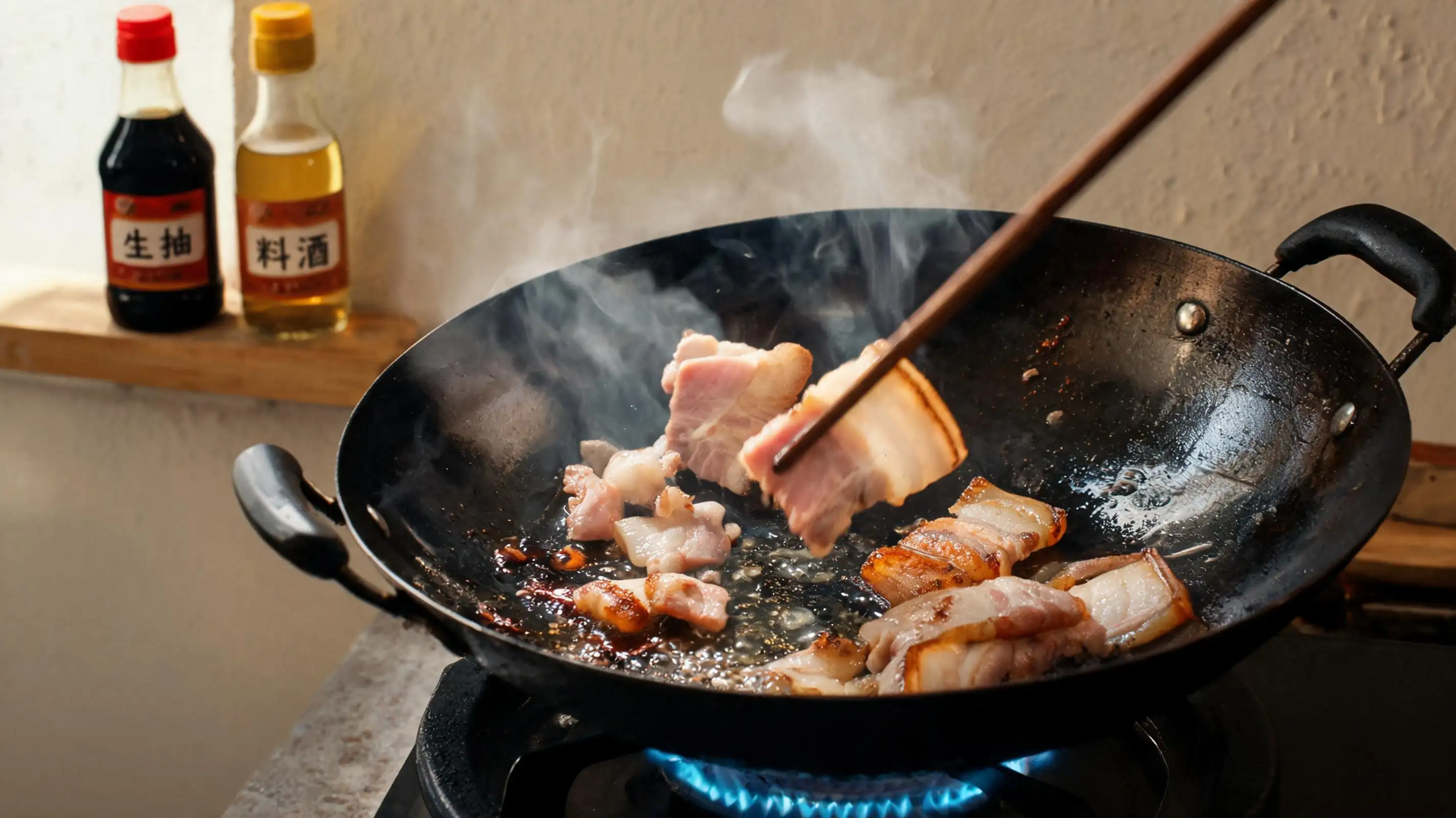
The wok goes on high heat until it just starts to smoke. Oil in, then the pork — spread quickly across the surface and left alone for thirty seconds to develop color before being tossed. The slices curl at the edges, the marinade caramelizing against the dark wok surface into spots of deep amber. When the pork is just cooked through and lightly charred in places, it comes out of the wok and waits.
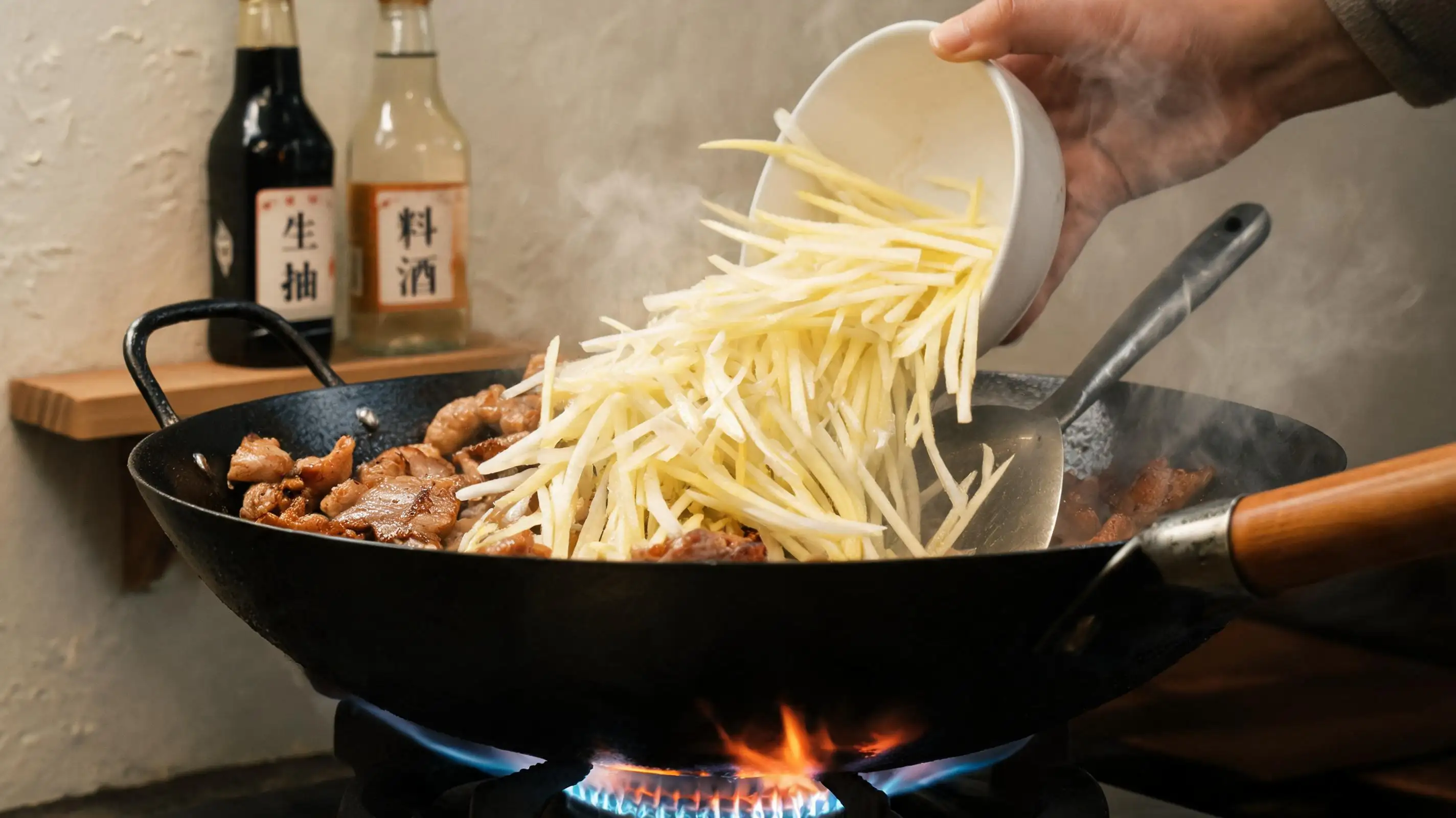
The ginger goes in next, directly into the same hot wok. There will be more ginger than seems reasonable — this is correct. The strips hit the hot surface and immediately release their oils, a sharp clean fragrance filling the kitchen in a way that nothing else quite does. The ginger sizzles and softens, its color shifting from pale white to a gentle gold as the heat works through each strip. Two minutes. The strips have wilted but still have texture, the bite is still there.
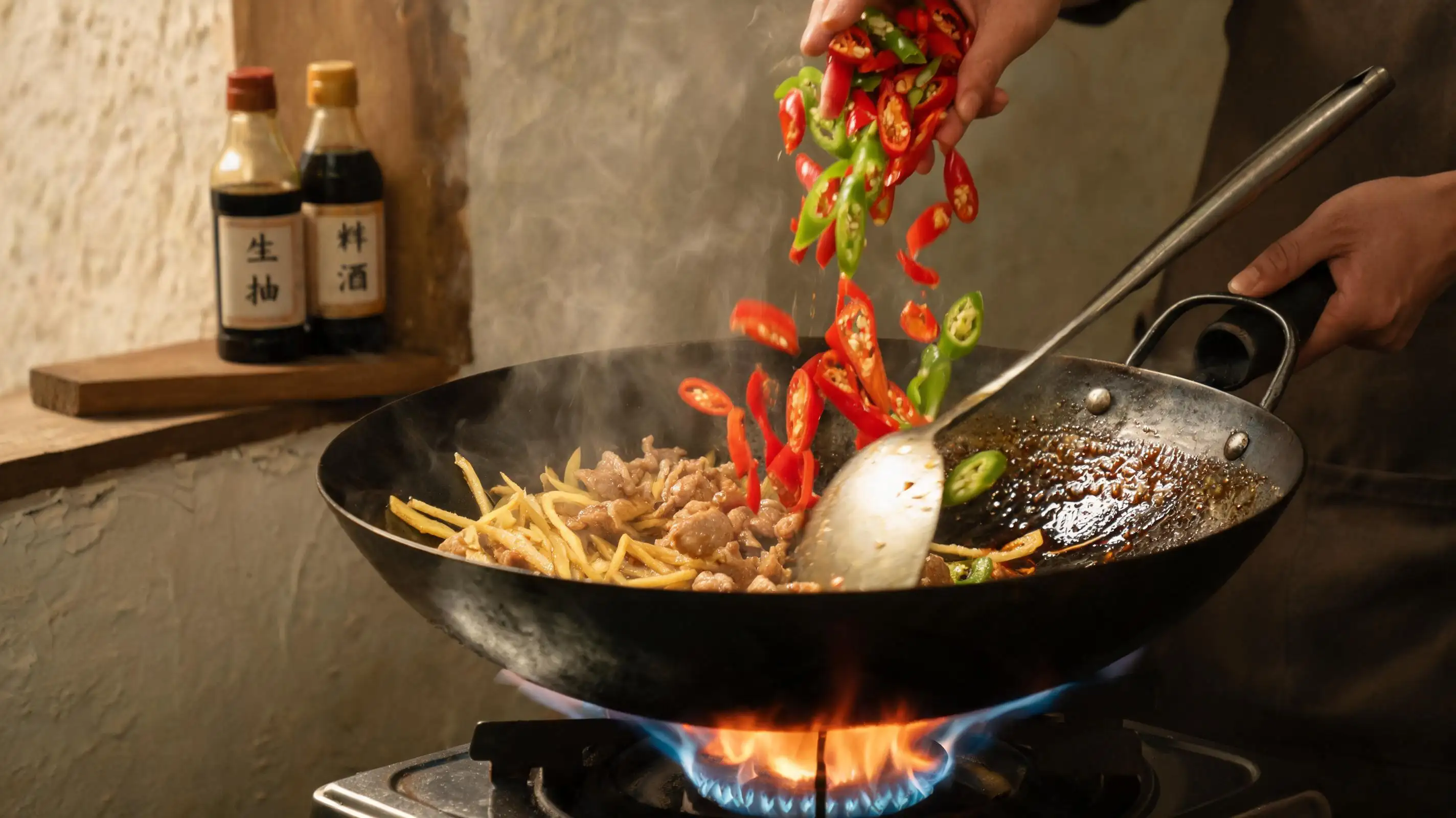
The pork goes back in. Chili peppers — green and red, sliced on a diagonal — follow. A splash of soy sauce around the rim of the wok, where it hits the hot metal and caramelizes before reaching the food. Thirty seconds of hard tossing, the wok hei smoke rising, everything coated in the light glaze.
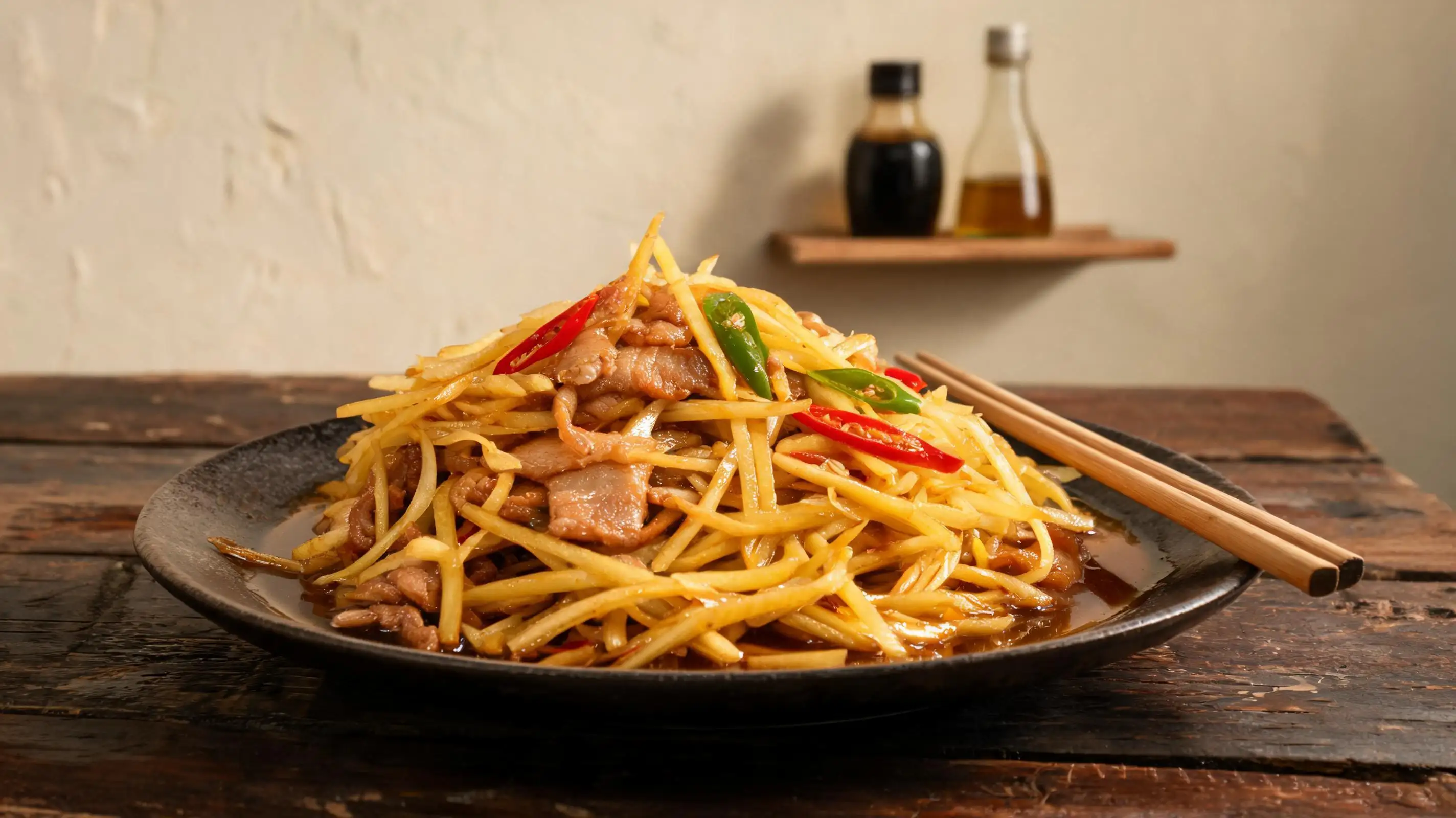
The dish comes out looking golden. The ginger strips have become the color of late afternoon light — translucent, soft, fragrant. The pork sits among them, the chili peppers providing the red and green that keeps the whole thing from looking monotone. A small pool of amber sauce at the bottom of the plate.
It's the kind of dish that disappears faster than it takes to make. The ginger, which seemed like too much, is never enough.
---
**Ingredients**
young ginger (子姜 / tender ginger) — two or three large knobs, about 150 to 200 grams, the real subject of the dish
pork belly or pork loin — 200 grams, sliced thin
green chili peppers — three or four, sliced diagonally
red chili pepper — one or two, for color
light soy sauce — two tablespoons, divided
cooking wine — one tablespoon
cornstarch — half a teaspoon, for the marinade
neutral oil — two tablespoons
salt — to taste
---
**How it's made**
The ginger here is young ginger, not the hard knobbly kind sitting in the back of the spice drawer. Young ginger — what the Chinese call 子姜 — is pale yellow-white with faint purple-pink tips, the skin thin enough to scrape off with a fingernail. Its heat is different: brighter, less aggressive, with a faint sweetness underneath. Cut into fine julienne strips, it barely looks like ginger at all. It looks like something delicate.
This distinction matters because young ginger is not a flavoring in this dish. It is the dish. The pork is the supporting cast.
The pork slices — thin enough to be almost translucent — get a short marinade: soy sauce, cooking wine, a half-teaspoon of cornstarch. Ten minutes. This is not about deep flavor penetration. It's about surface protection and ensuring the slices move as individuals in the wok, not as a clump.
The wok goes on high heat until it just starts to smoke. Oil in, then the pork — spread quickly across the surface and left alone for thirty seconds to develop color before being tossed. The slices curl at the edges, the marinade caramelizing against the dark wok surface into spots of deep amber. When the pork is just cooked through and lightly charred in places, it comes out of the wok and waits.
The ginger goes in next, directly into the same hot wok. There will be more ginger than seems reasonable — this is correct. The strips hit the hot surface and immediately release their oils, a sharp clean fragrance filling the kitchen in a way that nothing else quite does. The ginger sizzles and softens, its color shifting from pale white to a gentle gold as the heat works through each strip. Two minutes. The strips have wilted but still have texture, the bite is still there.
The pork goes back in. Chili peppers — green and red, sliced on a diagonal — follow. A splash of soy sauce around the rim of the wok, where it hits the hot metal and caramelizes before reaching the food. Thirty seconds of hard tossing, the wok hei smoke rising, everything coated in the light glaze.
The dish comes out looking golden. The ginger strips have become the color of late afternoon light — translucent, soft, fragrant. The pork sits among them, the chili peppers providing the red and green that keeps the whole thing from looking monotone. A small pool of amber sauce at the bottom of the plate.
It's the kind of dish that disappears faster than it takes to make. The ginger, which seemed like too much, is never enough.