·6/10/2026
from
Cola Braised Chicken Wings
**Cola Braised Chicken Wings** *(可乐鸡翅)*
---
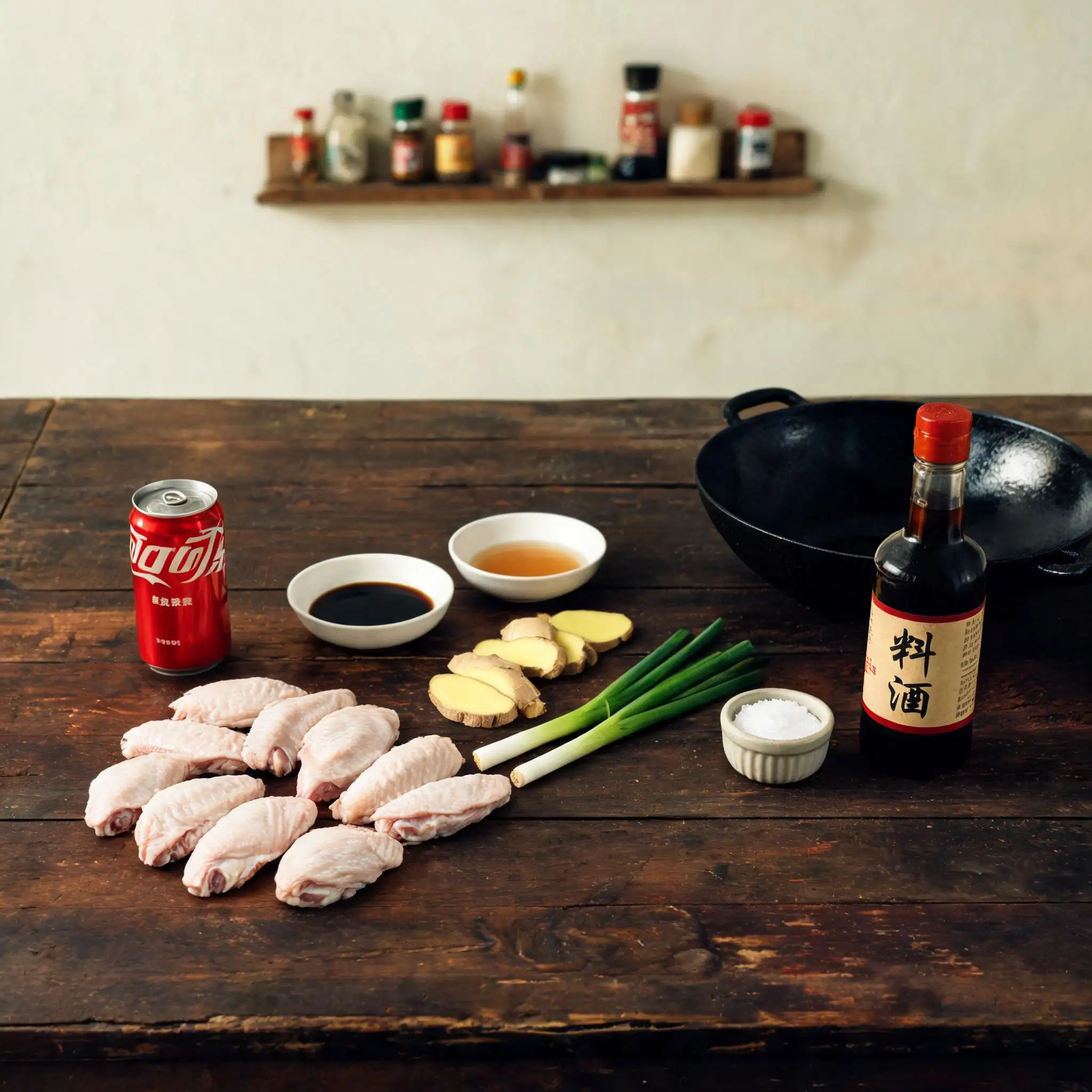
**Ingredients**
chicken wings — eight to ten, mid-joint section preferred, each scored twice with a knife across the thickest part
Coca-Cola — one standard 355ml can, regular, not diet
light soy sauce — two tablespoons
dark soy sauce — one tablespoon, for color
fresh ginger — four or five thick slices
scallion — two stalks, cut into sections
cooking wine — one tablespoon
neutral oil — just enough to coat the pan
scallion rings and white sesame seeds — for finishing
---
**How it's made**
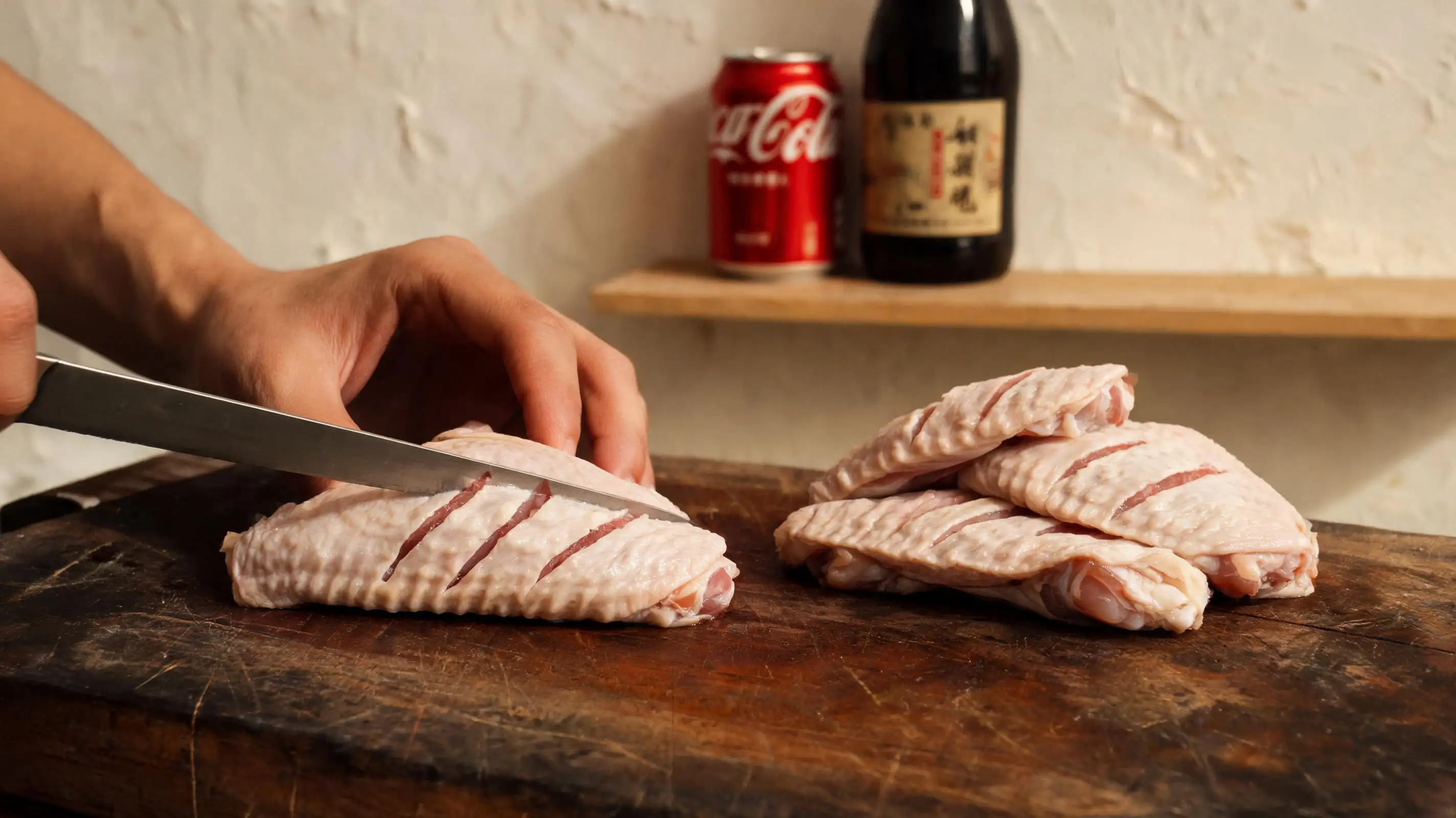
Each wing gets two diagonal cuts across the skin and into the flesh before anything else happens. Not deep enough to split the bone, but deep enough that you can feel the resistance give when the knife reaches the meat. This matters later, when the sauce is reducing and every surface of the wing needs to be reachable.
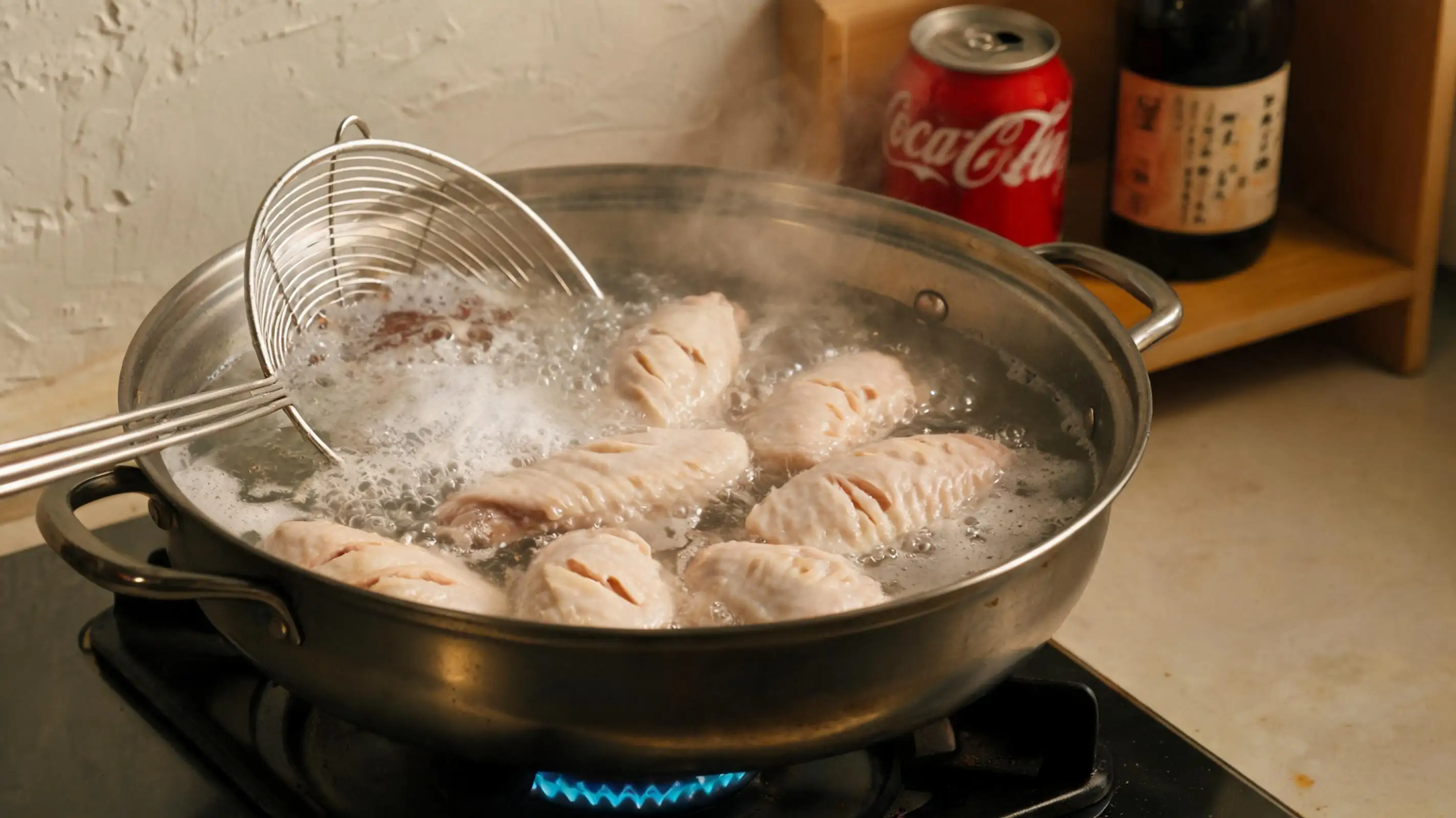
The wings go into a pot of cold water, brought to a boil from cold. As the water heats, grey foam rises to the surface — the blood and impurities working their way out. This is the part most people want to skip. Don't. The foam is exactly what you came here to remove. Skim it as it appears, let the water boil properly for two or three minutes, then drain the wings and rinse them under cold water. They come out pale and clean.
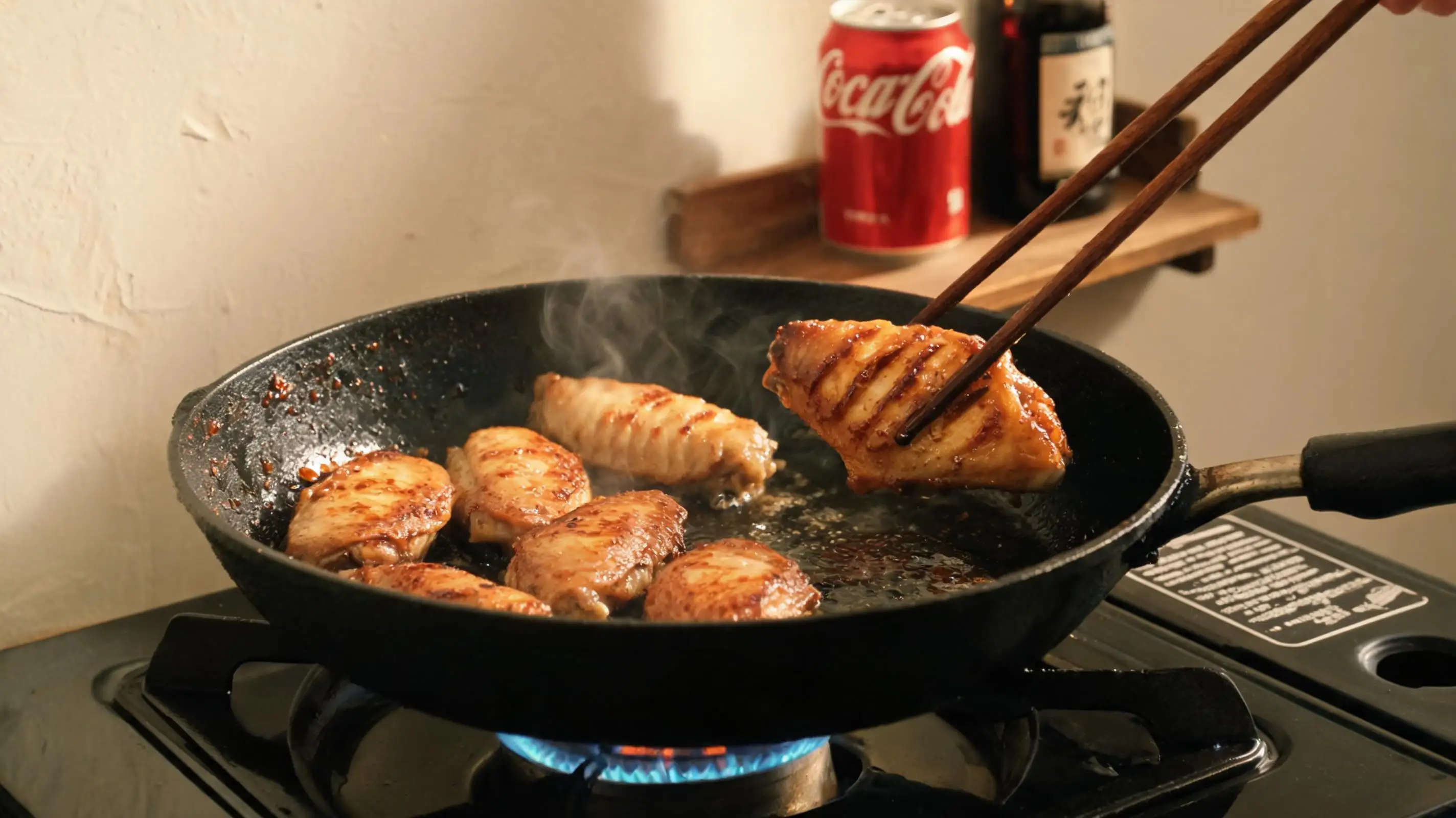
The pan goes on medium-high heat. A thin layer of oil, just enough to coat. When the oil shimmers, the wings go in skin-side down and stay there without touching — the sound of the first contact is the loud, wet sizzle of skin hitting hot oil, and then it settles into a steady, constant frying sound. Two to three minutes. The skin releases from the pan when it's ready, golden-brown and crisped, the fat rendered. Flip. The other side gets the same treatment. By the time both sides are done, the wings have color and the pan has a layer of fond at the bottom that the braising liquid will lift.
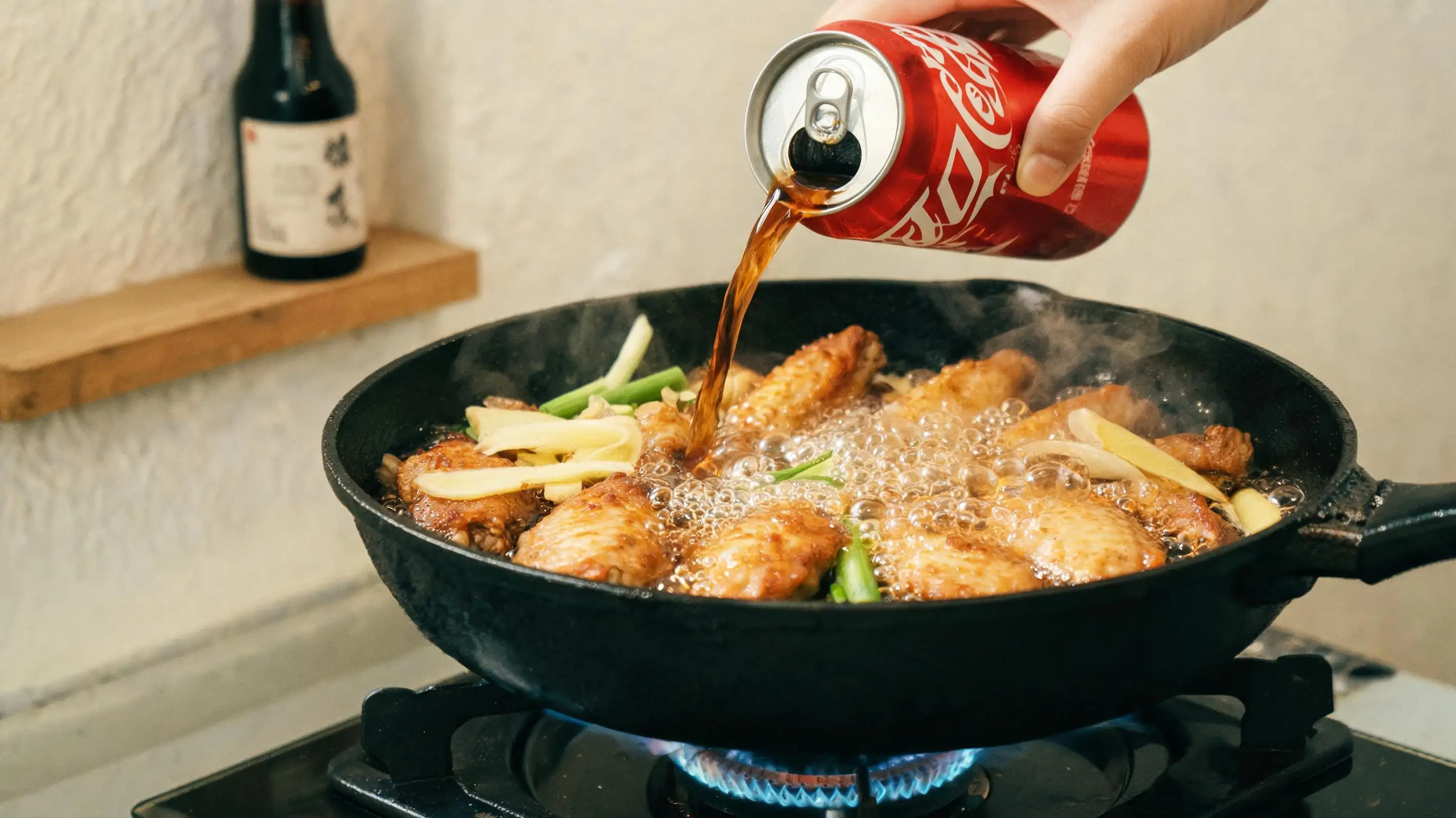
Ginger slices and scallion sections go in first, pushed around in the remaining oil for thirty seconds. Then the light soy sauce, then the dark soy sauce — the dark soy hits the hot pan and immediately turns the whole thing a deep caramel color. Then the cola. The entire can, poured in at once. It hits the hot pan and erupts — a sudden violent fizzing, foam surging up around the wings, the carbonation reacting with the heat. It settles in seconds into a steadily simmering braise, the liquid dark and fragrant, the wings now half-submerged.
Bring to a boil, then lower to a gentle simmer. Cover and leave it alone for fifteen minutes. The wings are cooking through, the sauce working its way into the scored cuts, the cola slowly cooking down and concentrating. After fifteen minutes, remove the lid. This is the part that requires attention.
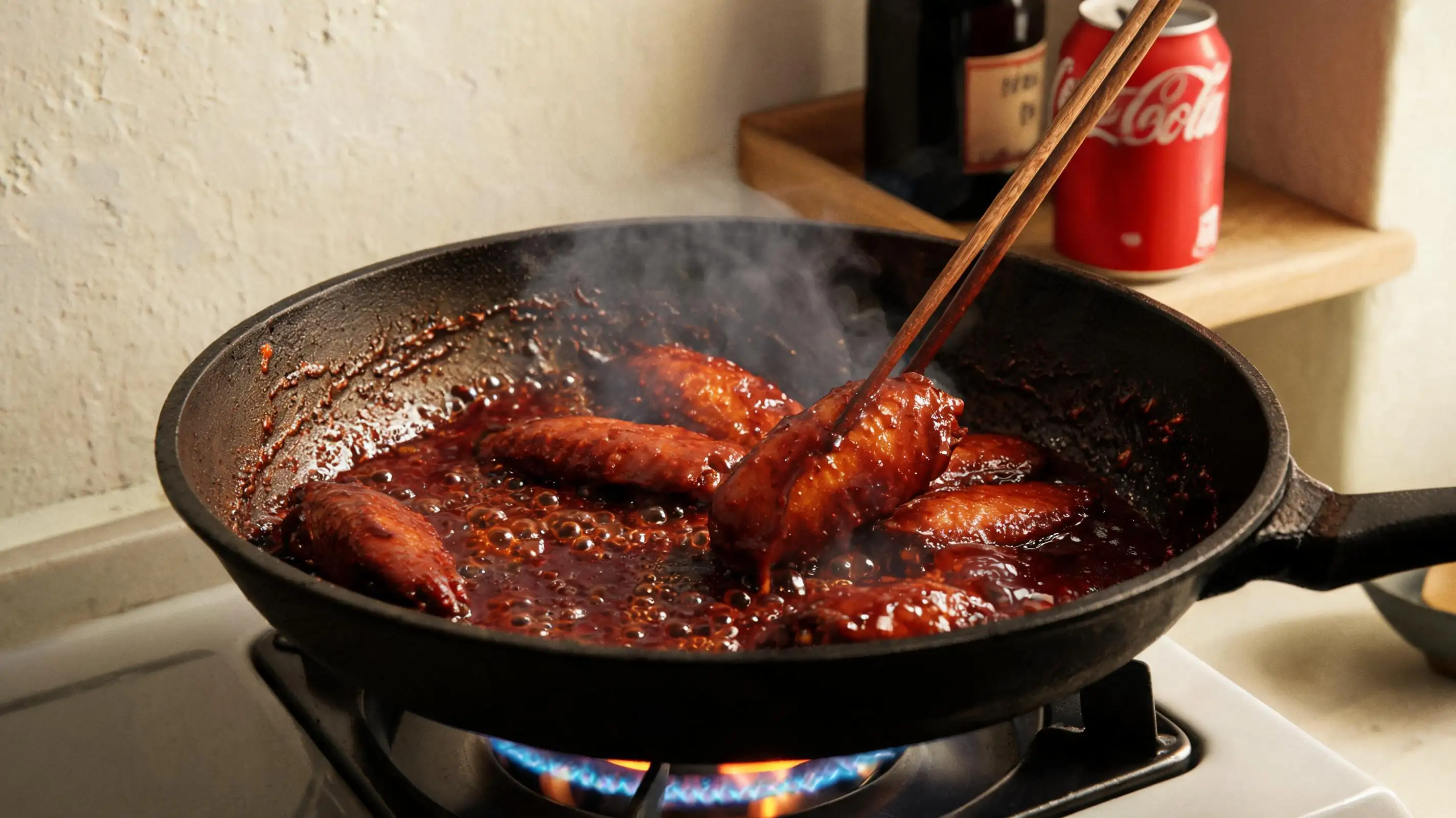
Turn the heat to high. The liquid will begin to reduce quickly, bubbling actively, thickening around the wings. Start turning the wings every minute or so, coating each one in the sauce as it thickens. The sauce goes from watery to glossy to thick and lacquered in about five to eight minutes of high heat. When it coats the back of a spoon and moves slowly, and when each wing is dark red and glistening and the pan has almost no liquid left — just thick sauce clinging to everything — it's done.
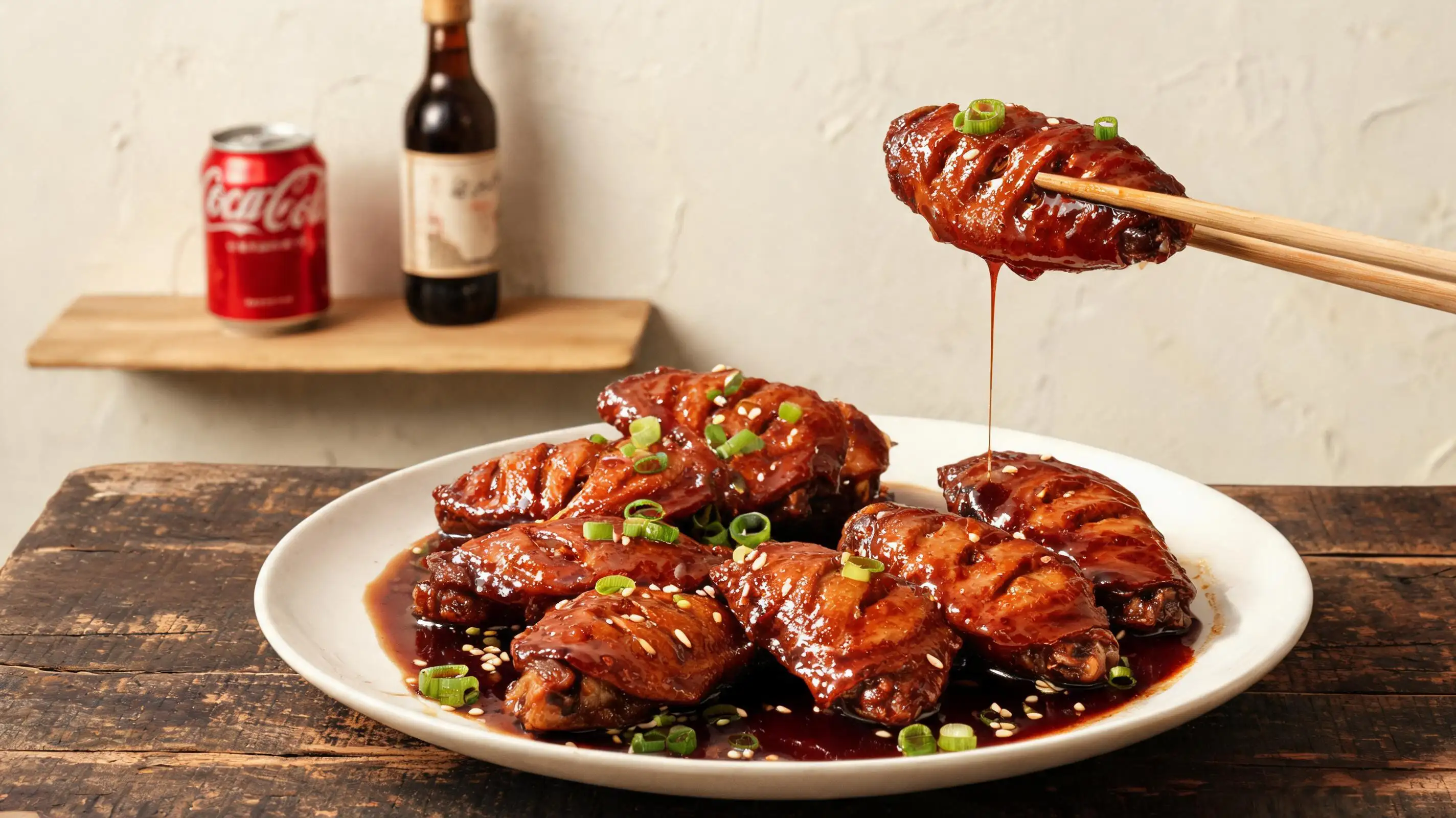
The wings go onto a plate still hot, the sauce pooling slightly underneath. Scallion rings scattered over the top. A pinch of white sesame seeds. The wings are deeply colored, almost mahogany, the skin taut and glossy from the reduced glaze.
The flavor is hard to explain to someone who hasn't had it. Sweet but not cloying, the cola's sugar caramelized down to something richer and darker. Salty from the soy. The chicken fat underneath making everything feel substantial. The scored cuts let the glaze work all the way in, so the meat and the skin taste the same thing.
It's a dish that surprises people the first time, then becomes the thing they ask for the second time they visit.
---
**Ingredients**
chicken wings — eight to ten, mid-joint section preferred, each scored twice with a knife across the thickest part
Coca-Cola — one standard 355ml can, regular, not diet
light soy sauce — two tablespoons
dark soy sauce — one tablespoon, for color
fresh ginger — four or five thick slices
scallion — two stalks, cut into sections
cooking wine — one tablespoon
neutral oil — just enough to coat the pan
scallion rings and white sesame seeds — for finishing
---
**How it's made**
Each wing gets two diagonal cuts across the skin and into the flesh before anything else happens. Not deep enough to split the bone, but deep enough that you can feel the resistance give when the knife reaches the meat. This matters later, when the sauce is reducing and every surface of the wing needs to be reachable.
The wings go into a pot of cold water, brought to a boil from cold. As the water heats, grey foam rises to the surface — the blood and impurities working their way out. This is the part most people want to skip. Don't. The foam is exactly what you came here to remove. Skim it as it appears, let the water boil properly for two or three minutes, then drain the wings and rinse them under cold water. They come out pale and clean.
The pan goes on medium-high heat. A thin layer of oil, just enough to coat. When the oil shimmers, the wings go in skin-side down and stay there without touching — the sound of the first contact is the loud, wet sizzle of skin hitting hot oil, and then it settles into a steady, constant frying sound. Two to three minutes. The skin releases from the pan when it's ready, golden-brown and crisped, the fat rendered. Flip. The other side gets the same treatment. By the time both sides are done, the wings have color and the pan has a layer of fond at the bottom that the braising liquid will lift.
Ginger slices and scallion sections go in first, pushed around in the remaining oil for thirty seconds. Then the light soy sauce, then the dark soy sauce — the dark soy hits the hot pan and immediately turns the whole thing a deep caramel color. Then the cola. The entire can, poured in at once. It hits the hot pan and erupts — a sudden violent fizzing, foam surging up around the wings, the carbonation reacting with the heat. It settles in seconds into a steadily simmering braise, the liquid dark and fragrant, the wings now half-submerged.
Bring to a boil, then lower to a gentle simmer. Cover and leave it alone for fifteen minutes. The wings are cooking through, the sauce working its way into the scored cuts, the cola slowly cooking down and concentrating. After fifteen minutes, remove the lid. This is the part that requires attention.
Turn the heat to high. The liquid will begin to reduce quickly, bubbling actively, thickening around the wings. Start turning the wings every minute or so, coating each one in the sauce as it thickens. The sauce goes from watery to glossy to thick and lacquered in about five to eight minutes of high heat. When it coats the back of a spoon and moves slowly, and when each wing is dark red and glistening and the pan has almost no liquid left — just thick sauce clinging to everything — it's done.
The wings go onto a plate still hot, the sauce pooling slightly underneath. Scallion rings scattered over the top. A pinch of white sesame seeds. The wings are deeply colored, almost mahogany, the skin taut and glossy from the reduced glaze.
The flavor is hard to explain to someone who hasn't had it. Sweet but not cloying, the cola's sugar caramelized down to something richer and darker. Salty from the soy. The chicken fat underneath making everything feel substantial. The scored cuts let the glaze work all the way in, so the meat and the skin taste the same thing.
It's a dish that surprises people the first time, then becomes the thing they ask for the second time they visit.