·6/10/2026
from
Steamed Egg Custard with Shrimp
**Steamed Egg Custard with Shrimp** *(虾仁蒸蛋)*
---
**Ingredients**
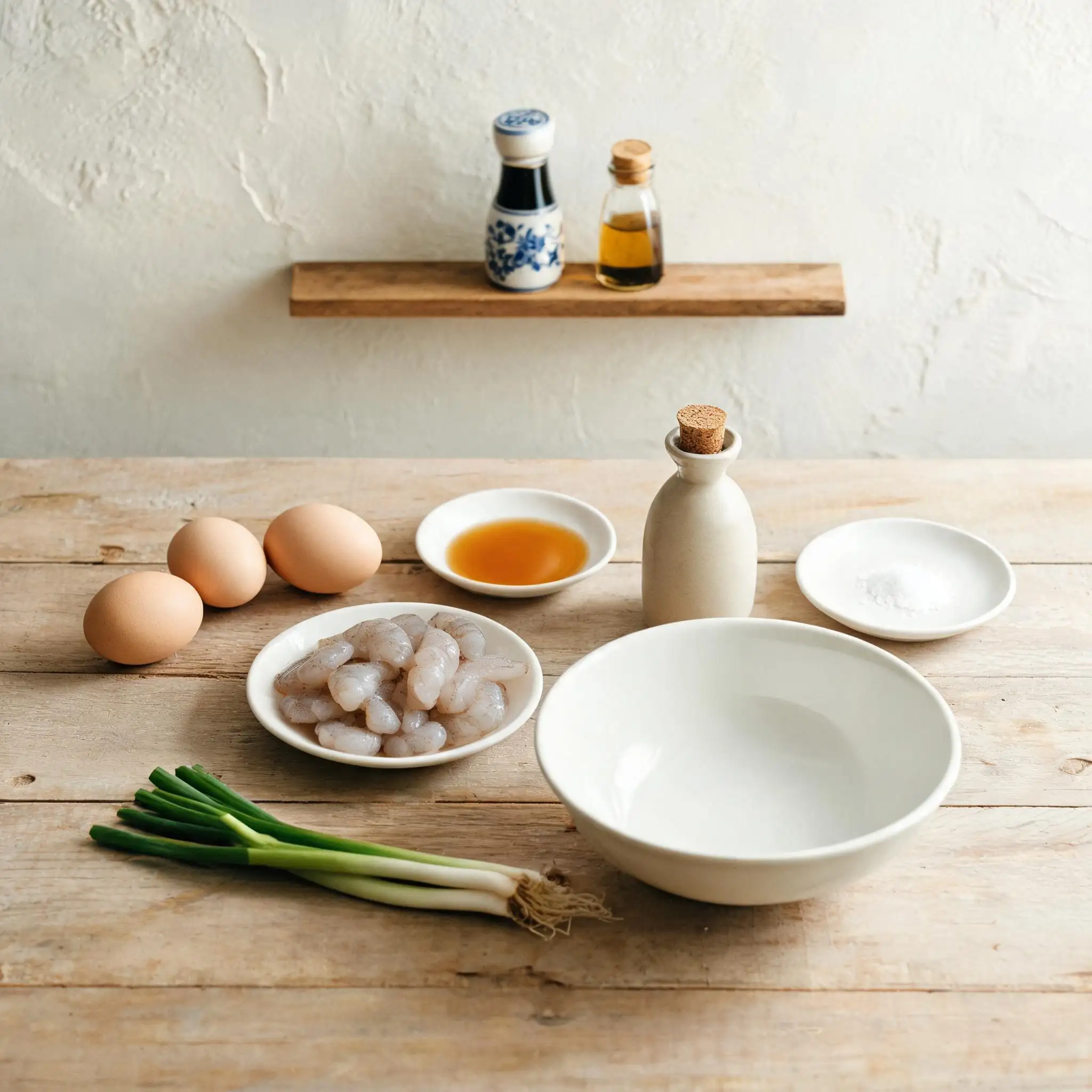
fresh eggs — three, at room temperature
raw peeled shrimp — eight to ten medium-sized, deveined, patted dry
warm water — approximately one and a half times the volume of the beaten egg, not hot
light soy sauce — one tablespoon, for finishing
toasted sesame oil — a few drops, for finishing
scallion — one stalk, green part only, sliced into thin rings
coarse salt — a small pinch
---
**How it's made**
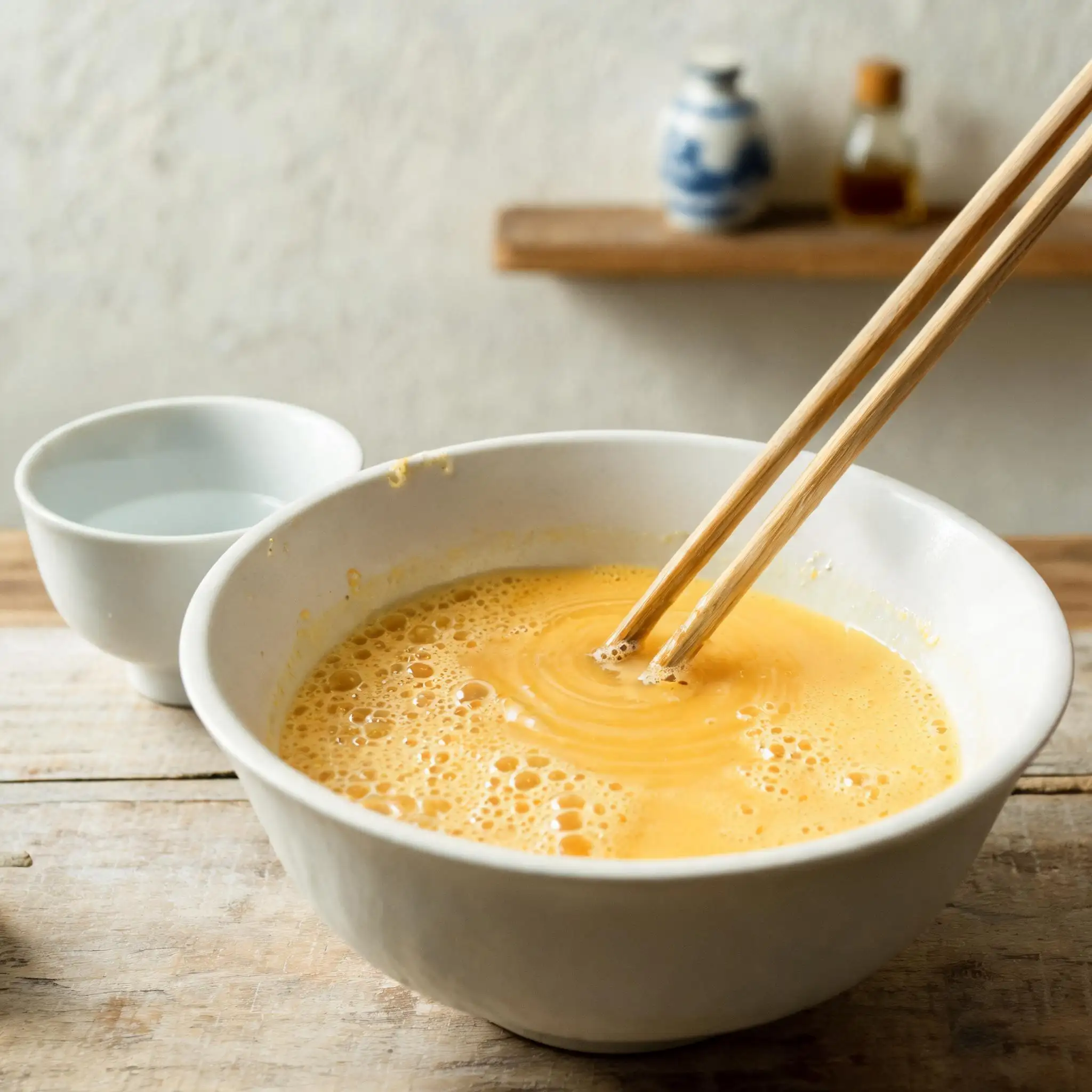
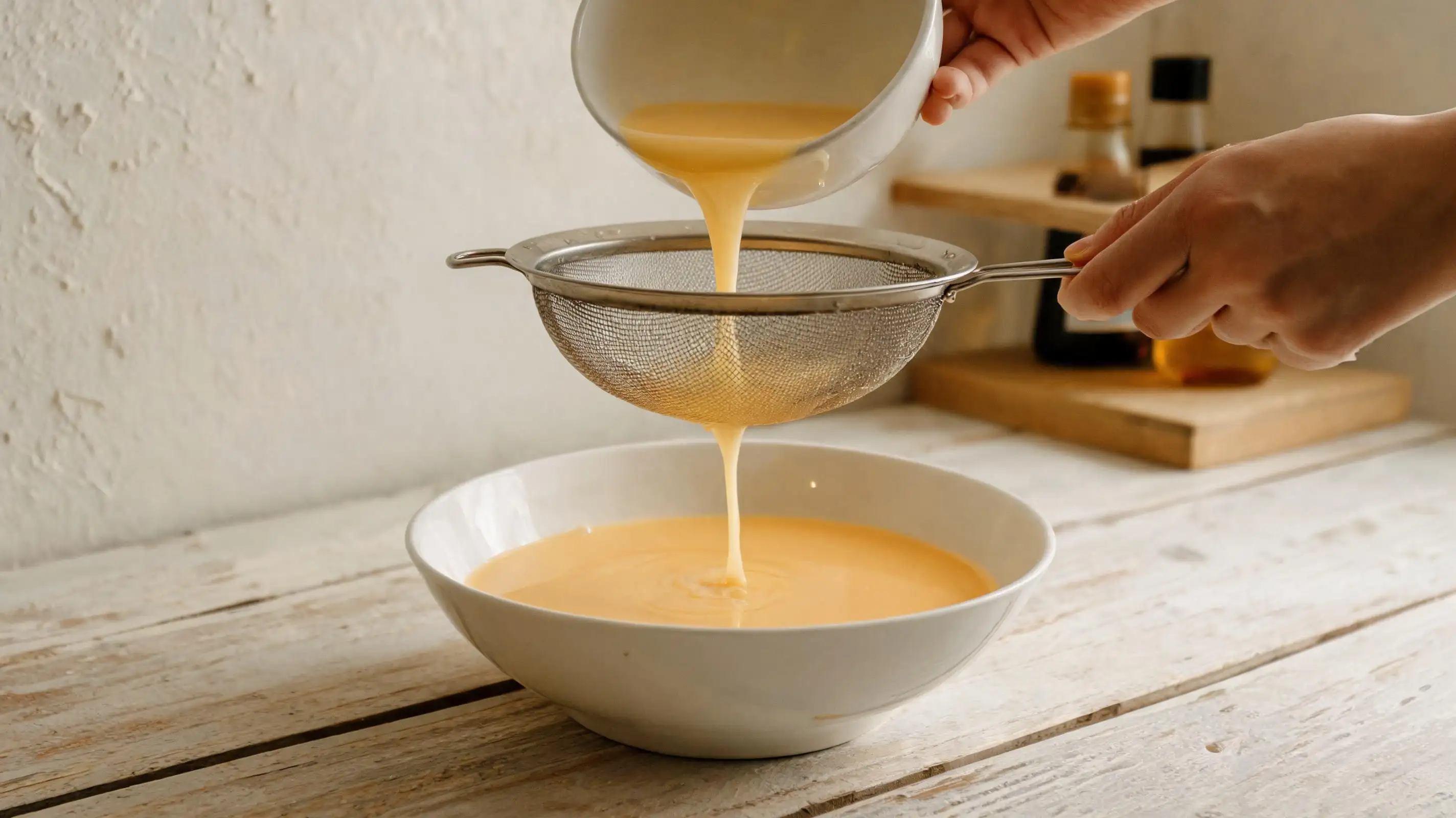
The eggs go into a bowl and are beaten until the yolks and whites are fully combined — no streaks of white remaining. Warm water is added, roughly one and a half times the volume of the egg, not cold and not boiling, just warm enough that when you dip your finger in it doesn't feel cool. Salt is stirred in. The whole mixture is then poured through a fine-mesh strainer into the steaming bowl. This step is quiet and unhurried, and it matters more than it looks. What passes through the strainer is smooth and even; what stays behind are the bubbles, the chalaza, the tiny knots of protein that would show up in the finished custard as hard flecks or uneven patches. The strained liquid sits in the bowl perfectly flat and still.
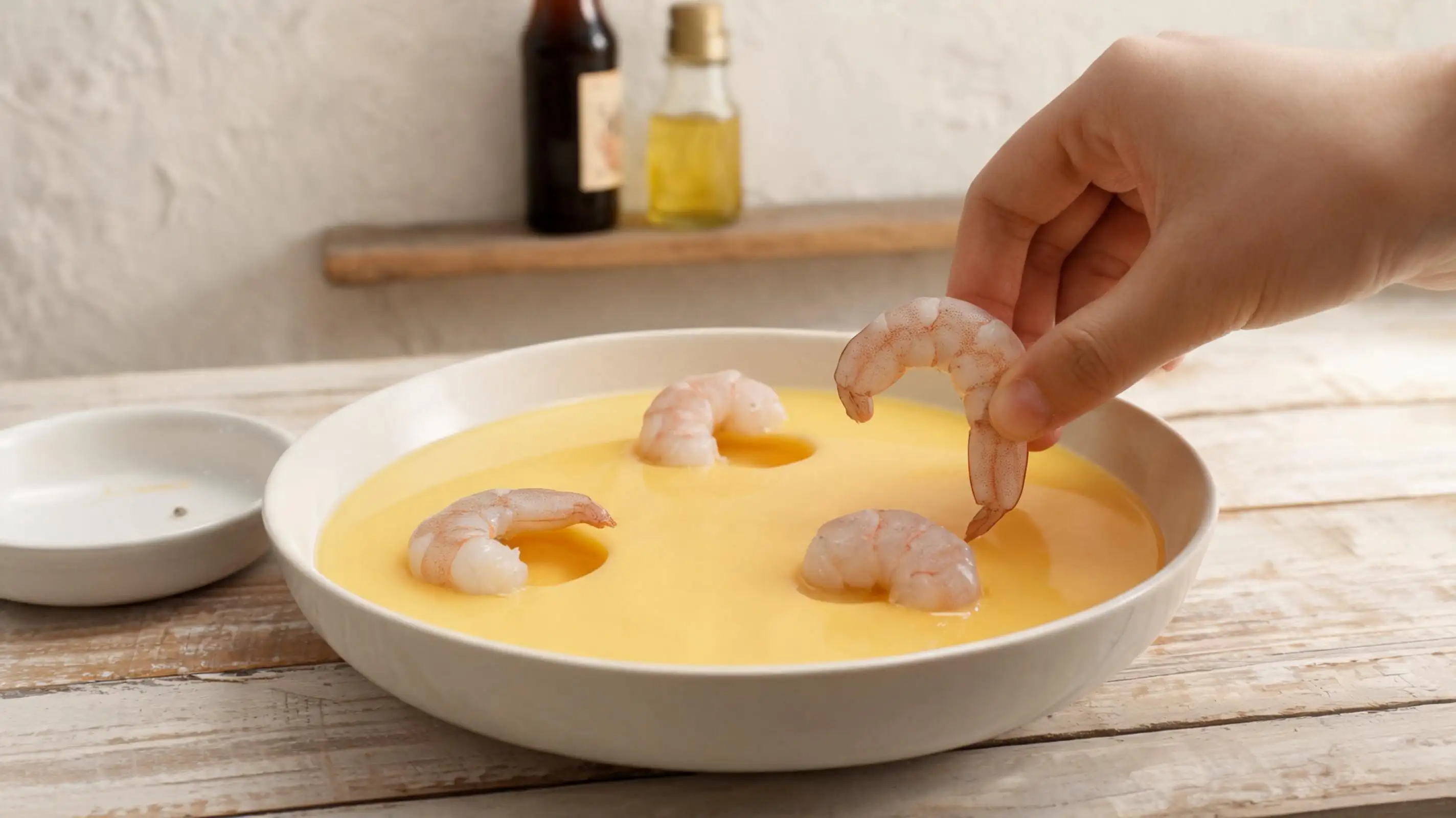
The shrimp are placed one at a time across the surface of the raw egg mixture — evenly spaced, not clustered, each one pressed very lightly so it sits half-submerged rather than floating on top. They will hold their position through the steaming.
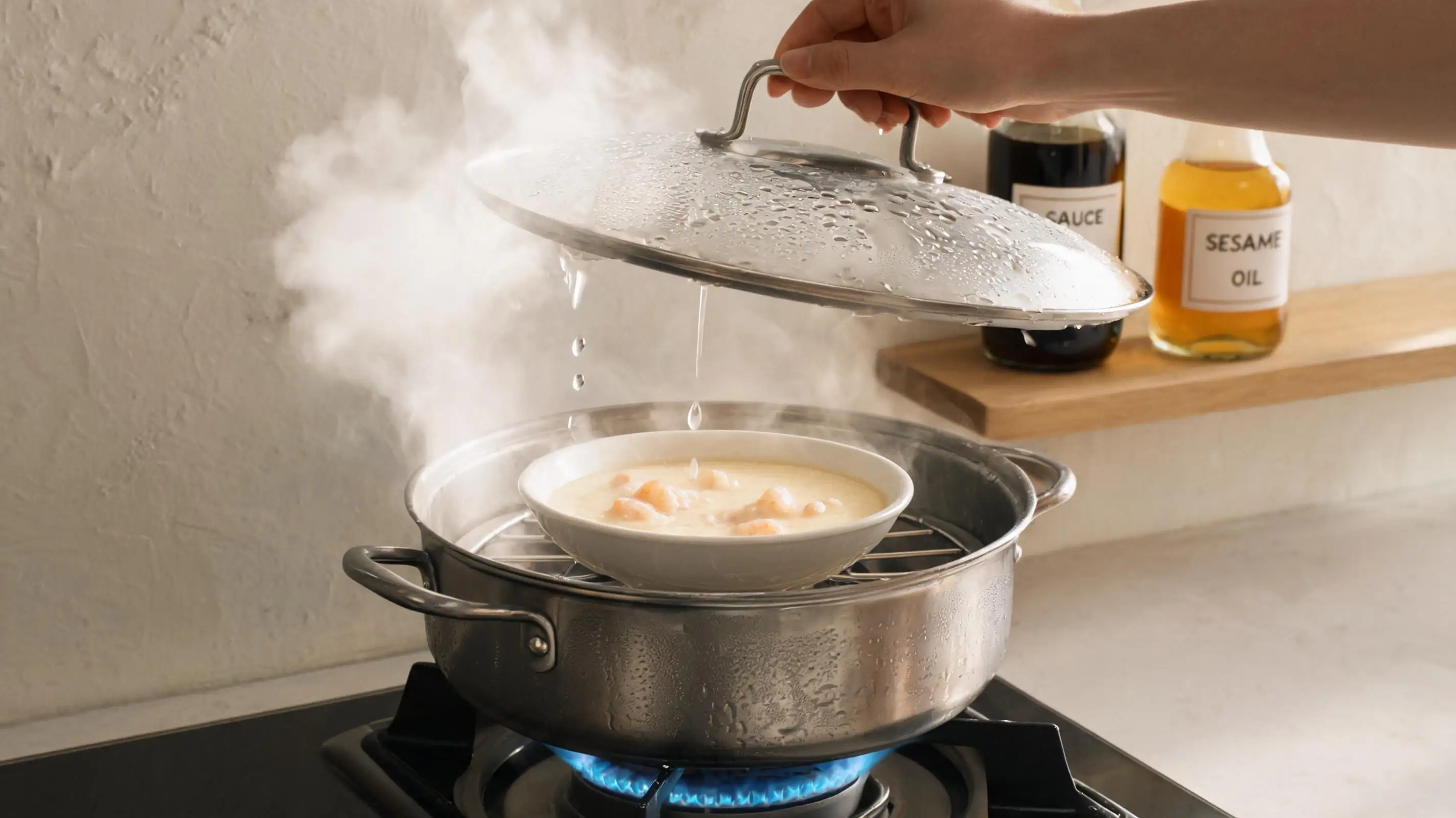
The steamer is already running before the bowl goes in. The lid is propped open a small crack — just enough to let steam escape without building the pressure that would make the surface bubble and pit. Medium-low heat from here. Eight to ten minutes, depending on how deep the custard sits in the bowl. The custard is done when the center barely jiggles and the edges are set. The surface should be smooth — not a single pockmark. A pockmarked surface means the heat was too high or the time too long, and the texture underneath will tell the same story.
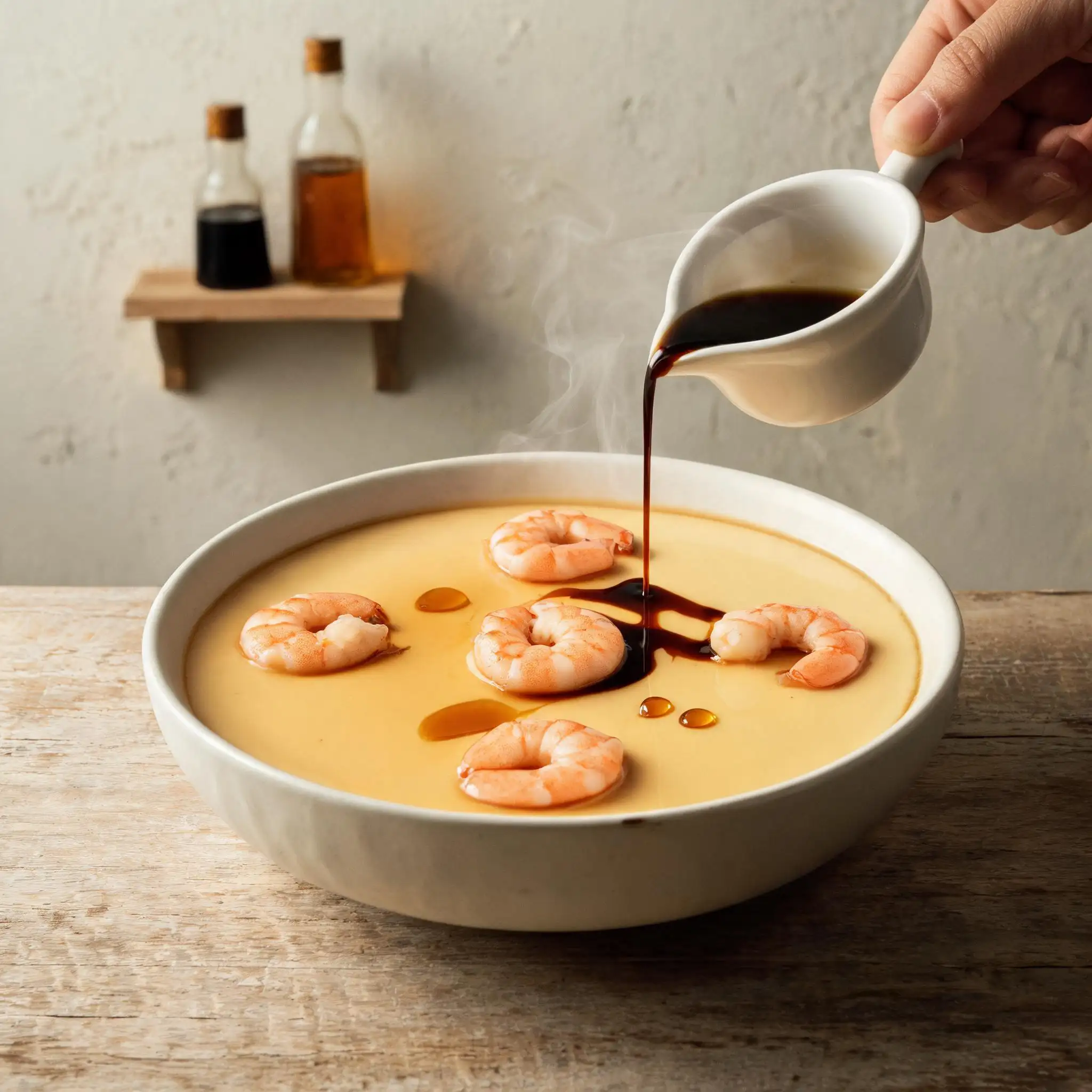
Out of the steamer, the bowl goes straight to the table. Light soy sauce drizzled across the surface in a thin stream, running between the shrimp and pooling gently in the slight valleys. A few drops of sesame oil dropped from just above, spreading in small amber rings on the pale surface. The scallion rings scattered last, their raw green sitting on top without cooking, without softening.
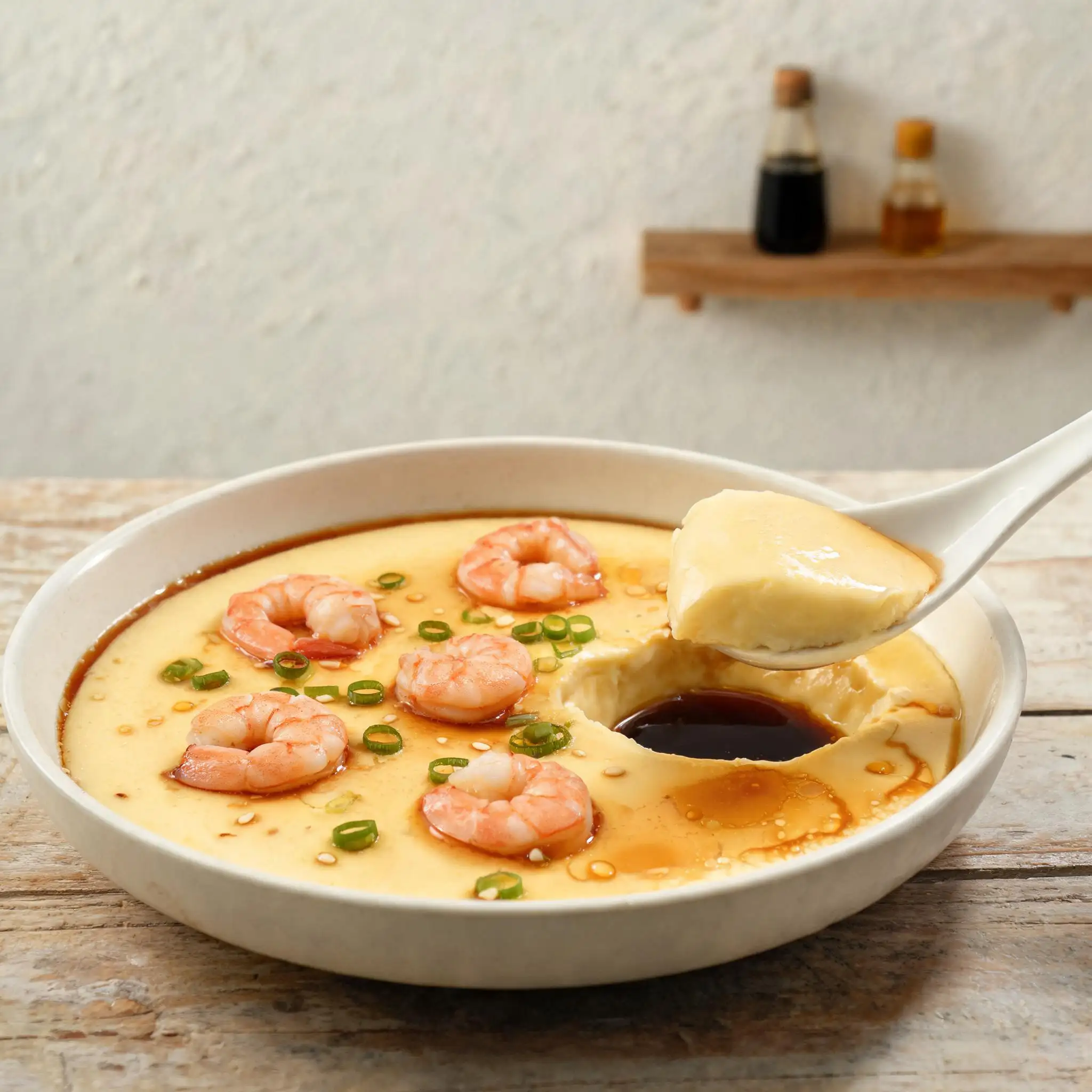
The spoon breaks the surface slowly. The custard pulls apart in soft, barely-set pieces that hold their shape for a moment before yielding. It is not firm. It is not runny. It is somewhere in between — the texture of very gentle tofu, or of something that was made with more care than most things on the dinner table.
This kind of dish does not announce itself. It does not have strong flavors or complicated technique. What it has is patience, and an understanding that softness is sometimes the hardest thing to make.
---
**Ingredients**
fresh eggs — three, at room temperature
raw peeled shrimp — eight to ten medium-sized, deveined, patted dry
warm water — approximately one and a half times the volume of the beaten egg, not hot
light soy sauce — one tablespoon, for finishing
toasted sesame oil — a few drops, for finishing
scallion — one stalk, green part only, sliced into thin rings
coarse salt — a small pinch
---
**How it's made**
The eggs go into a bowl and are beaten until the yolks and whites are fully combined — no streaks of white remaining. Warm water is added, roughly one and a half times the volume of the egg, not cold and not boiling, just warm enough that when you dip your finger in it doesn't feel cool. Salt is stirred in. The whole mixture is then poured through a fine-mesh strainer into the steaming bowl. This step is quiet and unhurried, and it matters more than it looks. What passes through the strainer is smooth and even; what stays behind are the bubbles, the chalaza, the tiny knots of protein that would show up in the finished custard as hard flecks or uneven patches. The strained liquid sits in the bowl perfectly flat and still.
The shrimp are placed one at a time across the surface of the raw egg mixture — evenly spaced, not clustered, each one pressed very lightly so it sits half-submerged rather than floating on top. They will hold their position through the steaming.
The steamer is already running before the bowl goes in. The lid is propped open a small crack — just enough to let steam escape without building the pressure that would make the surface bubble and pit. Medium-low heat from here. Eight to ten minutes, depending on how deep the custard sits in the bowl. The custard is done when the center barely jiggles and the edges are set. The surface should be smooth — not a single pockmark. A pockmarked surface means the heat was too high or the time too long, and the texture underneath will tell the same story.
Out of the steamer, the bowl goes straight to the table. Light soy sauce drizzled across the surface in a thin stream, running between the shrimp and pooling gently in the slight valleys. A few drops of sesame oil dropped from just above, spreading in small amber rings on the pale surface. The scallion rings scattered last, their raw green sitting on top without cooking, without softening.
The spoon breaks the surface slowly. The custard pulls apart in soft, barely-set pieces that hold their shape for a moment before yielding. It is not firm. It is not runny. It is somewhere in between — the texture of very gentle tofu, or of something that was made with more care than most things on the dinner table.
This kind of dish does not announce itself. It does not have strong flavors or complicated technique. What it has is patience, and an understanding that softness is sometimes the hardest thing to make.
417