·6/5/2026
from
Buddha Jumps Over the Wall
**Buddha Jumps Over the Wall** *(佛跳墙)*
---
**Ingredients**
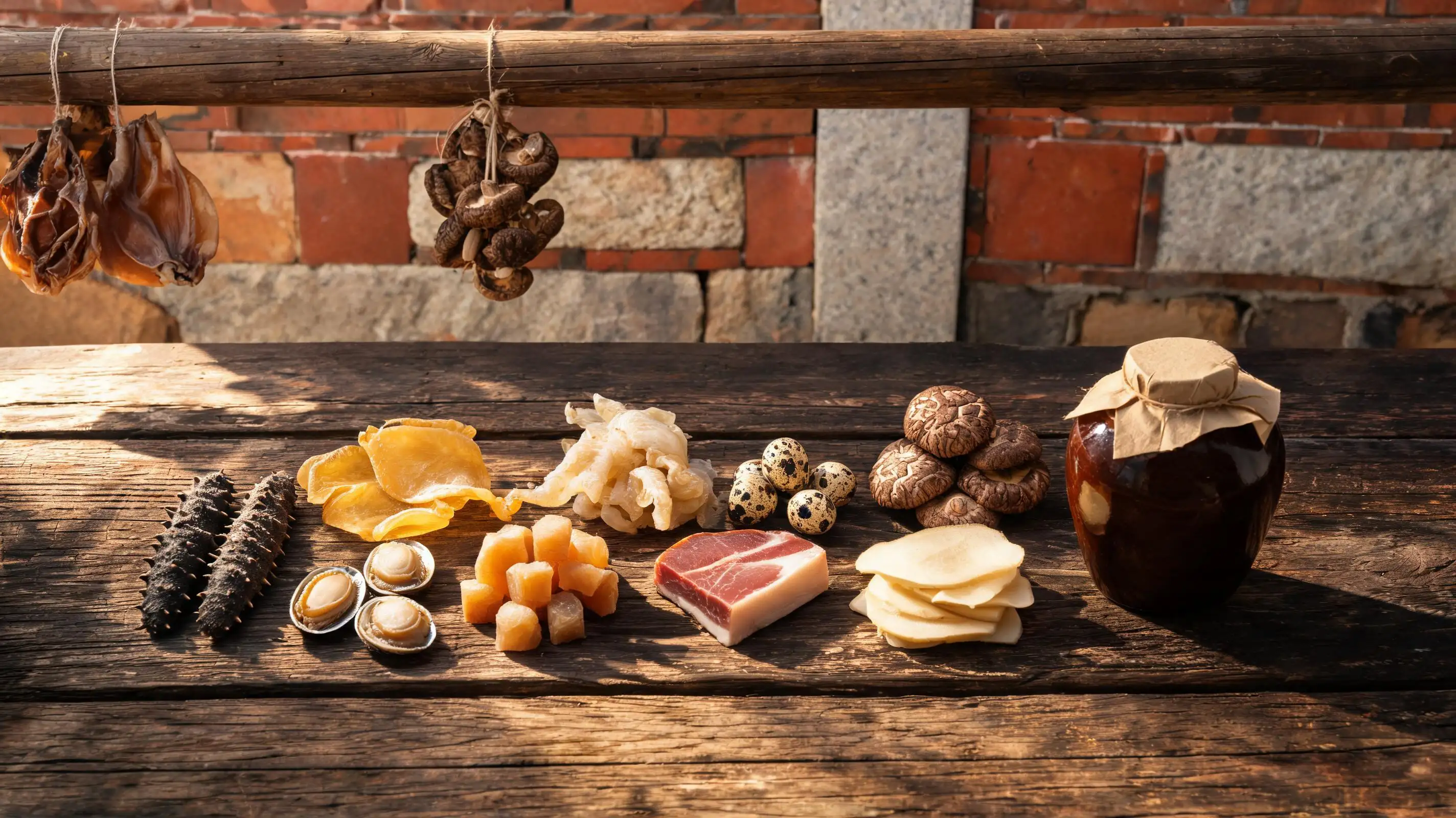
dried sea cucumber — two whole, rehydrated until plump and yielding
abalone — two small whole, cleaned
dried fish maw (花胶) — one large piece, rehydrated until soft and golden
dried scallops — a small handful, large and golden-amber
pork tendons — two or three pieces, blanched and cleaned
quail eggs — five or six, hard-boiled and peeled
Jinhua ham — one piece, for depth and salt
dried shiitake mushrooms — four or five, rehydrated, stems removed
bamboo shoots — several thick slices, blanched
aged Shaoxing rice wine — one full bottle
good chicken or pork bone stock — enough to fill the jar to the shoulder
dried tangerine peel (陈皮) — two or three pieces
ginger — three slices
scallion — two sections
a large dried lotus leaf — for sealing
natural hemp rope — for binding
---
**How it's made**
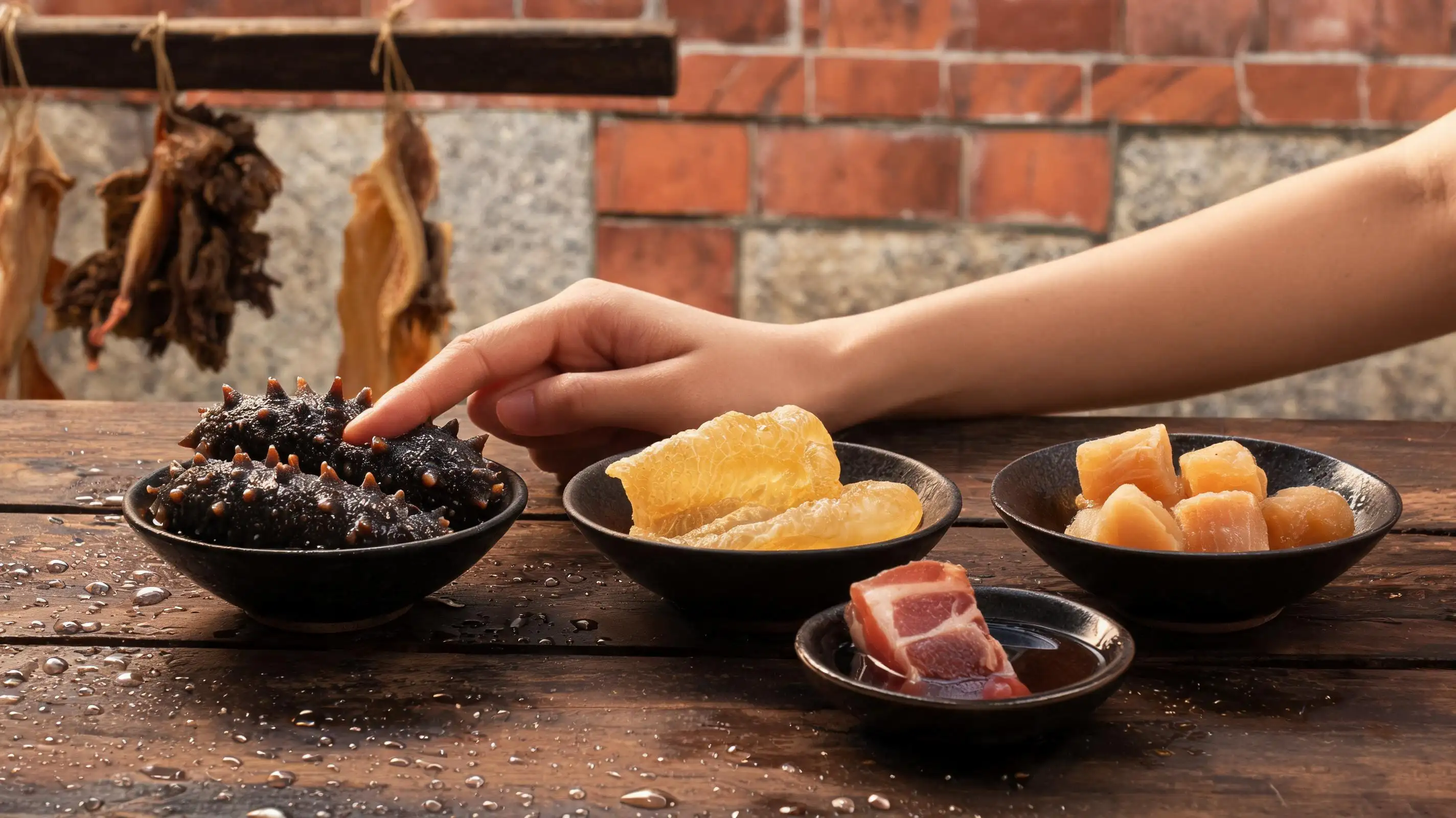
Every ingredient arrives at the pot through a different door. The sea cucumbers have soaked in cold water for two days, the water changed twice daily until they have swelled to three times their dried volume. The fish maw has gone through its own separate process: soaked, then gently simmered briefly, then soaked again until the thick golden sheets are soft and giving but still hold their shape. The dried scallops have sat overnight in warm water, the soaking liquid reserved and added to the braise later. The pork tendons have been blanched and rinsed. The ham briefly soaked to moderate its salt. Each ingredient, pre-treated and ready, is set out in its own small bowl before the layering begins.
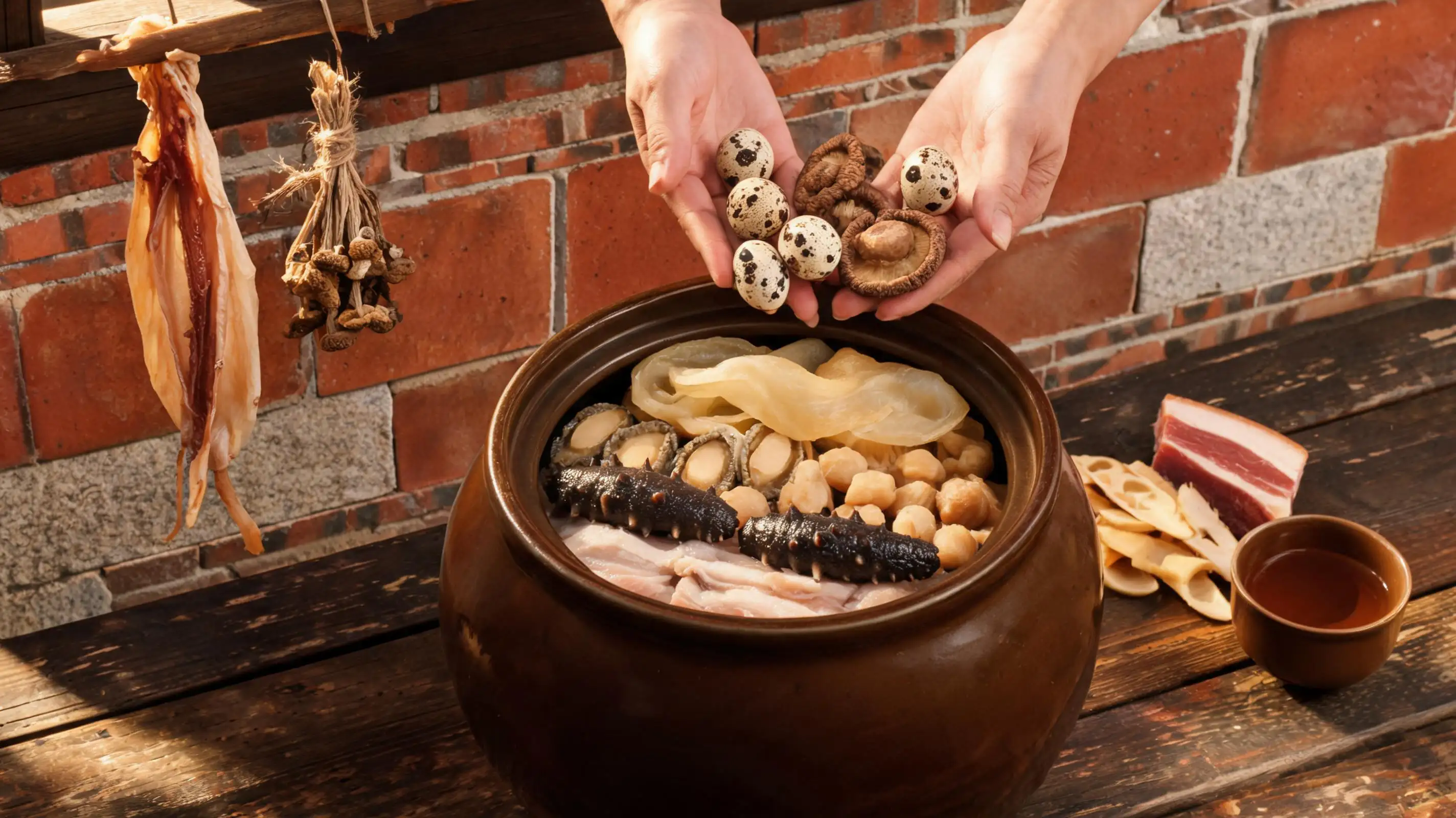
The vessel is a round-bellied earthenware wine jar — not a pot, not a casserole, but a jar that once held Shaoxing rice wine, now repurposed to hold something more complex. Its wide belly and narrow neck make it well-suited to slow sealed cooking: heat distributes evenly through the thick clay walls, and the tight neck holds in flavor and moisture. The bottom of the jar is lined with sliced ginger and scallion sections. Then the layering begins: pork tendons and ham at the base, sea cucumber and abalone in the next layer, fish maw folded on top, dried scallops scattered around the gaps, shiitake and bamboo shoots filling in, quail eggs nestled in last.
The stock goes in — enough to bring the liquid up to the shoulders of the jar, no higher. Then the Shaoxing wine, poured in slowly. The dried tangerine peel slips in last, pressed against the side.
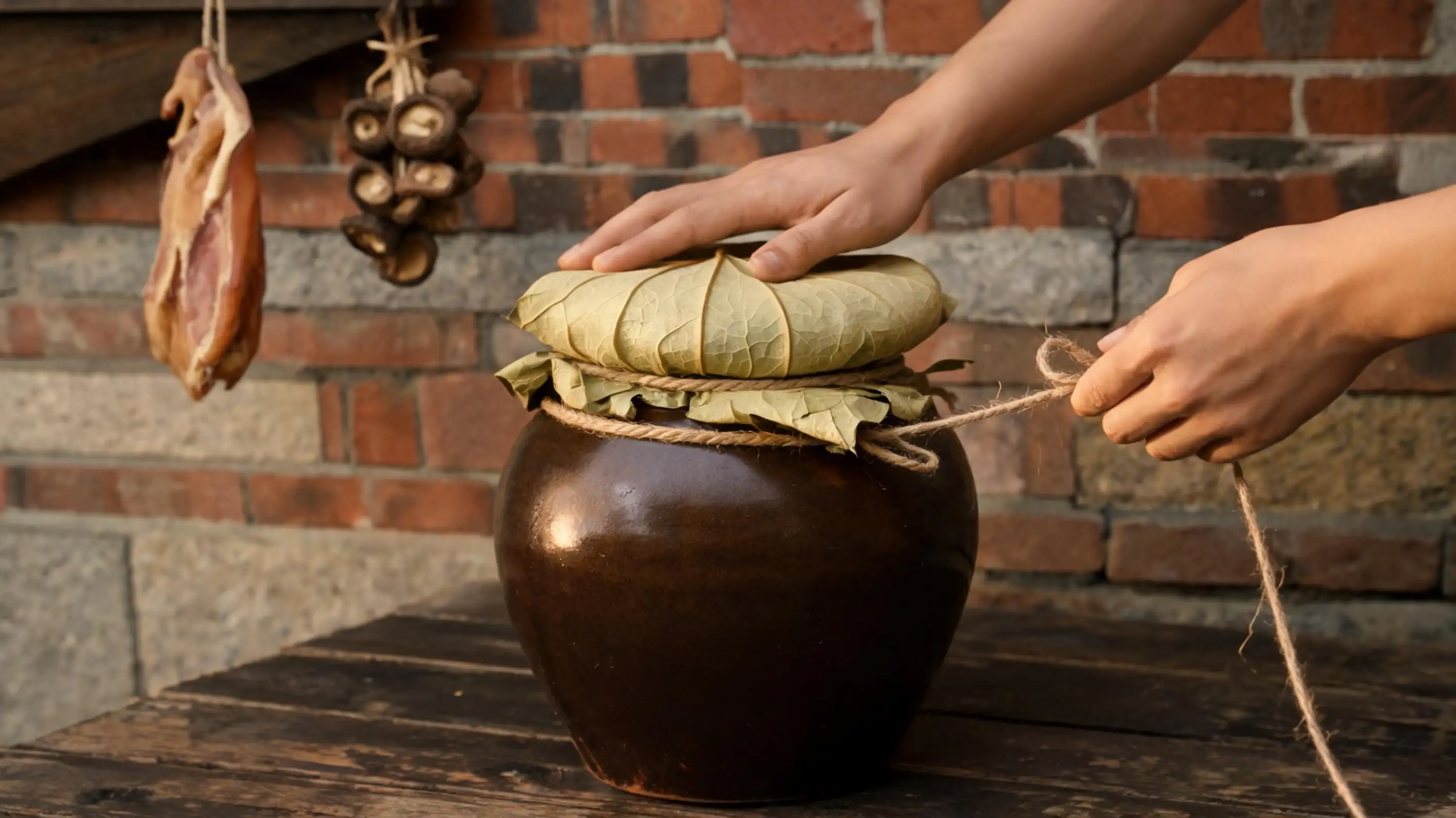
A large dried lotus leaf is spread across the jar mouth, overhanging evenly on all sides, pressed down firmly over the rim. Hemp rope is wound several times around the neck of the jar and pulled tight, binding the lotus leaf in place. The seal is complete.
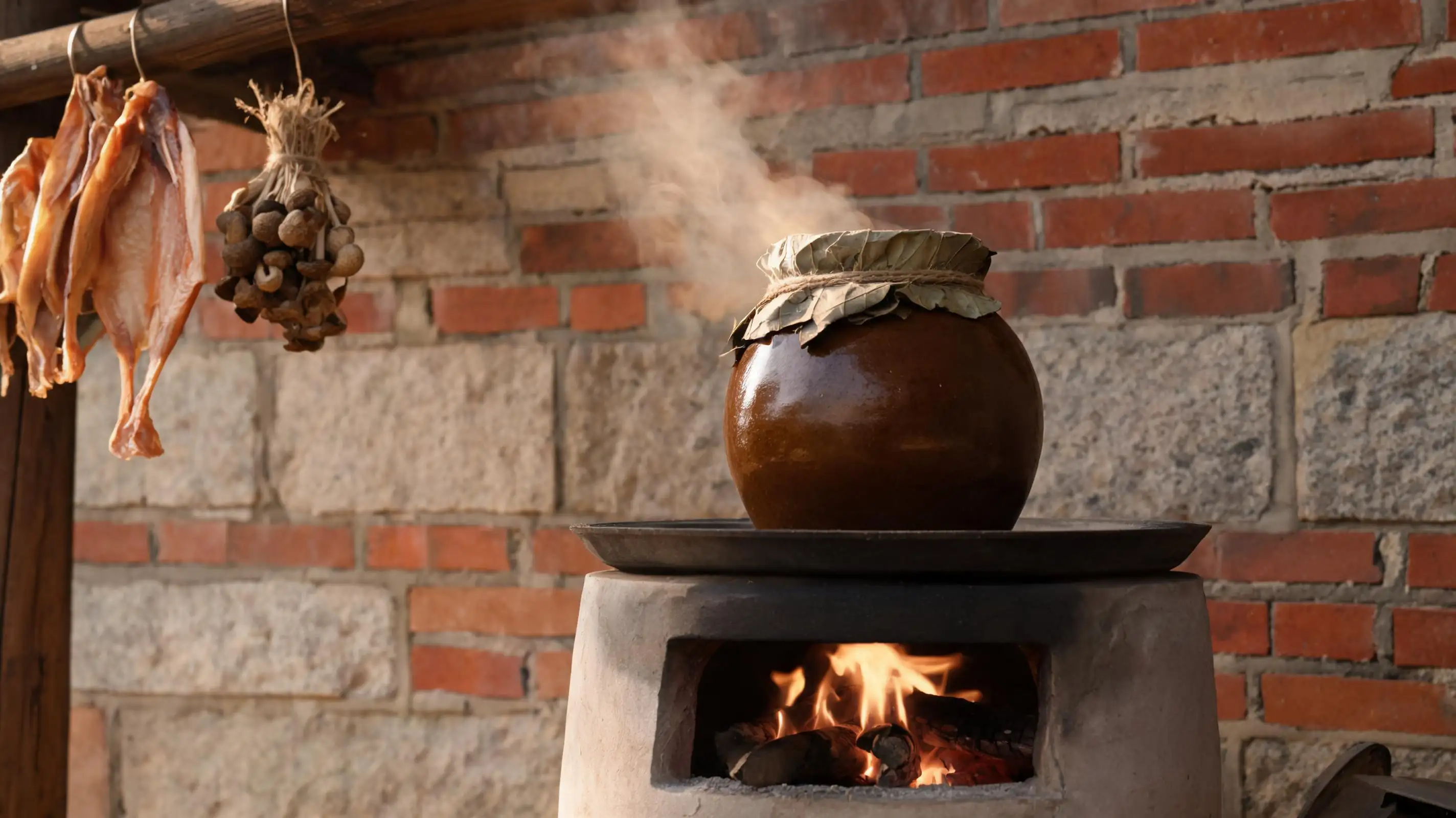
The jar goes onto a low wood-burning clay stove, over a controlled flame — never high, never rushing. The braise runs for at least three hours. Some cooks leave it for four. The thick clay walls absorb and hold the heat steadily; the interior never reaches a rolling boil, only simmers at a temperature just below. The lotus leaf darkens and tightens as it dries against the jar neck, pressing the seal harder as time passes.
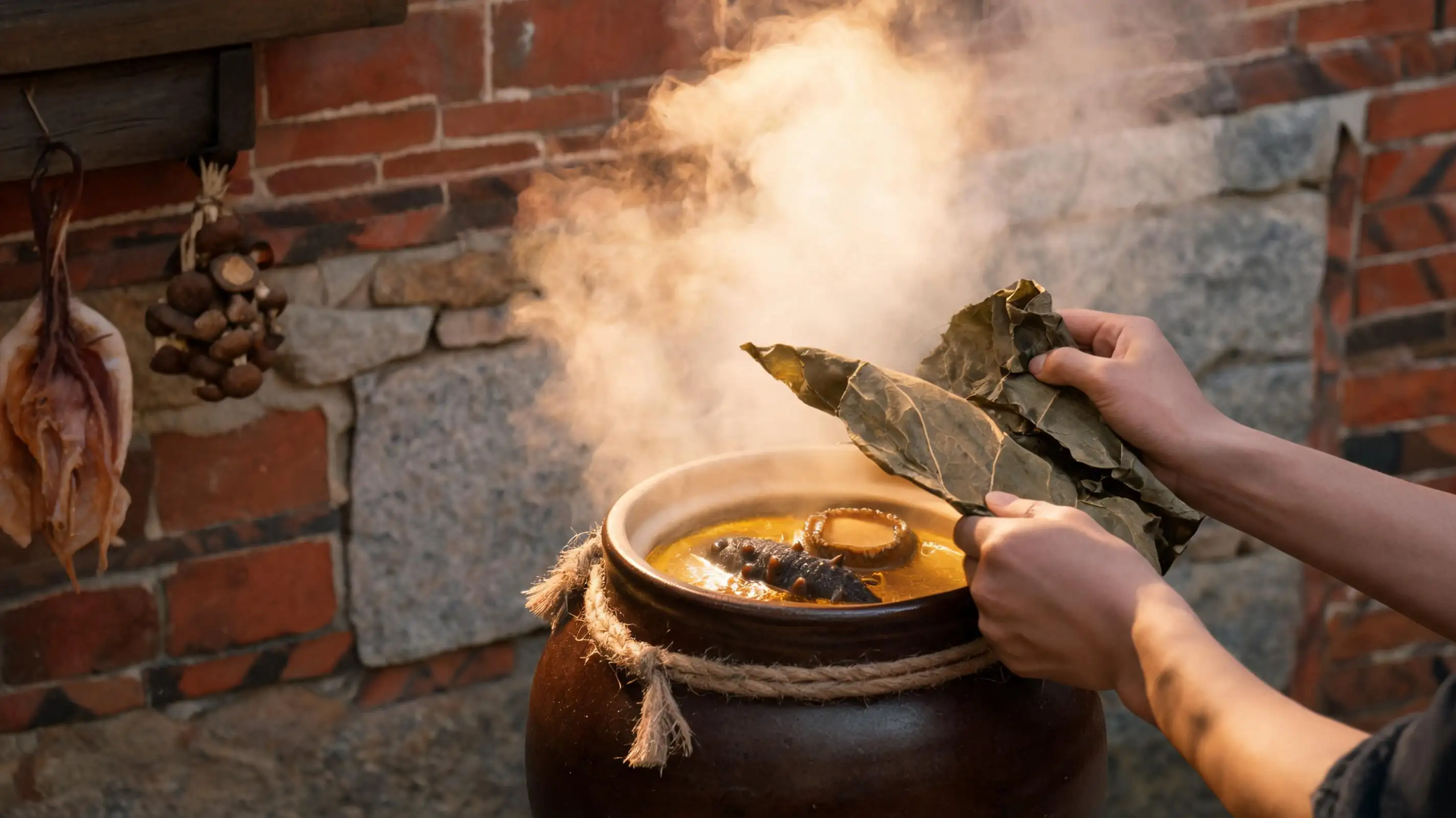
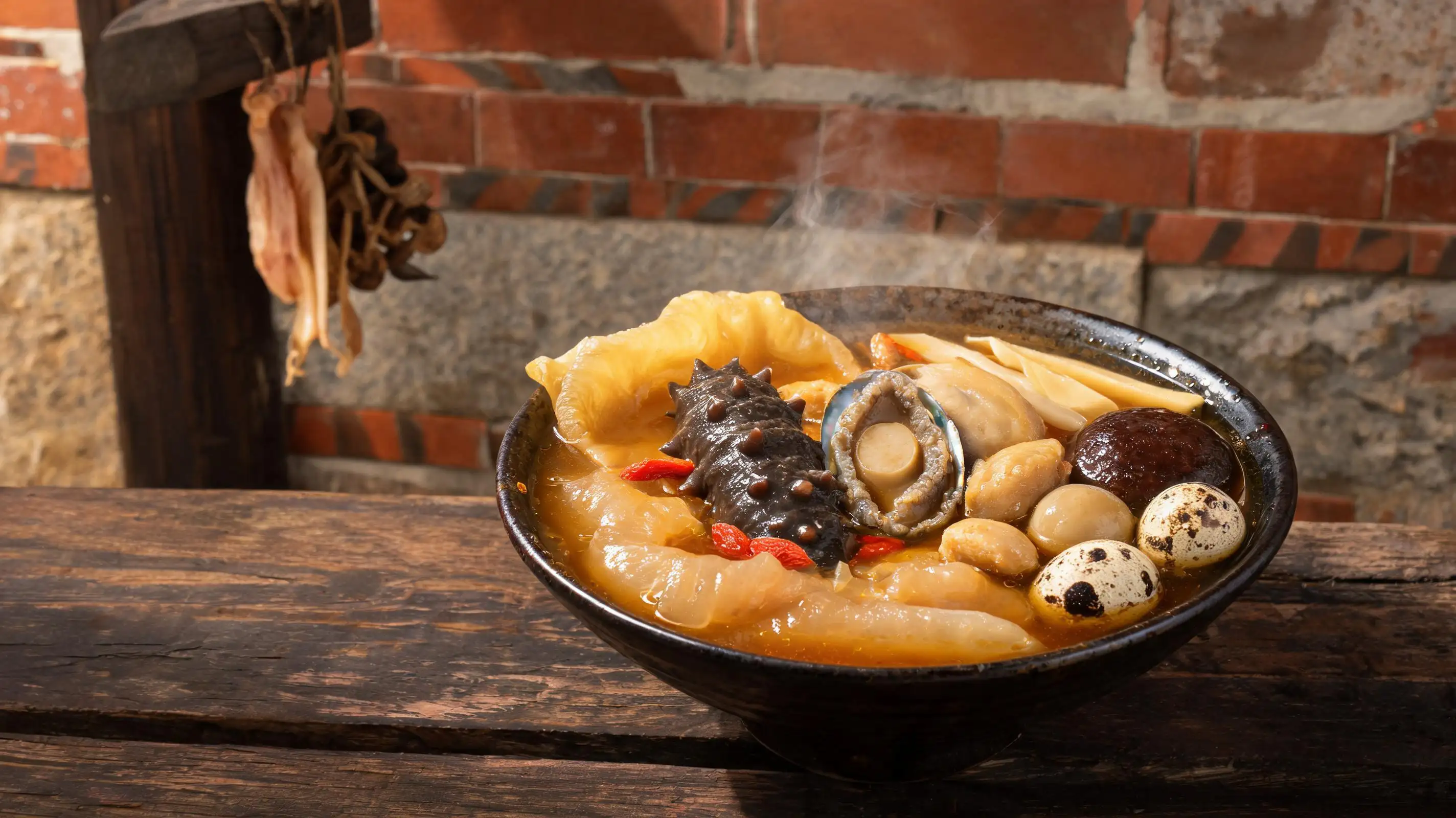
When it is done, the rope is cut and the lotus leaf peeled back. A rush of steam rises from the jar mouth, thick and fragrant — something between the sea and the earth, the scallops and the rice wine and the long hours of slow heat all arrived at the same place at the same time. The broth is deep amber-gold, trembling and glossy. Each ingredient has given something of itself to the liquid, and the liquid has in turn worked its way into everything it surrounds.
There is a poem attached to this dish, though its authorship is uncertain. It describes the jar being opened, the fragrance drifting beyond the temple wall, and a monk — drawn by the smell — abandoning his seat and climbing over to find the source. The key line reads: *when the jar is opened, fragrance drifts to the neighbors; even the Buddha, catching the scent, leaps the wall*. The dish has carried that name ever since. Whether the monk was real, or merely an idea someone had while eating, is a question the dish has never felt the need to answer.
---
**Ingredients**
dried sea cucumber — two whole, rehydrated until plump and yielding
abalone — two small whole, cleaned
dried fish maw (花胶) — one large piece, rehydrated until soft and golden
dried scallops — a small handful, large and golden-amber
pork tendons — two or three pieces, blanched and cleaned
quail eggs — five or six, hard-boiled and peeled
Jinhua ham — one piece, for depth and salt
dried shiitake mushrooms — four or five, rehydrated, stems removed
bamboo shoots — several thick slices, blanched
aged Shaoxing rice wine — one full bottle
good chicken or pork bone stock — enough to fill the jar to the shoulder
dried tangerine peel (陈皮) — two or three pieces
ginger — three slices
scallion — two sections
a large dried lotus leaf — for sealing
natural hemp rope — for binding
---
**How it's made**
Every ingredient arrives at the pot through a different door. The sea cucumbers have soaked in cold water for two days, the water changed twice daily until they have swelled to three times their dried volume. The fish maw has gone through its own separate process: soaked, then gently simmered briefly, then soaked again until the thick golden sheets are soft and giving but still hold their shape. The dried scallops have sat overnight in warm water, the soaking liquid reserved and added to the braise later. The pork tendons have been blanched and rinsed. The ham briefly soaked to moderate its salt. Each ingredient, pre-treated and ready, is set out in its own small bowl before the layering begins.
The vessel is a round-bellied earthenware wine jar — not a pot, not a casserole, but a jar that once held Shaoxing rice wine, now repurposed to hold something more complex. Its wide belly and narrow neck make it well-suited to slow sealed cooking: heat distributes evenly through the thick clay walls, and the tight neck holds in flavor and moisture. The bottom of the jar is lined with sliced ginger and scallion sections. Then the layering begins: pork tendons and ham at the base, sea cucumber and abalone in the next layer, fish maw folded on top, dried scallops scattered around the gaps, shiitake and bamboo shoots filling in, quail eggs nestled in last.
The stock goes in — enough to bring the liquid up to the shoulders of the jar, no higher. Then the Shaoxing wine, poured in slowly. The dried tangerine peel slips in last, pressed against the side.
A large dried lotus leaf is spread across the jar mouth, overhanging evenly on all sides, pressed down firmly over the rim. Hemp rope is wound several times around the neck of the jar and pulled tight, binding the lotus leaf in place. The seal is complete.
The jar goes onto a low wood-burning clay stove, over a controlled flame — never high, never rushing. The braise runs for at least three hours. Some cooks leave it for four. The thick clay walls absorb and hold the heat steadily; the interior never reaches a rolling boil, only simmers at a temperature just below. The lotus leaf darkens and tightens as it dries against the jar neck, pressing the seal harder as time passes.
When it is done, the rope is cut and the lotus leaf peeled back. A rush of steam rises from the jar mouth, thick and fragrant — something between the sea and the earth, the scallops and the rice wine and the long hours of slow heat all arrived at the same place at the same time. The broth is deep amber-gold, trembling and glossy. Each ingredient has given something of itself to the liquid, and the liquid has in turn worked its way into everything it surrounds.
There is a poem attached to this dish, though its authorship is uncertain. It describes the jar being opened, the fragrance drifting beyond the temple wall, and a monk — drawn by the smell — abandoning his seat and climbing over to find the source. The key line reads: *when the jar is opened, fragrance drifts to the neighbors; even the Buddha, catching the scent, leaps the wall*. The dish has carried that name ever since. Whether the monk was real, or merely an idea someone had while eating, is a question the dish has never felt the need to answer.