·6/4/2026
from
Dongpo Pork
**Dongpo Pork** *(东坡肉)*
---
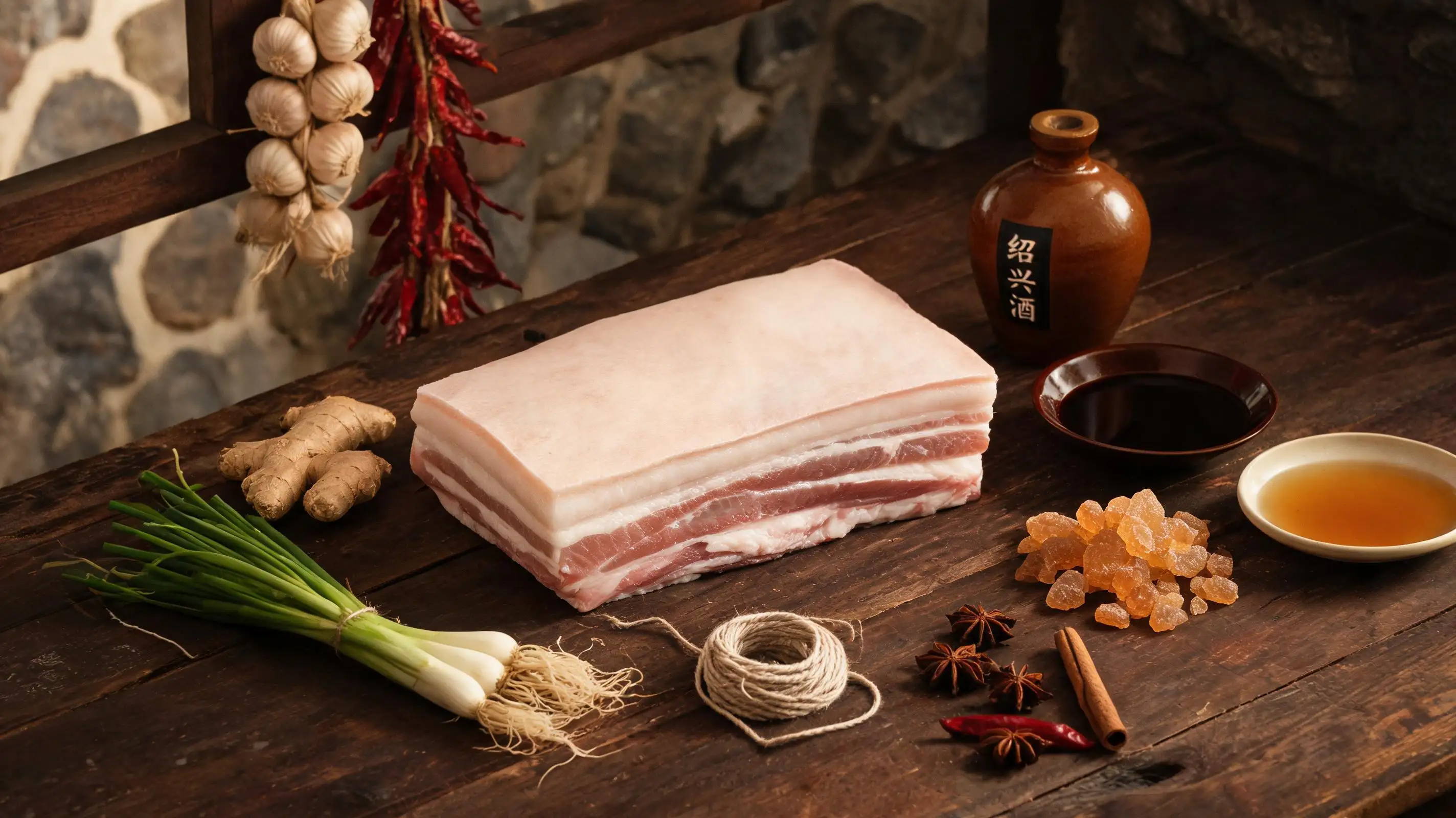
**Ingredients**
pork belly — one thick slab, skin-on
Shaoxing rice wine — nearly a full bottle, the dominant braising liquid
dark soy sauce — three tablespoons
light soy sauce — one tablespoon
rock sugar — a generous lump, roughly walnut-sized
scallions — three or four stalks, cut into sections
fresh ginger — five or six thick slices
star anise — two whole
cinnamon bark — one short piece
bay leaves — two
natural cotton kitchen twine — for tying each block
---
**How it's made**
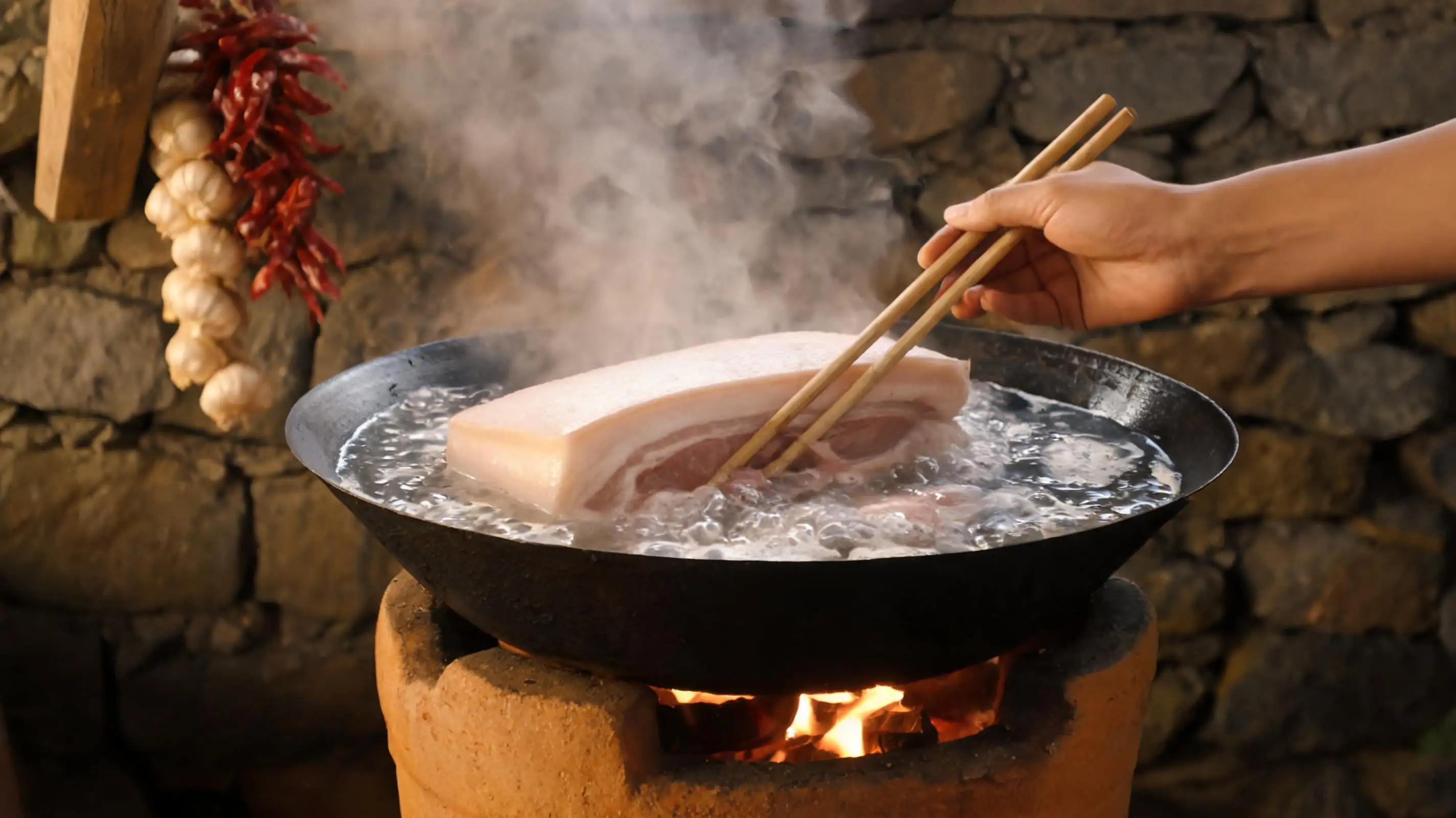
Start by putting the whole pork belly slab into a cold pot of water — not boiling, cold. Bring it up slowly, and spend the next ten minutes skimming the grey foam that rises to the surface. This step is about removing blood and impurities, and doing it properly matters more than people usually admit. Drain, rinse the pork under cold water, and let it cool enough to handle.
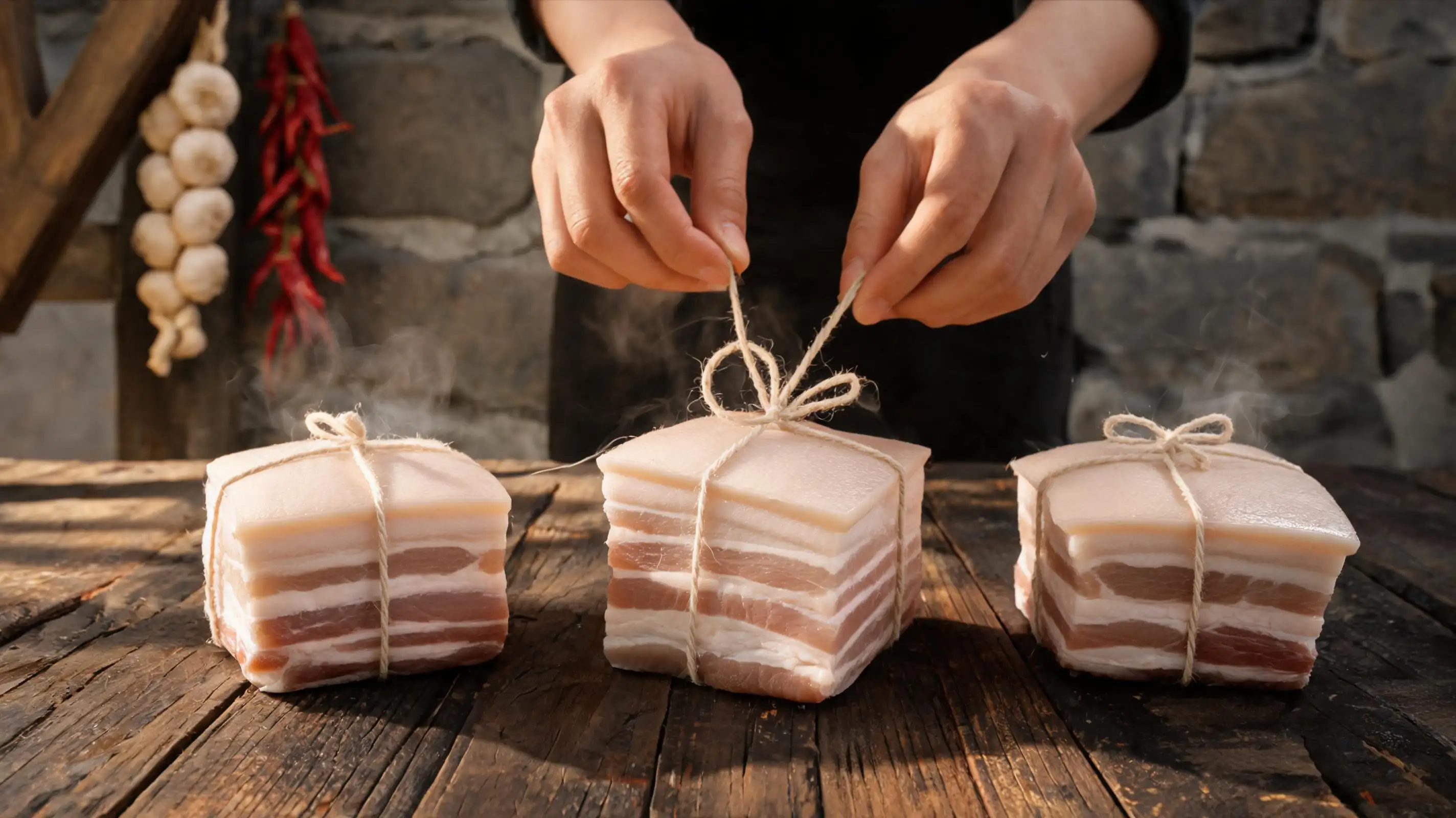
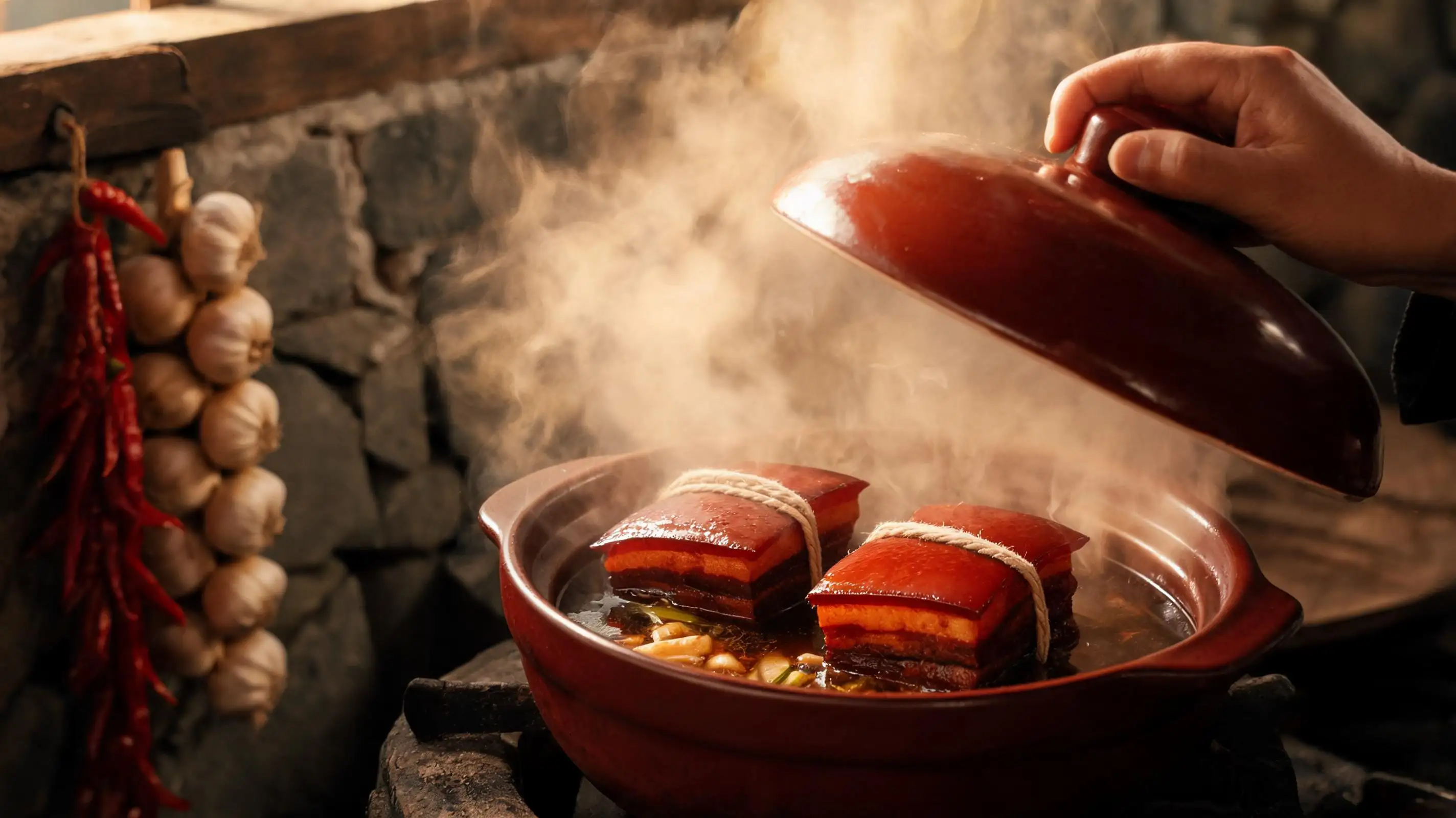
Cut the belly into generous square blocks, roughly five centimeters on each side. Then tie each block with a length of cotton kitchen twine — one pass lengthwise, one crosswise, knotted firmly on top. The twine is not decorative. It holds the layers of skin, fat, and meat together as they slowly soften into each other during the long braise. Without it, the blocks tend to come apart by the time they're done.
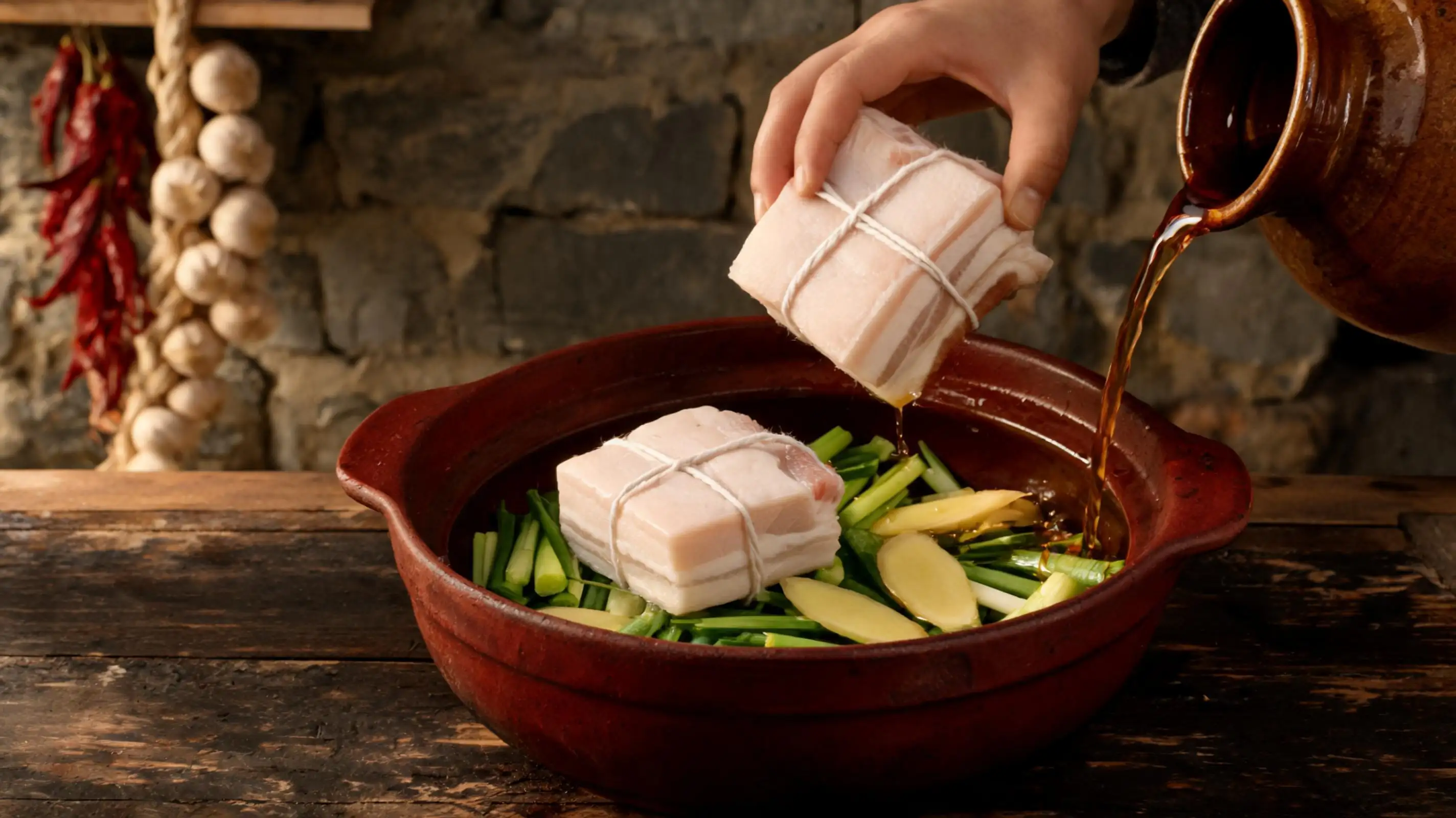
Line the bottom of a small clay casserole with the scallion sections and ginger slices. This fragrant bed adds flavor from below and keeps the pork from sitting directly on the pot floor where it might catch and scorch. Place the tied pork blocks skin-side down into the pot, snug against each other.
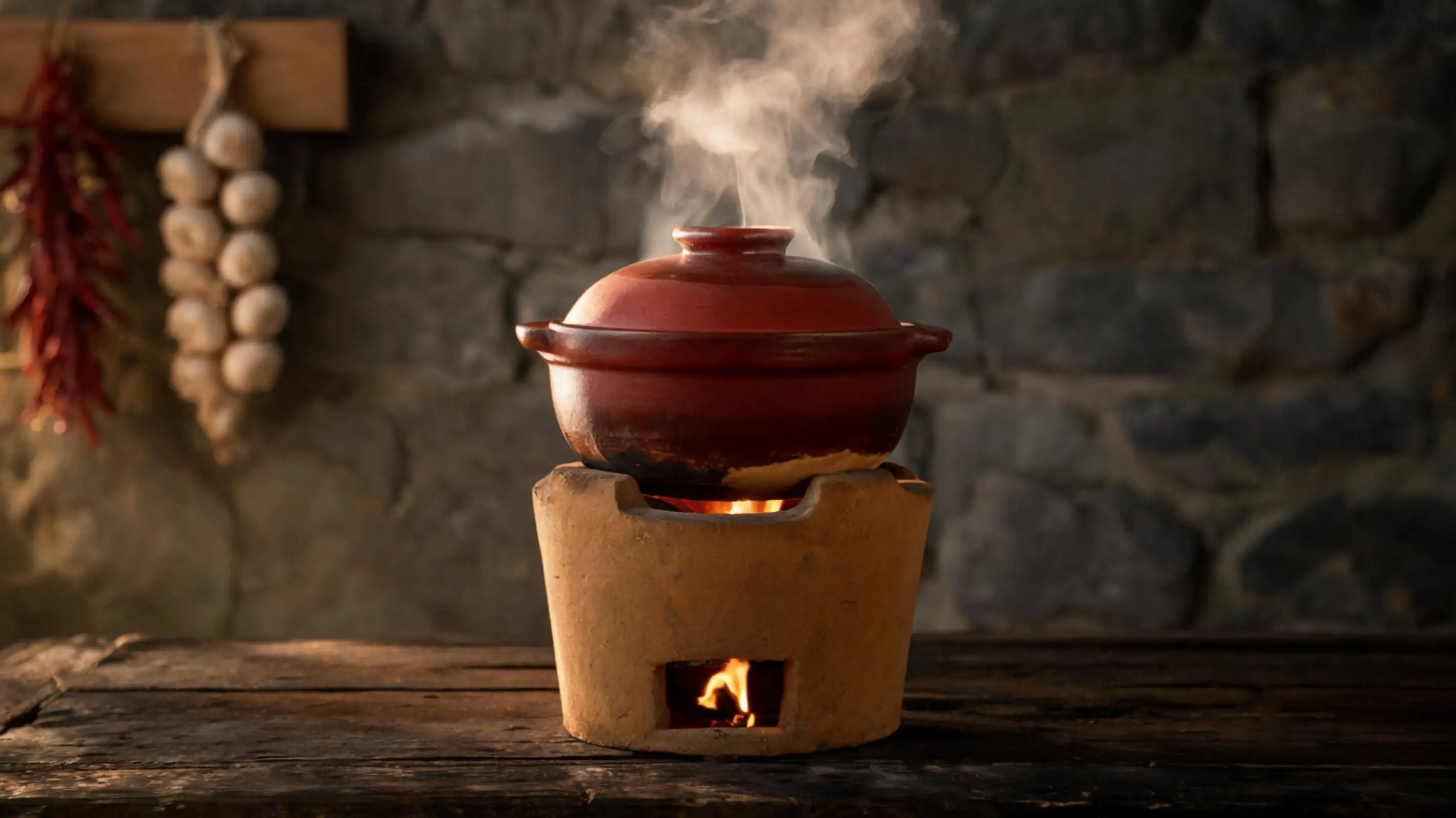
Pour in the Shaoxing wine. Not a splash — this is the primary braising liquid. A full bottle for a single batch is not unusual, and that amount is not excessive. Add the dark soy sauce for color and depth, the light soy sauce for salt, and the rock sugar. Tuck in the star anise and cinnamon. Bring everything to a boil, then reduce to the lowest possible flame, fit the lid on firmly, and leave it.
The braise takes at least ninety minutes. Two hours is better. The heat should be so low that the liquid barely moves — a faint murmur at the edges, never a rolling boil. At this temperature, the collagen in the skin dissolves slowly into gelatin, the fat softens until it trembles, and the meat becomes something closer to silk than flesh. Rushing it with higher heat produces a different result entirely: the meat tightens, the skin turns rubbery, and the layers pull apart. There is no shortcut that produces the same result.
After the braise, carefully flip each block so the skin faces up, raise the heat slightly, and reduce the remaining liquid until it thickens into a dark, slow-moving sauce. Spoon it over the pork as it reduces. When it clings to the surface and falls in heavy drops rather than running freely, it's ready.
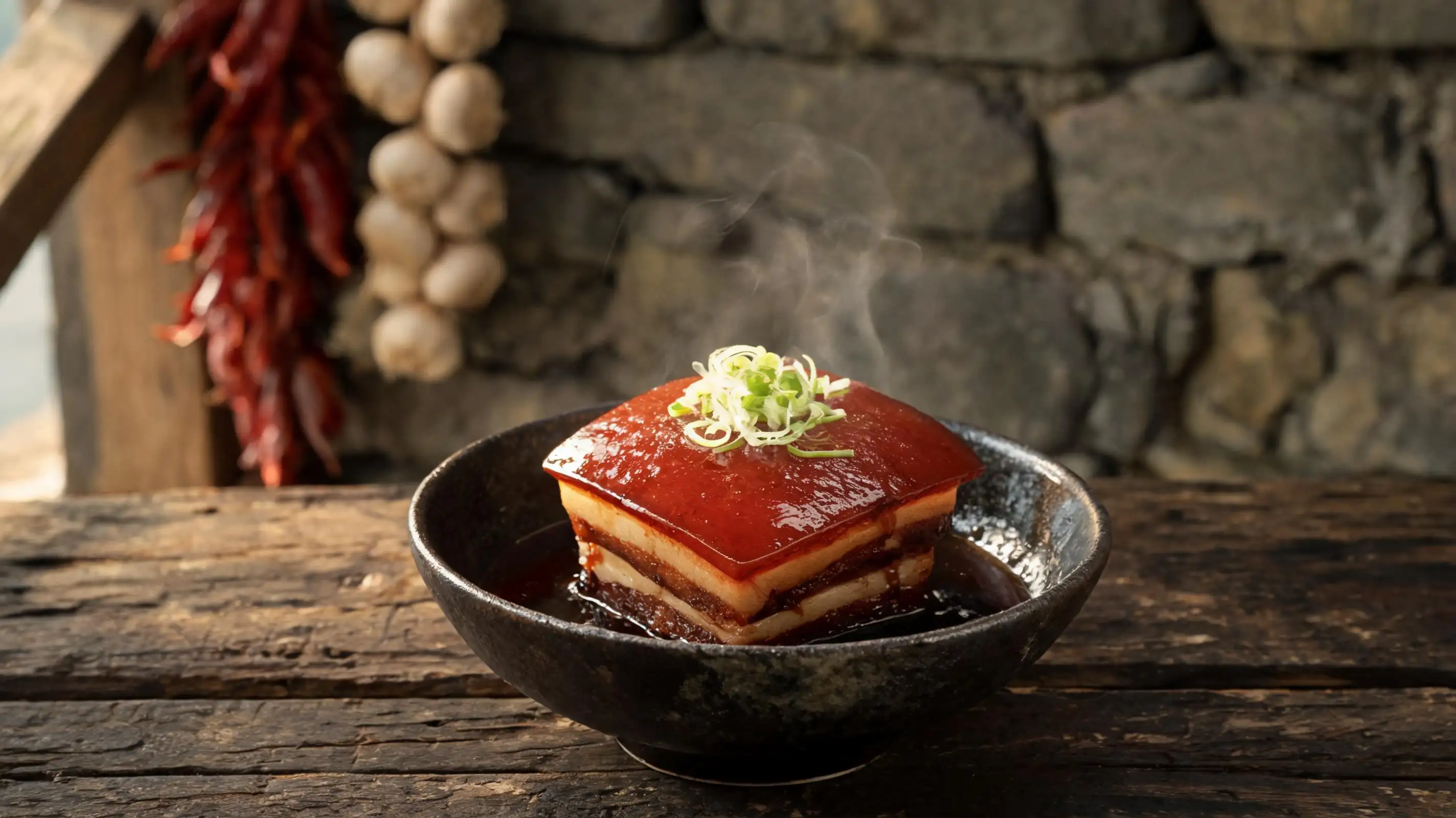
Lift each block into its own small bowl, skin up, twine removed, the sauce spooned around and over it.
The dish takes its name from Su Shi, the Song dynasty poet and official known as Su Dongpo, whose life moved through repeated cycles of appointment and exile. During one posting to a provincial outpost with little official work and more time than purpose, he is said to have taken a particular interest in cheap cuts of pork — the kind the local gentry left alone because it required patience rather than money. He wrote a short verse about how he cooked it. The most quoted line is a simple three-part instruction: low fire, little water, sufficient time. It was not serious poetry. But it was serious cooking, and the name has stayed attached to the dish for nine hundred years.
---
**Ingredients**
pork belly — one thick slab, skin-on
Shaoxing rice wine — nearly a full bottle, the dominant braising liquid
dark soy sauce — three tablespoons
light soy sauce — one tablespoon
rock sugar — a generous lump, roughly walnut-sized
scallions — three or four stalks, cut into sections
fresh ginger — five or six thick slices
star anise — two whole
cinnamon bark — one short piece
bay leaves — two
natural cotton kitchen twine — for tying each block
---
**How it's made**
Start by putting the whole pork belly slab into a cold pot of water — not boiling, cold. Bring it up slowly, and spend the next ten minutes skimming the grey foam that rises to the surface. This step is about removing blood and impurities, and doing it properly matters more than people usually admit. Drain, rinse the pork under cold water, and let it cool enough to handle.
Cut the belly into generous square blocks, roughly five centimeters on each side. Then tie each block with a length of cotton kitchen twine — one pass lengthwise, one crosswise, knotted firmly on top. The twine is not decorative. It holds the layers of skin, fat, and meat together as they slowly soften into each other during the long braise. Without it, the blocks tend to come apart by the time they're done.
Line the bottom of a small clay casserole with the scallion sections and ginger slices. This fragrant bed adds flavor from below and keeps the pork from sitting directly on the pot floor where it might catch and scorch. Place the tied pork blocks skin-side down into the pot, snug against each other.
Pour in the Shaoxing wine. Not a splash — this is the primary braising liquid. A full bottle for a single batch is not unusual, and that amount is not excessive. Add the dark soy sauce for color and depth, the light soy sauce for salt, and the rock sugar. Tuck in the star anise and cinnamon. Bring everything to a boil, then reduce to the lowest possible flame, fit the lid on firmly, and leave it.
The braise takes at least ninety minutes. Two hours is better. The heat should be so low that the liquid barely moves — a faint murmur at the edges, never a rolling boil. At this temperature, the collagen in the skin dissolves slowly into gelatin, the fat softens until it trembles, and the meat becomes something closer to silk than flesh. Rushing it with higher heat produces a different result entirely: the meat tightens, the skin turns rubbery, and the layers pull apart. There is no shortcut that produces the same result.
After the braise, carefully flip each block so the skin faces up, raise the heat slightly, and reduce the remaining liquid until it thickens into a dark, slow-moving sauce. Spoon it over the pork as it reduces. When it clings to the surface and falls in heavy drops rather than running freely, it's ready.
Lift each block into its own small bowl, skin up, twine removed, the sauce spooned around and over it.
The dish takes its name from Su Shi, the Song dynasty poet and official known as Su Dongpo, whose life moved through repeated cycles of appointment and exile. During one posting to a provincial outpost with little official work and more time than purpose, he is said to have taken a particular interest in cheap cuts of pork — the kind the local gentry left alone because it required patience rather than money. He wrote a short verse about how he cooked it. The most quoted line is a simple three-part instruction: low fire, little water, sufficient time. It was not serious poetry. But it was serious cooking, and the name has stayed attached to the dish for nine hundred years.