·6/3/2026
from
Braised Spicy Duck Necks
**Braised Spicy Duck Necks** *(麻辣鸭脖)*
---
**Ingredients**
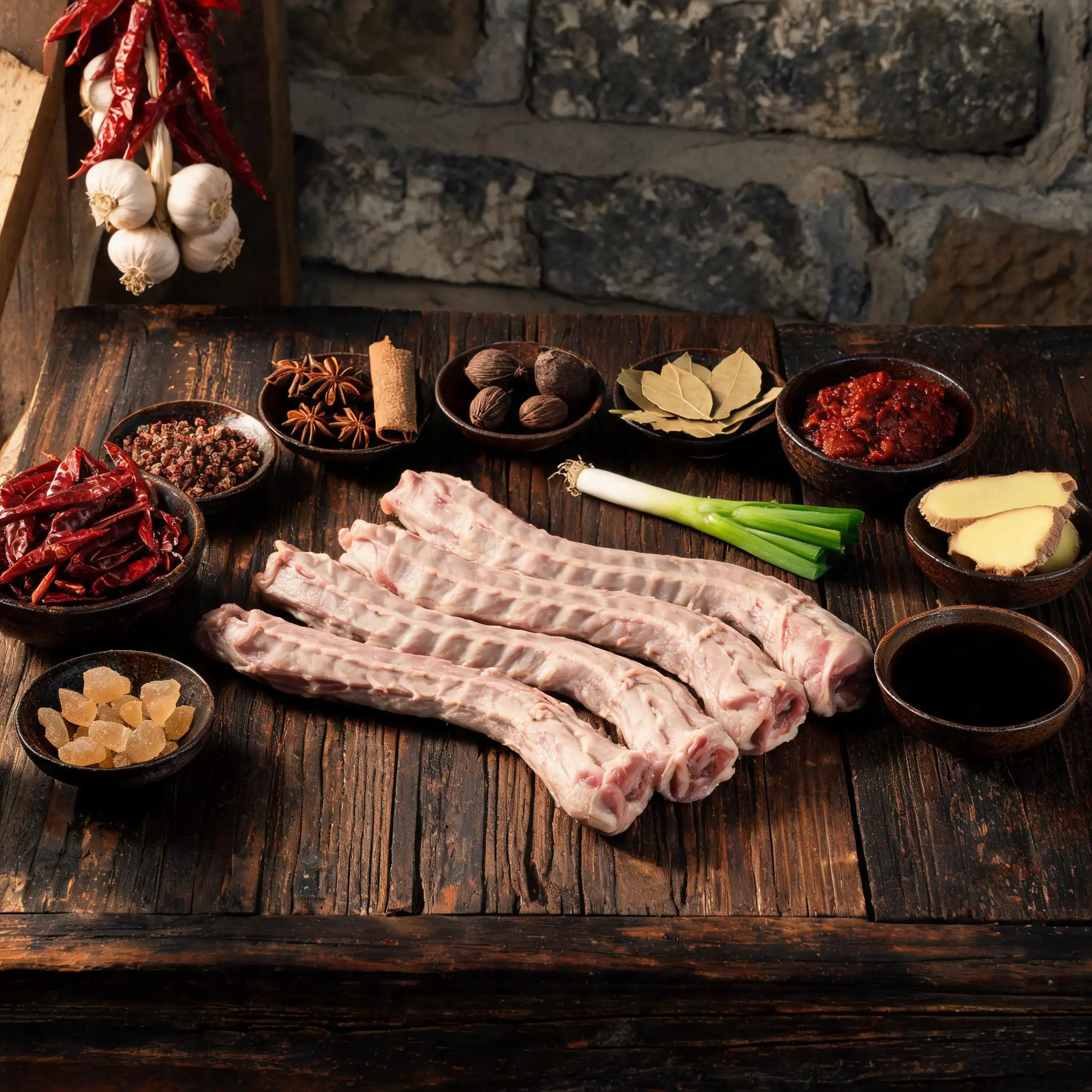
duck necks — four whole pieces, rinsed and patted dry
dried red chilies — a generous handful, stems removed
Sichuan peppercorns — one tablespoon
star anise — three whole
cinnamon bark — one short piece
black cardamom pods — two, lightly crushed
bay leaves — two
fermented chili bean paste — two tablespoons
fresh ginger — four thick slices
scallions — two stalks, loosely knotted
rock sugar — a small lump
dark soy sauce — two tablespoons
light soy sauce — one tablespoon
Shaoxing rice wine — two tablespoons
garlic — four cloves, crushed flat
---
**How it's made**
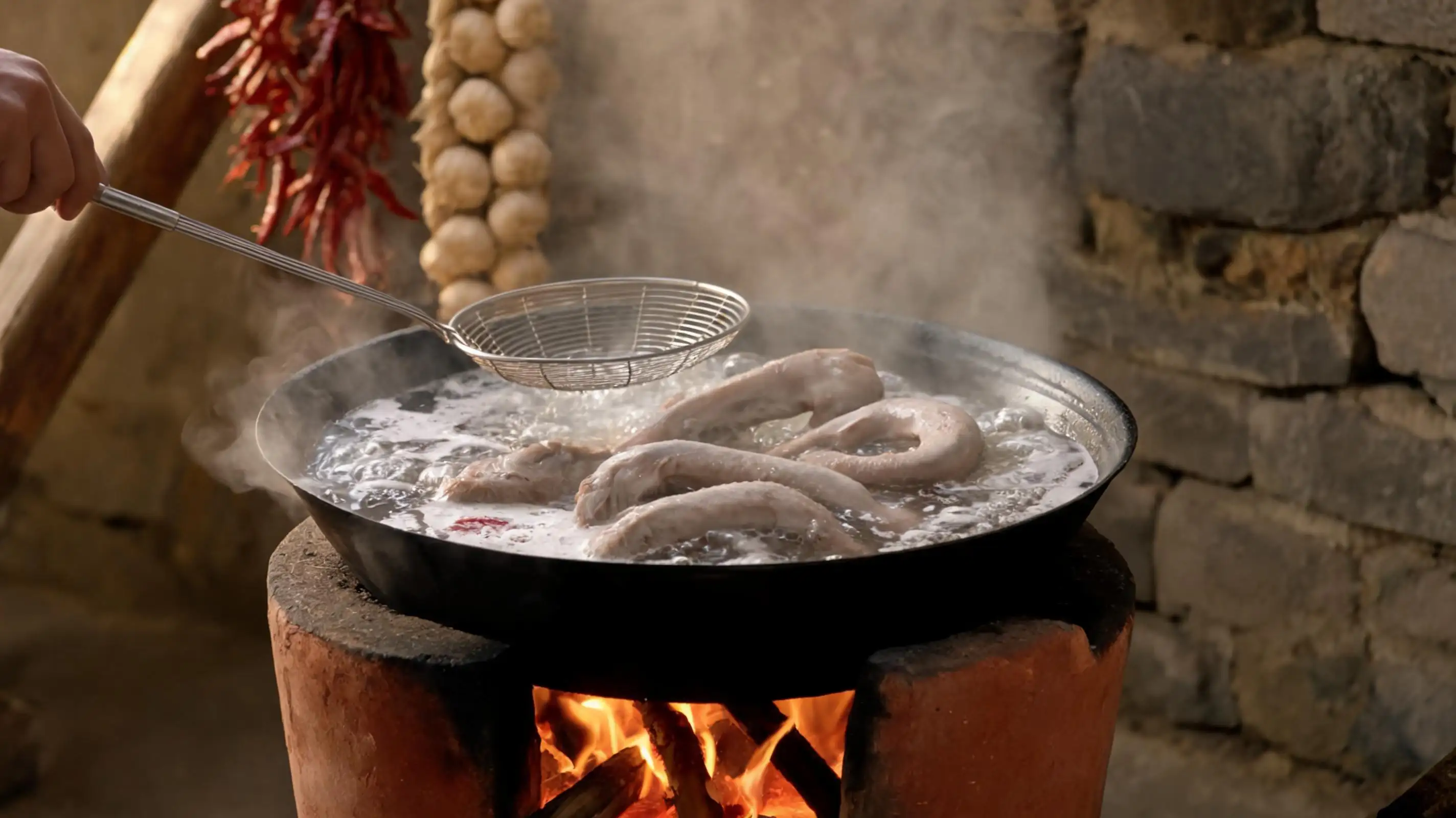
The duck necks go into cold water first. Not boiling — cold. Starting from cold pulls the blood out slowly rather than sealing it in, and the foam that rises over the next ten minutes tells you exactly how much is coming out. Add ginger and a splash of rice wine, bring it to a boil, and skim steadily until the surface runs clear. Lift the necks out and rinse them under cold running water. They'll look pale and a little unremarkable at this point. That's fine.
Get a deep pot going over medium heat with a small pour of oil. Add the fermented chili bean paste and press it flat against the bottom, letting it fry and spread. The oil turns red-orange as the paste opens up. The smell shifts from sharp and salty to something more rounded and smoky. Give it two or three minutes before adding the dried chilies, Sichuan peppercorns, star anise, cinnamon, cardamom, and bay leaves all at once — the pot becomes intensely fragrant in about thirty seconds.
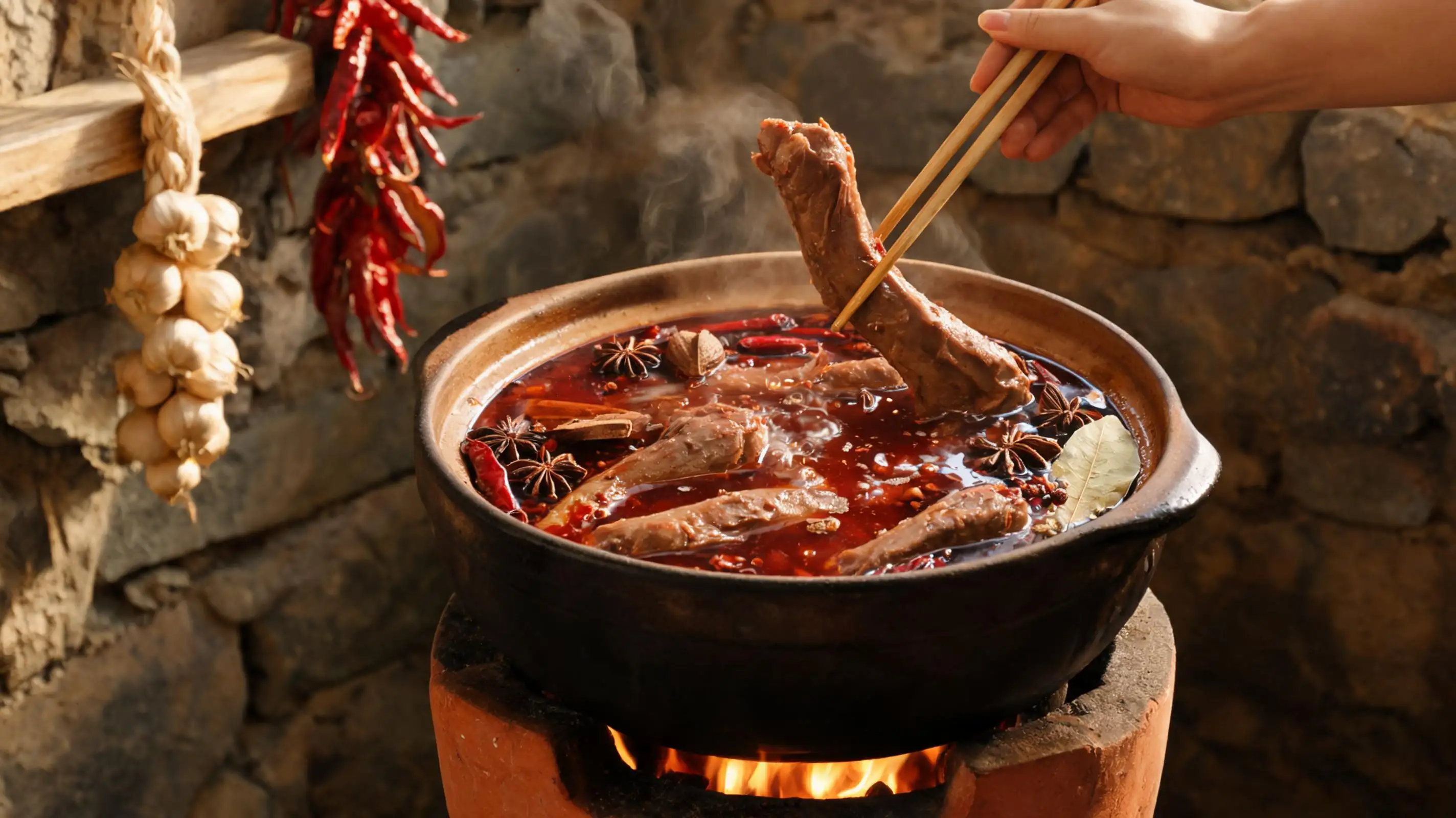
Pour in enough water to fully submerge the necks. Add the dark soy sauce, light soy sauce, rock sugar, knotted scallions, and crushed garlic. Bring it to a boil, taste the broth — deeply savory, mildly sweet, with heat that lingers in the back of the throat. Lower the necks in. Cover, reduce the heat to the lowest setting, and leave it alone.
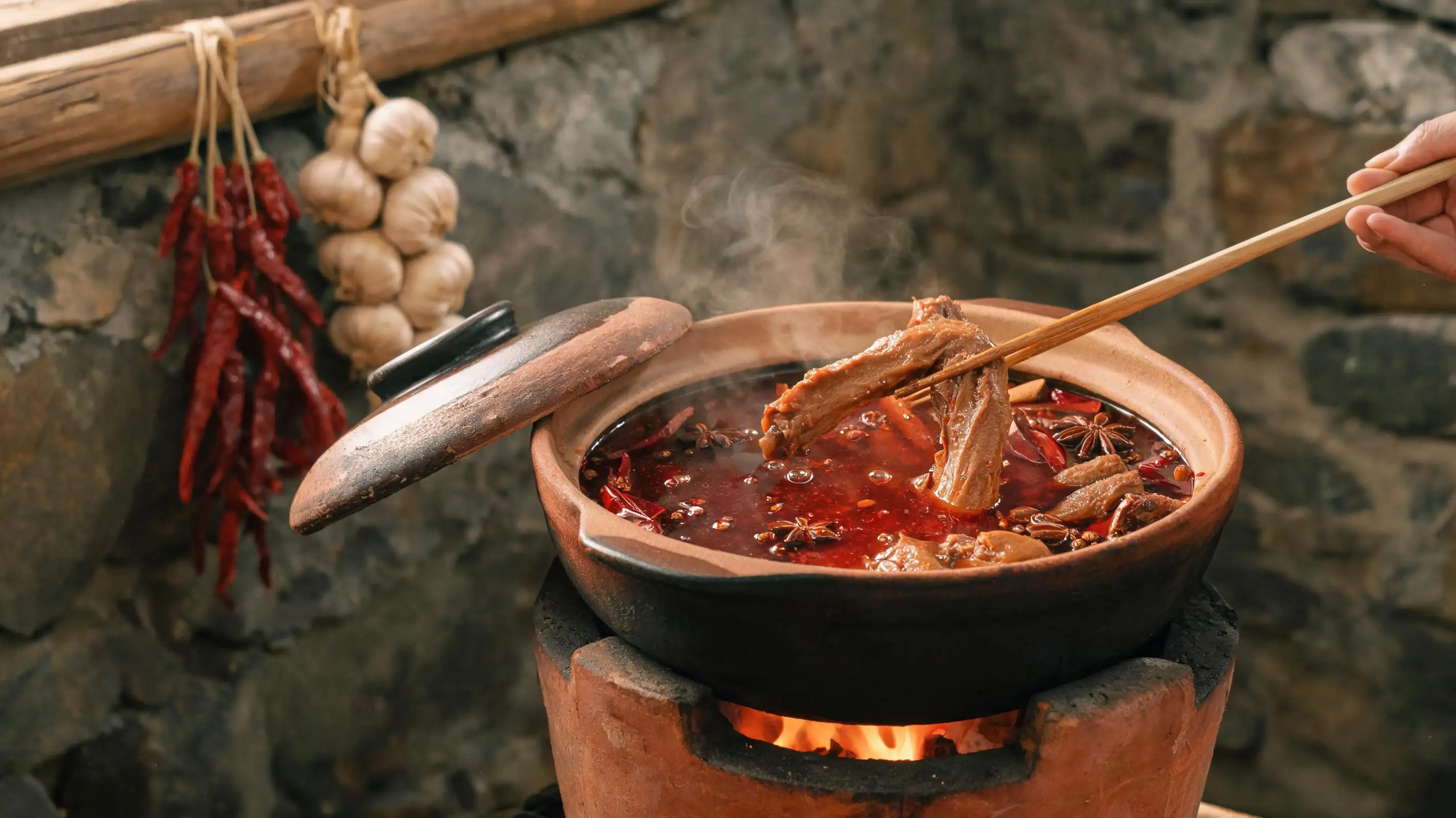
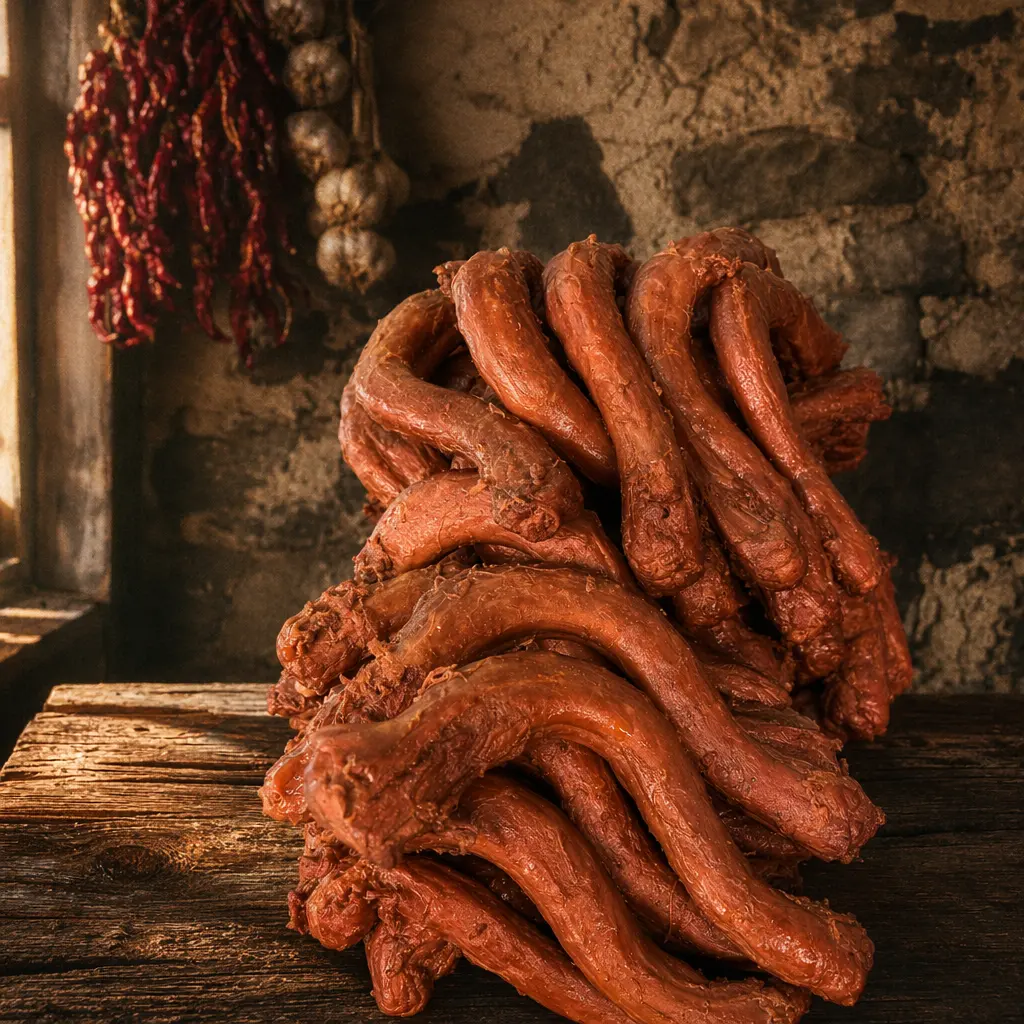
Forty minutes is the minimum. Sixty is better. The broth should barely be moving the whole time — a slow murmur, not a rolling boil. Around the thirty-minute mark the kitchen takes on a particular kind of heaviness, chili and spice mixing with steam. The necks are ready when a chopstick slides between the vertebrae with almost no resistance and the skin has gone from pale grey to a dark, lacquered reddish-brown.
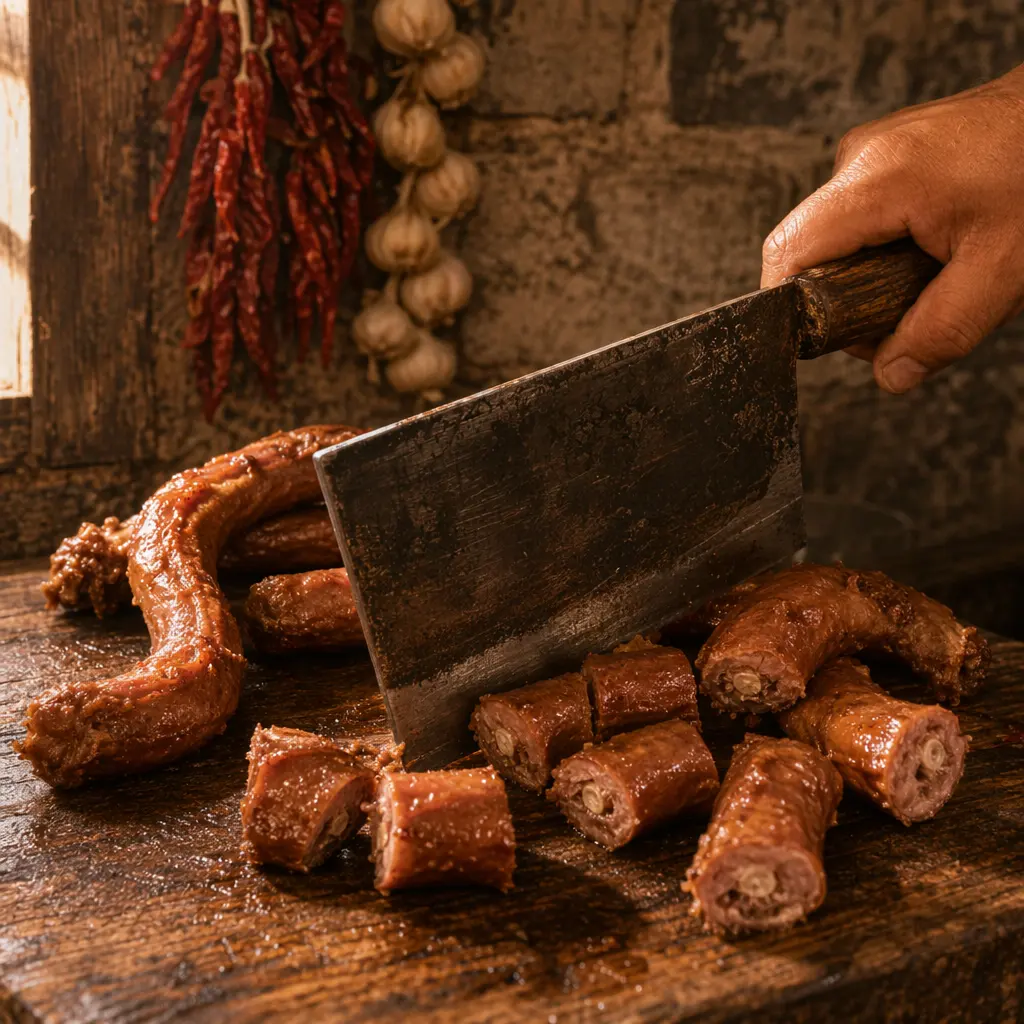
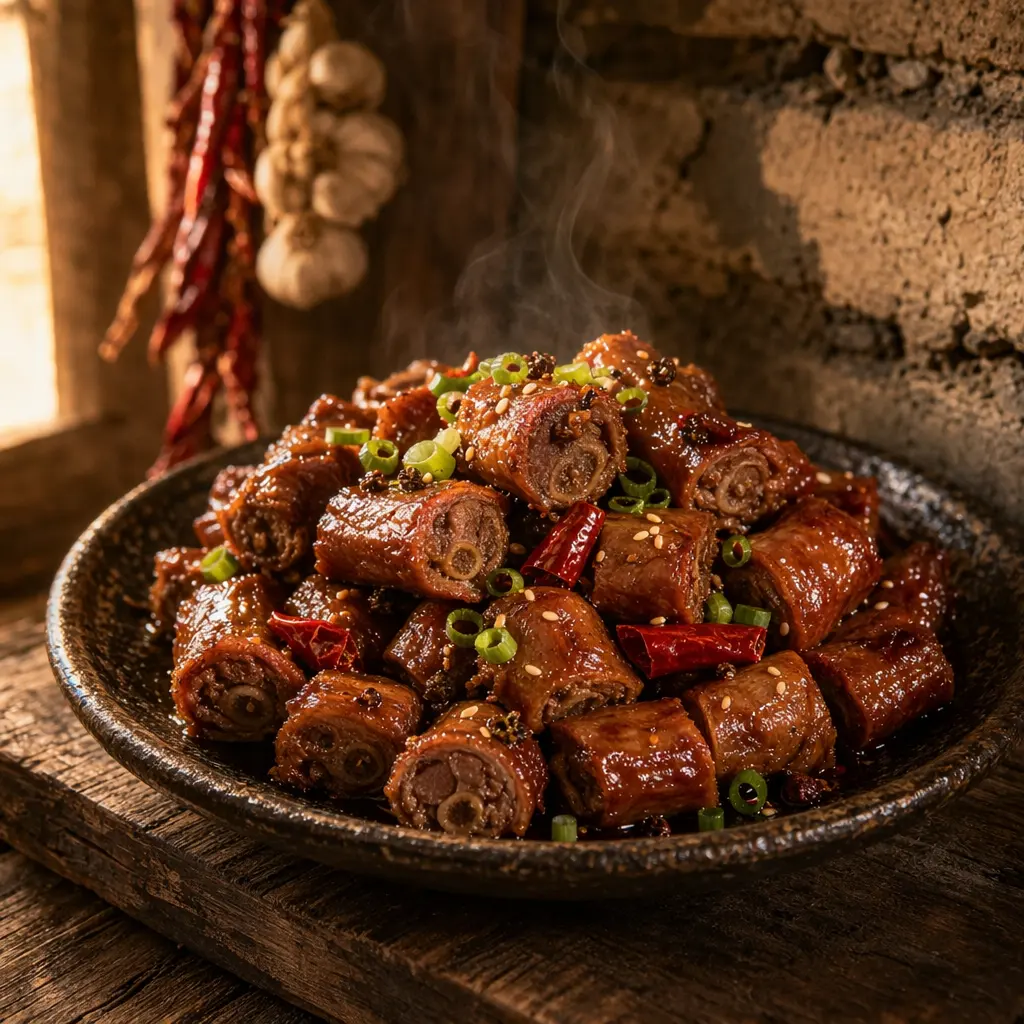
Lift them out, rest on a board for five minutes, then cut straight across into sections of three to four centimeters each. The cross-section shows the small ring of neck bone at the center, the meat and cartilage wrapped around it, the outer skin a deep mahogany glaze. Arrange cut-side up on a plate, scatter a few dried chili pieces and peppercorns over the top.
Duck necks have long been a fixture of night market stalls and roadside snack counters. The appeal is partly flavor and partly the act of eating itself — there is very little meat on a neck, and getting to it means working around the vertebrae and cartilage with some patience. That effort is considered part of the point. Vendors would start simmering large batches in the early afternoon, the broth darkening all day as new necks went in and old ones sold. By evening the pot would be near-black with reduced braising liquid, and whatever was left would have been cooking for hours.
---
**Ingredients**
duck necks — four whole pieces, rinsed and patted dry
dried red chilies — a generous handful, stems removed
Sichuan peppercorns — one tablespoon
star anise — three whole
cinnamon bark — one short piece
black cardamom pods — two, lightly crushed
bay leaves — two
fermented chili bean paste — two tablespoons
fresh ginger — four thick slices
scallions — two stalks, loosely knotted
rock sugar — a small lump
dark soy sauce — two tablespoons
light soy sauce — one tablespoon
Shaoxing rice wine — two tablespoons
garlic — four cloves, crushed flat
---
**How it's made**
The duck necks go into cold water first. Not boiling — cold. Starting from cold pulls the blood out slowly rather than sealing it in, and the foam that rises over the next ten minutes tells you exactly how much is coming out. Add ginger and a splash of rice wine, bring it to a boil, and skim steadily until the surface runs clear. Lift the necks out and rinse them under cold running water. They'll look pale and a little unremarkable at this point. That's fine.
Get a deep pot going over medium heat with a small pour of oil. Add the fermented chili bean paste and press it flat against the bottom, letting it fry and spread. The oil turns red-orange as the paste opens up. The smell shifts from sharp and salty to something more rounded and smoky. Give it two or three minutes before adding the dried chilies, Sichuan peppercorns, star anise, cinnamon, cardamom, and bay leaves all at once — the pot becomes intensely fragrant in about thirty seconds.
Pour in enough water to fully submerge the necks. Add the dark soy sauce, light soy sauce, rock sugar, knotted scallions, and crushed garlic. Bring it to a boil, taste the broth — deeply savory, mildly sweet, with heat that lingers in the back of the throat. Lower the necks in. Cover, reduce the heat to the lowest setting, and leave it alone.
Forty minutes is the minimum. Sixty is better. The broth should barely be moving the whole time — a slow murmur, not a rolling boil. Around the thirty-minute mark the kitchen takes on a particular kind of heaviness, chili and spice mixing with steam. The necks are ready when a chopstick slides between the vertebrae with almost no resistance and the skin has gone from pale grey to a dark, lacquered reddish-brown.
Lift them out, rest on a board for five minutes, then cut straight across into sections of three to four centimeters each. The cross-section shows the small ring of neck bone at the center, the meat and cartilage wrapped around it, the outer skin a deep mahogany glaze. Arrange cut-side up on a plate, scatter a few dried chili pieces and peppercorns over the top.
Duck necks have long been a fixture of night market stalls and roadside snack counters. The appeal is partly flavor and partly the act of eating itself — there is very little meat on a neck, and getting to it means working around the vertebrae and cartilage with some patience. That effort is considered part of the point. Vendors would start simmering large batches in the early afternoon, the broth darkening all day as new necks went in and old ones sold. By evening the pot would be near-black with reduced braising liquid, and whatever was left would have been cooking for hours.