·6/3/2026
from
Gan Guo Tu Dou Pian
**Gan Guo Tu Dou Pian** *(干锅土豆片)*
---
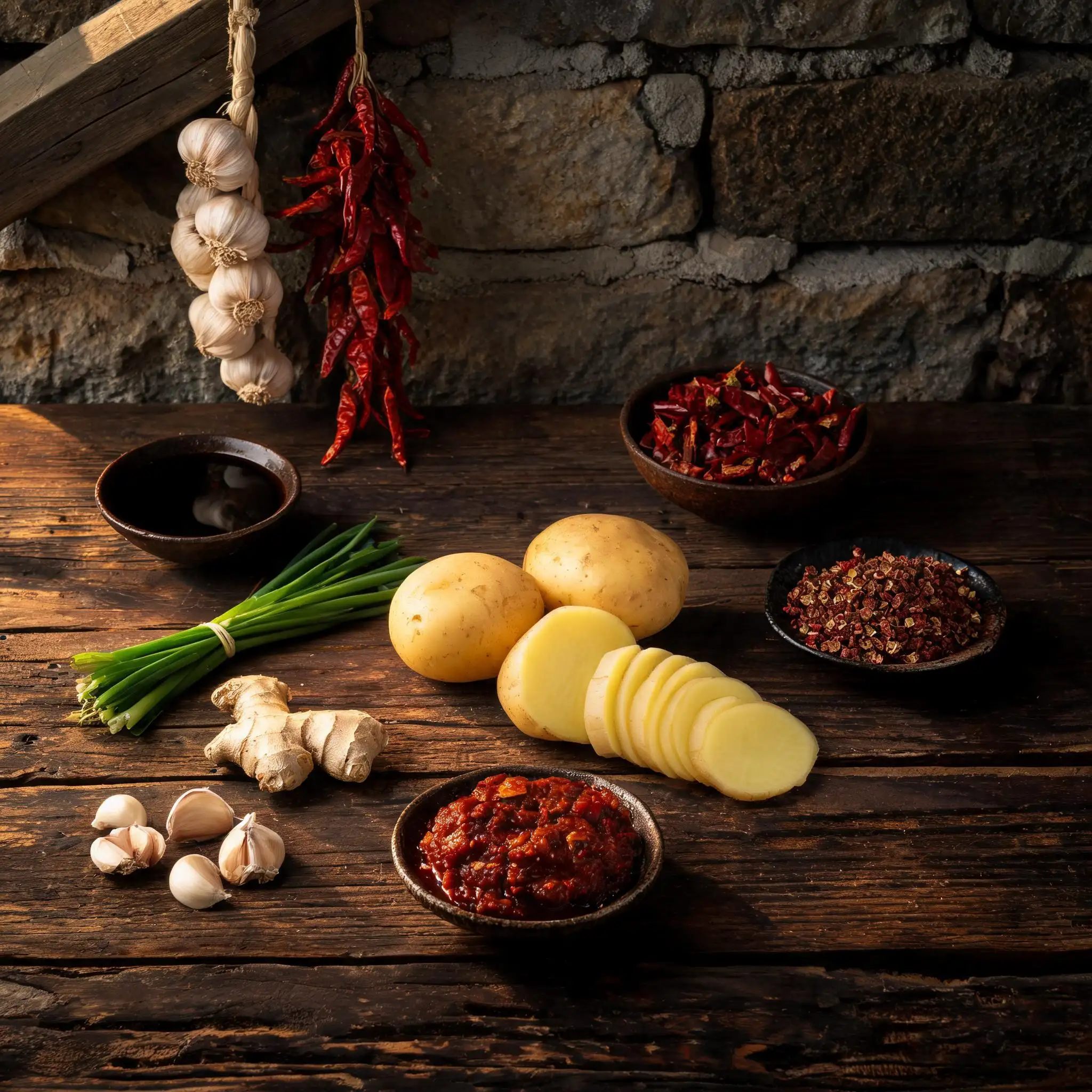
**Ingredients**
medium yellow-fleshed potatoes — 3 to 4, peeled and sliced thin
dried red chili peppers — a small handful, torn into sections
Sichuan peppercorns — one teaspoon
Pixian doubanjiang (chili bean paste) — one tablespoon
garlic — 4 cloves, thinly sliced
fresh ginger — a thumb-sized piece, thinly sliced
green peppers — 2, cut on the diagonal into wide pieces
dark soy sauce — one teaspoon
cooking oil — three tablespoons
scallion — a few stalks, thinly sliced, for garnish
salt — to taste
---
**How it's made**
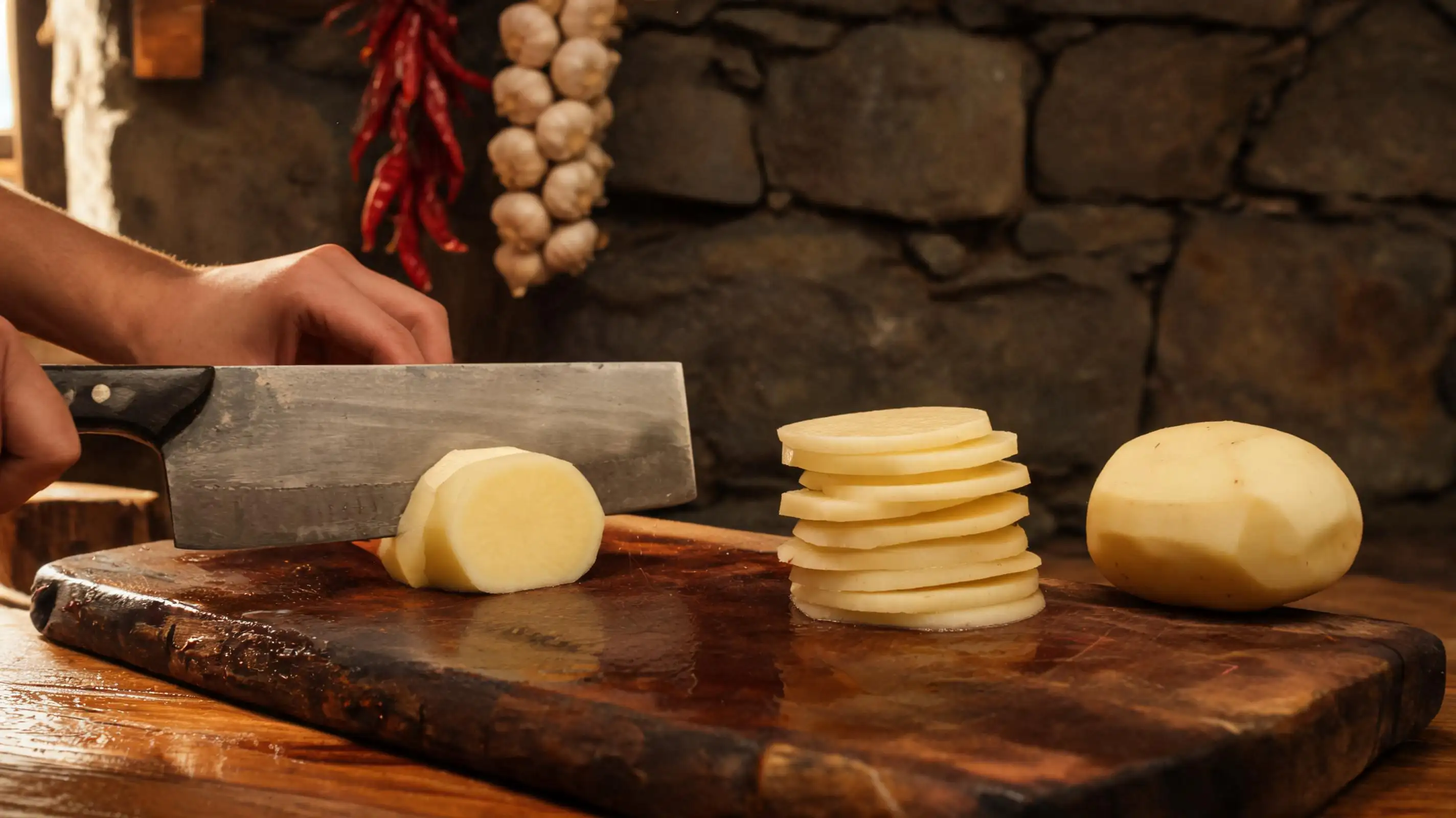
The potatoes go thin — about three millimeters, uniform enough that they'll fry evenly. A peeled potato held flat on the board, a cleaver pulled steadily through. The rounds come off pale and slightly damp, starchy on the cut face. Once sliced, they go straight into the wok.
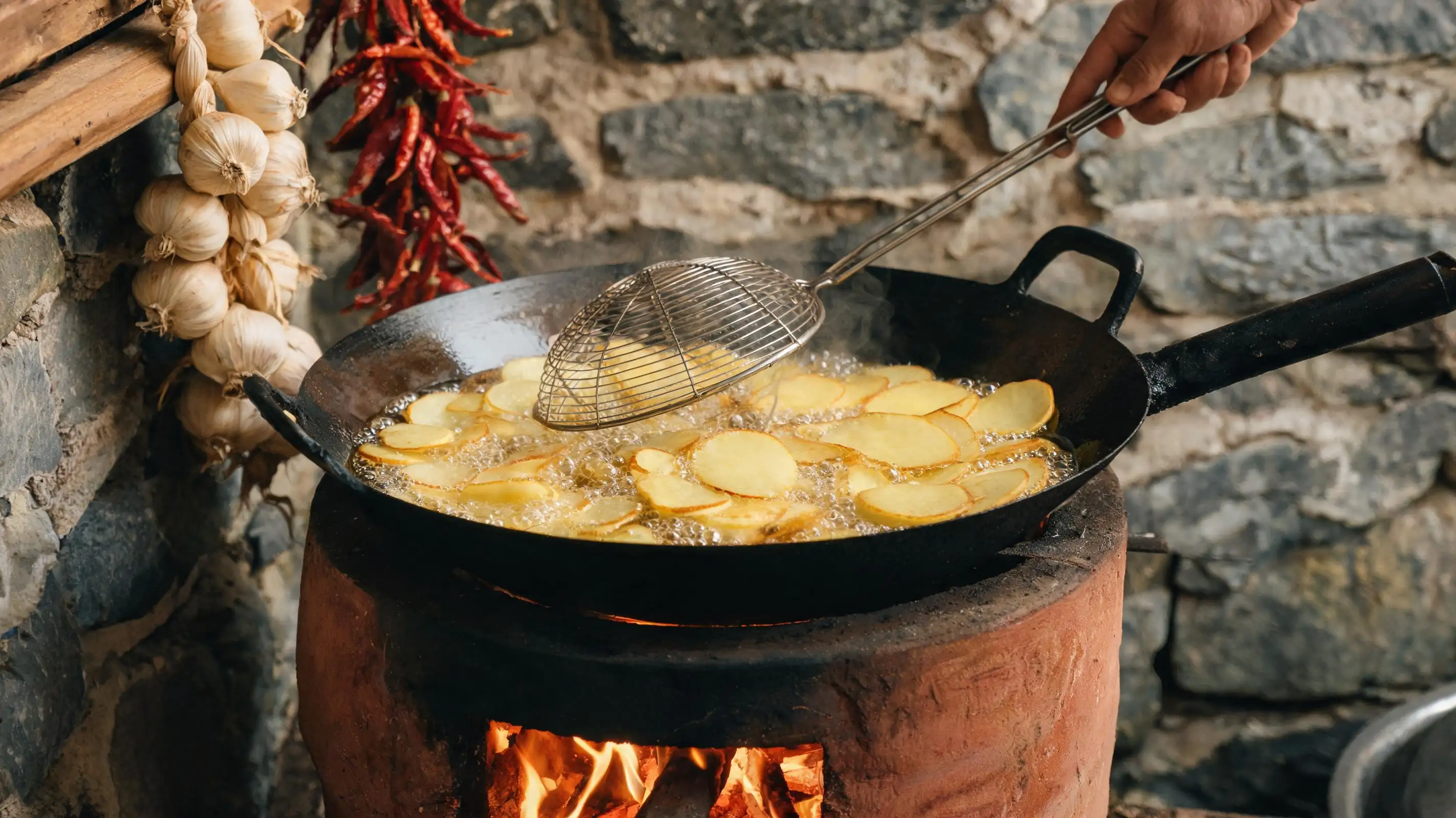
The first pass in the wok is with oil, not aromatics. Enough oil to shallow-fry, hot enough that the potato rounds sizzle immediately on contact. They spread out across the oil surface, the starch on their faces reacting fast, the rounds turning from opaque white to translucent, then to a light gold at the edges. A wire skimmer turns them occasionally. This stage isn't about flavor — it's about texture. The brief frying drives out surface moisture and firms the exterior so the potato rounds hold their shape through the rest of the cooking without going soft and broken. When they're lightly golden, they come out.
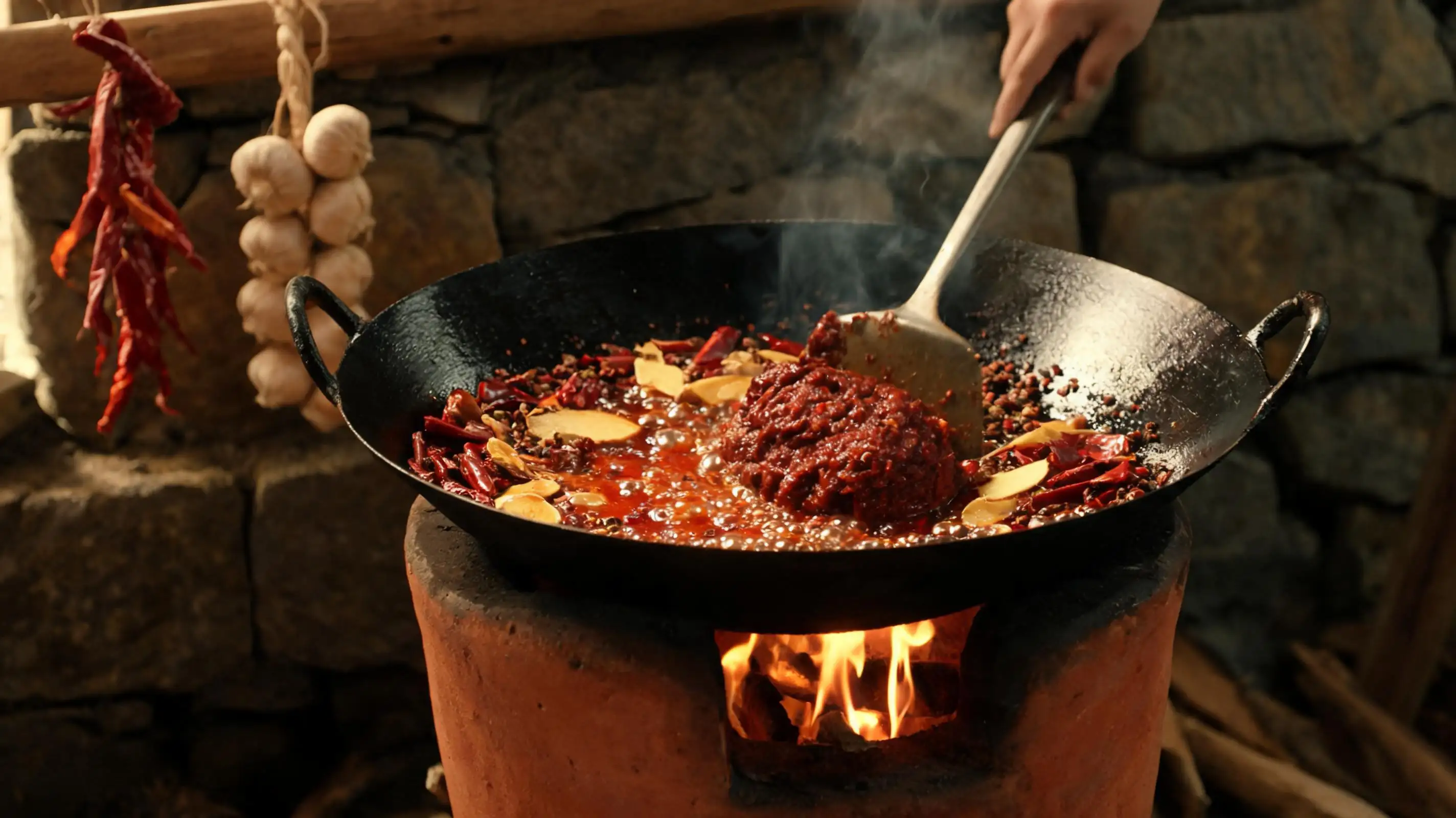
The oil left in the wok is enough to work with. The dried chili sections go in first, followed by the Sichuan peppercorns. Both need thirty seconds or so in the hot oil to bloom — the chilies darken slightly at the cut ends, the peppercorns release their distinctive numbing fragrance into the oil. Then the garlic and ginger slices, which color quickly. The doubanjiang goes in last, a spoonful pressed flat against the wok surface with the spatula and worked into the oil. It takes a minute or so to fry properly — the paste needs to cook down in the oil, not just heat through, and when it's done the oil has turned a deep brick red and the raw bean paste smell has shifted to something rounded and fragrant.
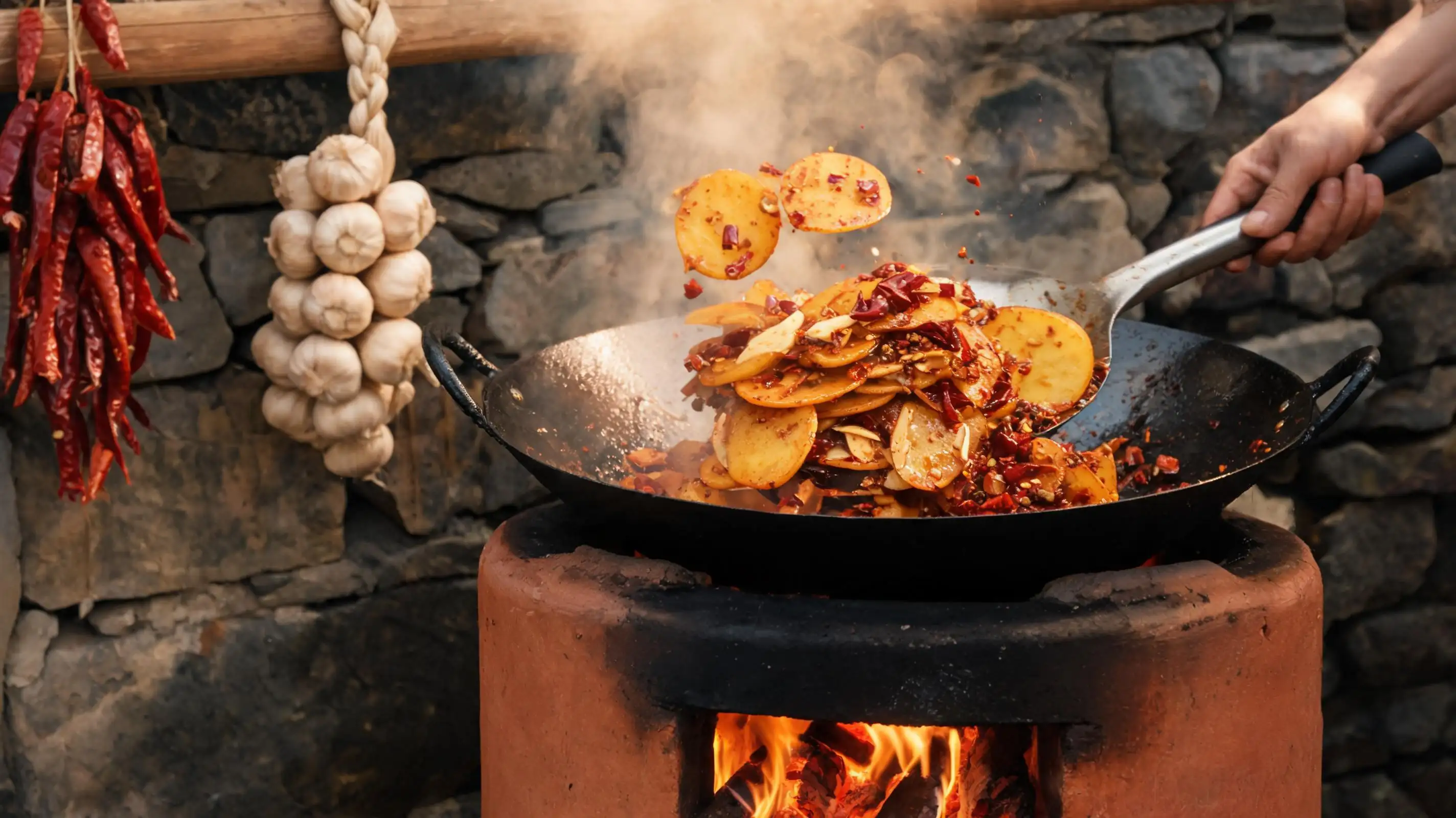
The potato rounds go back in. The spatula works through them from underneath, turning the whole pile with force to coat every piece in the red chili oil. The wok is hot and producing a lot of smoke at this point — that's the right heat level. The rounds absorb the color quickly, going from pale gold to a glossy reddish-brown in under a minute of constant tossing.
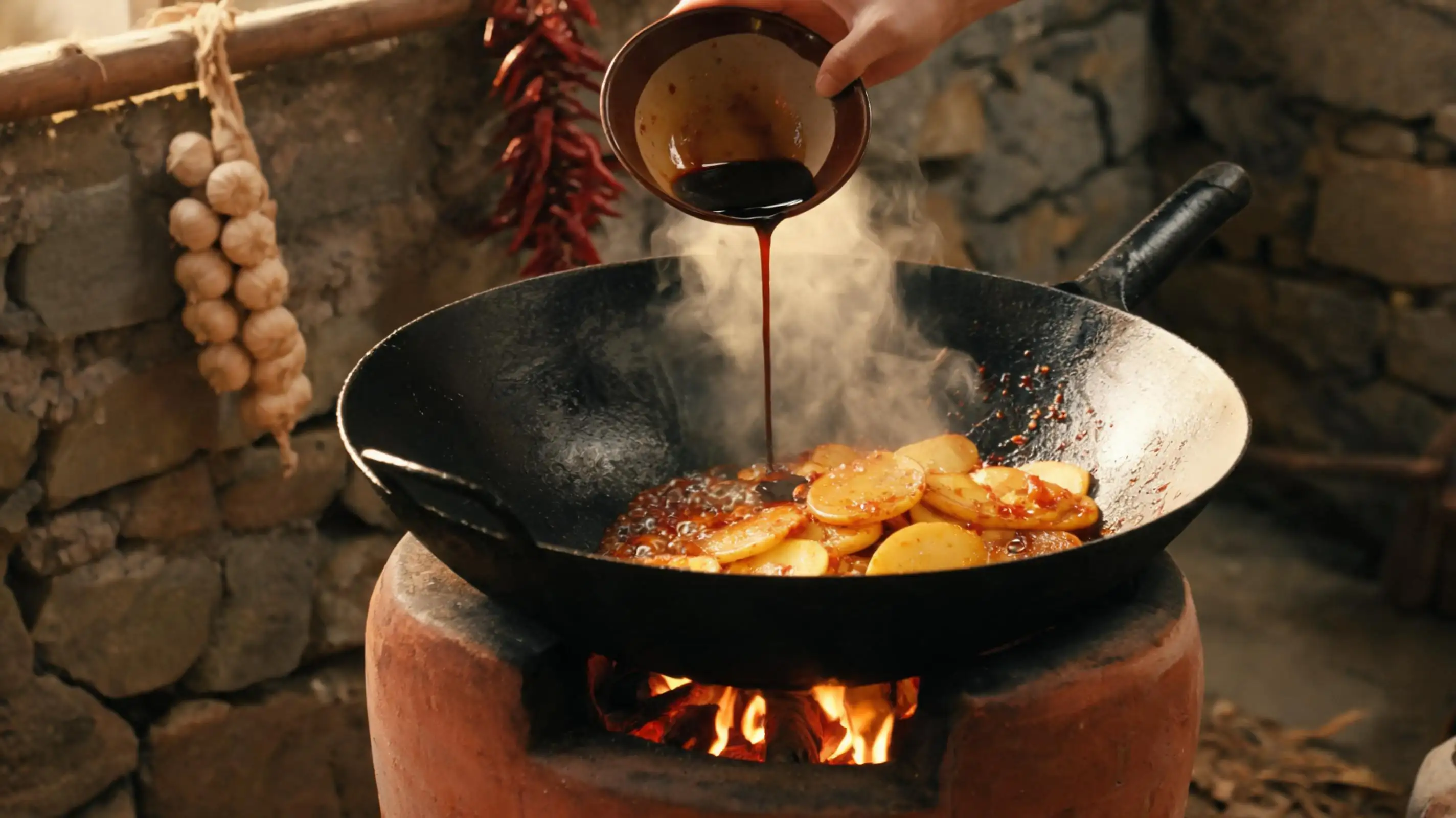
Soy sauce goes in along the wok edge, not poured over the top. When it hits the superheated iron of the wok wall, it vaporizes for a second, sending up a burst of steam before running down into the oil and potatoes. That brief contact with the hot metal adds something — a faint smokiness, a rounding of flavor that pouring straight over the food doesn't produce.
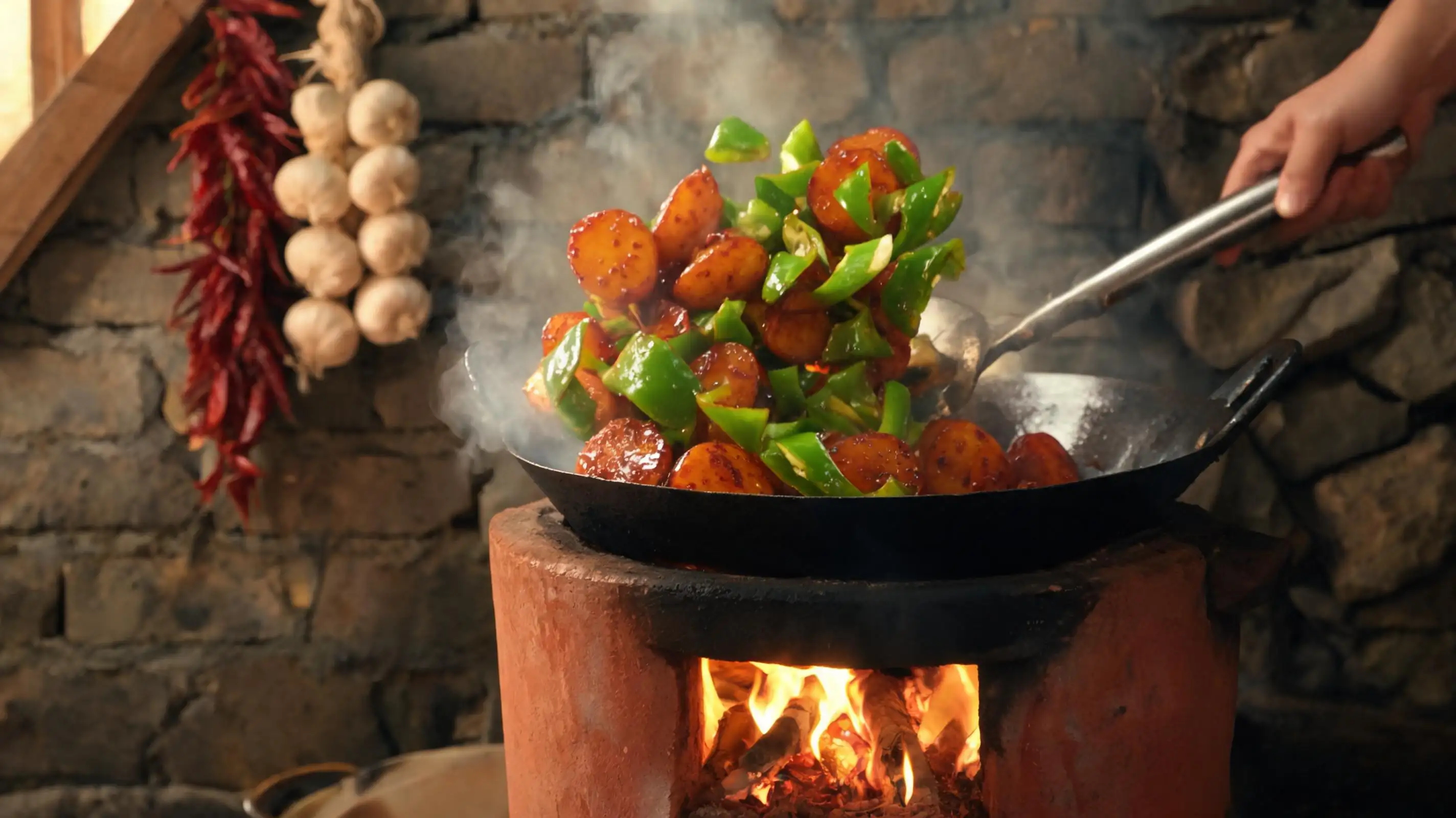
The green peppers go in near the end. Cut on the diagonal into wide pieces so they cook fast and keep some crunch. Thirty seconds of hard tossing is enough — they soften slightly and take on a little color from the oil, but stay vivid green. This is the point where the dish finds its contrast: the deep red-brown of the potato rounds against the bright green of the pepper, the Sichuan numbing heat sitting under the surface of everything.
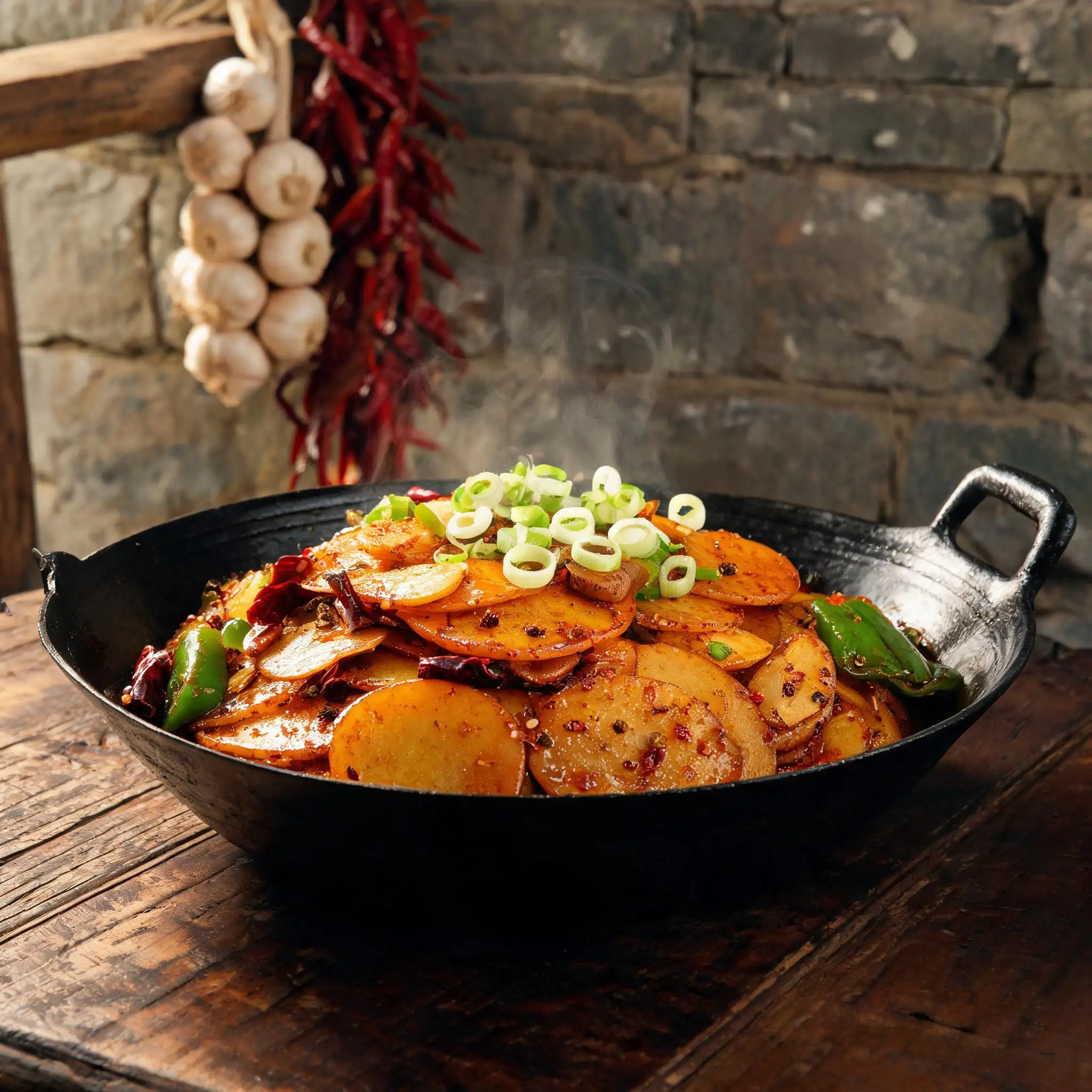
The whole thing goes into the black cast iron dry pot, scallion scattered on top, steam still rising.
Gan guo — dry pot — is a Sichuan and Chongqing way of cooking that sits between a stir-fry and a hotpot. There's no broth, no liquid base: everything concentrates directly in the wok, flavor building on itself rather than being diluted. Potatoes reached southwestern China from South America through trade routes a few hundred years ago and became a staple so thoroughly that it's hard to imagine the regional cooking without them. This dish — cheap ingredients, loud heat, a lot of smoke, very fast — is the kind of food that appears on every small restaurant's menu without fanfare and gets ordered constantly. The dry pot version started as a street food adaptation and stayed there, even after it moved inside.
---
**Ingredients**
medium yellow-fleshed potatoes — 3 to 4, peeled and sliced thin
dried red chili peppers — a small handful, torn into sections
Sichuan peppercorns — one teaspoon
Pixian doubanjiang (chili bean paste) — one tablespoon
garlic — 4 cloves, thinly sliced
fresh ginger — a thumb-sized piece, thinly sliced
green peppers — 2, cut on the diagonal into wide pieces
dark soy sauce — one teaspoon
cooking oil — three tablespoons
scallion — a few stalks, thinly sliced, for garnish
salt — to taste
---
**How it's made**
The potatoes go thin — about three millimeters, uniform enough that they'll fry evenly. A peeled potato held flat on the board, a cleaver pulled steadily through. The rounds come off pale and slightly damp, starchy on the cut face. Once sliced, they go straight into the wok.
The first pass in the wok is with oil, not aromatics. Enough oil to shallow-fry, hot enough that the potato rounds sizzle immediately on contact. They spread out across the oil surface, the starch on their faces reacting fast, the rounds turning from opaque white to translucent, then to a light gold at the edges. A wire skimmer turns them occasionally. This stage isn't about flavor — it's about texture. The brief frying drives out surface moisture and firms the exterior so the potato rounds hold their shape through the rest of the cooking without going soft and broken. When they're lightly golden, they come out.
The oil left in the wok is enough to work with. The dried chili sections go in first, followed by the Sichuan peppercorns. Both need thirty seconds or so in the hot oil to bloom — the chilies darken slightly at the cut ends, the peppercorns release their distinctive numbing fragrance into the oil. Then the garlic and ginger slices, which color quickly. The doubanjiang goes in last, a spoonful pressed flat against the wok surface with the spatula and worked into the oil. It takes a minute or so to fry properly — the paste needs to cook down in the oil, not just heat through, and when it's done the oil has turned a deep brick red and the raw bean paste smell has shifted to something rounded and fragrant.
The potato rounds go back in. The spatula works through them from underneath, turning the whole pile with force to coat every piece in the red chili oil. The wok is hot and producing a lot of smoke at this point — that's the right heat level. The rounds absorb the color quickly, going from pale gold to a glossy reddish-brown in under a minute of constant tossing.
Soy sauce goes in along the wok edge, not poured over the top. When it hits the superheated iron of the wok wall, it vaporizes for a second, sending up a burst of steam before running down into the oil and potatoes. That brief contact with the hot metal adds something — a faint smokiness, a rounding of flavor that pouring straight over the food doesn't produce.
The green peppers go in near the end. Cut on the diagonal into wide pieces so they cook fast and keep some crunch. Thirty seconds of hard tossing is enough — they soften slightly and take on a little color from the oil, but stay vivid green. This is the point where the dish finds its contrast: the deep red-brown of the potato rounds against the bright green of the pepper, the Sichuan numbing heat sitting under the surface of everything.
The whole thing goes into the black cast iron dry pot, scallion scattered on top, steam still rising.
Gan guo — dry pot — is a Sichuan and Chongqing way of cooking that sits between a stir-fry and a hotpot. There's no broth, no liquid base: everything concentrates directly in the wok, flavor building on itself rather than being diluted. Potatoes reached southwestern China from South America through trade routes a few hundred years ago and became a staple so thoroughly that it's hard to imagine the regional cooking without them. This dish — cheap ingredients, loud heat, a lot of smoke, very fast — is the kind of food that appears on every small restaurant's menu without fanfare and gets ordered constantly. The dry pot version started as a street food adaptation and stayed there, even after it moved inside.