·6/3/2026
from
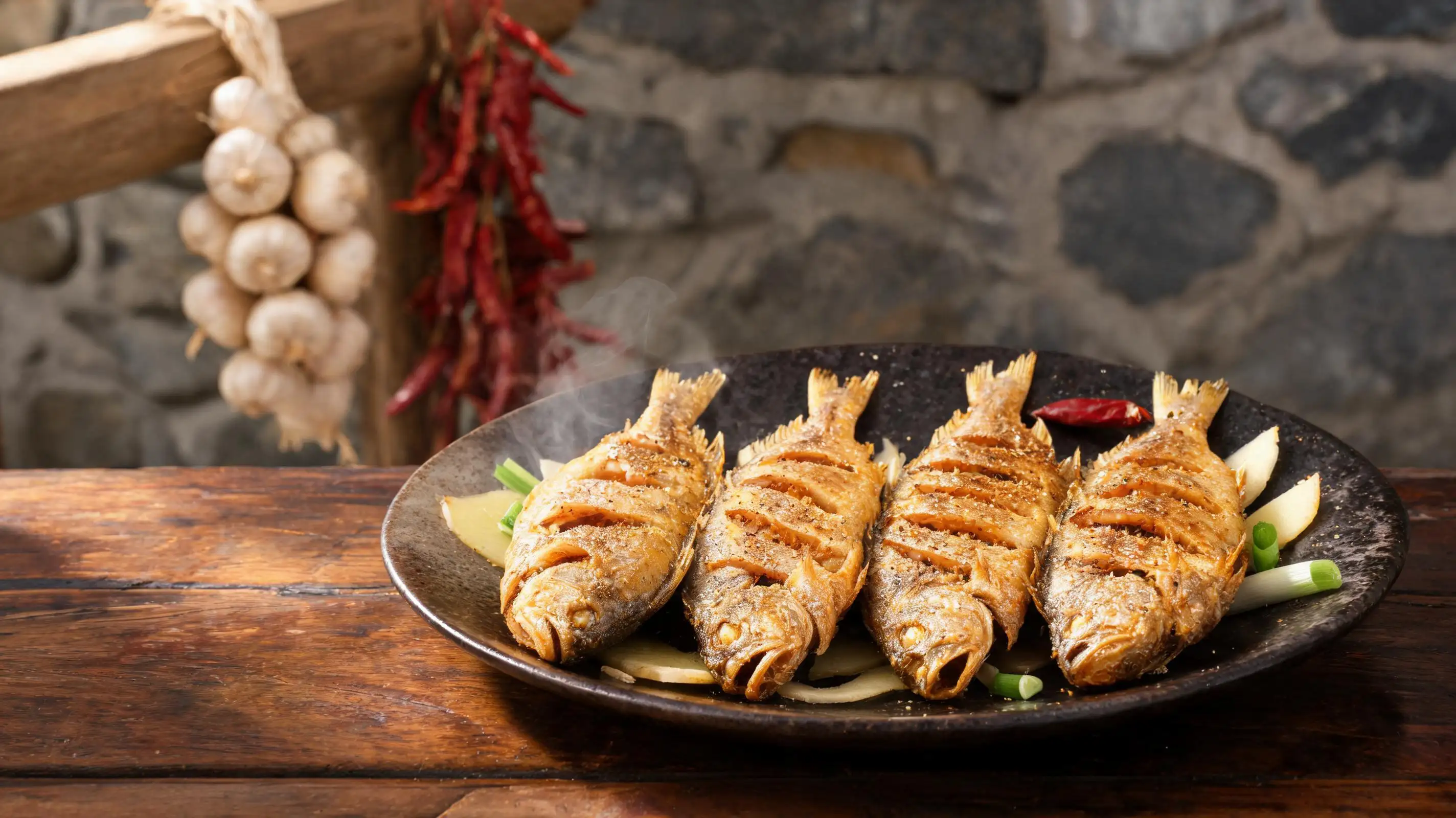
Zha Xiao Huang Yu
**Zha Xiao Huang Yu** *(炸小黄鱼)*
---
**Ingredients**
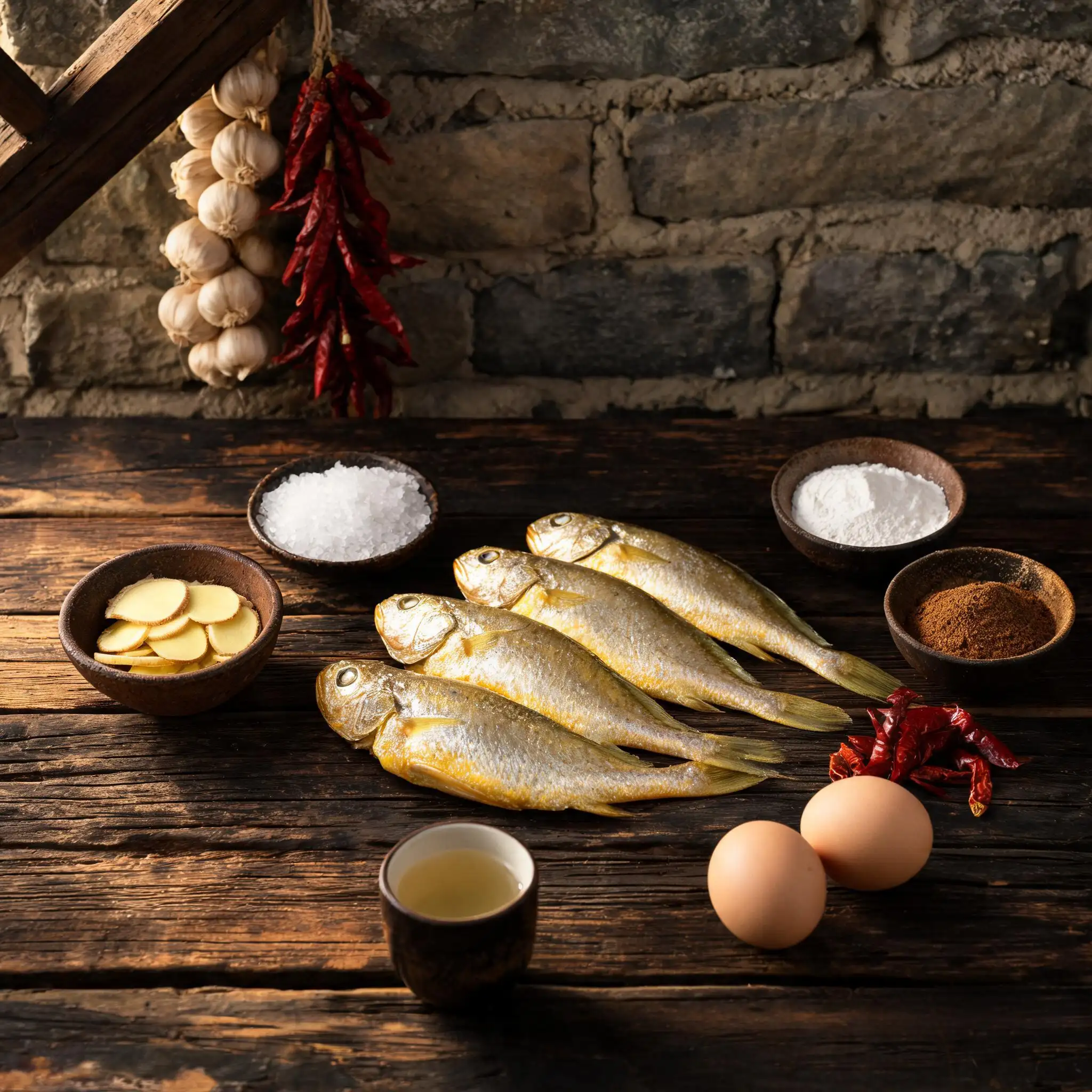
small yellow croaker fish — 4 to 5 whole, cleaned and scaled
fresh ginger — a thumb-sized piece, thinly sliced
Shaoxing rice wine — one tablespoon
coarse sea salt — one teaspoon
five-spice powder — half a teaspoon
cornstarch — enough to coat
cooking oil — enough for deep-frying
For the seasoning:
fine salt — a pinch
ground Sichuan pepper — a pinch
ground cumin — optional, a light dusting
---
**How it's made**
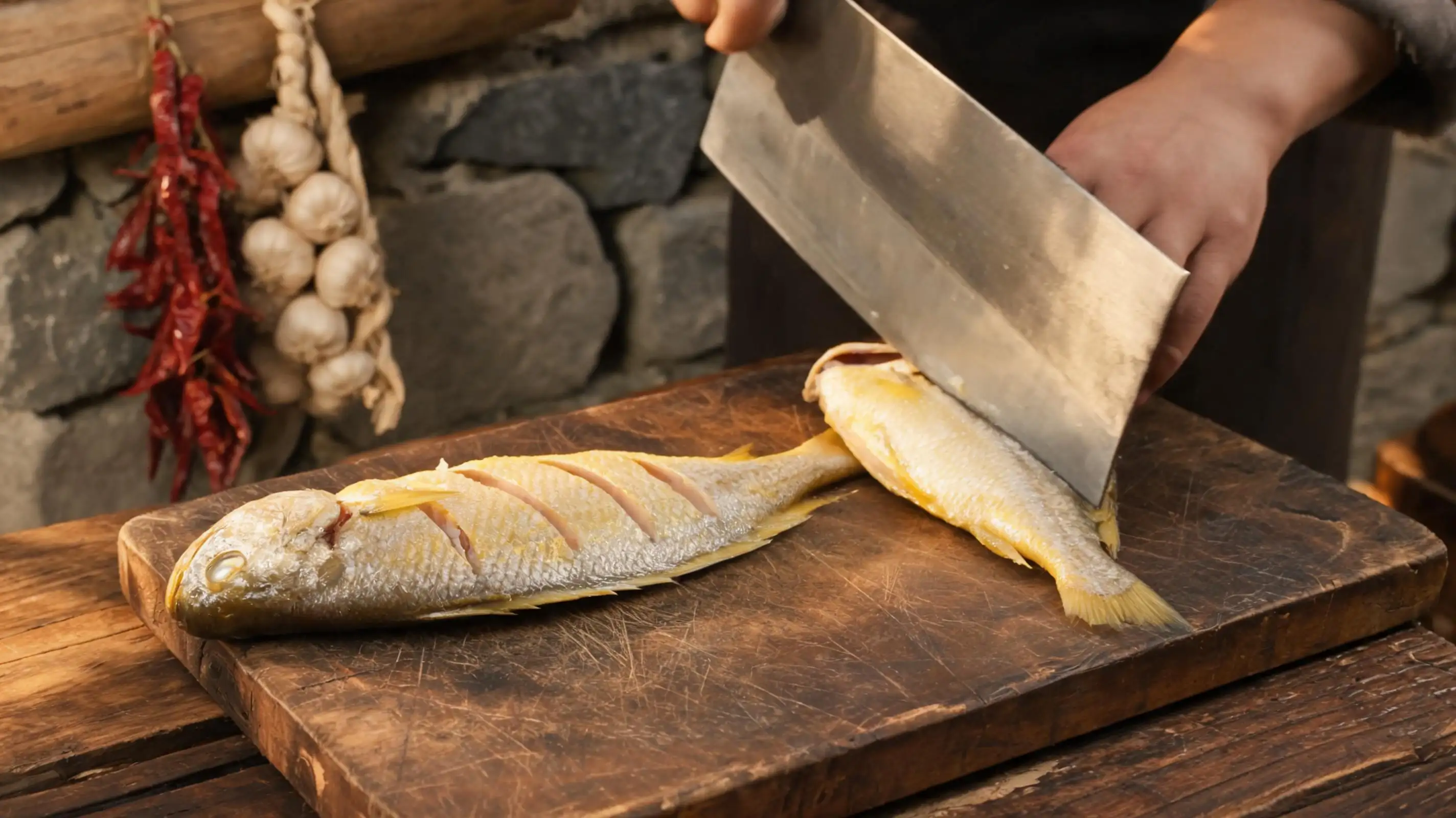
The fish get scored before anything else. A knife pressed at an angle into the flesh, three diagonal cuts along each side down to the bone, evenly spaced. The cuts help the marinade get in, and more importantly they help the thick parts of the fish cook through without the outside overcooking first. You can do this with a chef's knife or a cleaver — the motion is a firm press and drag, not a chop.
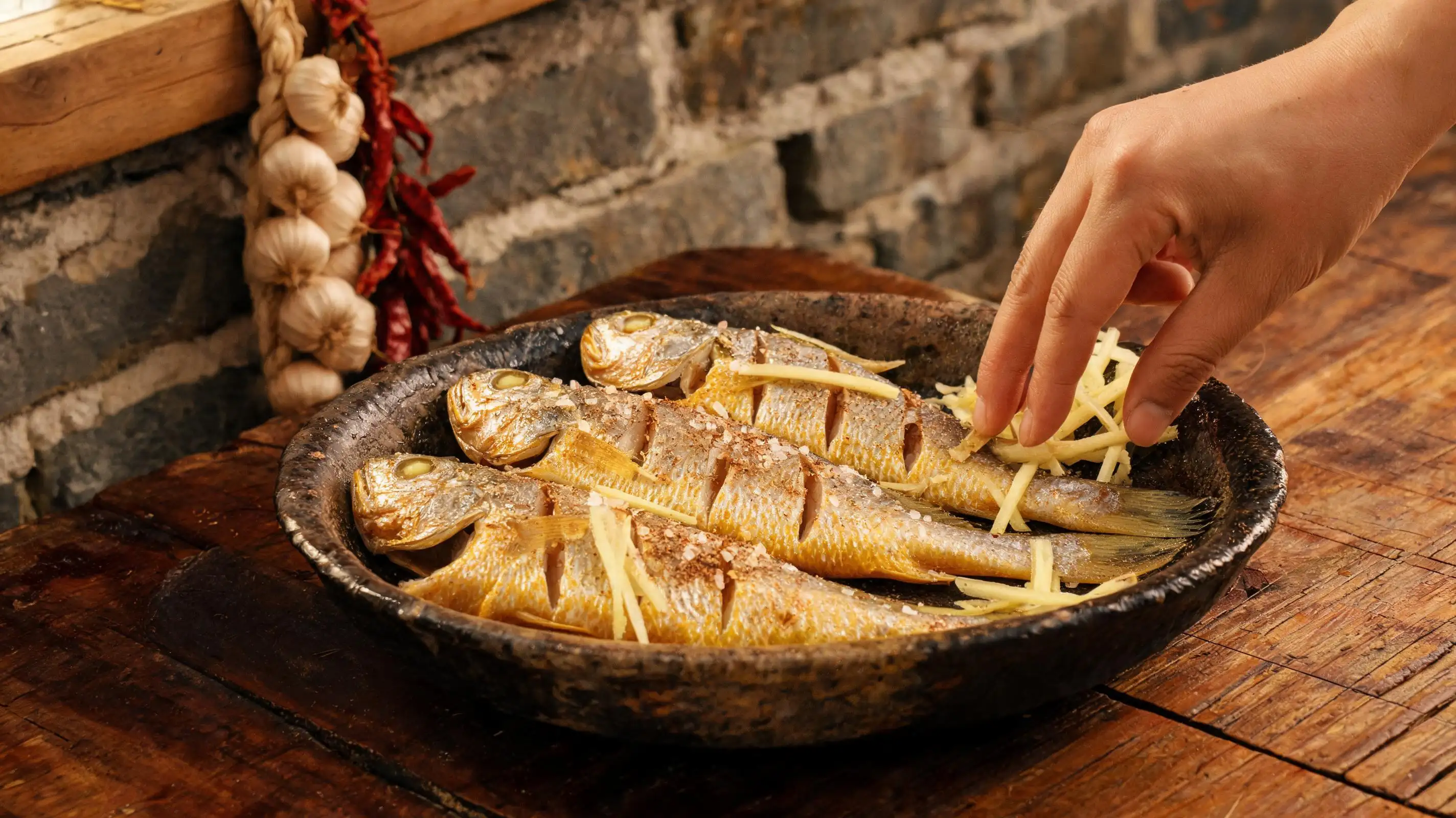
The fish go into a shallow dish with ginger slices, a pour of Shaoxing wine, coarse salt, and five-spice powder. Work the marinade into the score cuts with your fingers, pressing the ginger into the flesh. Fifteen minutes is enough. The salt firms the flesh slightly at the surface, the wine takes the fishiness out, and the five-spice gives the final crust something to build on.
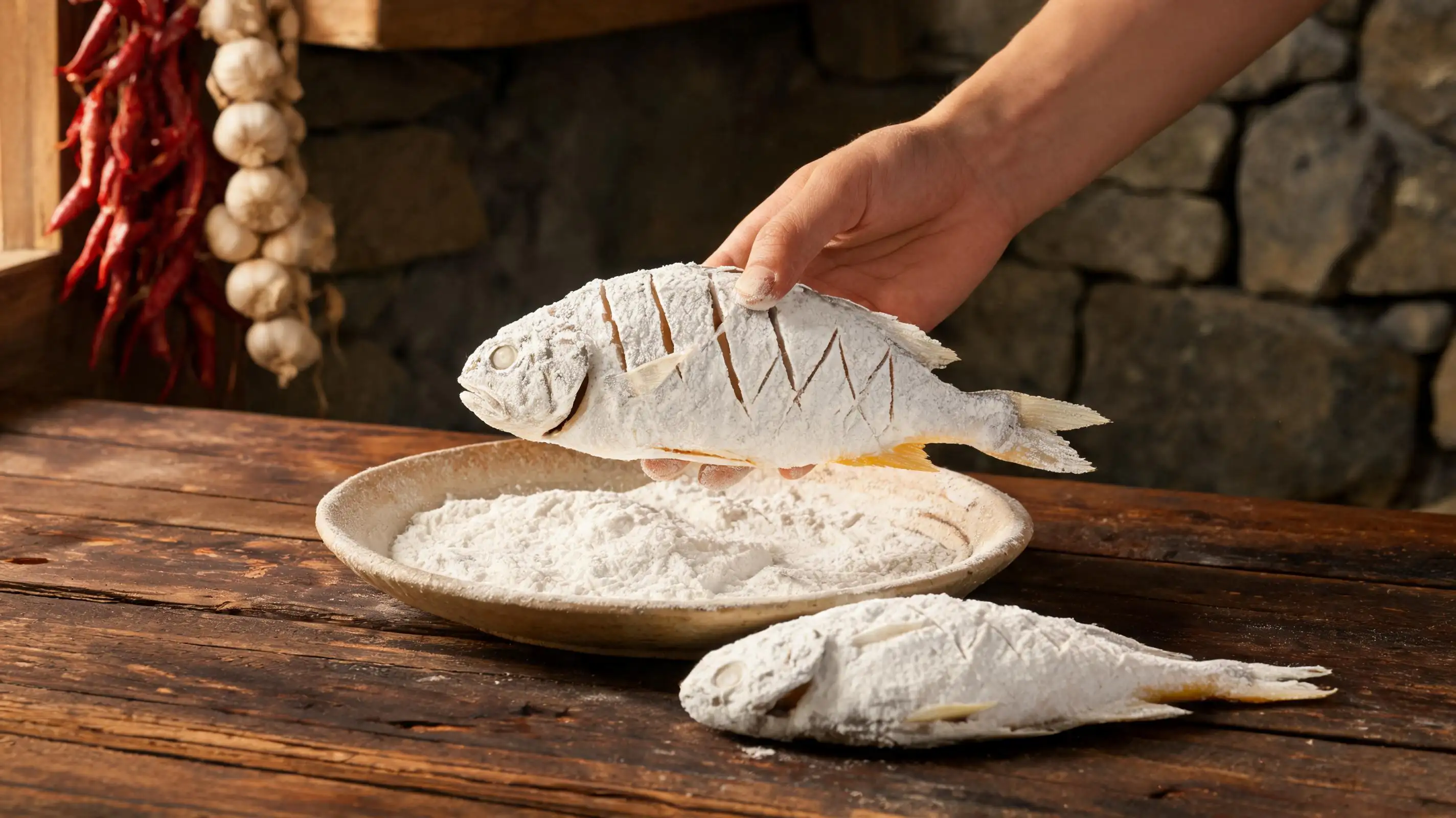
Then the starch. Each fish goes into a shallow plate of dry cornstarch and gets pressed down and turned until fully coated. The marinade moisture makes the starch stick — it clings immediately, coating every surface including inside the score cuts. Shake off the loose excess; not much comes off. The coated fish should look matte white, slightly damp-feeling, ready to go.
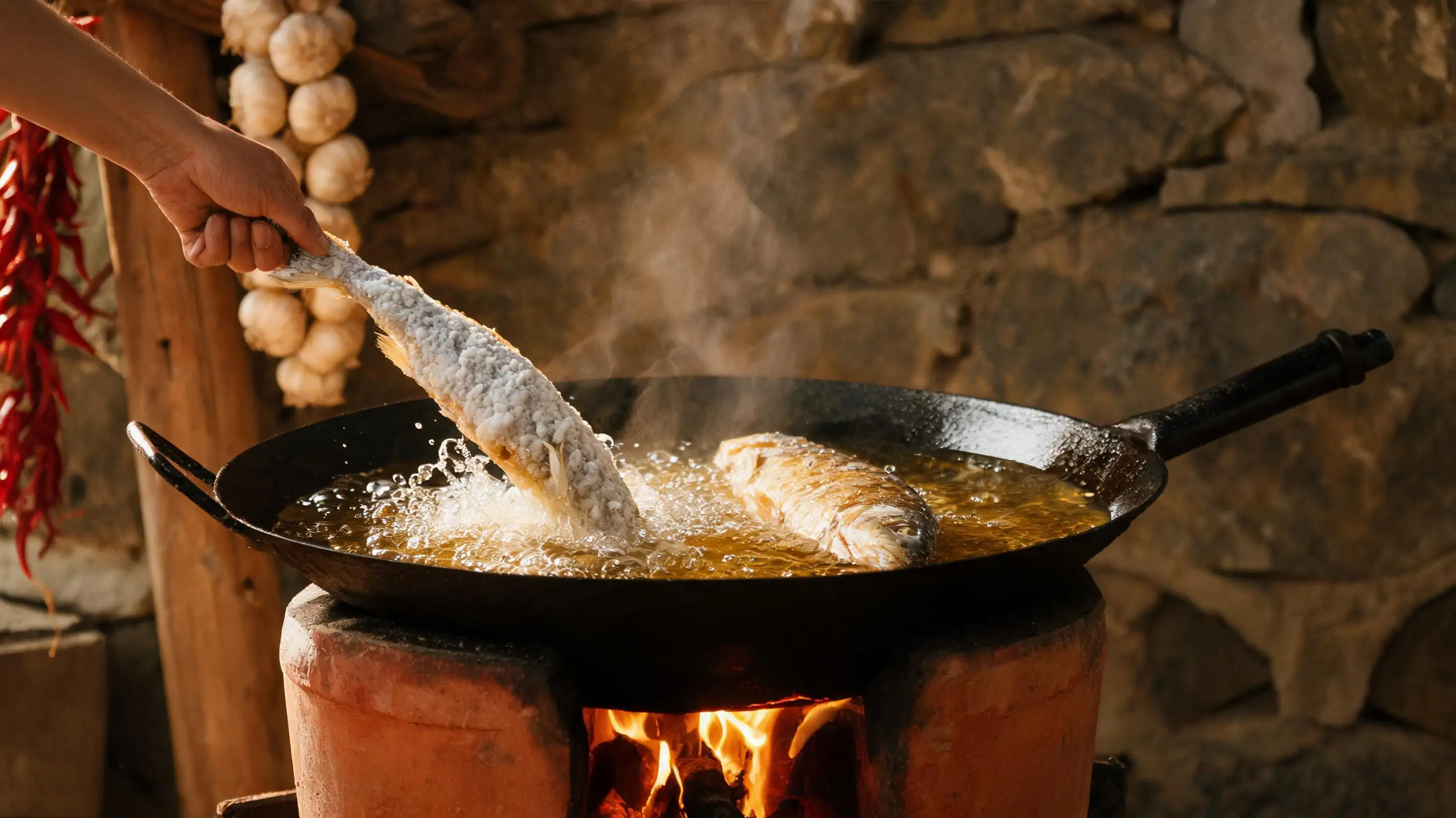
The oil needs to be hot before the fish go in — around 170 to 180 degrees Celsius, hot enough that a pinch of starch dropped in sizzles immediately. The fish go in one at a time along the side of the wok, lowered in gently so the oil doesn't splash. The moment of contact is loud: the starch hits the oil and erupts in a heavy burst of large white bubbles that surround the fish instantly. Hold the fish against the side of the wok for a few seconds with chopsticks before releasing, so it doesn't stick to the bottom.
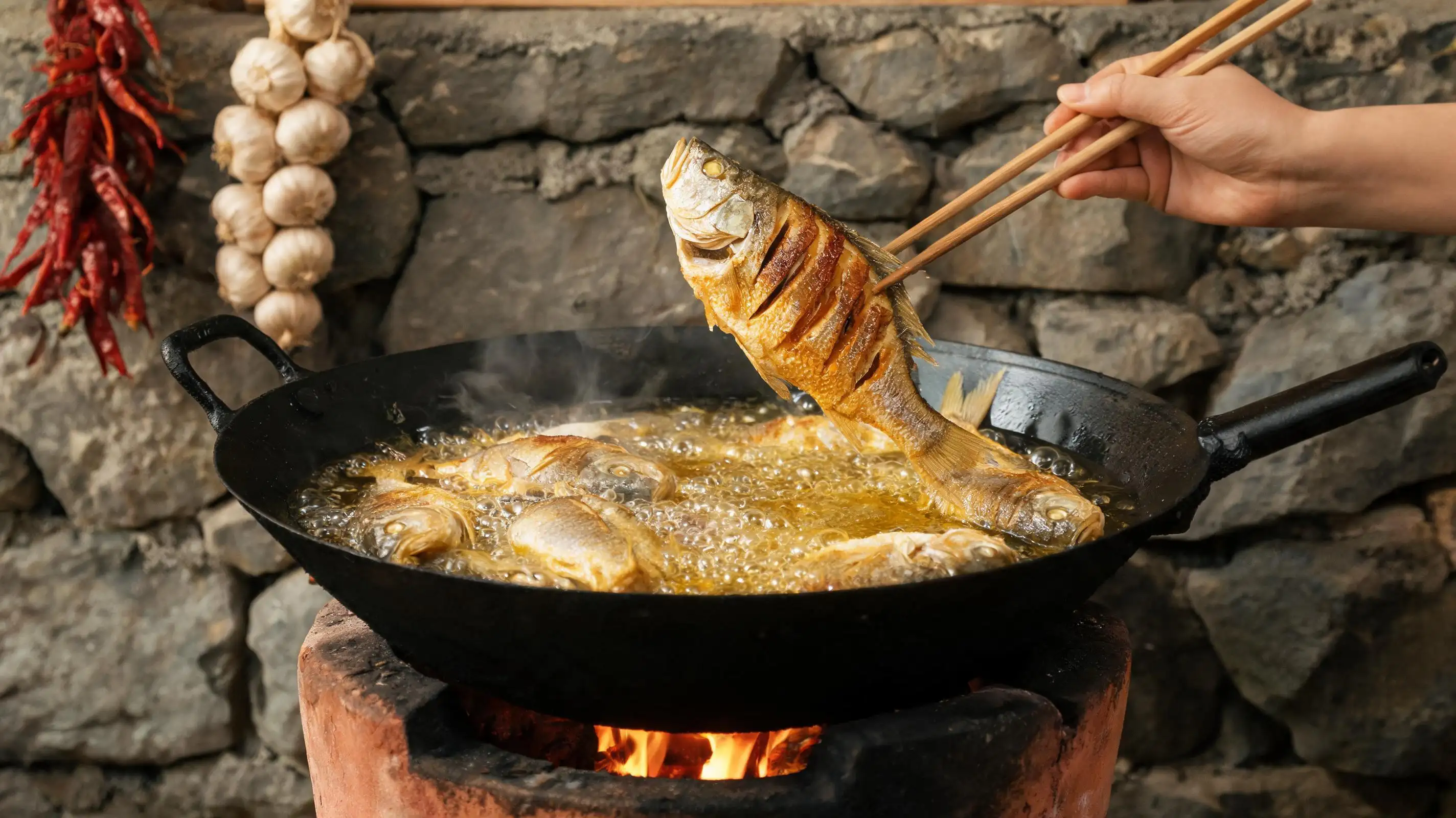
After three to four minutes the underside is set and golden. Chopsticks under the fish, turn it over. The cooked side is a deep amber-gold, the score cuts blown open and crisped into ridges. The other side goes in and the bubbling drops to a steady, quieter sizzle as the fish finishes cooking through. Another three minutes.
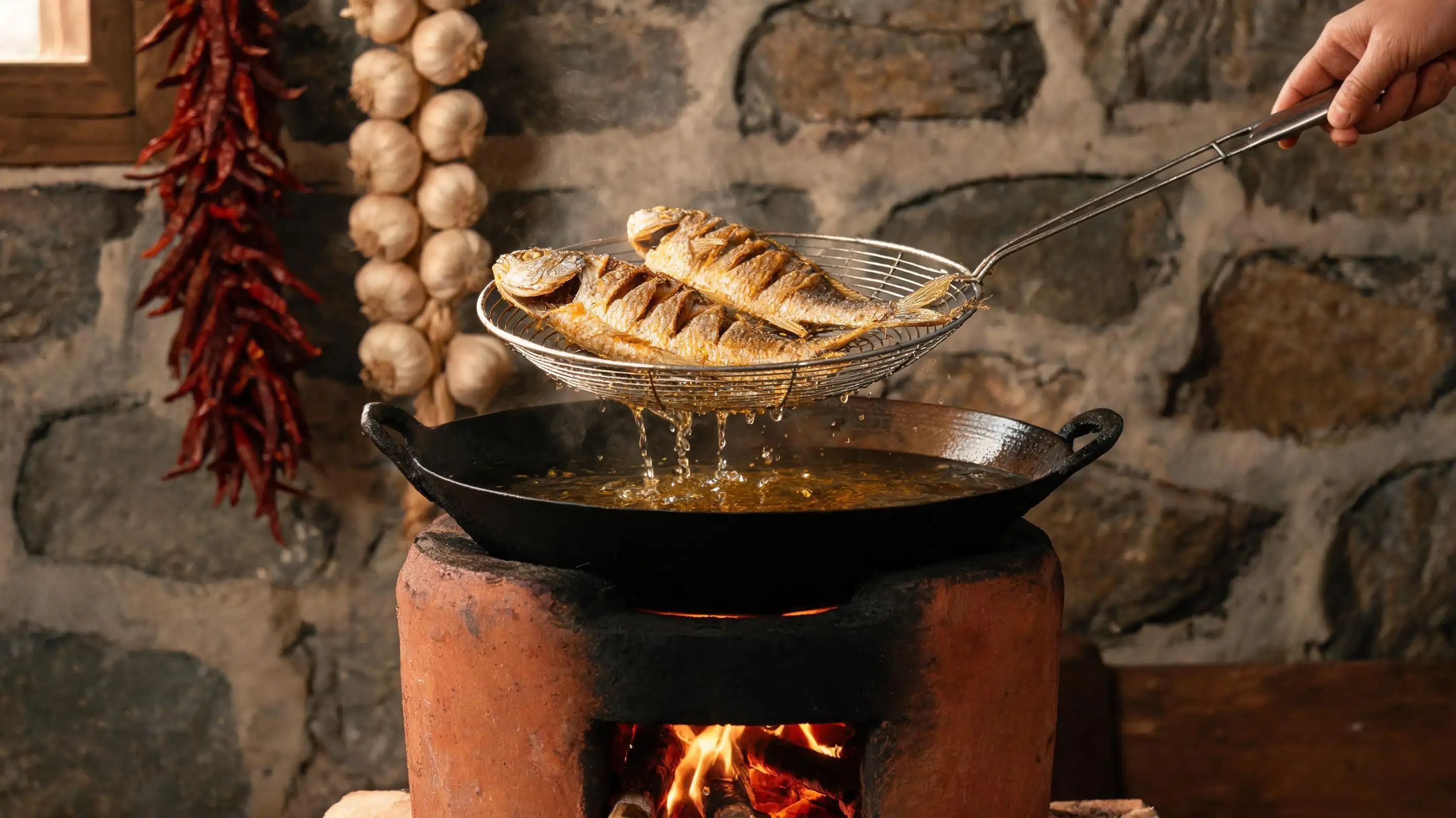
When the fish is a consistent deep gold on both sides and the bubbles slow to a sparse, dry crackling, the oil has mostly released from the flesh. Lift it with the wire skimmer and hold it above the wok for a moment — the oil runs off in thin streams through the mesh. Set the fish on a plate.
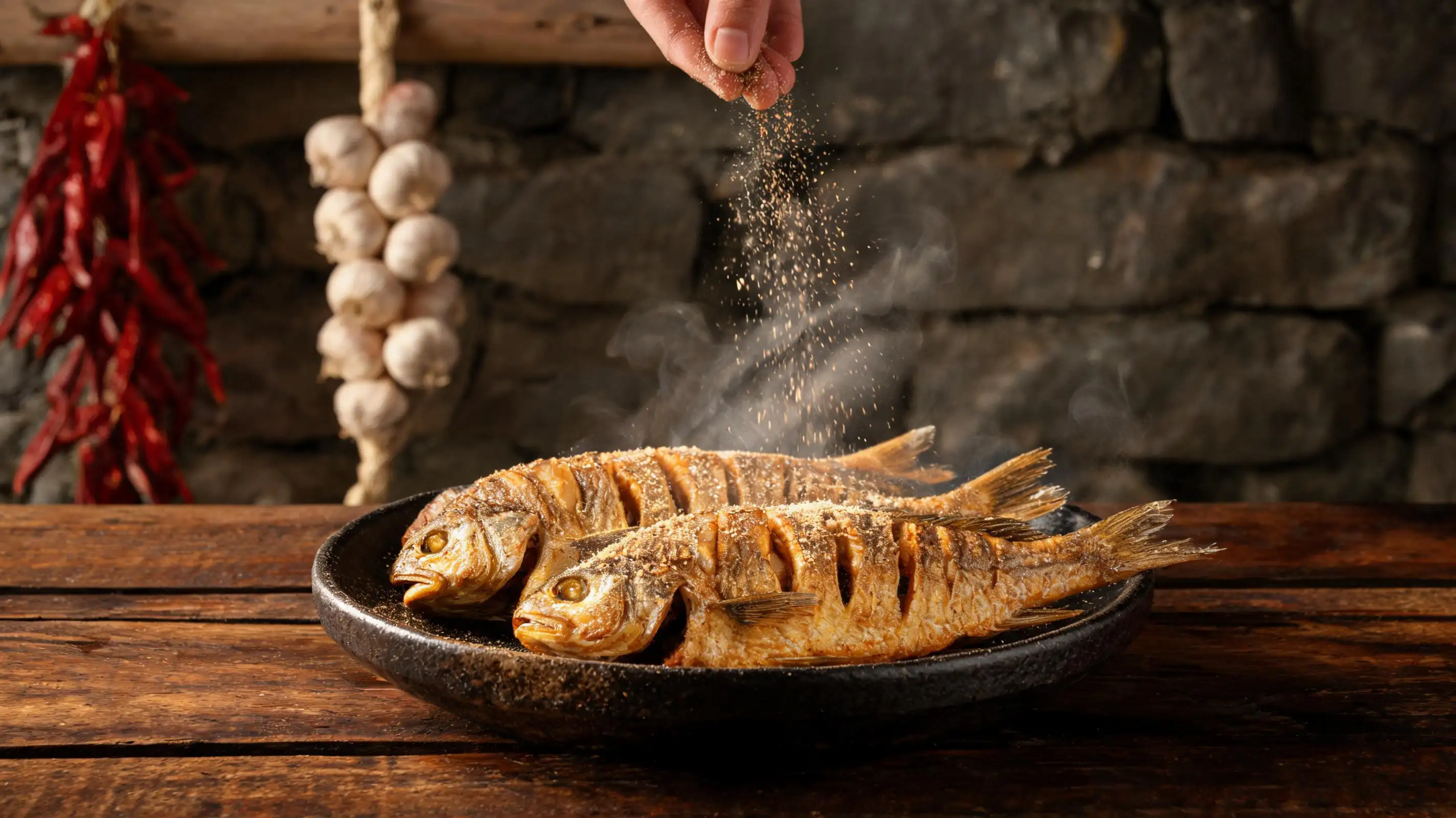
The seasoning goes on while the fish is still hot. A pinch of salt mixed with ground Sichuan pepper, pressed between the fingers and released from above in a light fall across the fish surfaces. The heat helps the seasoning stick. A dusting of cumin is optional — it pushes the flavor toward something earthier, more street-food.
The fish is meant to be eaten immediately, while the crust still has its snap. The exterior is a hard shell of crisped starch; the flesh inside is soft and pulls cleanly from the bone. The score cuts make it easy to work through without fighting the structure of the fish.
Small yellow croaker was once so common along the East China Sea coast that it was the cheapest fish at the market — what fishing families ate when the good catch had already been sold. The fish are smaller now and harder to find; decades of heavy trawling have cut the population to a fraction of what it was. The old guys at the docks remember when you could fill a basket for almost nothing. The recipe hasn't changed. The fish has.
---
**Ingredients**
small yellow croaker fish — 4 to 5 whole, cleaned and scaled
fresh ginger — a thumb-sized piece, thinly sliced
Shaoxing rice wine — one tablespoon
coarse sea salt — one teaspoon
five-spice powder — half a teaspoon
cornstarch — enough to coat
cooking oil — enough for deep-frying
For the seasoning:
fine salt — a pinch
ground Sichuan pepper — a pinch
ground cumin — optional, a light dusting
---
**How it's made**
The fish get scored before anything else. A knife pressed at an angle into the flesh, three diagonal cuts along each side down to the bone, evenly spaced. The cuts help the marinade get in, and more importantly they help the thick parts of the fish cook through without the outside overcooking first. You can do this with a chef's knife or a cleaver — the motion is a firm press and drag, not a chop.
The fish go into a shallow dish with ginger slices, a pour of Shaoxing wine, coarse salt, and five-spice powder. Work the marinade into the score cuts with your fingers, pressing the ginger into the flesh. Fifteen minutes is enough. The salt firms the flesh slightly at the surface, the wine takes the fishiness out, and the five-spice gives the final crust something to build on.
Then the starch. Each fish goes into a shallow plate of dry cornstarch and gets pressed down and turned until fully coated. The marinade moisture makes the starch stick — it clings immediately, coating every surface including inside the score cuts. Shake off the loose excess; not much comes off. The coated fish should look matte white, slightly damp-feeling, ready to go.
The oil needs to be hot before the fish go in — around 170 to 180 degrees Celsius, hot enough that a pinch of starch dropped in sizzles immediately. The fish go in one at a time along the side of the wok, lowered in gently so the oil doesn't splash. The moment of contact is loud: the starch hits the oil and erupts in a heavy burst of large white bubbles that surround the fish instantly. Hold the fish against the side of the wok for a few seconds with chopsticks before releasing, so it doesn't stick to the bottom.
After three to four minutes the underside is set and golden. Chopsticks under the fish, turn it over. The cooked side is a deep amber-gold, the score cuts blown open and crisped into ridges. The other side goes in and the bubbling drops to a steady, quieter sizzle as the fish finishes cooking through. Another three minutes.
When the fish is a consistent deep gold on both sides and the bubbles slow to a sparse, dry crackling, the oil has mostly released from the flesh. Lift it with the wire skimmer and hold it above the wok for a moment — the oil runs off in thin streams through the mesh. Set the fish on a plate.
The seasoning goes on while the fish is still hot. A pinch of salt mixed with ground Sichuan pepper, pressed between the fingers and released from above in a light fall across the fish surfaces. The heat helps the seasoning stick. A dusting of cumin is optional — it pushes the flavor toward something earthier, more street-food.
The fish is meant to be eaten immediately, while the crust still has its snap. The exterior is a hard shell of crisped starch; the flesh inside is soft and pulls cleanly from the bone. The score cuts make it easy to work through without fighting the structure of the fish.
Small yellow croaker was once so common along the East China Sea coast that it was the cheapest fish at the market — what fishing families ate when the good catch had already been sold. The fish are smaller now and harder to find; decades of heavy trawling have cut the population to a fraction of what it was. The old guys at the docks remember when you could fill a basket for almost nothing. The recipe hasn't changed. The fish has.