·6/3/2026
from
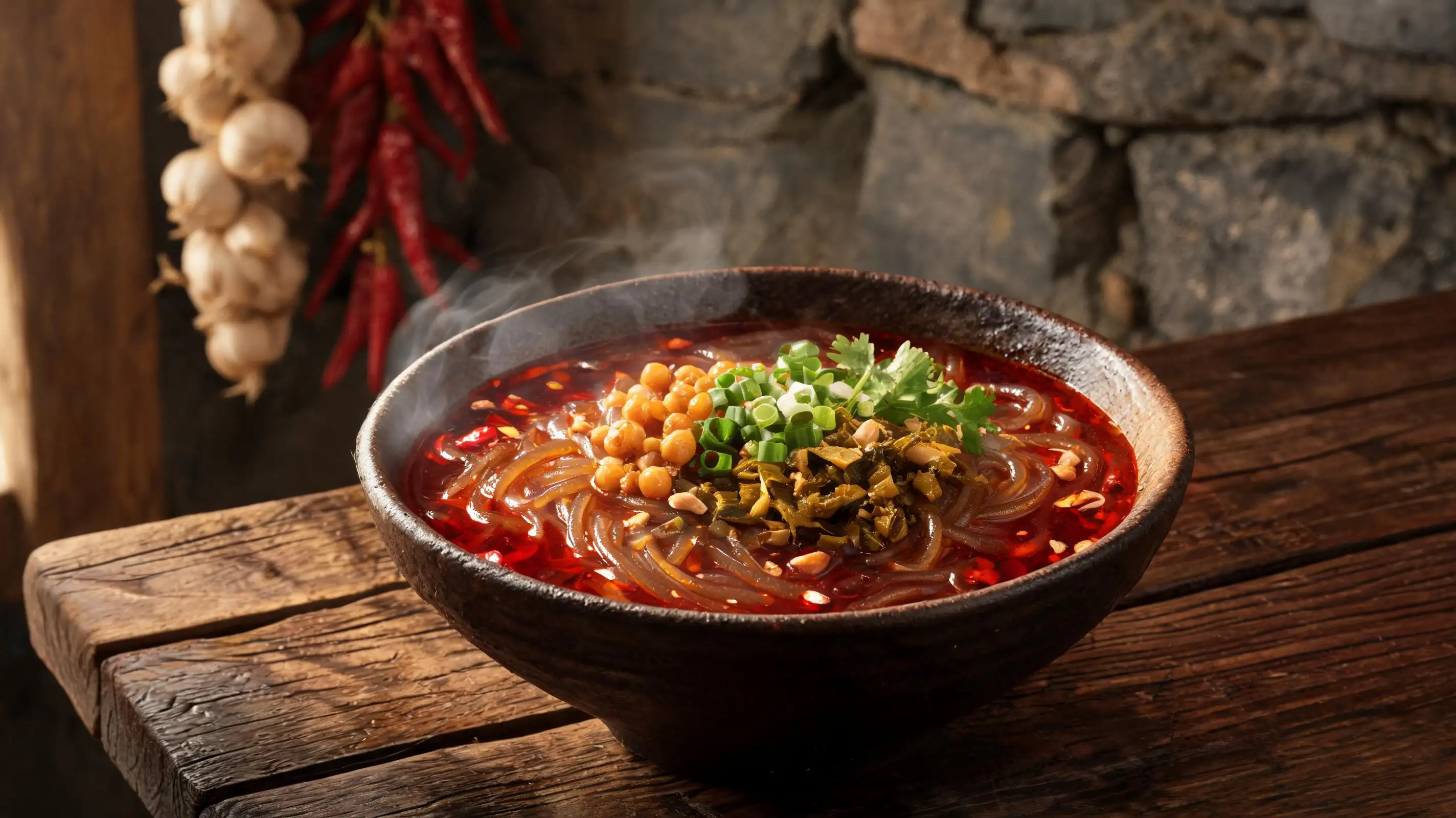
Suan La Fen
**Suan La Fen** *(酸辣粉)*
---
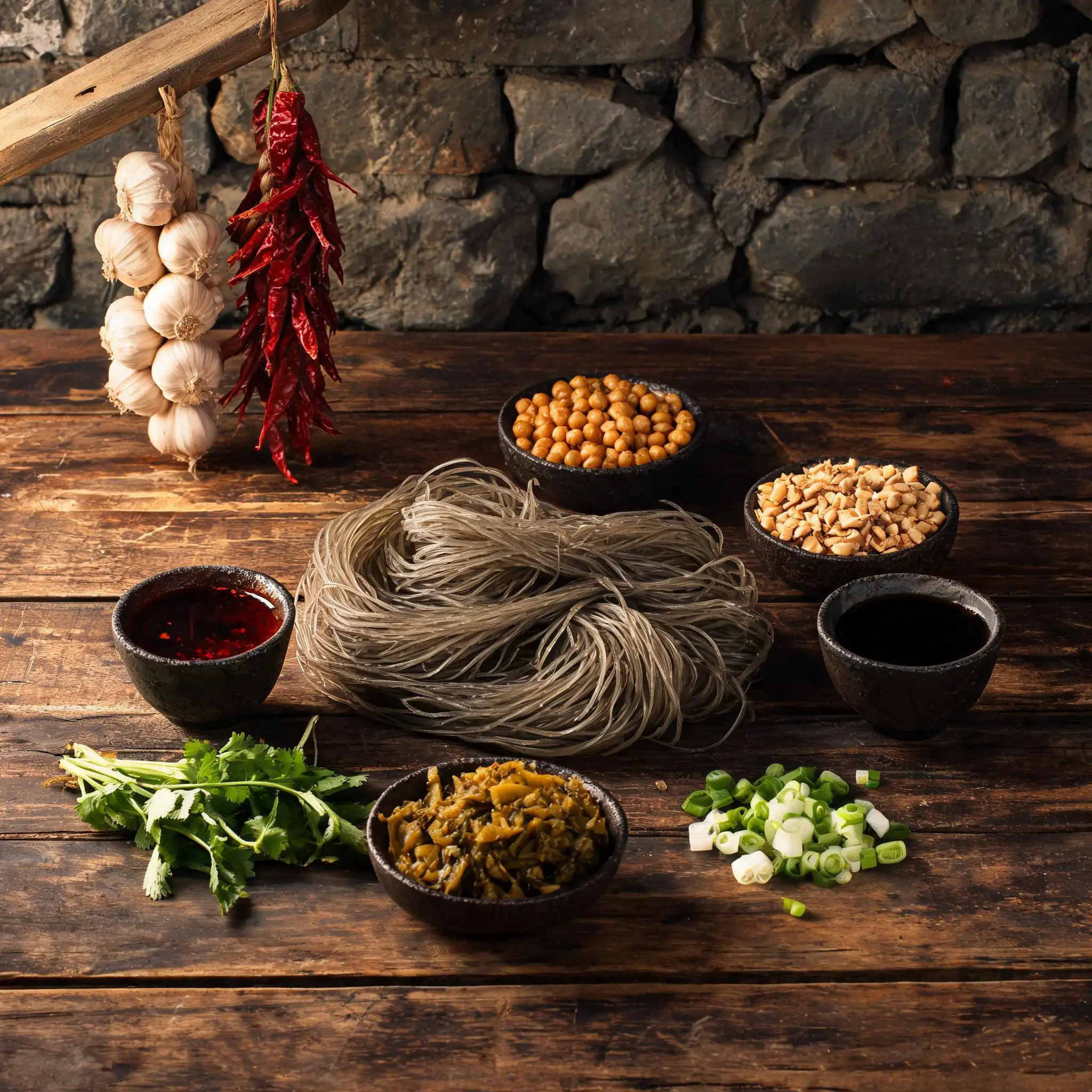
**Ingredients**
thick round red sweet potato starch noodles — a generous dry handful
chili oil — two tablespoons, deep red with visible chili flakes and sediment
Chinese black vinegar — two tablespoons, dark and sharp
soy sauce — one tablespoon
light broth or boiling water — enough to fill the bowl
For the toppings:
crispy fried soybeans — a small handful, golden and blistered
pickled mustard greens (zhacai) — a few tablespoons, finely shredded
fresh scallions — two stalks, cut into rings
fresh cilantro — a few sprigs
crushed roasted peanuts — one tablespoon
---
**How it's made**
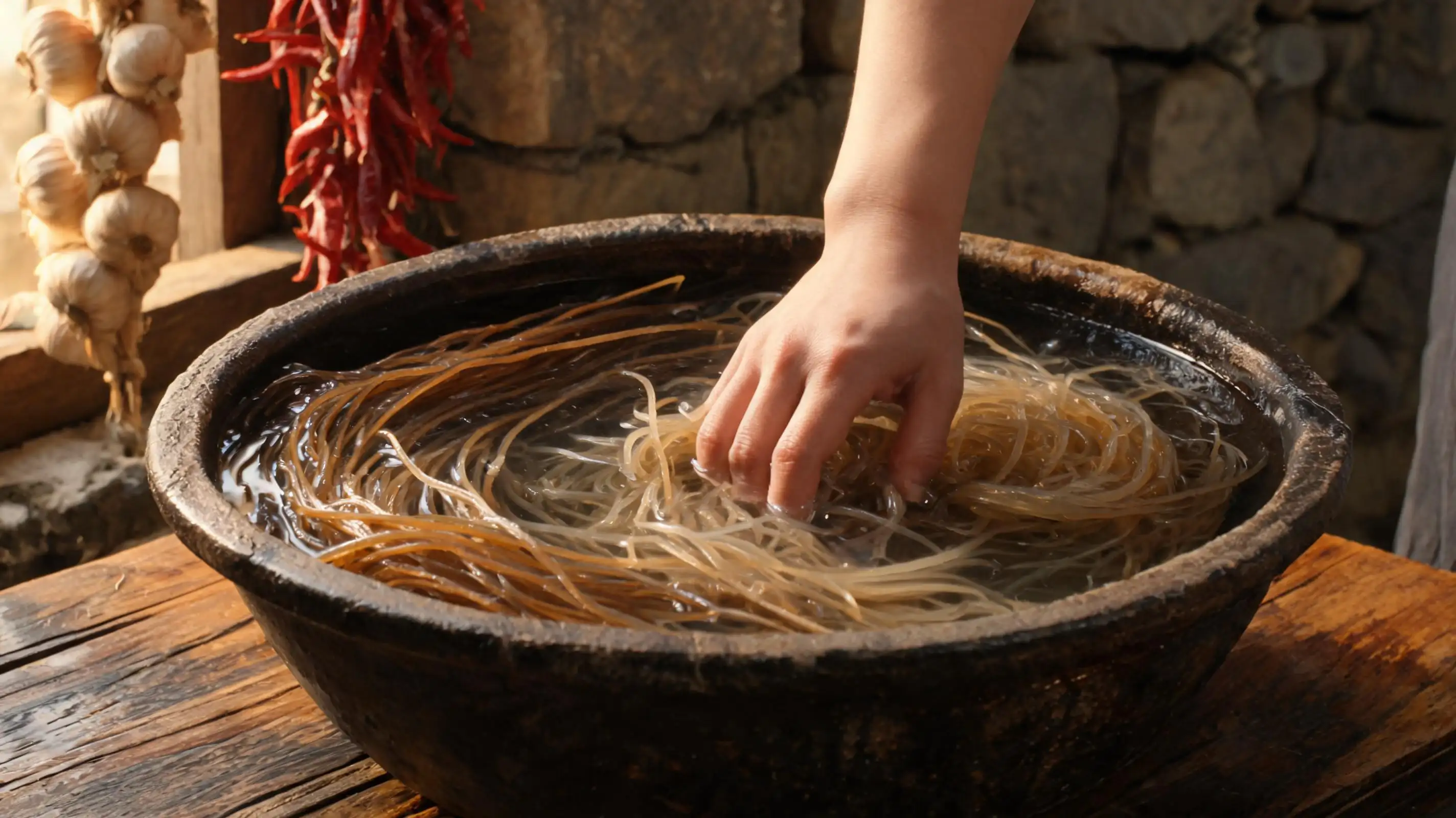
The dry noodles go into cold water the night before, or at least a few hours ahead. They're stiff and dark brown when dry, rigid enough that you can snap them. In the water they soften gradually, taking on color and going from opaque to a translucent brownish, still firm but no longer brittle. By the time you're ready to cook, they're pliable and a little glossy, soaking wet and heavy.
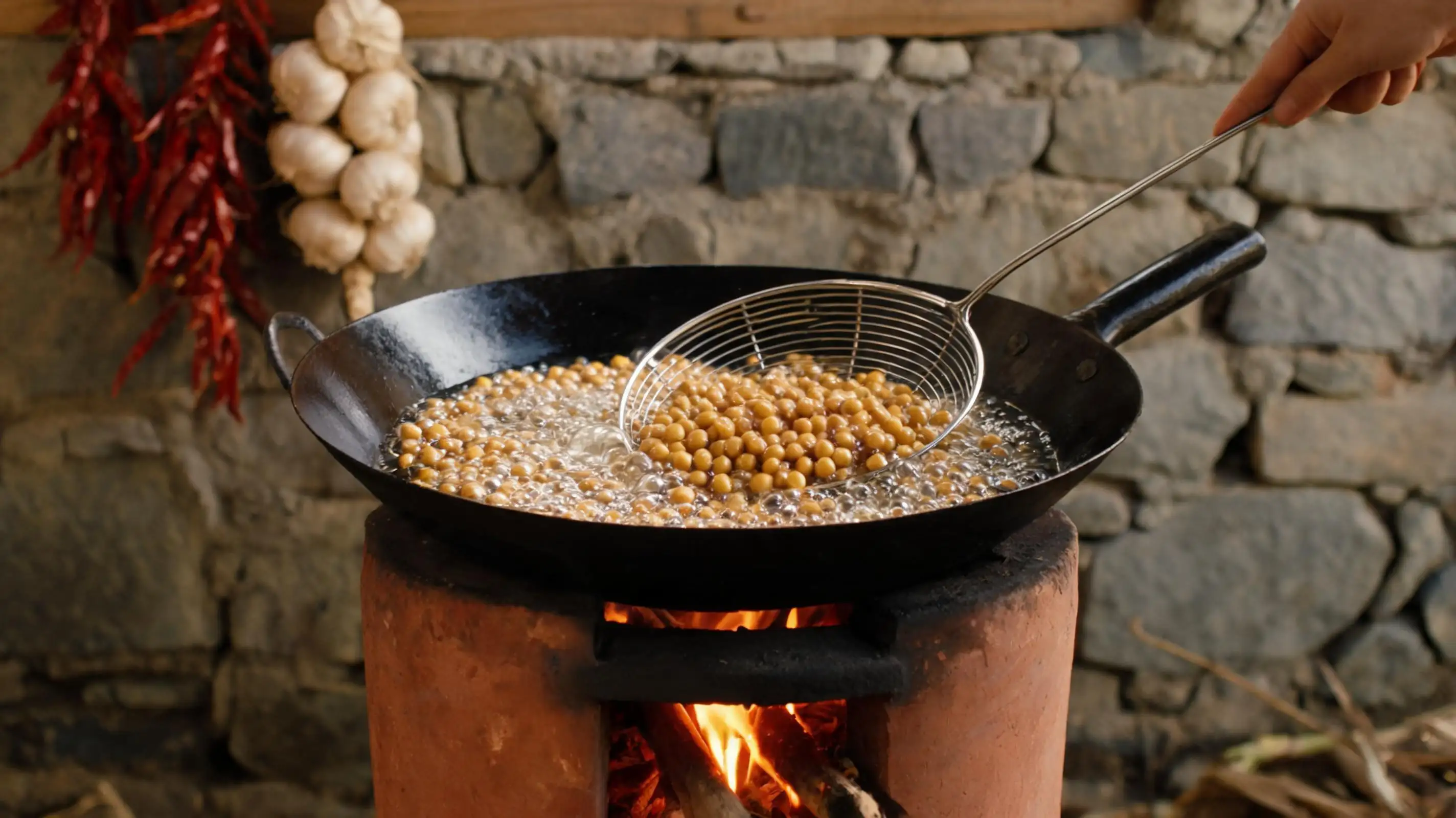
The soybeans come first. A small handful goes into hot oil in the wok, low heat, no rush. They need a few minutes to turn from pale and raw to golden and blistered, skins just beginning to split. You'll hear the pitch change when they're done — from a wet sizzle to a dry crackling sound. Pull them out onto a plate to cool. They'll harden further as they sit, and by the time the bowl is ready, they'll be crunchy all the way through.
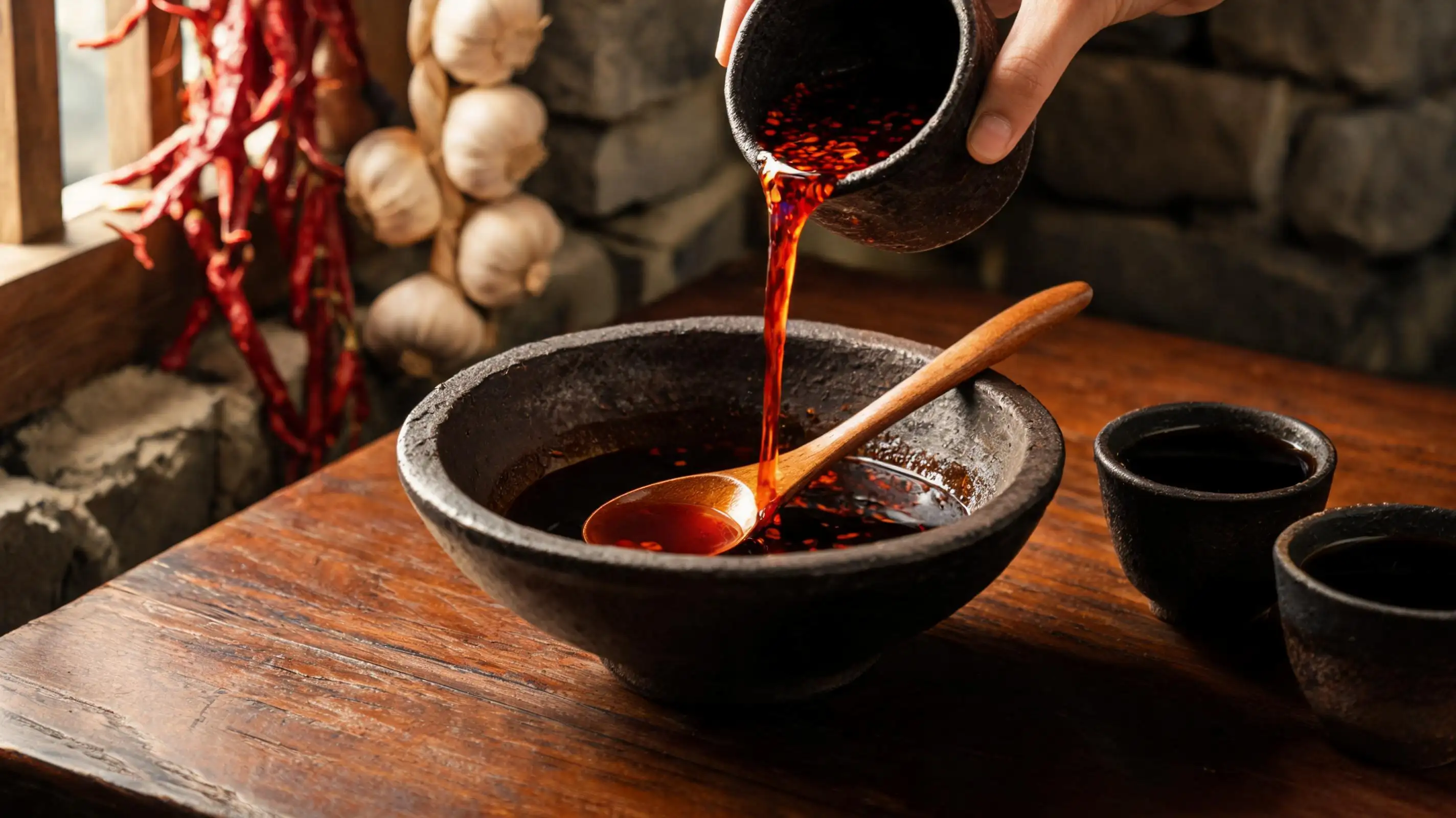
The bowl gets built before the noodles are cooked. Chili oil goes in first — two full tablespoons, deep red and thick with chili flakes settled at the bottom of the jar. Then black vinegar, two tablespoons, dark and sour. Then a splash of soy sauce for salt and a touch of depth. Leave it. The broth will do most of the stirring for you.
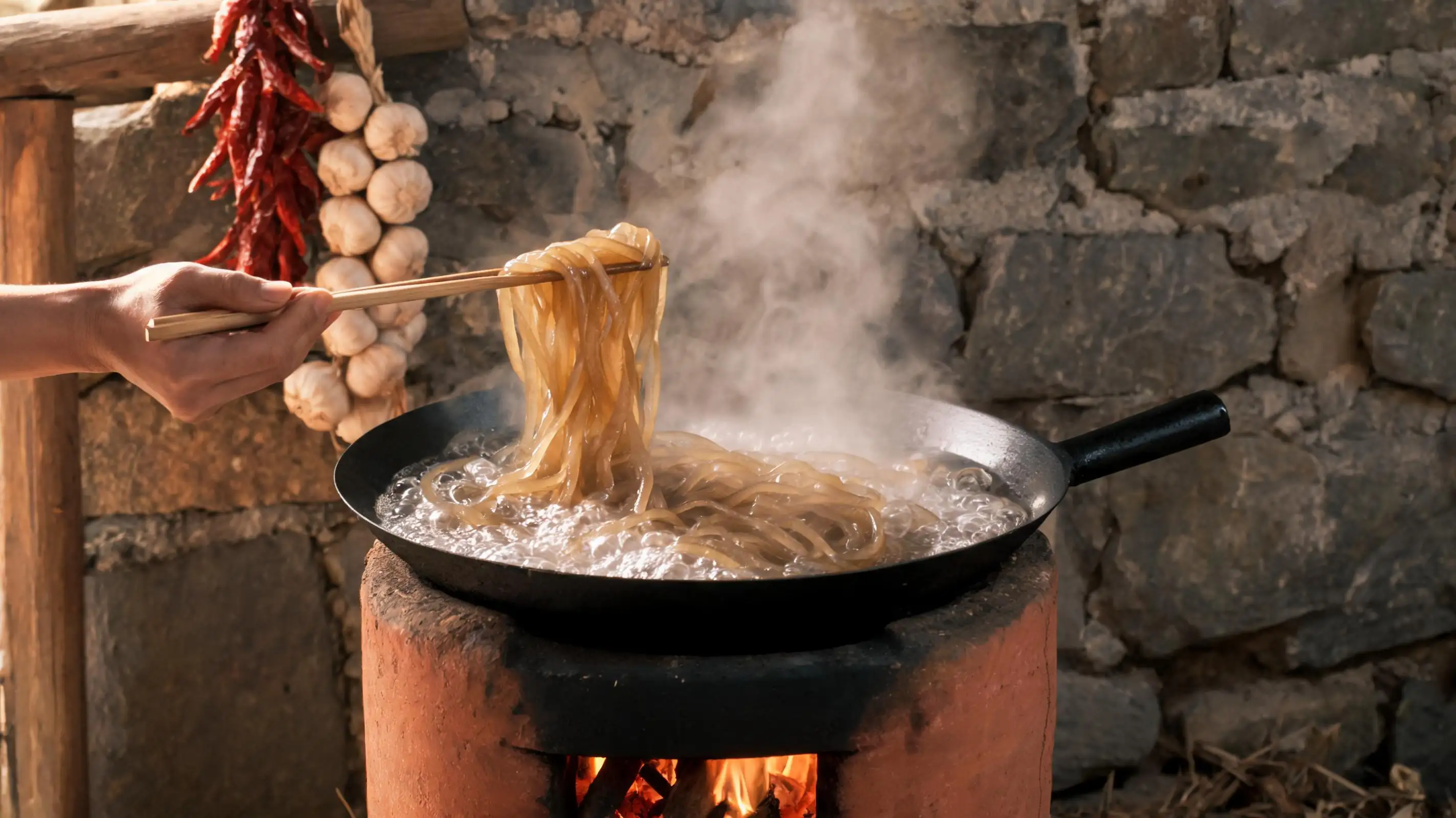
The noodles go into vigorously boiling water, the full rolling boil. Thick noodles need real heat to cook through without going soft on the outside while the center stays dense. Two to three minutes, turning them with chopsticks to make sure they don't clump. When they're done they're fully translucent, slippery and elastic when you lift them — they stretch slightly before they spring back. Drain them into the bowl directly, letting the weight of the noodles sink into the sauce at the bottom.
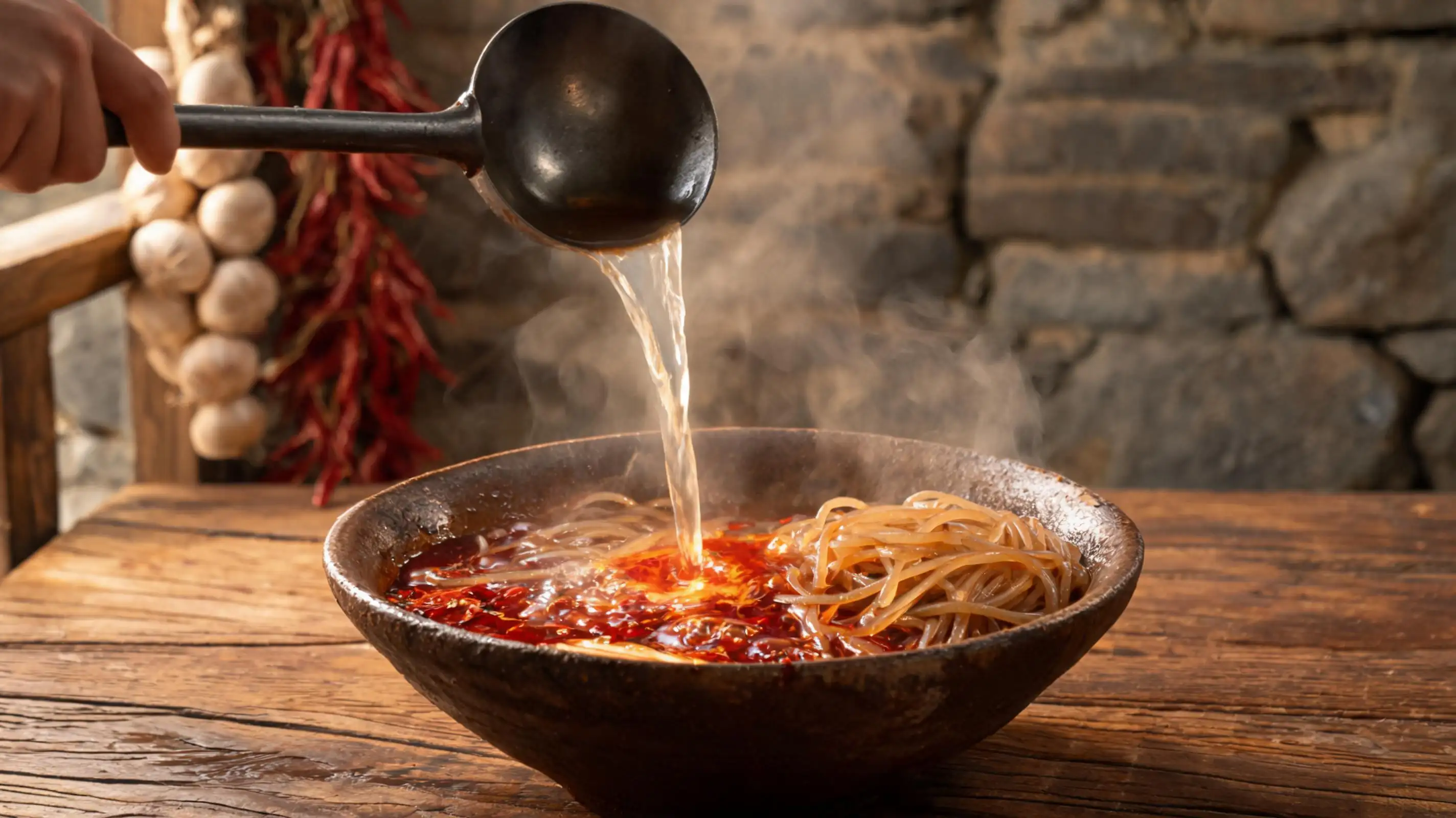
Then comes the broth. A full ladle of hot liquid poured in a strong stream — you want the impact to do the mixing. The hot broth hits the chili oil base and kicks everything upward in swirls of red and dark amber, the vinegar blooming through the steam in sharp-smelling clouds. The bowl fills from below, the noodles lifting and floating, the red broth rising around them.
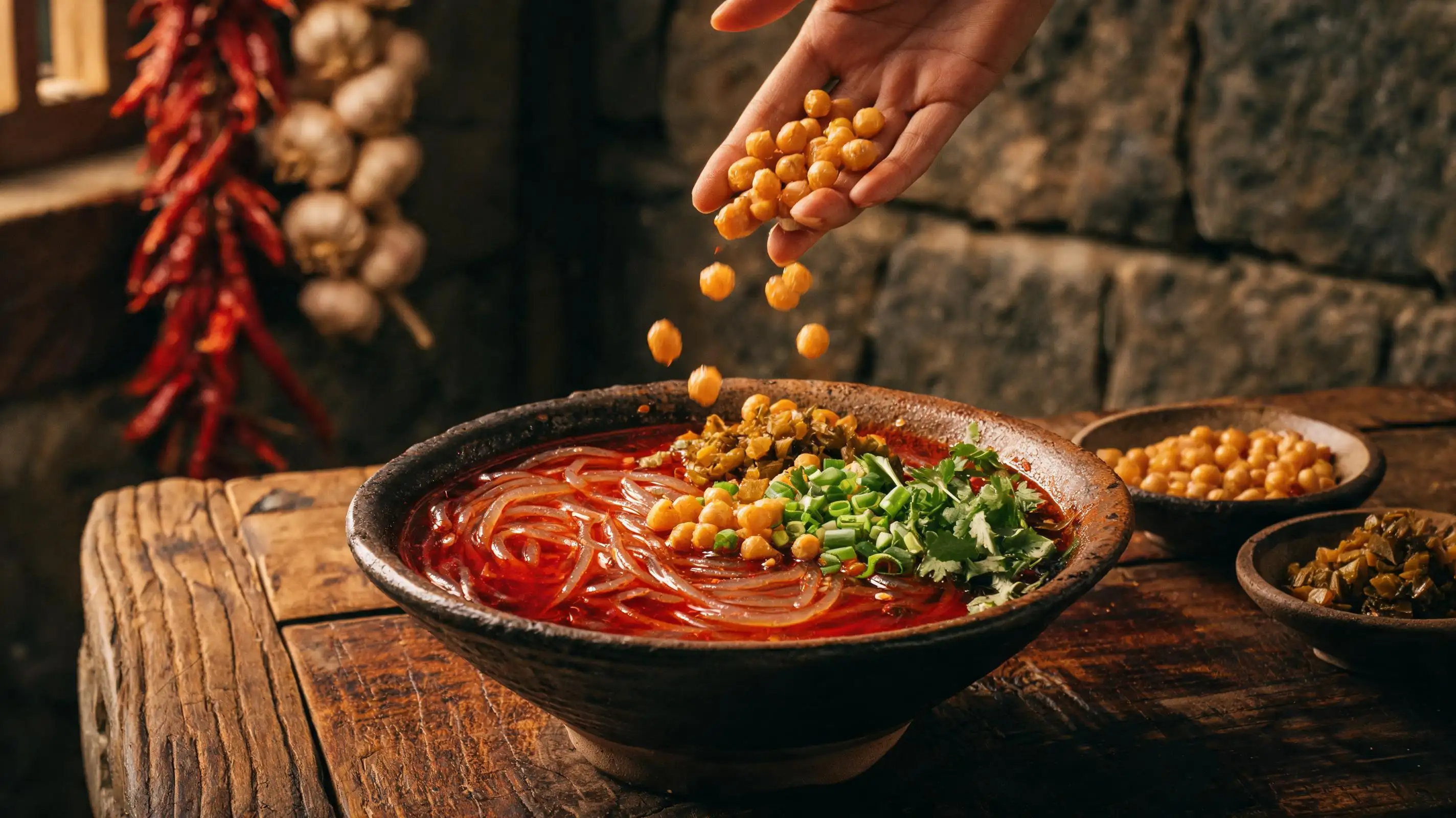
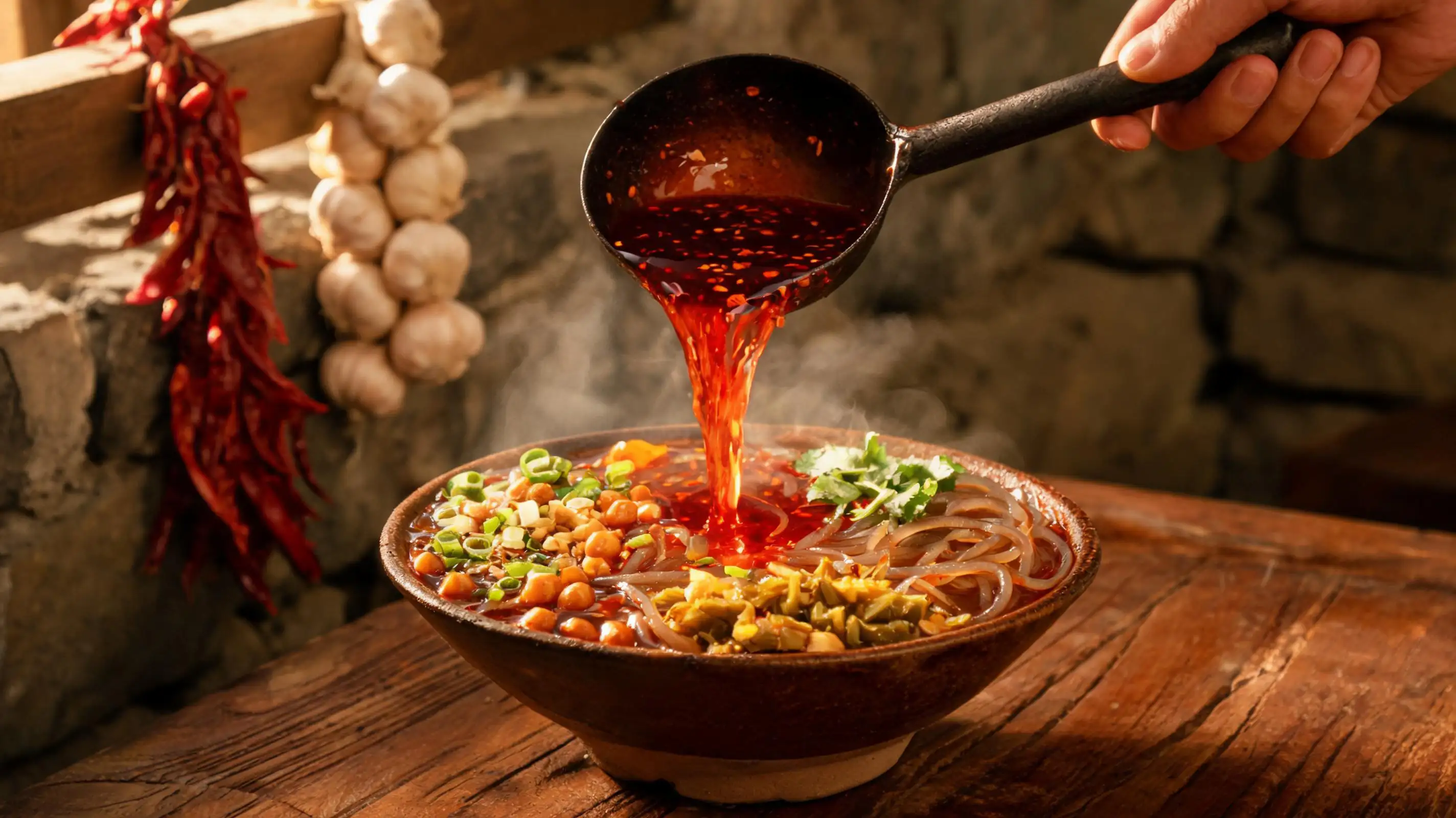
The toppings go on top: pickled mustard greens for crunch and salt, scallion rings, a few sprigs of cilantro, a spoon of crushed peanuts. Then the soybeans, scattered last so they stay above the liquid and hold their crunch. A final spoon of chili oil poured in a thin ribbon across the surface, spreading into a red slick that catches the light.
Stir before eating, pulling the noodles up from the bottom so the sauce coats every strand. The balance is the whole thing — sour from the vinegar, hot from the oil, savory from the soy sauce, and that crunch from the soybeans and peanuts all the way through.
The dish comes from Chongqing and the surrounding regions, where sweet potato starch noodles were a staple long before the dish had a name. Street vendors used to carry the whole setup on a shoulder pole — one bucket for the noodles and broth, one for the seasonings — assembling each bowl on the spot and handing it over in under two minutes. The sourness and the heat were not decorative. They were practical: vinegar cut through oil and salt, and the chili kept you warm in the damp winters that come with living in a river basin city built into the side of a mountain.
---
**Ingredients**
thick round red sweet potato starch noodles — a generous dry handful
chili oil — two tablespoons, deep red with visible chili flakes and sediment
Chinese black vinegar — two tablespoons, dark and sharp
soy sauce — one tablespoon
light broth or boiling water — enough to fill the bowl
For the toppings:
crispy fried soybeans — a small handful, golden and blistered
pickled mustard greens (zhacai) — a few tablespoons, finely shredded
fresh scallions — two stalks, cut into rings
fresh cilantro — a few sprigs
crushed roasted peanuts — one tablespoon
---
**How it's made**
The dry noodles go into cold water the night before, or at least a few hours ahead. They're stiff and dark brown when dry, rigid enough that you can snap them. In the water they soften gradually, taking on color and going from opaque to a translucent brownish, still firm but no longer brittle. By the time you're ready to cook, they're pliable and a little glossy, soaking wet and heavy.
The soybeans come first. A small handful goes into hot oil in the wok, low heat, no rush. They need a few minutes to turn from pale and raw to golden and blistered, skins just beginning to split. You'll hear the pitch change when they're done — from a wet sizzle to a dry crackling sound. Pull them out onto a plate to cool. They'll harden further as they sit, and by the time the bowl is ready, they'll be crunchy all the way through.
The bowl gets built before the noodles are cooked. Chili oil goes in first — two full tablespoons, deep red and thick with chili flakes settled at the bottom of the jar. Then black vinegar, two tablespoons, dark and sour. Then a splash of soy sauce for salt and a touch of depth. Leave it. The broth will do most of the stirring for you.
The noodles go into vigorously boiling water, the full rolling boil. Thick noodles need real heat to cook through without going soft on the outside while the center stays dense. Two to three minutes, turning them with chopsticks to make sure they don't clump. When they're done they're fully translucent, slippery and elastic when you lift them — they stretch slightly before they spring back. Drain them into the bowl directly, letting the weight of the noodles sink into the sauce at the bottom.
Then comes the broth. A full ladle of hot liquid poured in a strong stream — you want the impact to do the mixing. The hot broth hits the chili oil base and kicks everything upward in swirls of red and dark amber, the vinegar blooming through the steam in sharp-smelling clouds. The bowl fills from below, the noodles lifting and floating, the red broth rising around them.
The toppings go on top: pickled mustard greens for crunch and salt, scallion rings, a few sprigs of cilantro, a spoon of crushed peanuts. Then the soybeans, scattered last so they stay above the liquid and hold their crunch. A final spoon of chili oil poured in a thin ribbon across the surface, spreading into a red slick that catches the light.
Stir before eating, pulling the noodles up from the bottom so the sauce coats every strand. The balance is the whole thing — sour from the vinegar, hot from the oil, savory from the soy sauce, and that crunch from the soybeans and peanuts all the way through.
The dish comes from Chongqing and the surrounding regions, where sweet potato starch noodles were a staple long before the dish had a name. Street vendors used to carry the whole setup on a shoulder pole — one bucket for the noodles and broth, one for the seasonings — assembling each bowl on the spot and handing it over in under two minutes. The sourness and the heat were not decorative. They were practical: vinegar cut through oil and salt, and the chili kept you warm in the damp winters that come with living in a river basin city built into the side of a mountain.