·6/1/2026
from
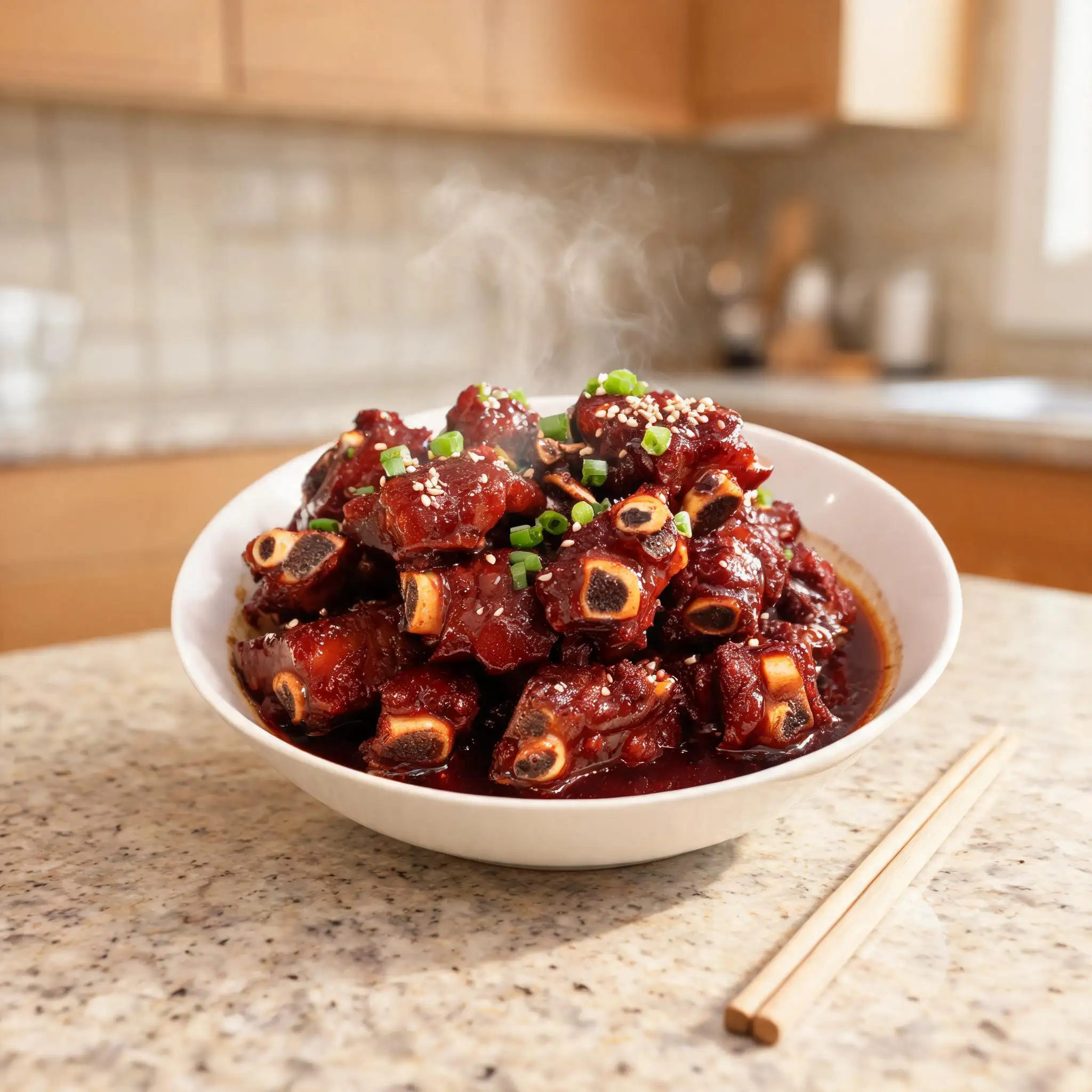
Red-Braised Pork Spare Ribs
**Red-Braised Pork Spare Ribs** *(红烧排骨)*
---
**Ingredients**
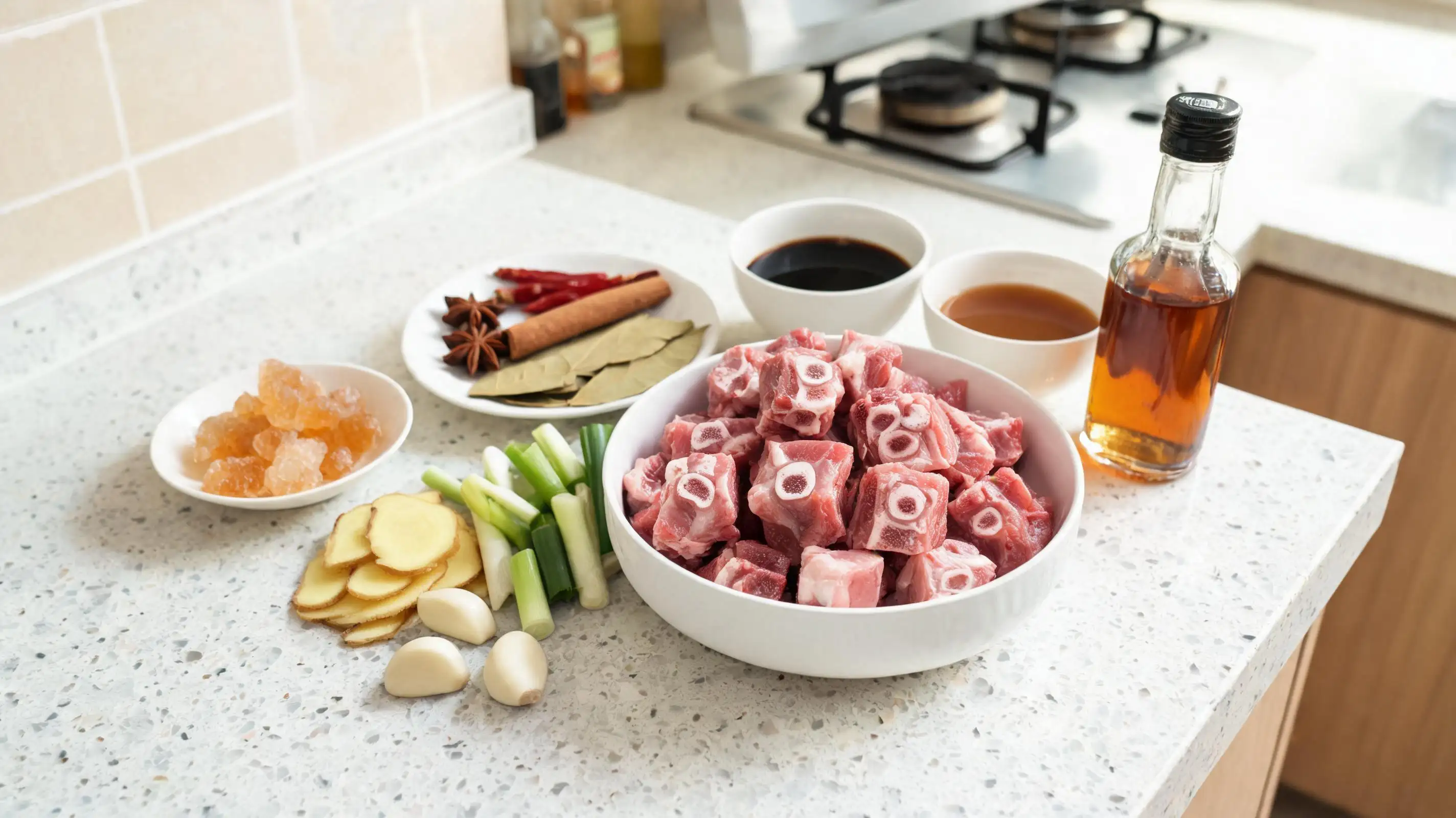
Pork spare ribs — cut into 3 to 4cm sections, each piece with one bone; rinsed clean before use
Rock sugar (bing tang) — a small handful of irregular amber crystals
Fresh ginger — four or five thin slices
Garlic — four cloves, peeled and left whole
Green onion — one stalk, cut into finger-length sections
Star anise — two whole
Cinnamon stick — one small piece
Dried bay leaves — two
Dried red chilies — two, optional
For the sauce:
Dark soy sauce — two tablespoons
Light soy sauce — one tablespoon
Shaoxing rice wine — two tablespoons
Neutral cooking oil — a small amount, just enough to coat the pan
---
**How it's made**
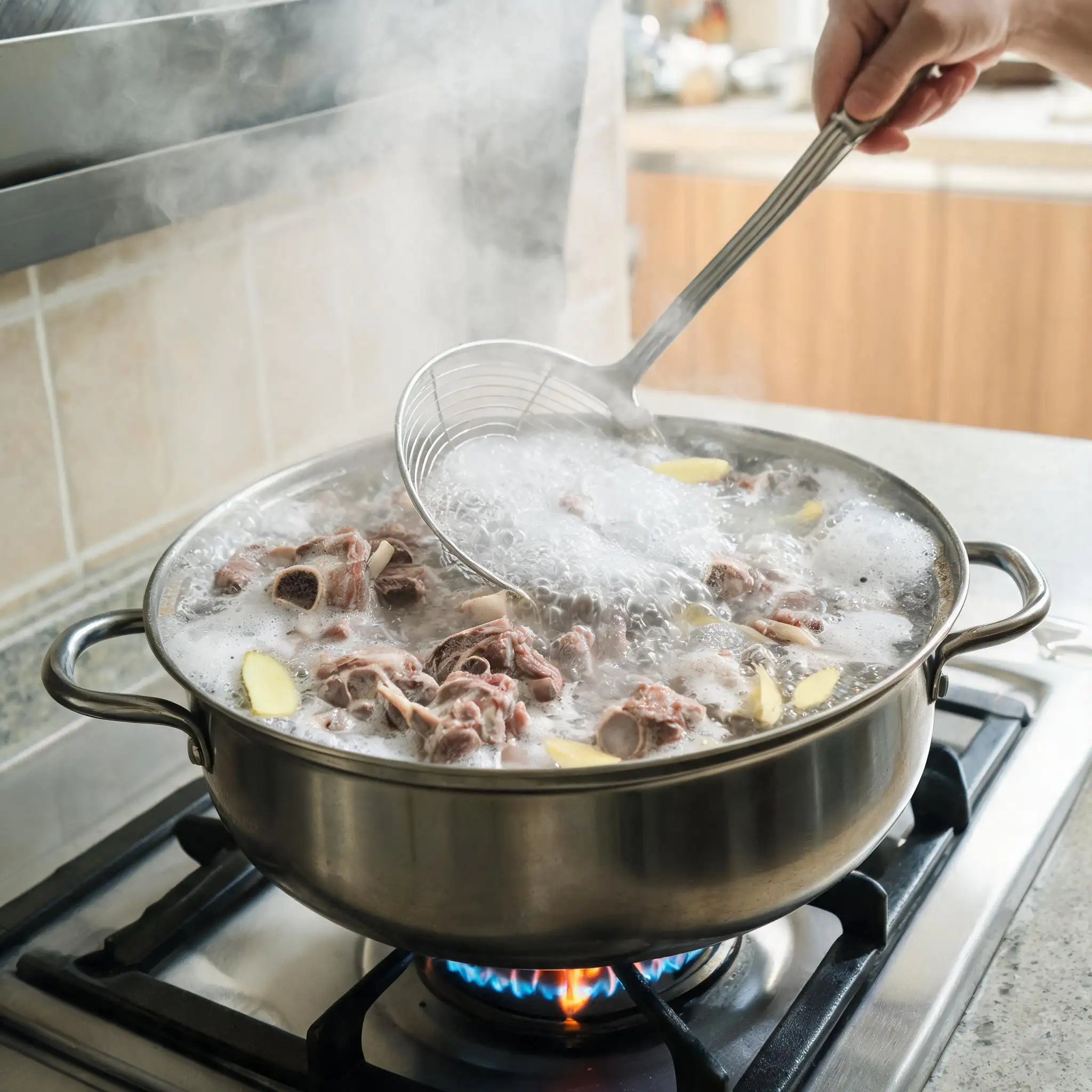
Put the rib sections into a pot with enough cold water to cover. Add two ginger slices and a splash of rice wine, then bring to a boil over high heat. Within a few minutes the water will turn gray and foamy — that's blood and bone matter releasing from the marrow. Skim the surface as the scum rises, let it go another minute, then drain and rinse the ribs under running water until it runs clear. This step matters. It pulls out the off-flavors that would otherwise muddy the final sauce and leaves the meat with a much cleaner, more direct taste.
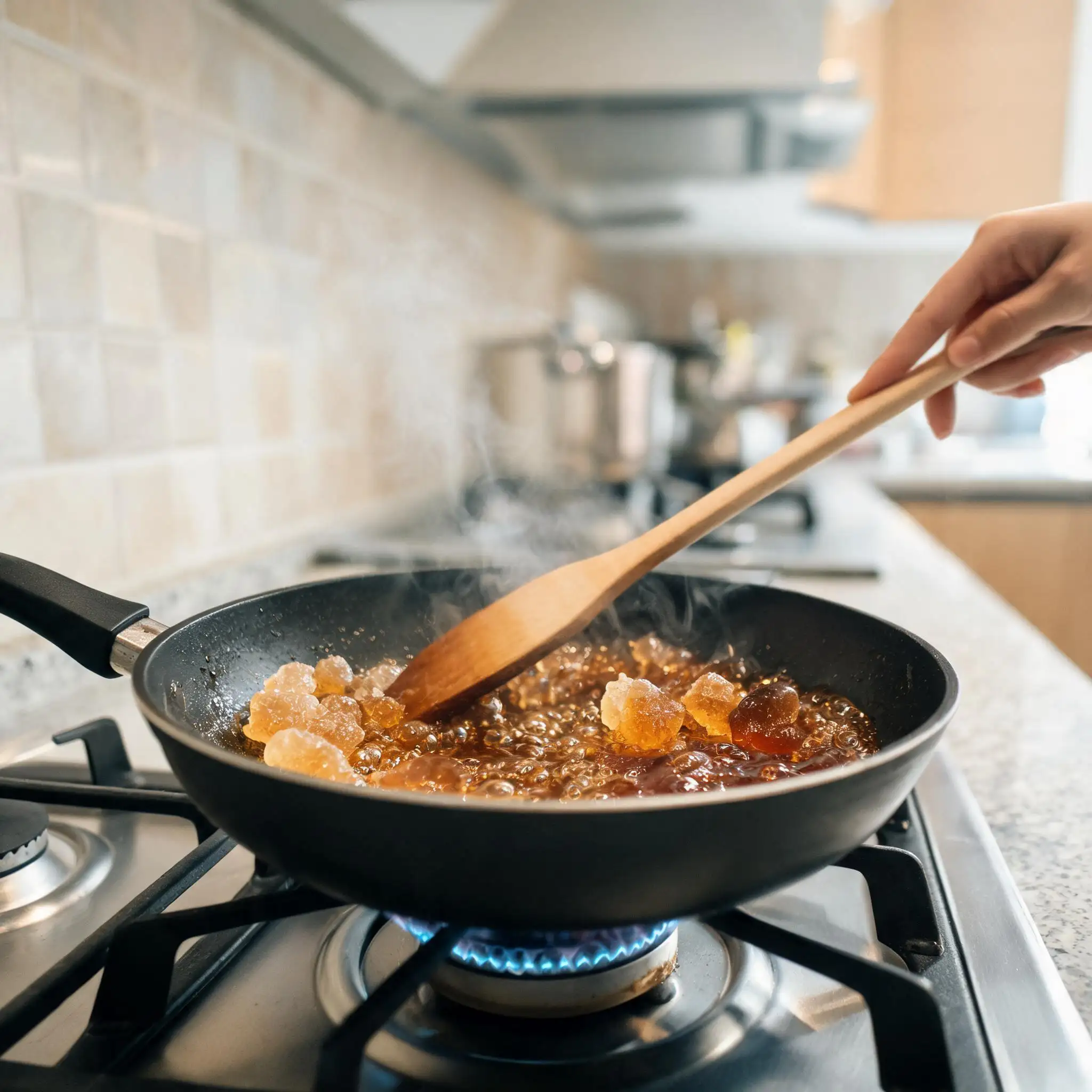
Heat a pan over medium-low, add a small amount of oil, then put the rock sugar in. Don't rush it. The crystals melt slowly — first going transparent, then pale yellow, then a deep reddish amber that smells sweet with a faint bitter edge underneath. Stir gently with a wooden spatula and stay close. The gap between the right color and burnt is maybe thirty seconds. When it hits that dark, almost-red amber, add the drained ribs straight in. They'll spit hard as the hot caramel seizes onto the cold wet surface, and that contact is exactly what builds the base color on each piece.
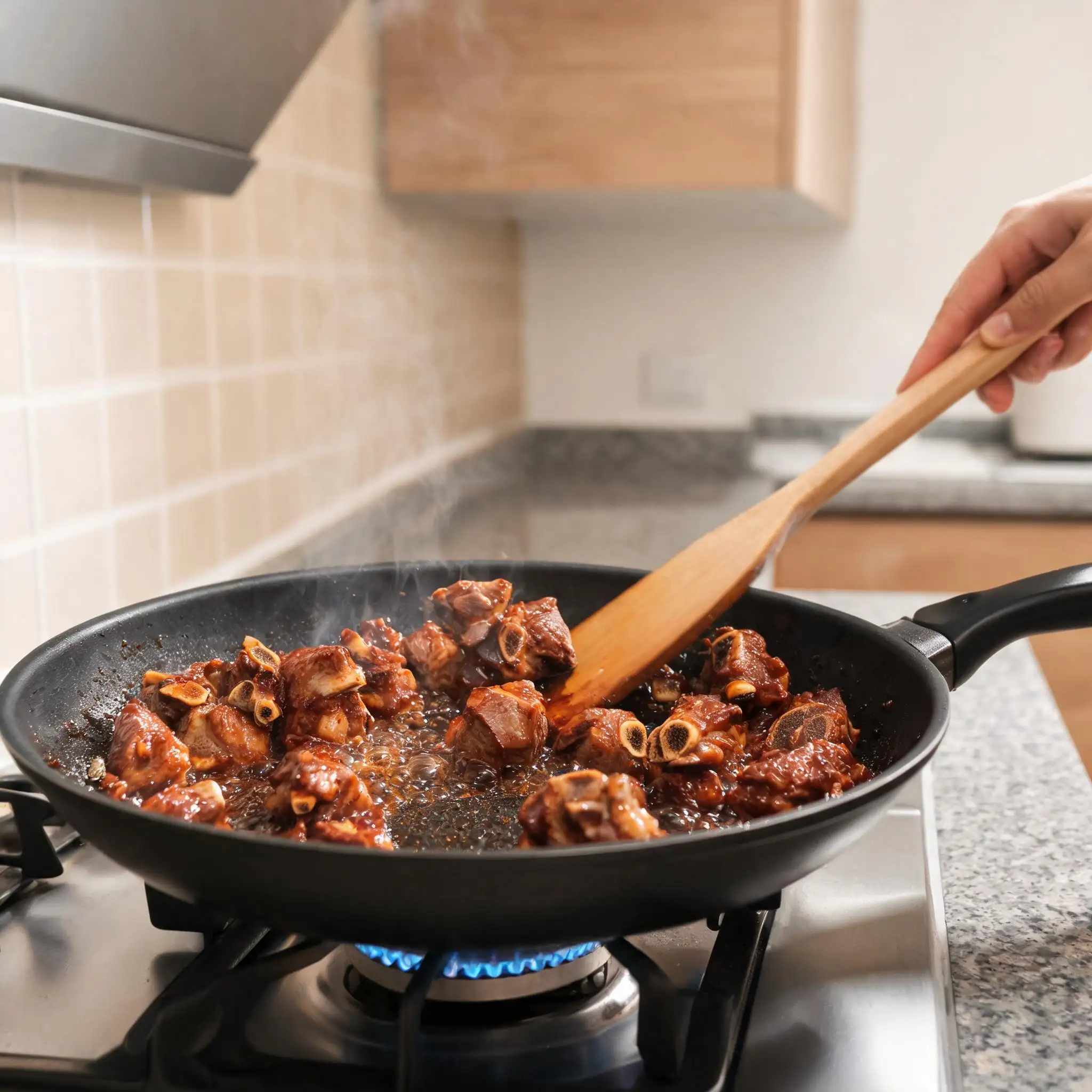
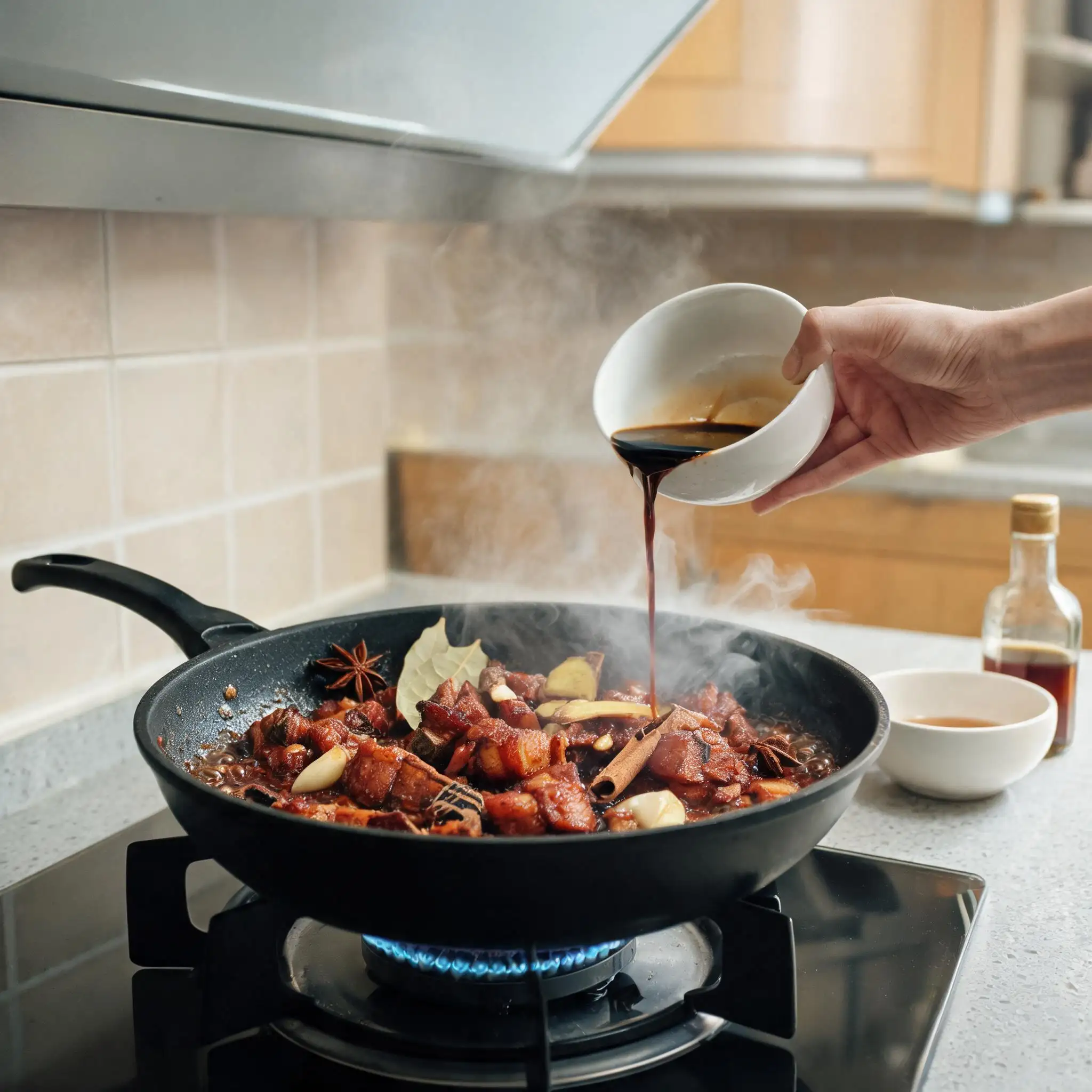
Turn the heat up and toss the ribs through the caramel for a minute or two until every surface is coated. Add the ginger, garlic, green onion, star anise, cinnamon, bay leaves, and dried chilies. Let the aromatics go for half a minute in the hot pan — you'll catch the smell of the spices opening up before you can see anything change. Pour the dark soy sauce around the inner edge of the pan rather than directly over the ribs; it hits the hot surface and flashes into dark steam, which carries a stronger flavor into the meat than pouring it cold into the center. Follow with the light soy sauce and the rice wine, then fold everything together quickly.
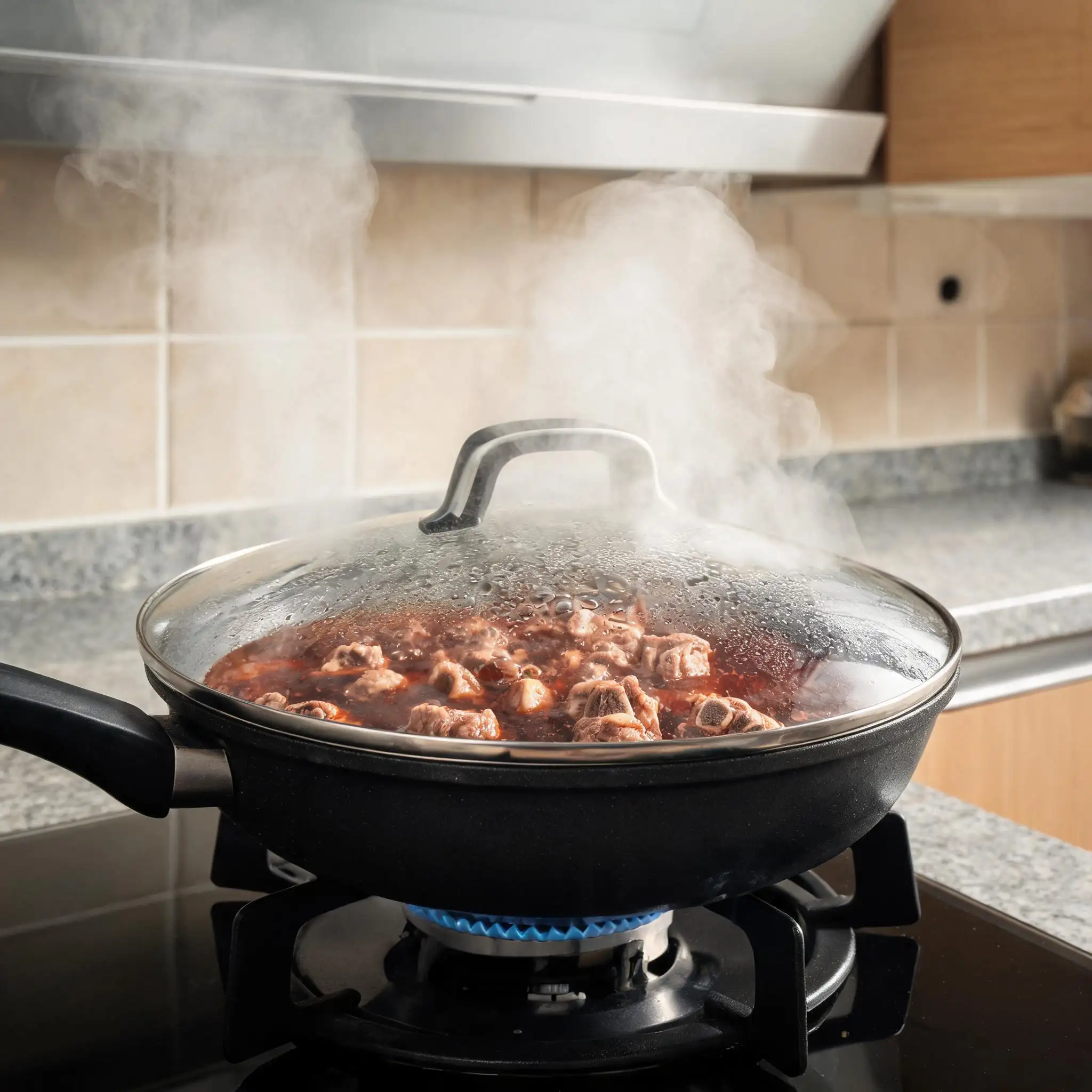
Add enough hot water to bring the liquid level with the ribs. Bring it back to a boil, then drop the heat to low, lid on, and leave it for about forty minutes. The ribs need this time — the collagen near the bone requires sustained heat to break down properly, and if you cut the braising short, the meat will still be slightly tight when you bite close to the bone. Check once halfway through; if the liquid has dropped by more than half, add a small splash of hot water. You'll know the braising phase is working when the smell from under the lid shifts from sharp and soy-forward to something warmer and a little floral from the spices.
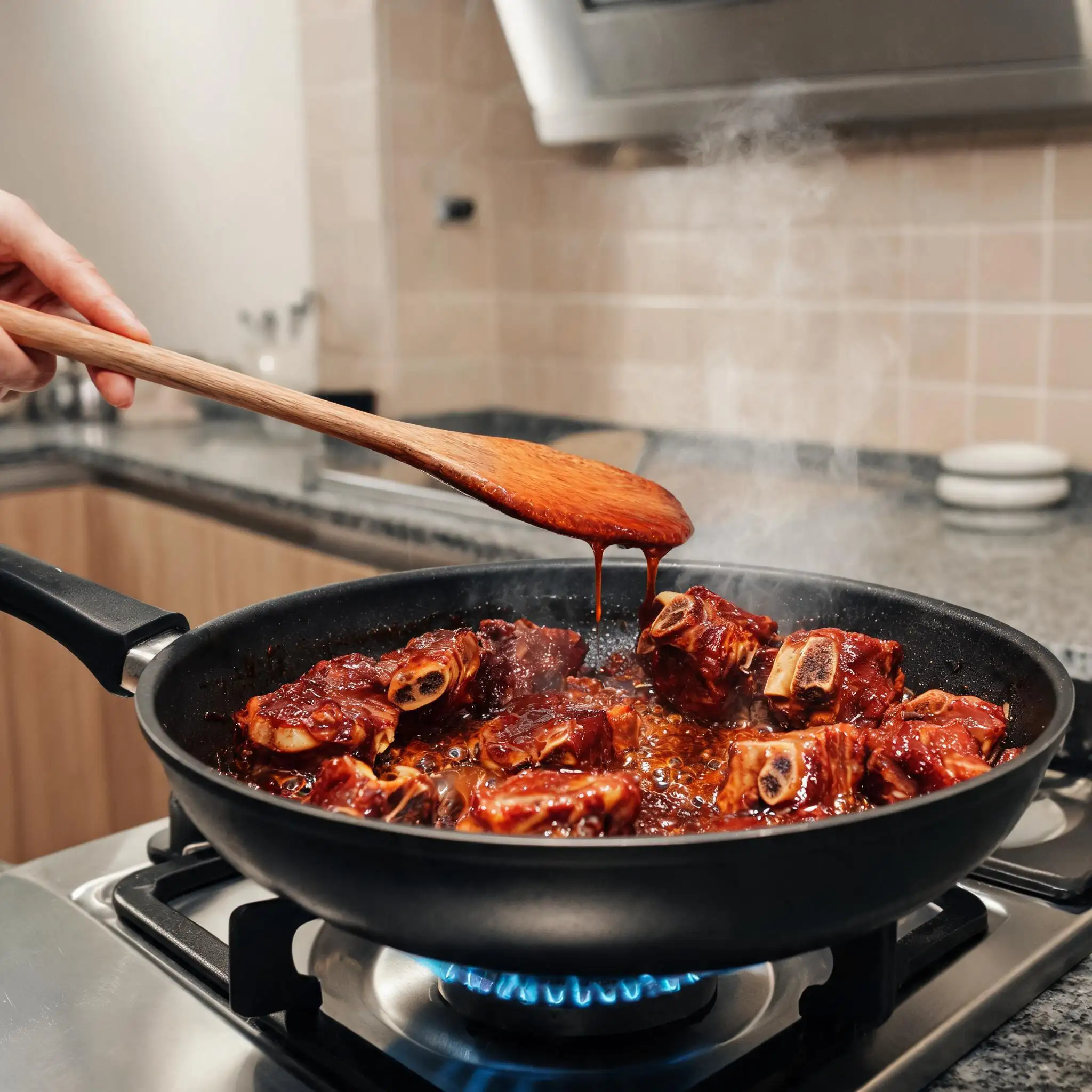
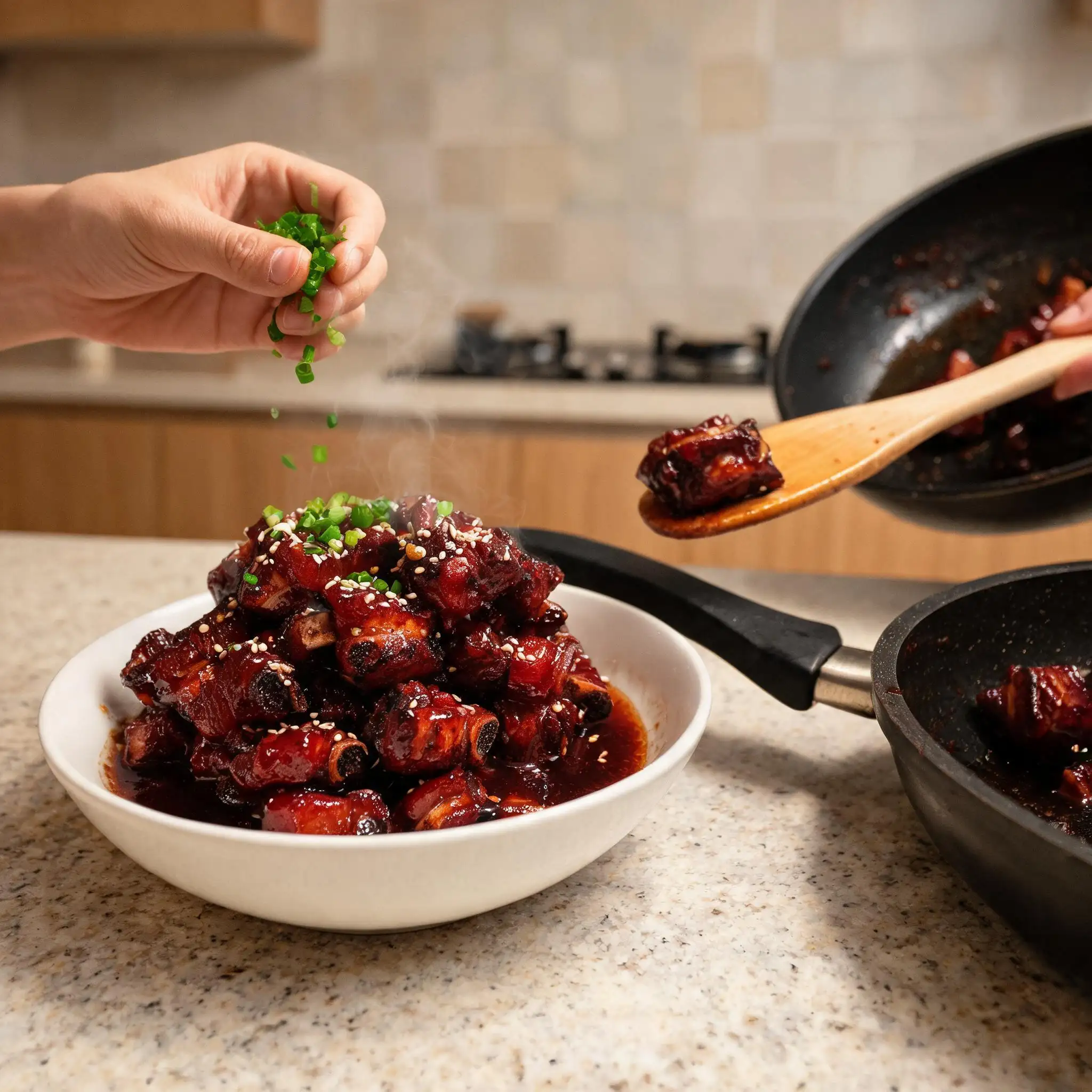
Take the lid off and raise the heat to medium-high. Now you're just reducing. Stir every thirty seconds or so, turning the ribs so nothing catches on the bottom. The sauce goes from thin and watery to thick and glossy in a way that's visible — it stops running off the spatula freely and starts falling in slow, heavy ribbons. When each piece is coated in a dark, shining glaze and the sauce pools thickly at the bottom rather than spreading thin, it's done. Move to a deep bowl. Scatter some chopped green onion and a small pinch of white sesame on top.
The name — hong shao, literally "red cook" — just describes the color the sauce turns when the sugar caramelizes and the dark soy builds up together. It's not specific to this dish; the same technique gets applied to pork belly, chicken wings, and even tofu in Chinese home cooking. What makes the spare rib version particular is the bone itself — during braising, the marrow slowly leaches into the surrounding liquid, which is part of what makes the final glaze thick and rich in a way that a boneless cut wouldn't quite achieve. Most families have their own version of this, adjusted slightly based on what someone's mother or grandmother did, and the proportions shift from kitchen to kitchen. This one keeps things straightforward.
---
**Ingredients**
Pork spare ribs — cut into 3 to 4cm sections, each piece with one bone; rinsed clean before use
Rock sugar (bing tang) — a small handful of irregular amber crystals
Fresh ginger — four or five thin slices
Garlic — four cloves, peeled and left whole
Green onion — one stalk, cut into finger-length sections
Star anise — two whole
Cinnamon stick — one small piece
Dried bay leaves — two
Dried red chilies — two, optional
For the sauce:
Dark soy sauce — two tablespoons
Light soy sauce — one tablespoon
Shaoxing rice wine — two tablespoons
Neutral cooking oil — a small amount, just enough to coat the pan
---
**How it's made**
Put the rib sections into a pot with enough cold water to cover. Add two ginger slices and a splash of rice wine, then bring to a boil over high heat. Within a few minutes the water will turn gray and foamy — that's blood and bone matter releasing from the marrow. Skim the surface as the scum rises, let it go another minute, then drain and rinse the ribs under running water until it runs clear. This step matters. It pulls out the off-flavors that would otherwise muddy the final sauce and leaves the meat with a much cleaner, more direct taste.
Heat a pan over medium-low, add a small amount of oil, then put the rock sugar in. Don't rush it. The crystals melt slowly — first going transparent, then pale yellow, then a deep reddish amber that smells sweet with a faint bitter edge underneath. Stir gently with a wooden spatula and stay close. The gap between the right color and burnt is maybe thirty seconds. When it hits that dark, almost-red amber, add the drained ribs straight in. They'll spit hard as the hot caramel seizes onto the cold wet surface, and that contact is exactly what builds the base color on each piece.
Turn the heat up and toss the ribs through the caramel for a minute or two until every surface is coated. Add the ginger, garlic, green onion, star anise, cinnamon, bay leaves, and dried chilies. Let the aromatics go for half a minute in the hot pan — you'll catch the smell of the spices opening up before you can see anything change. Pour the dark soy sauce around the inner edge of the pan rather than directly over the ribs; it hits the hot surface and flashes into dark steam, which carries a stronger flavor into the meat than pouring it cold into the center. Follow with the light soy sauce and the rice wine, then fold everything together quickly.
Add enough hot water to bring the liquid level with the ribs. Bring it back to a boil, then drop the heat to low, lid on, and leave it for about forty minutes. The ribs need this time — the collagen near the bone requires sustained heat to break down properly, and if you cut the braising short, the meat will still be slightly tight when you bite close to the bone. Check once halfway through; if the liquid has dropped by more than half, add a small splash of hot water. You'll know the braising phase is working when the smell from under the lid shifts from sharp and soy-forward to something warmer and a little floral from the spices.
Take the lid off and raise the heat to medium-high. Now you're just reducing. Stir every thirty seconds or so, turning the ribs so nothing catches on the bottom. The sauce goes from thin and watery to thick and glossy in a way that's visible — it stops running off the spatula freely and starts falling in slow, heavy ribbons. When each piece is coated in a dark, shining glaze and the sauce pools thickly at the bottom rather than spreading thin, it's done. Move to a deep bowl. Scatter some chopped green onion and a small pinch of white sesame on top.
The name — hong shao, literally "red cook" — just describes the color the sauce turns when the sugar caramelizes and the dark soy builds up together. It's not specific to this dish; the same technique gets applied to pork belly, chicken wings, and even tofu in Chinese home cooking. What makes the spare rib version particular is the bone itself — during braising, the marrow slowly leaches into the surrounding liquid, which is part of what makes the final glaze thick and rich in a way that a boneless cut wouldn't quite achieve. Most families have their own version of this, adjusted slightly based on what someone's mother or grandmother did, and the proportions shift from kitchen to kitchen. This one keeps things straightforward.