·6/1/2026
from
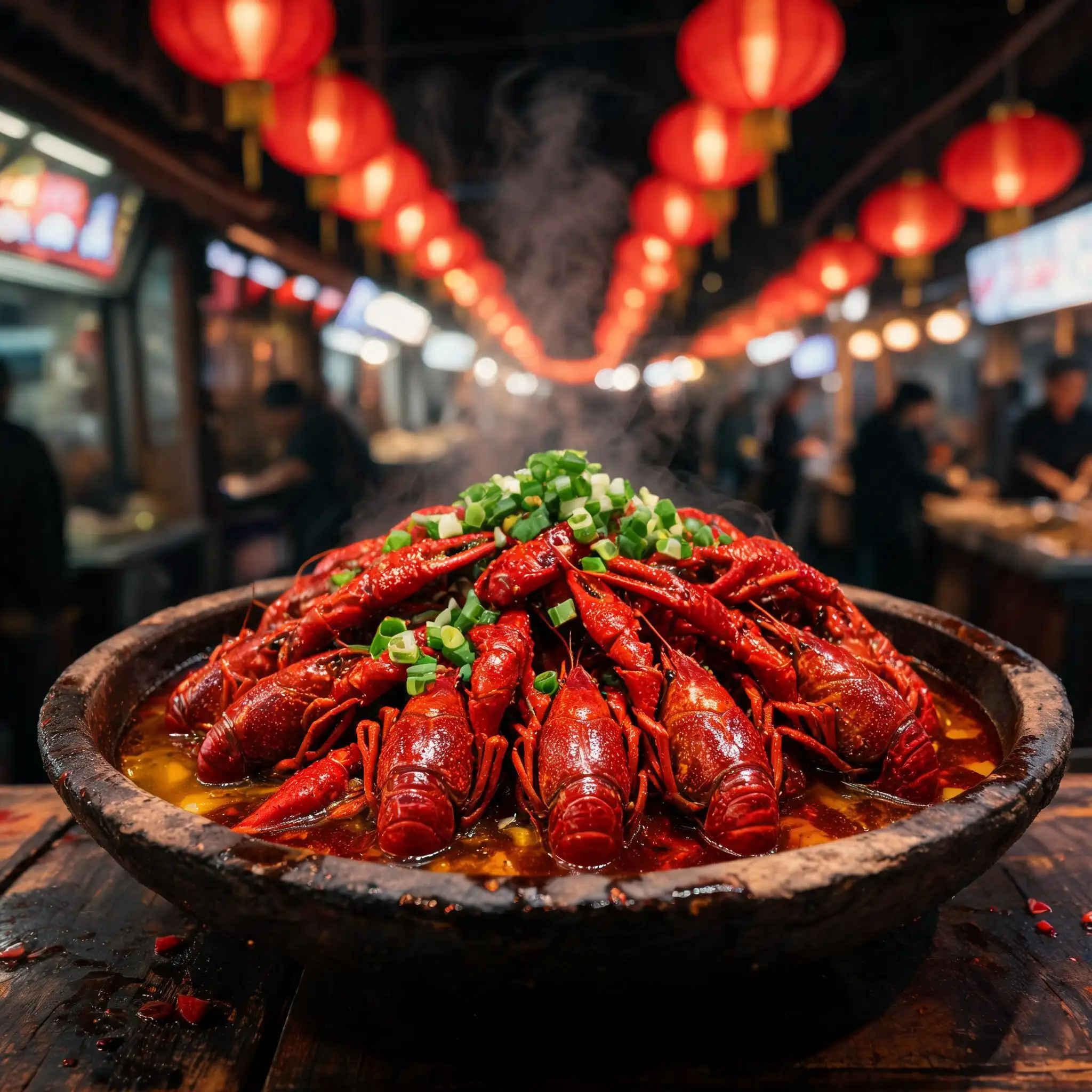
Spicy Braised Crayfish
**Spicy Braised Crayfish** *(麻辣小龙虾)*
---
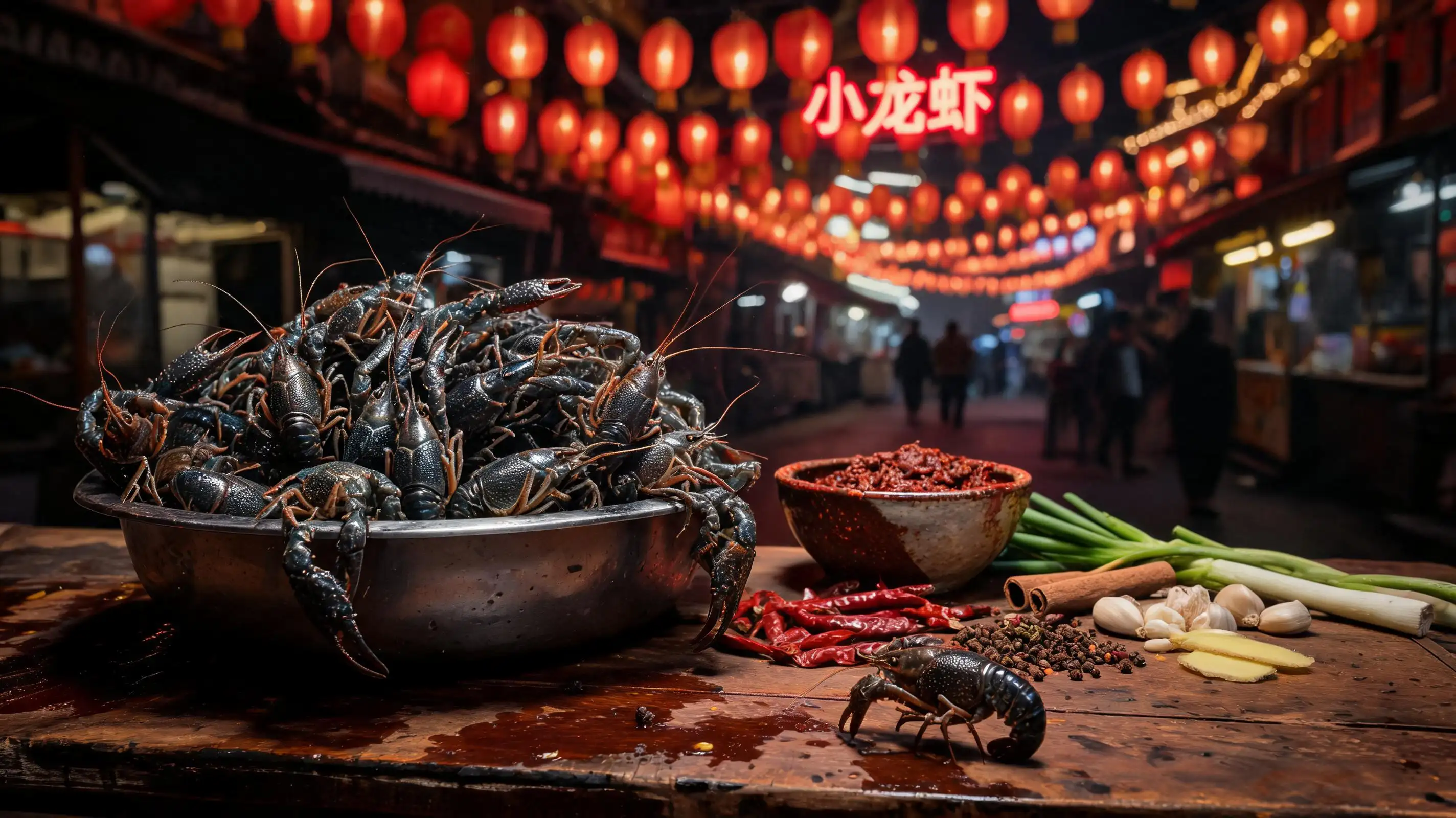
**Ingredients**
live crayfish — scrubbed one by one under cold running water with a stiff-bristled brush, claws and belly cleaned
dried red chilies — stemmed and torn roughly in half; a large handful
Sichuan peppercorns — whole, one tablespoon
Pixian doubanjiang — one heaped tablespoon, the dark fermented kind with visible chili flakes, not the smooth bright-red paste
garlic — six or seven cloves, peeled and smashed flat with the side of a knife
fresh ginger — three to four thin slices
green onion — two or three stalks, cut into finger-length sections
cinnamon stick — one piece
star anise — two whole pieces
cooking oil — enough to generously coat the base of the wok
Shaoxing rice wine — a generous pour, about two tablespoons
light soy sauce — a small splash
sugar — just a pinch, to round off the edge
---
**How it's made**
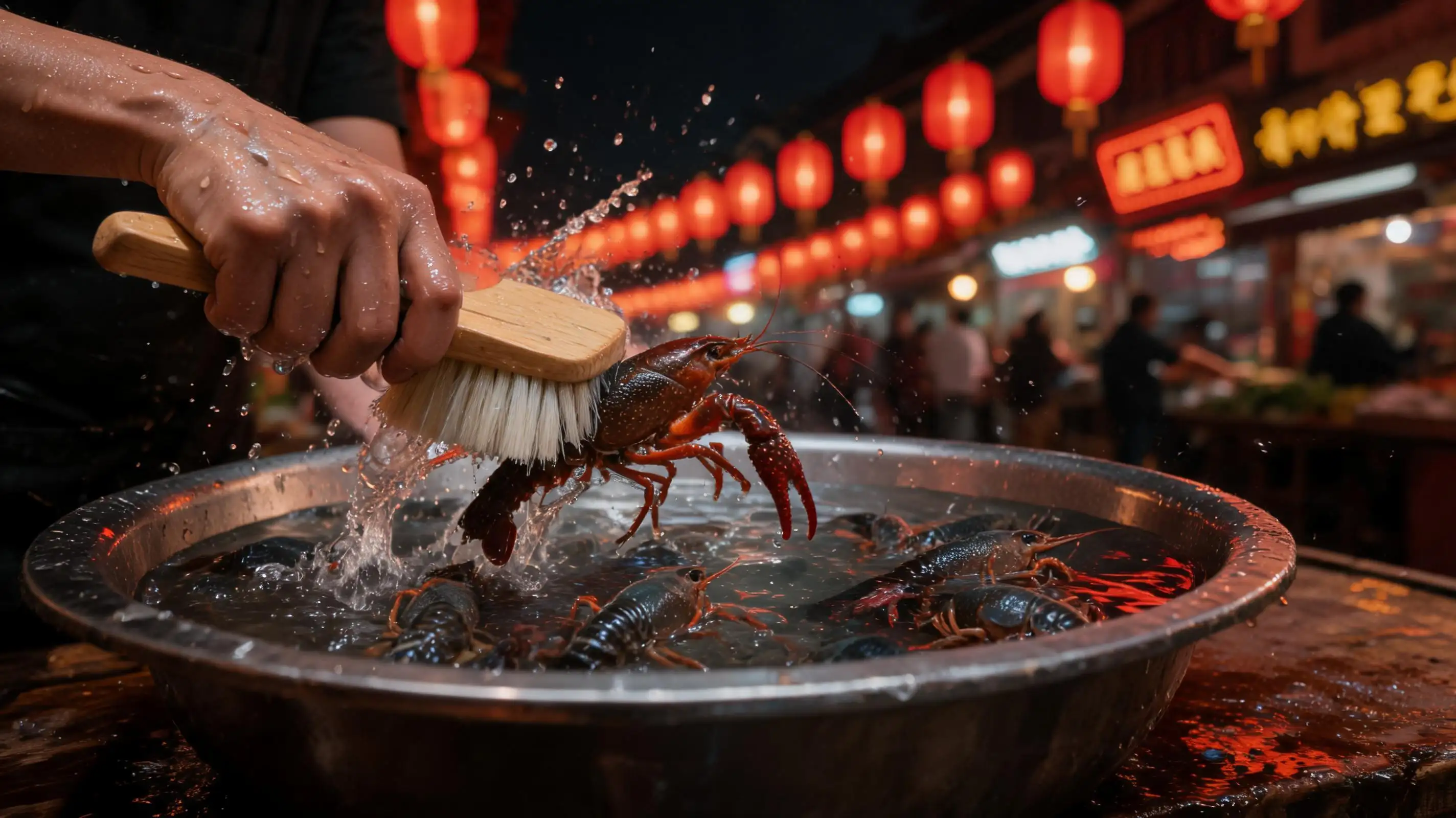
The crayfish come in alive, packed into a big metal basin, crawling over each other and gripping the rim with their claws. You scrub them one at a time under cold running water with a short stiff-bristled brush — the underside, the joints, between the legs — until the shell stops feeling gritty and the water runs clear. It takes longer than you'd expect. There is no shortcut here.
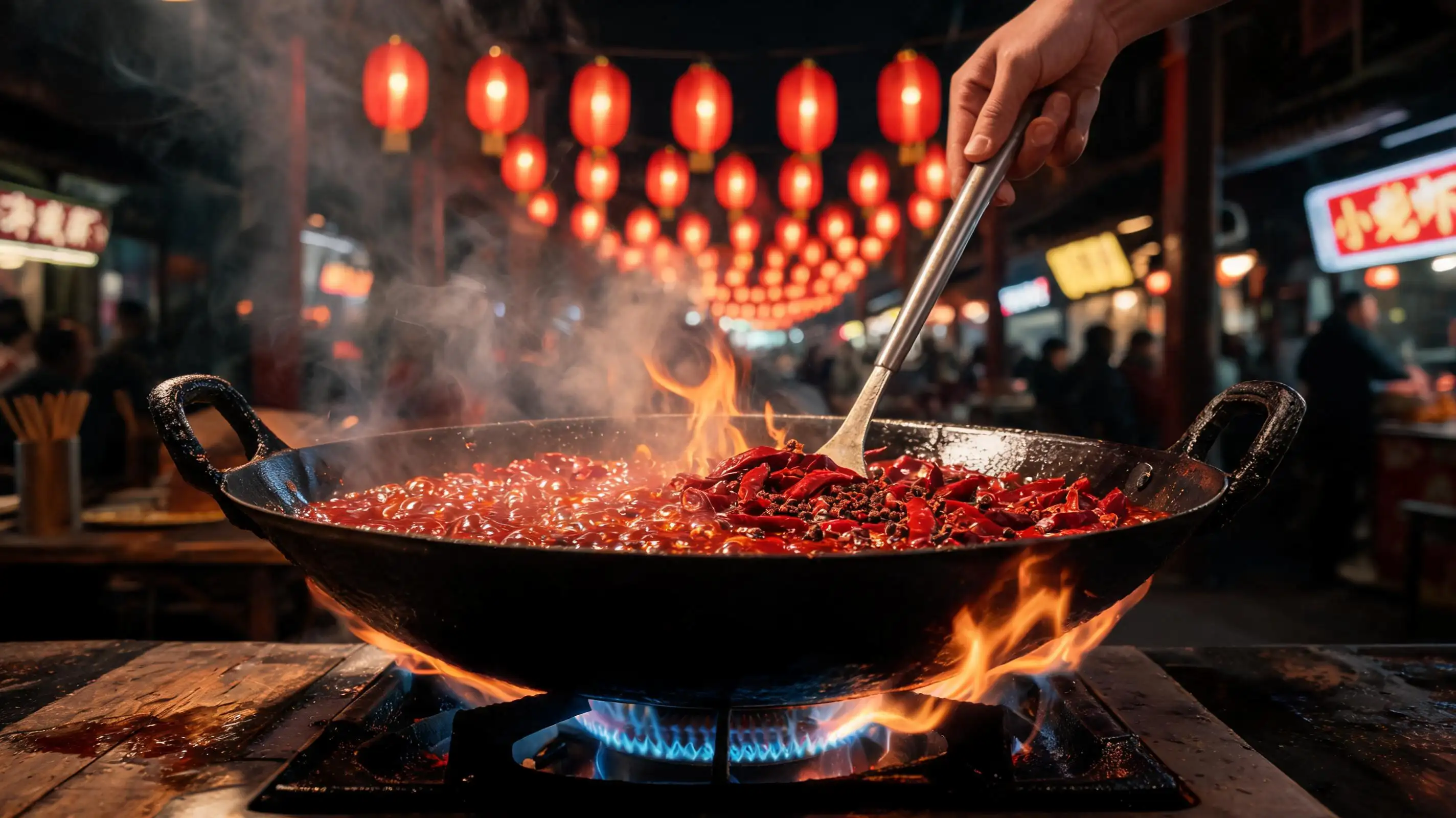
Get the wok as hot as you can over maximum flame before adding oil. The dried chilies go in first, pressing flat against the wok surface so they blister and darken in about thirty seconds. Then the Sichuan peppercorns, then the cinnamon and star anise. The kitchen fills immediately with the kind of sharp, woody smoke that stings the back of your throat. Add the garlic and ginger before anything tips from fragrant to burnt.
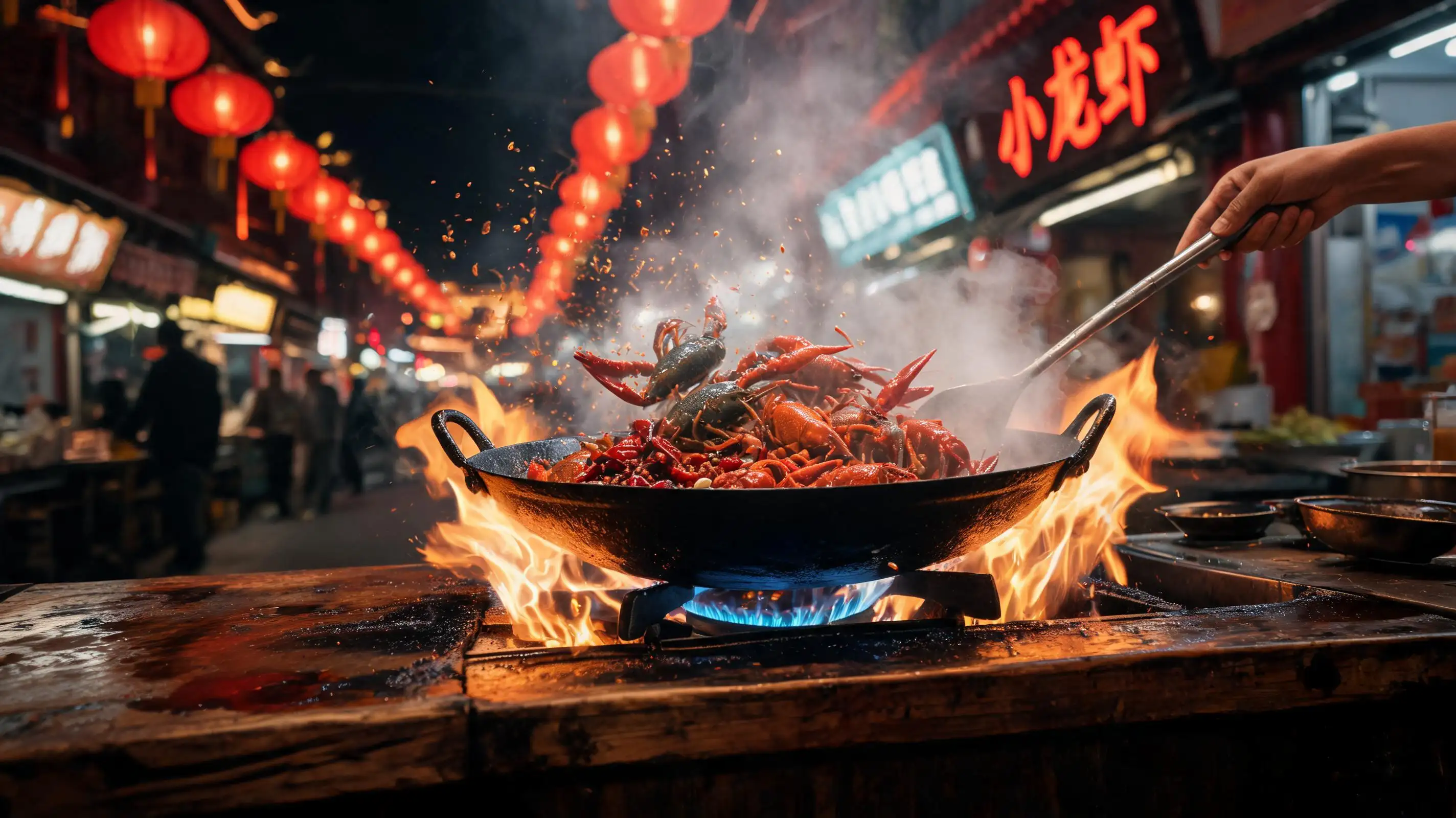
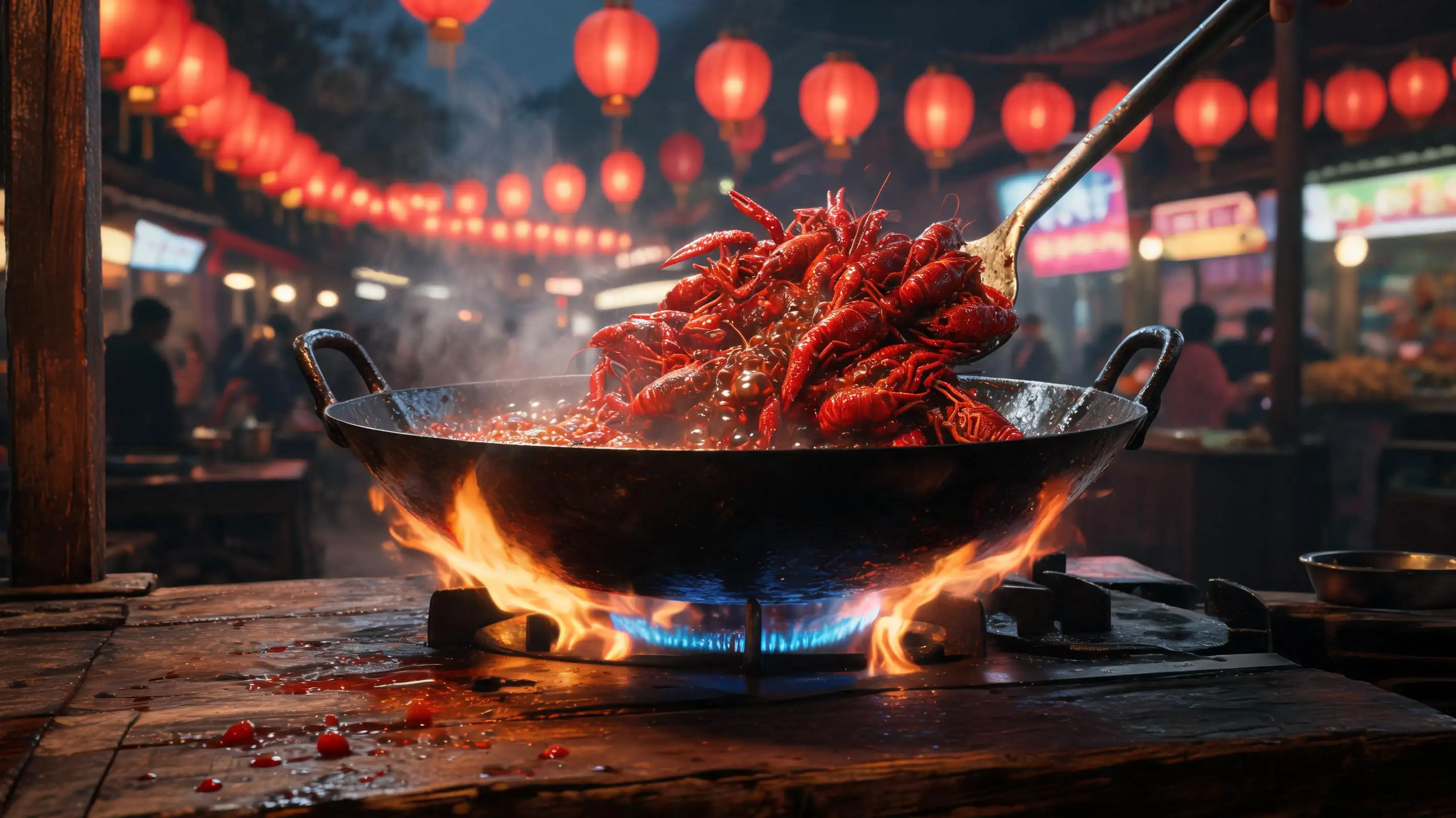
Dump the crayfish in all at once. The sound when they hit a properly hot wok is unmistakable — a dense, sustained crackling that settles into a steady deep sizzle after the first thirty seconds. Keep them moving with the spatula. The shells go from dark gray-blue to vivid orange-red in under two minutes, though you keep tossing for another minute to push the heat all the way through.
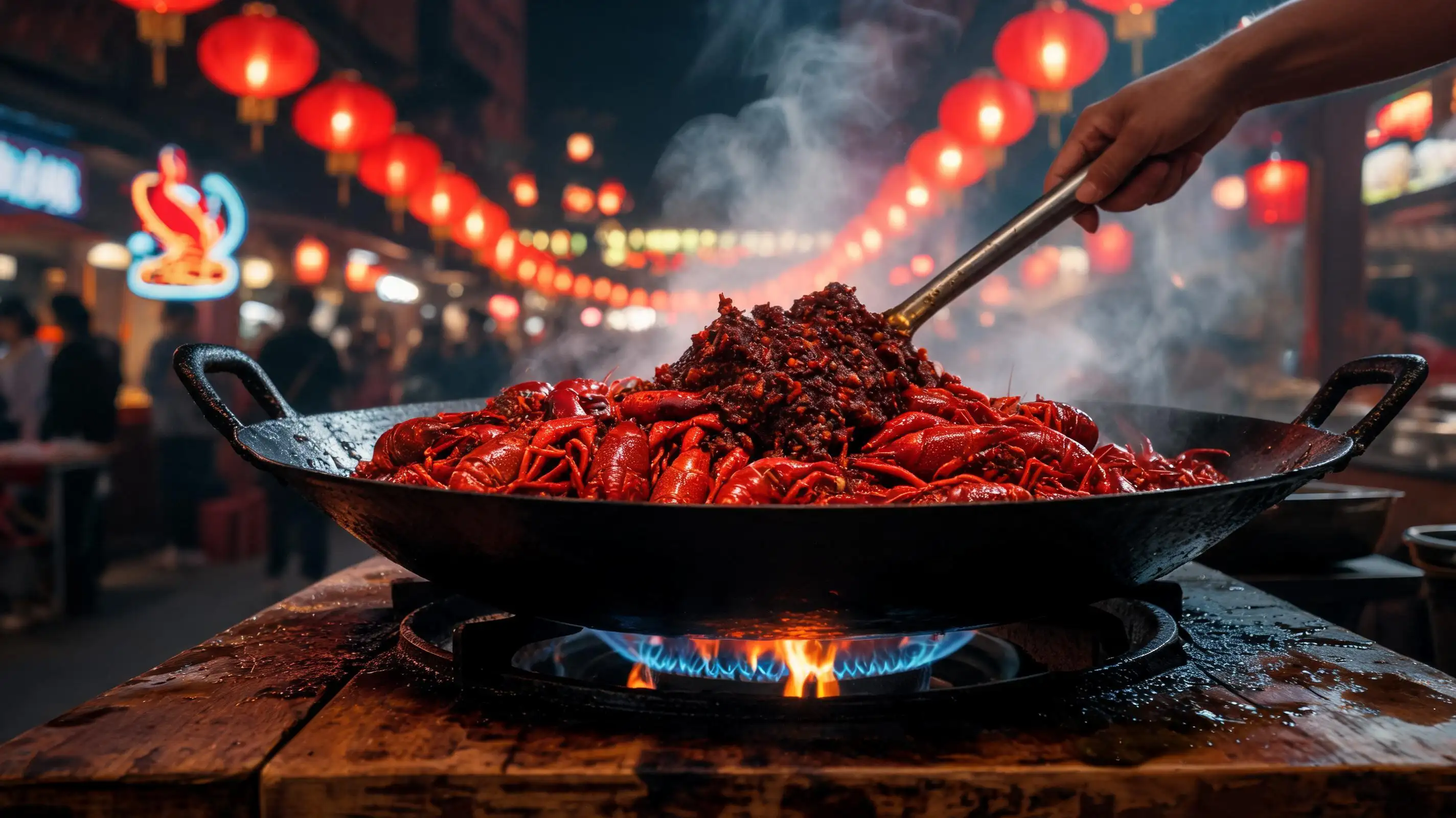
Push everything to the sides and drop the doubanjiang into the center of the wok. Let it cook alone in the oil for half a minute, pressing it with the back of the spatula until the paste starts to break apart and the oil around it turns deep red. Then pull the crayfish back in and fold everything together. Add the rice wine along the hot edge of the wok — it hits the metal and evaporates in a rush, leaving its flavor without the rawness. A small splash of soy sauce, a pinch of sugar.
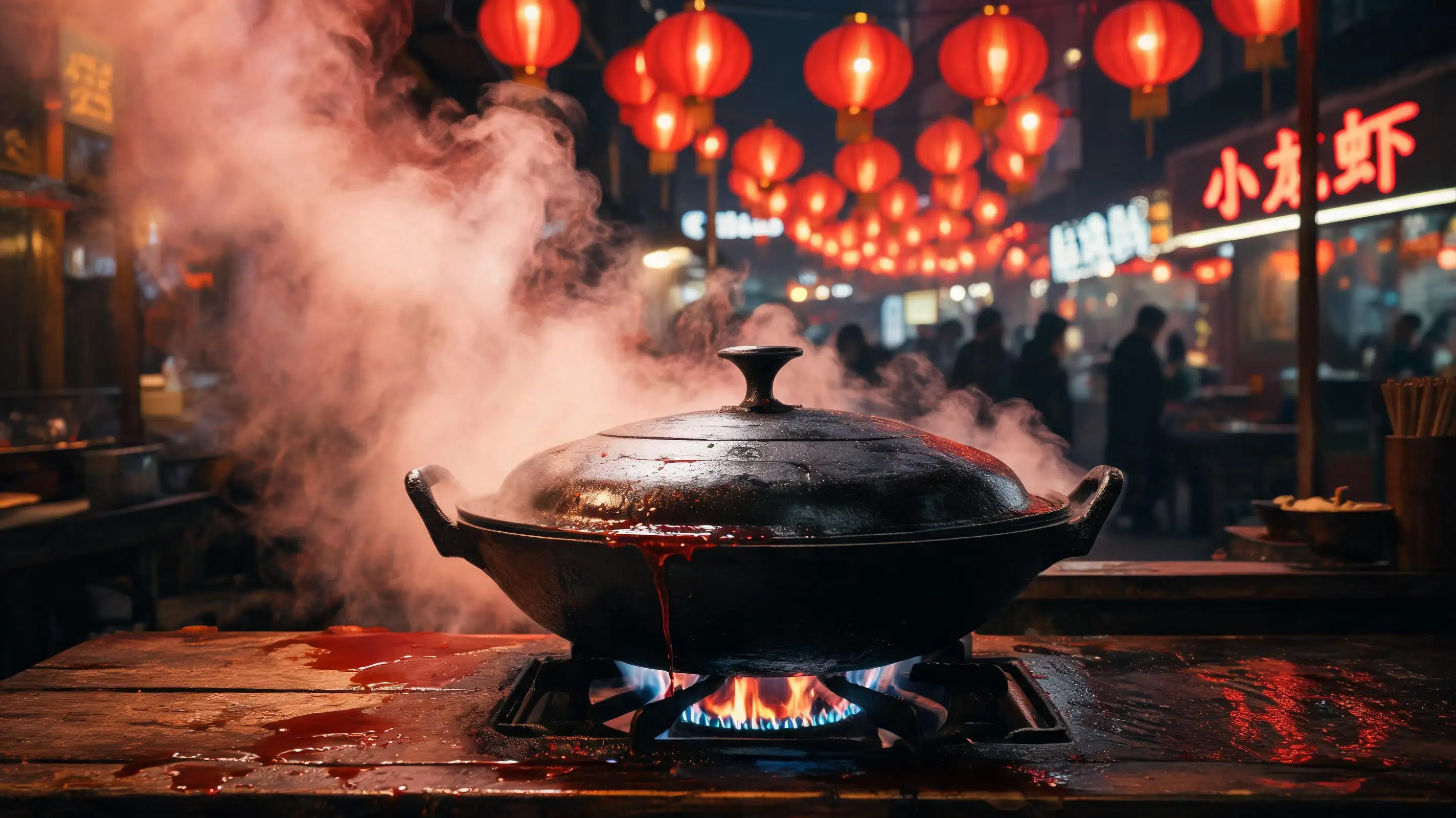
Pour in just enough water to come level with the bottom layer of crayfish. Cover the wok, reduce the heat slightly, and leave it for eight minutes. The shells absorb the braising liquid and release their own fat back into the pot. When you lift the lid the smell is much deeper than when it went in.
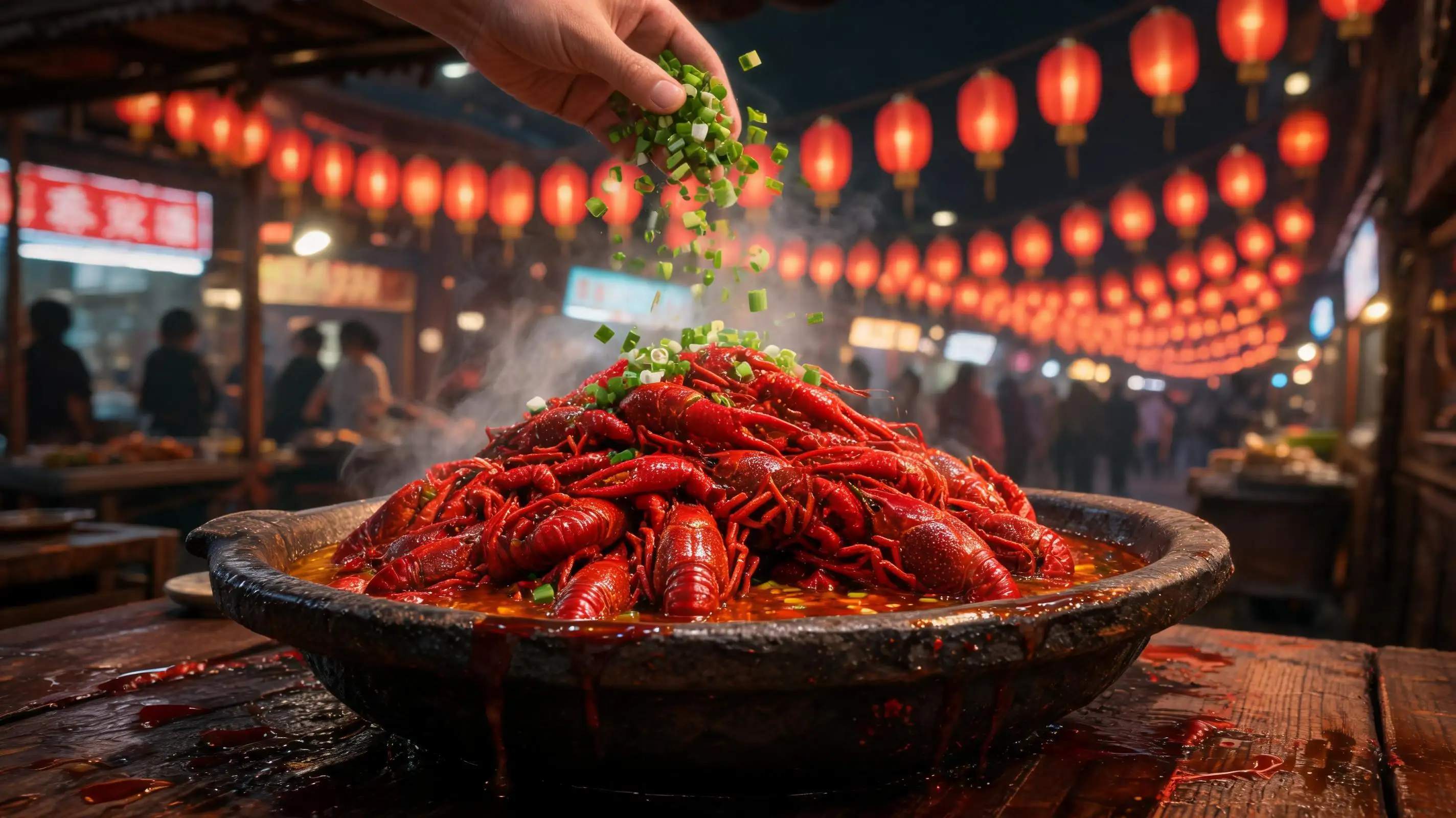
Take the lid off and turn the heat back up to maximum. Stir continuously and let the sauce reduce until it coats every shell thickly — slow enough that when you lift the spatula it falls back in ribbons. The shells should look nearly lacquered when it's done, the sauce glossy and clinging without being sticky. Scatter freshly chopped scallions over the top just before it goes to the table.
Crayfish as street food became closely tied to Beijing's Guijie dining strip in the 1990s, when vendors from Jiangsu began selling them out of buckets along the sidewalk. What started as cheap late-night food — priced by the catty, eaten by hand at plastic folding tables — gradually became one of the most recognized summer dishes in the city, eventually filling dedicated storefronts along the lantern-lined corridor that the street became known for. The seasoning changed over time, picking up the fermented chili paste and numbing pepper that traveled north with the cooks. Most people still eat them the same way: shells cracked open at the table, fingers orange for the rest of the night.
---
**Ingredients**
live crayfish — scrubbed one by one under cold running water with a stiff-bristled brush, claws and belly cleaned
dried red chilies — stemmed and torn roughly in half; a large handful
Sichuan peppercorns — whole, one tablespoon
Pixian doubanjiang — one heaped tablespoon, the dark fermented kind with visible chili flakes, not the smooth bright-red paste
garlic — six or seven cloves, peeled and smashed flat with the side of a knife
fresh ginger — three to four thin slices
green onion — two or three stalks, cut into finger-length sections
cinnamon stick — one piece
star anise — two whole pieces
cooking oil — enough to generously coat the base of the wok
Shaoxing rice wine — a generous pour, about two tablespoons
light soy sauce — a small splash
sugar — just a pinch, to round off the edge
---
**How it's made**
The crayfish come in alive, packed into a big metal basin, crawling over each other and gripping the rim with their claws. You scrub them one at a time under cold running water with a short stiff-bristled brush — the underside, the joints, between the legs — until the shell stops feeling gritty and the water runs clear. It takes longer than you'd expect. There is no shortcut here.
Get the wok as hot as you can over maximum flame before adding oil. The dried chilies go in first, pressing flat against the wok surface so they blister and darken in about thirty seconds. Then the Sichuan peppercorns, then the cinnamon and star anise. The kitchen fills immediately with the kind of sharp, woody smoke that stings the back of your throat. Add the garlic and ginger before anything tips from fragrant to burnt.
Dump the crayfish in all at once. The sound when they hit a properly hot wok is unmistakable — a dense, sustained crackling that settles into a steady deep sizzle after the first thirty seconds. Keep them moving with the spatula. The shells go from dark gray-blue to vivid orange-red in under two minutes, though you keep tossing for another minute to push the heat all the way through.
Push everything to the sides and drop the doubanjiang into the center of the wok. Let it cook alone in the oil for half a minute, pressing it with the back of the spatula until the paste starts to break apart and the oil around it turns deep red. Then pull the crayfish back in and fold everything together. Add the rice wine along the hot edge of the wok — it hits the metal and evaporates in a rush, leaving its flavor without the rawness. A small splash of soy sauce, a pinch of sugar.
Pour in just enough water to come level with the bottom layer of crayfish. Cover the wok, reduce the heat slightly, and leave it for eight minutes. The shells absorb the braising liquid and release their own fat back into the pot. When you lift the lid the smell is much deeper than when it went in.
Take the lid off and turn the heat back up to maximum. Stir continuously and let the sauce reduce until it coats every shell thickly — slow enough that when you lift the spatula it falls back in ribbons. The shells should look nearly lacquered when it's done, the sauce glossy and clinging without being sticky. Scatter freshly chopped scallions over the top just before it goes to the table.
Crayfish as street food became closely tied to Beijing's Guijie dining strip in the 1990s, when vendors from Jiangsu began selling them out of buckets along the sidewalk. What started as cheap late-night food — priced by the catty, eaten by hand at plastic folding tables — gradually became one of the most recognized summer dishes in the city, eventually filling dedicated storefronts along the lantern-lined corridor that the street became known for. The seasoning changed over time, picking up the fermented chili paste and numbing pepper that traveled north with the cooks. Most people still eat them the same way: shells cracked open at the table, fingers orange for the rest of the night.