·5/29/2026
from
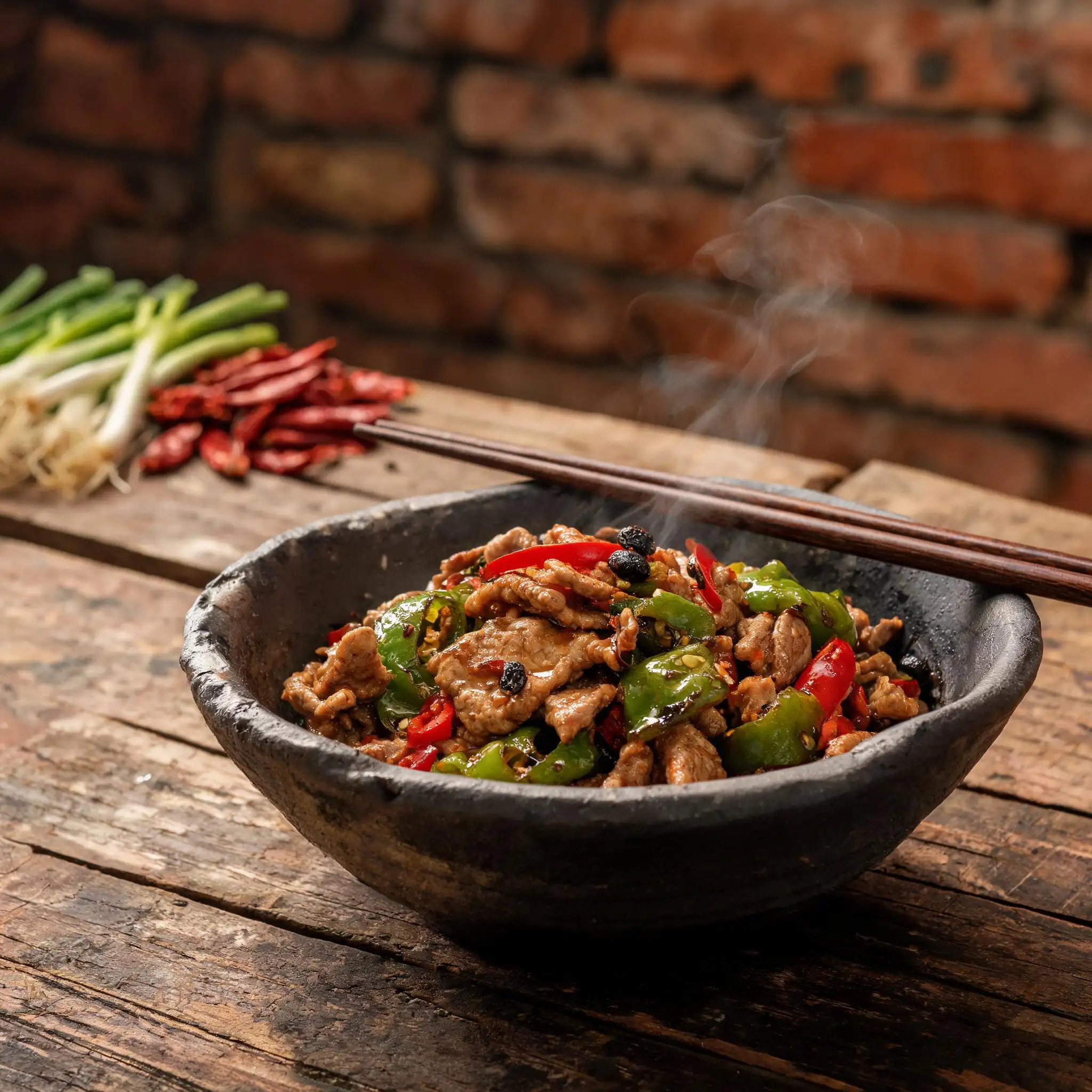
Stir-Fried Pork Belly with Chili Peppers
**Stir-Fried Pork Belly with Chili Peppers** *(辣椒炒肉)*
---
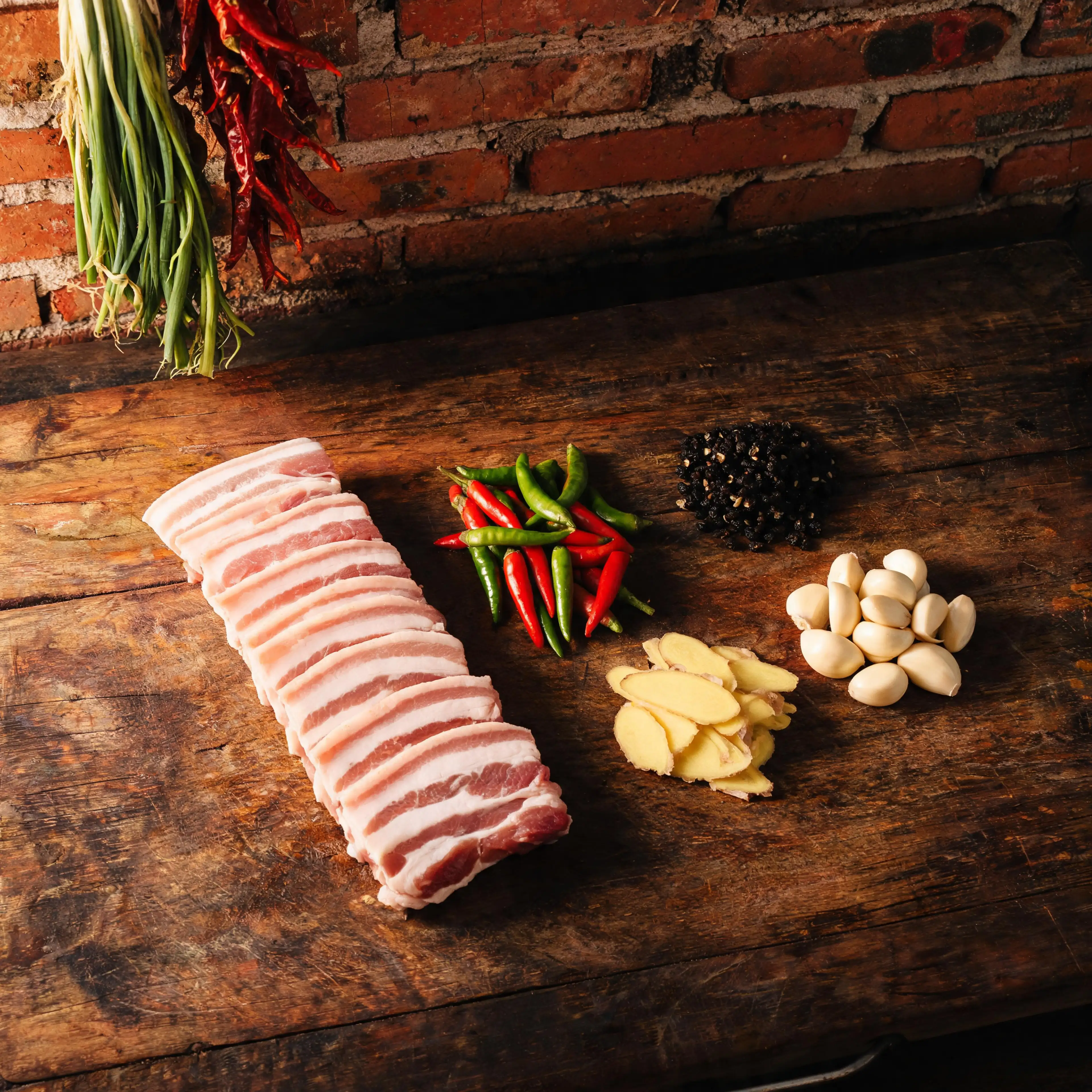
**Ingredients**
Skin-on pork belly — sliced thin across the grain, about 3mm thick, fat and lean layers both visible in each piece
Green finger chili peppers — cut diagonally into segments, seeds left in
Red finger chili peppers — cut diagonally into segments, seeds left in
Fermented black beans (douchi) — a small loose handful, rinsed once with cold water
Fresh ginger — four or five thin slices
Garlic — two cloves, lightly crushed with the flat of the blade
For the sauce: dark soy sauce — poured in a slow stream along the inner edge of the wok, not straight into the center
---
**How it's made**
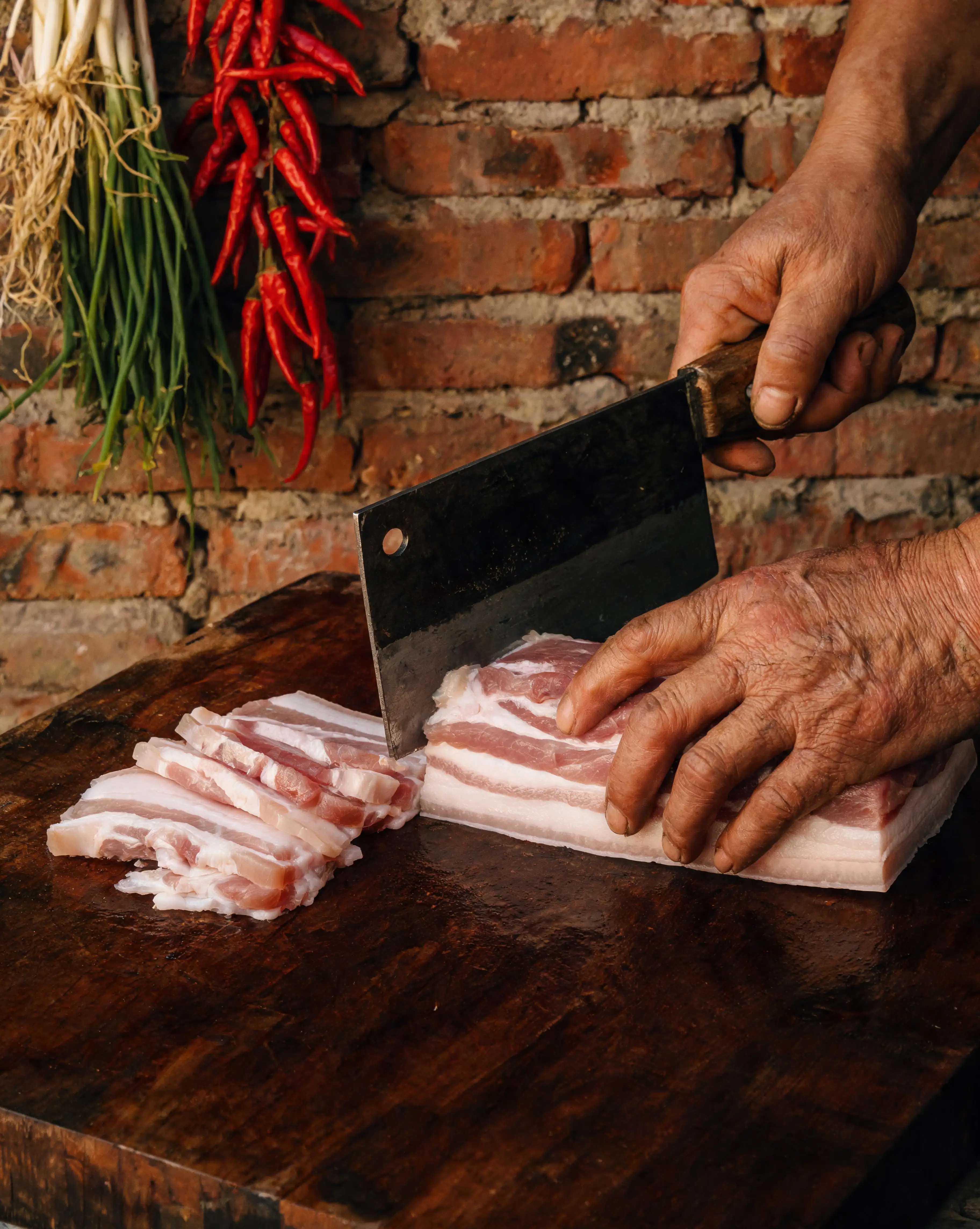
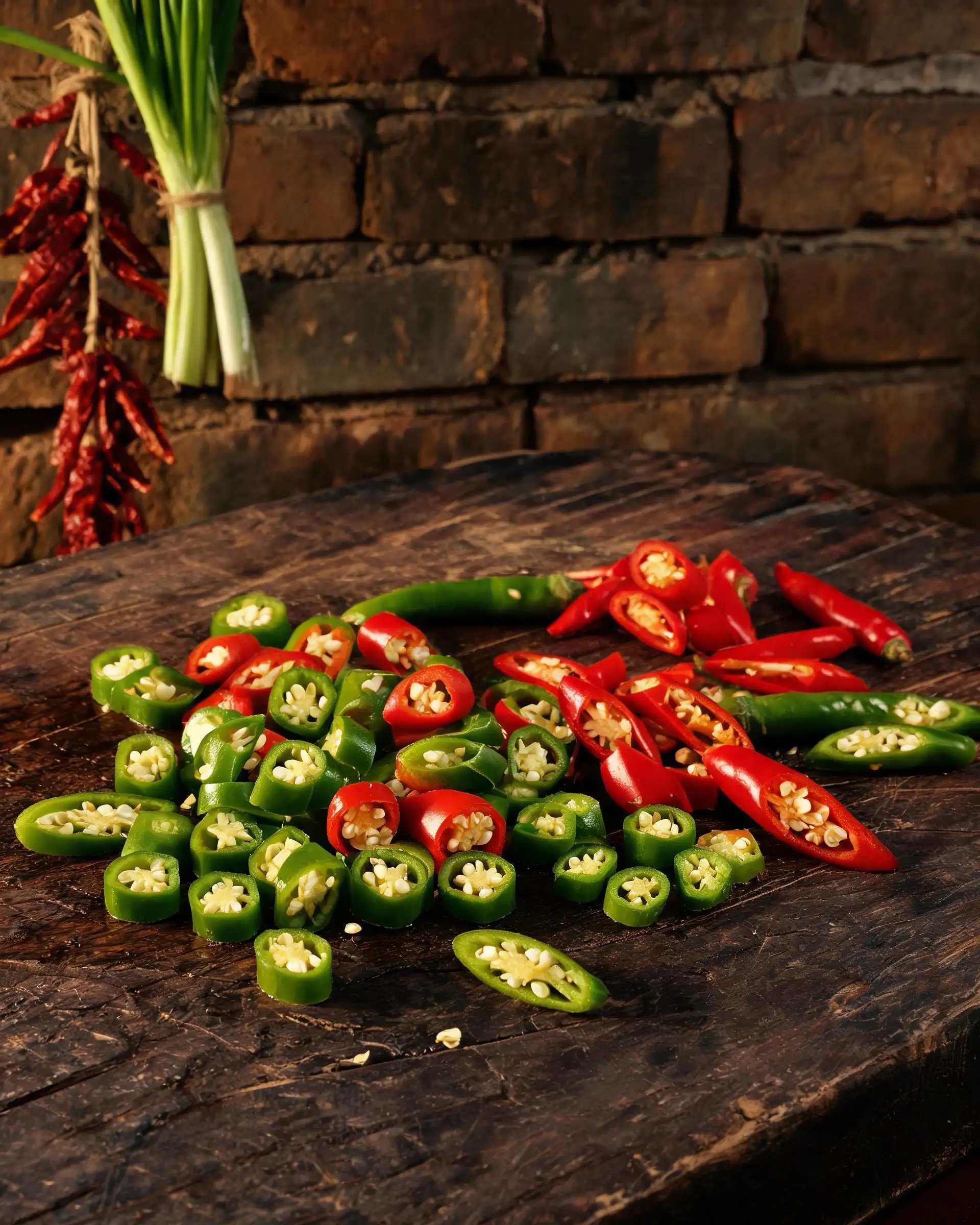
Start with the pork belly cold from the fridge — it's easier to slice thin when the fat is firm. You're cutting across the grain, three millimeters at most. Each slice should show the alternating bands of fat and meat clearly. Set them aside on the board. The chilies go next: a rolling diagonal cut, angled at about forty-five degrees, so each piece has a wide face and the seeds spill out naturally. You want the cross-sections bright and the seeds still attached.
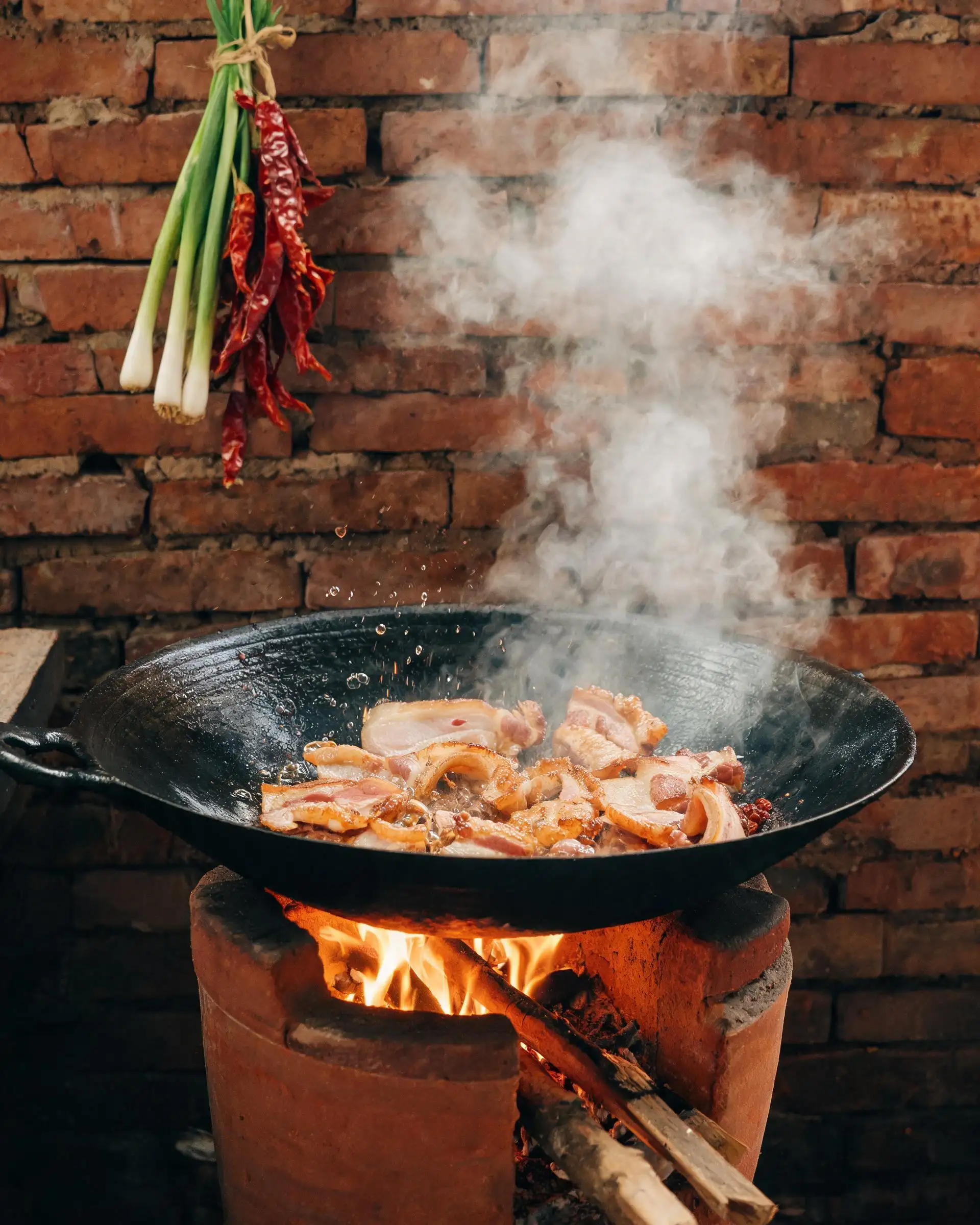
Get the wok over the highest heat you have. No oil at first — the pork goes in dry. The fat in the belly starts to render almost immediately, the slices curling at the edges and turning from pale pink to a deep golden brown. You hear it more than you watch it: a steady aggressive sizzle that builds into something louder. Let them sit for a moment before you start moving them. The caramelization only happens when the meat is in contact with the hot iron, not while it's being stirred.
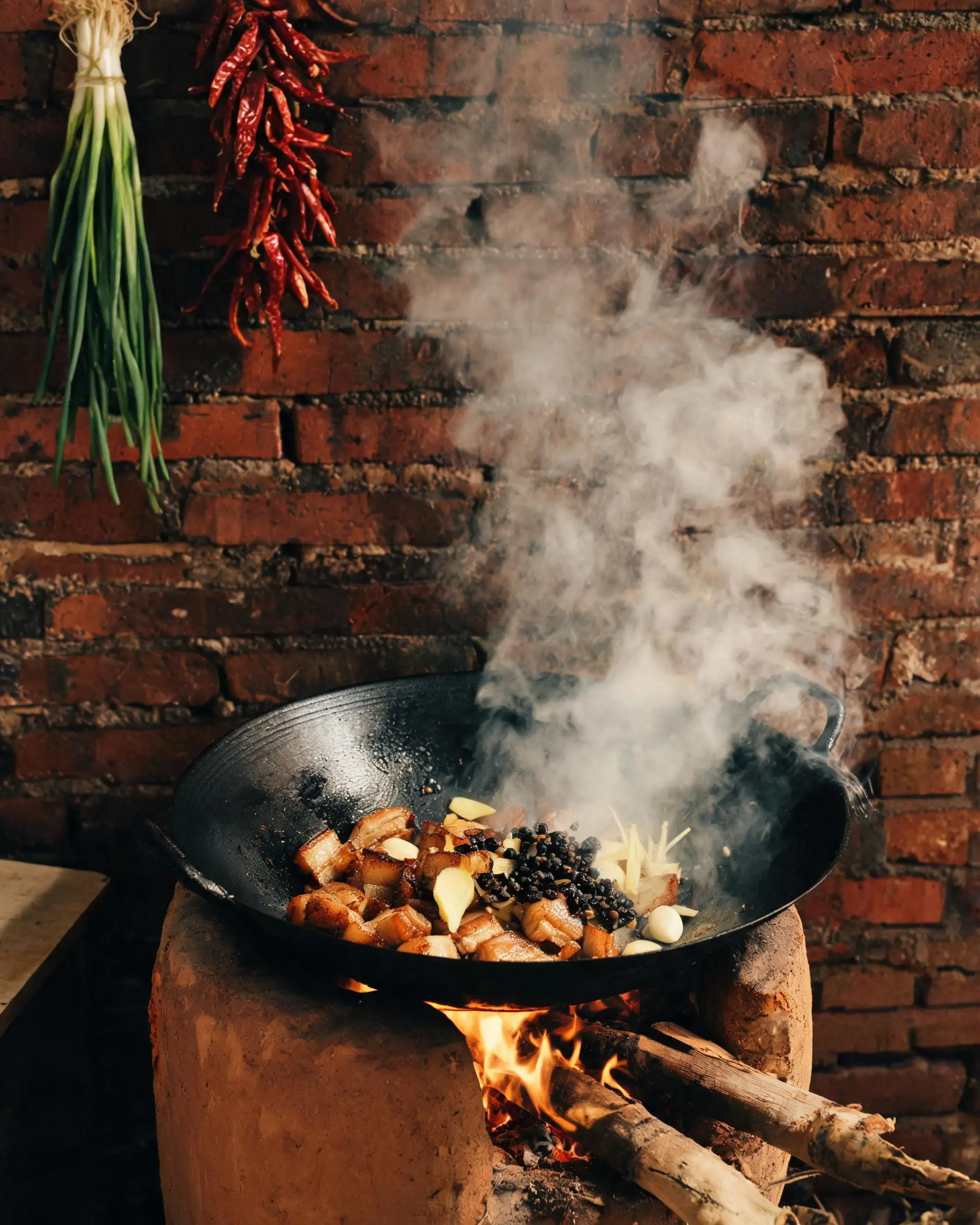
Once the pork is colored and a little oil has pooled at the bottom of the wok, push everything to one side and drop the fermented black beans in with the ginger and garlic. The douchi hits the iron and releases a dense, dark smoke — earthy and sharp at the same time. Stir it into the pork quickly so the beans don't scorch. The whole wok changes color and smell within ten seconds.
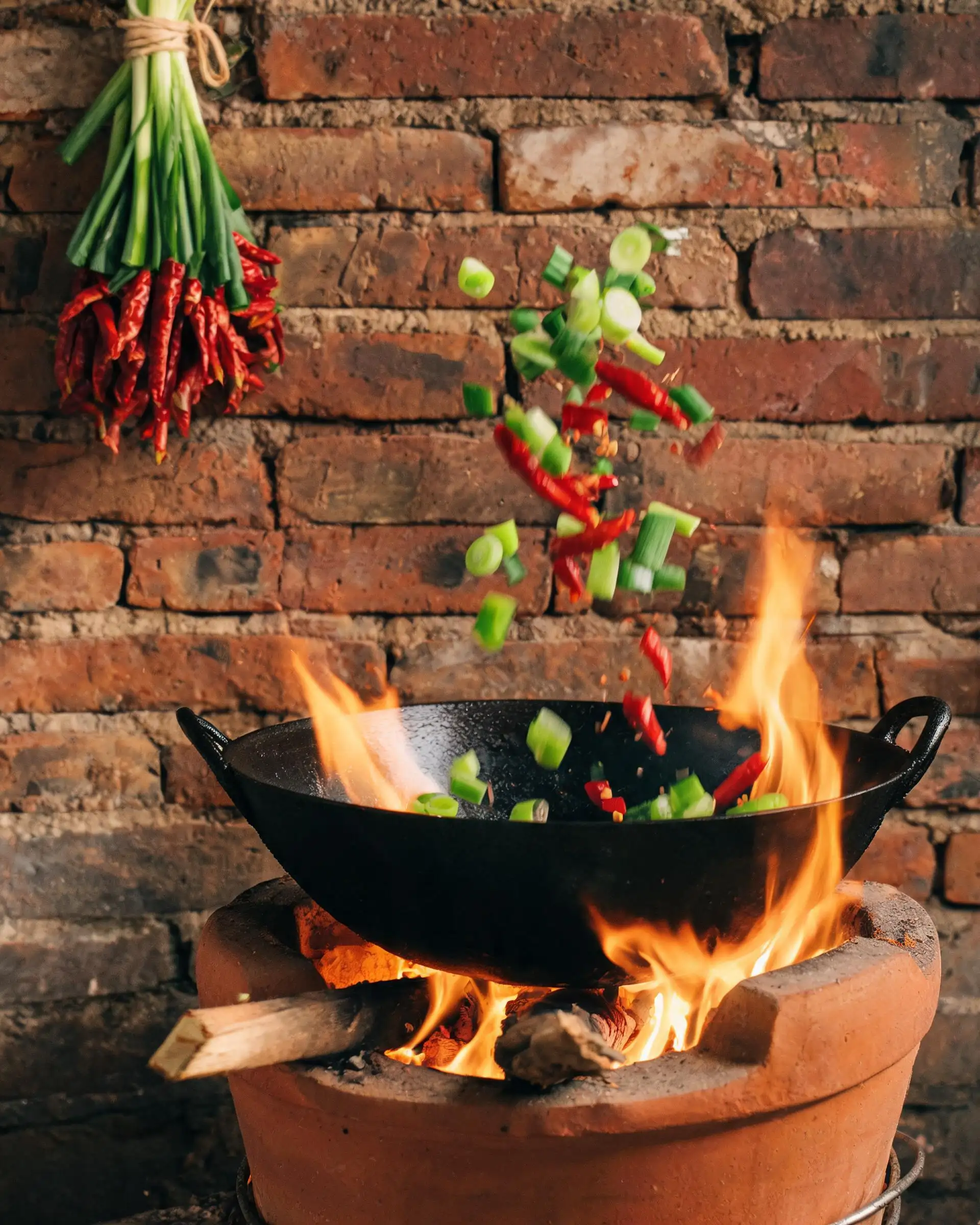
In go the chilies. Toss everything together over the fire. The green and red pieces blister fast in the rendered pork fat, their skins puckering into small tiger-stripe marks. The seeds toast and turn nutty. You're not cooking them soft — three minutes of hard tossing is enough. The chilies should still have some snap when you bite through them.
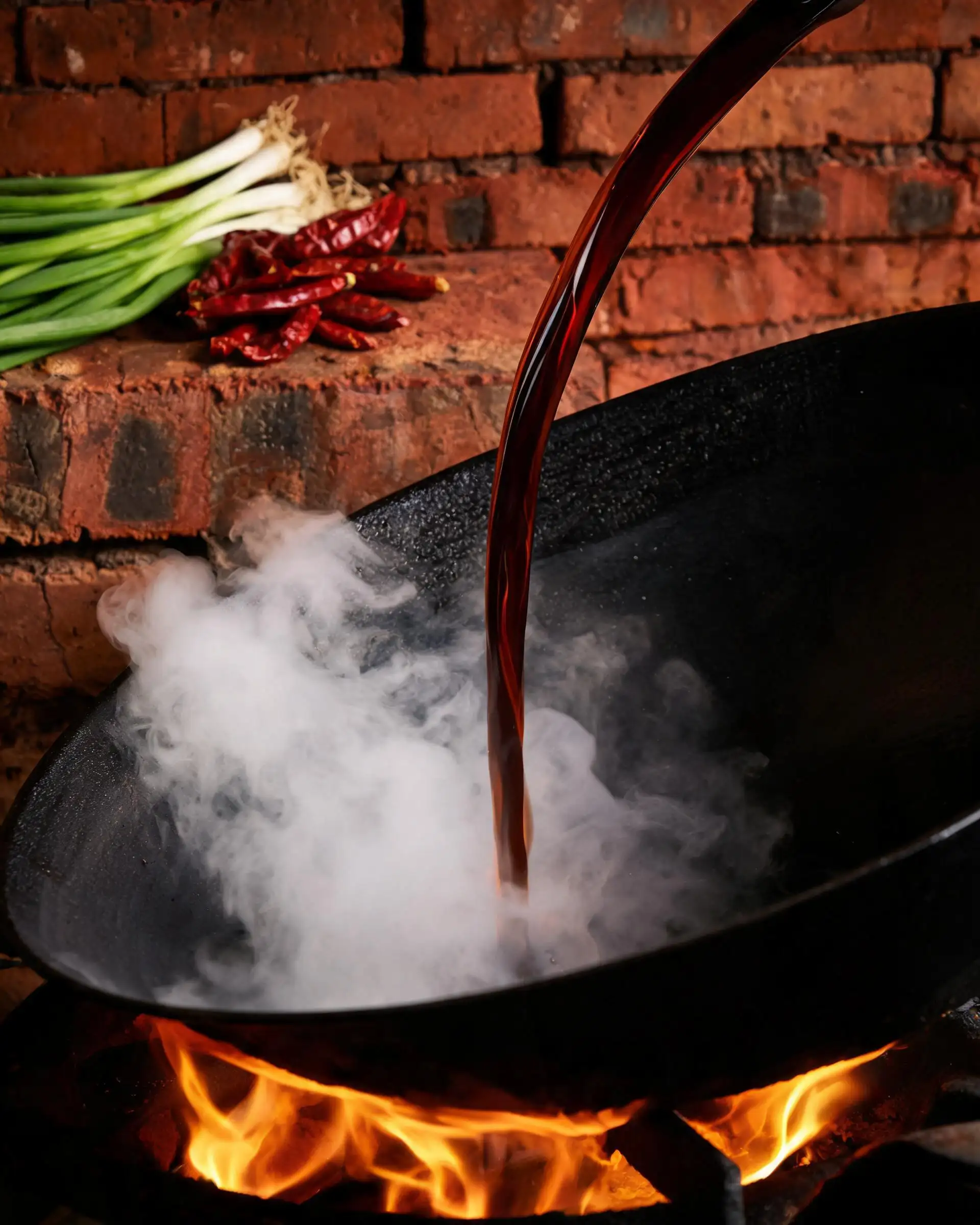
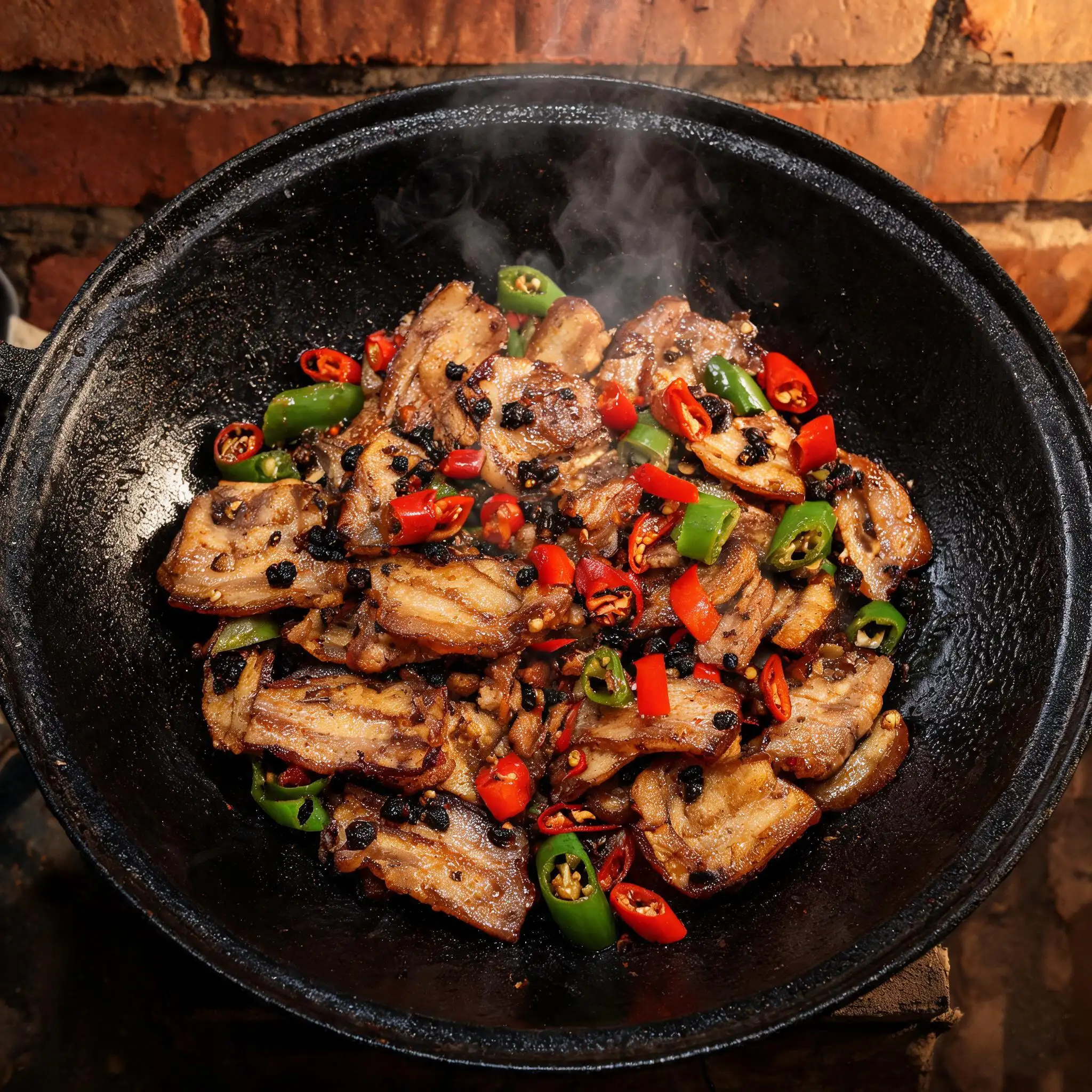
Tilt the soy sauce bottle and let it run along the edge of the wok rather than pouring it straight into the food. The iron is hottest at the sides, and the sauce hits that heat and instantly erupts into a thick white cloud of steam. The sugar in the soy sauce caramelizes in that same instant and coats everything with a dark, glossy finish. One last toss over the flame and it's done.
This dish doesn't really have an official name in the way that banquet dishes do. It's the kind of food made from whatever was in the kitchen — a strip of belly pork from the morning market, chilies from the garden, fermented beans from a jar that's been sitting on the shelf for months. Douchi, the fermented black beans, have been made in China for over two thousand years; they appear in texts from the Han dynasty as a standard pantry ingredient. The pairing of fatty pork with preserved fermented flavors is one of the most direct ways of tasting how Chinese home cooking actually works: fat carries flavor, salt deepens it, and high heat pulls it all together in about five minutes.
---
**Ingredients**
Skin-on pork belly — sliced thin across the grain, about 3mm thick, fat and lean layers both visible in each piece
Green finger chili peppers — cut diagonally into segments, seeds left in
Red finger chili peppers — cut diagonally into segments, seeds left in
Fermented black beans (douchi) — a small loose handful, rinsed once with cold water
Fresh ginger — four or five thin slices
Garlic — two cloves, lightly crushed with the flat of the blade
For the sauce: dark soy sauce — poured in a slow stream along the inner edge of the wok, not straight into the center
---
**How it's made**
Start with the pork belly cold from the fridge — it's easier to slice thin when the fat is firm. You're cutting across the grain, three millimeters at most. Each slice should show the alternating bands of fat and meat clearly. Set them aside on the board. The chilies go next: a rolling diagonal cut, angled at about forty-five degrees, so each piece has a wide face and the seeds spill out naturally. You want the cross-sections bright and the seeds still attached.
Get the wok over the highest heat you have. No oil at first — the pork goes in dry. The fat in the belly starts to render almost immediately, the slices curling at the edges and turning from pale pink to a deep golden brown. You hear it more than you watch it: a steady aggressive sizzle that builds into something louder. Let them sit for a moment before you start moving them. The caramelization only happens when the meat is in contact with the hot iron, not while it's being stirred.
Once the pork is colored and a little oil has pooled at the bottom of the wok, push everything to one side and drop the fermented black beans in with the ginger and garlic. The douchi hits the iron and releases a dense, dark smoke — earthy and sharp at the same time. Stir it into the pork quickly so the beans don't scorch. The whole wok changes color and smell within ten seconds.
In go the chilies. Toss everything together over the fire. The green and red pieces blister fast in the rendered pork fat, their skins puckering into small tiger-stripe marks. The seeds toast and turn nutty. You're not cooking them soft — three minutes of hard tossing is enough. The chilies should still have some snap when you bite through them.
Tilt the soy sauce bottle and let it run along the edge of the wok rather than pouring it straight into the food. The iron is hottest at the sides, and the sauce hits that heat and instantly erupts into a thick white cloud of steam. The sugar in the soy sauce caramelizes in that same instant and coats everything with a dark, glossy finish. One last toss over the flame and it's done.
This dish doesn't really have an official name in the way that banquet dishes do. It's the kind of food made from whatever was in the kitchen — a strip of belly pork from the morning market, chilies from the garden, fermented beans from a jar that's been sitting on the shelf for months. Douchi, the fermented black beans, have been made in China for over two thousand years; they appear in texts from the Han dynasty as a standard pantry ingredient. The pairing of fatty pork with preserved fermented flavors is one of the most direct ways of tasting how Chinese home cooking actually works: fat carries flavor, salt deepens it, and high heat pulls it all together in about five minutes.