·5/29/2026
from
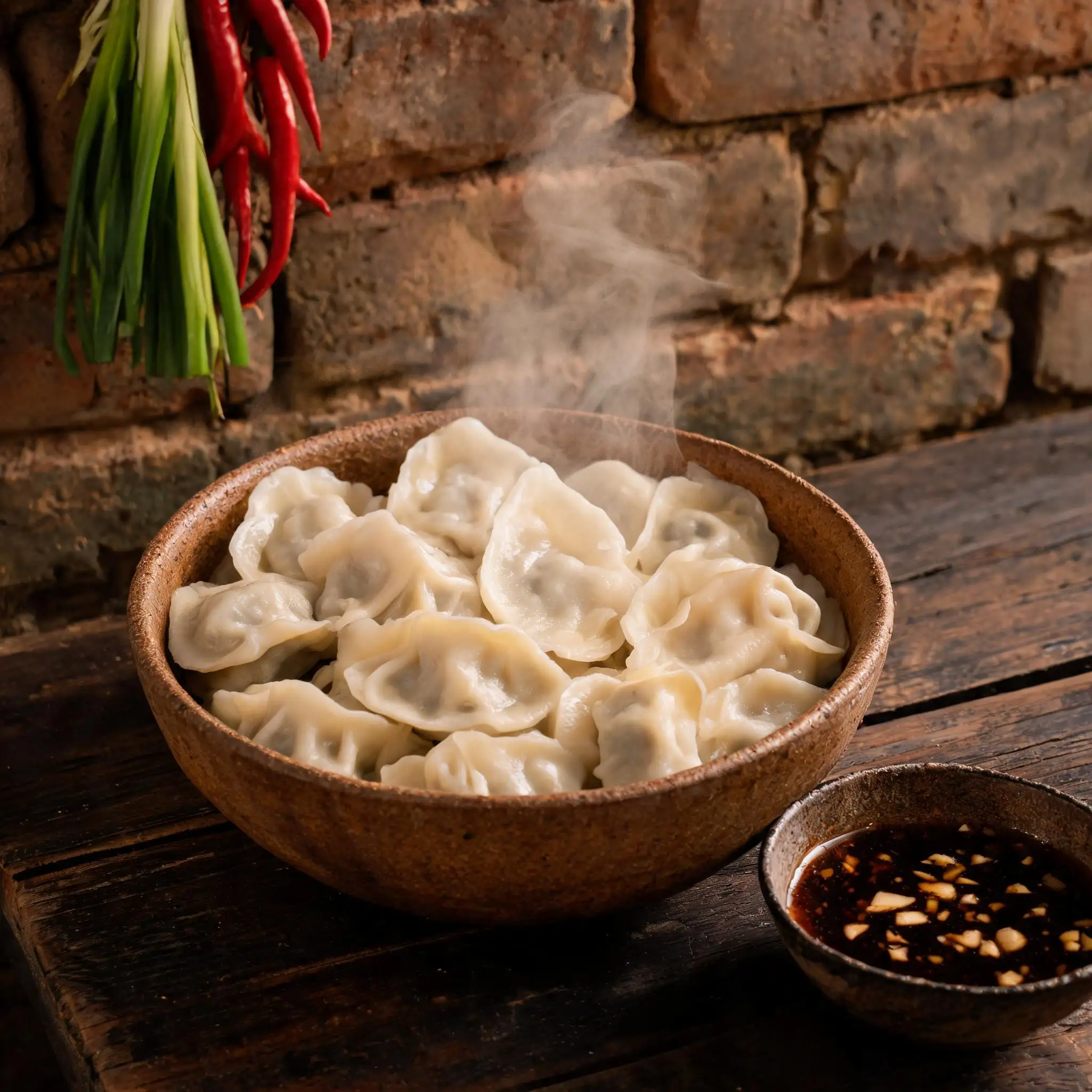
Pork and Napa Cabbage Dumplings
**Pork and Napa Cabbage Dumplings** *(猪肉白菜水饺)*
---
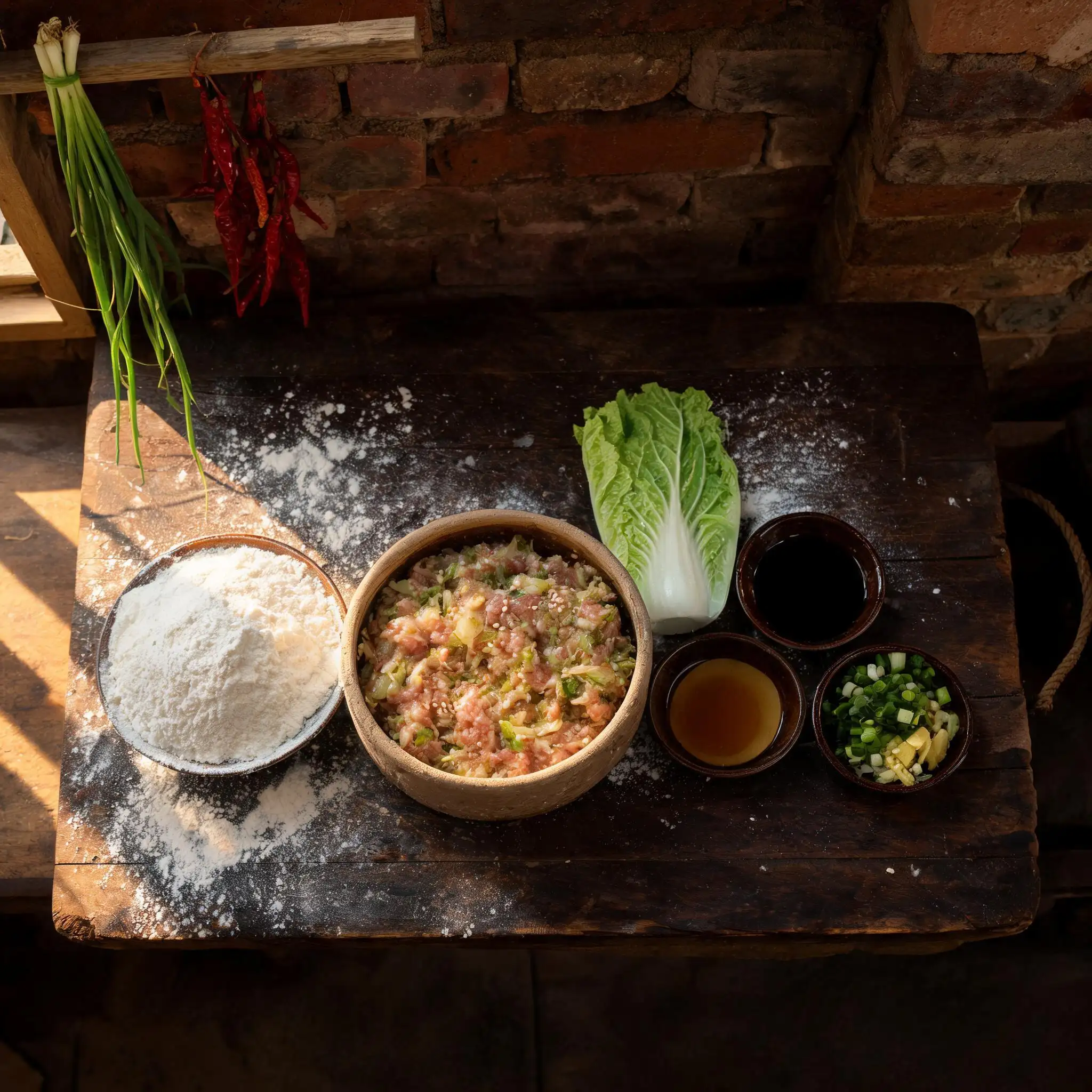
**Ingredients**
All-purpose wheat flour — a generous bowlful; kneaded by hand into smooth, pliable dough
Pork shoulder — hand-chopped into a rough mince, not processed fine
Napa cabbage — salted and squeezed dry; at least two large handfuls once the water is pressed out
Fresh ginger — minced fine
Scallion — both white and green parts, sliced thin
For the sauce bowl:
Dark soy sauce — a small pour; Shaoxing rice wine — same measure; sesame oil — added last, just a spoonful, stirred in once
For dipping:
Aged black vinegar — a small dish; garlic — minced, stirred in
---
**How it's made**
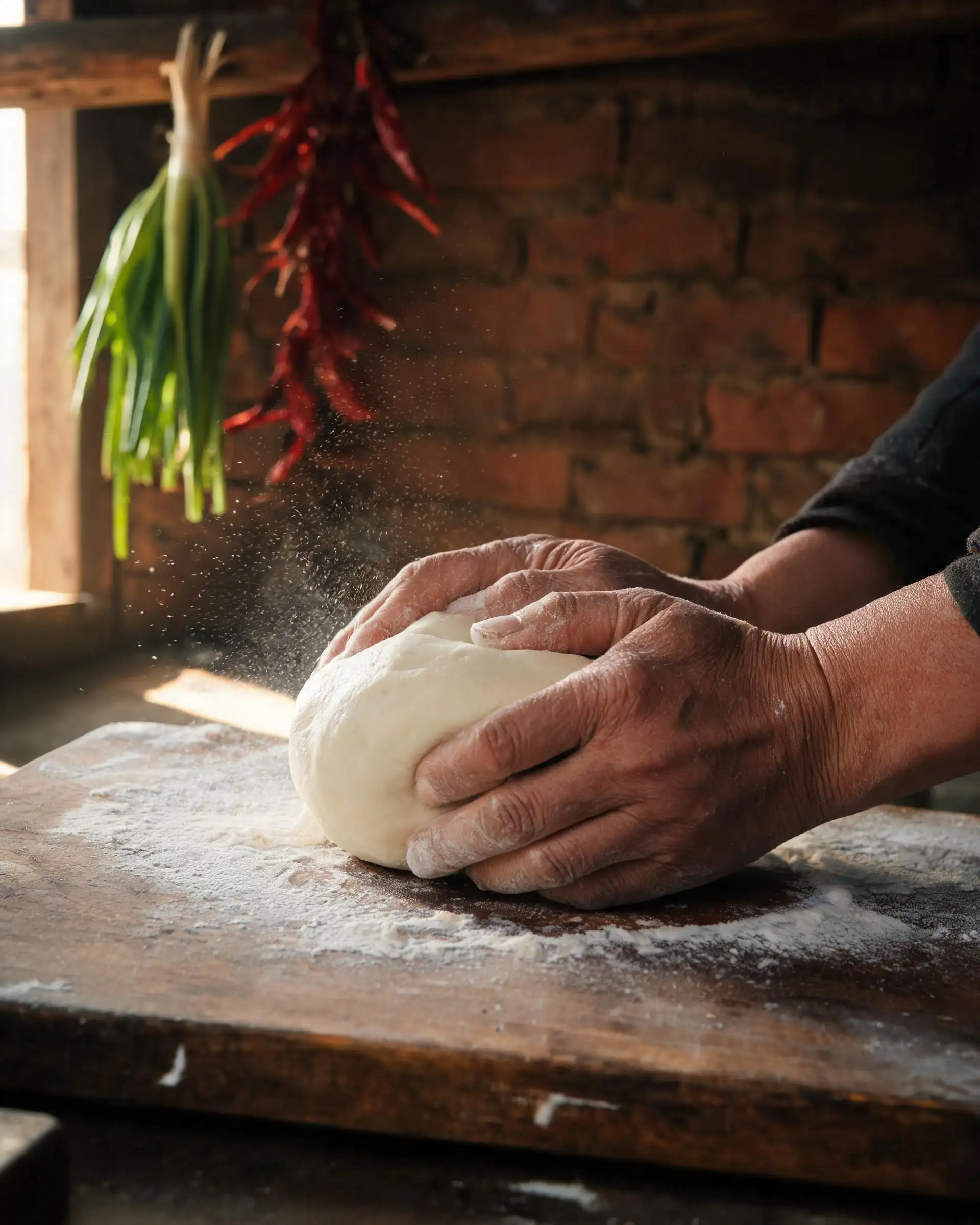
The flour goes into the bowl and scalding water pours straight in — roughly two parts water to five parts flour by feel, not measurement. You stir fast with chopsticks while it's still hot, breaking the flour into rough clumps before it cools unevenly. Then it comes out onto the board and you start kneading. The dough resists at first, crumbly and stiff, but after eight to ten minutes pressing the heel of your palm forward and folding back, it smooths out. The surface turns matte white, almost silky, and holds an indent when you press a finger in. It goes back in the bowl under a damp cloth to rest while you work the filling.
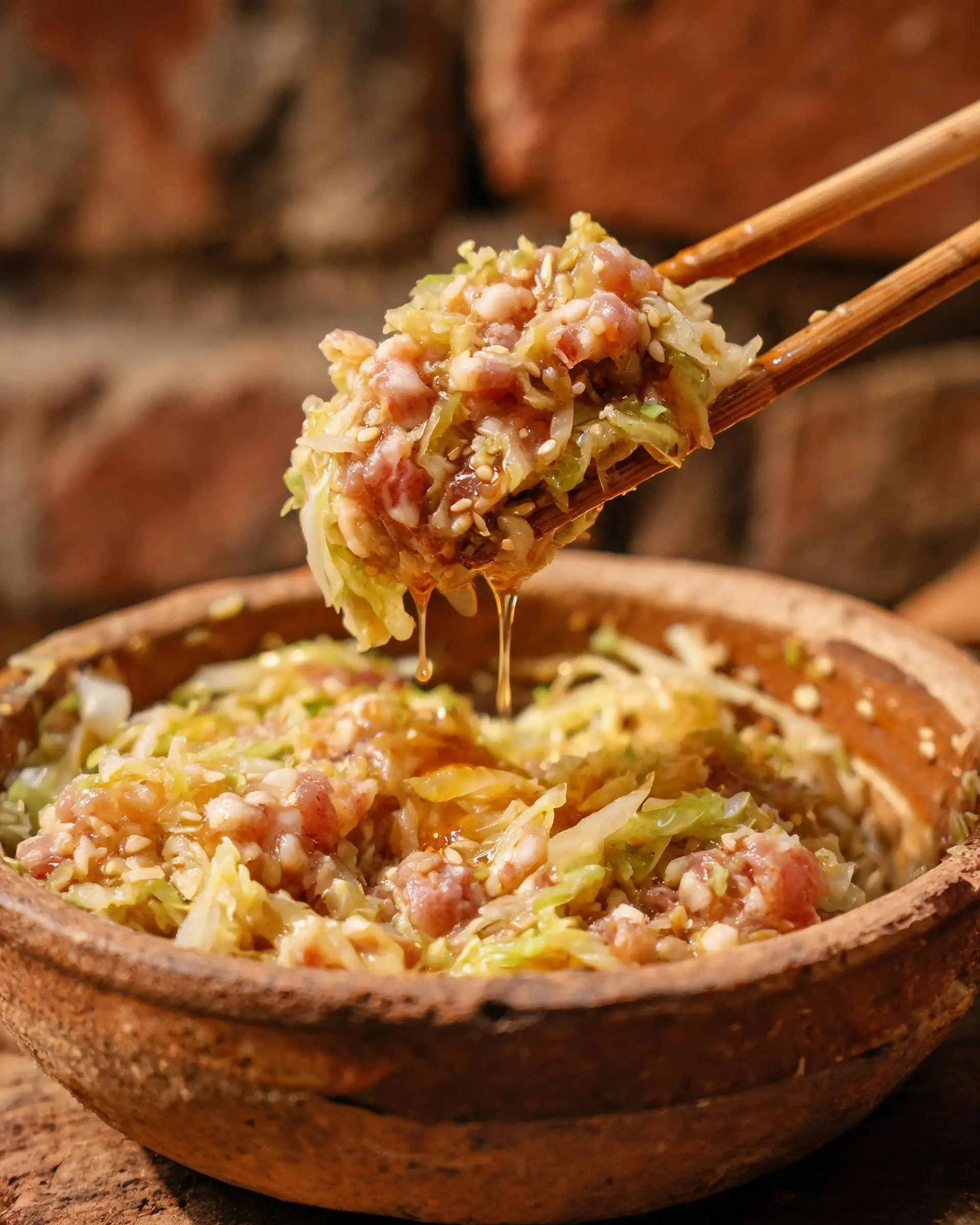
The napa cabbage gets salted and left to sweat for twenty minutes. When you come back, you grab it in both hands and squeeze — and the water that comes out is always more than you expected. That step is not optional. Skip it and the filling turns watery inside the dumplings; the skins go soft, the pleats unstick, the whole thing falls apart in the pot. The squeezed cabbage goes into the pork. Soy sauce, Shaoxing wine, ginger, and scallion go in next. Sesame oil last. Then you stir everything in one direction — always the same direction — until the filling starts to hold together and pulls away from the sides of the bowl in a loose mass when the chopsticks lift it.
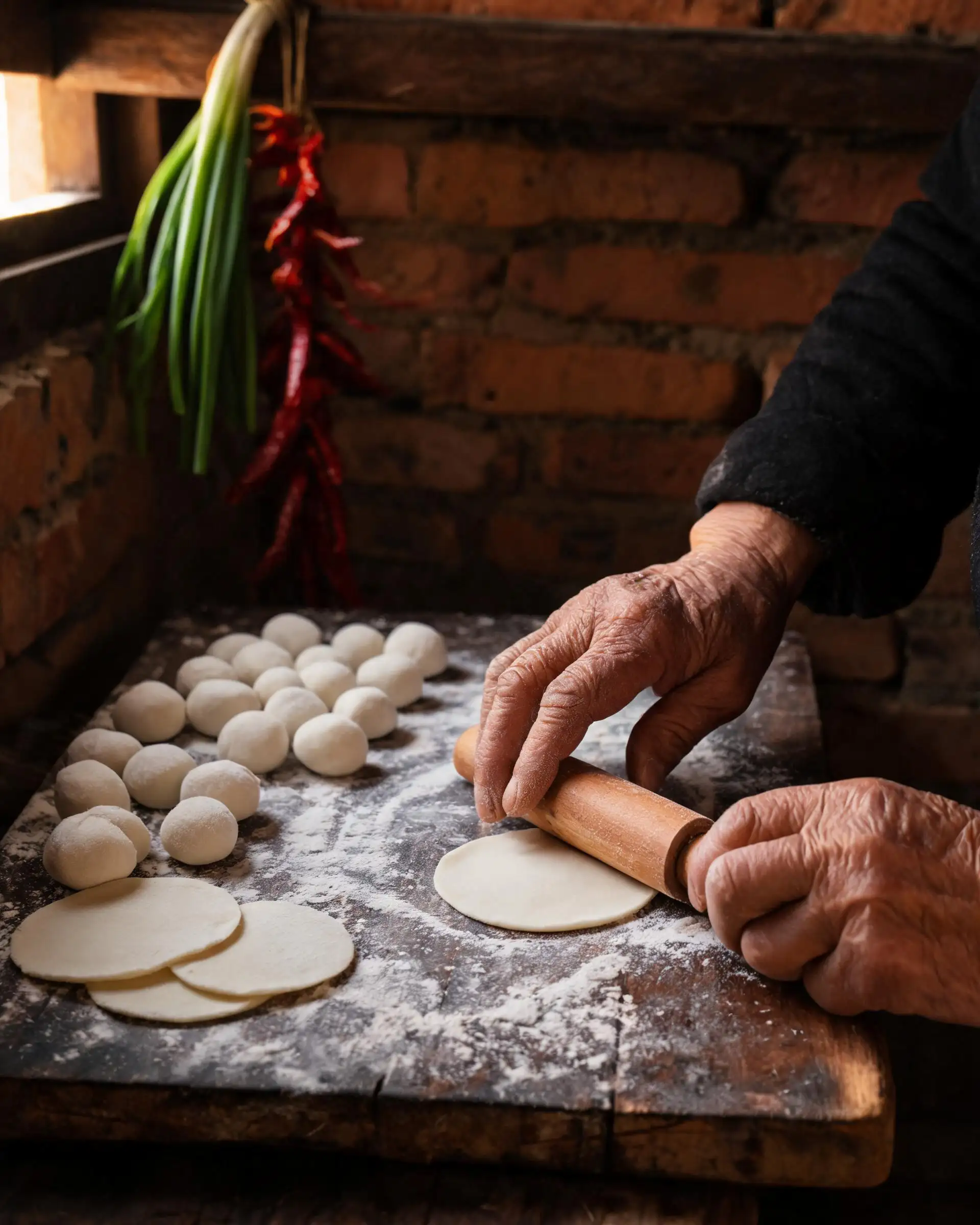
The rested dough gets pressed out into a long rope and cut into small pieces, each one flattened with your palm. The rolling pin is small — shorter than a regular one, meant for this job — and you roll each round with one hand while rotating it with the other. The skin should be thicker in the center to support the filling and thin enough at the edges that the pleats seal without a thick ridge. Speed matters once you start rolling because the skins dry out quickly and stop sticking.
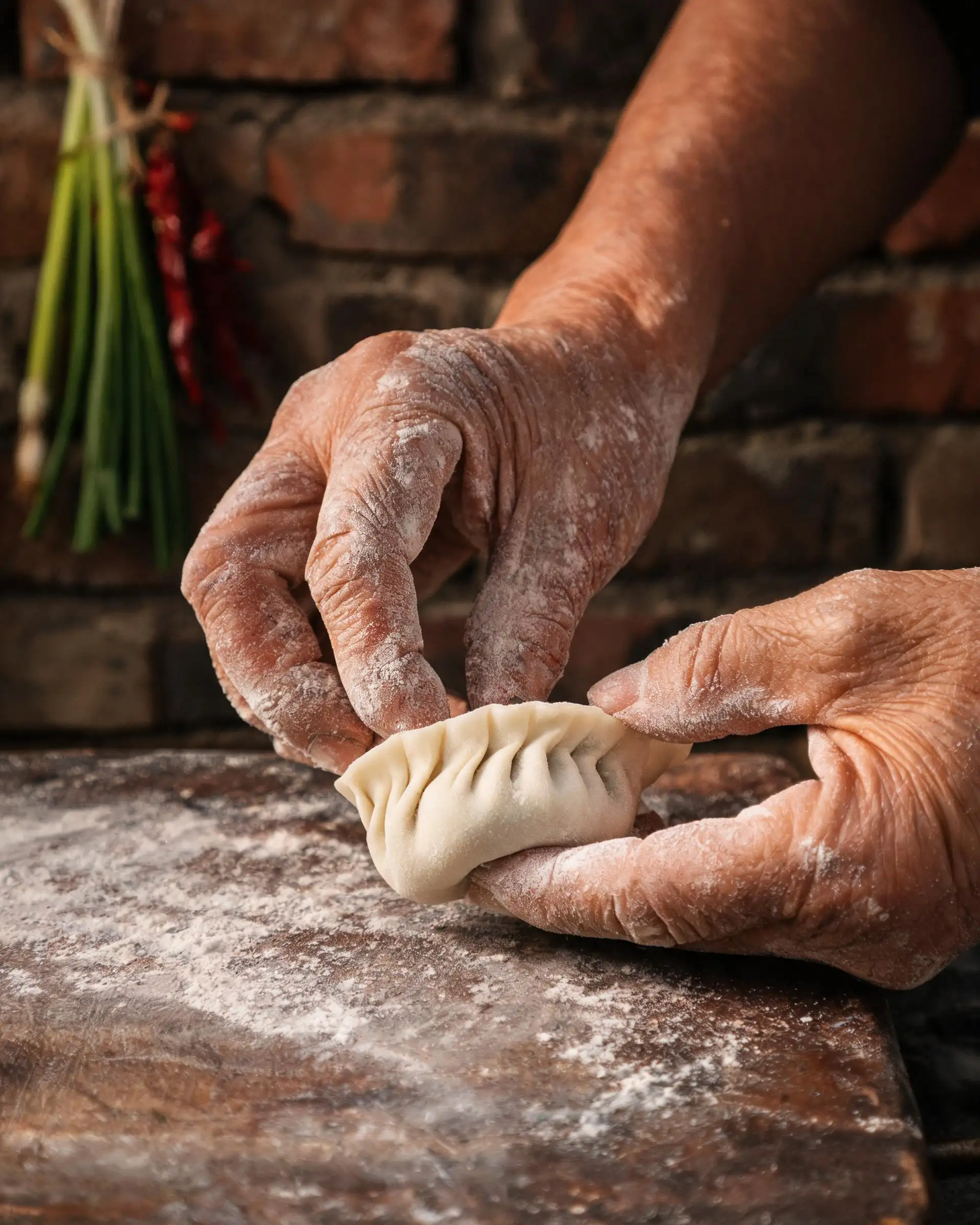
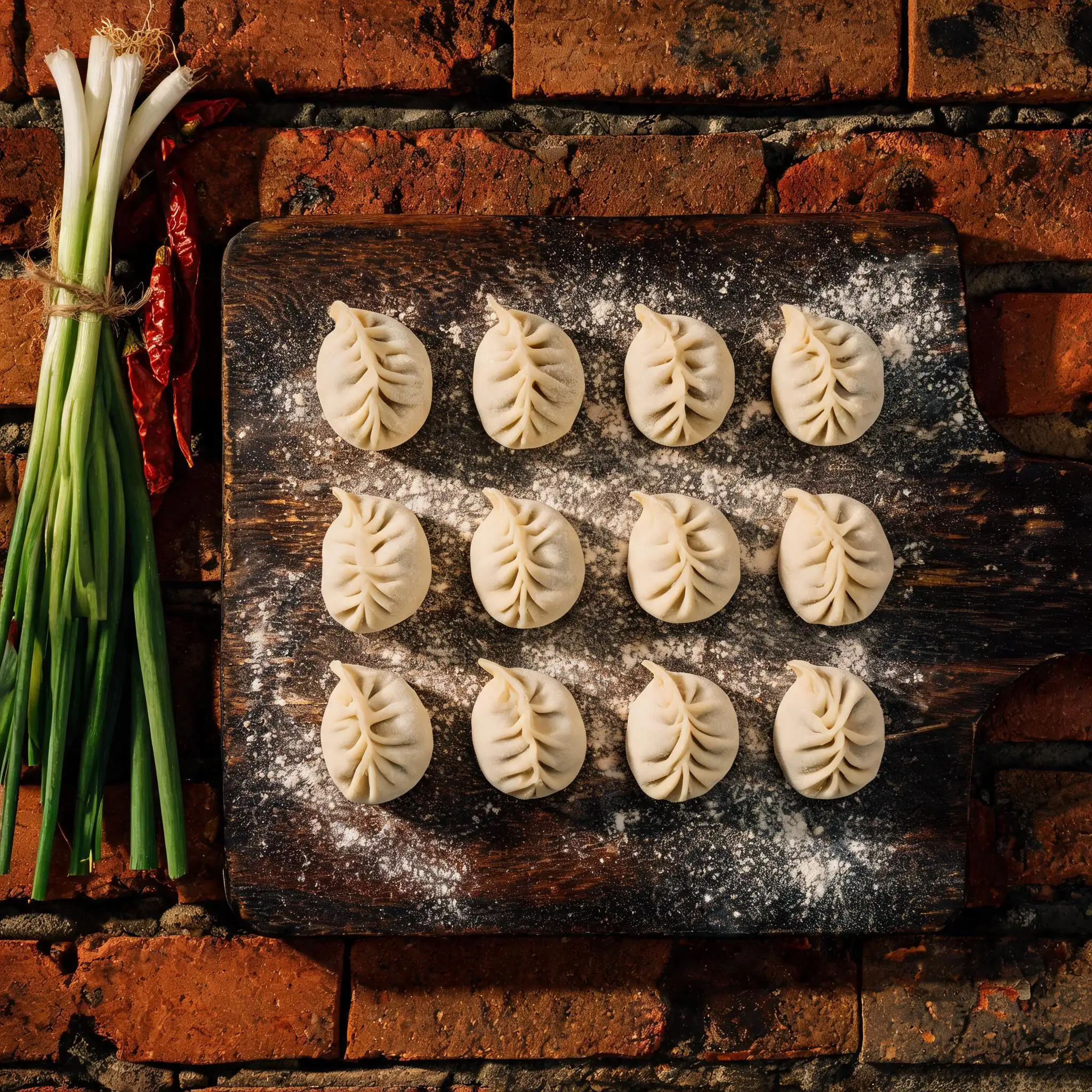
A spoonful of filling goes dead center. You fold the wrapper in half over it, press the middle of the edge together first, then work outward in both directions — pinching and folding in small pleats, five or six to each side. The pleat pattern is the part that takes the most practice. Done right, the dumpling holds its shape and stands flat-bottomed on the board. You line them up without touching, on a board dusted with flour, until the whole batch is wrapped.
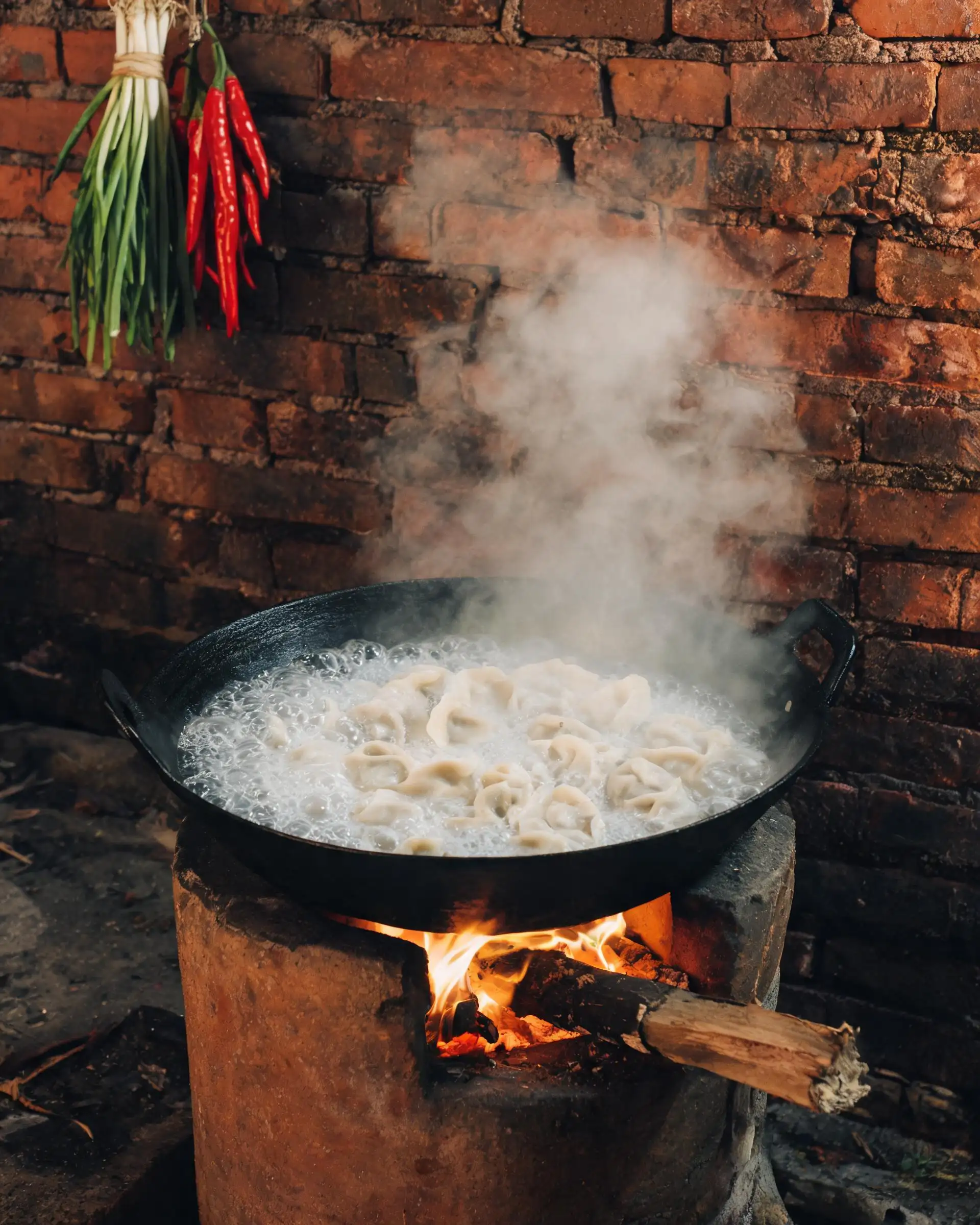
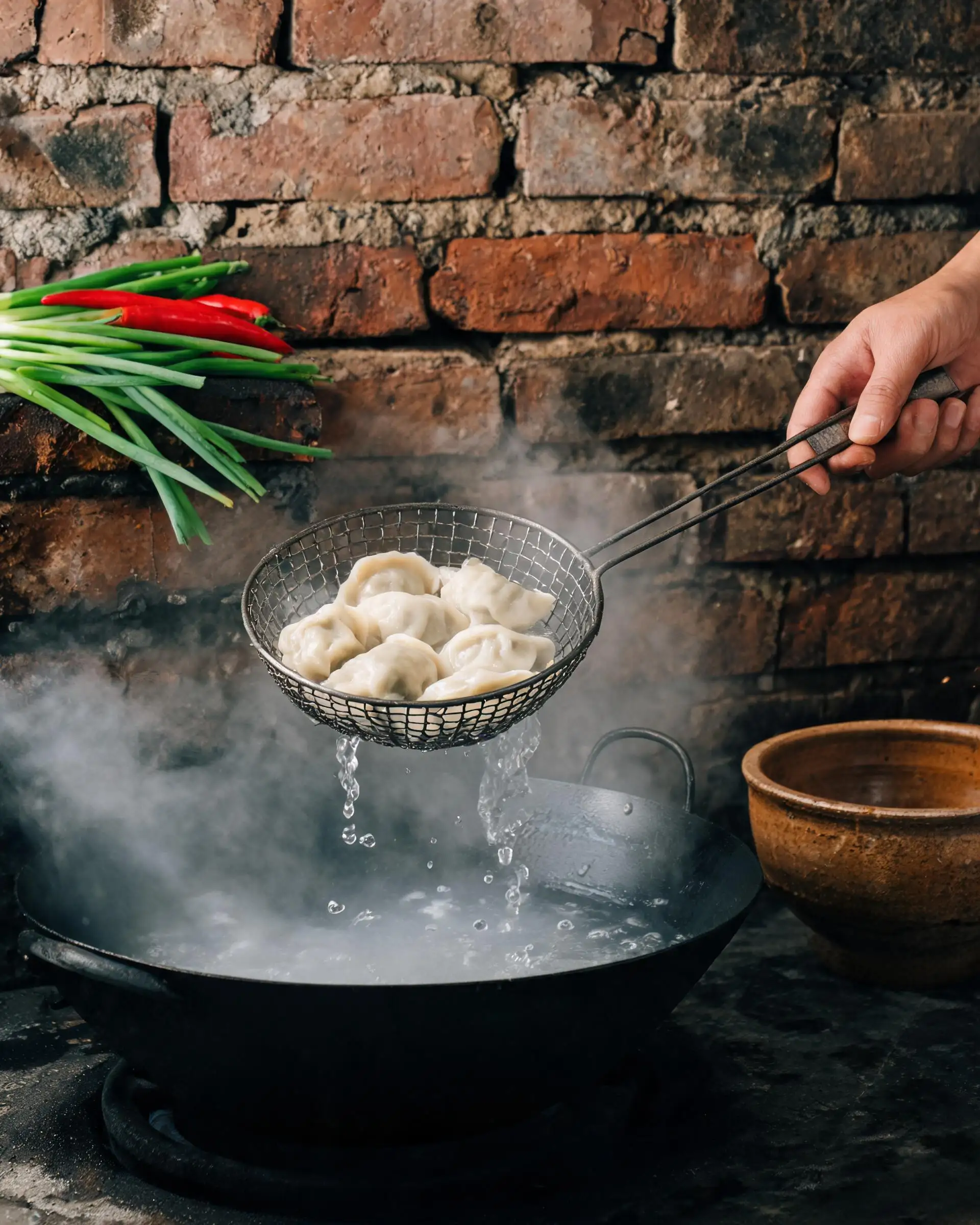
The water in the cast-iron wok goes to a full rolling boil over the wood fire before the dumplings go in. One stir along the bottom right away to stop them sticking. They cook in three stages — the water boils up high, you add a ladleful of cold water to settle it back down, it rises again, you add cold water a second time, and on the third boil the skins have turned from chalky white to a faint translucent. You scoop them out fast with the wire ladle, tipping them into the pottery bowl. The dipping sauce is waiting beside it: black vinegar with raw minced garlic stirred in, nothing else.
The character 饺, in its oldest form, carried a meaning close to "boundary" — the place where one period ends and another begins. Dumplings have been eaten at transitions: the turn of the lunar year, the winter solstice, the moment before someone leaves or comes home. The shape, pinched at the top and rounded at the base, was said to resemble the gold ingots used as currency. You fold one fortune inside each piece of dough and press the edges closed.
---
**Ingredients**
All-purpose wheat flour — a generous bowlful; kneaded by hand into smooth, pliable dough
Pork shoulder — hand-chopped into a rough mince, not processed fine
Napa cabbage — salted and squeezed dry; at least two large handfuls once the water is pressed out
Fresh ginger — minced fine
Scallion — both white and green parts, sliced thin
For the sauce bowl:
Dark soy sauce — a small pour; Shaoxing rice wine — same measure; sesame oil — added last, just a spoonful, stirred in once
For dipping:
Aged black vinegar — a small dish; garlic — minced, stirred in
---
**How it's made**
The flour goes into the bowl and scalding water pours straight in — roughly two parts water to five parts flour by feel, not measurement. You stir fast with chopsticks while it's still hot, breaking the flour into rough clumps before it cools unevenly. Then it comes out onto the board and you start kneading. The dough resists at first, crumbly and stiff, but after eight to ten minutes pressing the heel of your palm forward and folding back, it smooths out. The surface turns matte white, almost silky, and holds an indent when you press a finger in. It goes back in the bowl under a damp cloth to rest while you work the filling.
The napa cabbage gets salted and left to sweat for twenty minutes. When you come back, you grab it in both hands and squeeze — and the water that comes out is always more than you expected. That step is not optional. Skip it and the filling turns watery inside the dumplings; the skins go soft, the pleats unstick, the whole thing falls apart in the pot. The squeezed cabbage goes into the pork. Soy sauce, Shaoxing wine, ginger, and scallion go in next. Sesame oil last. Then you stir everything in one direction — always the same direction — until the filling starts to hold together and pulls away from the sides of the bowl in a loose mass when the chopsticks lift it.
The rested dough gets pressed out into a long rope and cut into small pieces, each one flattened with your palm. The rolling pin is small — shorter than a regular one, meant for this job — and you roll each round with one hand while rotating it with the other. The skin should be thicker in the center to support the filling and thin enough at the edges that the pleats seal without a thick ridge. Speed matters once you start rolling because the skins dry out quickly and stop sticking.
A spoonful of filling goes dead center. You fold the wrapper in half over it, press the middle of the edge together first, then work outward in both directions — pinching and folding in small pleats, five or six to each side. The pleat pattern is the part that takes the most practice. Done right, the dumpling holds its shape and stands flat-bottomed on the board. You line them up without touching, on a board dusted with flour, until the whole batch is wrapped.
The water in the cast-iron wok goes to a full rolling boil over the wood fire before the dumplings go in. One stir along the bottom right away to stop them sticking. They cook in three stages — the water boils up high, you add a ladleful of cold water to settle it back down, it rises again, you add cold water a second time, and on the third boil the skins have turned from chalky white to a faint translucent. You scoop them out fast with the wire ladle, tipping them into the pottery bowl. The dipping sauce is waiting beside it: black vinegar with raw minced garlic stirred in, nothing else.
The character 饺, in its oldest form, carried a meaning close to "boundary" — the place where one period ends and another begins. Dumplings have been eaten at transitions: the turn of the lunar year, the winter solstice, the moment before someone leaves or comes home. The shape, pinched at the top and rounded at the base, was said to resemble the gold ingots used as currency. You fold one fortune inside each piece of dough and press the edges closed.