·5/28/2026
from
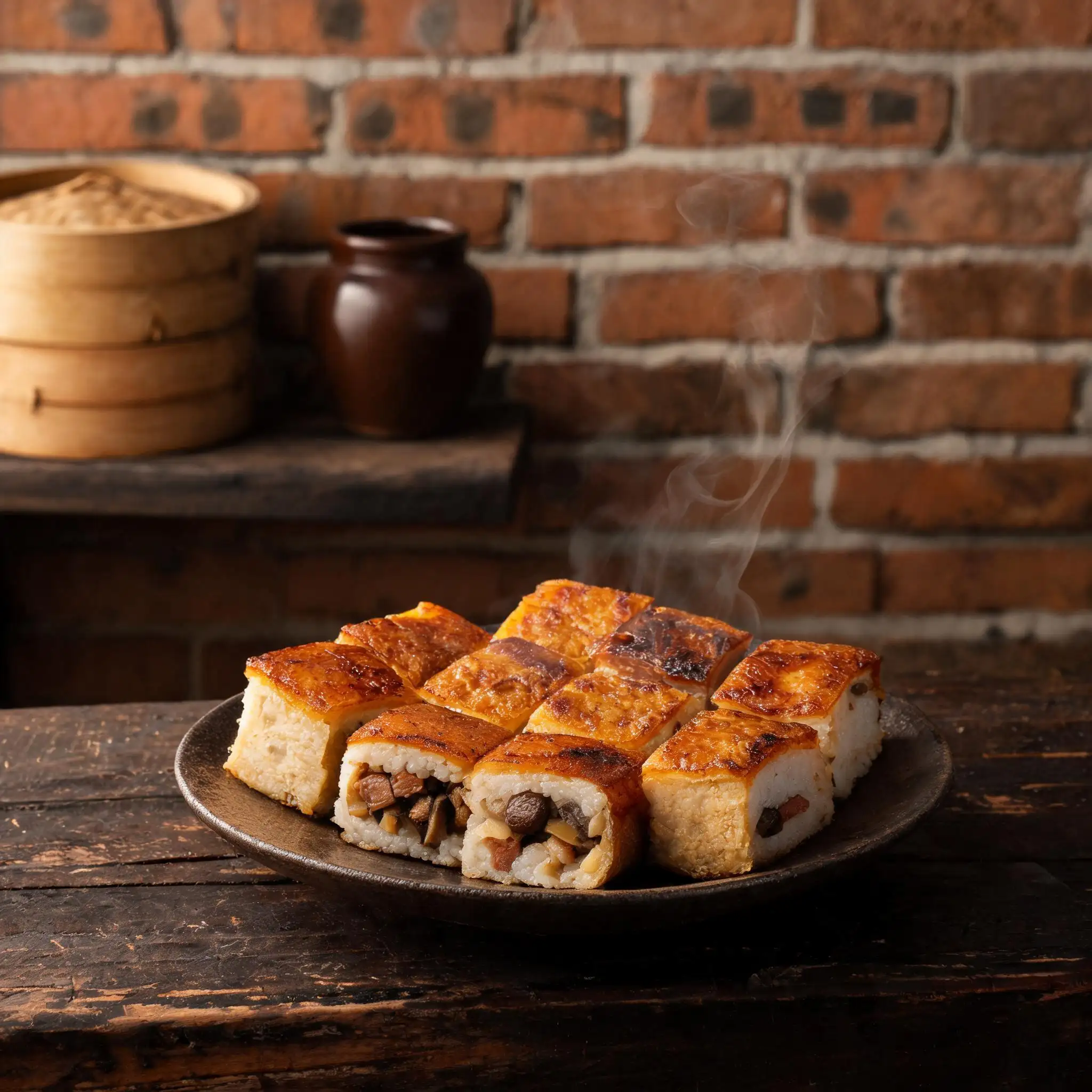
Three-Fresh Bean Skin
**Three-Fresh Bean Skin** *(三鲜豆皮)*
---
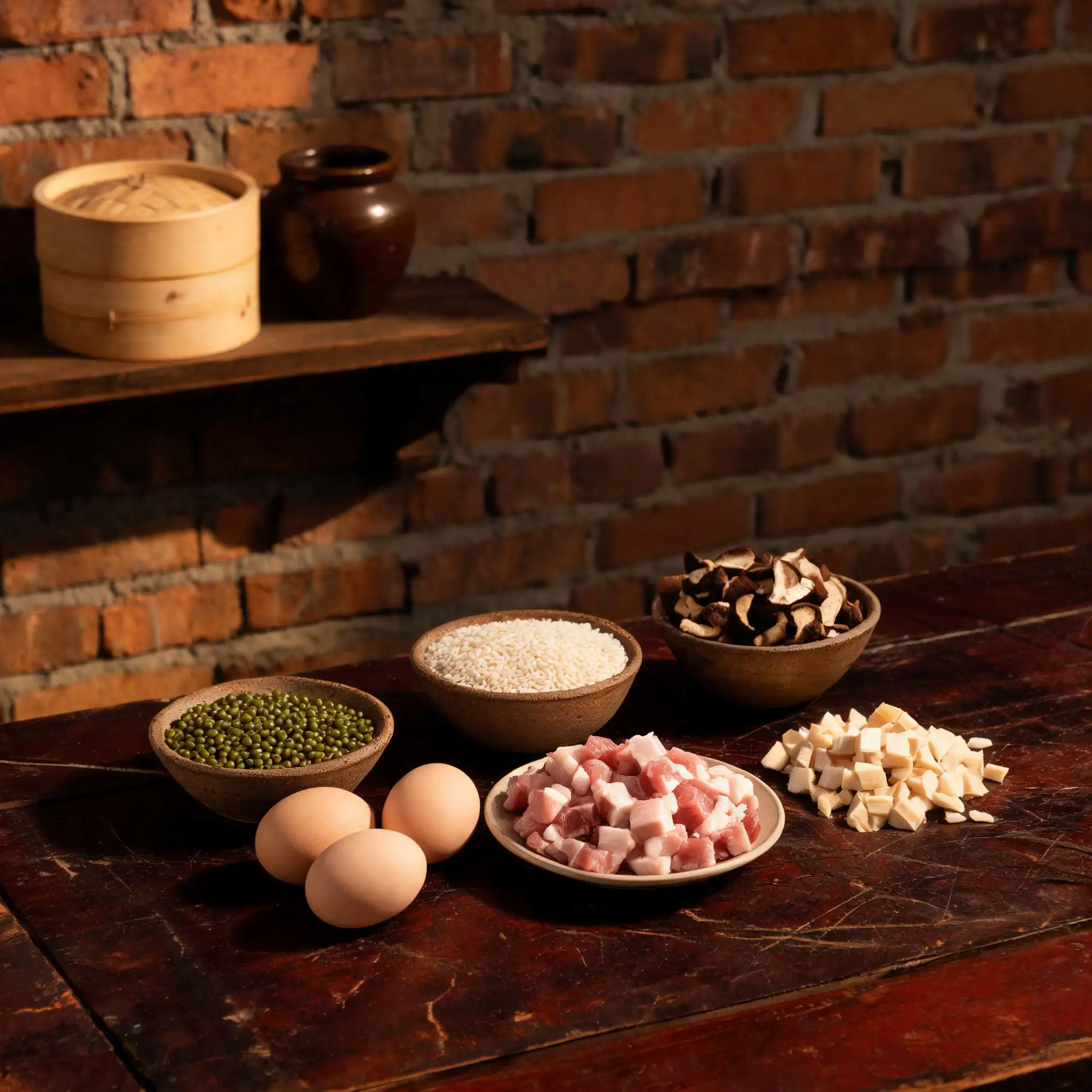
**Ingredients**
Mung beans — soaked overnight in cold water, then ground with fresh water into a smooth, pourable slurry; pale yellowish-green, thin enough to coat the back of a spoon without clinging
Eggs — three whole eggs; one beaten into the batter, two cracked directly onto the griddle surface during cooking
Glutinous rice — soaked for four hours, then steamed until the grains are cooked through and compact; must be used warm, not cold
Pork belly — cut into small cubes roughly one centimeter across; fat and lean portions both present
Dried shiitake mushrooms — two or three large caps, rehydrated in warm water until fully plump, water wrung out, diced to match the pork
Winter bamboo shoots — one small piece, blanched in plain water for three minutes to remove the bitter edge, then diced
For the filling: a splash of soy sauce, a small amount of sugar, neutral oil for stir-frying
Rendered lard — a spoonful, for brushing the griddle just before the flip
---
**How it's made**
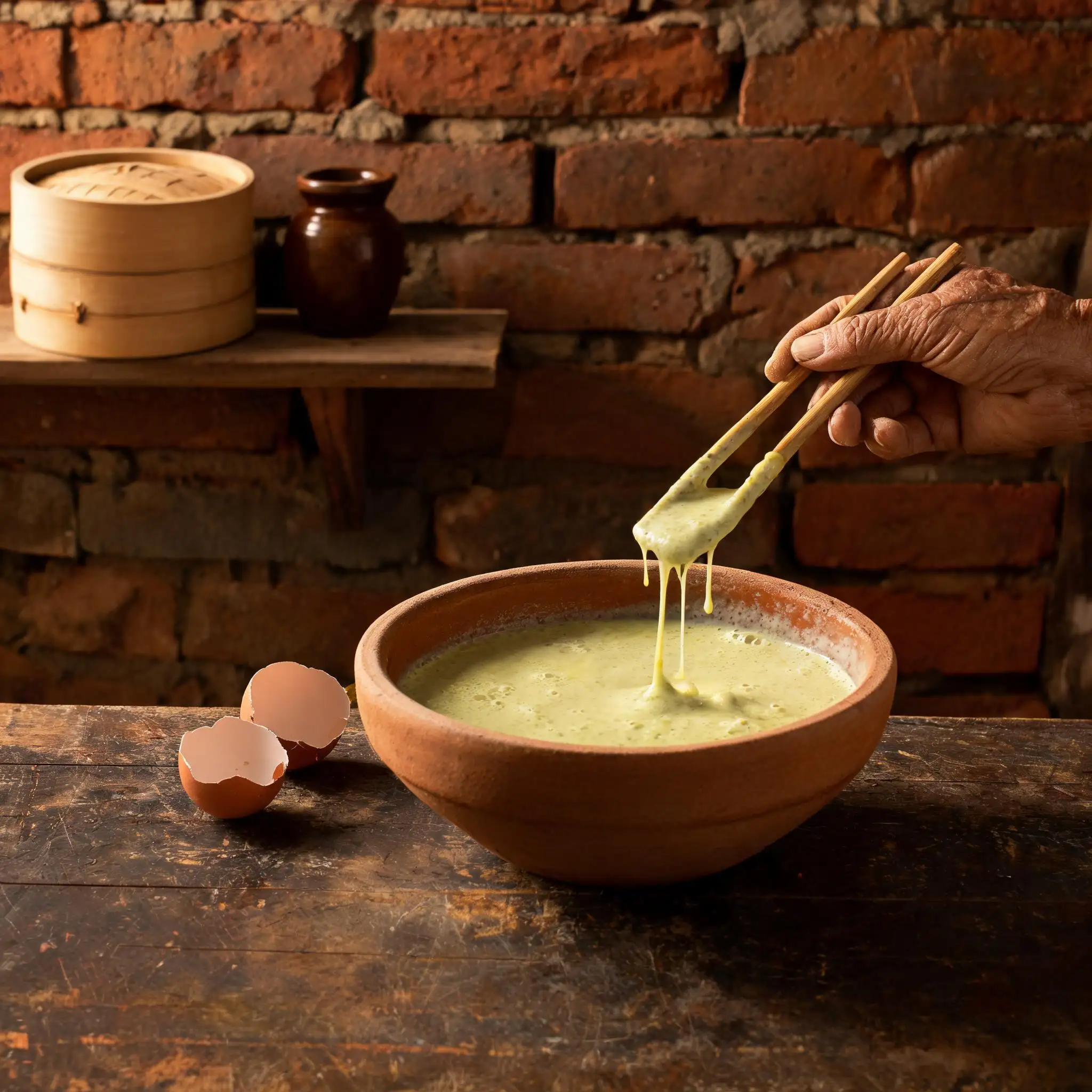
The night before, rinse a cup of dried mung beans and leave them submerged in cold water. By morning they should feel soft when pressed between two fingers. Drain them, add about twice their volume in fresh cold water, and blend until completely smooth — run it long enough that there's no grit left. Break one egg into the slurry, stir it in, and the mixture should pour off a ladle in a thin, steady stream. It should not cling or thicken. This is the batter.
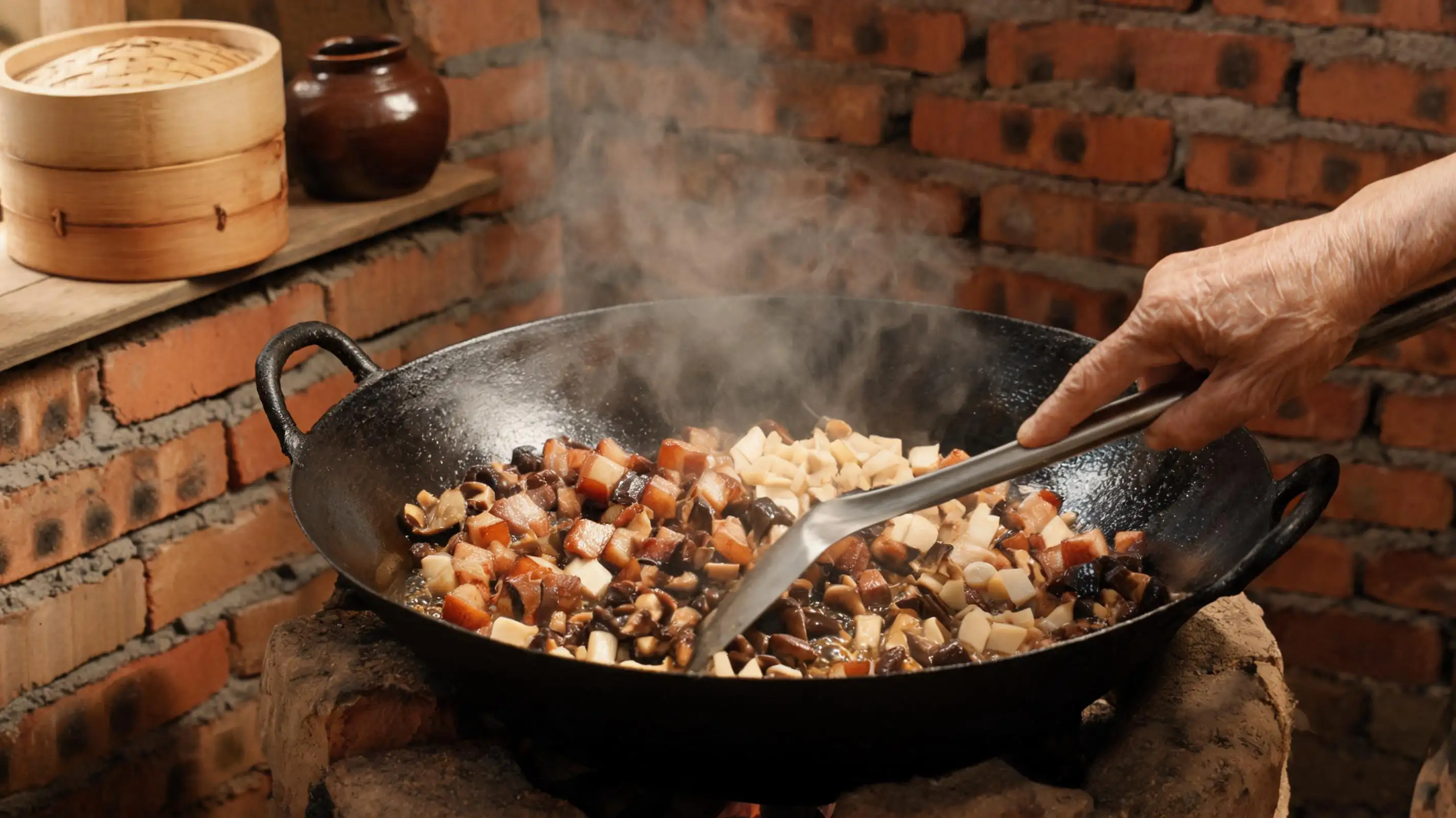
While the griddle heats, make the filling. Get the wok genuinely hot — hold your palm a few inches above the surface and you should feel the heat rising. Add oil, then the pork belly cubes. They'll spit as soon as they hit the metal. Keep the heat high and let the fat begin to render; the cubes should sizzle steadily, not stew. Once the edges start to brown, push them to the side and drop in the shiitake. Let the mushrooms sit for thirty seconds before stirring — they need direct contact with the surface to develop color rather than steam. Add the bamboo shoots, a pour of soy sauce, a pinch of sugar, and stir for another minute until the liquid reduces and the filling looks glossy. It should smell savory and slightly caramelized, not wet. Take it off the heat.
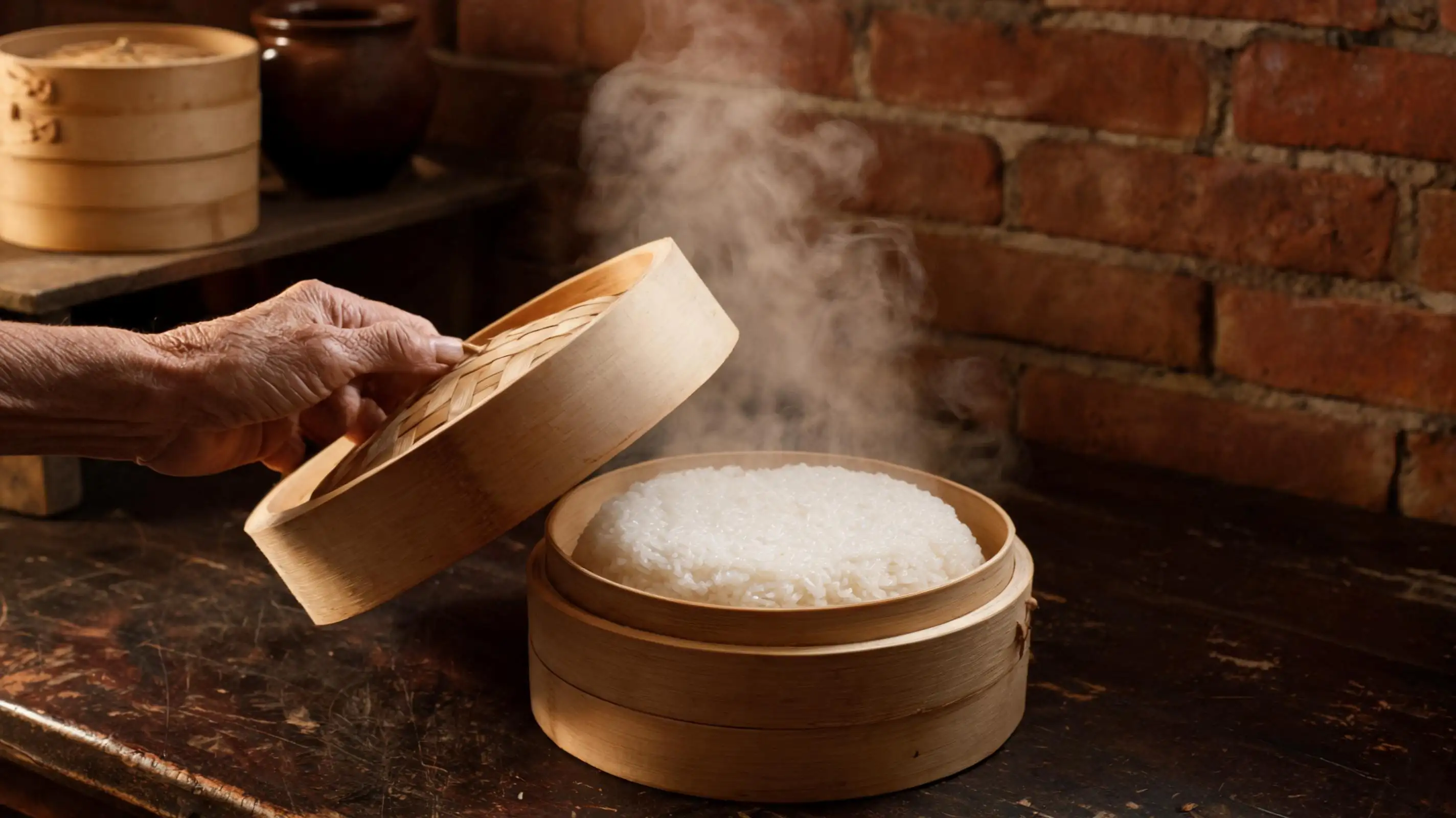
The glutinous rice needs to be warm when it goes down. Cold rice stiffens and tears the skin when pressed. Keep it covered after steaming and use it while it still holds some heat.
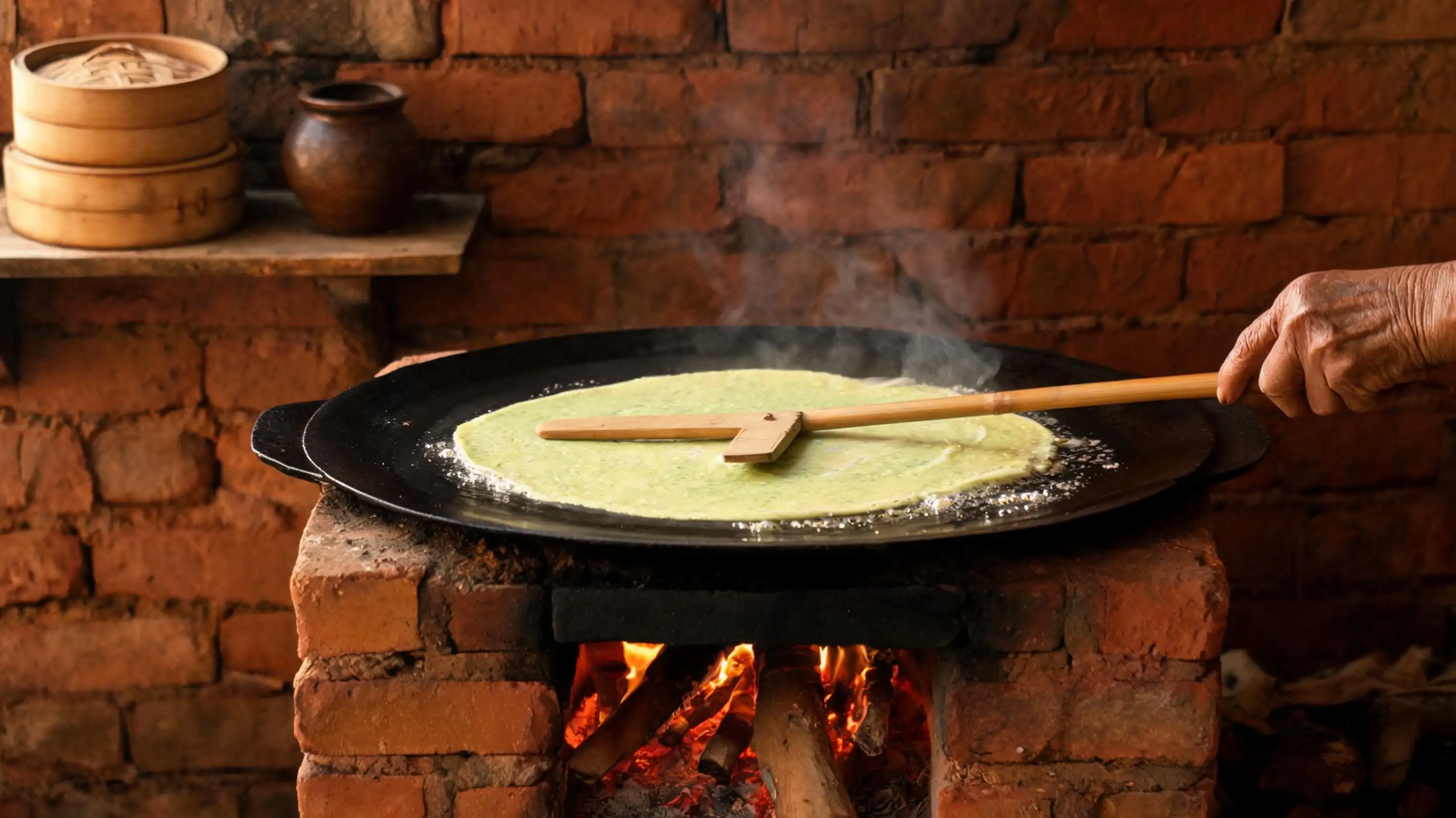
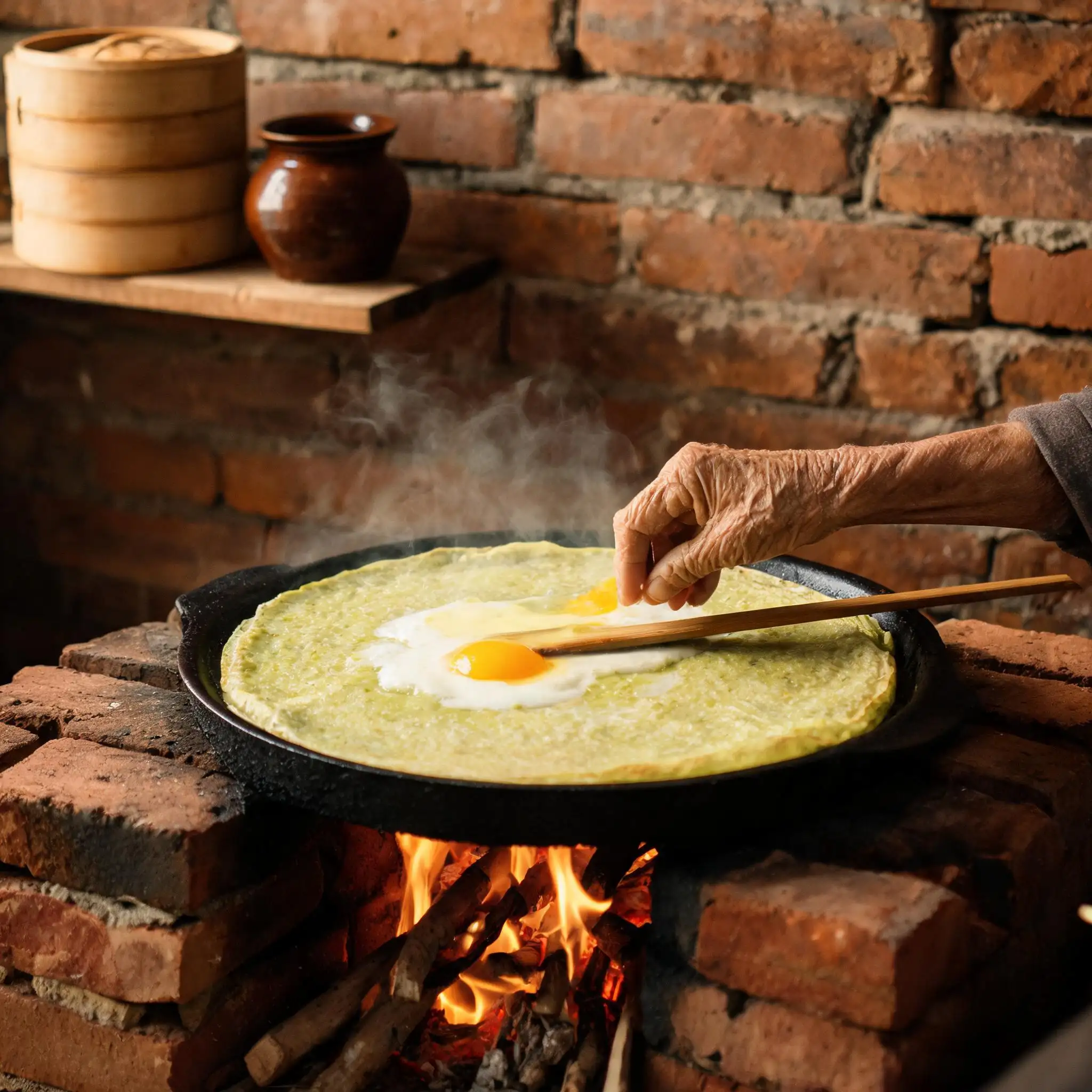
The griddle for this dish is a large, flat, cast-iron disc with no sides — wide enough to hold a full round of skin across its entire surface. Set it over a wood fire and let it heat evenly. When a drop of water disappears on contact, it's ready. Pour the batter in from the center and work a long-handled bamboo spreader outward in slow circular arcs. The goal is an even layer, edge to edge, thin enough that the skin sets within about a minute. While the top surface is still soft, crack two eggs directly onto it. Break the yolks with the flat side of the spreader and push the egg out to the edges until it covers the whole surface in a thin wash of yellow and white. Wait for it to stop looking wet before moving on.
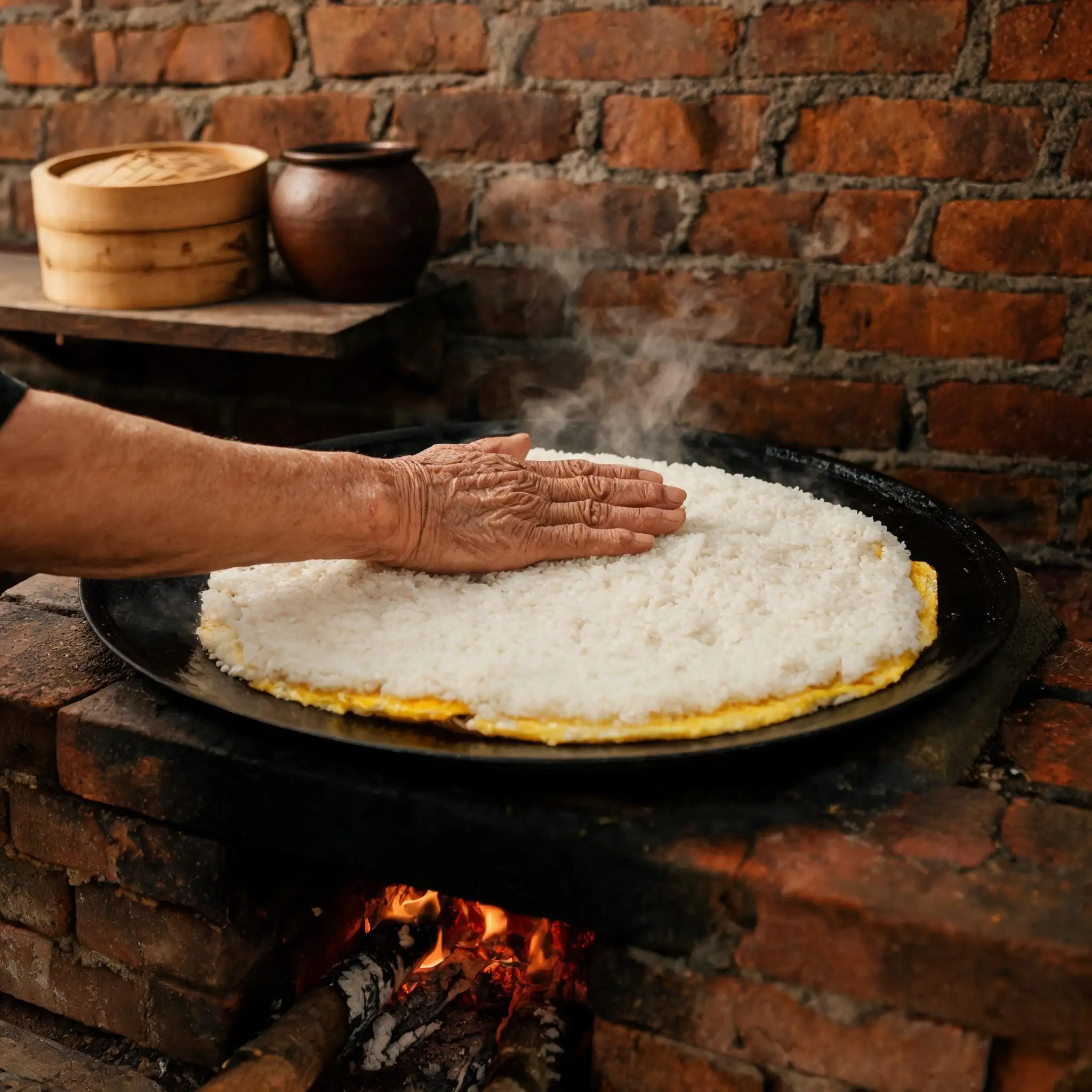
Lay the warm glutinous rice across the entire egg surface and press down with both palms. Work from the center outward, applying steady pressure until the rice forms a flat, compact layer. Spoon the filling over the rice and spread it evenly to the edges.
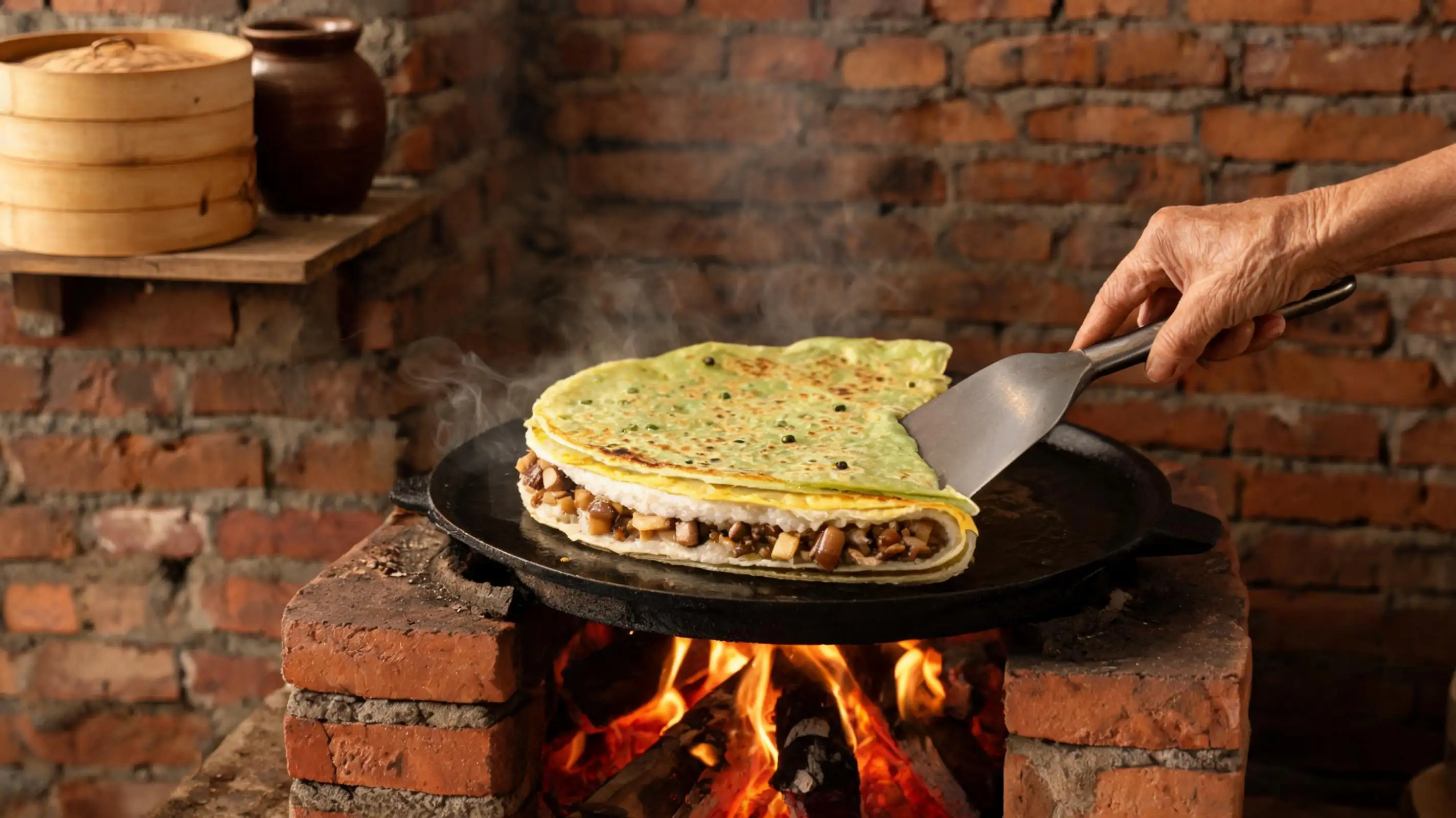
Now flip. Slide a wide flat spatula under the skin, get as much surface underneath as possible, and turn it in one clean motion. The side that was against the griddle first — the original layer of bean batter — now faces up. Brush it lightly with lard. Over the next few minutes it will go from pale and matte to deeply golden, slightly translucent at the edges. The smell shifts from the faint, grassy scent of raw mung bean to something toasted and rich. When the surface has color and a little texture when tapped, it's done.
Cut it into squares on the griddle while still hot. Eight or nine pieces from one round is typical. Each piece should hold its layers when lifted: the crisp outer skin, a thin film of egg beneath it, compact white rice, and the filling showing at the cut edge. Eat immediately — the texture is best in the first five minutes.
The name is simple: three fillings, bean skin. But the dish belongs to a particular kind of urban morning — breakfast food for people who started their days early and hard, dock workers and market porters and shop-owners who arrived before their customers. The shops that made it kept unusual hours, opening before dawn and closing by mid-morning. A skilled cook could run two or three griddles at once, working through a steady rhythm. The flip is the step that concentrates everything: too much moisture in the filling and the rice slips, too little heat and the skin tears. When it goes cleanly, the whole round lands in one piece and finishes with that combination of crispness and weight that makes it the kind of food people remember — not just for how it tastes, but for the specific way it feels when you eat it standing up, still too hot to hold comfortably.
---
**Ingredients**
Mung beans — soaked overnight in cold water, then ground with fresh water into a smooth, pourable slurry; pale yellowish-green, thin enough to coat the back of a spoon without clinging
Eggs — three whole eggs; one beaten into the batter, two cracked directly onto the griddle surface during cooking
Glutinous rice — soaked for four hours, then steamed until the grains are cooked through and compact; must be used warm, not cold
Pork belly — cut into small cubes roughly one centimeter across; fat and lean portions both present
Dried shiitake mushrooms — two or three large caps, rehydrated in warm water until fully plump, water wrung out, diced to match the pork
Winter bamboo shoots — one small piece, blanched in plain water for three minutes to remove the bitter edge, then diced
For the filling: a splash of soy sauce, a small amount of sugar, neutral oil for stir-frying
Rendered lard — a spoonful, for brushing the griddle just before the flip
---
**How it's made**
The night before, rinse a cup of dried mung beans and leave them submerged in cold water. By morning they should feel soft when pressed between two fingers. Drain them, add about twice their volume in fresh cold water, and blend until completely smooth — run it long enough that there's no grit left. Break one egg into the slurry, stir it in, and the mixture should pour off a ladle in a thin, steady stream. It should not cling or thicken. This is the batter.
While the griddle heats, make the filling. Get the wok genuinely hot — hold your palm a few inches above the surface and you should feel the heat rising. Add oil, then the pork belly cubes. They'll spit as soon as they hit the metal. Keep the heat high and let the fat begin to render; the cubes should sizzle steadily, not stew. Once the edges start to brown, push them to the side and drop in the shiitake. Let the mushrooms sit for thirty seconds before stirring — they need direct contact with the surface to develop color rather than steam. Add the bamboo shoots, a pour of soy sauce, a pinch of sugar, and stir for another minute until the liquid reduces and the filling looks glossy. It should smell savory and slightly caramelized, not wet. Take it off the heat.
The glutinous rice needs to be warm when it goes down. Cold rice stiffens and tears the skin when pressed. Keep it covered after steaming and use it while it still holds some heat.
The griddle for this dish is a large, flat, cast-iron disc with no sides — wide enough to hold a full round of skin across its entire surface. Set it over a wood fire and let it heat evenly. When a drop of water disappears on contact, it's ready. Pour the batter in from the center and work a long-handled bamboo spreader outward in slow circular arcs. The goal is an even layer, edge to edge, thin enough that the skin sets within about a minute. While the top surface is still soft, crack two eggs directly onto it. Break the yolks with the flat side of the spreader and push the egg out to the edges until it covers the whole surface in a thin wash of yellow and white. Wait for it to stop looking wet before moving on.
Lay the warm glutinous rice across the entire egg surface and press down with both palms. Work from the center outward, applying steady pressure until the rice forms a flat, compact layer. Spoon the filling over the rice and spread it evenly to the edges.
Now flip. Slide a wide flat spatula under the skin, get as much surface underneath as possible, and turn it in one clean motion. The side that was against the griddle first — the original layer of bean batter — now faces up. Brush it lightly with lard. Over the next few minutes it will go from pale and matte to deeply golden, slightly translucent at the edges. The smell shifts from the faint, grassy scent of raw mung bean to something toasted and rich. When the surface has color and a little texture when tapped, it's done.
Cut it into squares on the griddle while still hot. Eight or nine pieces from one round is typical. Each piece should hold its layers when lifted: the crisp outer skin, a thin film of egg beneath it, compact white rice, and the filling showing at the cut edge. Eat immediately — the texture is best in the first five minutes.
The name is simple: three fillings, bean skin. But the dish belongs to a particular kind of urban morning — breakfast food for people who started their days early and hard, dock workers and market porters and shop-owners who arrived before their customers. The shops that made it kept unusual hours, opening before dawn and closing by mid-morning. A skilled cook could run two or three griddles at once, working through a steady rhythm. The flip is the step that concentrates everything: too much moisture in the filling and the rice slips, too little heat and the skin tears. When it goes cleanly, the whole round lands in one piece and finishes with that combination of crispness and weight that makes it the kind of food people remember — not just for how it tastes, but for the specific way it feels when you eat it standing up, still too hot to hold comfortably.