·5/27/2026
from
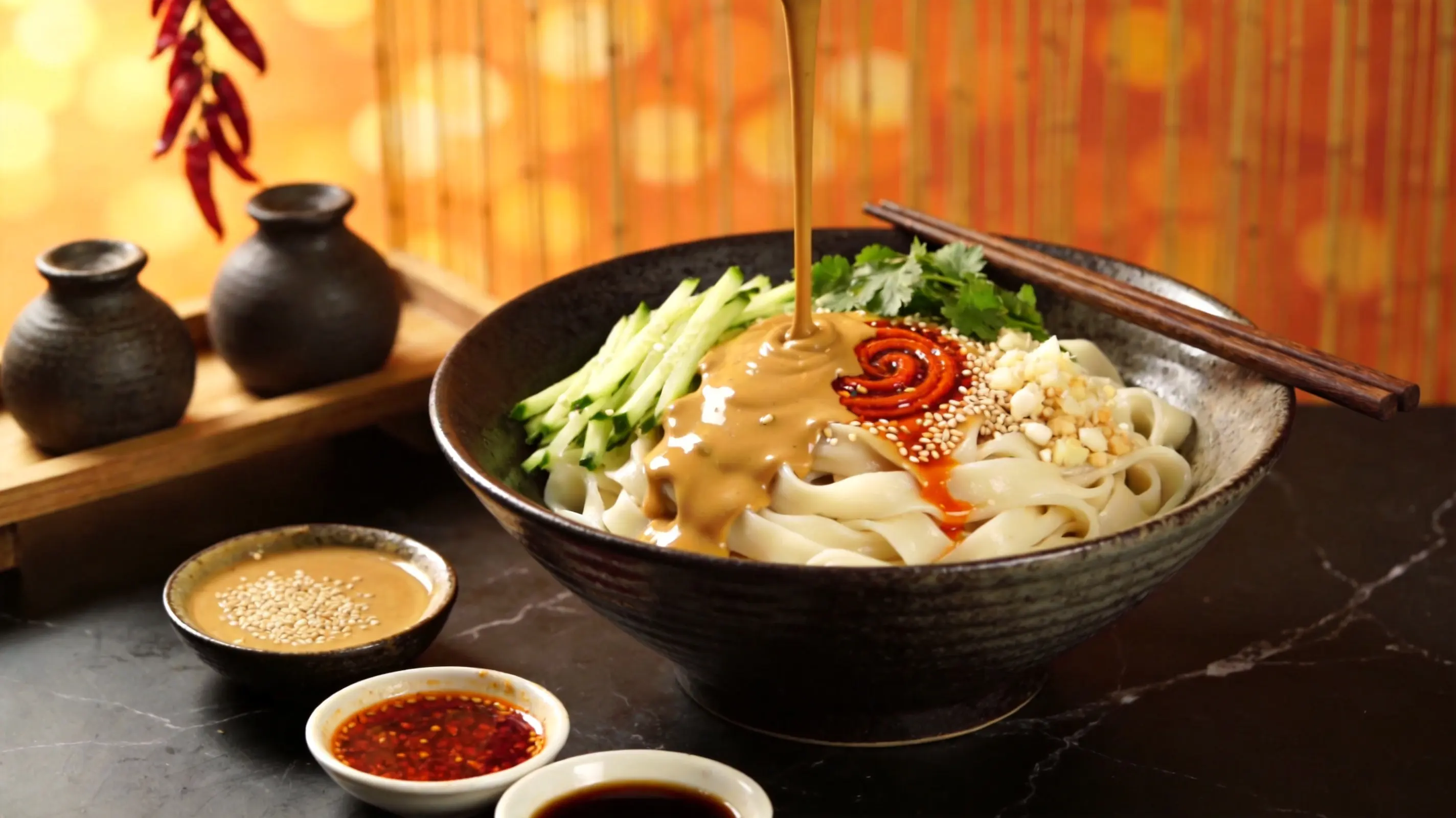
Cold Sesame Noodles
**Cold Sesame Noodles** *(麻酱凉面)*
---
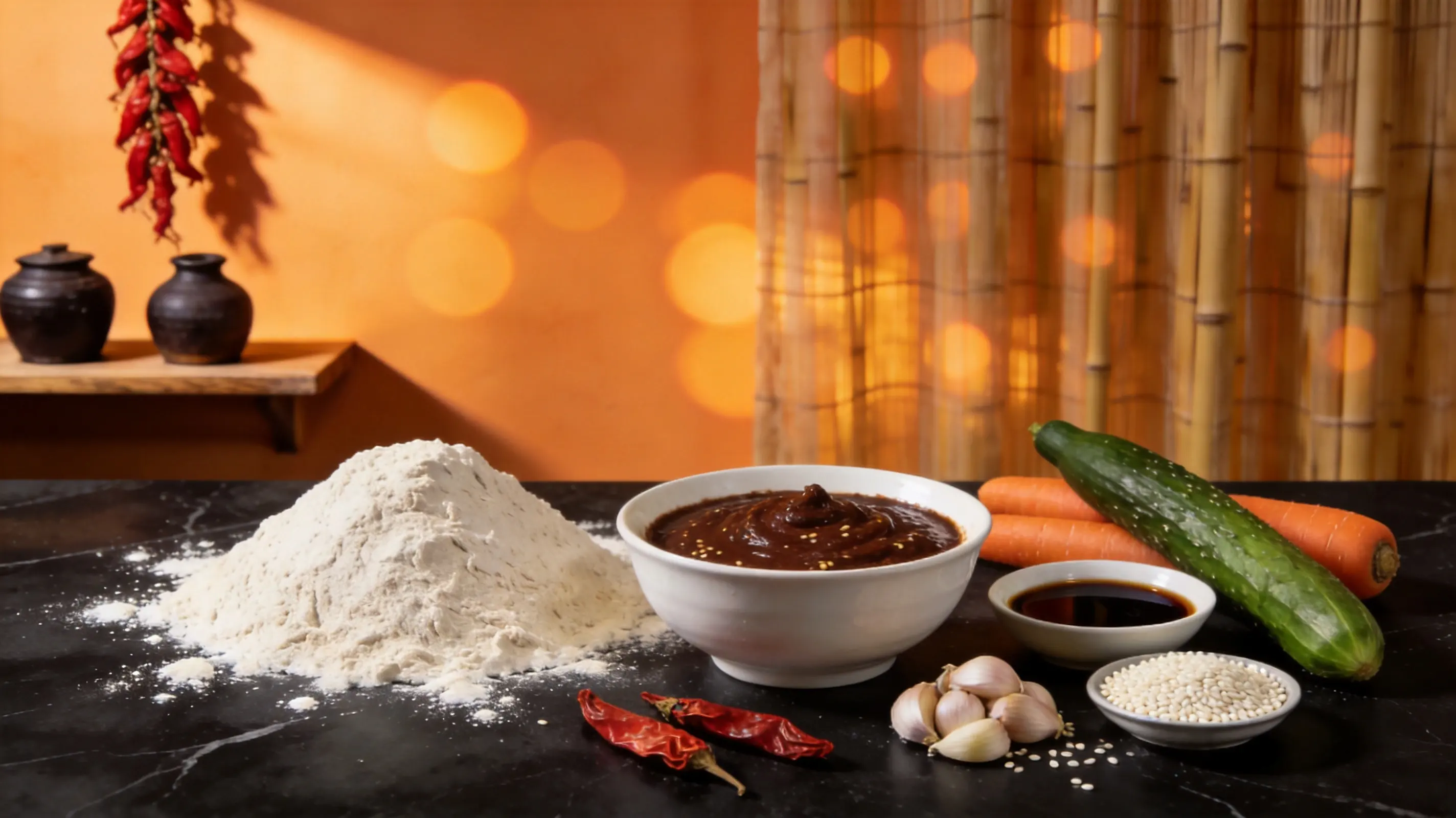
**Ingredients**
All-purpose flour — sifted; used to make the noodle dough
Salt — a small pinch; added directly to the flour before mixing
Cold water — enough to bring the dough together; added gradually
For the sauce bowl:
Sesame paste — two generous spoonfuls, thick and dense
Soy sauce — a small amount; lightens and seasons the paste
Black vinegar — a small splash; cuts through the richness
Sesame oil — a few drops; deepens the aroma
Minced garlic — one small clove, finely pressed
Chili oil — to taste; a swirl over the finished bowl
Cold water — added in stages to loosen the paste to a pourable consistency
Cucumber — one piece, cut into thin matchstick strips
Fresh cilantro — a small handful
Toasted white sesame seeds — a small amount, for finishing
---
**How it's made**
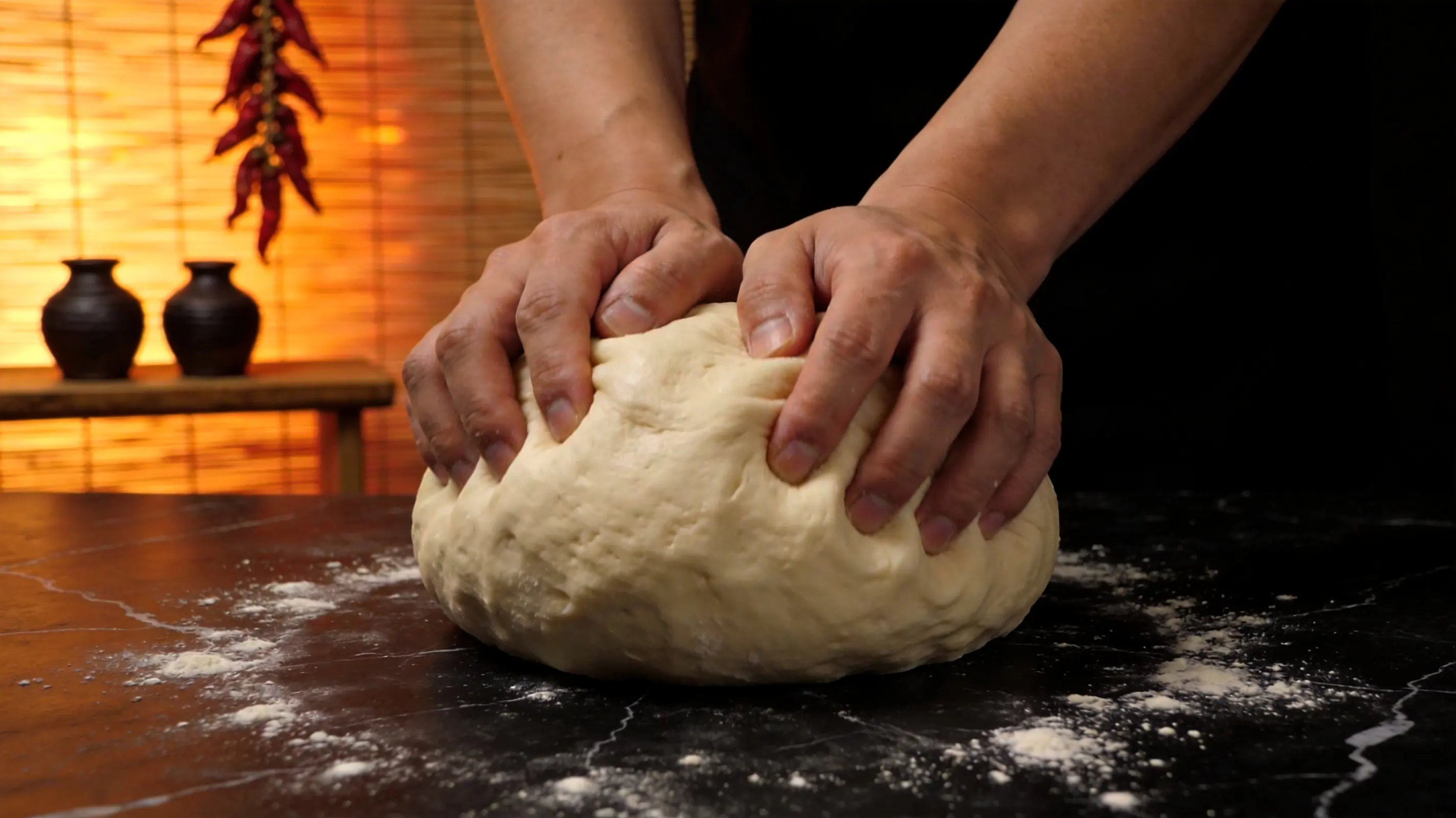
The dough starts simply — flour and a pinch of salt mixed together, then cold water added a little at a time and worked in by hand until the mass comes together. It takes a few minutes of kneading before the surface stops looking ragged and starts to smooth out. The finished dough should feel firm but not stiff, and it needs time to rest — covered, left alone for at least thirty minutes. The gluten relaxes during that time, and a dough that felt slightly resistant becomes noticeably softer and easier to roll.
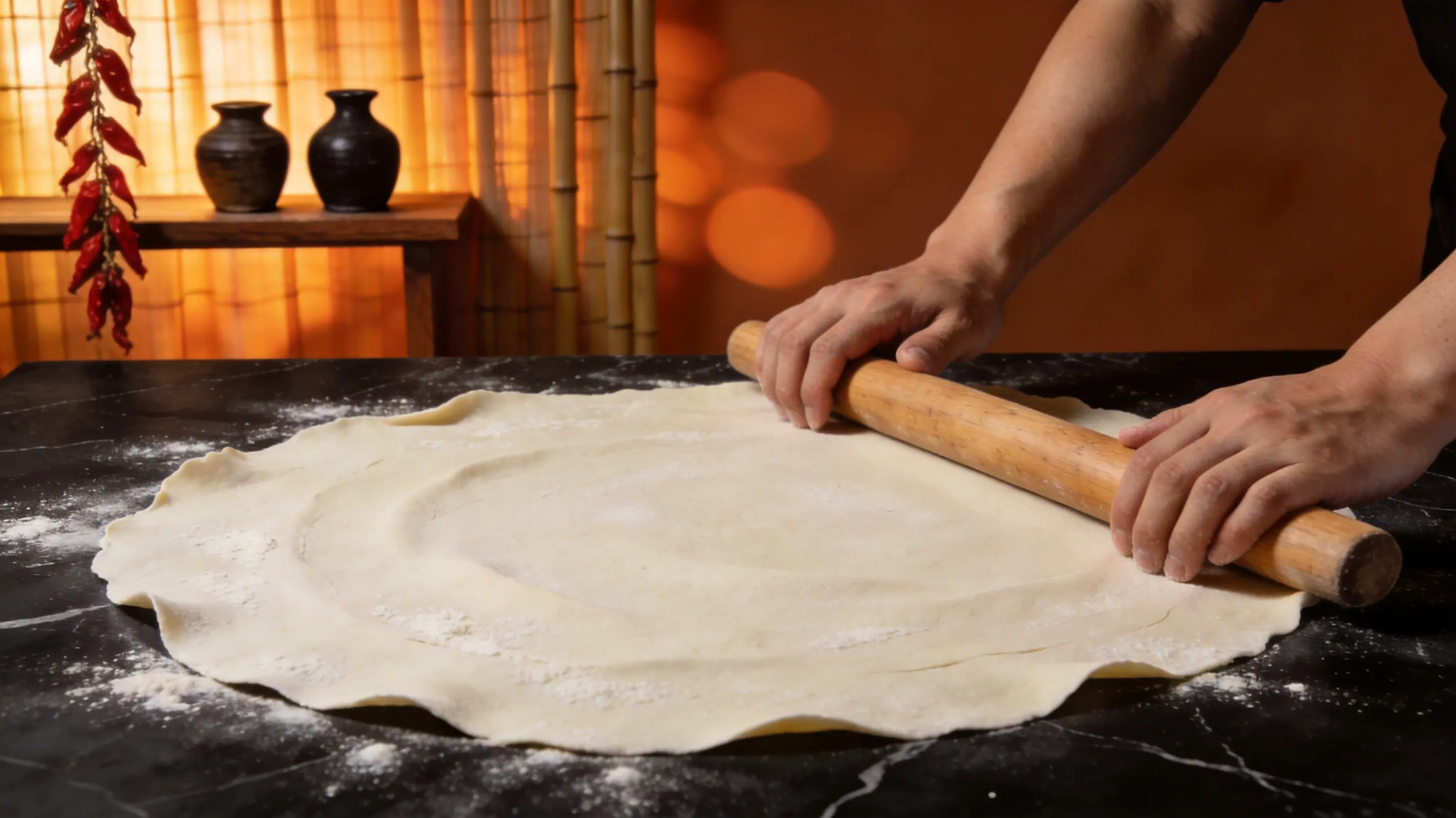
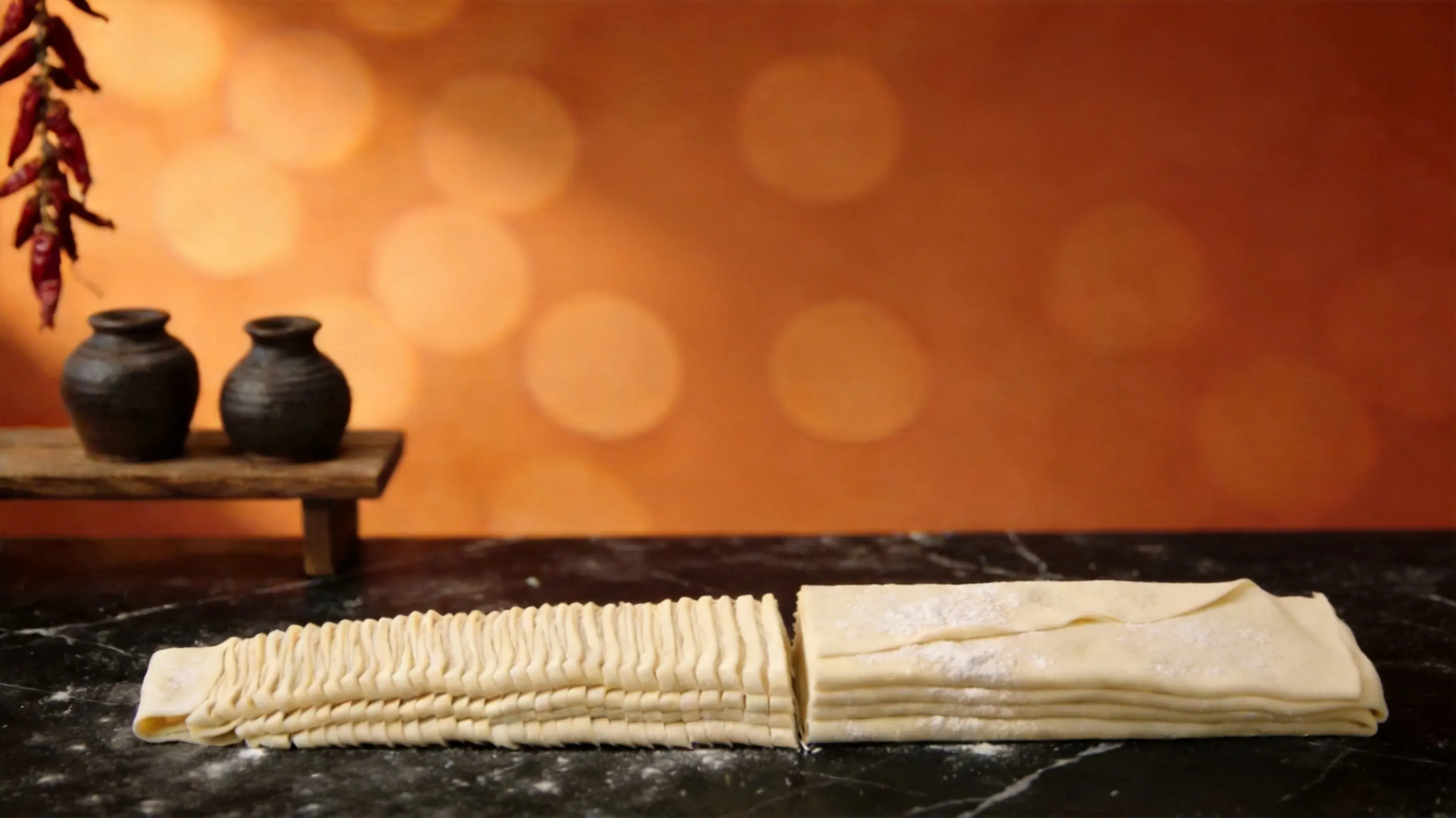
After resting, the dough is pressed flat on the surface and rolled out with a pin. The goal is an even sheet, thin enough to fold without tearing. Once rolled out, it gets dusted with flour, folded over itself several times into a neat stack, then cut straight across into strips. The strips are narrow — about the width of a flat ribbon — and when you shake them loose, they fan out into long pale noodles that smell faintly of raw flour.
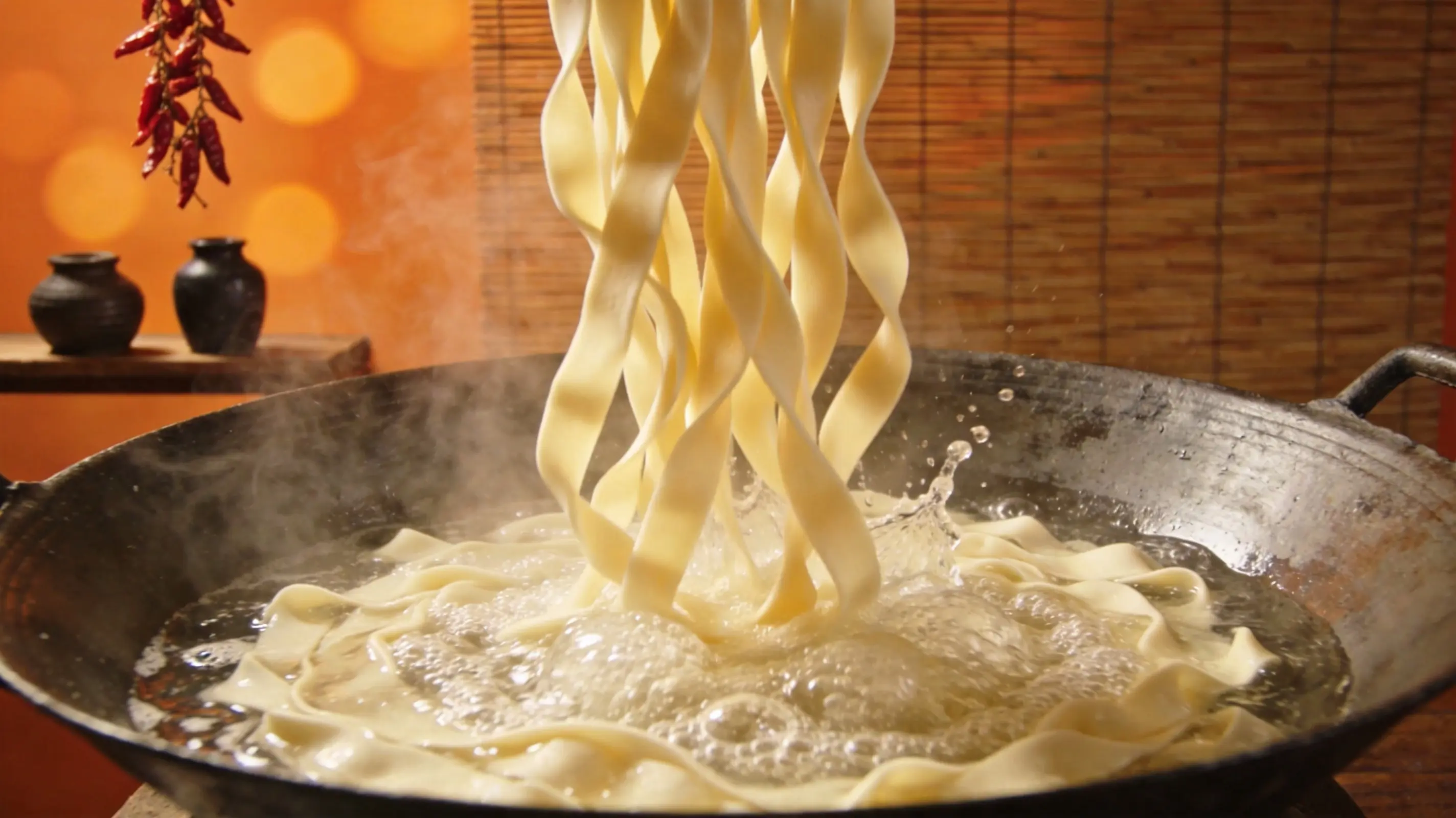
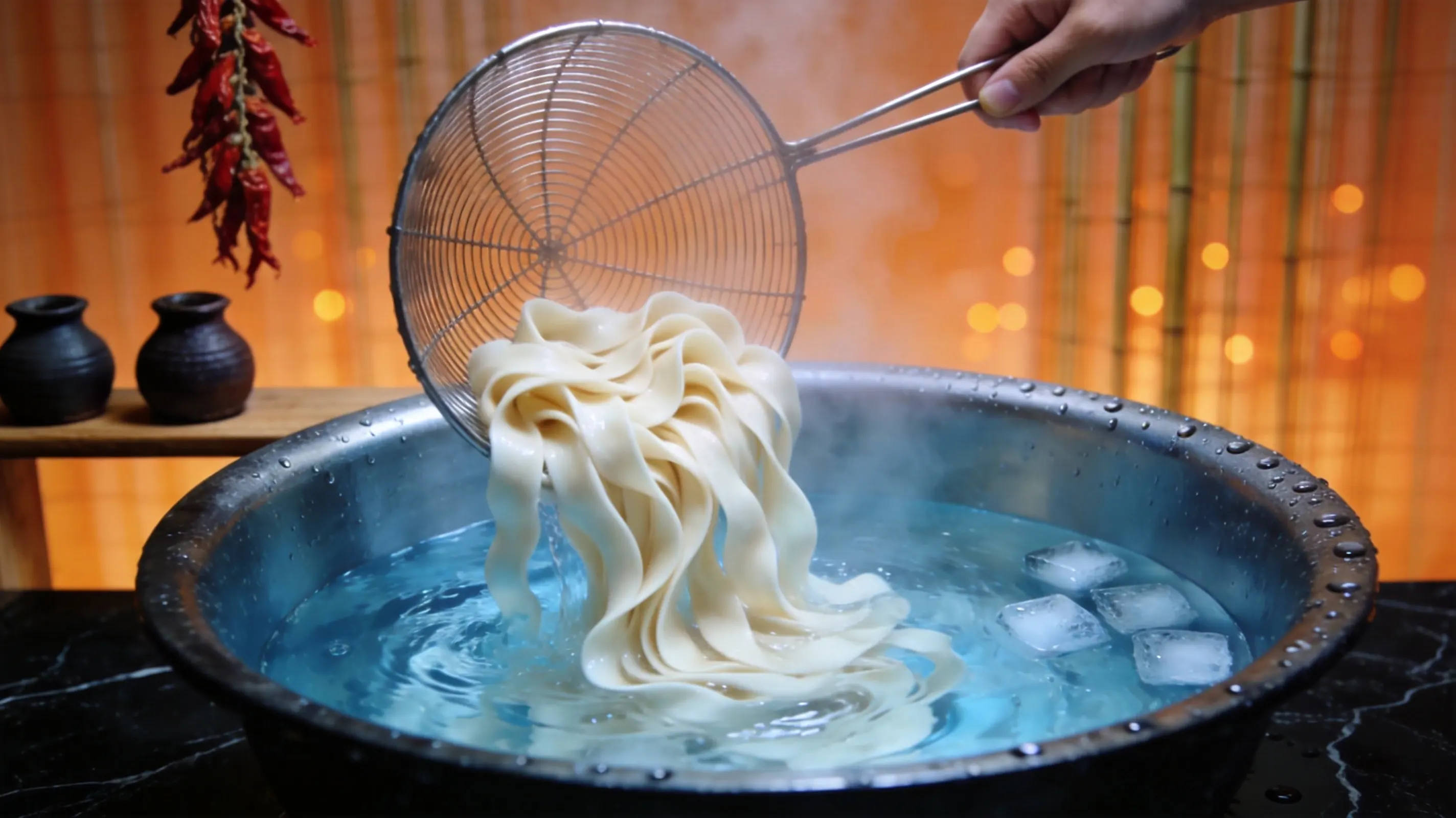
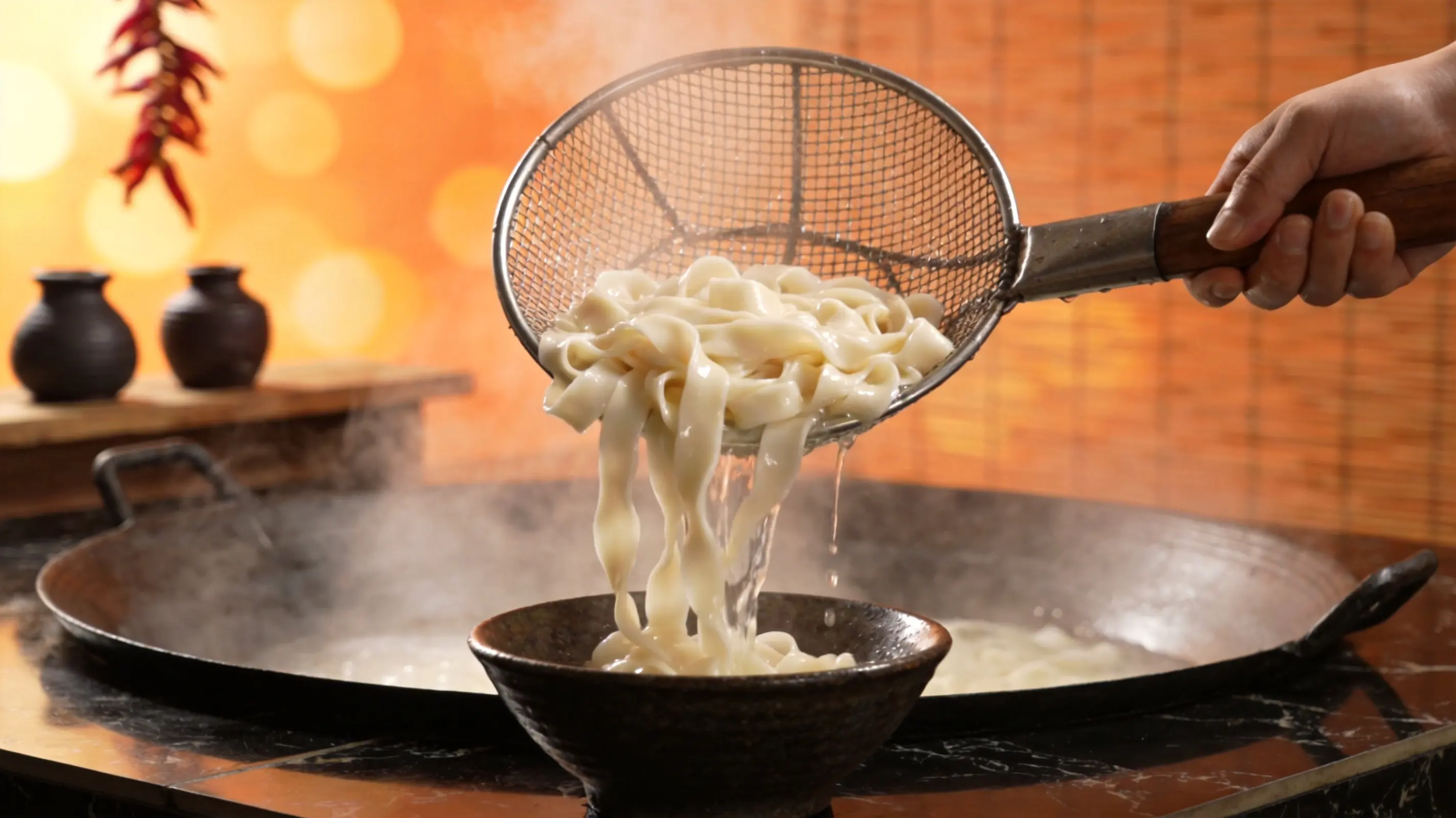
The noodles go into a large iron wok of hard-boiling water. They cook quickly, just a few minutes, moving around in the bubbling water as they soften and turn slightly translucent. When they're done, they get lifted out with a wire mesh strainer and lowered directly into a basin of cold water with a few ice cubes floating in it. The cold shock stops the cooking instantly and makes the noodles firm up — they go from limp and slippery to springy and distinct, each strand separate. This step is what turns boiled noodles into cold noodles worth eating.
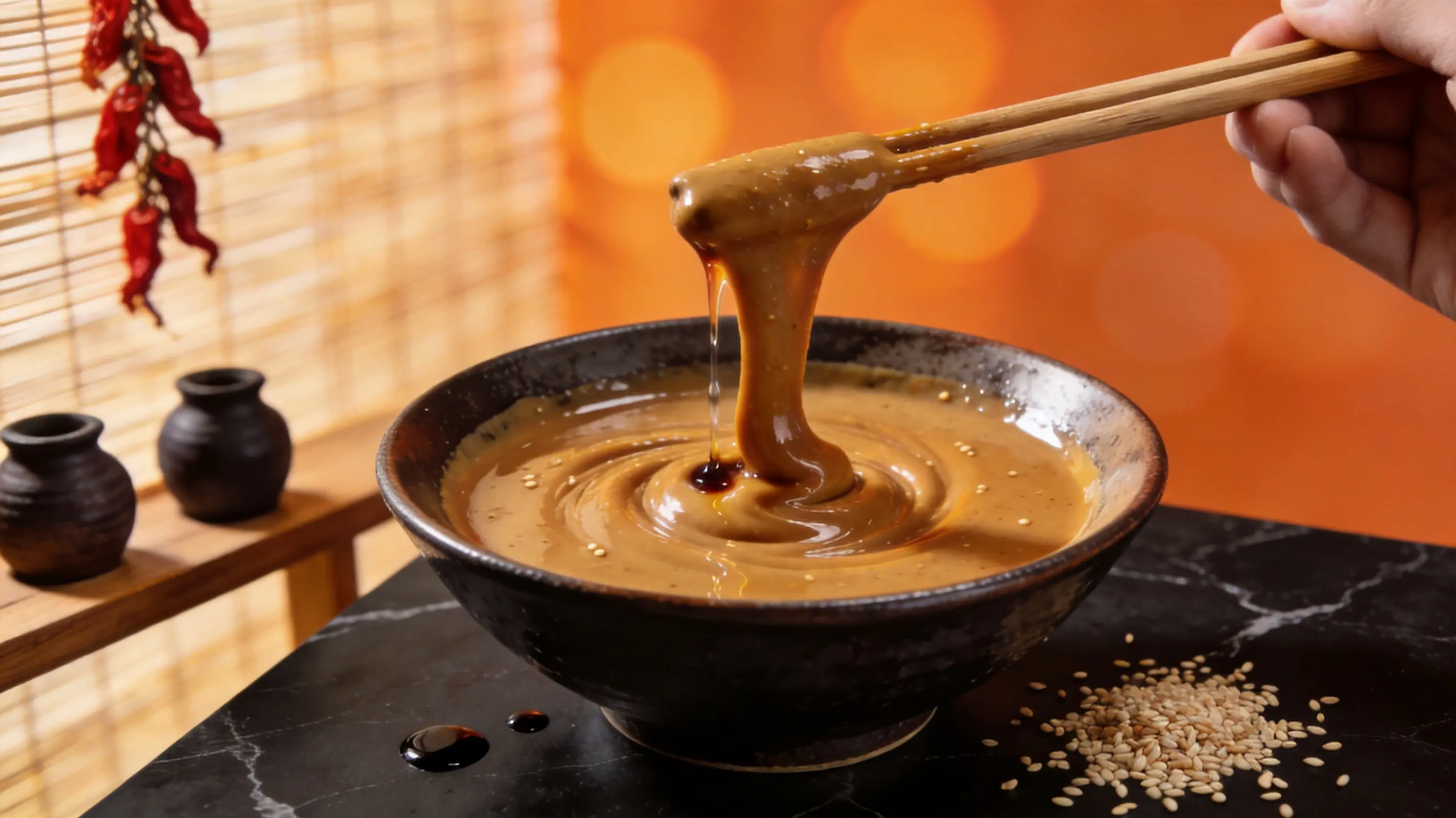
The sesame sauce is made while the noodles are cooking. Sesame paste right out of the jar is thick and dense, almost too stiff to pour. A spoonful of cold water stirred in with chopsticks starts to loosen it; more water, a little at a time, and it gradually becomes smooth and flowing. Soy sauce, a splash of black vinegar, a few drops of sesame oil, and a small amount of minced garlic go in as well. The finished sauce should pour off the chopsticks in a slow, steady ribbon — rich but not heavy, fragrant without being sharp.
The cold noodles go into a bowl, the sauce is poured over, and the cucumber strips and a few sprigs of cilantro are laid across the top. A swirl of chili oil, a scatter of toasted sesame seeds, and it's ready.
The name comes from the paste itself — *má jiàng* means sesame paste, and the dish is named simply for what coats the noodles. It's been eaten as a summer meal for a long time in northern China, where the heat makes anything hot feel like too much effort. The cold noodles stay firm for a while after the sauce goes on, which is part of what makes them worth the time it takes to make them by hand.
---
**Ingredients**
All-purpose flour — sifted; used to make the noodle dough
Salt — a small pinch; added directly to the flour before mixing
Cold water — enough to bring the dough together; added gradually
For the sauce bowl:
Sesame paste — two generous spoonfuls, thick and dense
Soy sauce — a small amount; lightens and seasons the paste
Black vinegar — a small splash; cuts through the richness
Sesame oil — a few drops; deepens the aroma
Minced garlic — one small clove, finely pressed
Chili oil — to taste; a swirl over the finished bowl
Cold water — added in stages to loosen the paste to a pourable consistency
Cucumber — one piece, cut into thin matchstick strips
Fresh cilantro — a small handful
Toasted white sesame seeds — a small amount, for finishing
---
**How it's made**
The dough starts simply — flour and a pinch of salt mixed together, then cold water added a little at a time and worked in by hand until the mass comes together. It takes a few minutes of kneading before the surface stops looking ragged and starts to smooth out. The finished dough should feel firm but not stiff, and it needs time to rest — covered, left alone for at least thirty minutes. The gluten relaxes during that time, and a dough that felt slightly resistant becomes noticeably softer and easier to roll.
After resting, the dough is pressed flat on the surface and rolled out with a pin. The goal is an even sheet, thin enough to fold without tearing. Once rolled out, it gets dusted with flour, folded over itself several times into a neat stack, then cut straight across into strips. The strips are narrow — about the width of a flat ribbon — and when you shake them loose, they fan out into long pale noodles that smell faintly of raw flour.
The noodles go into a large iron wok of hard-boiling water. They cook quickly, just a few minutes, moving around in the bubbling water as they soften and turn slightly translucent. When they're done, they get lifted out with a wire mesh strainer and lowered directly into a basin of cold water with a few ice cubes floating in it. The cold shock stops the cooking instantly and makes the noodles firm up — they go from limp and slippery to springy and distinct, each strand separate. This step is what turns boiled noodles into cold noodles worth eating.
The sesame sauce is made while the noodles are cooking. Sesame paste right out of the jar is thick and dense, almost too stiff to pour. A spoonful of cold water stirred in with chopsticks starts to loosen it; more water, a little at a time, and it gradually becomes smooth and flowing. Soy sauce, a splash of black vinegar, a few drops of sesame oil, and a small amount of minced garlic go in as well. The finished sauce should pour off the chopsticks in a slow, steady ribbon — rich but not heavy, fragrant without being sharp.
The cold noodles go into a bowl, the sauce is poured over, and the cucumber strips and a few sprigs of cilantro are laid across the top. A swirl of chili oil, a scatter of toasted sesame seeds, and it's ready.
The name comes from the paste itself — *má jiàng* means sesame paste, and the dish is named simply for what coats the noodles. It's been eaten as a summer meal for a long time in northern China, where the heat makes anything hot feel like too much effort. The cold noodles stay firm for a while after the sauce goes on, which is part of what makes them worth the time it takes to make them by hand.