·5/26/2026
from
Peking Sauce Pork Slivers
**Peking Sauce Pork Slivers** *(京酱肉丝)*
---
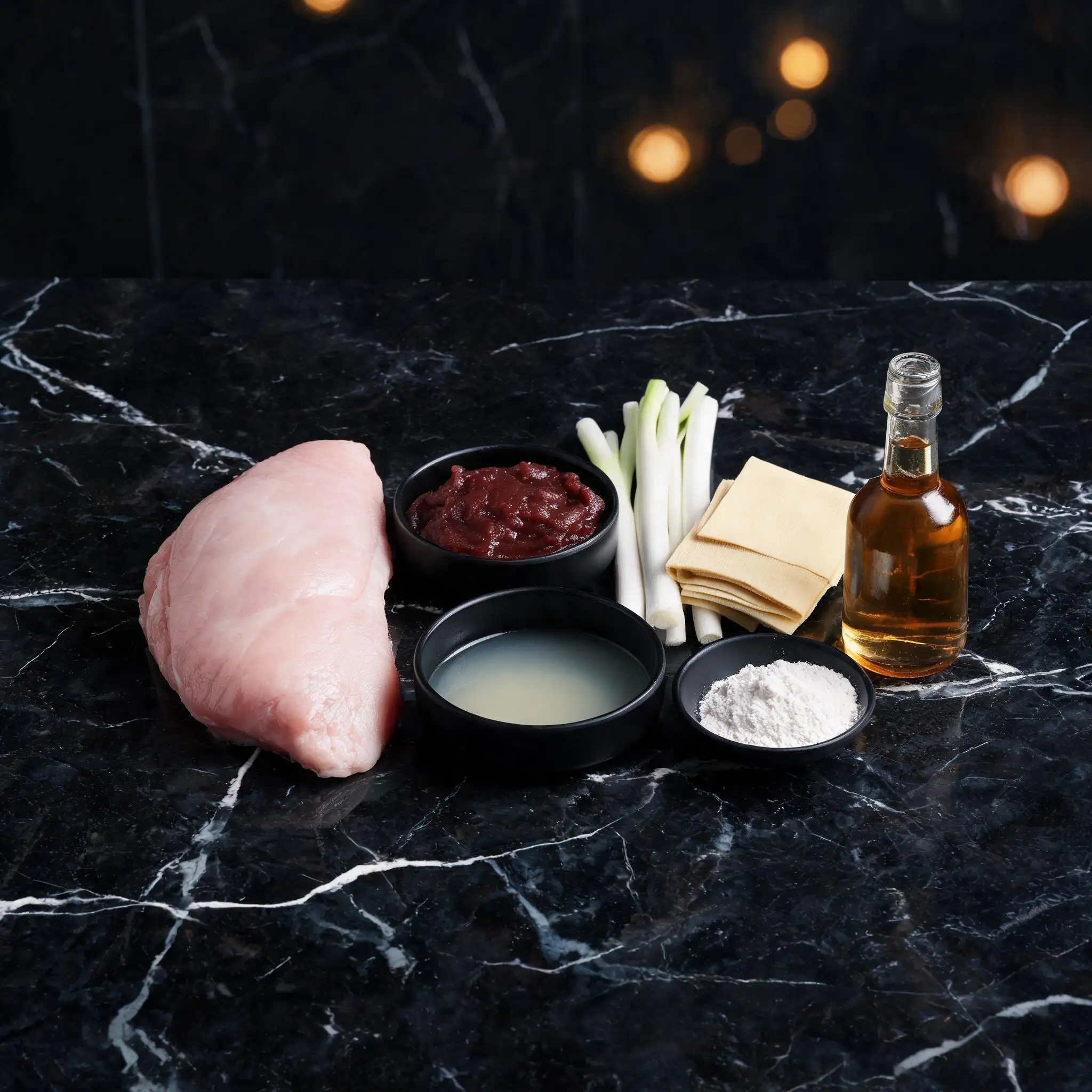
**Ingredients**
Pork loin — sliced into thin julienne strips, roughly the width of a chopstick; the leaner the cut, the cleaner the texture
Egg white — one, for the marinade
Starch — a generous spoonful, potato or cornstarch
Light soy sauce — a small splash
Shaoxing rice wine — a small splash
Salt — a pinch
For the sauce:
Sweet bean paste (甜面酱) — two heaped tablespoons
Sugar — half a teaspoon
Sesame oil — a few drops to finish
Scallions — white parts only, four or five stalks, cut into 8cm lengths, then split lengthwise into fine matchsticks
Pressed tofu skin (千张) — several sheets, folded into fan shapes, arranged on the plate
---
**How it's made**
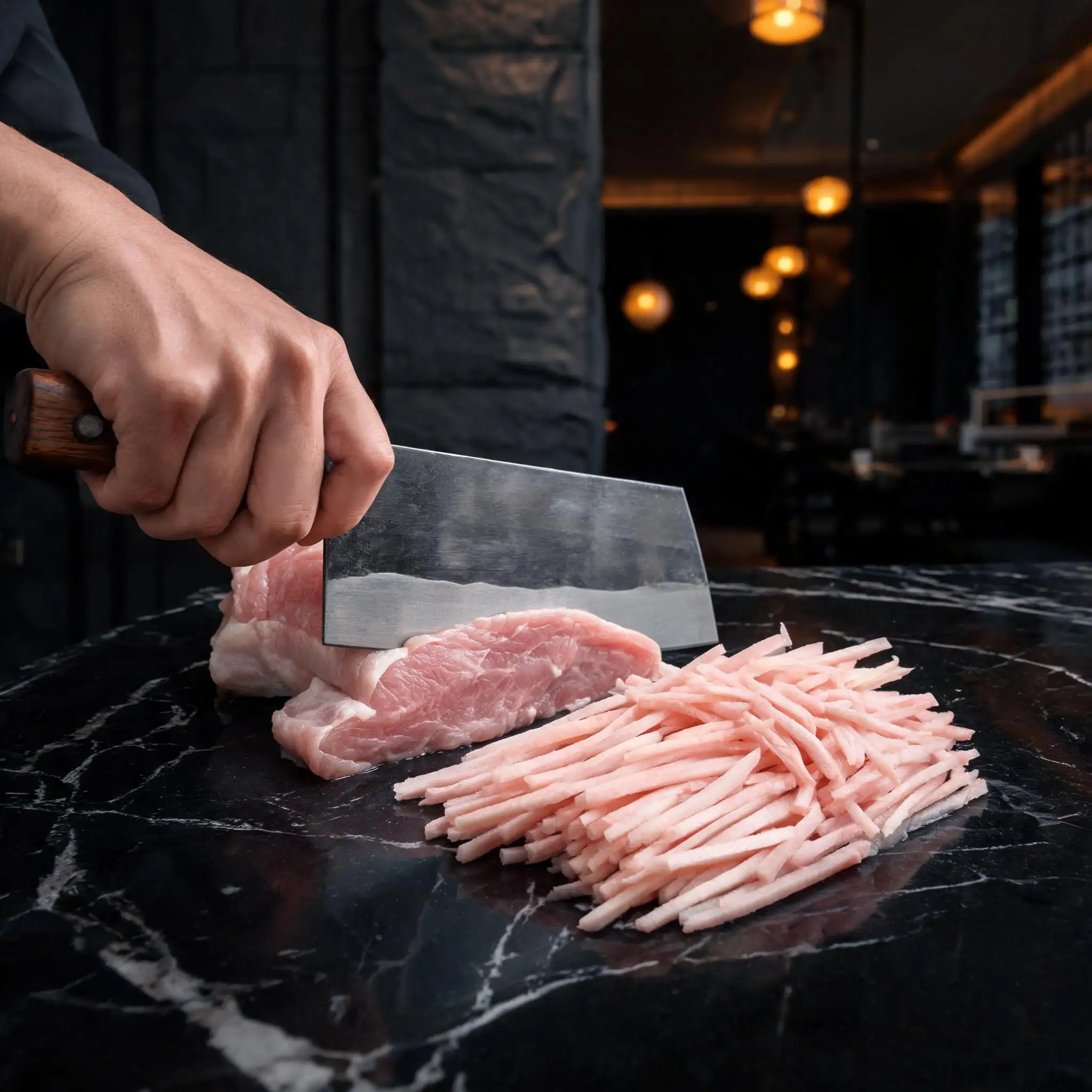
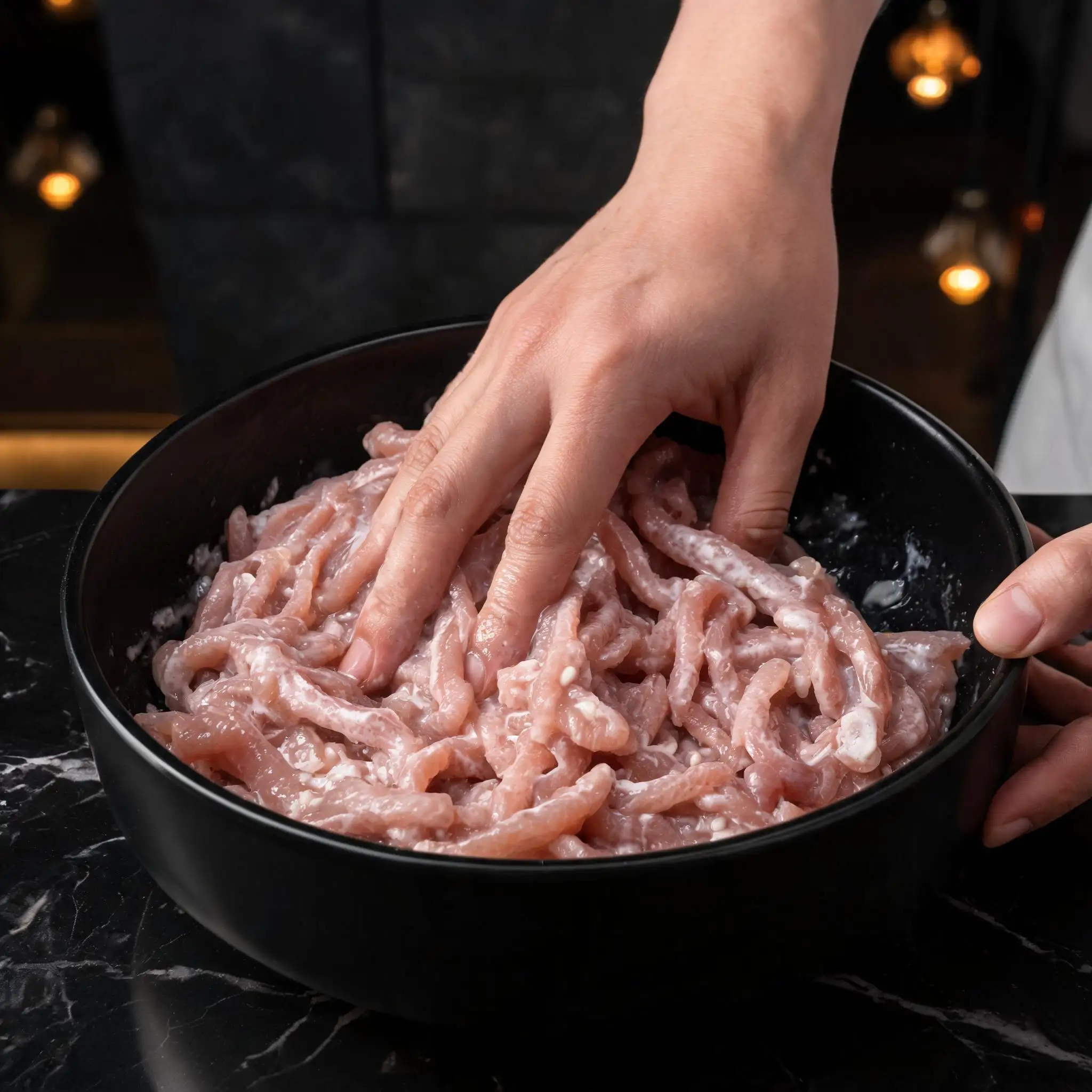
Start with the pork. Cut the loin into strips as thin as you can manage — the thinner the better, because the whole point is that each strip picks up a coating of sauce while staying tender inside. Mix the strips with egg white, a spoonful of starch, a splash of soy sauce, a pour of Shaoxing wine, and a pinch of salt. Work it through with your fingers until every strip is lightly coated and slightly sticky, then leave it to sit for twenty minutes.
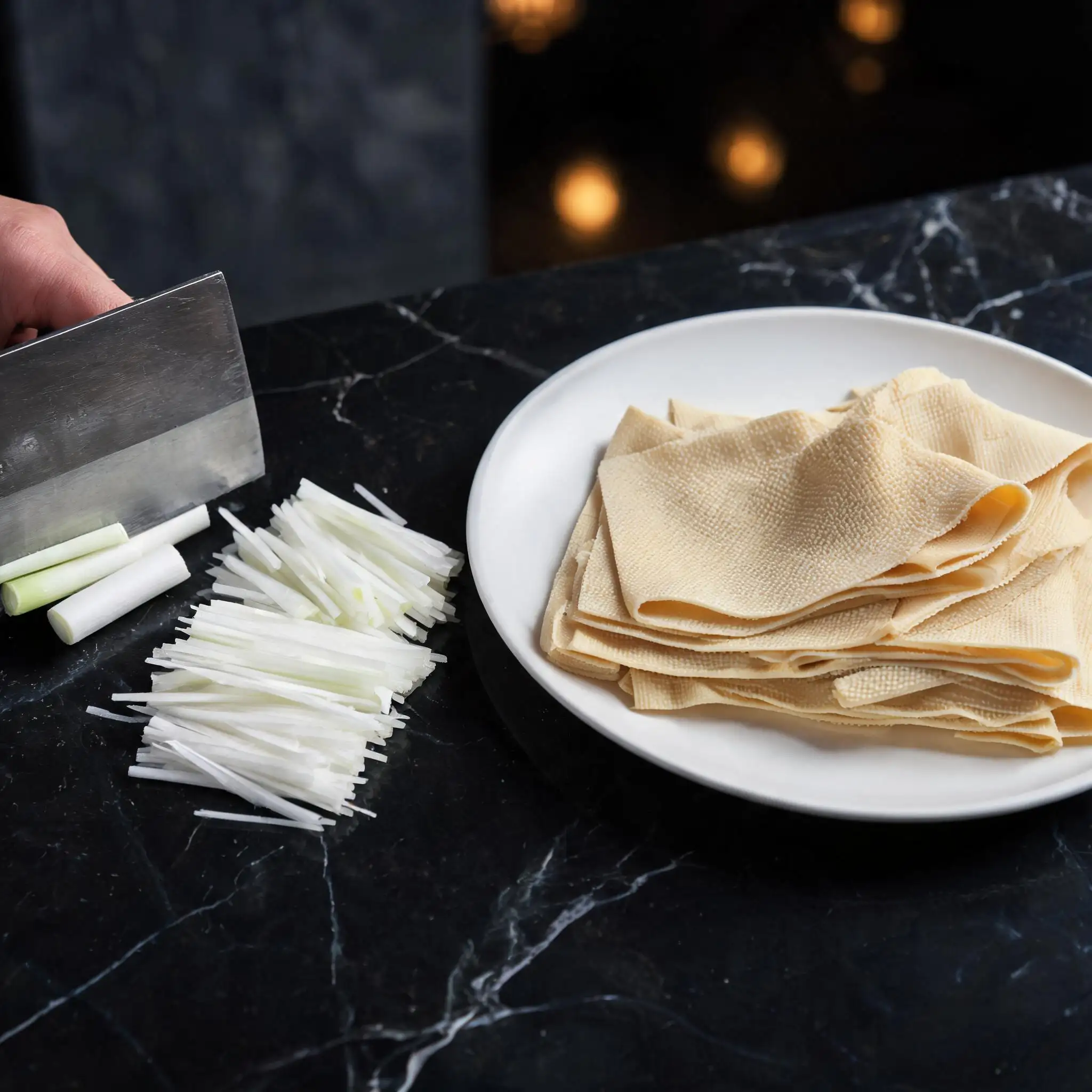
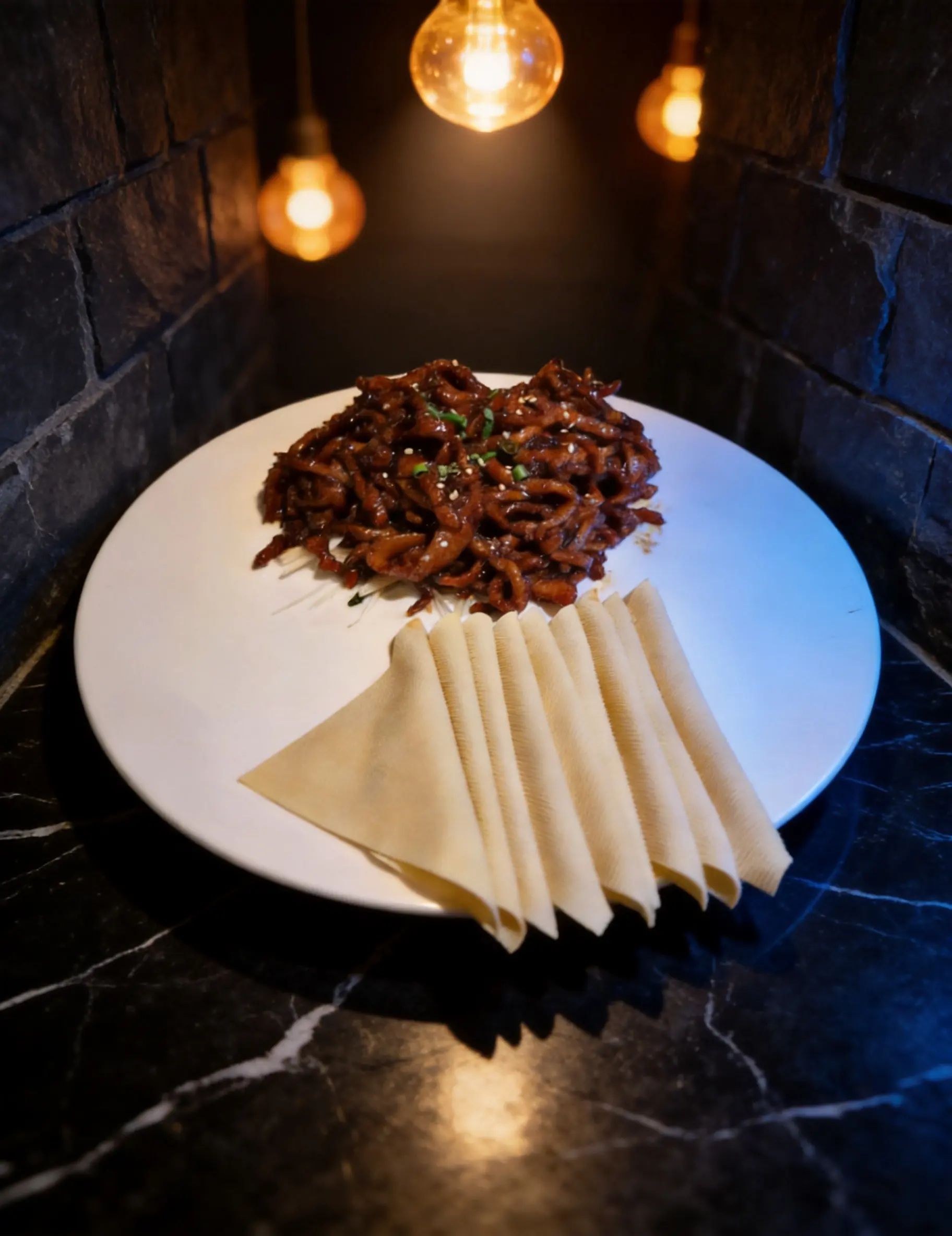
While the pork rests, deal with the scallions. Peel off the outer layer, then slice the white sections lengthwise into fine strips. These go onto the plate raw — not cooked, not wilted. Their sharp bite is meant to cut through the richness of the sauce. Set them aside. Fold the tofu skin sheets into accordion fans and lay them in a neat row along one half of a wide white plate.
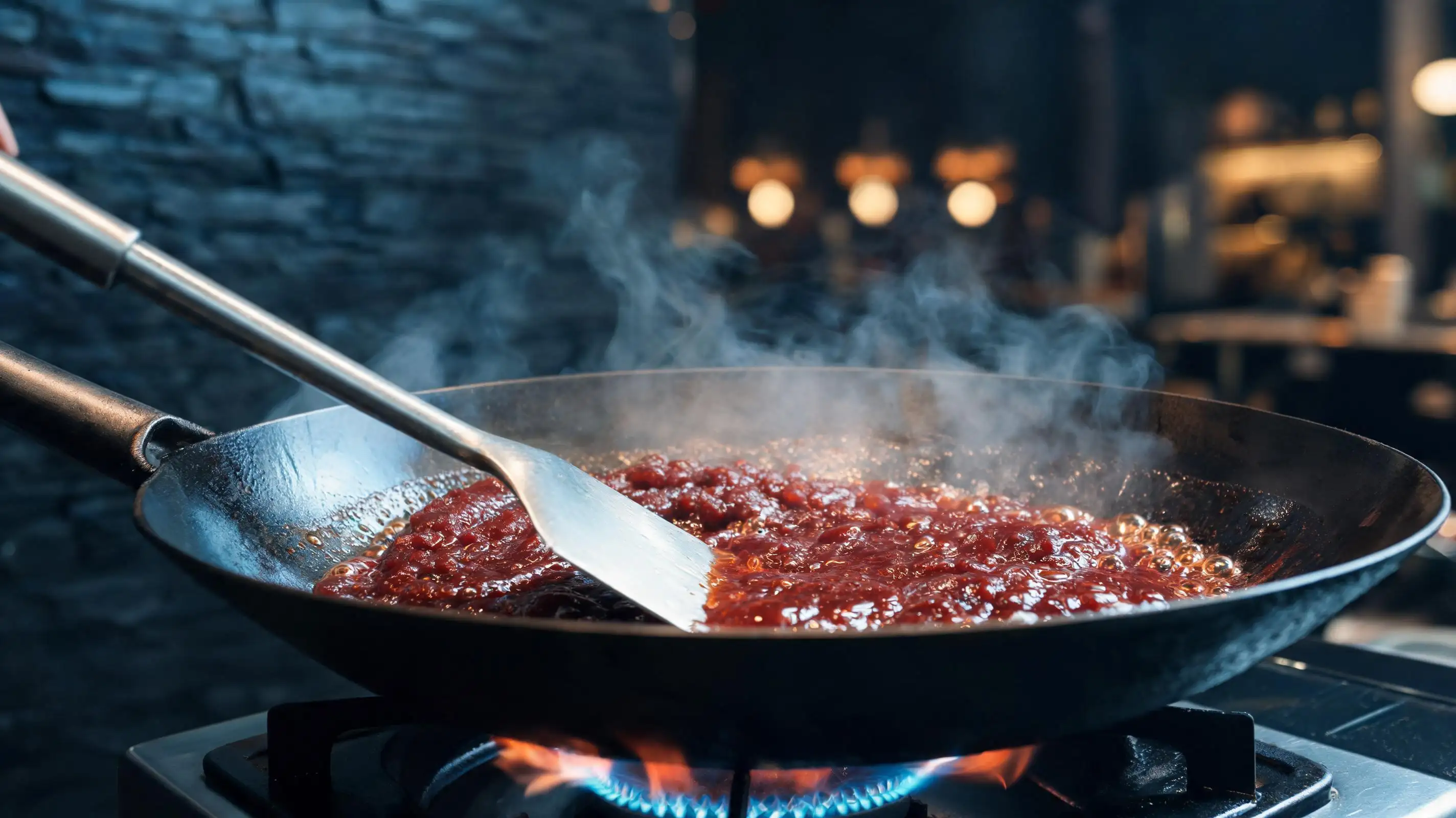
To make the sauce, pour a little oil into a cold wok and add the sweet bean paste before the oil heats up. Bring the flame up to medium and keep stirring, pressing the paste flat with the spatula. You'll hear it start to sizzle after about thirty seconds, and the smell shifts from sharp and fermented to something rounder, more fragrant. Keep it moving for a full two minutes until the color deepens and the oil turns a reddish brown. Add a small amount of sugar near the end to soften the edges.
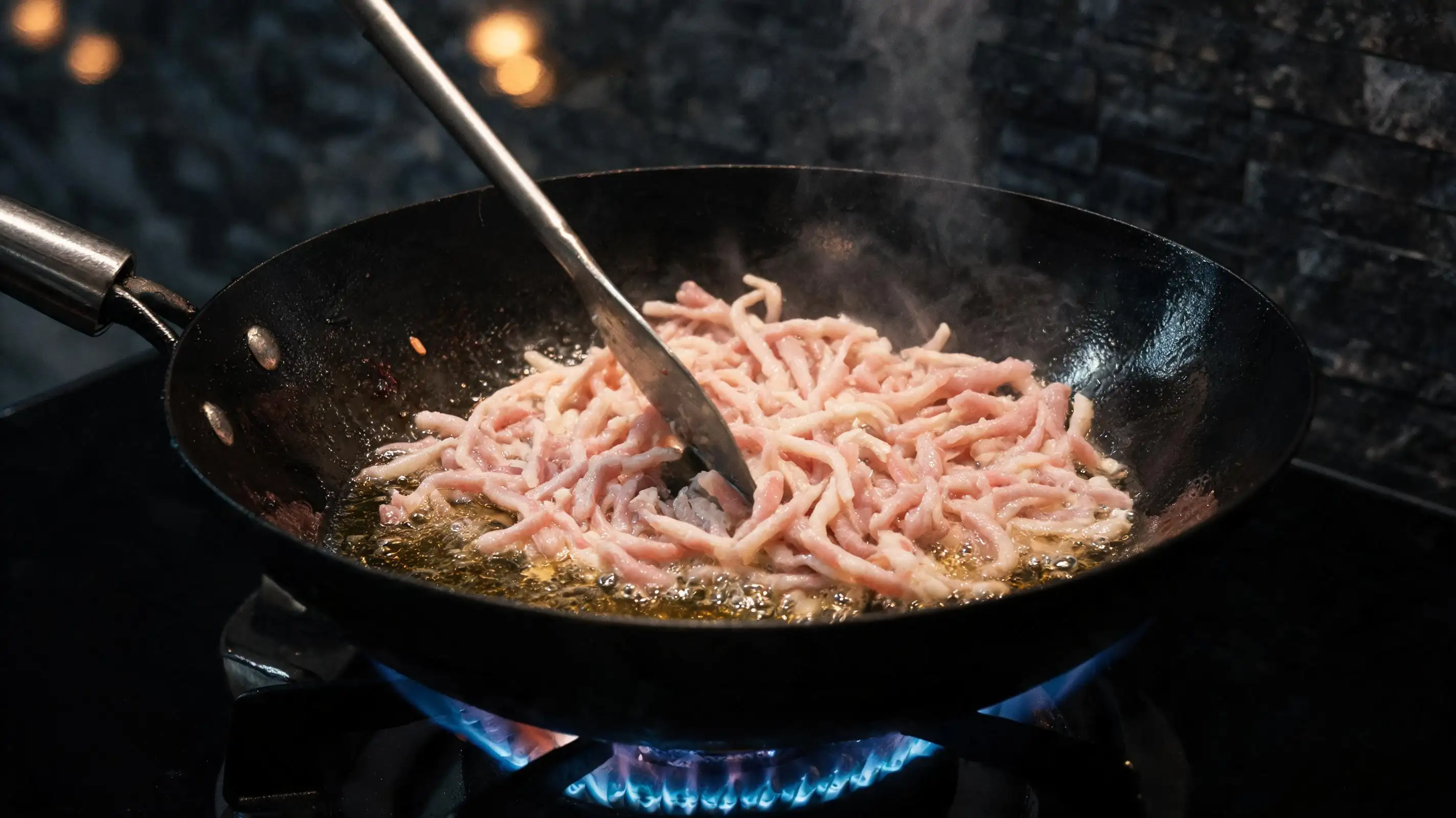
Wipe out the wok and add fresh oil. When it reaches around 130°C — shimmering but not smoking — drop in the pork strips and keep them moving. They'll turn from pink to pale grey in under a minute. Pull them out while they're just barely cooked through; they'll finish in the next step.
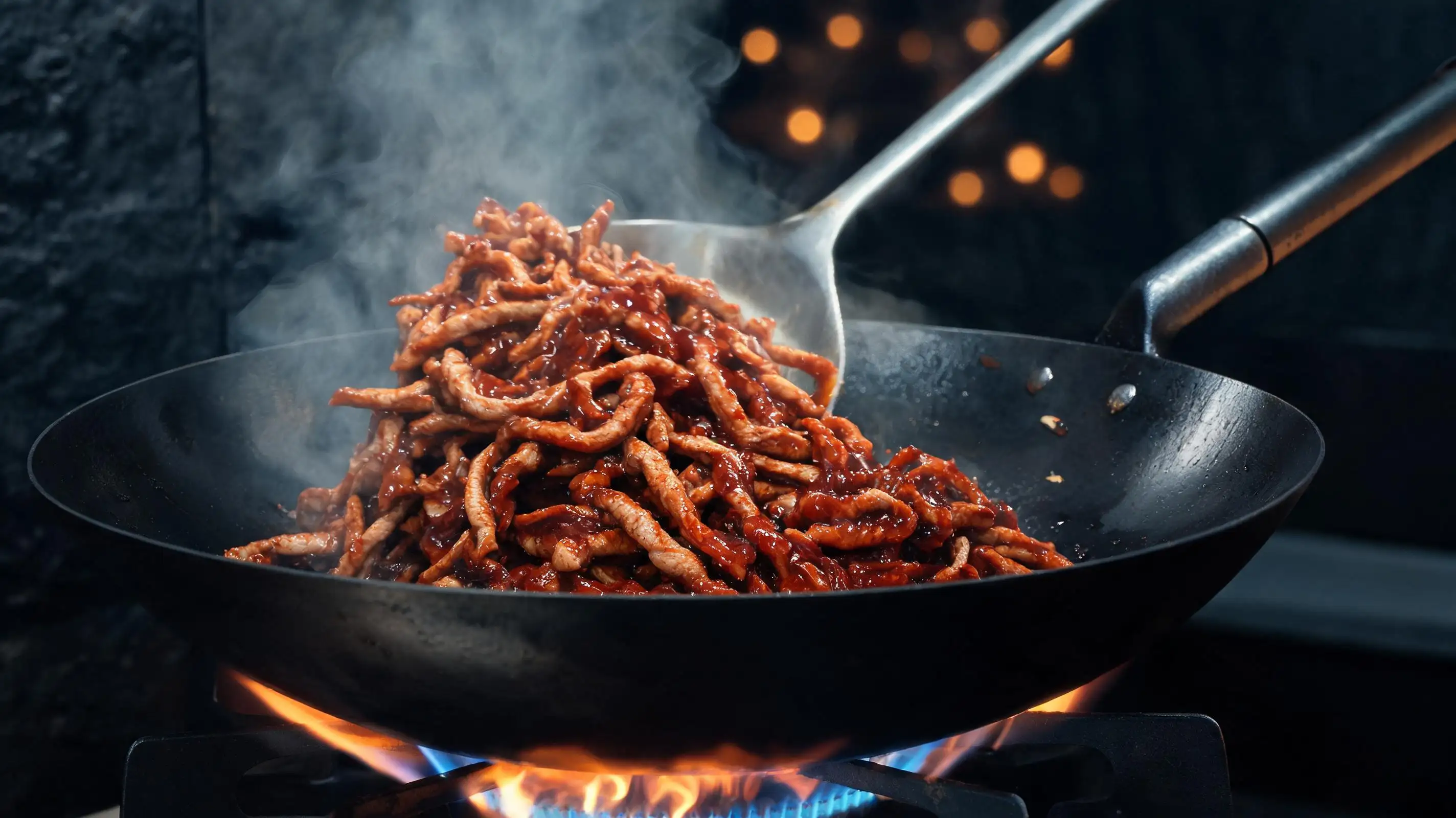
Put the wok back on high heat. Return the pork and the sauce to the wok together. Toss quickly — thirty seconds is enough. Every strip should come out coated in that dark, glossy glaze, the sauce clinging thickly to each piece. Drizzle sesame oil around the edge, give it one last toss, and take it off the heat immediately.
To plate: lay the scallion strips down first, piled in the center. Spoon the pork over the top. The tofu skin fans sit on the side. You eat it by wrapping a few pork strips and scallion matchsticks inside a sheet of the folded tofu skin, tucked up like a small parcel and eaten in two bites.
The name traces back to the sauce itself. 京酱 (jīng jiàng) is built from two characters: 京, an old word for a capital city — the same character in Beijing — and 酱, meaning paste or sauce. The dish belongs to the northern Chinese cooking tradition, built around the practical logic of using a small amount of affordable pork with a sauce rich enough to carry the whole meal. Families in Beijing have made versions of this for generations, and the method hasn't changed much: velvet the pork so it stays soft, fry the paste until it loses its raw edge, and wrap everything in tofu skin with a handful of scallions. Simple enough to make on a weeknight, good enough to put on the table for guests.
---
**Ingredients**
Pork loin — sliced into thin julienne strips, roughly the width of a chopstick; the leaner the cut, the cleaner the texture
Egg white — one, for the marinade
Starch — a generous spoonful, potato or cornstarch
Light soy sauce — a small splash
Shaoxing rice wine — a small splash
Salt — a pinch
For the sauce:
Sweet bean paste (甜面酱) — two heaped tablespoons
Sugar — half a teaspoon
Sesame oil — a few drops to finish
Scallions — white parts only, four or five stalks, cut into 8cm lengths, then split lengthwise into fine matchsticks
Pressed tofu skin (千张) — several sheets, folded into fan shapes, arranged on the plate
---
**How it's made**
Start with the pork. Cut the loin into strips as thin as you can manage — the thinner the better, because the whole point is that each strip picks up a coating of sauce while staying tender inside. Mix the strips with egg white, a spoonful of starch, a splash of soy sauce, a pour of Shaoxing wine, and a pinch of salt. Work it through with your fingers until every strip is lightly coated and slightly sticky, then leave it to sit for twenty minutes.
While the pork rests, deal with the scallions. Peel off the outer layer, then slice the white sections lengthwise into fine strips. These go onto the plate raw — not cooked, not wilted. Their sharp bite is meant to cut through the richness of the sauce. Set them aside. Fold the tofu skin sheets into accordion fans and lay them in a neat row along one half of a wide white plate.
To make the sauce, pour a little oil into a cold wok and add the sweet bean paste before the oil heats up. Bring the flame up to medium and keep stirring, pressing the paste flat with the spatula. You'll hear it start to sizzle after about thirty seconds, and the smell shifts from sharp and fermented to something rounder, more fragrant. Keep it moving for a full two minutes until the color deepens and the oil turns a reddish brown. Add a small amount of sugar near the end to soften the edges.
Wipe out the wok and add fresh oil. When it reaches around 130°C — shimmering but not smoking — drop in the pork strips and keep them moving. They'll turn from pink to pale grey in under a minute. Pull them out while they're just barely cooked through; they'll finish in the next step.
Put the wok back on high heat. Return the pork and the sauce to the wok together. Toss quickly — thirty seconds is enough. Every strip should come out coated in that dark, glossy glaze, the sauce clinging thickly to each piece. Drizzle sesame oil around the edge, give it one last toss, and take it off the heat immediately.
To plate: lay the scallion strips down first, piled in the center. Spoon the pork over the top. The tofu skin fans sit on the side. You eat it by wrapping a few pork strips and scallion matchsticks inside a sheet of the folded tofu skin, tucked up like a small parcel and eaten in two bites.
The name traces back to the sauce itself. 京酱 (jīng jiàng) is built from two characters: 京, an old word for a capital city — the same character in Beijing — and 酱, meaning paste or sauce. The dish belongs to the northern Chinese cooking tradition, built around the practical logic of using a small amount of affordable pork with a sauce rich enough to carry the whole meal. Families in Beijing have made versions of this for generations, and the method hasn't changed much: velvet the pork so it stays soft, fry the paste until it loses its raw edge, and wrap everything in tofu skin with a handful of scallions. Simple enough to make on a weeknight, good enough to put on the table for guests.