·5/26/2026
from
Spicy Boiled Fish
**Spicy Boiled Fish**
---
**Ingredients**
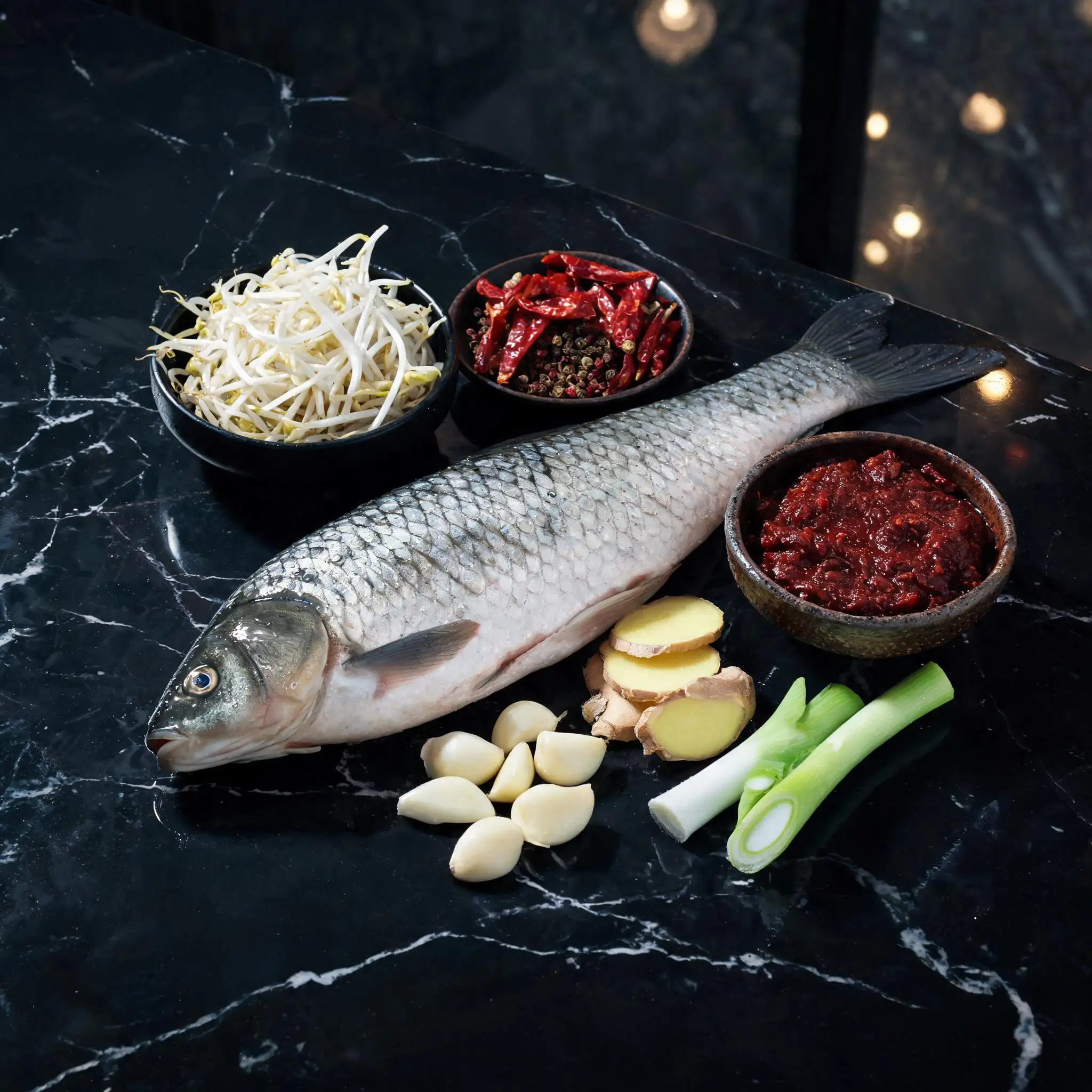
Grass carp — one whole fish, around 1.5 kg; scaled, gutted, head separated
Bean sprouts — a large handful, roots trimmed
Pixian doubanjiang — two heaped tablespoons, the brick-red fermented kind
Dried red chilies — twelve to fifteen whole, stems left on
Sichuan peppercorns — one tablespoon
Garlic — six cloves; four for the broth, two minced finely for garnish
Ginger — one thumb-sized piece; half sliced for the broth, half minced for garnish
Scallions — two stalks, sliced thin on the diagonal
Neutral oil — enough to fill a small ladle, heated until just smoking
For the marinade:
Egg white — from one egg
Cornstarch — one tablespoon
Shaoxing rice wine — one tablespoon
Fine salt — a small pinch
---
**How it's made**
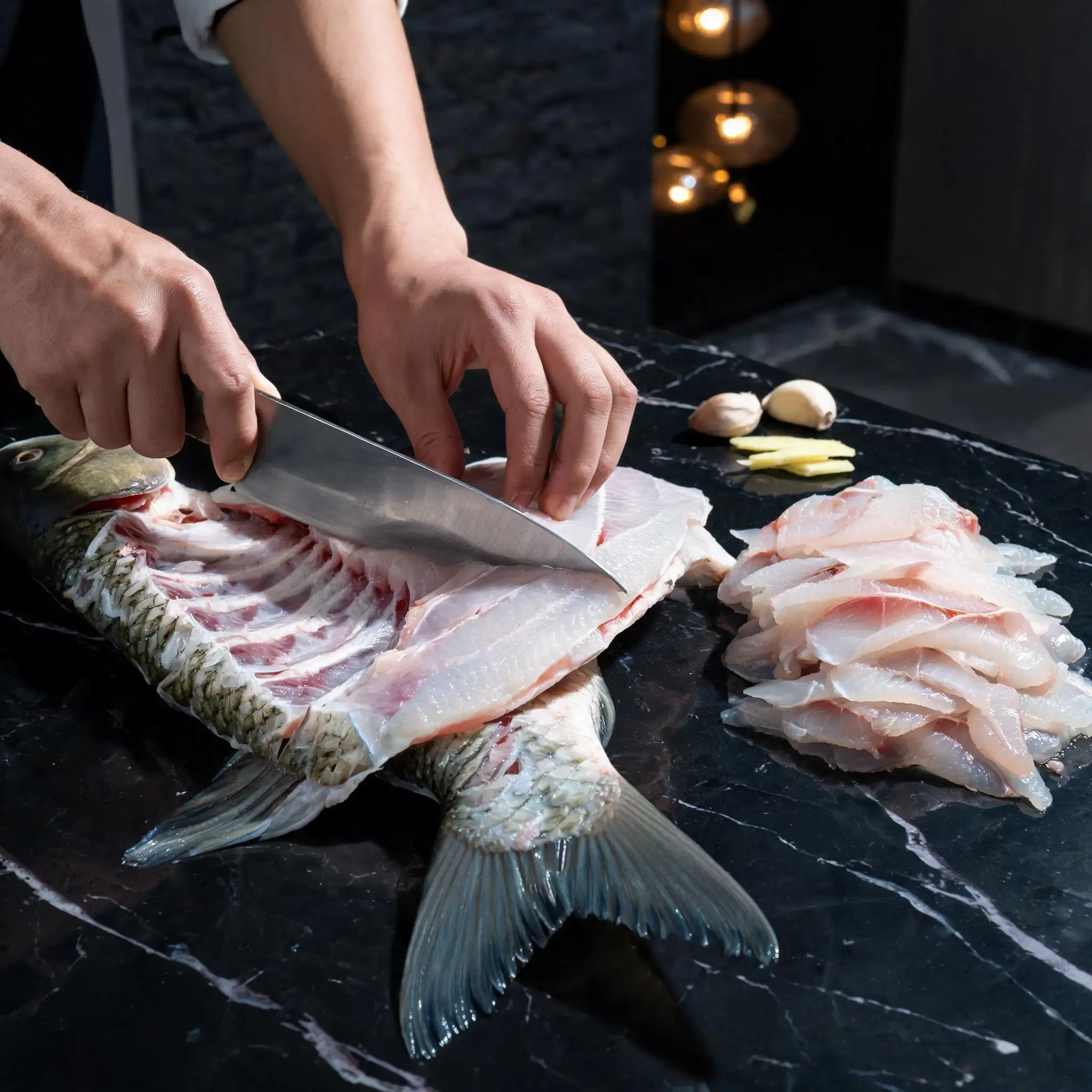
Lay the fish flat and run a thin knife along the spine, pressing the blade close to the bone and peeling the fillet away in one long motion. You get two clean sides. Slice each fillet on the diagonal, about half a centimeter thick — the angle gives you a wider surface that cooks faster and holds the broth better. Set the head and spine aside; they go in the pot later.
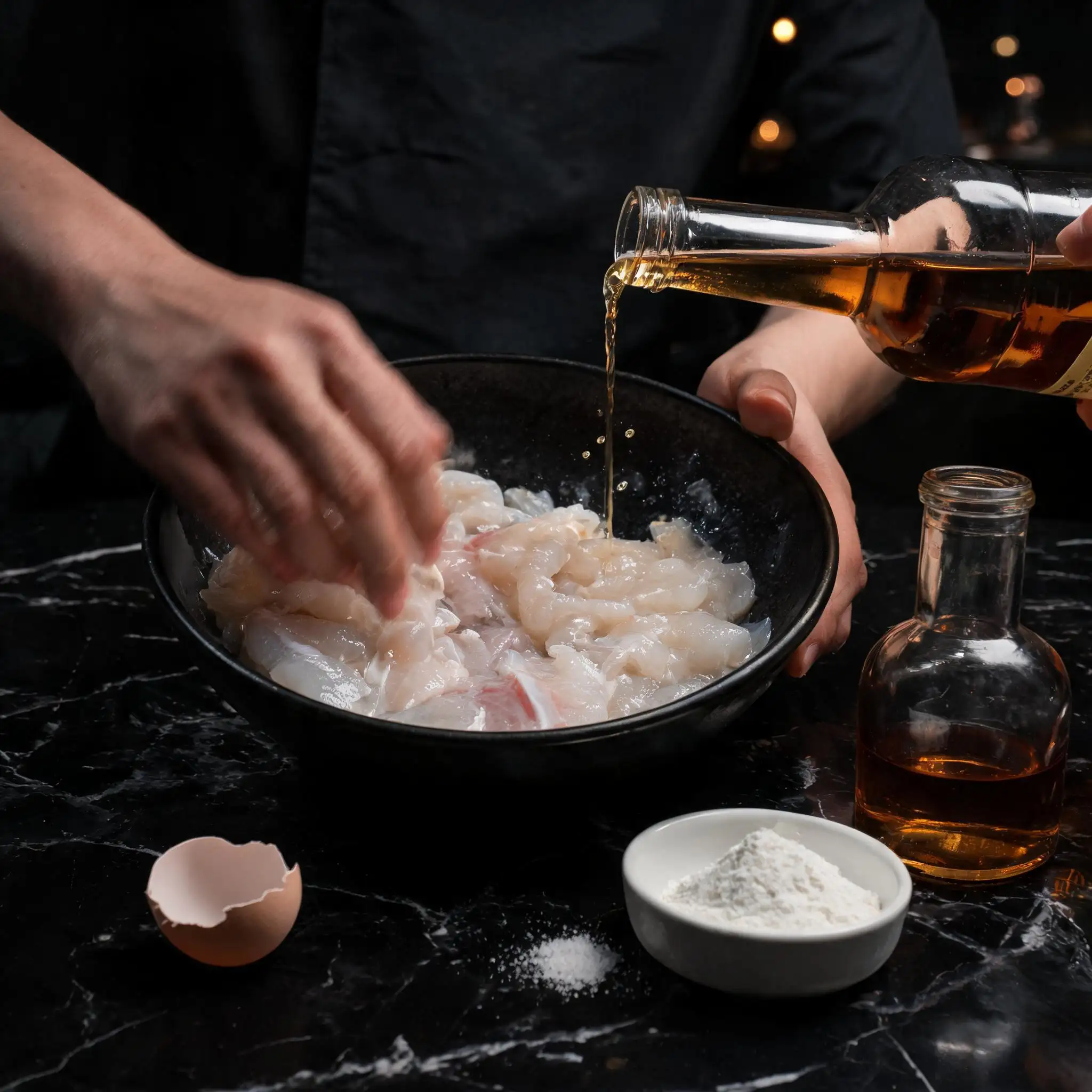
Toss the fillets in a bowl with the egg white, cornstarch, rice wine, and a small pinch of salt. Mix with your hands until everything is coated and slightly sticky. The egg white and starch form a thin seal around each piece that keeps the inside soft when it hits the boiling broth. Let it sit for ten minutes.
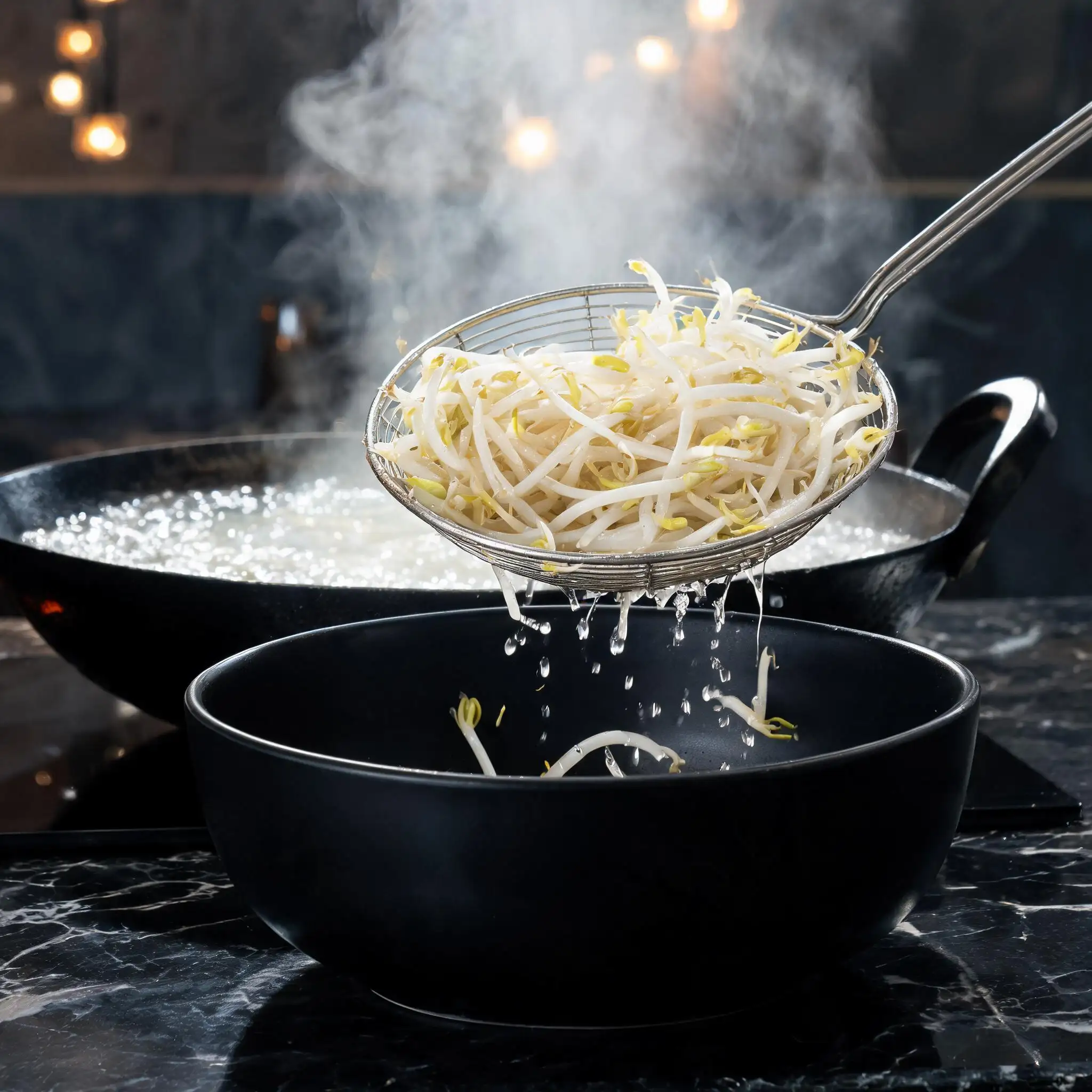
While the fish rests, drop the bean sprouts into a pot of boiling water for about forty seconds — just long enough to take the raw edge off. Scoop them straight into the serving bowl. They form the base.
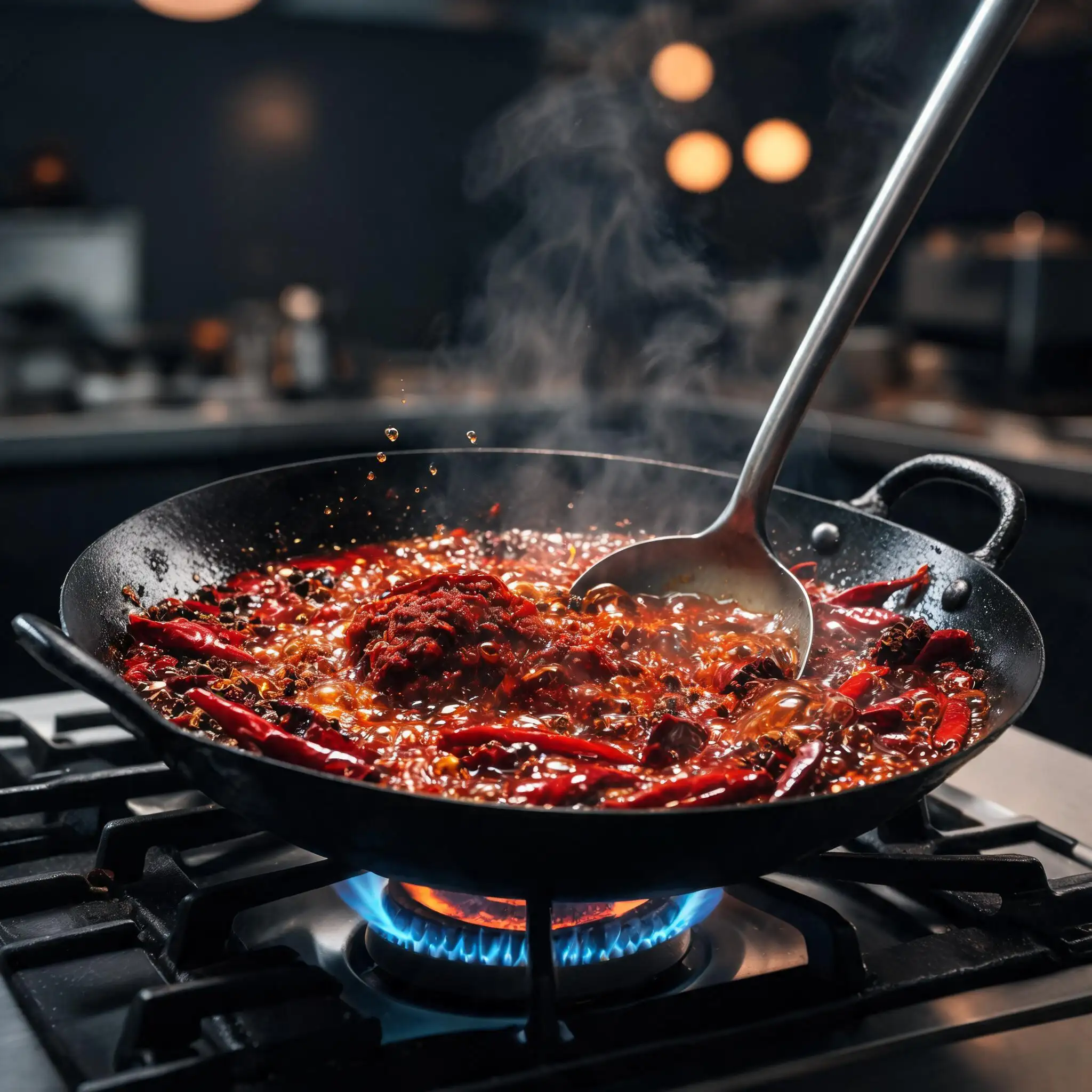
Get your wok very hot, add a generous pour of oil, then fry the doubanjiang over medium heat for two to three minutes, pressing it flat against the wok with the back of the ladle. It smells sharp at first, a little funky. Then it settles, and the oil turns a deep brick red. Add the whole dried chilies and Sichuan peppercorns and keep stirring. Another minute and the kitchen smells of something smoky and numbing at the same time.
Add the fish head and spine into the spiced oil, turn up the heat, and let them color slightly on both sides. Pour in enough water to cover, bring to a hard boil, then lower to a simmer for eight minutes. The broth goes milky and a little cloudy from the collagen in the bones. Fish out the head and spine and set them in the bowl over the bean sprouts.
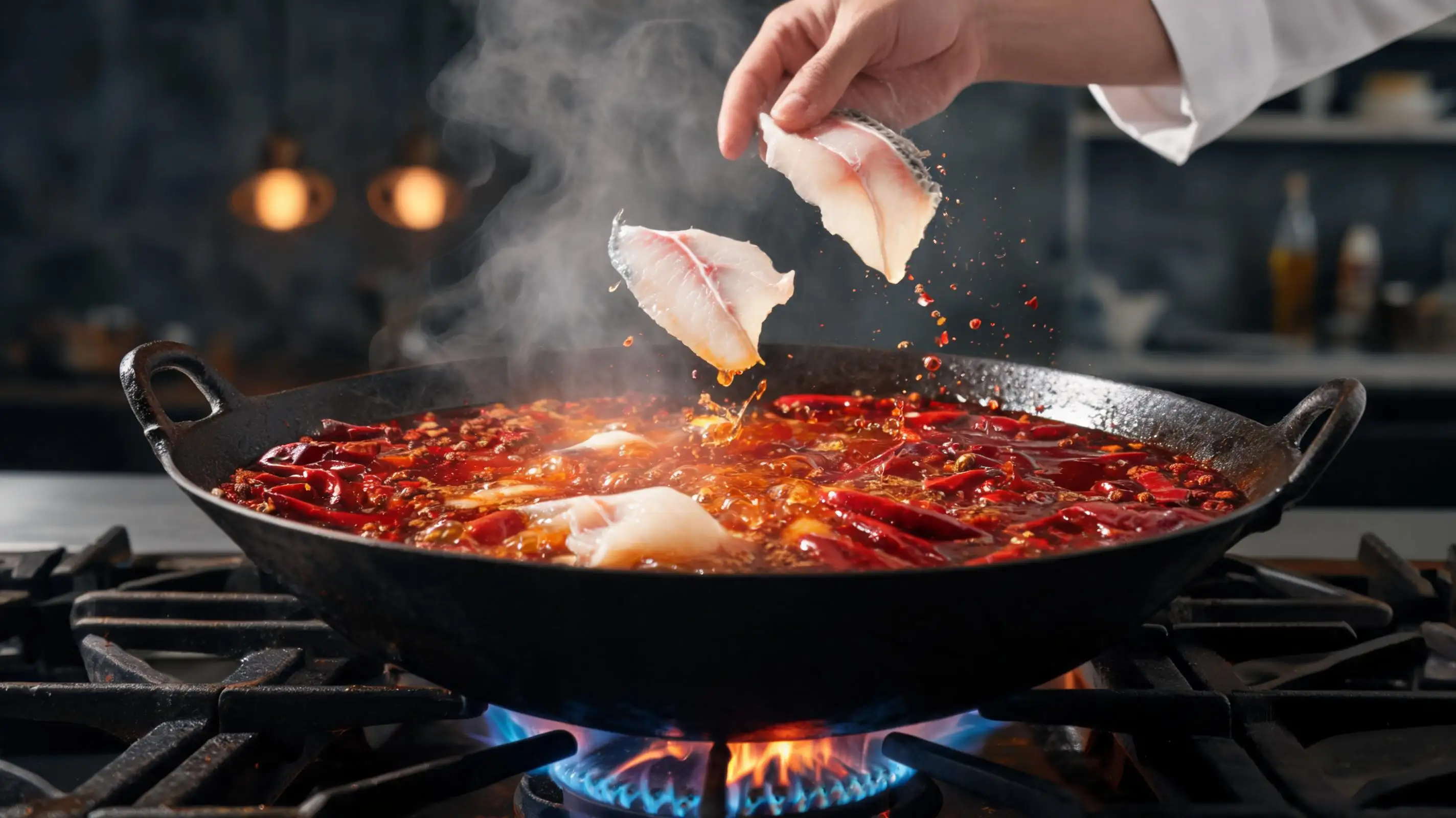
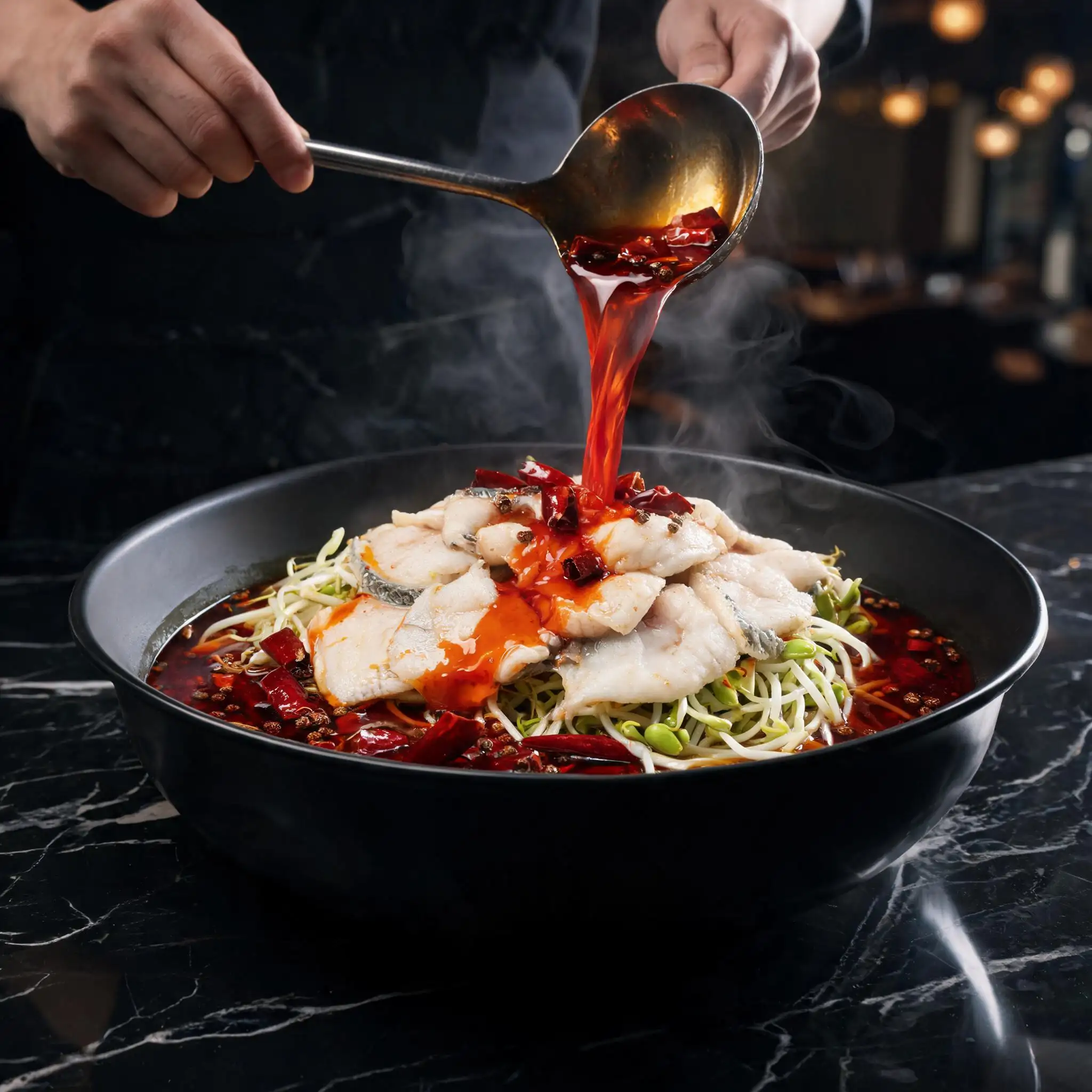
Turn the heat back up until the broth is rolling hard. Slide the marinated fillets in one by one, easing them apart so they don't clump. They take about ninety seconds. You can see them go from translucent to opaque white at the edges, just starting to firm up. Ladle the fillets and all the red broth over the bowl.
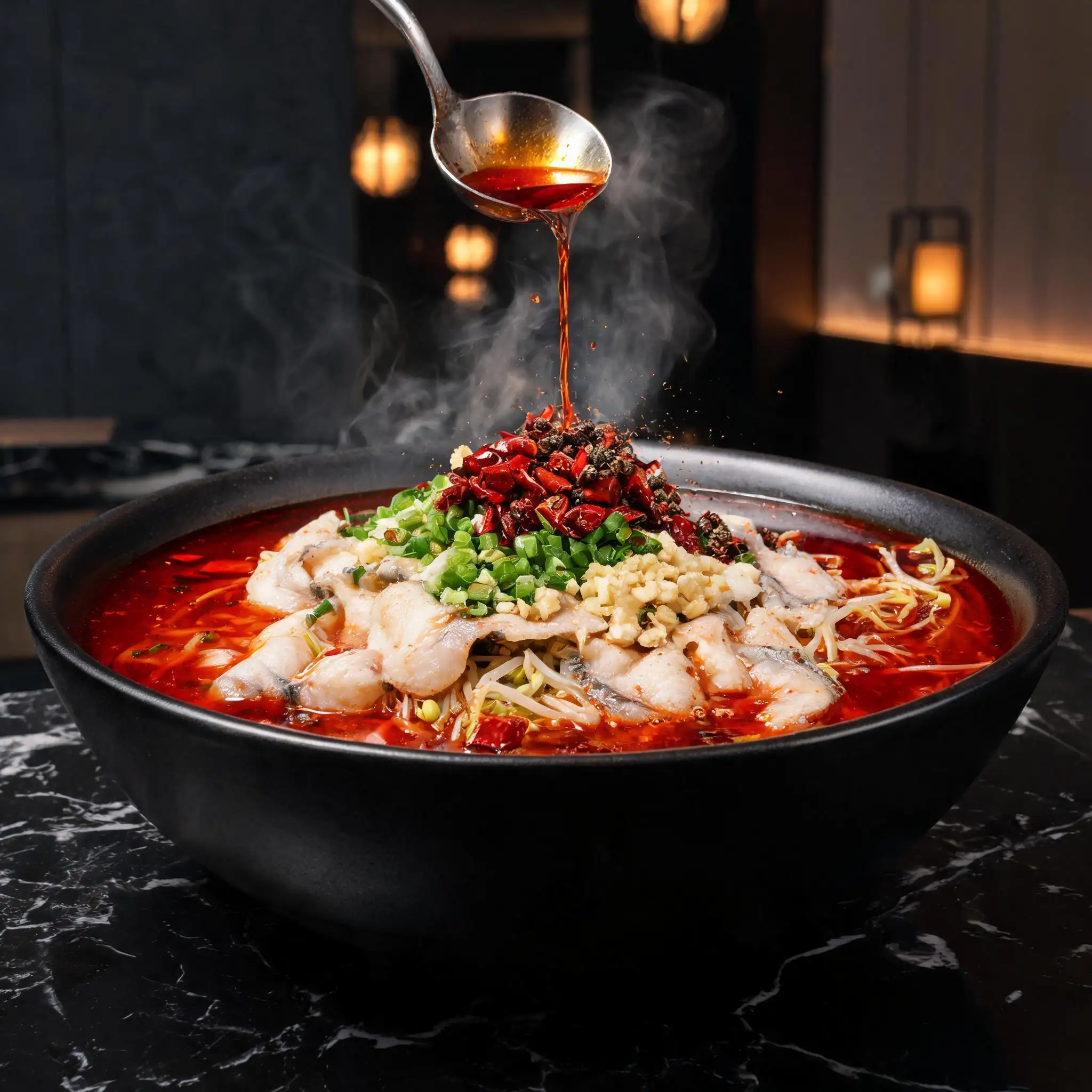
Scatter the minced garlic, minced ginger, and sliced scallions over the top. Pile on a mound of extra dried chilies and peppercorns. Heat a small ladle of oil until it just starts to smoke — you want it properly hot, not warm — then pour it straight down over the garnish. It cracks and sizzles on contact, garlic smell rising immediately. That pour is what finishes the dish.
The name doesn't mean much by itself. It refers to the technique of cooking fish suspended in liquid rather than over dry heat, keeping the temperature just below a vigorous boil so the starch coating sets slowly and the flesh stays silk-soft inside. The dish is from Chongqing and spread across mainland China through the 1990s, moving from workers' canteens into restaurant menus as people carried the recipe with them. Most people who grew up eating it have a specific version in their head, and will tell you quietly that every other version is missing something.
---
**Ingredients**
Grass carp — one whole fish, around 1.5 kg; scaled, gutted, head separated
Bean sprouts — a large handful, roots trimmed
Pixian doubanjiang — two heaped tablespoons, the brick-red fermented kind
Dried red chilies — twelve to fifteen whole, stems left on
Sichuan peppercorns — one tablespoon
Garlic — six cloves; four for the broth, two minced finely for garnish
Ginger — one thumb-sized piece; half sliced for the broth, half minced for garnish
Scallions — two stalks, sliced thin on the diagonal
Neutral oil — enough to fill a small ladle, heated until just smoking
For the marinade:
Egg white — from one egg
Cornstarch — one tablespoon
Shaoxing rice wine — one tablespoon
Fine salt — a small pinch
---
**How it's made**
Lay the fish flat and run a thin knife along the spine, pressing the blade close to the bone and peeling the fillet away in one long motion. You get two clean sides. Slice each fillet on the diagonal, about half a centimeter thick — the angle gives you a wider surface that cooks faster and holds the broth better. Set the head and spine aside; they go in the pot later.
Toss the fillets in a bowl with the egg white, cornstarch, rice wine, and a small pinch of salt. Mix with your hands until everything is coated and slightly sticky. The egg white and starch form a thin seal around each piece that keeps the inside soft when it hits the boiling broth. Let it sit for ten minutes.
While the fish rests, drop the bean sprouts into a pot of boiling water for about forty seconds — just long enough to take the raw edge off. Scoop them straight into the serving bowl. They form the base.
Get your wok very hot, add a generous pour of oil, then fry the doubanjiang over medium heat for two to three minutes, pressing it flat against the wok with the back of the ladle. It smells sharp at first, a little funky. Then it settles, and the oil turns a deep brick red. Add the whole dried chilies and Sichuan peppercorns and keep stirring. Another minute and the kitchen smells of something smoky and numbing at the same time.
Add the fish head and spine into the spiced oil, turn up the heat, and let them color slightly on both sides. Pour in enough water to cover, bring to a hard boil, then lower to a simmer for eight minutes. The broth goes milky and a little cloudy from the collagen in the bones. Fish out the head and spine and set them in the bowl over the bean sprouts.
Turn the heat back up until the broth is rolling hard. Slide the marinated fillets in one by one, easing them apart so they don't clump. They take about ninety seconds. You can see them go from translucent to opaque white at the edges, just starting to firm up. Ladle the fillets and all the red broth over the bowl.
Scatter the minced garlic, minced ginger, and sliced scallions over the top. Pile on a mound of extra dried chilies and peppercorns. Heat a small ladle of oil until it just starts to smoke — you want it properly hot, not warm — then pour it straight down over the garnish. It cracks and sizzles on contact, garlic smell rising immediately. That pour is what finishes the dish.
The name doesn't mean much by itself. It refers to the technique of cooking fish suspended in liquid rather than over dry heat, keeping the temperature just below a vigorous boil so the starch coating sets slowly and the flesh stays silk-soft inside. The dish is from Chongqing and spread across mainland China through the 1990s, moving from workers' canteens into restaurant menus as people carried the recipe with them. Most people who grew up eating it have a specific version in their head, and will tell you quietly that every other version is missing something.