·5/25/2026
from
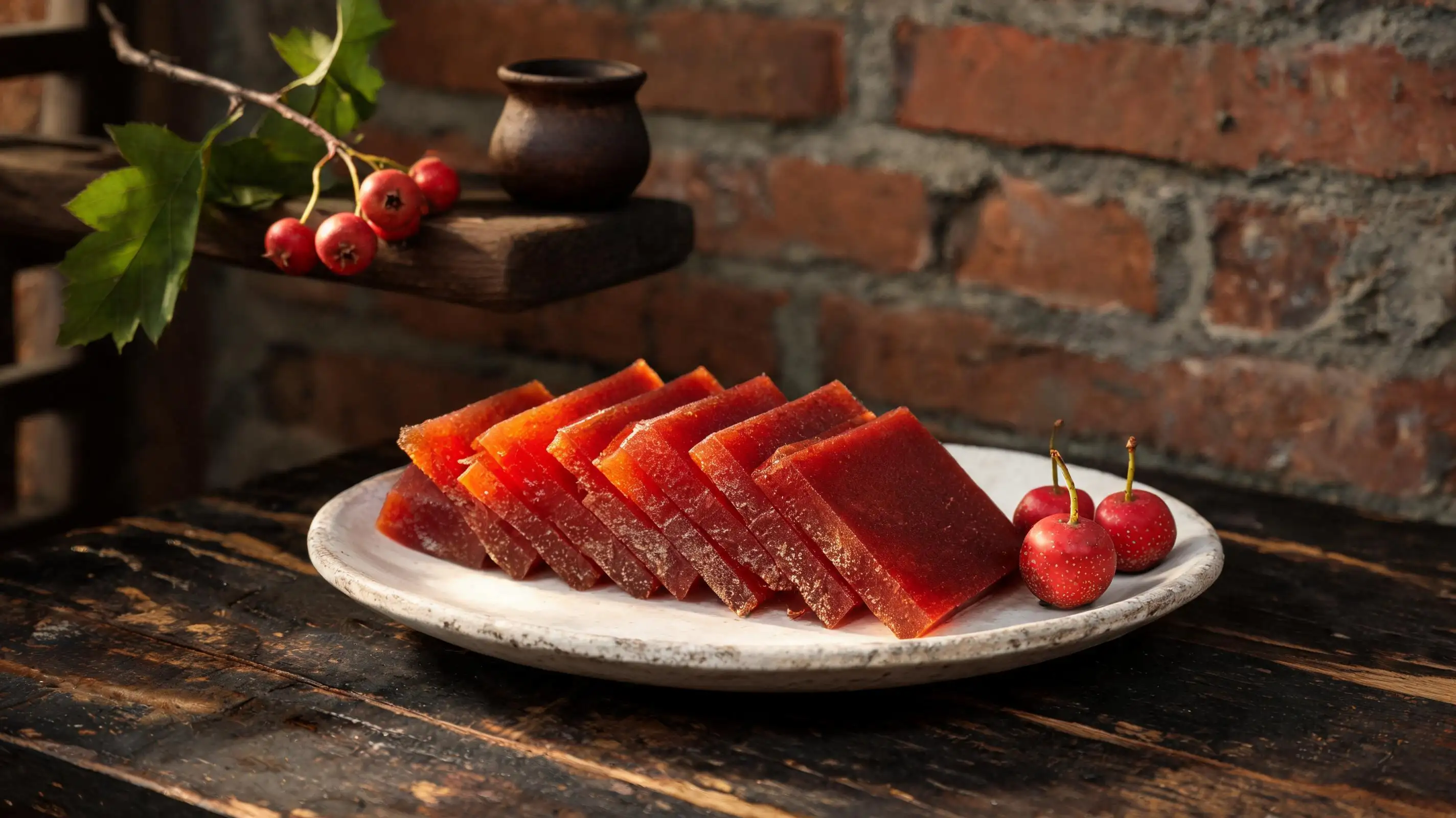
Hawthorn Cake
**Hawthorn Cake**
---
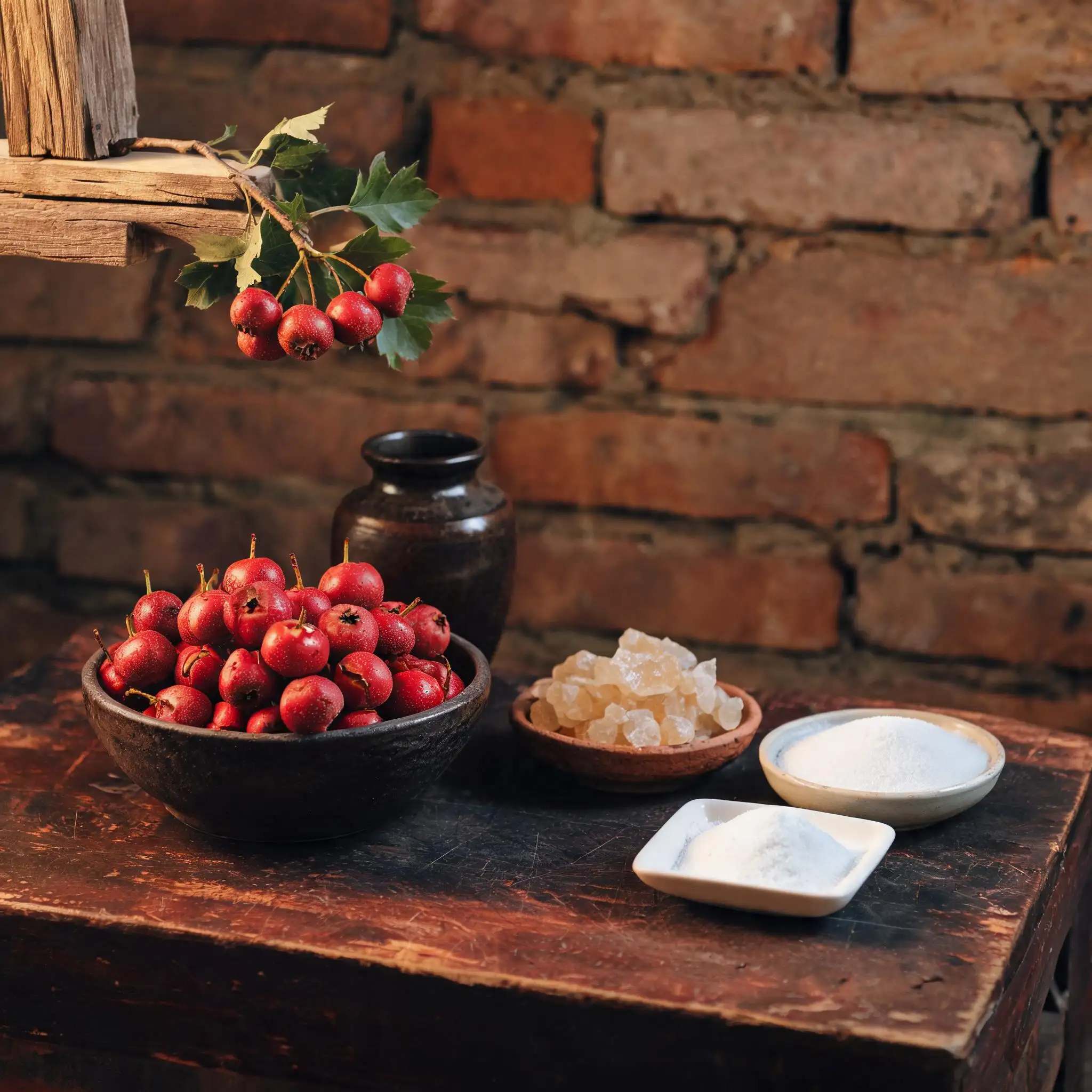
**Ingredients**
Fresh hawthorn berries — stems and blossom ends removed, halved, cores scooped out
Rock sugar — a generous handful, pale amber chunks, roughly the size of a thumbnail
Water — enough to fully submerge the fruit
---
**How it's made**
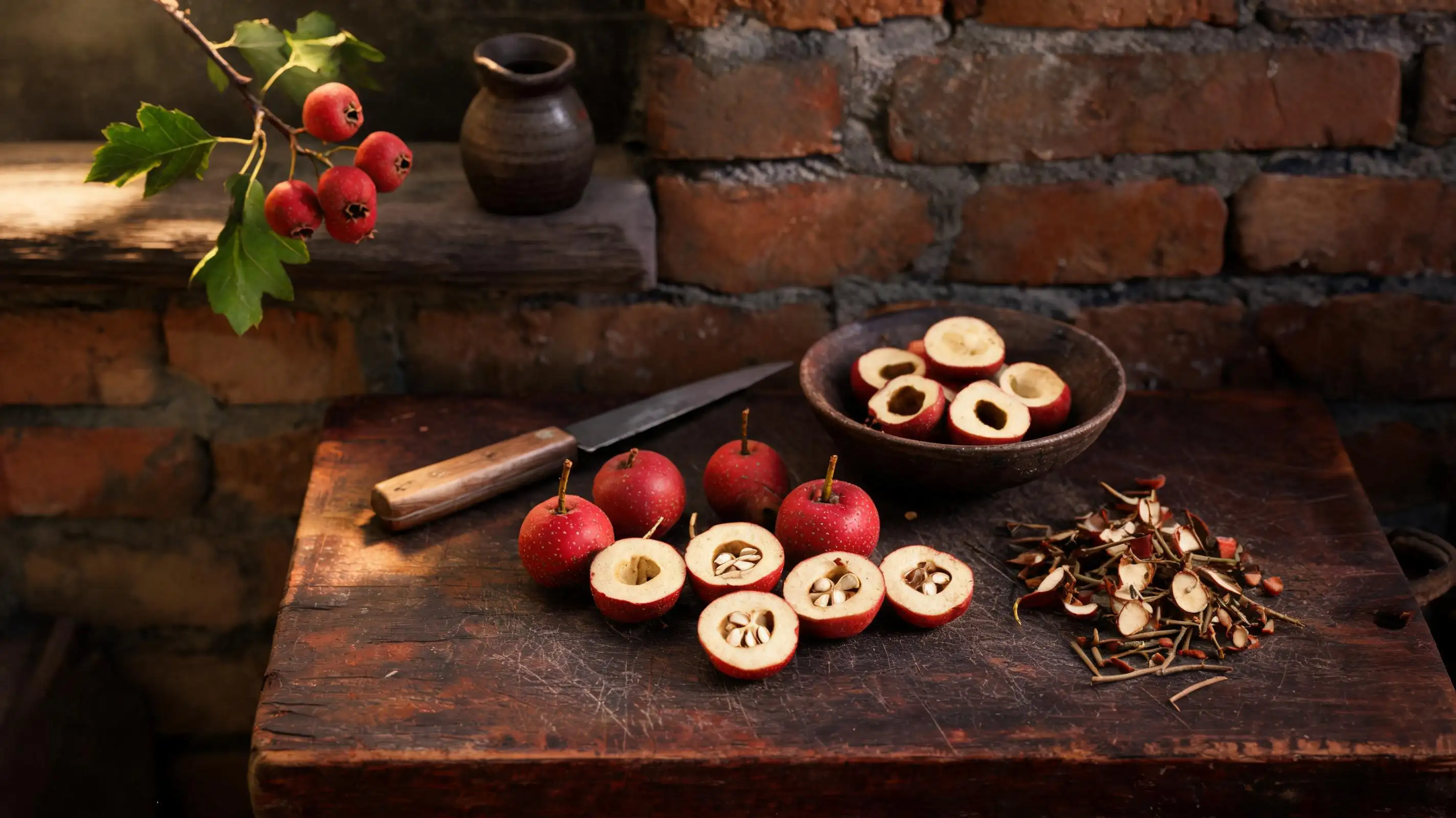
Hawthorn berries have a short window in late autumn when they are properly ripe — skins still taut, flesh tart enough to make your jaw tighten at the first bite. Those are the ones to use. Each berry gets its stem and calyx pulled off, then cut in half so you can dig out the core and seeds with the tip of a small knife. It is slow work, dozens of berries one by one, and by the time you are done your fingers are faintly stained red and the cutting board is scattered with tiny white cores and thin skins.
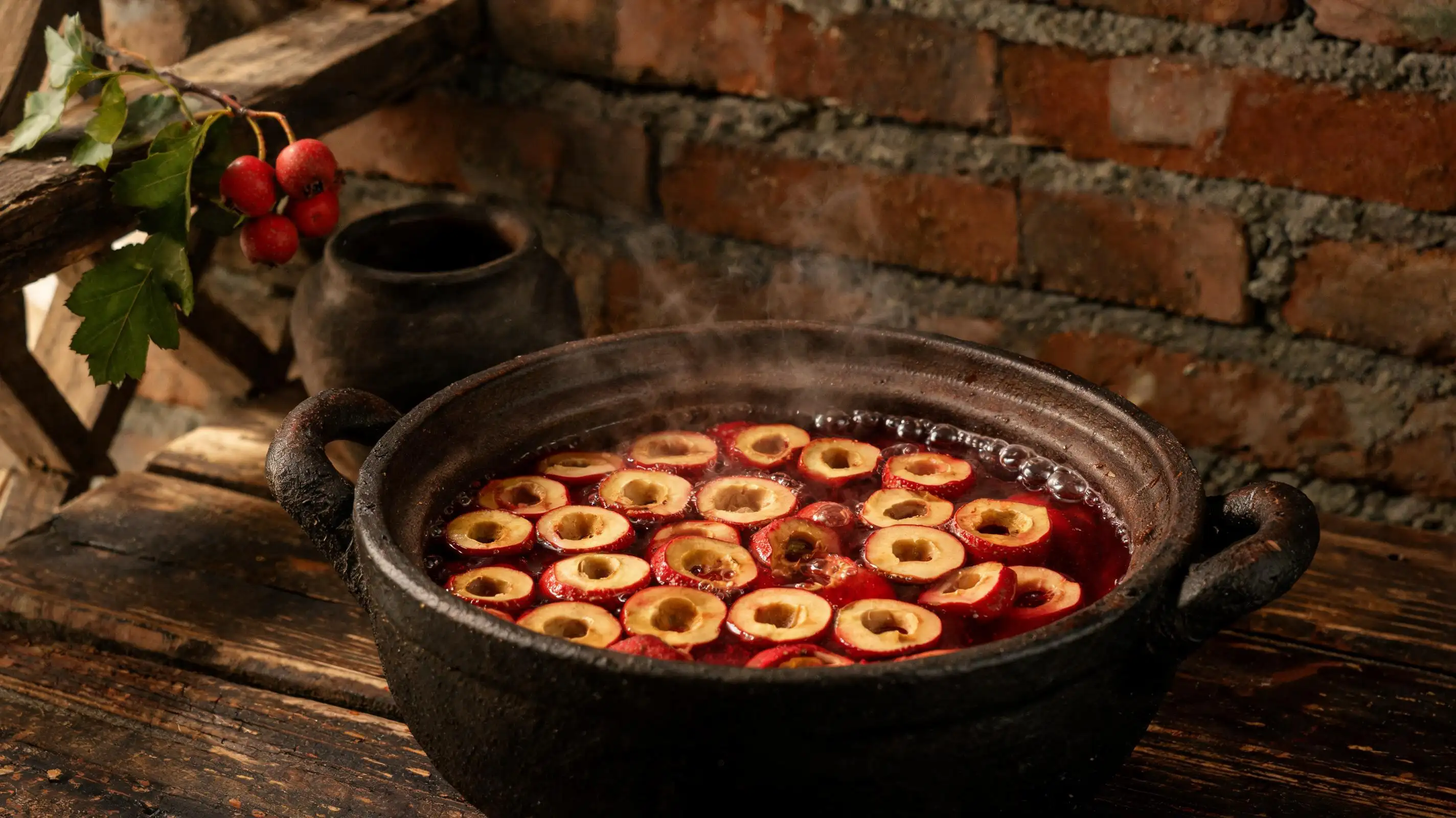
Drop all the halved fruit into a heavy pottery pot and pour in enough water to just cover them. Bring it to a gentle simmer and leave it there, lid off, for around twenty minutes. The water shifts from pale to deep ruby almost immediately as the skins start bleeding color. By the time the fruit is completely soft — you can press a piece apart between two fingers without resistance — the liquid has become a thick dark red and the air in the room smells of concentrated tart fruit, nothing sweet about it yet.
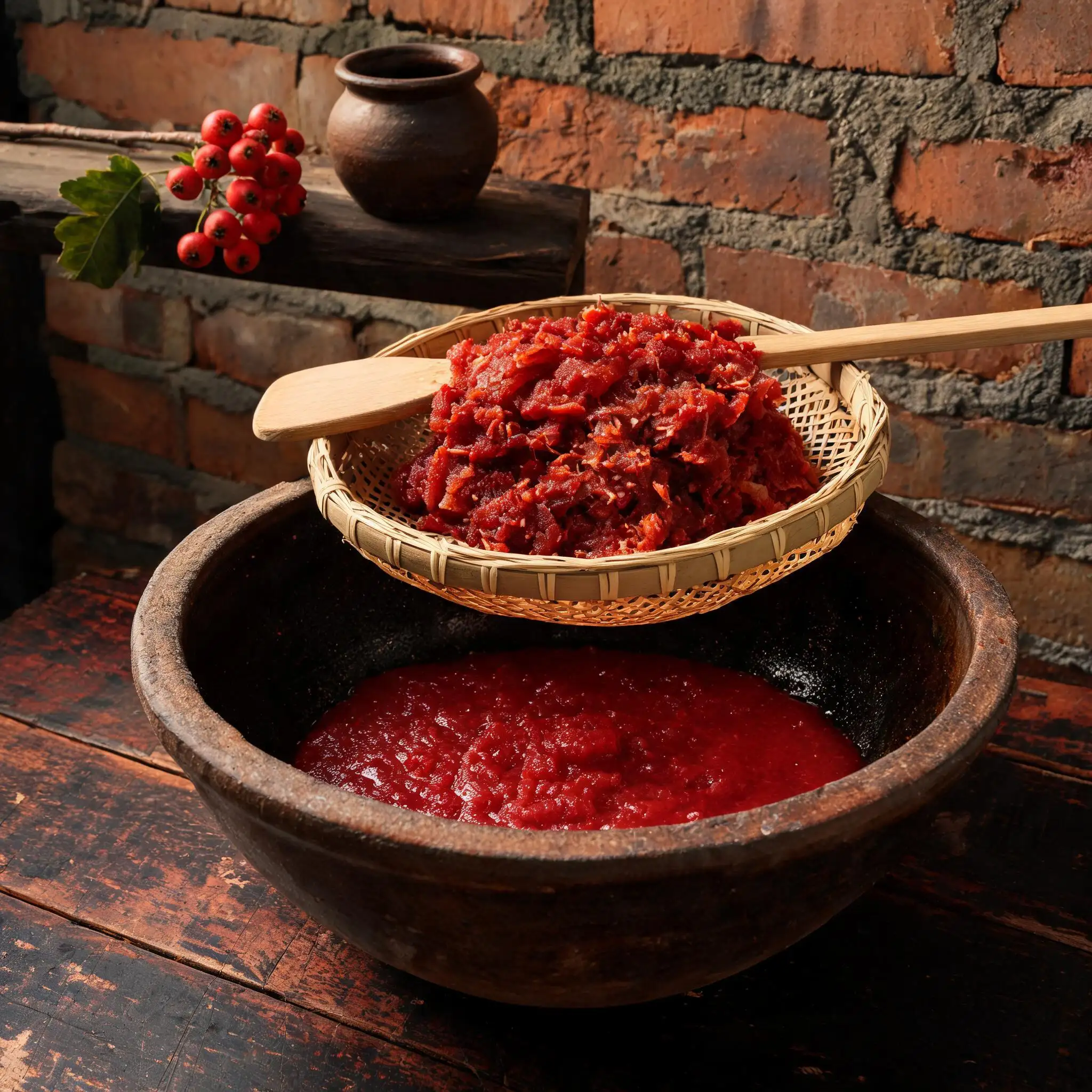
Pour everything through a bamboo sieve set over a wide bowl. Press the cooked pulp firmly through the mesh with a wooden spatula, working in slow circles until only a dry mat of skin and fiber sits on top. The paste that collects in the bowl below is smooth and brilliant crimson, slightly grainy but mostly uniform. Scrape every bit through. Discard the skins.
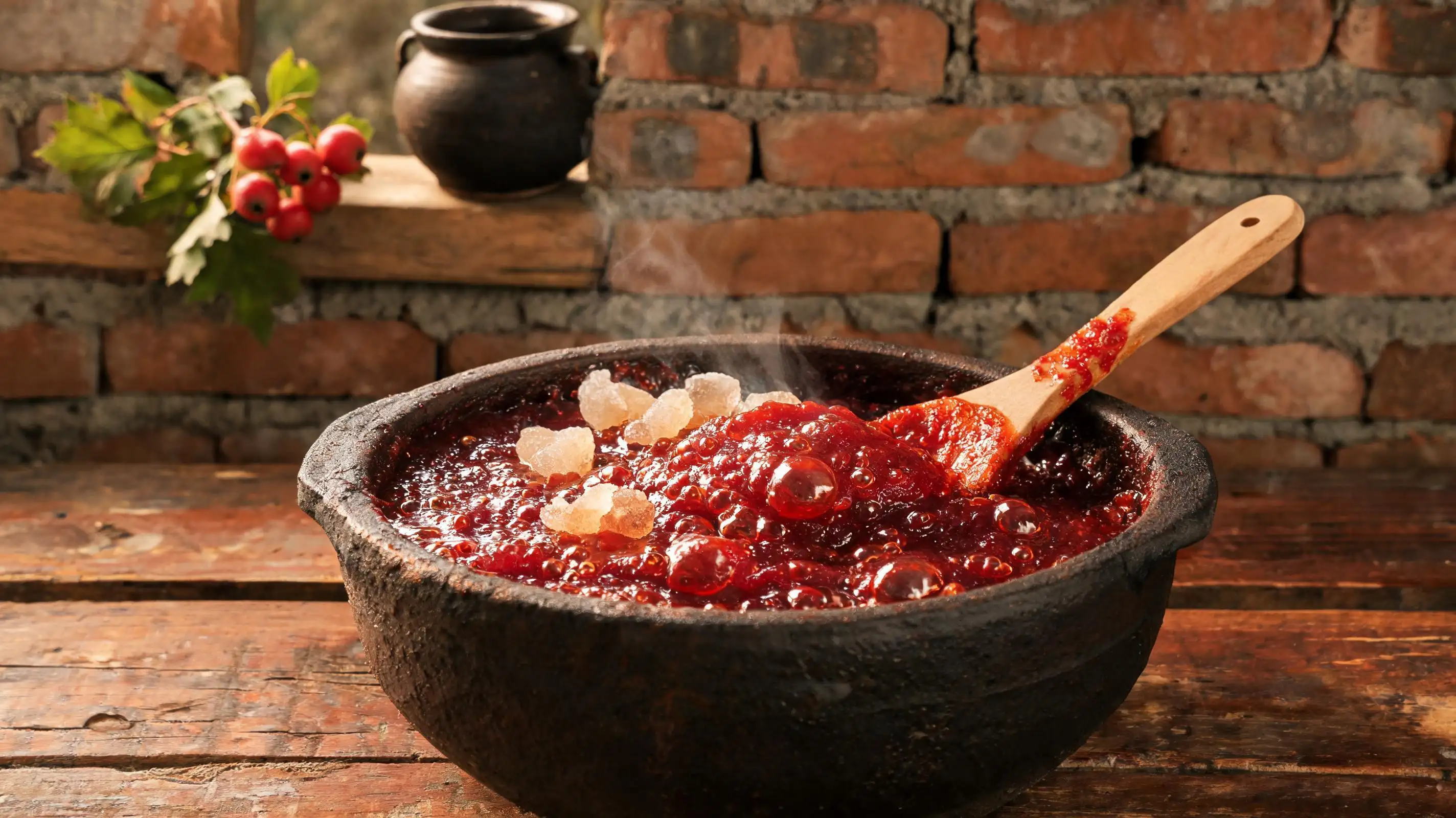
Return the paste to the pot. Add the rock sugar and set the heat to medium-low. The sugar dissolves slowly at first, and then the paste begins to cook down in earnest — it darkens slightly, loses its wateriness, and starts pulling away from the sides of the pot when you drag the spatula across the bottom. This takes twenty to thirty minutes of steady stirring. You know it is ready when a line drawn through the paste stays open for a full second before slowly closing back in. The finished paste is thick, glossy, and just barely pourable.
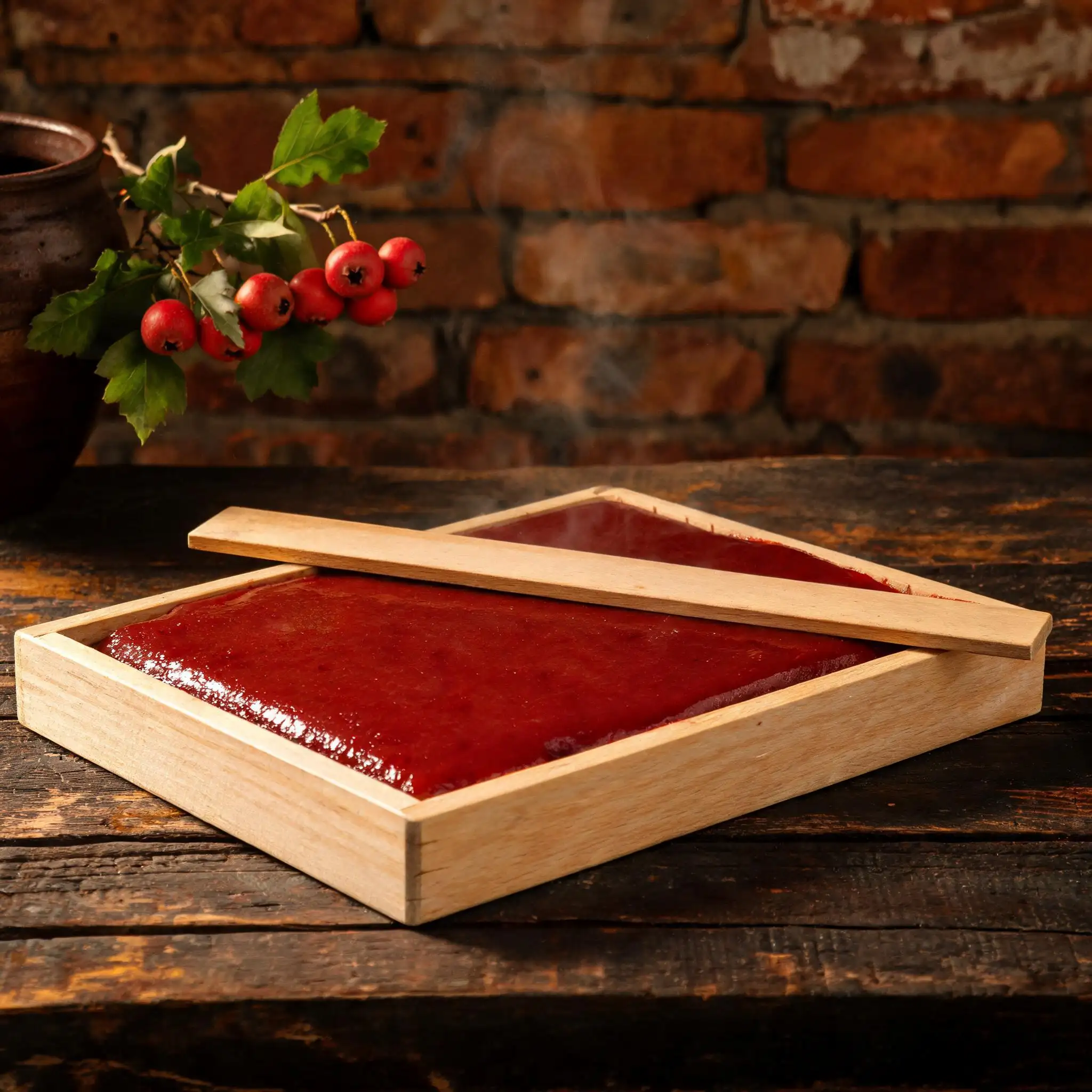
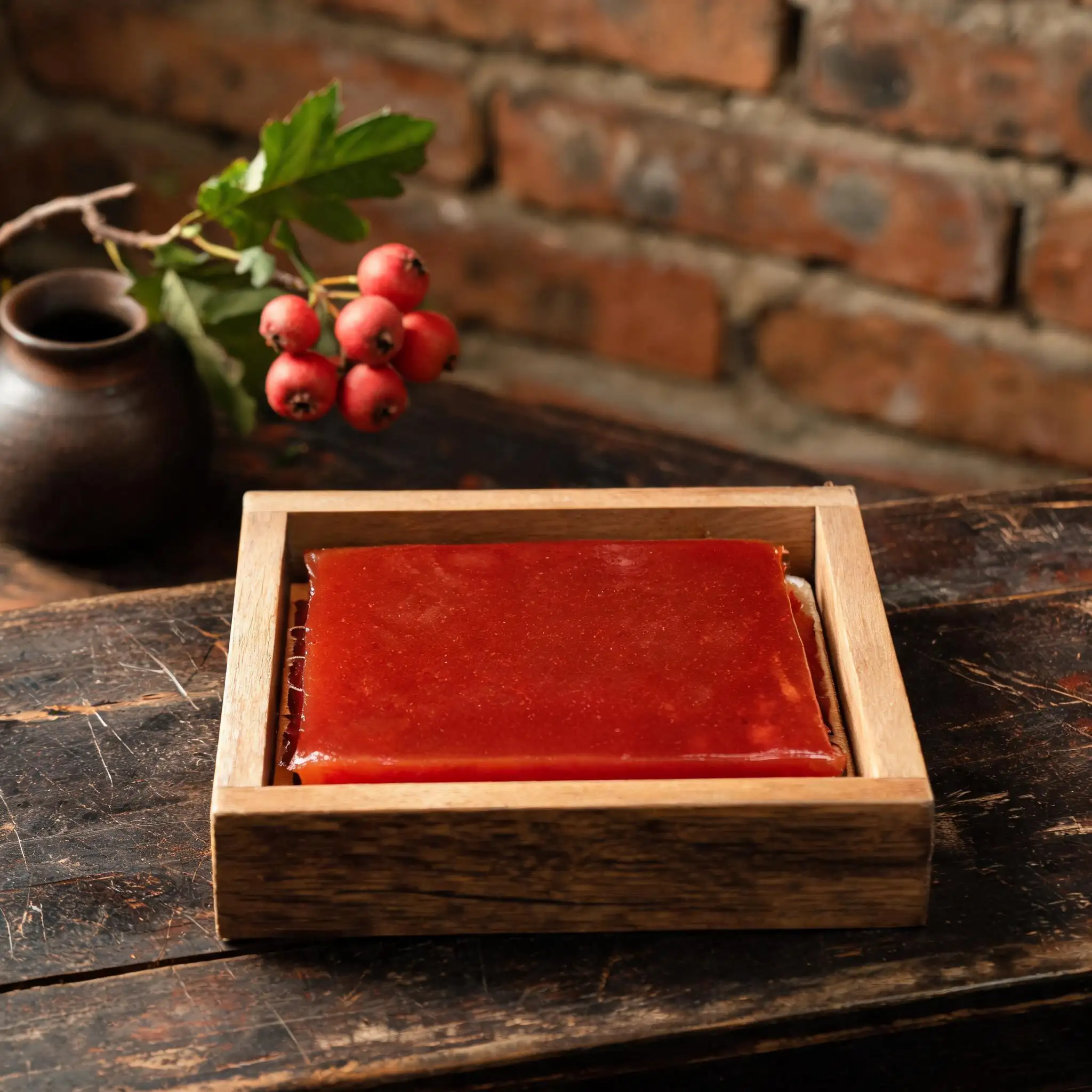
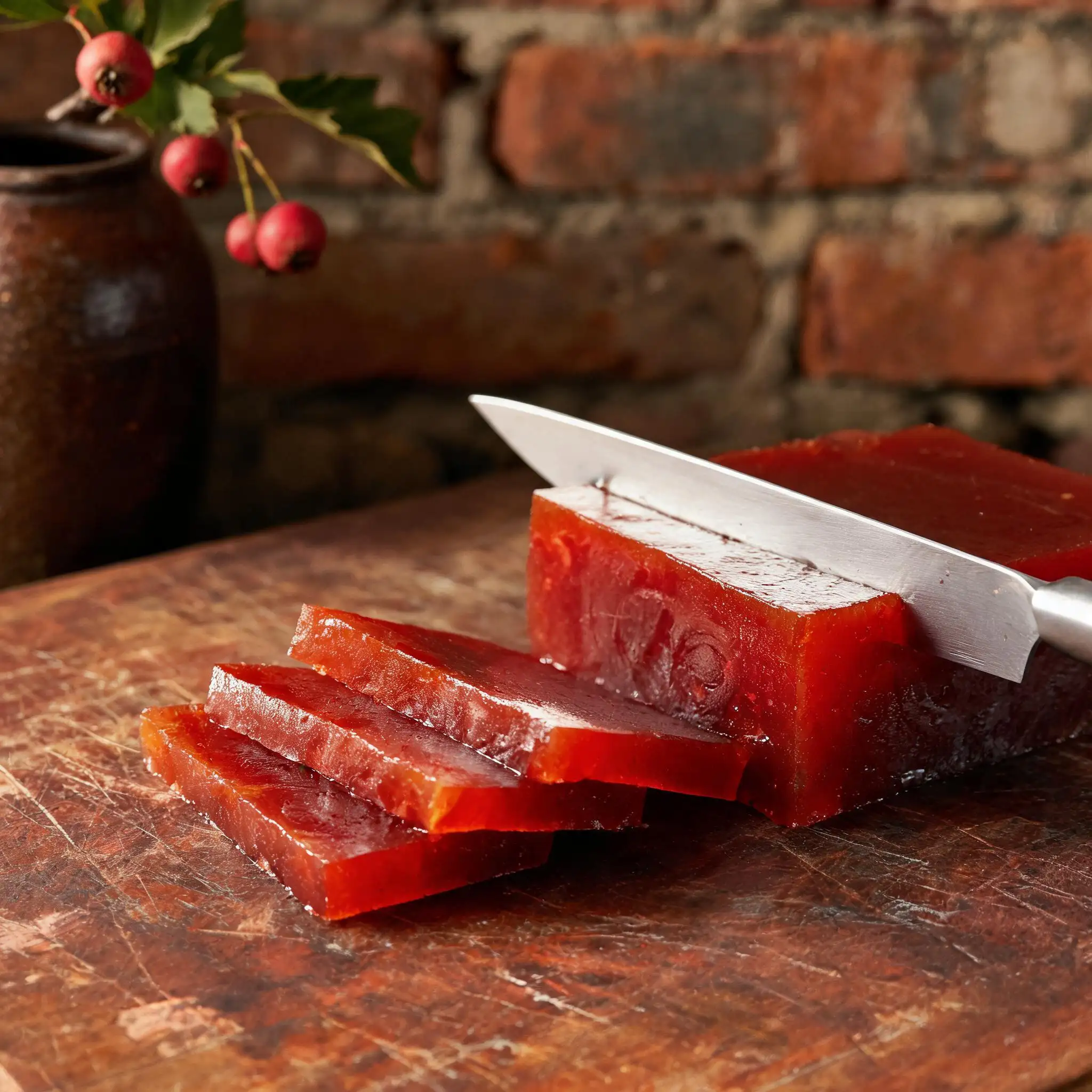
Pour it into a shallow wooden mold, smooth the surface flat with a straight-edged scraper, and leave it somewhere cool. An hour at room temperature is enough in winter. The paste sets into a firm, smooth slab — no wobble when you press the center, and the edges pull slightly from the wood on their own. Run a knife around the inside and lift the whole thing out, then slice it into clean rectangular portions. The cut faces catch the light like stained glass: deep red shading to garnet at the edges, semi-translucent, somewhere between hard candy and a very firm jelly.
The hawthorn tree has grown across northern China for a long time, and people have been turning its fruit into sweets and preserved foods for most of that time. Hawthorn cake as it exists now — smooth, set, sliceable — became a fixture of old Beijing street food, sold alongside tanghulu from the same carts and the same vendors. What makes it work without any added thickener is the pectin already in the fruit. Enough sugar, enough heat, enough stirring, and the pectin does the rest. The sourness never fully surrenders to the sweet, which is probably why people keep eating it one slice at a time until the plate is empty.
---
**Ingredients**
Fresh hawthorn berries — stems and blossom ends removed, halved, cores scooped out
Rock sugar — a generous handful, pale amber chunks, roughly the size of a thumbnail
Water — enough to fully submerge the fruit
---
**How it's made**
Hawthorn berries have a short window in late autumn when they are properly ripe — skins still taut, flesh tart enough to make your jaw tighten at the first bite. Those are the ones to use. Each berry gets its stem and calyx pulled off, then cut in half so you can dig out the core and seeds with the tip of a small knife. It is slow work, dozens of berries one by one, and by the time you are done your fingers are faintly stained red and the cutting board is scattered with tiny white cores and thin skins.
Drop all the halved fruit into a heavy pottery pot and pour in enough water to just cover them. Bring it to a gentle simmer and leave it there, lid off, for around twenty minutes. The water shifts from pale to deep ruby almost immediately as the skins start bleeding color. By the time the fruit is completely soft — you can press a piece apart between two fingers without resistance — the liquid has become a thick dark red and the air in the room smells of concentrated tart fruit, nothing sweet about it yet.
Pour everything through a bamboo sieve set over a wide bowl. Press the cooked pulp firmly through the mesh with a wooden spatula, working in slow circles until only a dry mat of skin and fiber sits on top. The paste that collects in the bowl below is smooth and brilliant crimson, slightly grainy but mostly uniform. Scrape every bit through. Discard the skins.
Return the paste to the pot. Add the rock sugar and set the heat to medium-low. The sugar dissolves slowly at first, and then the paste begins to cook down in earnest — it darkens slightly, loses its wateriness, and starts pulling away from the sides of the pot when you drag the spatula across the bottom. This takes twenty to thirty minutes of steady stirring. You know it is ready when a line drawn through the paste stays open for a full second before slowly closing back in. The finished paste is thick, glossy, and just barely pourable.
Pour it into a shallow wooden mold, smooth the surface flat with a straight-edged scraper, and leave it somewhere cool. An hour at room temperature is enough in winter. The paste sets into a firm, smooth slab — no wobble when you press the center, and the edges pull slightly from the wood on their own. Run a knife around the inside and lift the whole thing out, then slice it into clean rectangular portions. The cut faces catch the light like stained glass: deep red shading to garnet at the edges, semi-translucent, somewhere between hard candy and a very firm jelly.
The hawthorn tree has grown across northern China for a long time, and people have been turning its fruit into sweets and preserved foods for most of that time. Hawthorn cake as it exists now — smooth, set, sliceable — became a fixture of old Beijing street food, sold alongside tanghulu from the same carts and the same vendors. What makes it work without any added thickener is the pectin already in the fruit. Enough sugar, enough heat, enough stirring, and the pectin does the rest. The sourness never fully surrenders to the sweet, which is probably why people keep eating it one slice at a time until the plate is empty.