·5/25/2026
from
Red Bean Paste Zongzi
**Red Bean Paste Zongzi** *(豆沙粽)*
---
**Ingredients**
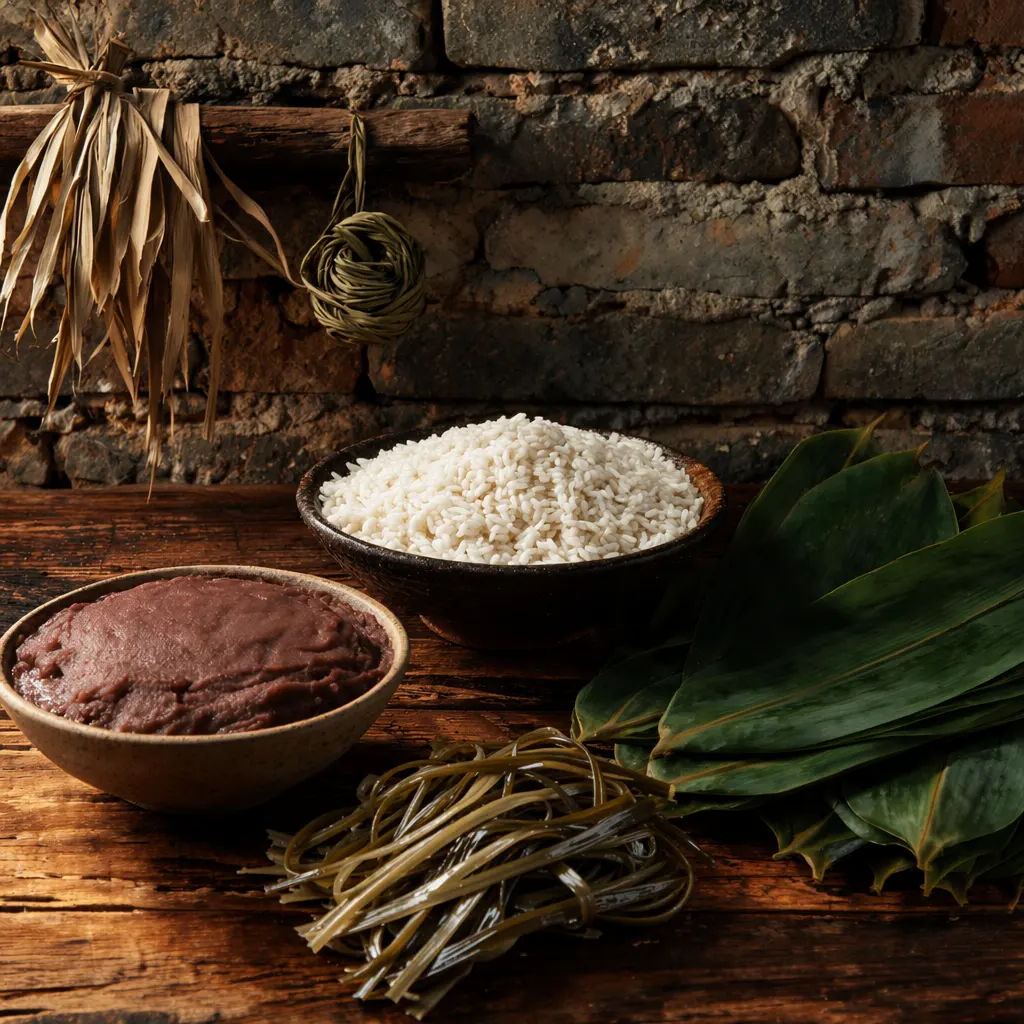
Glutinous rice — soaked overnight in cold water until each grain turns opaque and soft; soaking is not optional, it's what gives the final texture its density
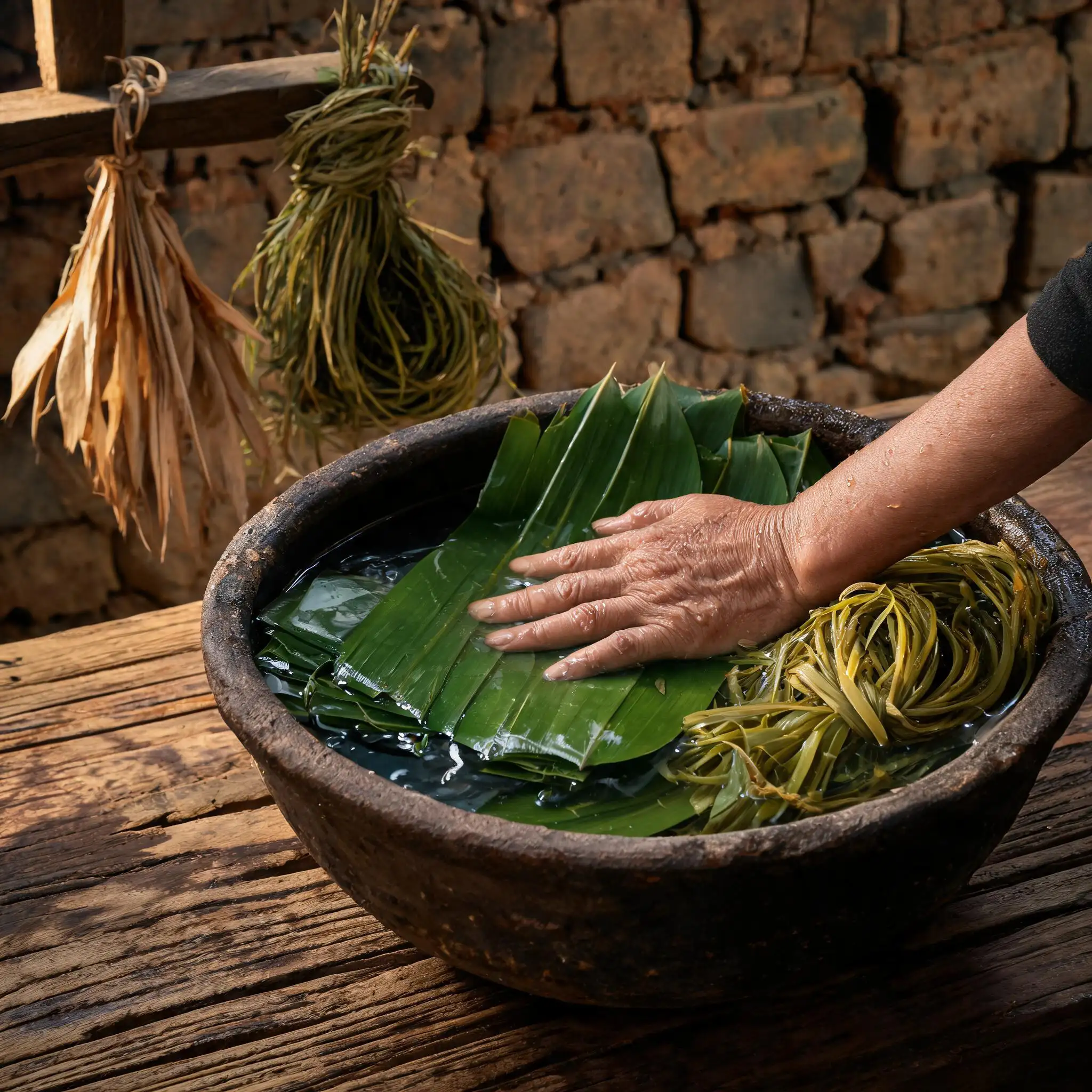
Reed leaves — soaked in a basin of cold water for several hours until pliable and deep green, with a faint grassy smell that gets into everything nearby
Malan grass strands — soaked until soft and flexible; used for binding
Red bean paste — smooth and thick, the kind that holds its shape when spooned but spreads when pressed; deeply sweet without being sugary
---
**How it's made**
The reed leaves go into a basin of cold water the night before, held down so they stay submerged. By morning they've softened from brittle and pale to slick and dark green, and when you pull one out it carries that particular smell — part grass, part riverbank, part something you can't quite name.
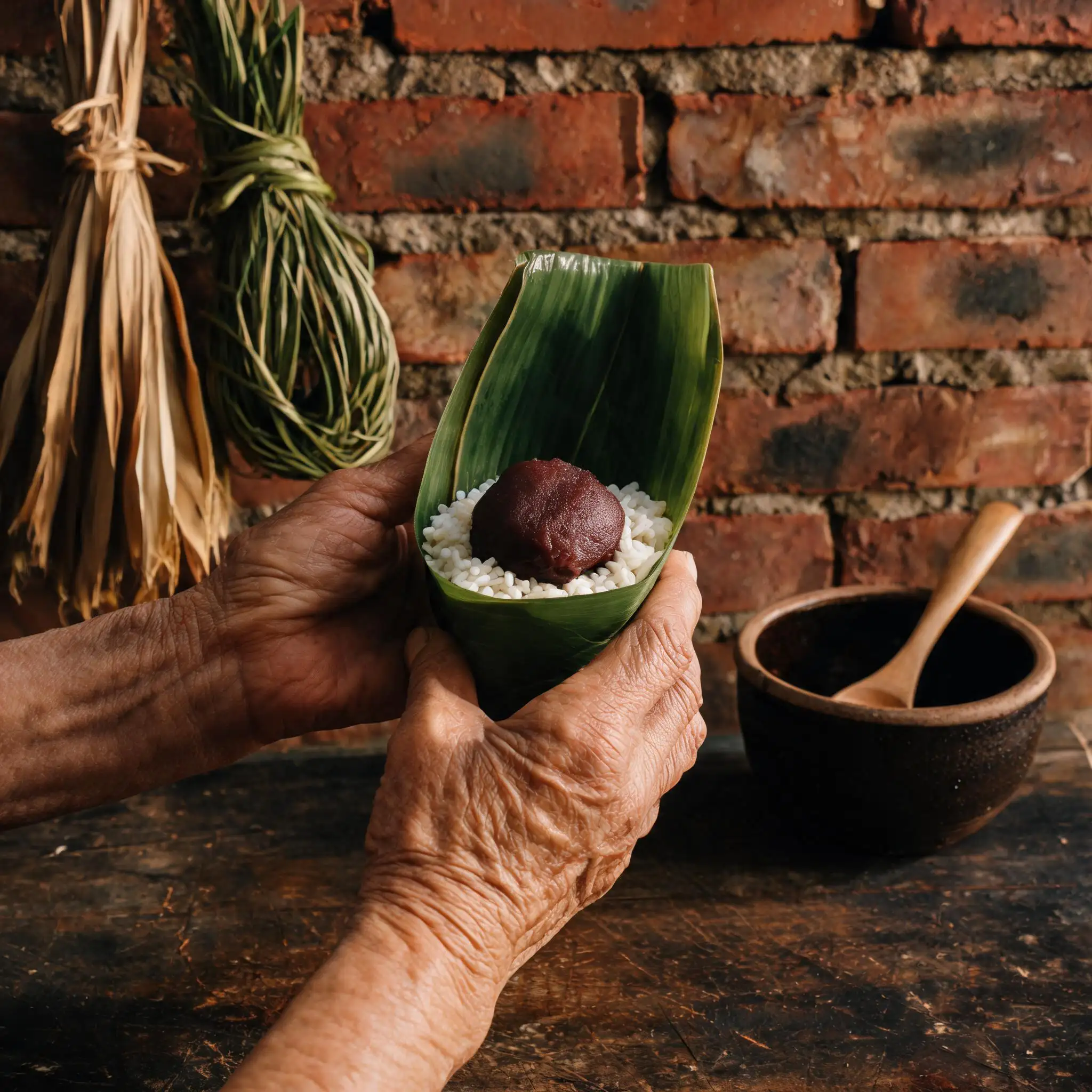
Two or three leaves together, overlapped and folded in the palm into a cone. The point at the bottom has to be tight or the rice leaks out during cooking. One hand cups the shape while the other packs in a layer of soaked white rice, pressing it down. Then a spoonful of bean paste goes into the center — a smooth, dark mound placed directly on the rice — and another handful of rice goes on top to cover it completely. The filling disappears under the white.
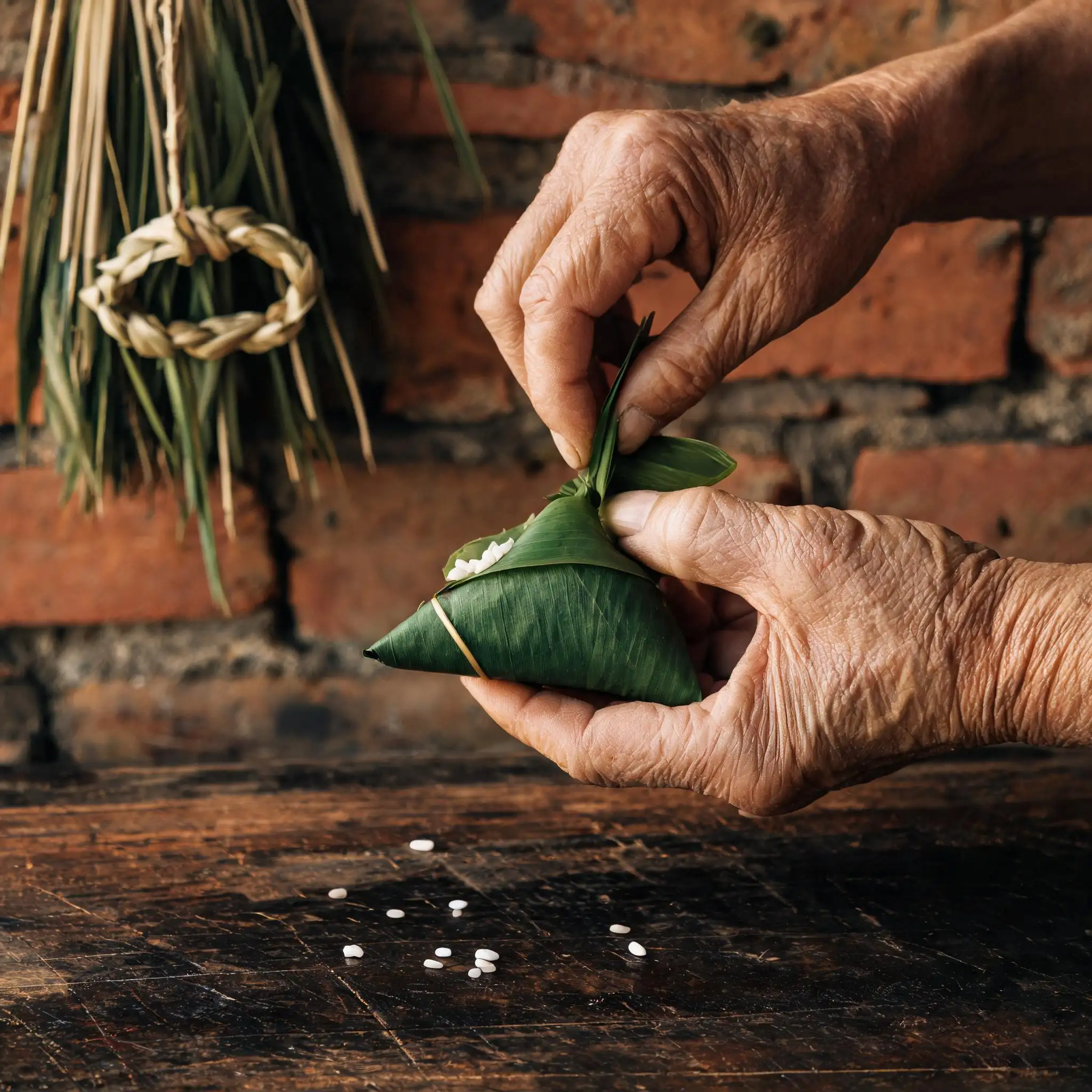
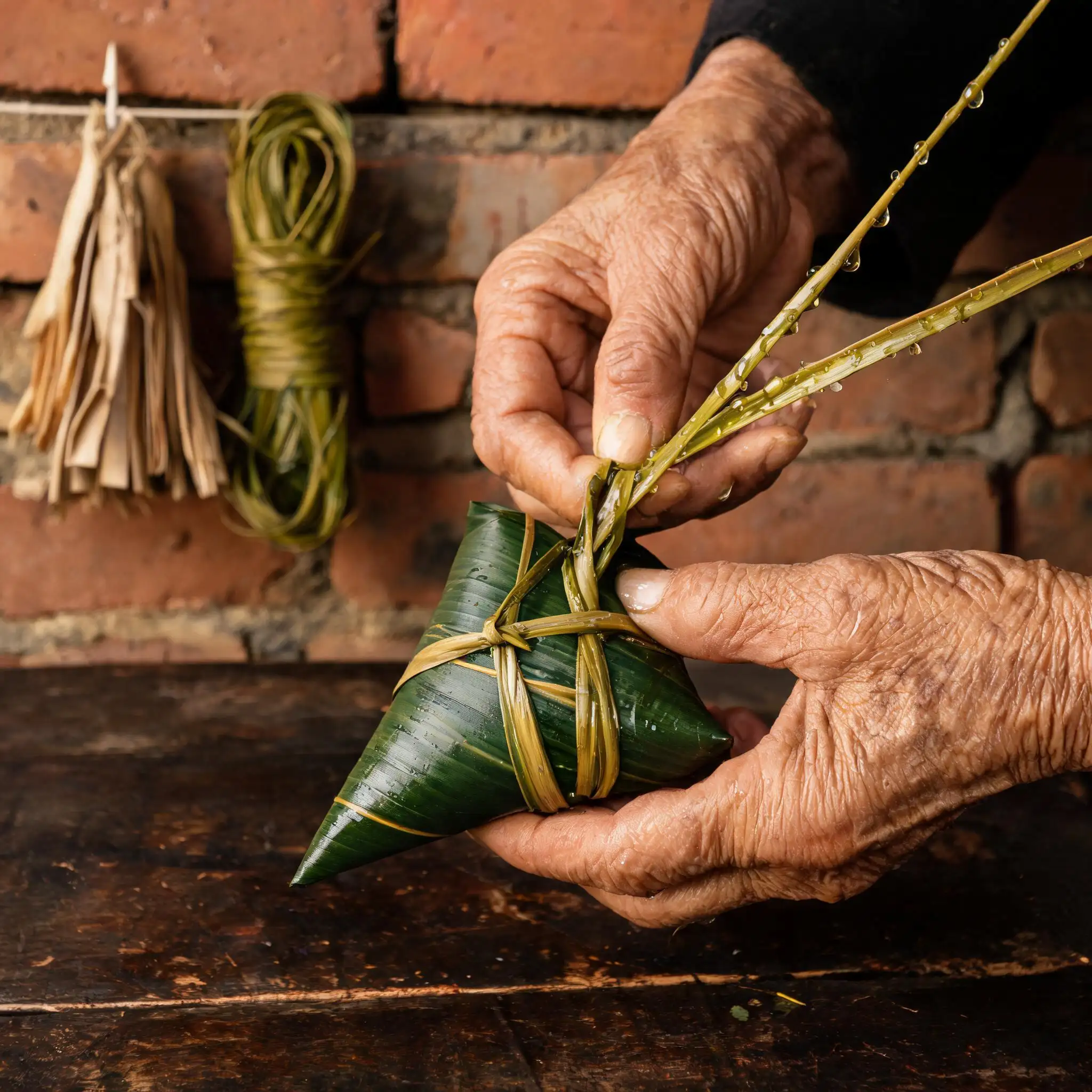
The leaves fold over the open end and tuck flat, bringing the whole thing into a pyramid. It's slightly soft at this stage, yielding when you press it. A length of malan grass goes around the body twice and knots at the top — firm enough to hold the leaves down through hours of boiling, loose enough not to cut into them.
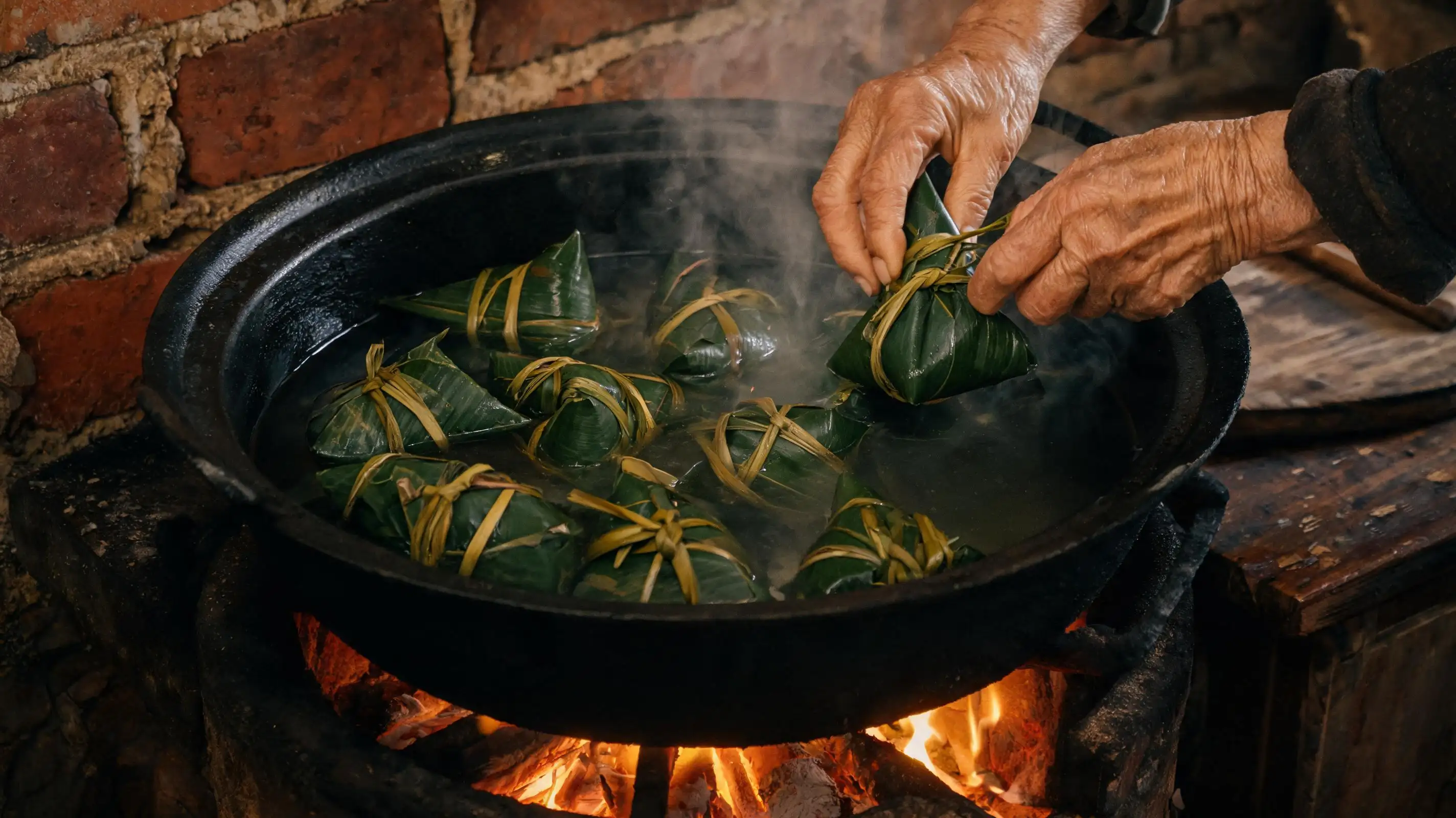
They go into a large iron pot fitted close together so they don't float and tip. Cold water in until they're submerged. The pot goes onto the stove and comes to a full boil, then settles into a steady rolling simmer for three to four hours. The smell that builds in the kitchen is hard to describe — the tannins in the leaves release something green and faintly medicinal, and it mixes with rice steam until the whole room holds it.
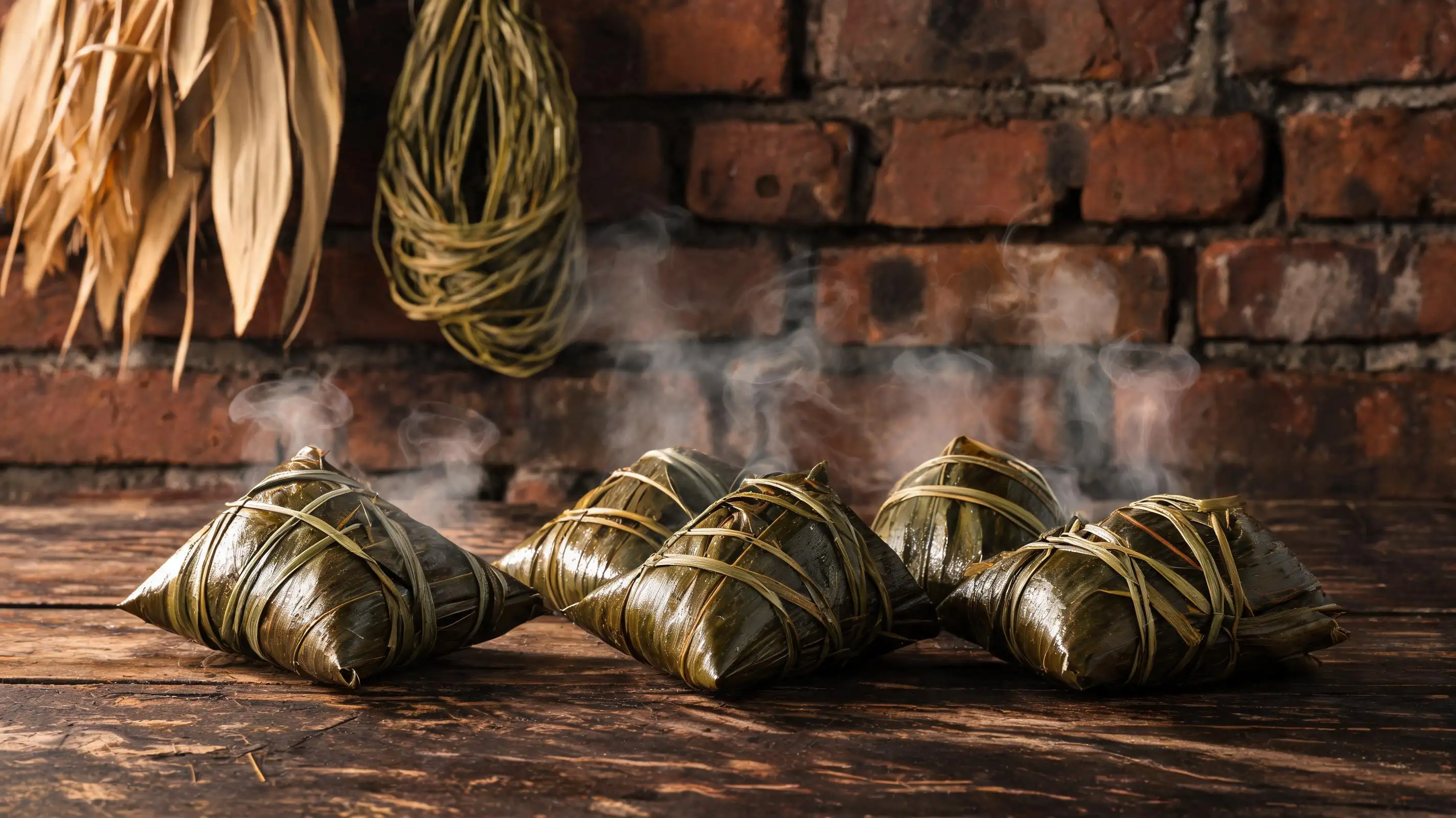
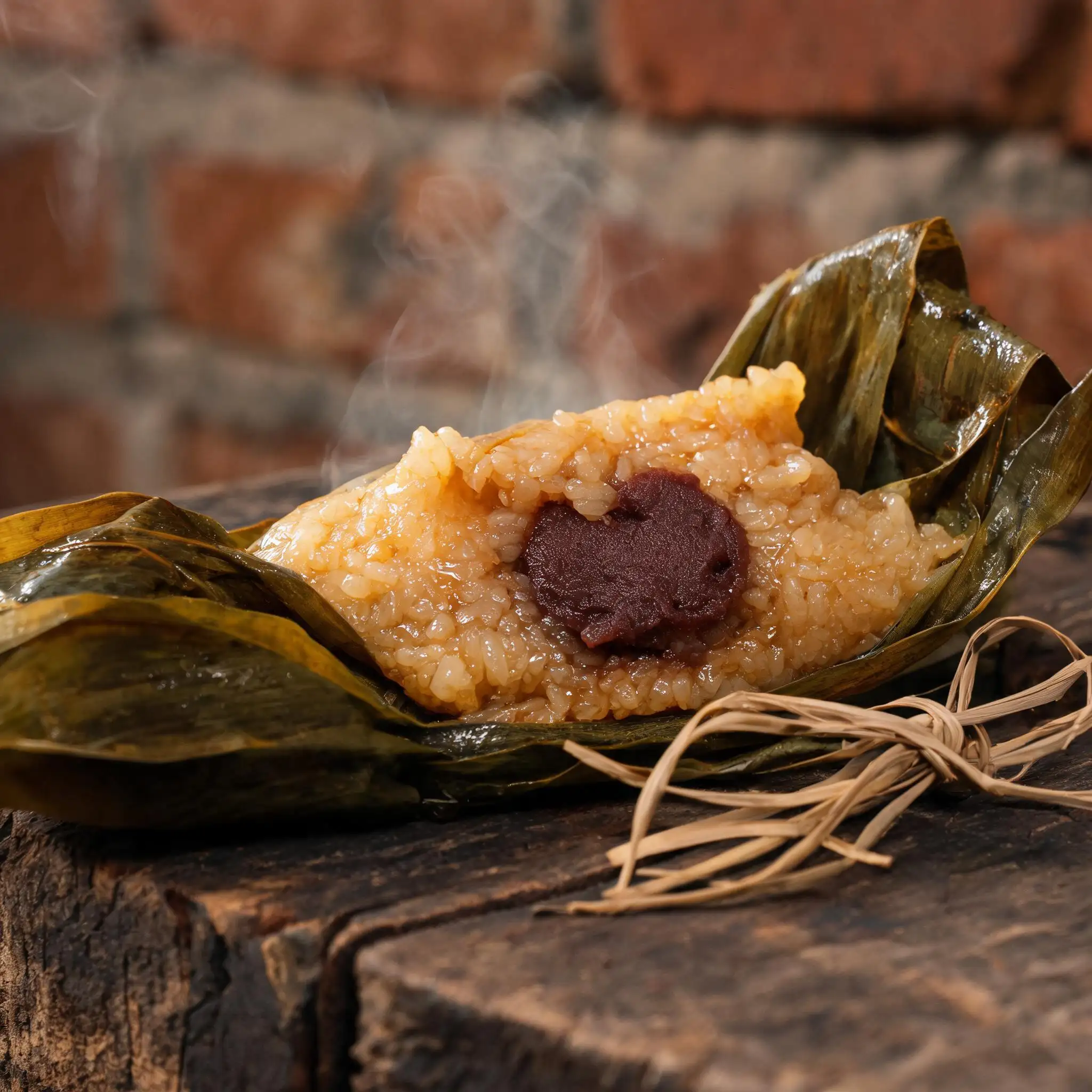
Coming out of the pot, the leaves are dark and soft, the grass browning slightly at the knot. They need a few minutes before you can handle them. Peel the knot loose and the leaves open back like a flower. Inside, the rice is translucent and faintly golden from the leaf oils, sticky and dense and still steaming. The bean paste in the center has cooked darker and softer, almost jammy where it meets the rice at the edges.
The name zongzi goes back more than two thousand years. The most often repeated story connects it to Qu Yuan, a poet and official of the state of Chu, who threw himself into the Miluo River after his country was conquered. People threw parcels of rice into the water — to feed his spirit, some say, or to keep the fish from his body, others say. Whether that story is literally true or not, Dragon Boat Festival and zongzi have stayed together ever since, and in many families the wrapping is still done by the oldest woman in the house, the one who has been folding these cones the longest and whose hands know exactly how tight the point needs to be.
---
**Ingredients**
Glutinous rice — soaked overnight in cold water until each grain turns opaque and soft; soaking is not optional, it's what gives the final texture its density
Reed leaves — soaked in a basin of cold water for several hours until pliable and deep green, with a faint grassy smell that gets into everything nearby
Malan grass strands — soaked until soft and flexible; used for binding
Red bean paste — smooth and thick, the kind that holds its shape when spooned but spreads when pressed; deeply sweet without being sugary
---
**How it's made**
The reed leaves go into a basin of cold water the night before, held down so they stay submerged. By morning they've softened from brittle and pale to slick and dark green, and when you pull one out it carries that particular smell — part grass, part riverbank, part something you can't quite name.
Two or three leaves together, overlapped and folded in the palm into a cone. The point at the bottom has to be tight or the rice leaks out during cooking. One hand cups the shape while the other packs in a layer of soaked white rice, pressing it down. Then a spoonful of bean paste goes into the center — a smooth, dark mound placed directly on the rice — and another handful of rice goes on top to cover it completely. The filling disappears under the white.
The leaves fold over the open end and tuck flat, bringing the whole thing into a pyramid. It's slightly soft at this stage, yielding when you press it. A length of malan grass goes around the body twice and knots at the top — firm enough to hold the leaves down through hours of boiling, loose enough not to cut into them.
They go into a large iron pot fitted close together so they don't float and tip. Cold water in until they're submerged. The pot goes onto the stove and comes to a full boil, then settles into a steady rolling simmer for three to four hours. The smell that builds in the kitchen is hard to describe — the tannins in the leaves release something green and faintly medicinal, and it mixes with rice steam until the whole room holds it.
Coming out of the pot, the leaves are dark and soft, the grass browning slightly at the knot. They need a few minutes before you can handle them. Peel the knot loose and the leaves open back like a flower. Inside, the rice is translucent and faintly golden from the leaf oils, sticky and dense and still steaming. The bean paste in the center has cooked darker and softer, almost jammy where it meets the rice at the edges.
The name zongzi goes back more than two thousand years. The most often repeated story connects it to Qu Yuan, a poet and official of the state of Chu, who threw himself into the Miluo River after his country was conquered. People threw parcels of rice into the water — to feed his spirit, some say, or to keep the fish from his body, others say. Whether that story is literally true or not, Dragon Boat Festival and zongzi have stayed together ever since, and in many families the wrapping is still done by the oldest woman in the house, the one who has been folding these cones the longest and whose hands know exactly how tight the point needs to be.