·5/25/2026
from
Glutinous Rice Cake
**Glutinous Rice Cake** *(切糕)*
---
**Ingredients**
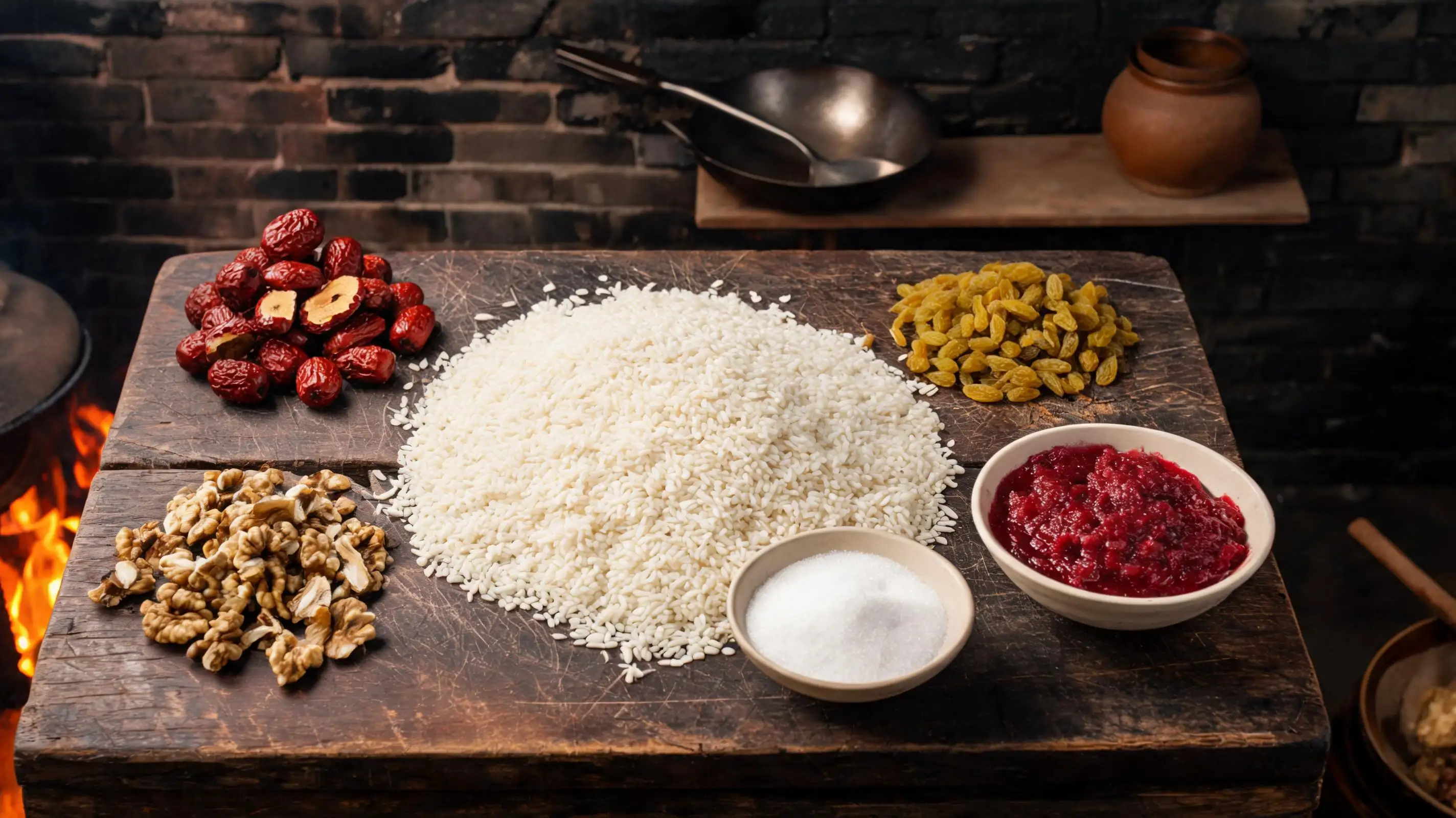
Glutinous rice — short-grain variety, soaked overnight in cold water until each grain swells and the water runs cloudy with released starch
Large dried red dates — pitted and split open lengthwise, the flesh exposed; the large kind, where the sweetness has concentrated and the skin wrinkles tight around the core
Golden raisins — plump, the golden variety, left whole
Walnut halves — broken roughly into large chunks, large enough to find and bite into in the finished block
Rose jam — a small amount, for spreading between the layers
Sugar — white
---
**How it's made**
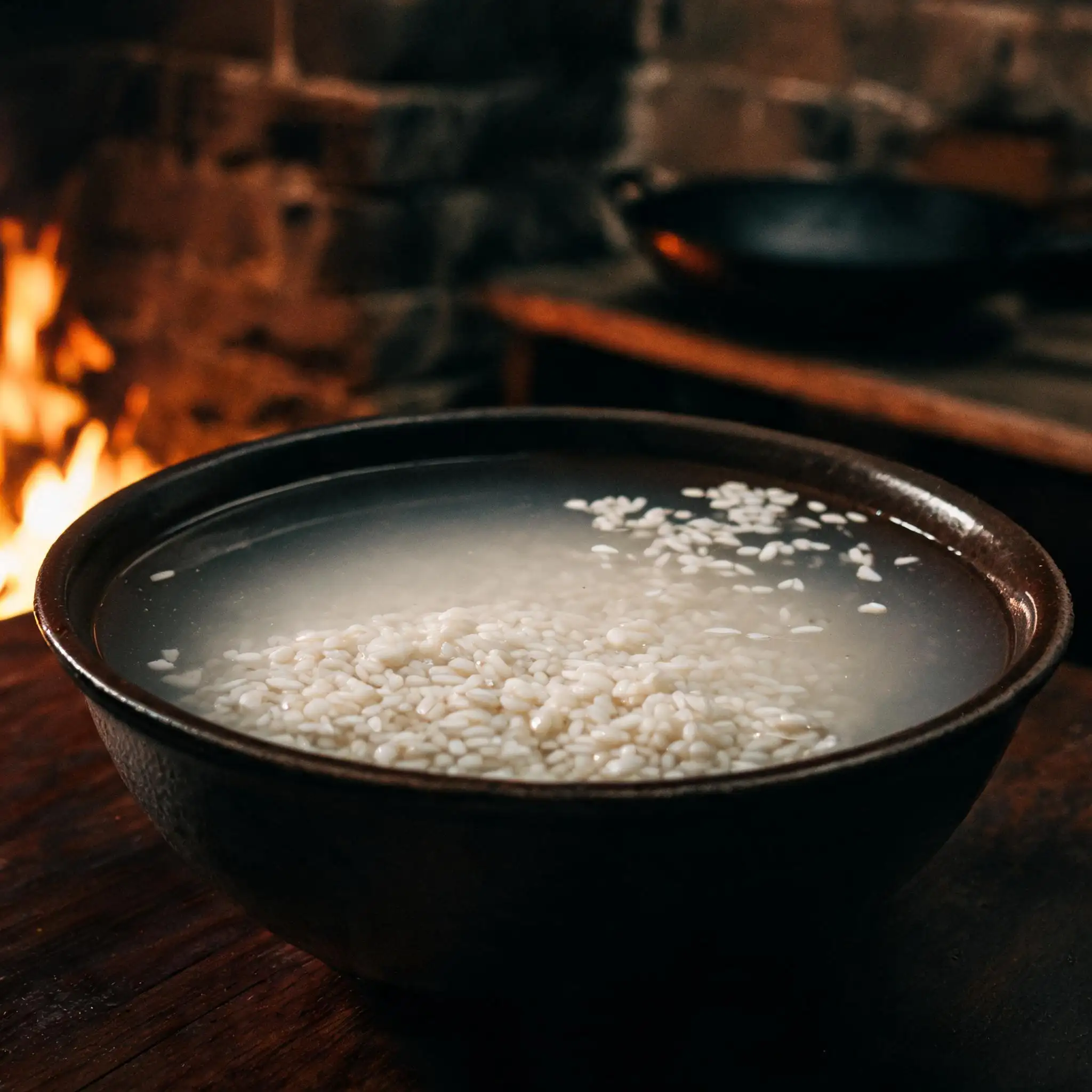
The rice goes into cold water the night before. It sits submerged for eight hours, absorbing slowly, each grain swelling to about a third larger than it started. By morning the water is milky white from the starch. The soaked grains should yield with almost no resistance when pressed between two fingers. Under-soaked rice won't compress properly — the interior stays grainy no matter how long it steams.
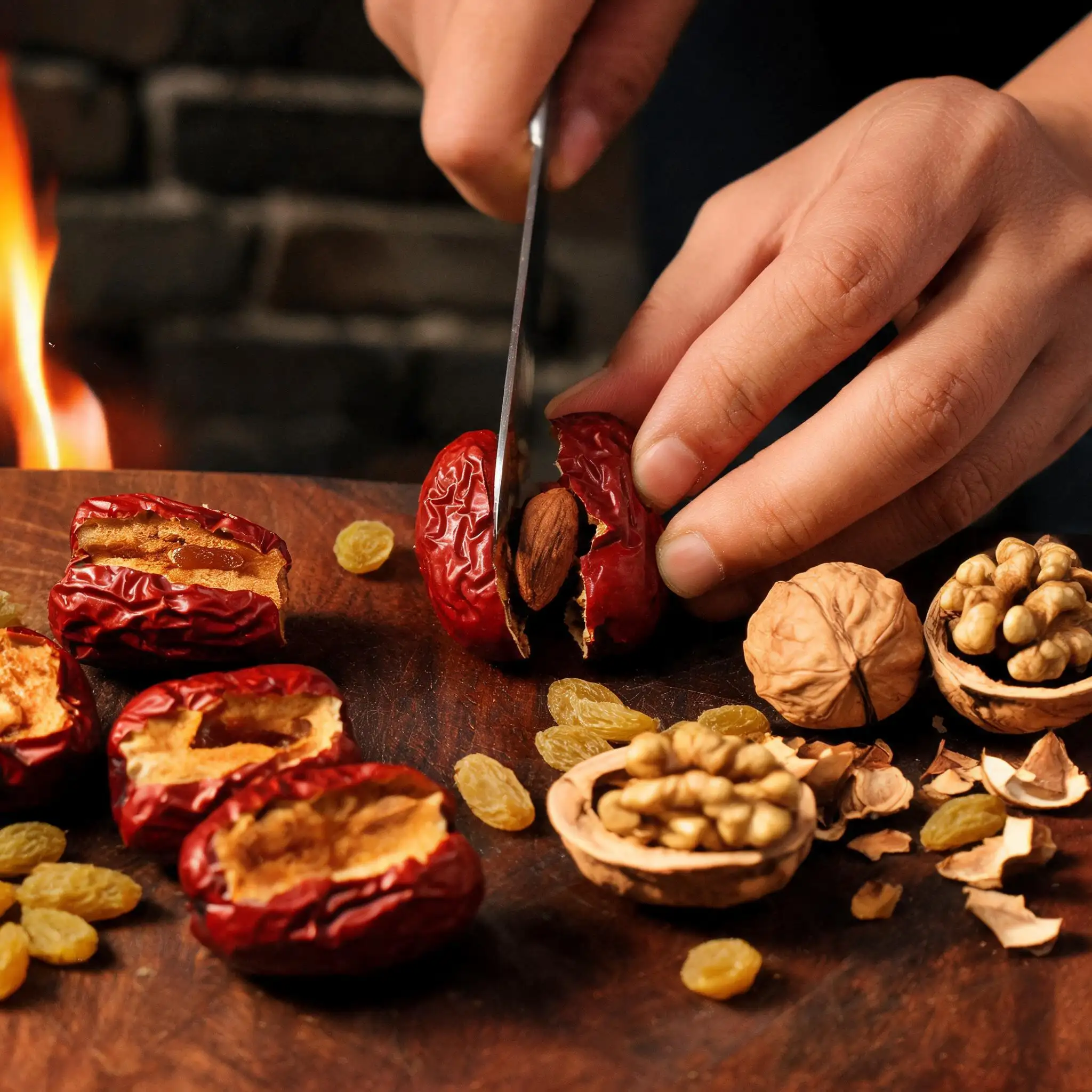
The dates are split open along the natural seam and the stone pulled out. Each date is pressed flat into two halves, flesh side up. Left whole, even a pitted date steams unevenly — the center stays tough while the edges soften. Halved, the flesh caramelizes and bleeds into the surrounding rice. The walnuts are cracked into rough pieces, two or three breaks per half.
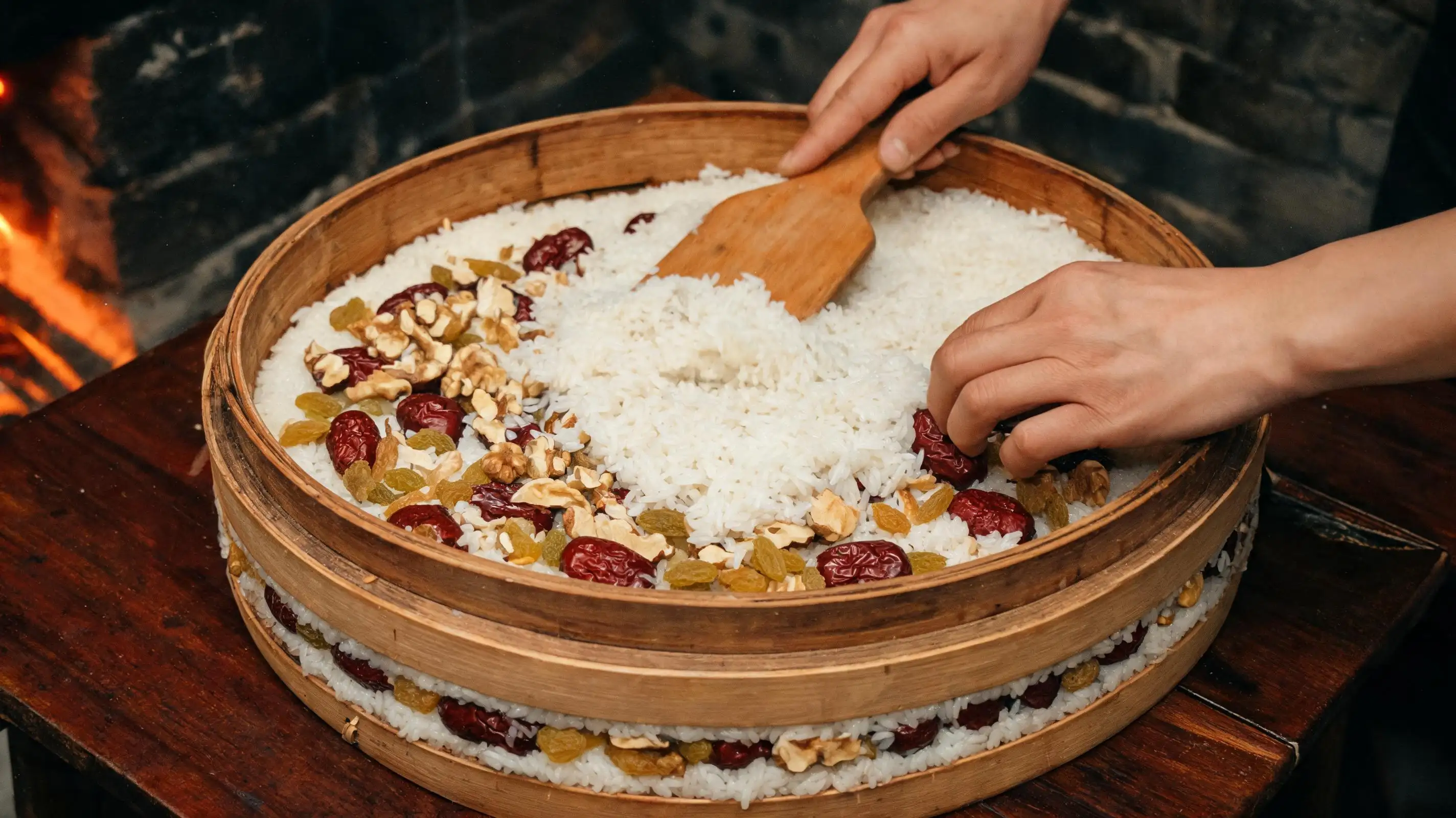
A bamboo steamer is lined with dampened cheesecloth, the edges draped over the sides for lifting later. The soaked rice is drained and pressed into layers — about two centimeters of rice pressed flat with a wet palm, then a scattering of dates, raisins, walnuts, and a thin smear of rose jam across the surface. Another layer of rice, another layer of fruit. Three rice layers, two fruit layers in between.
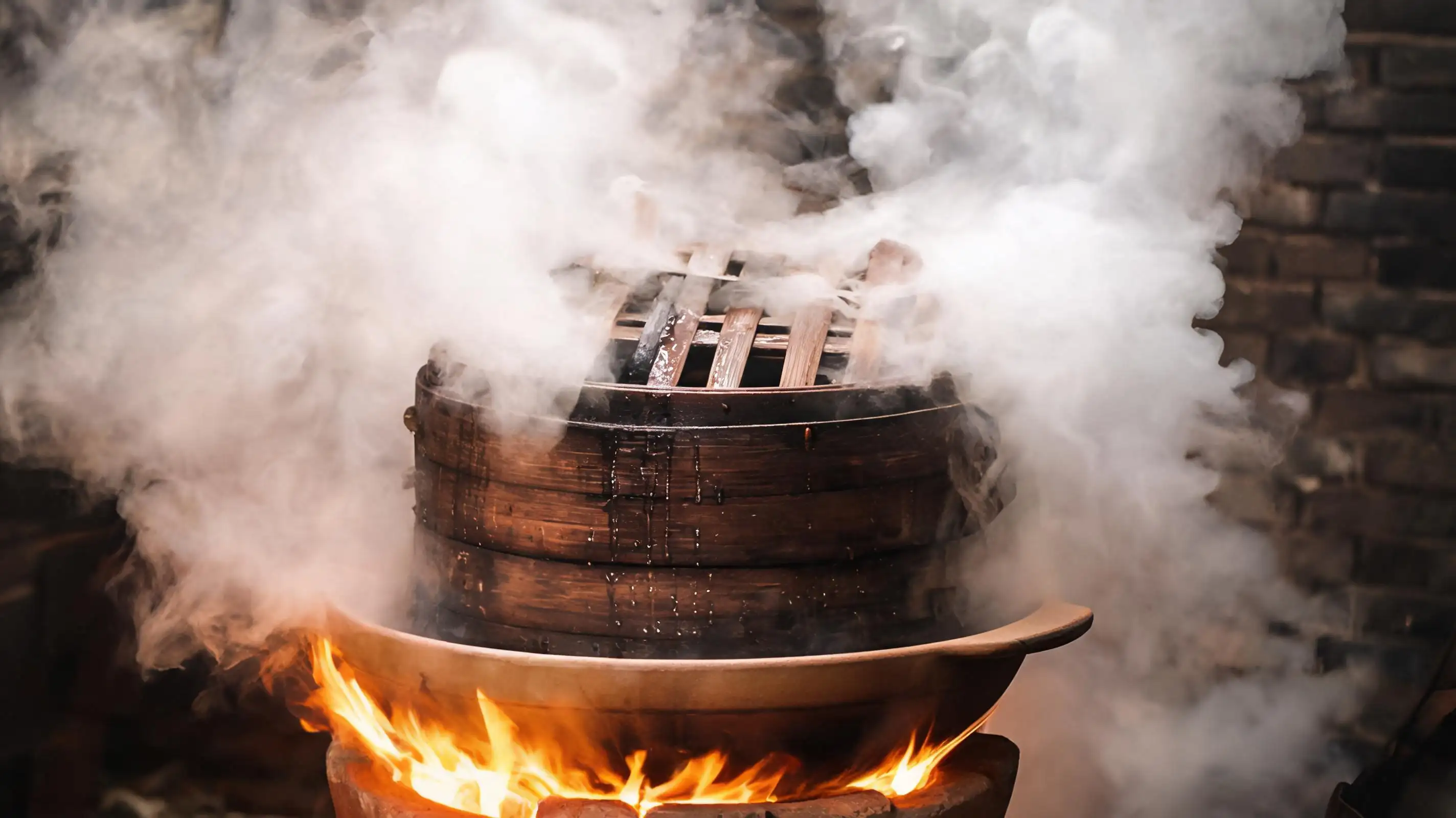
The steamer goes over a pot of already-boiling water and stays there for forty minutes, lid undisturbed. At forty minutes, a chopstick pressed through the top should meet light, uniform resistance throughout. No resistance means the rice has gone too soft and won't hold its shape under the press.
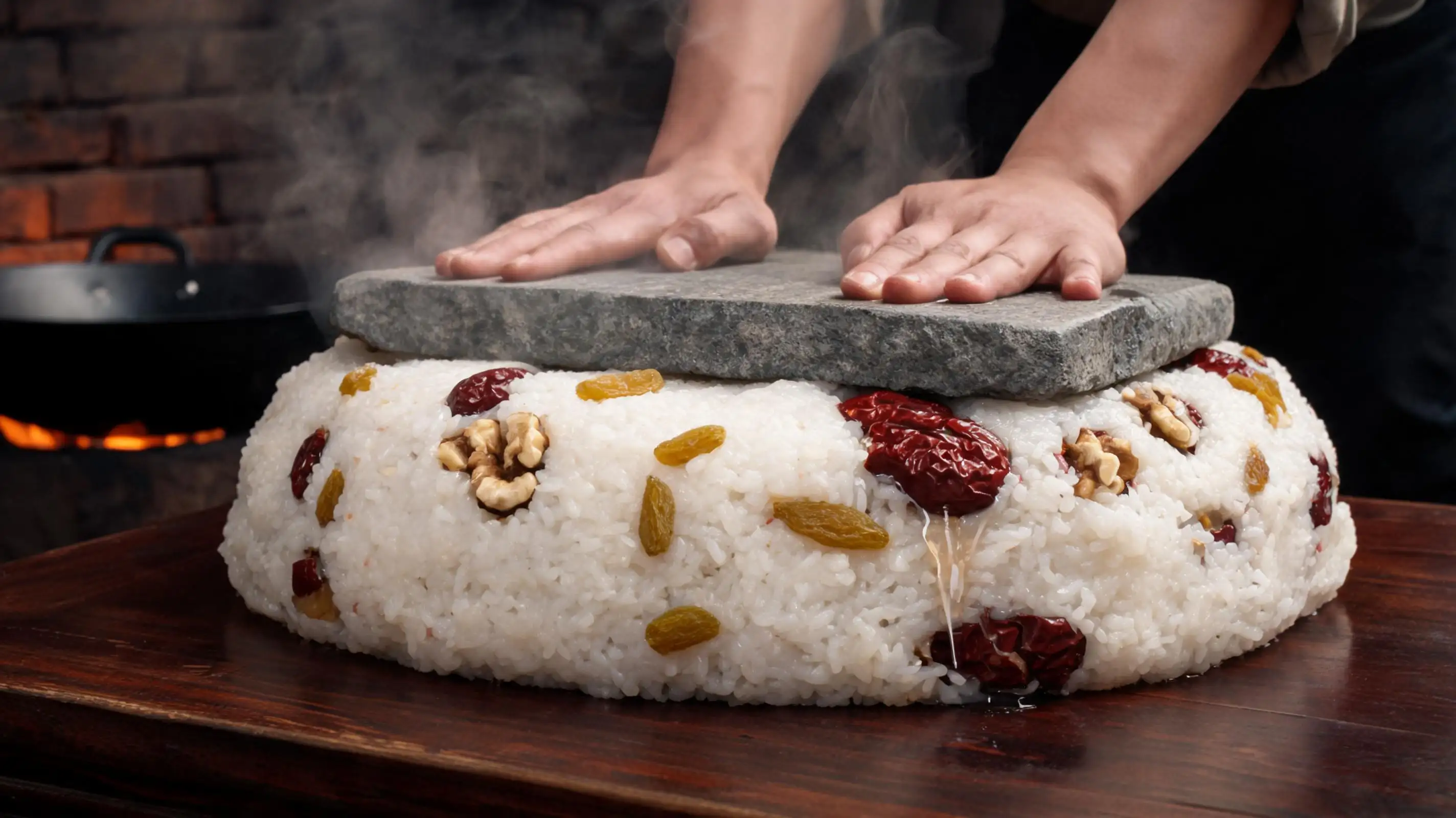
The block comes out while still hot. Turned onto a heavy board, cheesecloth lifted away, a stone slab is laid across the top. Both hands press down — full body weight, steady — for three minutes. Steam escapes from the edges. Date syrup runs thin and dark down the white sides. The stone is then left to rest on top while the block cools completely, undisturbed, for at least four hours. The compression is permanent only if it happens while the rice is still hot.
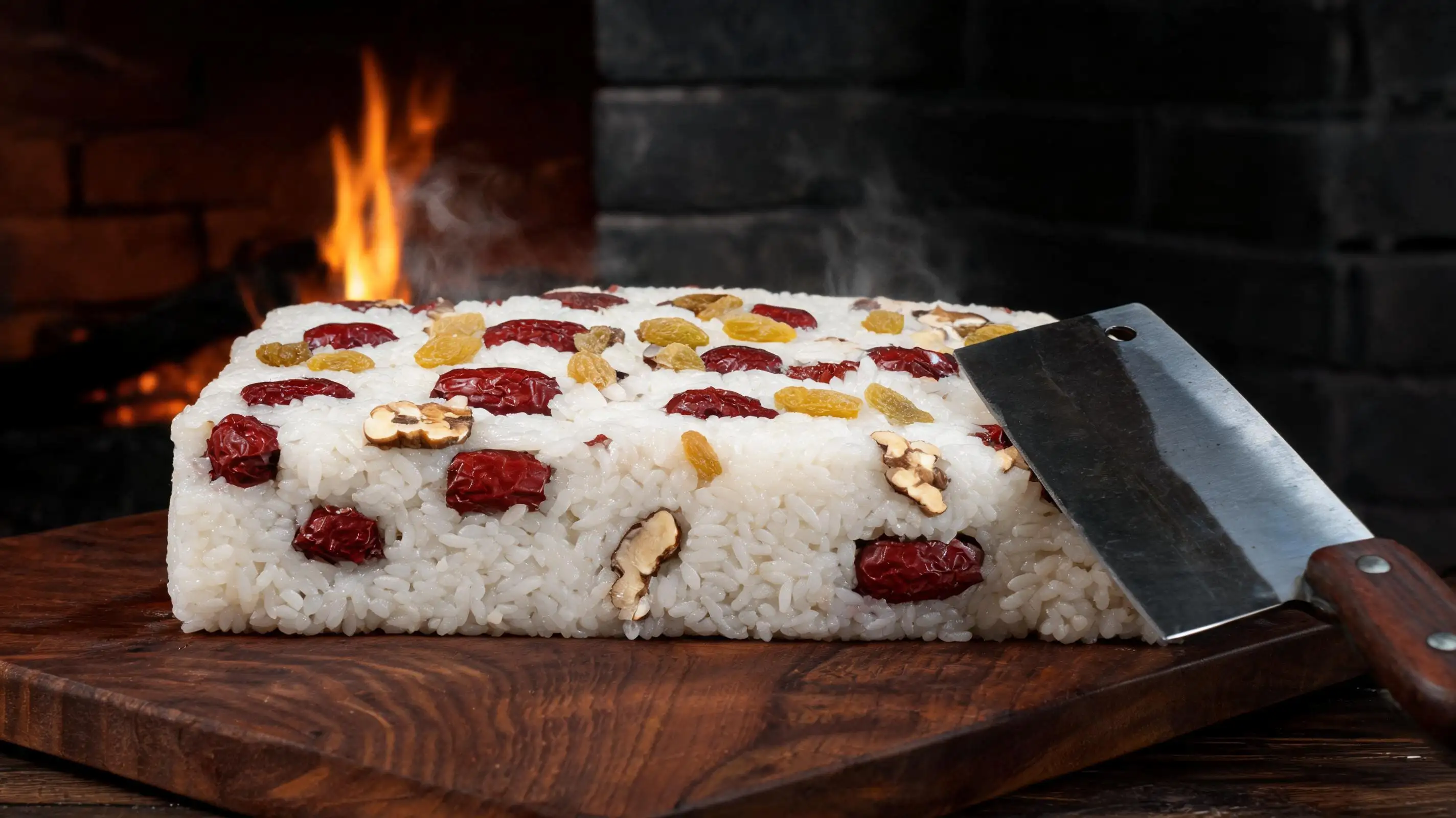
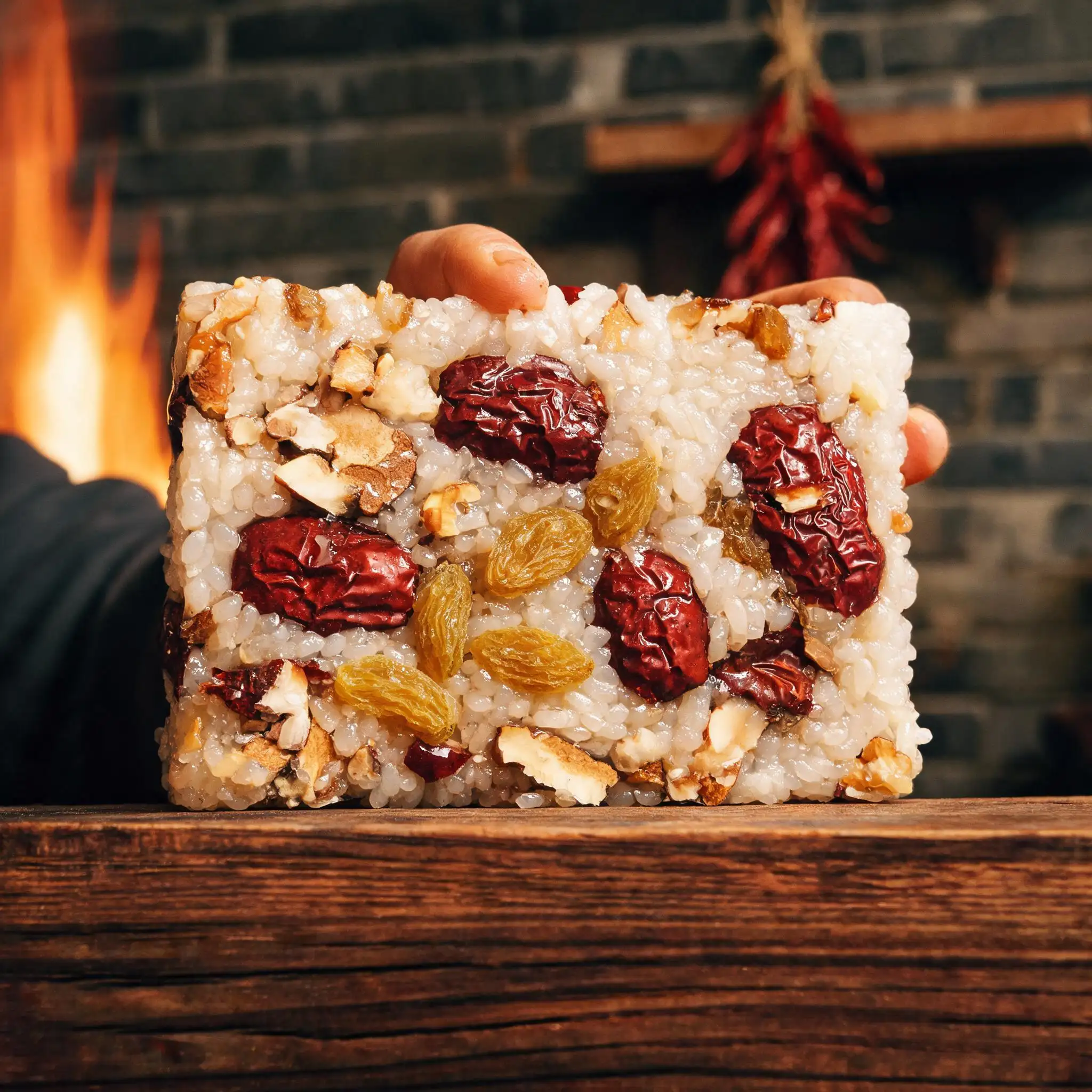
After four hours, the block holds its shape entirely — flat top, straight sides, cream-white rice with crimson date flesh and amber raisins pressed through to the surface in irregular clusters. It weighs more than expected. That weight is the point. A properly made block of this size should feel close to a kilogram in both hands. Light means under-pressed.
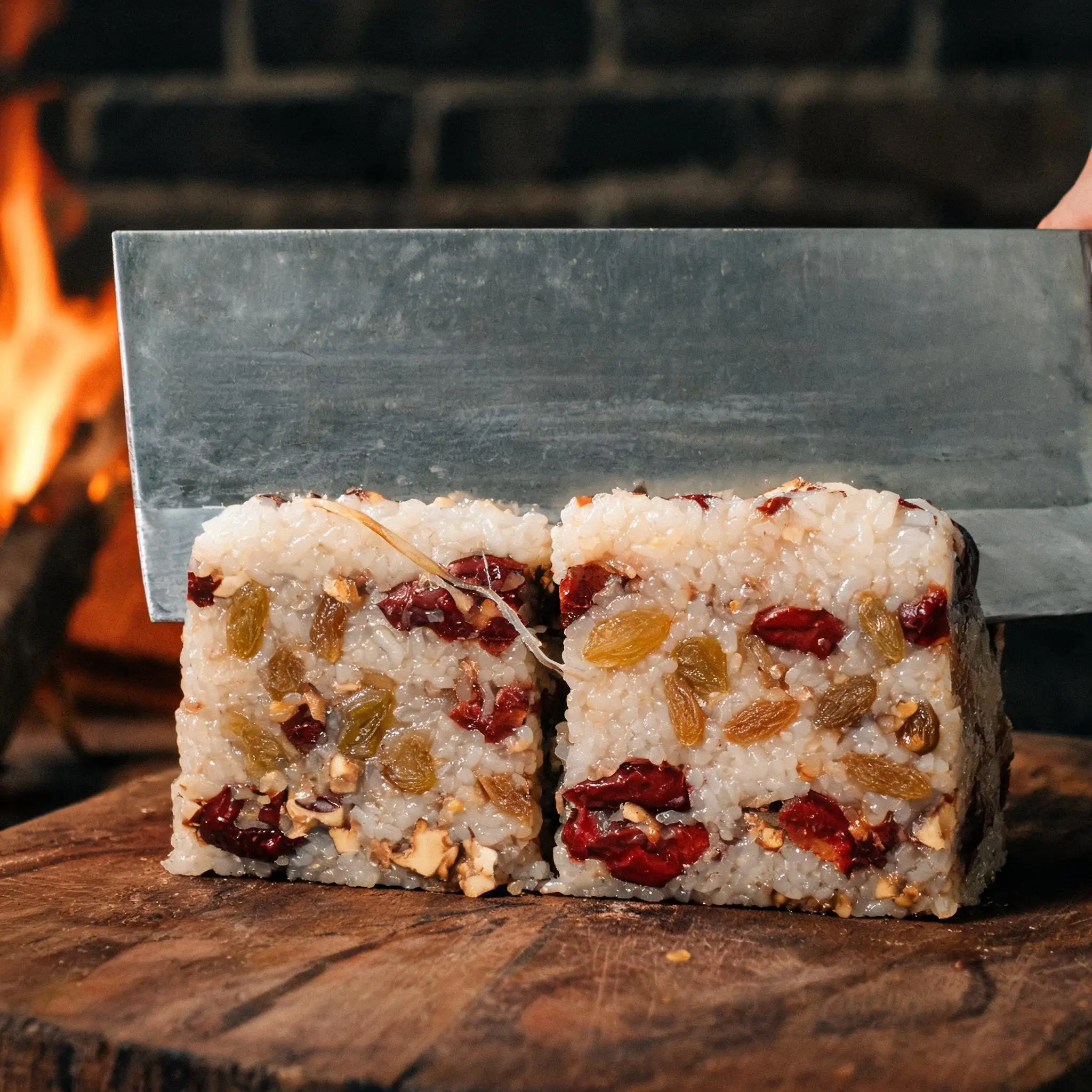
A wide cleaver cuts it — one clean stroke, perpendicular to the board. The cut face opens: compressed white rice as the matrix, deep red date pieces embedded throughout, clusters of raisins, pale walnut fragments scattered between. A fine thread of stickiness stretches between the two halves before snapping.
Slices are served at room temperature. Cold turns the rice waxy and thick on the tongue. Heat makes everything sticky and formless. Room temperature is the only version that actually works.
The name translates roughly as "cut cake." It comes from the northwest, sold by weight from large pressed blocks at outdoor markets — a vendor cutting portions to order with a cleaver or a wire pulled tight across the surface. The weight of the block was historically a source of dispute: buyers accused sellers of embedding stones inside to inflate the measurement. Whether this was common practice or legend is unclear. The weight is real regardless.
---
**Ingredients**
Glutinous rice — short-grain variety, soaked overnight in cold water until each grain swells and the water runs cloudy with released starch
Large dried red dates — pitted and split open lengthwise, the flesh exposed; the large kind, where the sweetness has concentrated and the skin wrinkles tight around the core
Golden raisins — plump, the golden variety, left whole
Walnut halves — broken roughly into large chunks, large enough to find and bite into in the finished block
Rose jam — a small amount, for spreading between the layers
Sugar — white
---
**How it's made**
The rice goes into cold water the night before. It sits submerged for eight hours, absorbing slowly, each grain swelling to about a third larger than it started. By morning the water is milky white from the starch. The soaked grains should yield with almost no resistance when pressed between two fingers. Under-soaked rice won't compress properly — the interior stays grainy no matter how long it steams.
The dates are split open along the natural seam and the stone pulled out. Each date is pressed flat into two halves, flesh side up. Left whole, even a pitted date steams unevenly — the center stays tough while the edges soften. Halved, the flesh caramelizes and bleeds into the surrounding rice. The walnuts are cracked into rough pieces, two or three breaks per half.
A bamboo steamer is lined with dampened cheesecloth, the edges draped over the sides for lifting later. The soaked rice is drained and pressed into layers — about two centimeters of rice pressed flat with a wet palm, then a scattering of dates, raisins, walnuts, and a thin smear of rose jam across the surface. Another layer of rice, another layer of fruit. Three rice layers, two fruit layers in between.
The steamer goes over a pot of already-boiling water and stays there for forty minutes, lid undisturbed. At forty minutes, a chopstick pressed through the top should meet light, uniform resistance throughout. No resistance means the rice has gone too soft and won't hold its shape under the press.
The block comes out while still hot. Turned onto a heavy board, cheesecloth lifted away, a stone slab is laid across the top. Both hands press down — full body weight, steady — for three minutes. Steam escapes from the edges. Date syrup runs thin and dark down the white sides. The stone is then left to rest on top while the block cools completely, undisturbed, for at least four hours. The compression is permanent only if it happens while the rice is still hot.
After four hours, the block holds its shape entirely — flat top, straight sides, cream-white rice with crimson date flesh and amber raisins pressed through to the surface in irregular clusters. It weighs more than expected. That weight is the point. A properly made block of this size should feel close to a kilogram in both hands. Light means under-pressed.
A wide cleaver cuts it — one clean stroke, perpendicular to the board. The cut face opens: compressed white rice as the matrix, deep red date pieces embedded throughout, clusters of raisins, pale walnut fragments scattered between. A fine thread of stickiness stretches between the two halves before snapping.
Slices are served at room temperature. Cold turns the rice waxy and thick on the tongue. Heat makes everything sticky and formless. Room temperature is the only version that actually works.
The name translates roughly as "cut cake." It comes from the northwest, sold by weight from large pressed blocks at outdoor markets — a vendor cutting portions to order with a cleaver or a wire pulled tight across the surface. The weight of the block was historically a source of dispute: buyers accused sellers of embedding stones inside to inflate the measurement. Whether this was common practice or legend is unclear. The weight is real regardless.