·5/25/2026
from
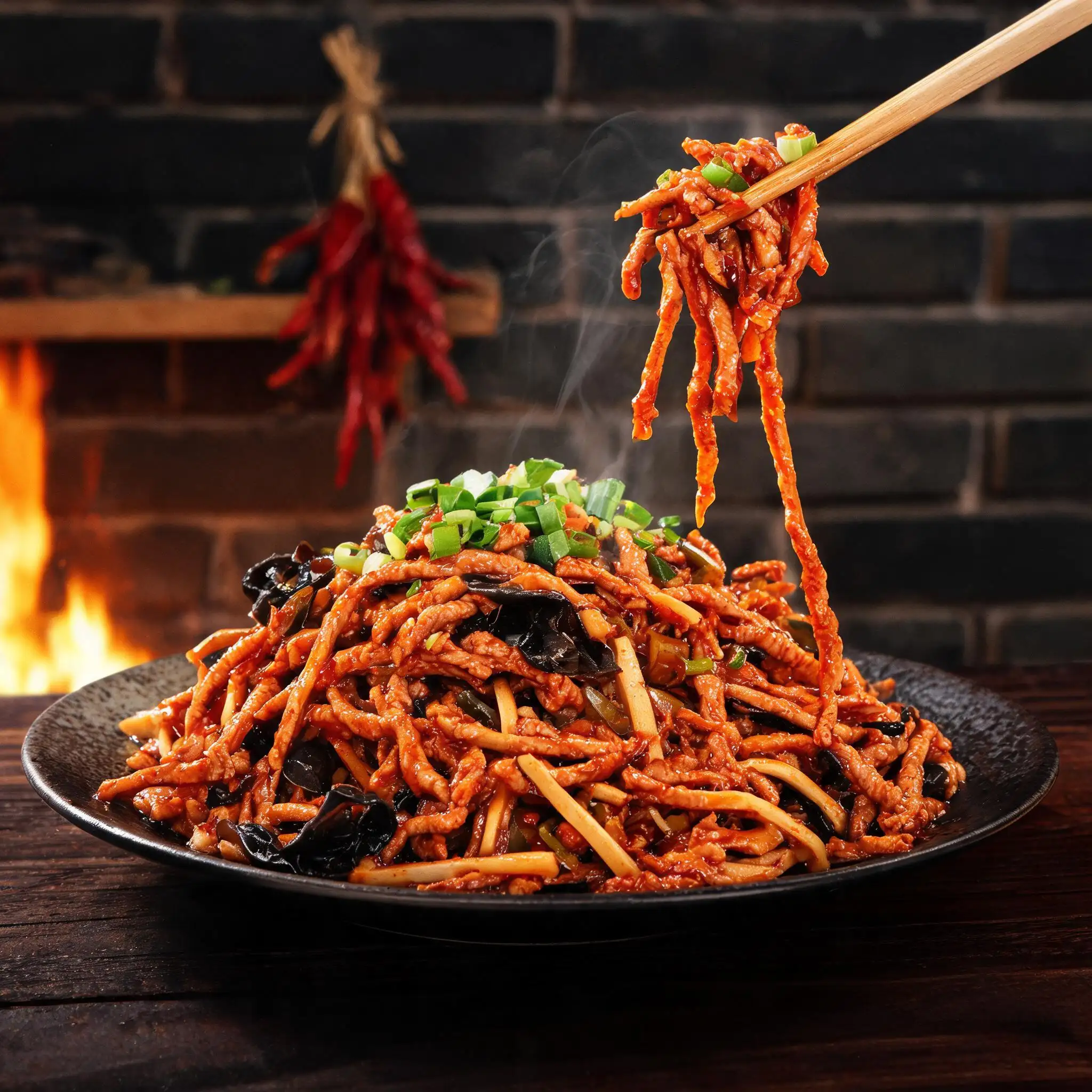
Fish-Fragrant Shredded Pork
**Fish-Fragrant Shredded Pork** *(鱼香肉丝)*
---
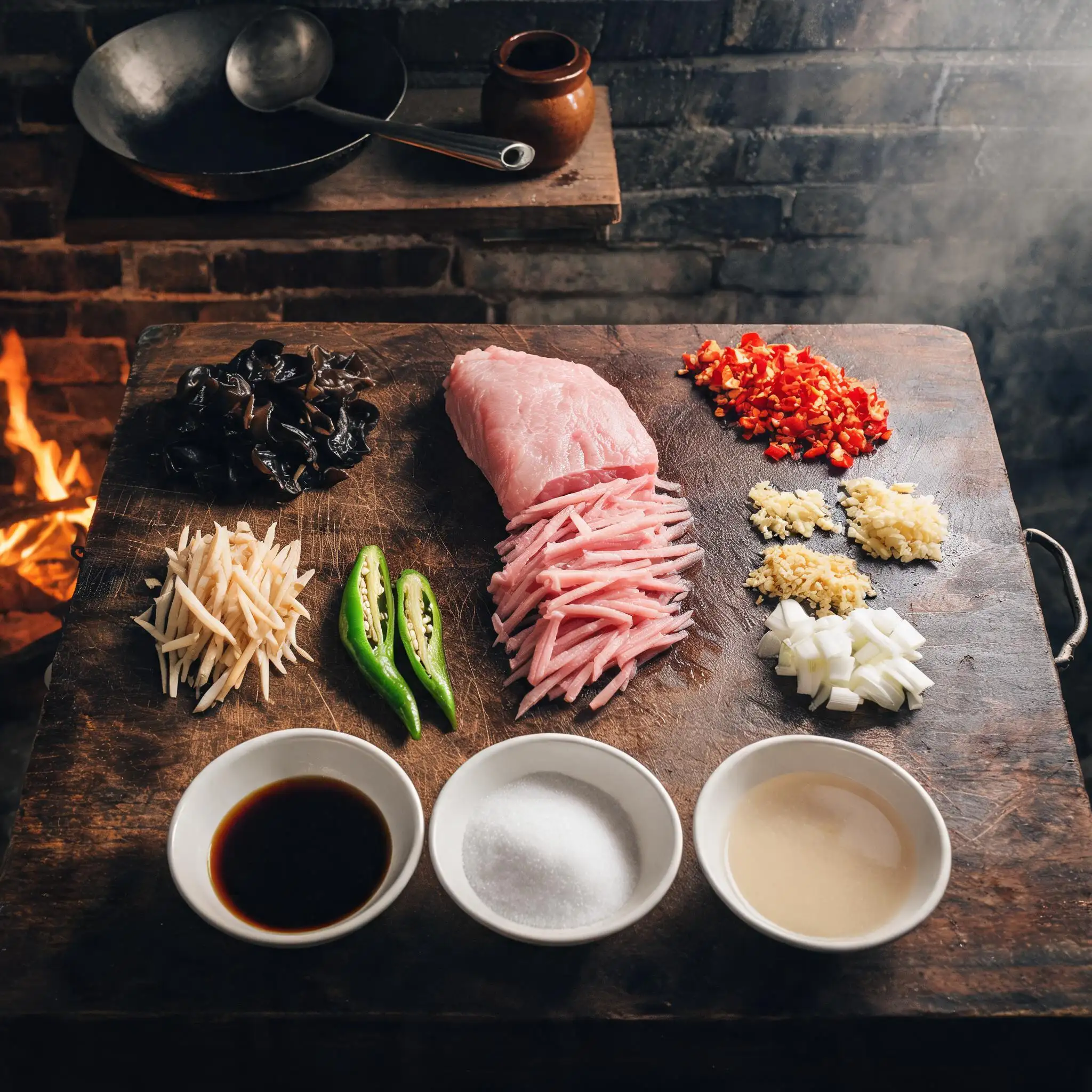
**Ingredients**
Pork tenderloin — one piece, trimmed of any sinew
Dried black wood ear fungus — soaked in cold water until soft and supple, then torn into bite-sized pieces
Bamboo shoots — julienned to match the pork, pale and firm
Green chilies — two, split and cut into strips
Pickled red chilies (泡椒) — rough-chopped, the brine reserved
Garlic — minced fine
Fresh ginger — minced fine
Scallions — the white parts minced for the wok, the green parts chopped for the finish
Egg white and potato starch — for the marinade
Shaoxing rice wine — a splash for the pork
For the sauce bowl:
Light soy sauce, aged black vinegar, white sugar, potato starch mixed with cold water —
combined in a single bowl before anything touches the heat
---
**How it's made**
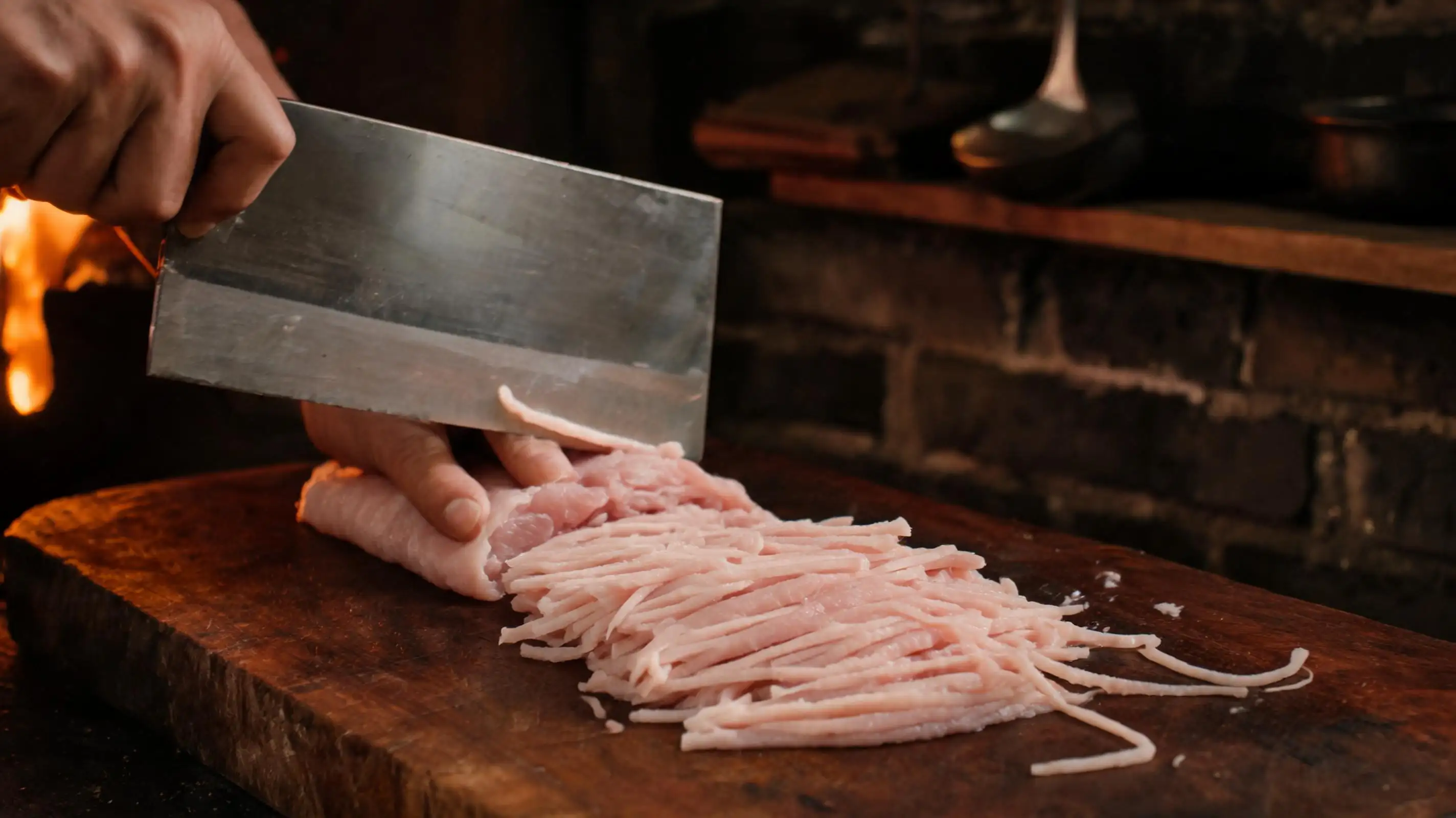
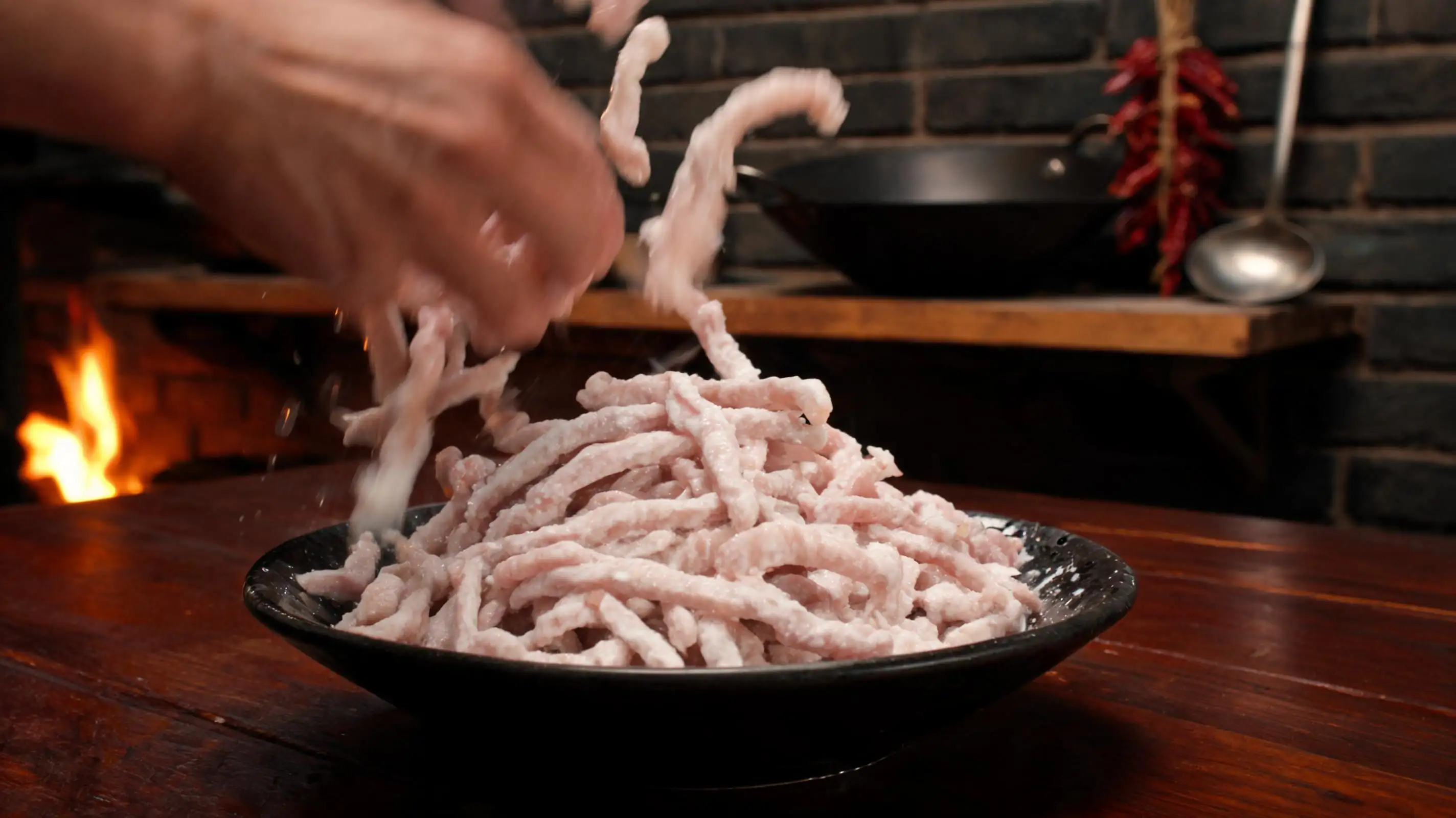
The pork goes in the freezer for twenty minutes until it firms up slightly. Then it's sliced thin against the grain and cut again into long, even strips — each one about the width of a wooden matchstick and as long as a finger. The strips are tossed with egg white, potato starch, a pour of Shaoxing wine, and a pinch of salt, and left to sit while everything else is prepared.
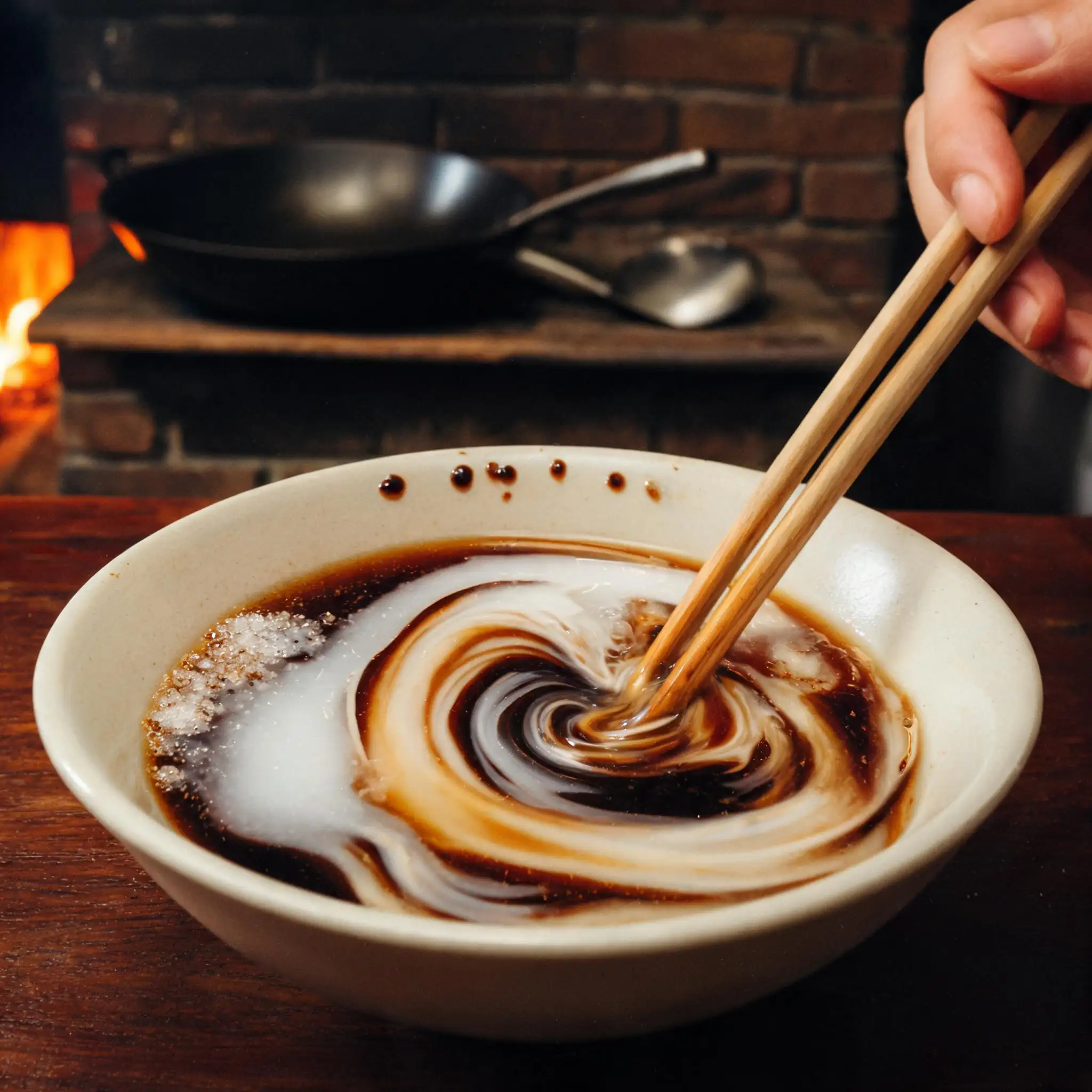
The sauce bowl is mixed: soy sauce, black vinegar, sugar, and starch water stirred together until the sugar dissolves. The ratio is important. There should be a clear sourness from the vinegar, a round sweetness from the sugar, salt from the soy, and enough starch to thicken the sauce the moment it hits the wok. The bowl is set aside within reach.
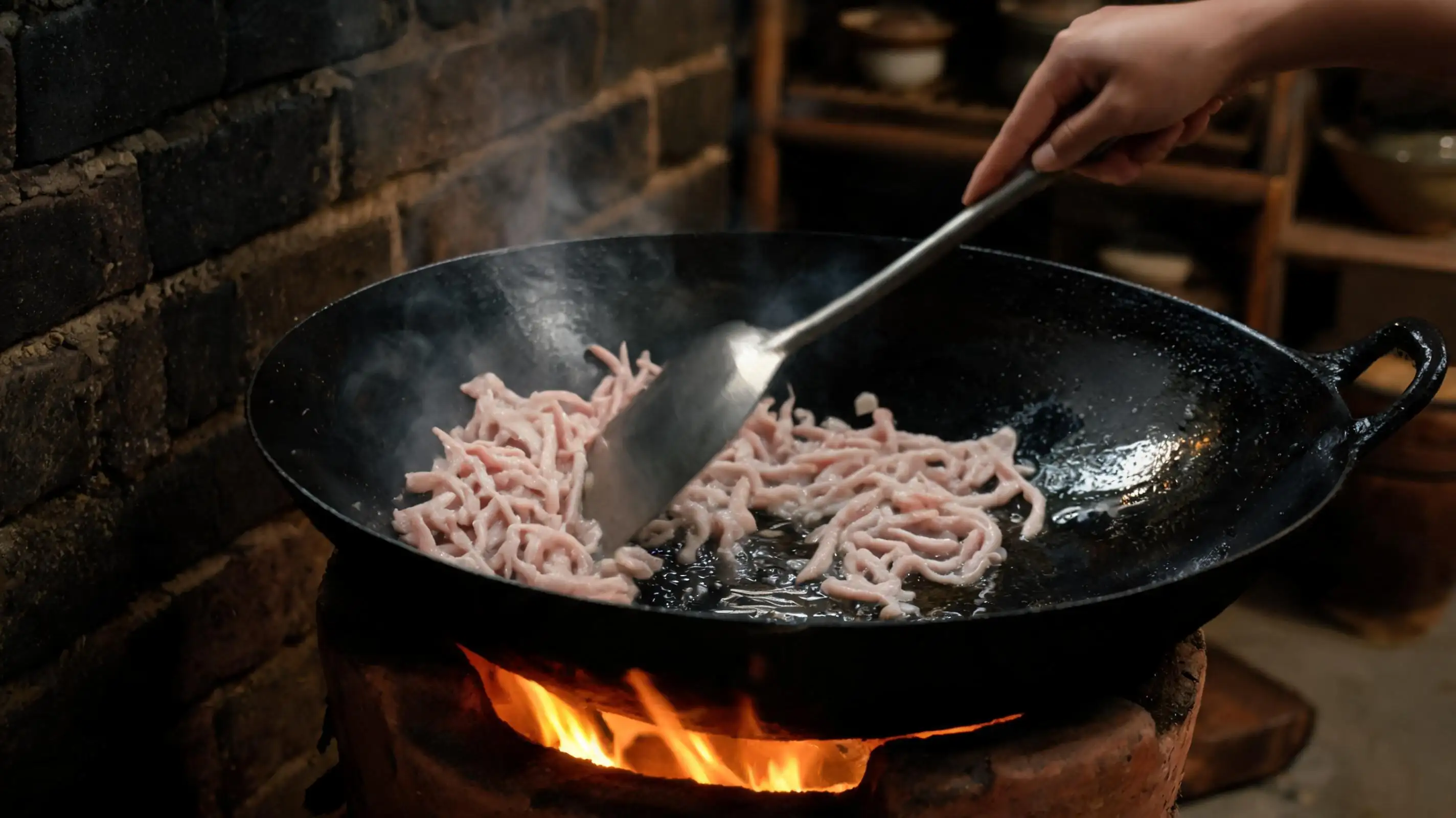
A wok goes over high heat. Oil goes in. When the oil is hot but not smoking, the pork strips go in and are spread quickly across the surface with a spatula. They cook for about thirty seconds — just until opaque, still tender, not yet coloured. They come out of the wok immediately.
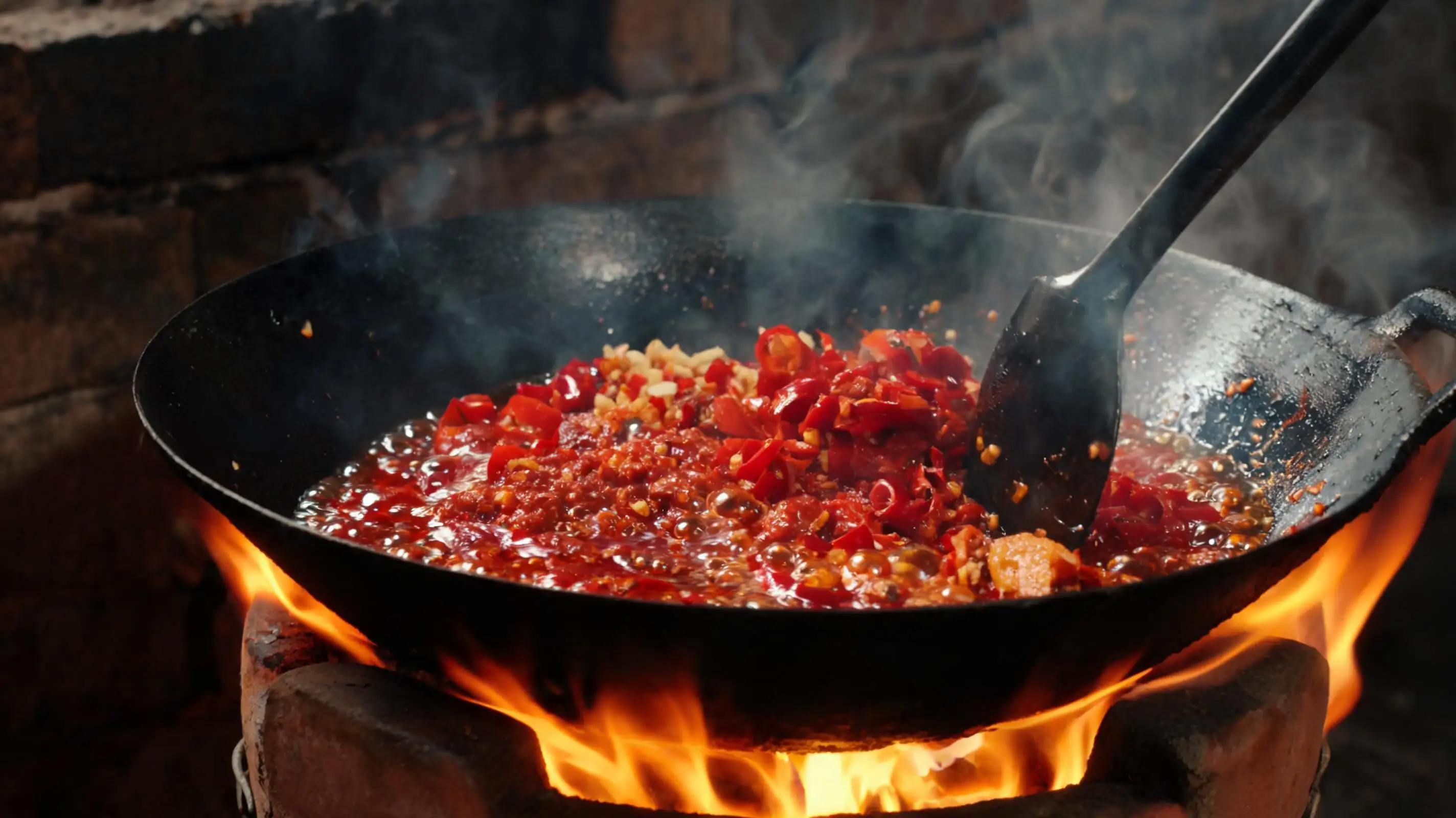
The wok goes back on the heat. A little more oil. The chopped pickled chilies go in first, pressing and stirring until the oil turns a deep, saturated red. Then the minced garlic, ginger, and scallion whites go in together — the smell that comes up is sharp and particular, fragrant from the garlic, hot from the chili, with a faint sourness from the pickling brine.
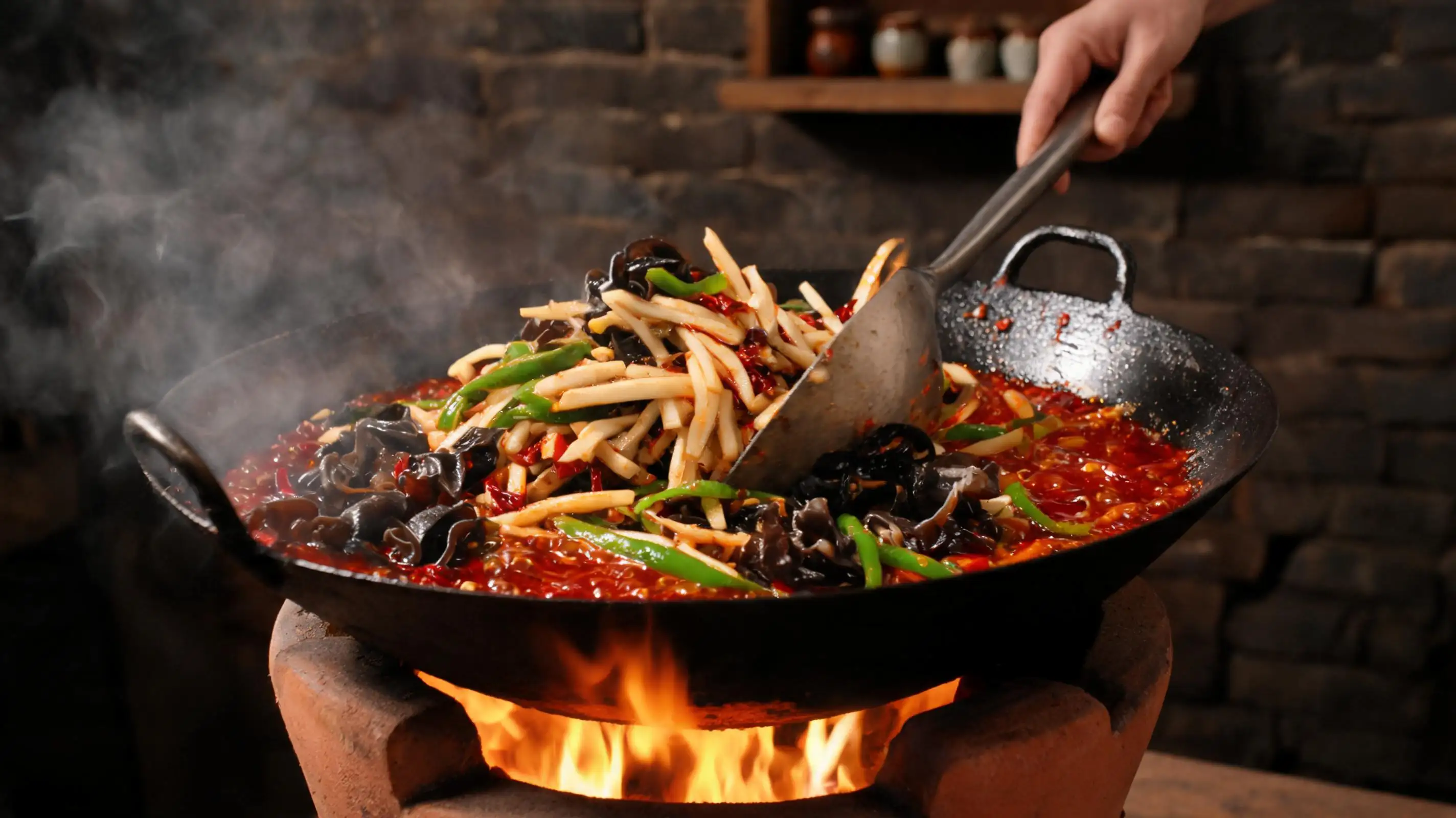
The wood ear fungus, bamboo shoots, and green chili strips go in next, tossed through the red oil base until everything is coated and hot.
The pork goes back in. Everything is folded together quickly.
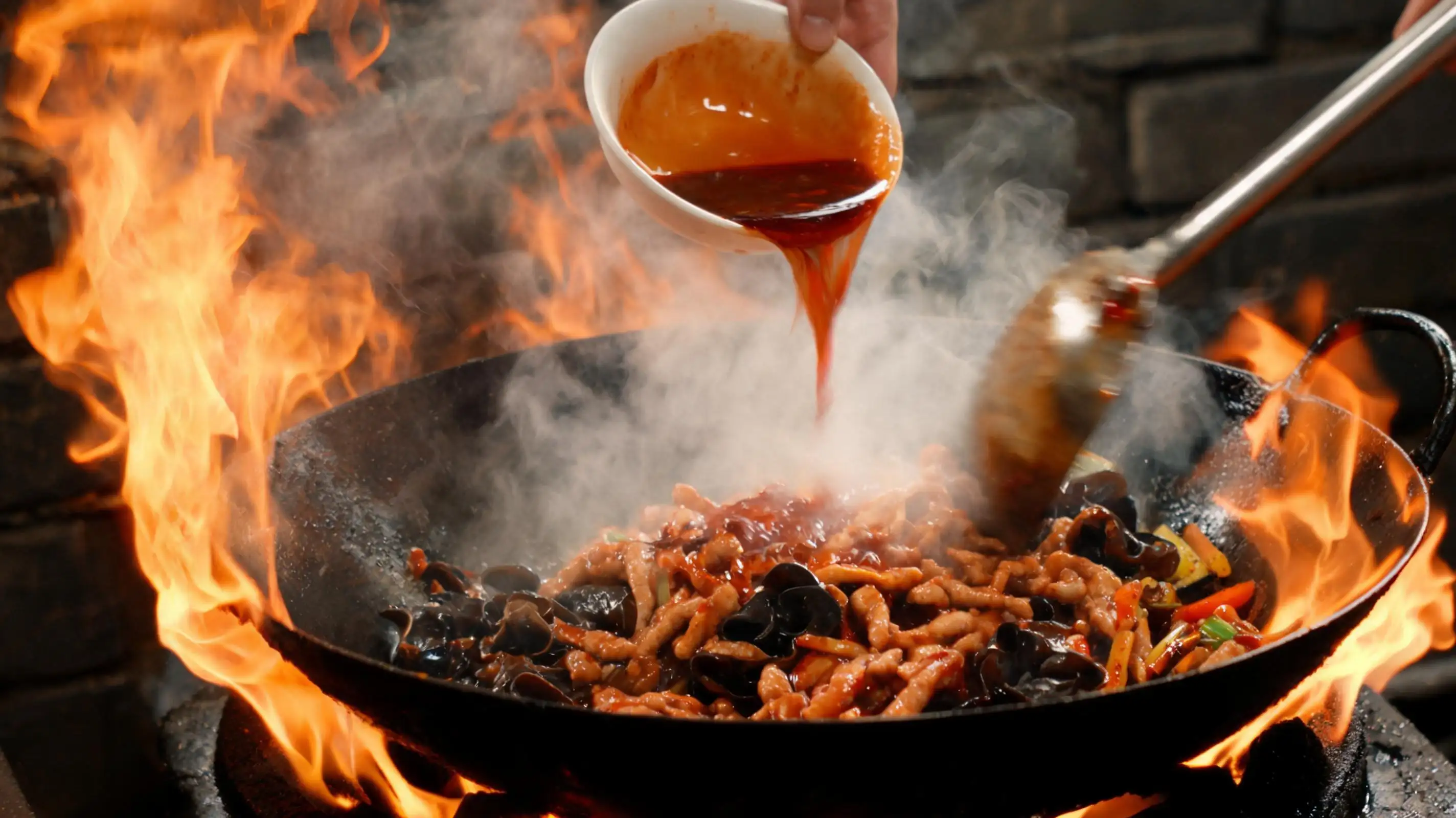
The sauce bowl is poured in from the side of the wok. It hits the heat and thickens almost instantly — the starch cooking through in seconds, the sauce pulling tight around every strand of meat and every piece of fungus, turning the whole wok contents glossy and brick-red. A few quick folds with the spatula to coat everything evenly.
Off the heat. A few drops of sesame oil. The green scallion tops go on at the end, bright against the dark sauce.
The dish has no fish in it and never has. The name refers to the flavour profile — the combination of pickled chili, garlic, ginger, vinegar, and sugar that was traditionally used to cook freshwater fish in Sichuan. At some point cooks began applying the same sauce to pork, to eggplant, to anything they wanted to carry that particular balance of hot, sour, sweet, and savoury. The name stuck. The fish stayed out.
---
**Ingredients**
Pork tenderloin — one piece, trimmed of any sinew
Dried black wood ear fungus — soaked in cold water until soft and supple, then torn into bite-sized pieces
Bamboo shoots — julienned to match the pork, pale and firm
Green chilies — two, split and cut into strips
Pickled red chilies (泡椒) — rough-chopped, the brine reserved
Garlic — minced fine
Fresh ginger — minced fine
Scallions — the white parts minced for the wok, the green parts chopped for the finish
Egg white and potato starch — for the marinade
Shaoxing rice wine — a splash for the pork
For the sauce bowl:
Light soy sauce, aged black vinegar, white sugar, potato starch mixed with cold water —
combined in a single bowl before anything touches the heat
---
**How it's made**
The pork goes in the freezer for twenty minutes until it firms up slightly. Then it's sliced thin against the grain and cut again into long, even strips — each one about the width of a wooden matchstick and as long as a finger. The strips are tossed with egg white, potato starch, a pour of Shaoxing wine, and a pinch of salt, and left to sit while everything else is prepared.
The sauce bowl is mixed: soy sauce, black vinegar, sugar, and starch water stirred together until the sugar dissolves. The ratio is important. There should be a clear sourness from the vinegar, a round sweetness from the sugar, salt from the soy, and enough starch to thicken the sauce the moment it hits the wok. The bowl is set aside within reach.
A wok goes over high heat. Oil goes in. When the oil is hot but not smoking, the pork strips go in and are spread quickly across the surface with a spatula. They cook for about thirty seconds — just until opaque, still tender, not yet coloured. They come out of the wok immediately.
The wok goes back on the heat. A little more oil. The chopped pickled chilies go in first, pressing and stirring until the oil turns a deep, saturated red. Then the minced garlic, ginger, and scallion whites go in together — the smell that comes up is sharp and particular, fragrant from the garlic, hot from the chili, with a faint sourness from the pickling brine.
The wood ear fungus, bamboo shoots, and green chili strips go in next, tossed through the red oil base until everything is coated and hot.
The pork goes back in. Everything is folded together quickly.
The sauce bowl is poured in from the side of the wok. It hits the heat and thickens almost instantly — the starch cooking through in seconds, the sauce pulling tight around every strand of meat and every piece of fungus, turning the whole wok contents glossy and brick-red. A few quick folds with the spatula to coat everything evenly.
Off the heat. A few drops of sesame oil. The green scallion tops go on at the end, bright against the dark sauce.
The dish has no fish in it and never has. The name refers to the flavour profile — the combination of pickled chili, garlic, ginger, vinegar, and sugar that was traditionally used to cook freshwater fish in Sichuan. At some point cooks began applying the same sauce to pork, to eggplant, to anything they wanted to carry that particular balance of hot, sour, sweet, and savoury. The name stuck. The fish stayed out.