·5/22/2026
from
Flash-Fried Pork Kidneys
**Flash-Fried Pork Kidneys** *(爆炒腰花)*
---
**Ingredients**
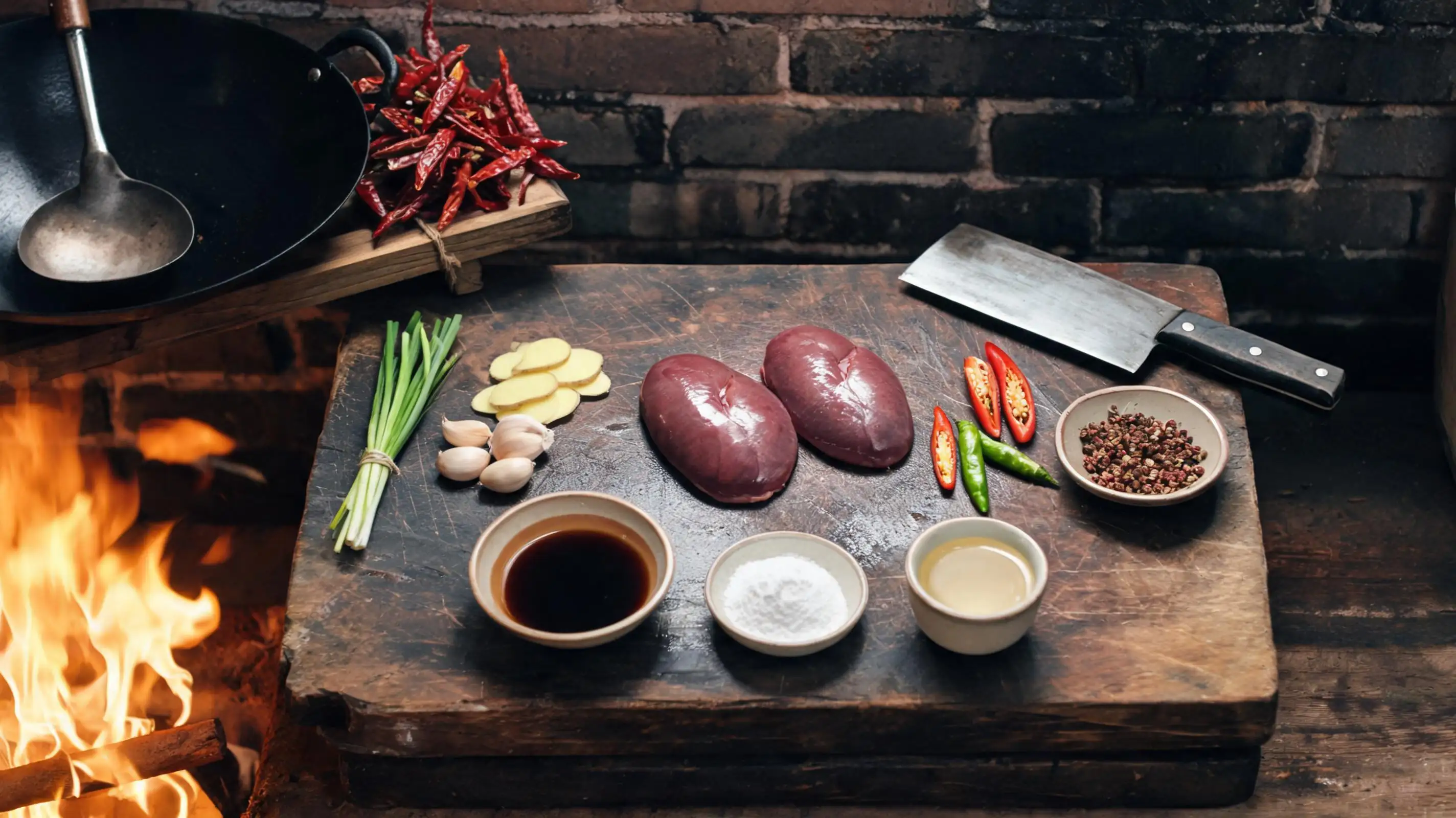
Pork kidneys — two whole, fresh, the membrane trimmed clean
Shaoxing rice wine — a generous pour for the soak and the marinade
Fresh ginger — sliced thin, used in both the water and the wok
Garlic — smashed flat, several cloves
Green chilies — split lengthwise, seeds in
Red chilies — same, for color against the green
Sichuan peppercorns — a small pinch for the wok
Scallions — cut into short lengths, the green parts for the finish
Light soy sauce and oyster sauce — mixed together into a sauce bowl before you start
Potato starch — to coat the kidney pieces before they go in
Sesame oil — a few drops at the very end
---
**How it's made**
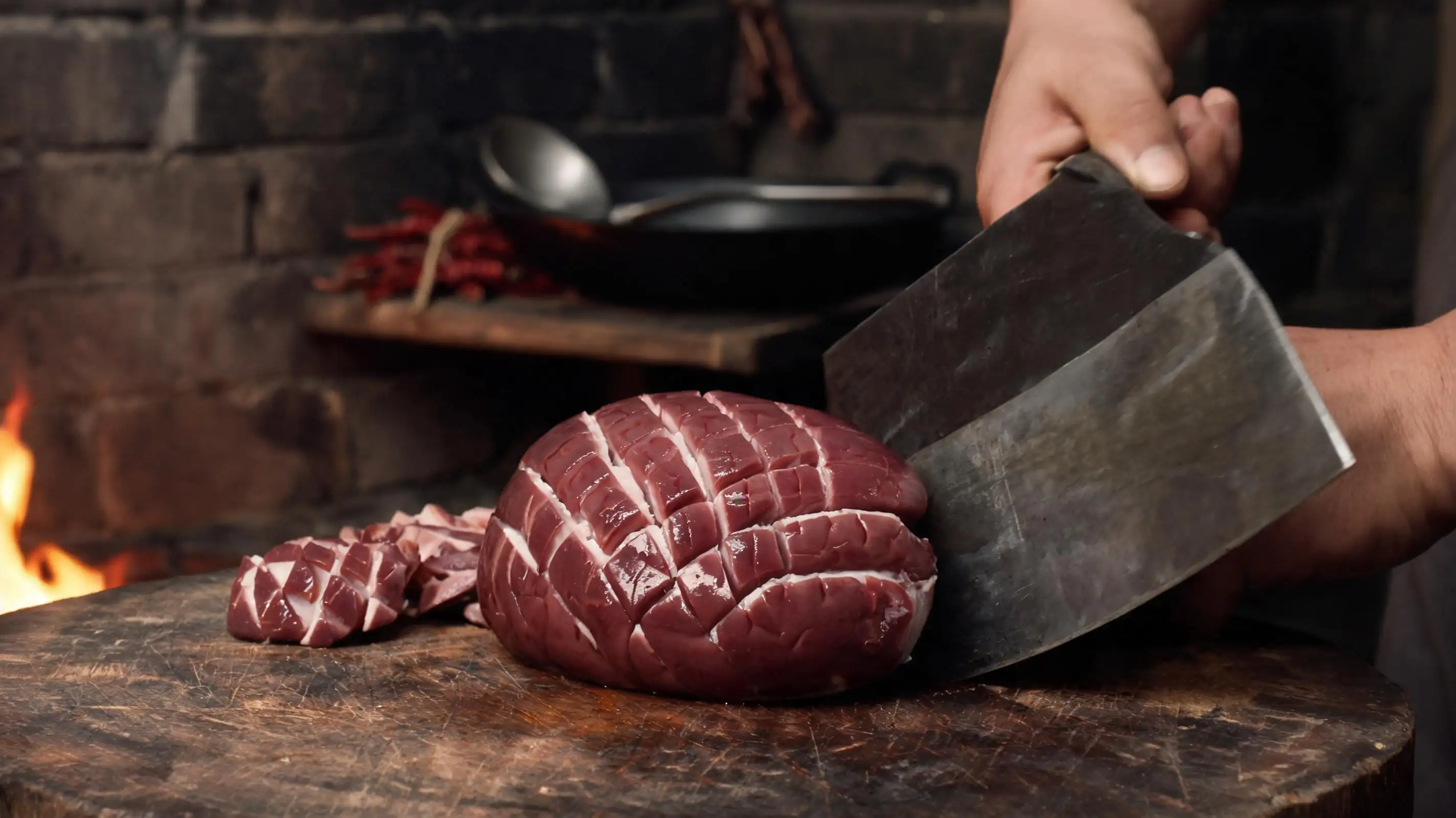
A cross-hatch is cut into each kidney half — parallel lines in one direction, then parallel lines across at an angle, the blade going deep but not all the way through. When the piece is finished it looks almost like the surface of a pine cone, tight and geometric. Each half is then cut into smaller pieces following the score lines.
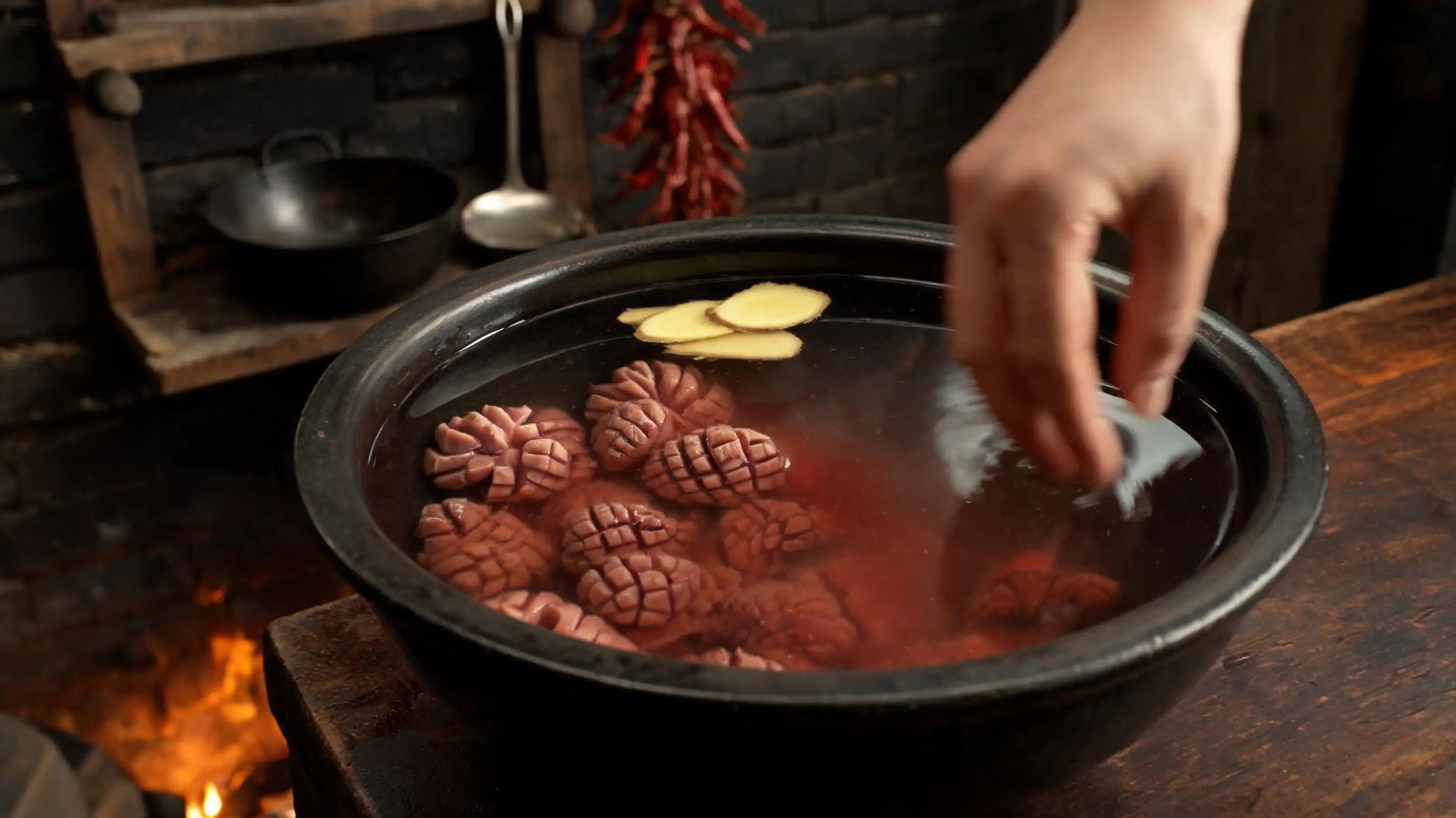
The pieces go into cold water with ginger and a pour of Shaoxing wine. The water goes dark and reddish-brown as the blood draws out. You change it once. The kidneys come out pale and clean.
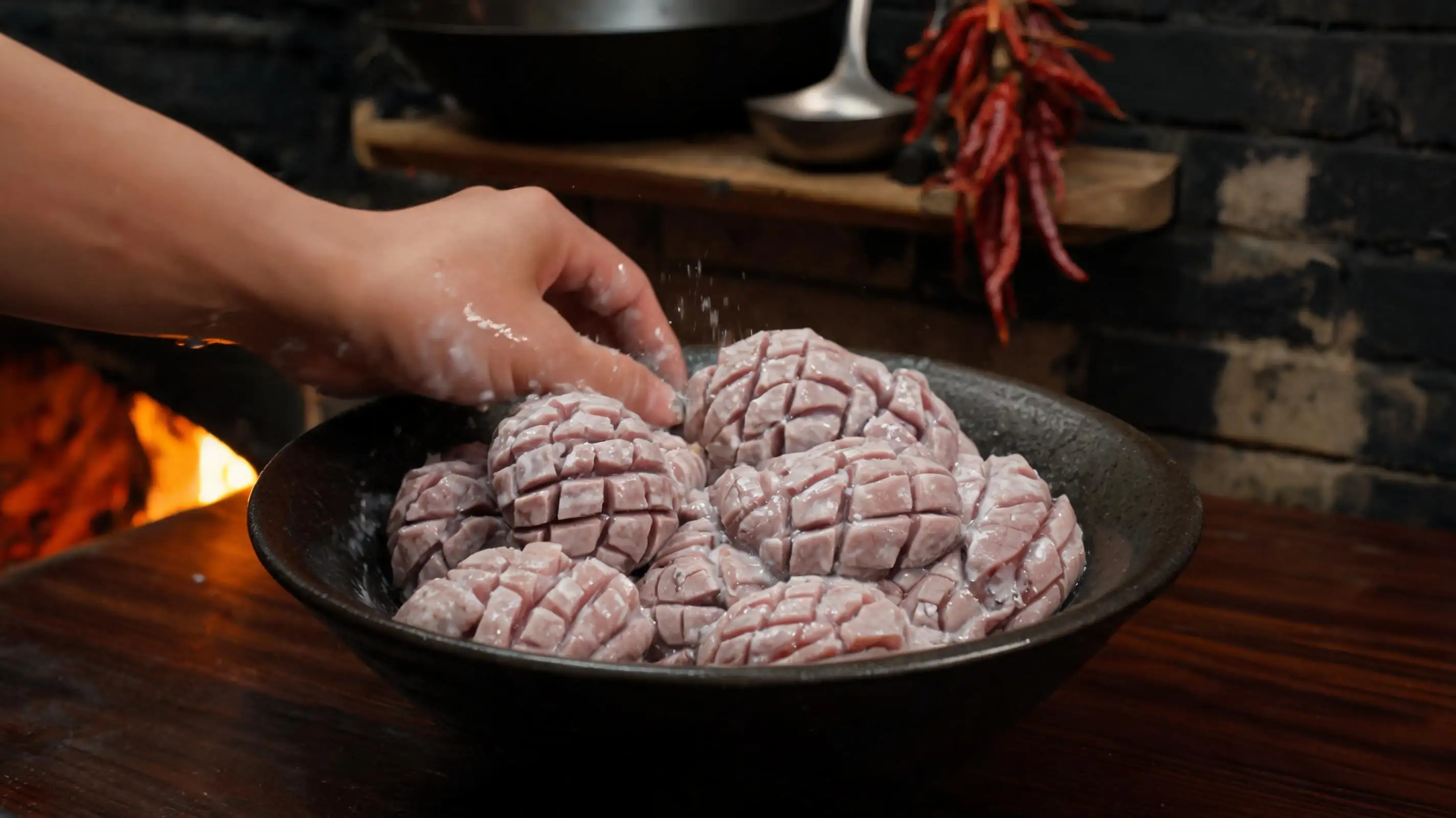
A dusting of potato starch, a splash of wine, a pinch of ginger juice. The pieces are tossed until the starch coats every groove of the cross-hatch.
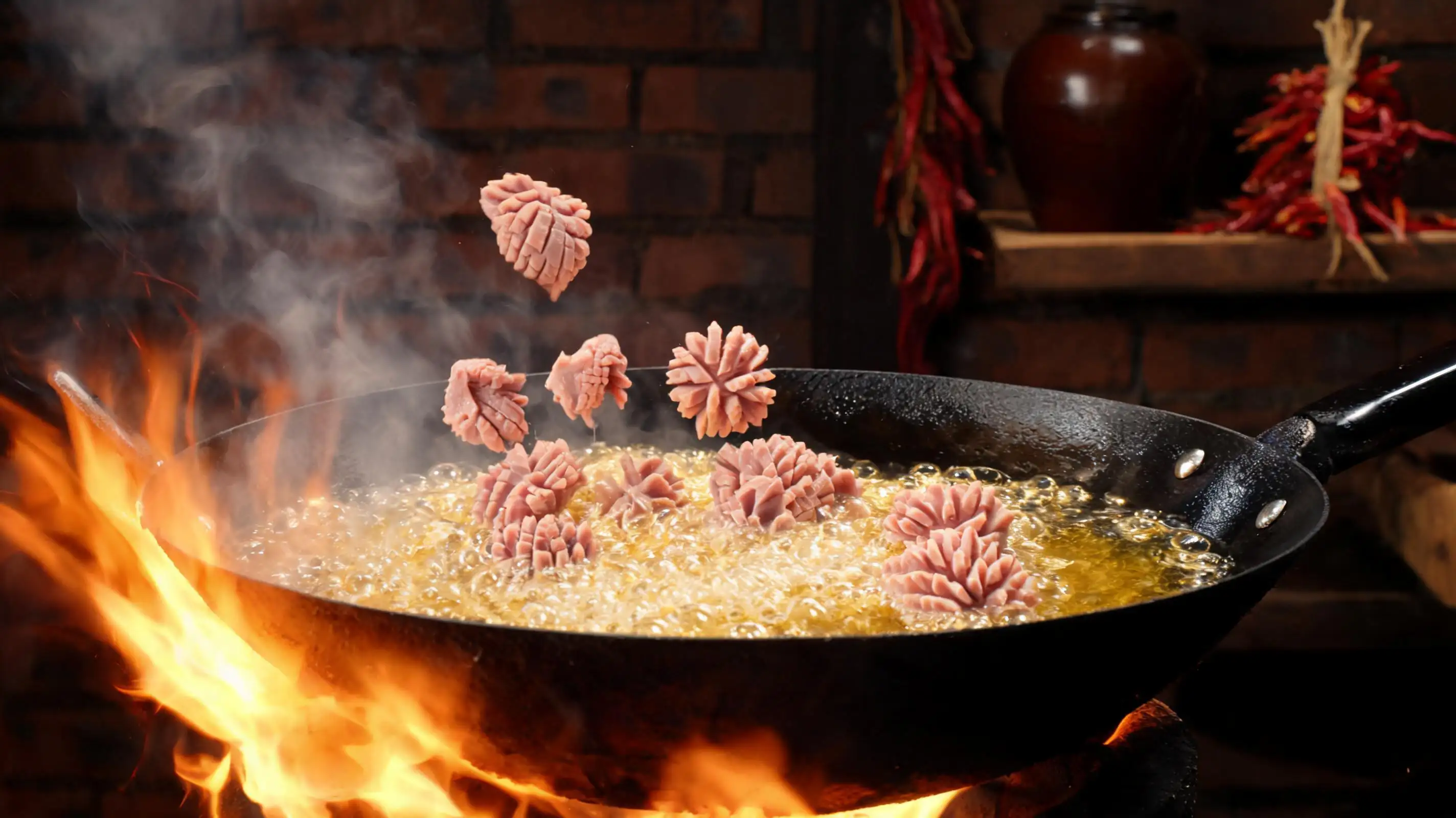
The oil goes in the wok over the highest flame available. When the surface of the oil begins to shimmer and move, the kidney pieces go in — one hit of heat and each piece curls open immediately, the score lines pulling apart as the meat contracts, turning each piece into a small open flower. They bloom in the oil within seconds. They come straight back out.
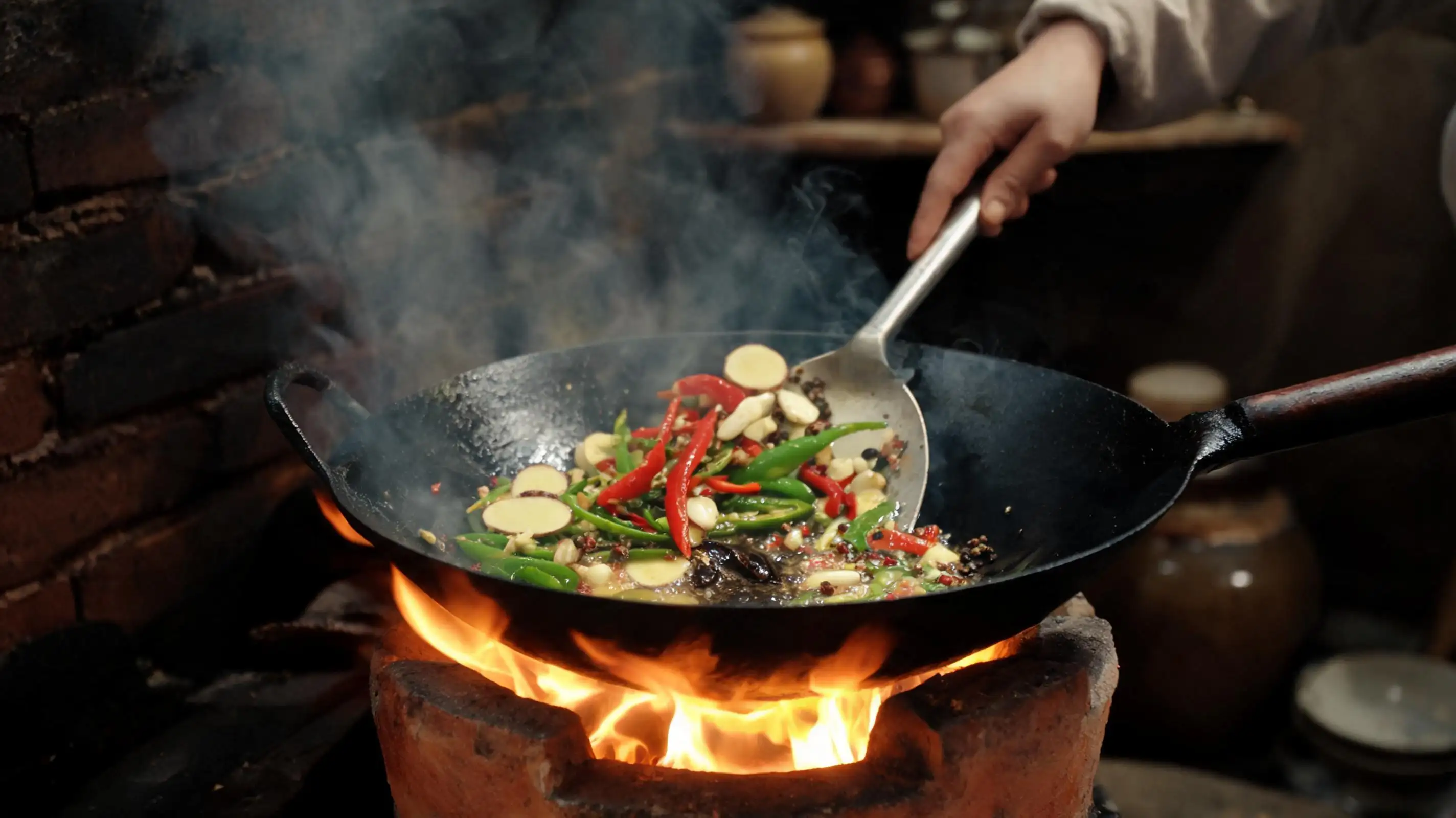
Ginger, garlic, green and red chili, and Sichuan peppercorns go into the same hot wok with a thin film of oil. The smell comes up sharp and immediate, the green chili catching the heat and turning bright. Then the kidney flowers go back in.
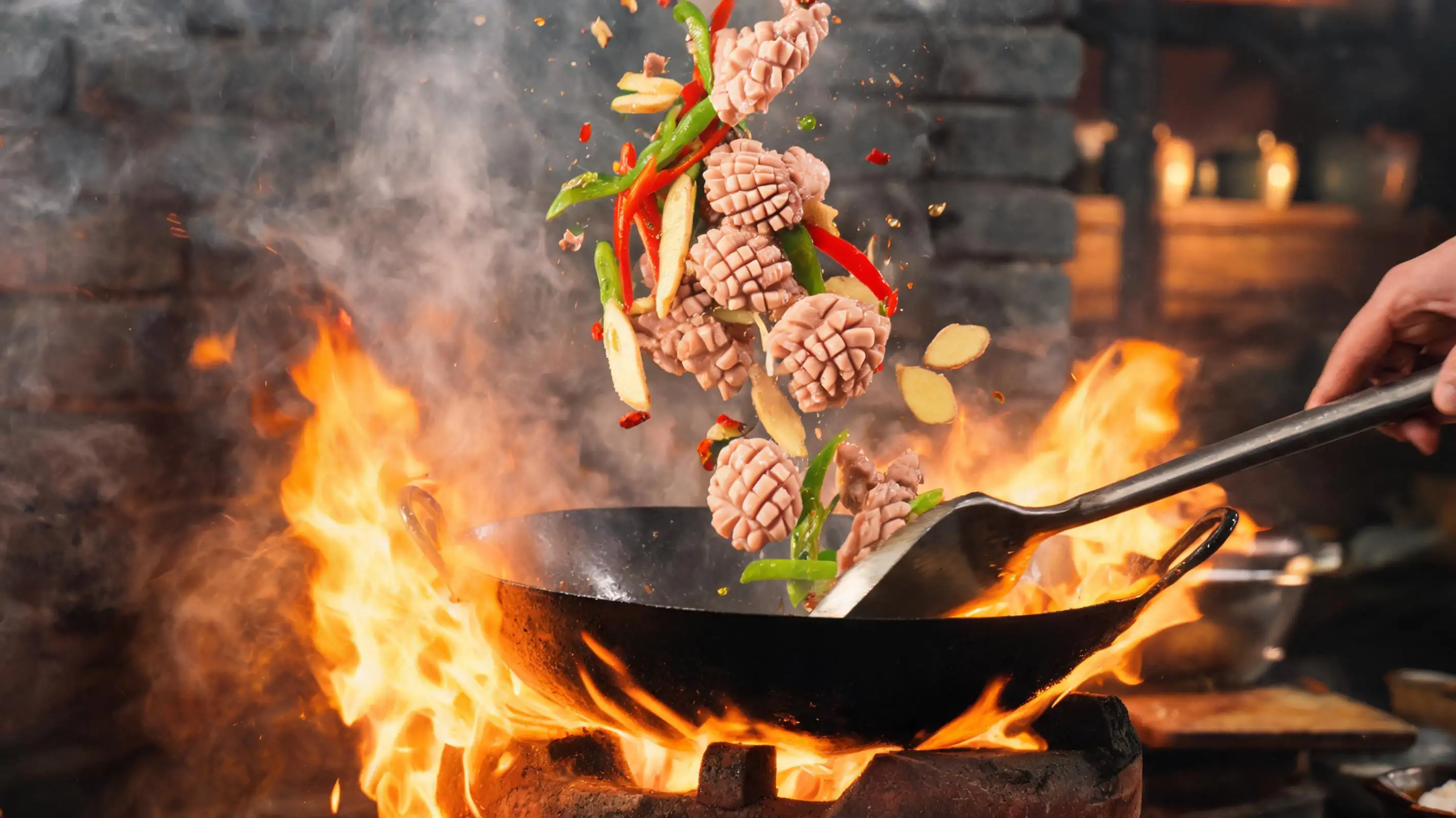
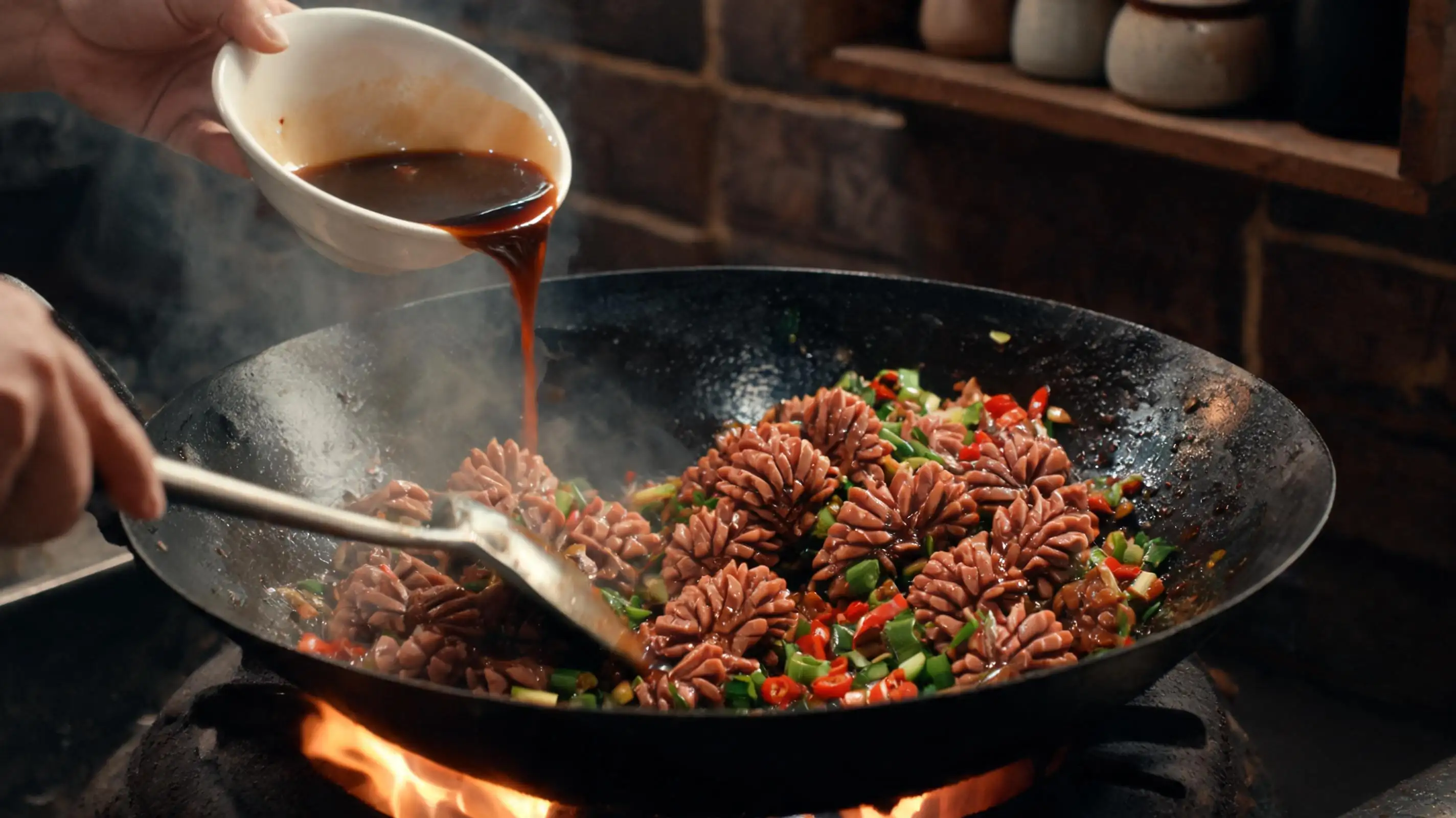
Everything is tossed together over maximum flame — the wok tilts, the contents lift off and fall back, the flower shapes holding their form through the motion. The pre-mixed sauce goes in. The wok hisses. Everything gets folded through quickly. The sauce coats every petal of every kidney flower, dark and glossy.
Scallion pieces go in at the end and hit the heat for just a moment.
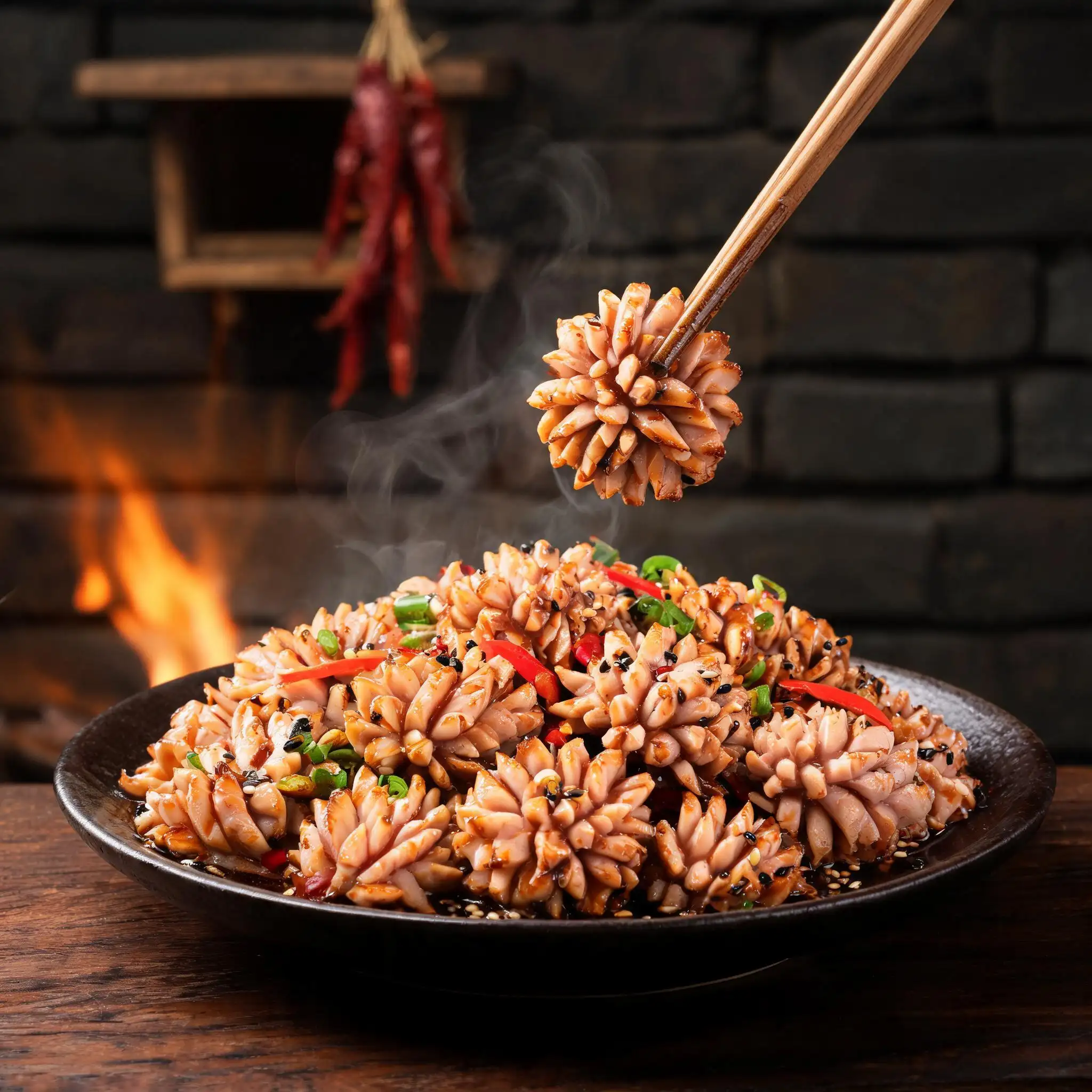
The finished dish goes onto a plate: a pile of small open flowers, each one with its cuts spread wide, pale at the center and glazed dark at the edges. A few drops of sesame oil. Red chili against green scallion across the top.
The texture is the point. The outside has a slight resistance from the starch, and when that gives way the inside is tender and clean. There is no off-smell. The whole process from the kidney hitting the oil to the dish being done takes under two minutes. Anything longer and the texture is gone.
That's the whole trick. Heat and speed.
---
**Ingredients**
Pork kidneys — two whole, fresh, the membrane trimmed clean
Shaoxing rice wine — a generous pour for the soak and the marinade
Fresh ginger — sliced thin, used in both the water and the wok
Garlic — smashed flat, several cloves
Green chilies — split lengthwise, seeds in
Red chilies — same, for color against the green
Sichuan peppercorns — a small pinch for the wok
Scallions — cut into short lengths, the green parts for the finish
Light soy sauce and oyster sauce — mixed together into a sauce bowl before you start
Potato starch — to coat the kidney pieces before they go in
Sesame oil — a few drops at the very end
---
**How it's made**
A cross-hatch is cut into each kidney half — parallel lines in one direction, then parallel lines across at an angle, the blade going deep but not all the way through. When the piece is finished it looks almost like the surface of a pine cone, tight and geometric. Each half is then cut into smaller pieces following the score lines.
The pieces go into cold water with ginger and a pour of Shaoxing wine. The water goes dark and reddish-brown as the blood draws out. You change it once. The kidneys come out pale and clean.
A dusting of potato starch, a splash of wine, a pinch of ginger juice. The pieces are tossed until the starch coats every groove of the cross-hatch.
The oil goes in the wok over the highest flame available. When the surface of the oil begins to shimmer and move, the kidney pieces go in — one hit of heat and each piece curls open immediately, the score lines pulling apart as the meat contracts, turning each piece into a small open flower. They bloom in the oil within seconds. They come straight back out.
Ginger, garlic, green and red chili, and Sichuan peppercorns go into the same hot wok with a thin film of oil. The smell comes up sharp and immediate, the green chili catching the heat and turning bright. Then the kidney flowers go back in.
Everything is tossed together over maximum flame — the wok tilts, the contents lift off and fall back, the flower shapes holding their form through the motion. The pre-mixed sauce goes in. The wok hisses. Everything gets folded through quickly. The sauce coats every petal of every kidney flower, dark and glossy.
Scallion pieces go in at the end and hit the heat for just a moment.
The finished dish goes onto a plate: a pile of small open flowers, each one with its cuts spread wide, pale at the center and glazed dark at the edges. A few drops of sesame oil. Red chili against green scallion across the top.
The texture is the point. The outside has a slight resistance from the starch, and when that gives way the inside is tender and clean. There is no off-smell. The whole process from the kidney hitting the oil to the dish being done takes under two minutes. Anything longer and the texture is gone.
That's the whole trick. Heat and speed.