·5/20/2026
from
Fuling Jiabing
# Fuling Jiabing
---
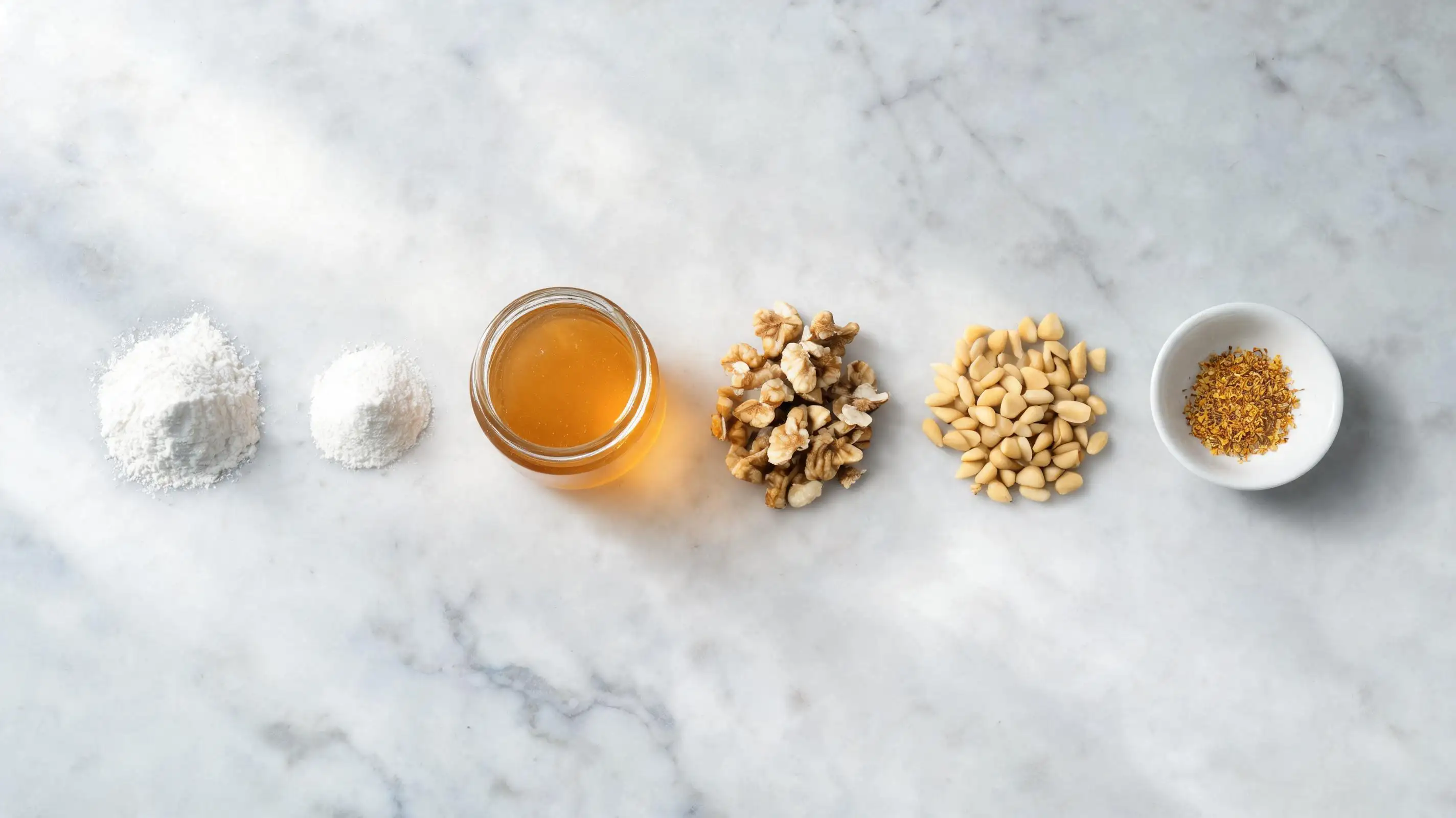
**Ingredients**
- Poria mushroom powder (茯苓粉) — fine, white, slightly earthy; the defining ingredient
- Wheat starch — mixed with poria powder to form the batter
- Honey — the base of the filling; Beijing acacia honey preferred
- Walnut halves — coarsely chopped, pale and oily
- Pine nuts — whole, ivory-yellow
- Dried osmanthus flowers — a small amount, for fragrance
---
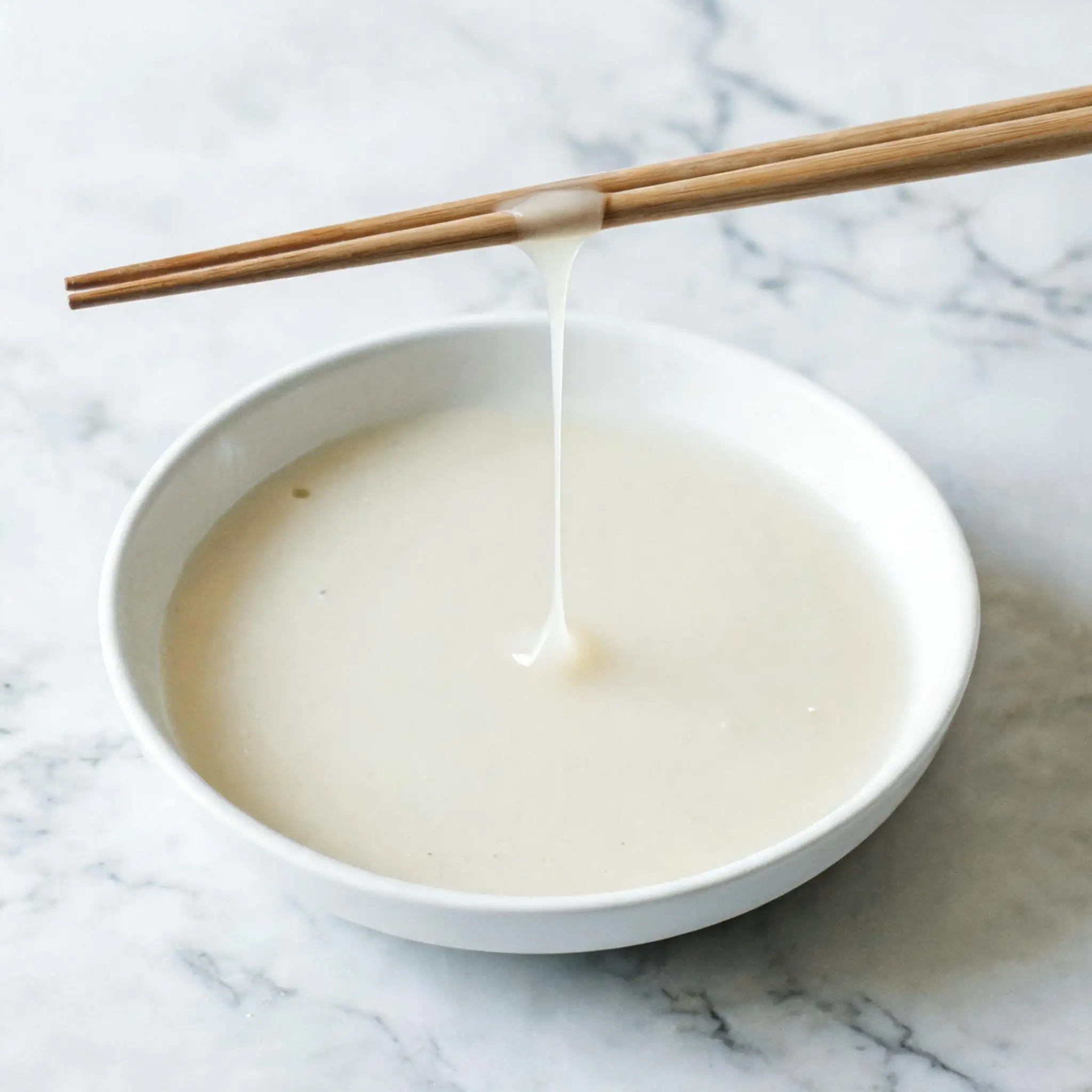
The wafer comes first. Poria mushroom powder — 茯苓粉, a fine white powder ground from the dried flesh of the fungus Wolfiporia extensa — is combined with wheat starch and cold water and whisked until the mixture is completely smooth: thin, barely white, almost transparent when held to the light, flowing off a chopstick in a thin, unbroken ribbon. This is the batter. It contains no egg, no fat, no leavening. What it contains, primarily, is water and starch.
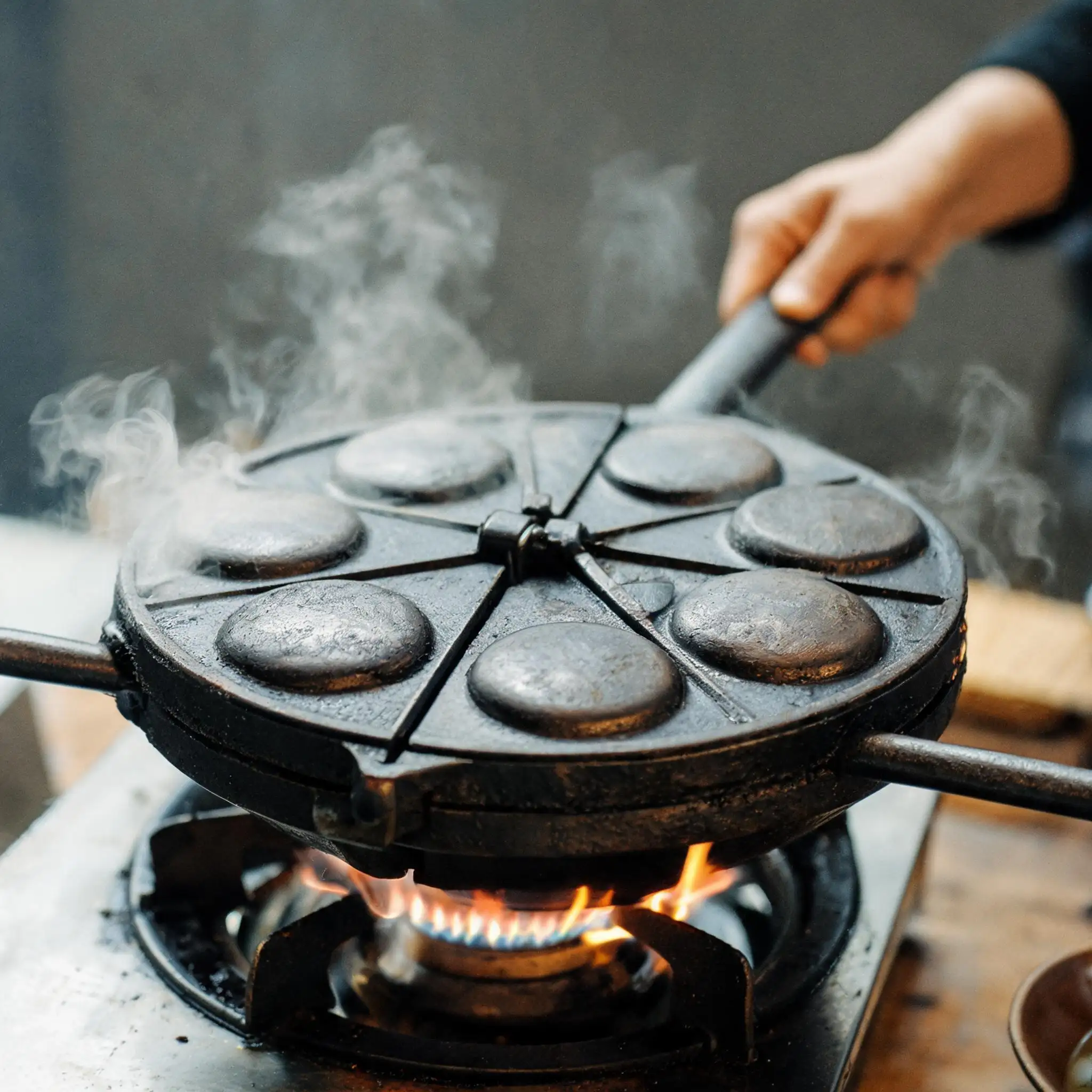
The mold is a pair of circular cast iron plates, each about fifteen centimeters across, hinged together with long handles — the kind of tool that has not meaningfully changed in Beijing in several hundred years. The iron is thick and dark, seasoned black from years of use. It is heated over a low flame until the surface is uniformly hot, then a small spoonful of batter is poured onto the lower plate. The upper plate comes down and clamps shut. The batter spreads instantly under the pressure of the plates, running to the edges of the circular mold and stopping there, forming a perfect disc. The heat from both sides cooks it simultaneously.
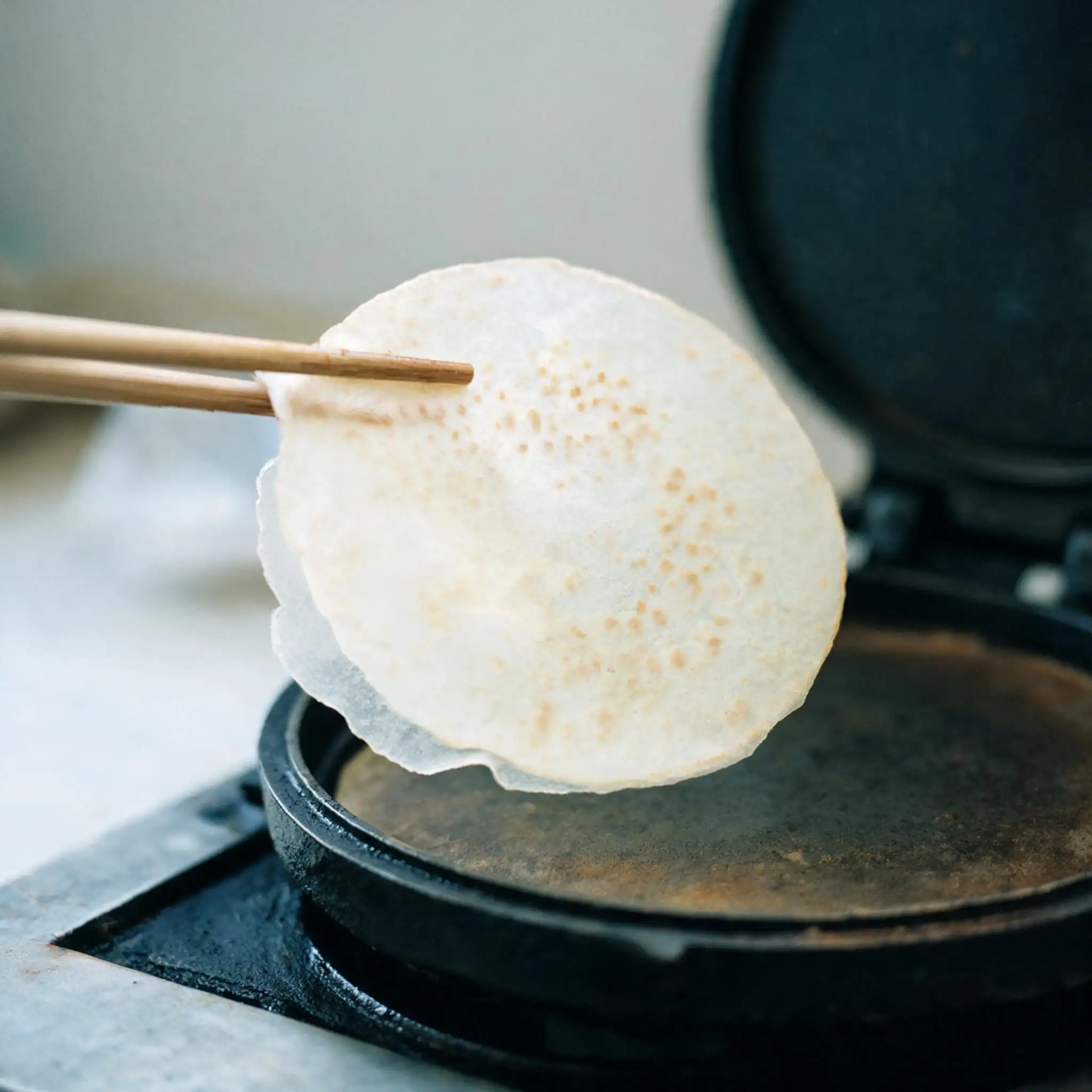
It takes less than a minute. When the upper plate is lifted, the wafer is done: a round, white, nearly flat disc, the thickness of two or three sheets of paper stacked together. The surface bears the faint impression of the mold's texture — slightly mottled, not perfectly smooth, with occasional darker spots where the batter was thinnest. Lifted from the plate by chopsticks, it bends slightly under its own weight but does not break. Held to the light, the thinner parts are translucent.
The wafers cool on a flat surface. As they cool they stiffen, becoming more brittle. They are now fragile — a firm press with a finger would crack one.
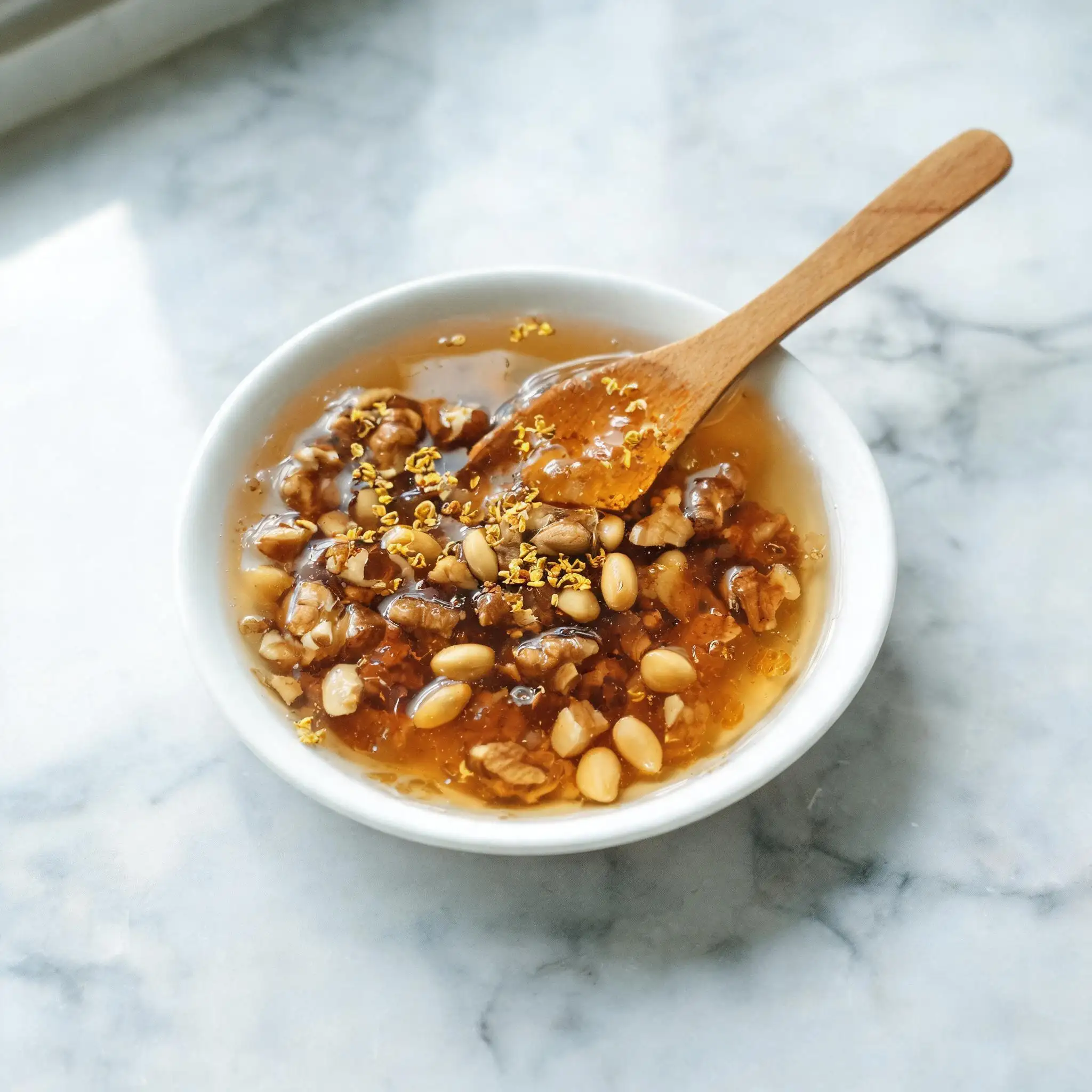
The filling is made separately. Honey goes into a small bowl with coarsely chopped walnut pieces, whole pine nuts, and a few dried osmanthus flowers. The honey binds the nuts together into a thick, amber-colored paste that holds its shape when pressed but flows slowly if left alone. The walnuts provide texture; the pine nuts add their faint oiliness; the honey supplies sweetness and cohesion; the osmanthus is almost invisible in the filling but present in the smell.
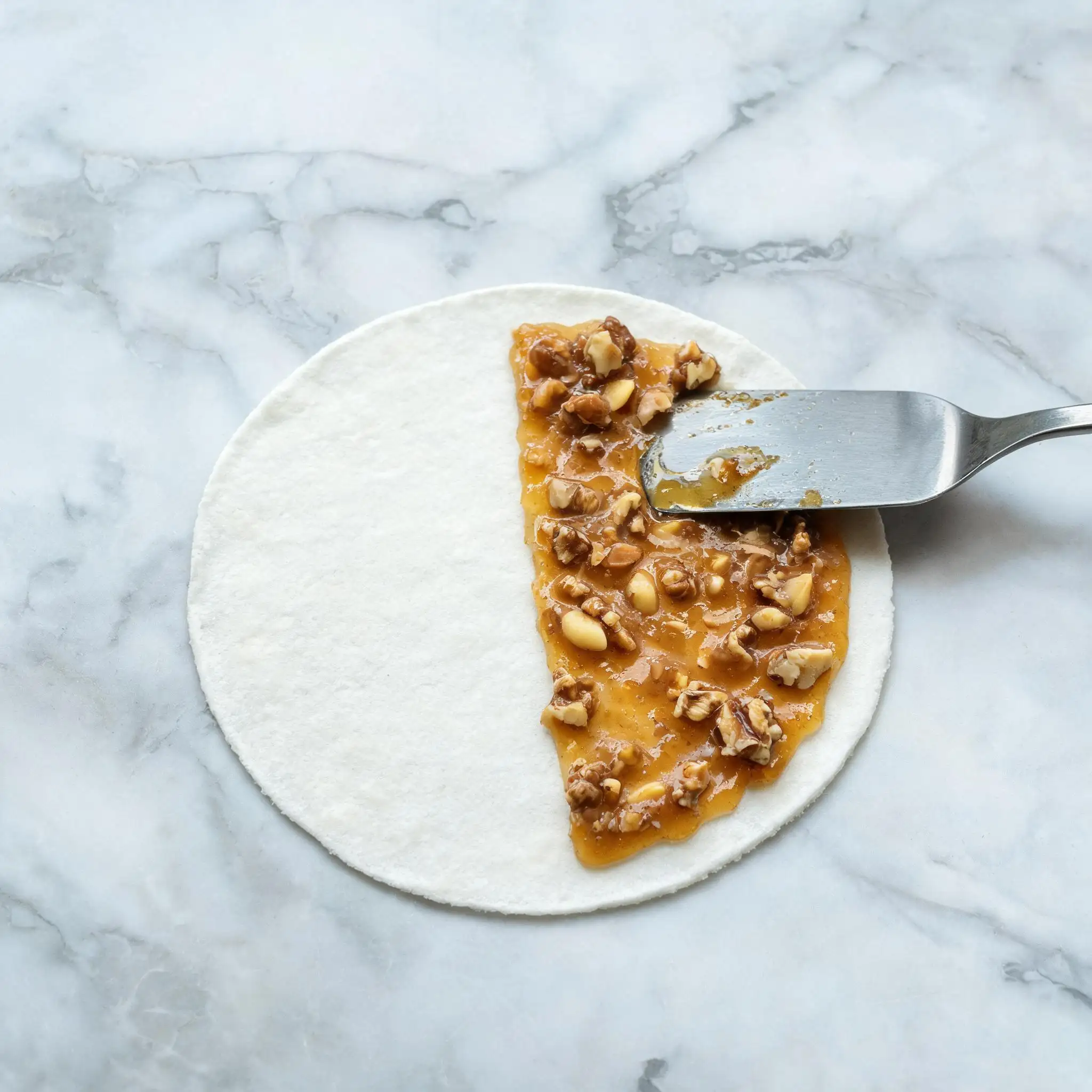
Assembly is straightforward. A wafer lies flat. A small amount of filling — perhaps a teaspoon, spread thin — is applied to the surface with an offset spatula, covering the wafer almost to its edges. A second wafer goes on top and is pressed gently into place. The filling is now enclosed. The two wafer discs are slightly larger in diameter than the filling extends, so the edges of the sandwich show white, with the amber filling visible as a thin line at the perimeter.
Held in the hand, a finished fuling jiabing is almost weightless. The two wafer shells are so thin that the total thickness of the sandwich — two shells plus filling — is perhaps seven or eight millimeters. When bitten, the outer shells shatter immediately: a sharp crack, the kind of sound a piece of thin ice makes when it breaks. What the shell leaves behind in the mouth is almost nothing — a slight starchy residue, a faint earthy note from the poria powder. The filling provides the body: the honey, the walnuts, the osmanthus.
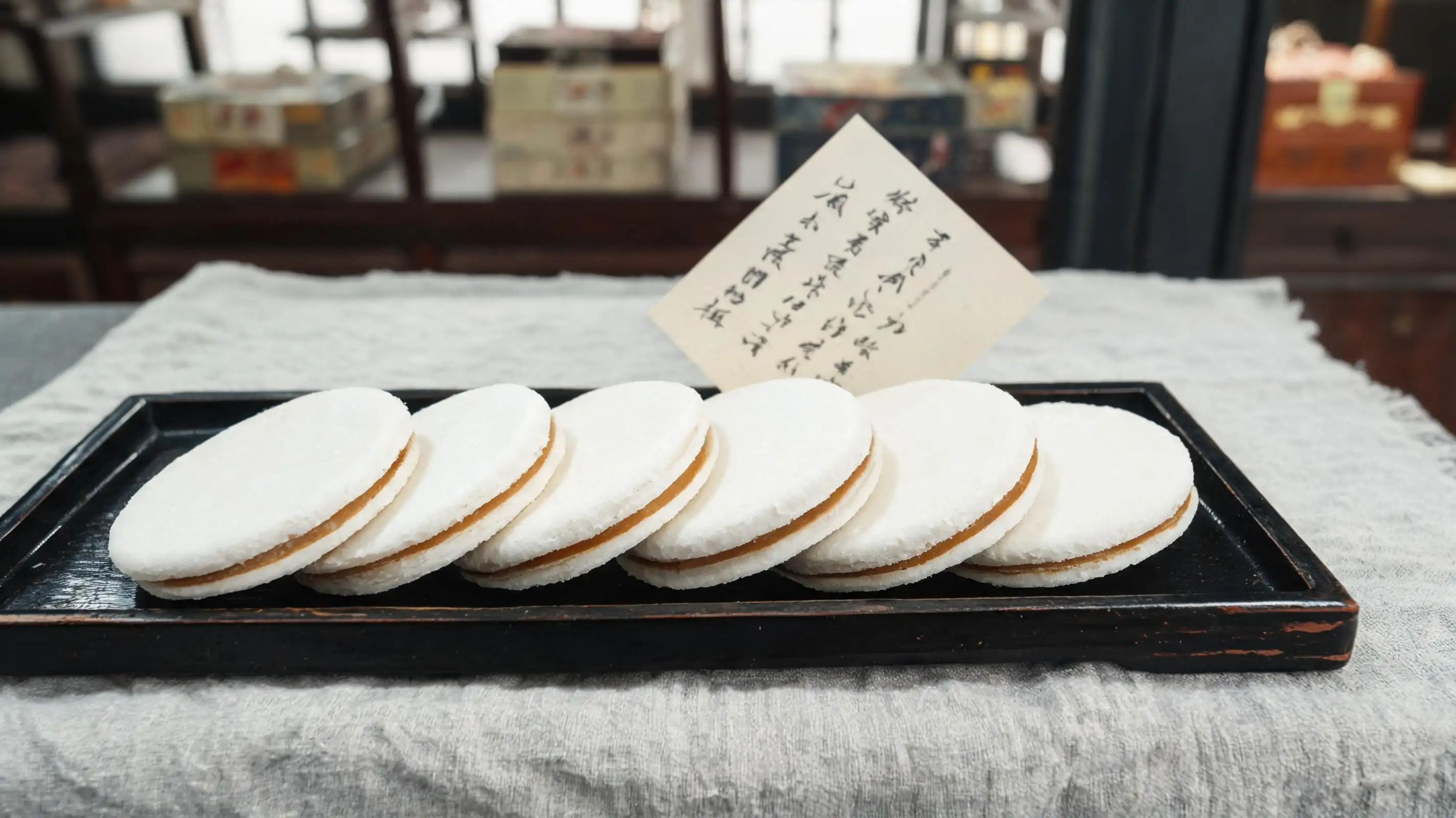
Fuling jiabing has been made in Beijing since at least the Qing dynasty, when poria mushroom — long used in Chinese medicine for its mild tonic properties — began appearing in court confections. The imperial connection became part of the product's identity. At the old confectionery shops in Beijing, fuling jiabing is still sold stacked in rows on black lacquered trays, each piece identical to the next: round, white, with that thin amber line at the edge.
The thinness is not incidental. It is the whole point. A thicker shell would be a different food entirely — a cracker, a wafer cookie, something with presence and chew. What the fuling jiabing shell does is disappear. It gives way at the first contact, offering almost no resistance, delivering the filling without interposing itself. The craft is in making something strong enough to hold together in your hand and fragile enough to vanish the moment it reaches your mouth.
Two sheets of white. A line of amber between them. That is all it is.
---
**Ingredients**
- Poria mushroom powder (茯苓粉) — fine, white, slightly earthy; the defining ingredient
- Wheat starch — mixed with poria powder to form the batter
- Honey — the base of the filling; Beijing acacia honey preferred
- Walnut halves — coarsely chopped, pale and oily
- Pine nuts — whole, ivory-yellow
- Dried osmanthus flowers — a small amount, for fragrance
---
The wafer comes first. Poria mushroom powder — 茯苓粉, a fine white powder ground from the dried flesh of the fungus Wolfiporia extensa — is combined with wheat starch and cold water and whisked until the mixture is completely smooth: thin, barely white, almost transparent when held to the light, flowing off a chopstick in a thin, unbroken ribbon. This is the batter. It contains no egg, no fat, no leavening. What it contains, primarily, is water and starch.
The mold is a pair of circular cast iron plates, each about fifteen centimeters across, hinged together with long handles — the kind of tool that has not meaningfully changed in Beijing in several hundred years. The iron is thick and dark, seasoned black from years of use. It is heated over a low flame until the surface is uniformly hot, then a small spoonful of batter is poured onto the lower plate. The upper plate comes down and clamps shut. The batter spreads instantly under the pressure of the plates, running to the edges of the circular mold and stopping there, forming a perfect disc. The heat from both sides cooks it simultaneously.
It takes less than a minute. When the upper plate is lifted, the wafer is done: a round, white, nearly flat disc, the thickness of two or three sheets of paper stacked together. The surface bears the faint impression of the mold's texture — slightly mottled, not perfectly smooth, with occasional darker spots where the batter was thinnest. Lifted from the plate by chopsticks, it bends slightly under its own weight but does not break. Held to the light, the thinner parts are translucent.
The wafers cool on a flat surface. As they cool they stiffen, becoming more brittle. They are now fragile — a firm press with a finger would crack one.
The filling is made separately. Honey goes into a small bowl with coarsely chopped walnut pieces, whole pine nuts, and a few dried osmanthus flowers. The honey binds the nuts together into a thick, amber-colored paste that holds its shape when pressed but flows slowly if left alone. The walnuts provide texture; the pine nuts add their faint oiliness; the honey supplies sweetness and cohesion; the osmanthus is almost invisible in the filling but present in the smell.
Assembly is straightforward. A wafer lies flat. A small amount of filling — perhaps a teaspoon, spread thin — is applied to the surface with an offset spatula, covering the wafer almost to its edges. A second wafer goes on top and is pressed gently into place. The filling is now enclosed. The two wafer discs are slightly larger in diameter than the filling extends, so the edges of the sandwich show white, with the amber filling visible as a thin line at the perimeter.
Held in the hand, a finished fuling jiabing is almost weightless. The two wafer shells are so thin that the total thickness of the sandwich — two shells plus filling — is perhaps seven or eight millimeters. When bitten, the outer shells shatter immediately: a sharp crack, the kind of sound a piece of thin ice makes when it breaks. What the shell leaves behind in the mouth is almost nothing — a slight starchy residue, a faint earthy note from the poria powder. The filling provides the body: the honey, the walnuts, the osmanthus.
Fuling jiabing has been made in Beijing since at least the Qing dynasty, when poria mushroom — long used in Chinese medicine for its mild tonic properties — began appearing in court confections. The imperial connection became part of the product's identity. At the old confectionery shops in Beijing, fuling jiabing is still sold stacked in rows on black lacquered trays, each piece identical to the next: round, white, with that thin amber line at the edge.
The thinness is not incidental. It is the whole point. A thicker shell would be a different food entirely — a cracker, a wafer cookie, something with presence and chew. What the fuling jiabing shell does is disappear. It gives way at the first contact, offering almost no resistance, delivering the filling without interposing itself. The craft is in making something strong enough to hold together in your hand and fragile enough to vanish the moment it reaches your mouth.
Two sheets of white. A line of amber between them. That is all it is.