·5/20/2026
from
Lu Zha Doufu
# Lu Zha Doufu
---
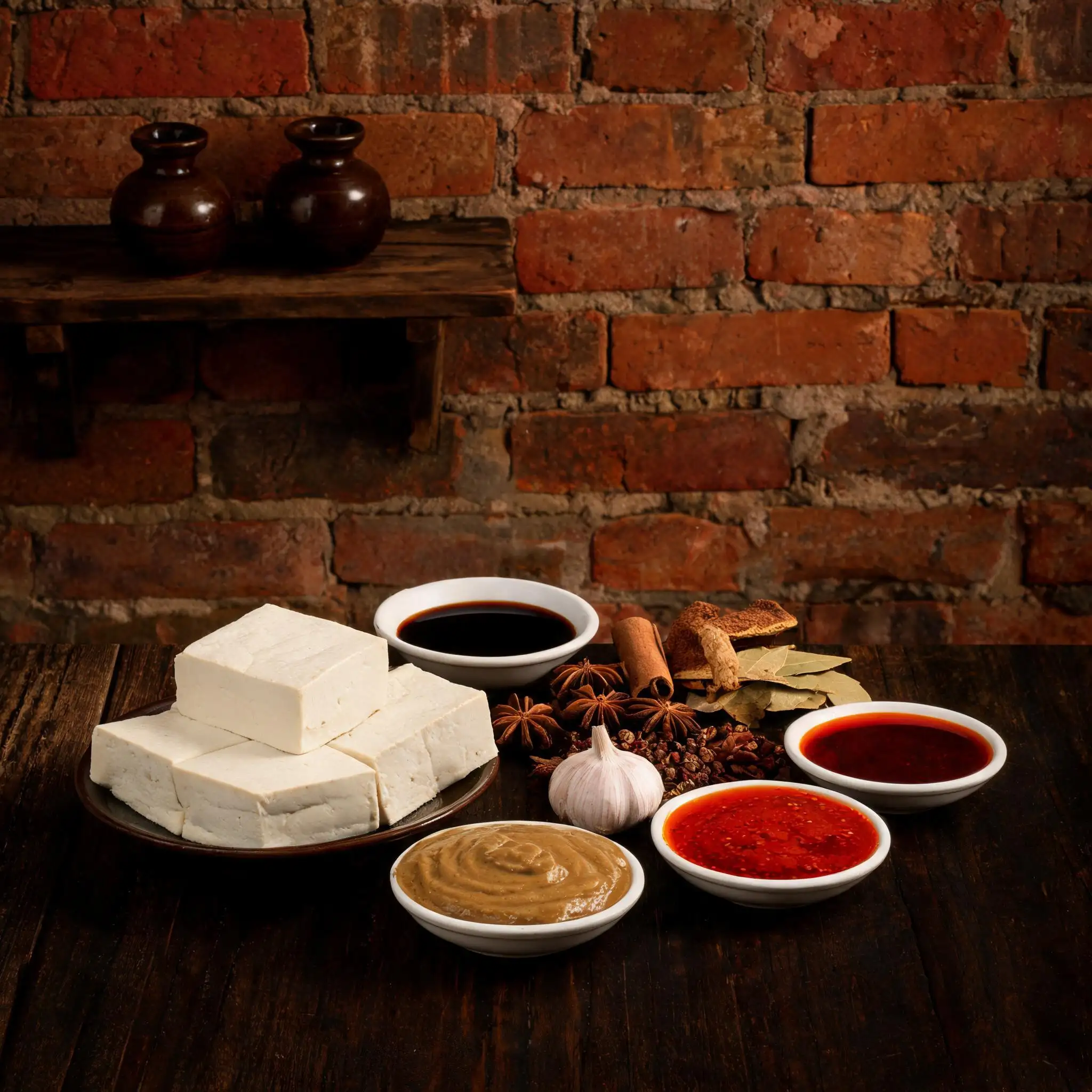
**Ingredients**
- Firm Beijing-style tofu (北豆腐) — dense, low-moisture; cut into rectangles
- Neutral oil — for deep-frying
- Dark soy sauce — the base color of the lu broth
- Star anise, cinnamon, dried tangerine peel, Sichuan peppercorns, bay leaves — whole spices for the broth
- Garlic water (蒜汁) — raw garlic pounded and dissolved in cold water
- Chili oil (辣椒油) — red, oil-based, with chili flakes
- Sesame paste (麻酱) — Beijing-style, made from roasted sesame
---
The tofu goes through two transformations before it reaches the bowl. The first is frying. The second is drowning.
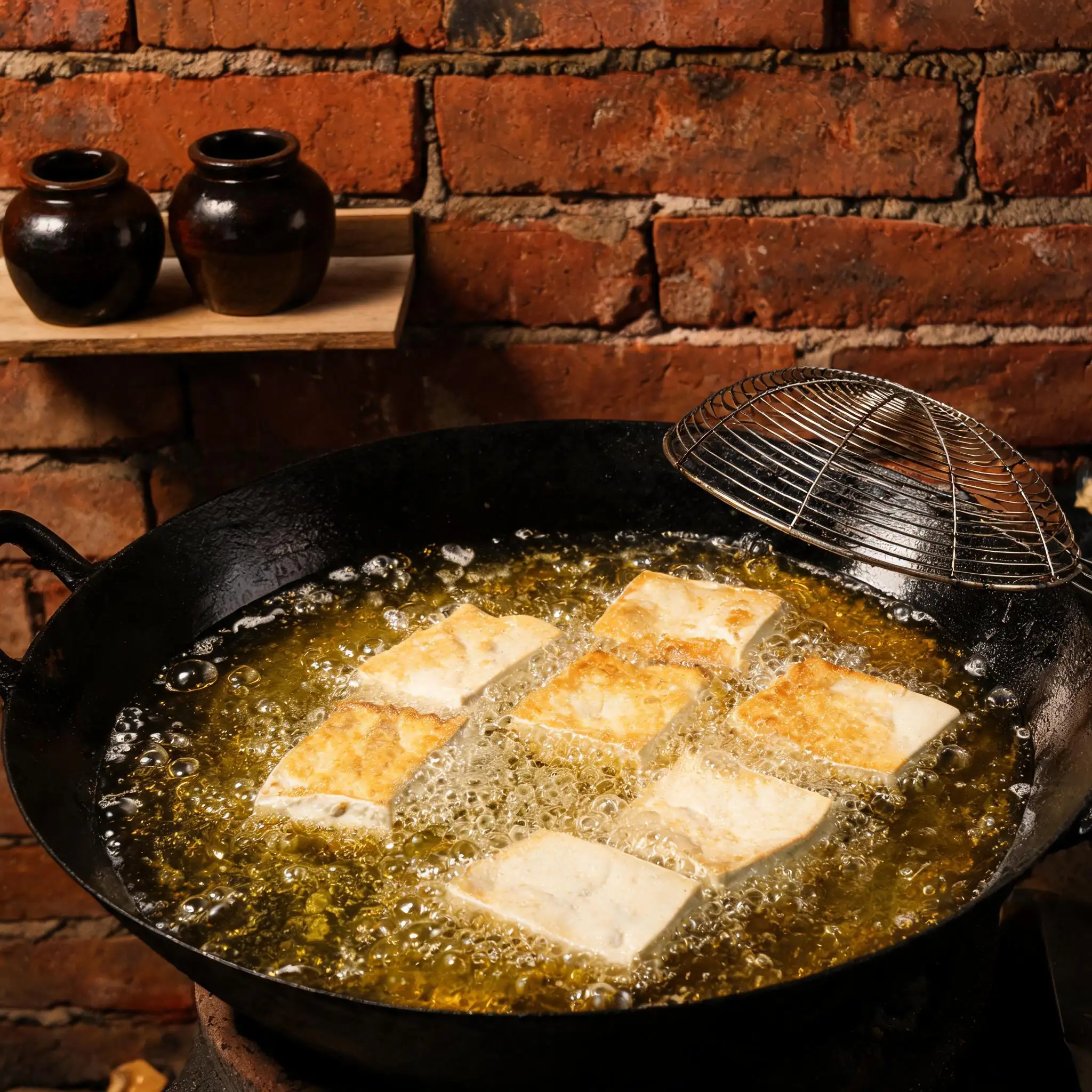
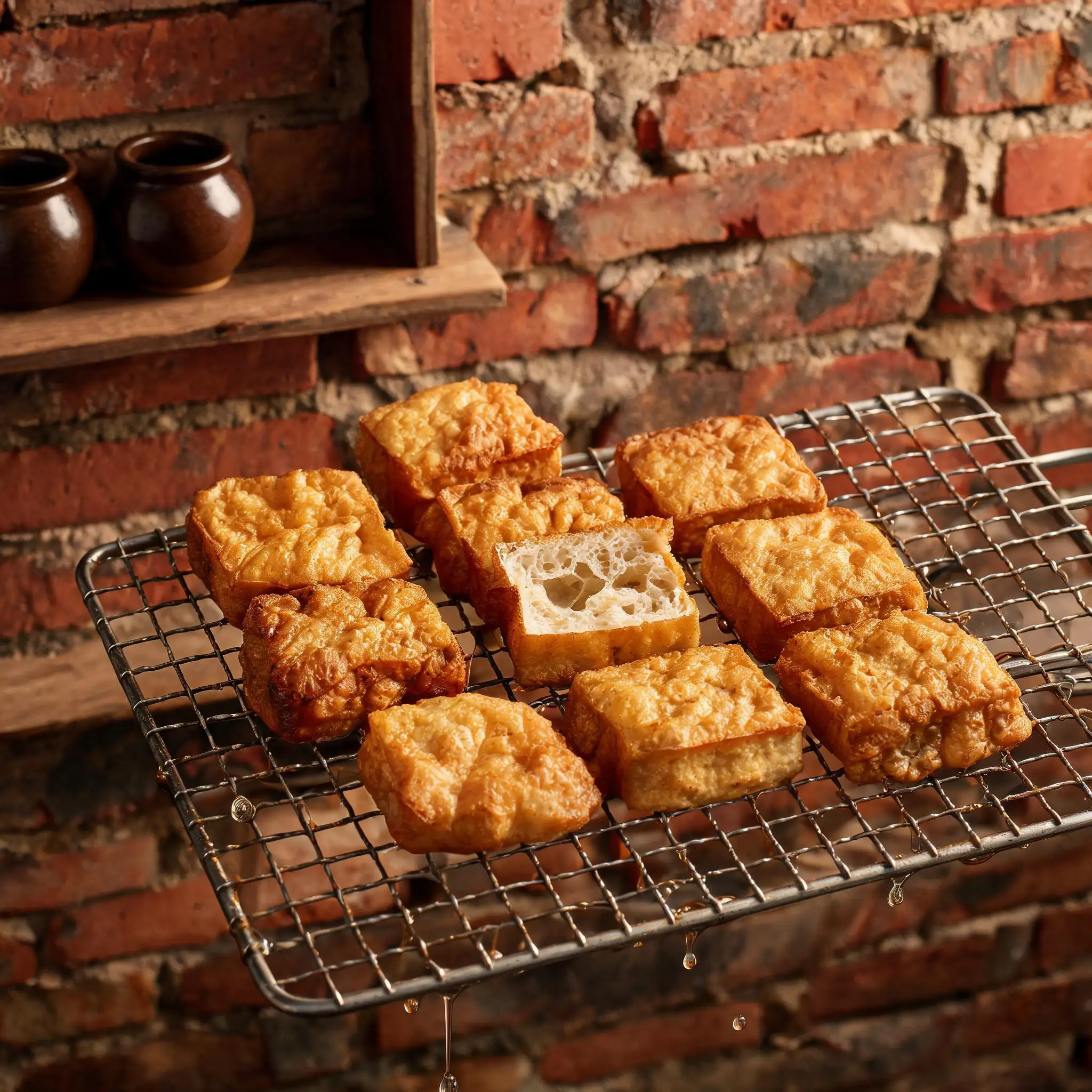
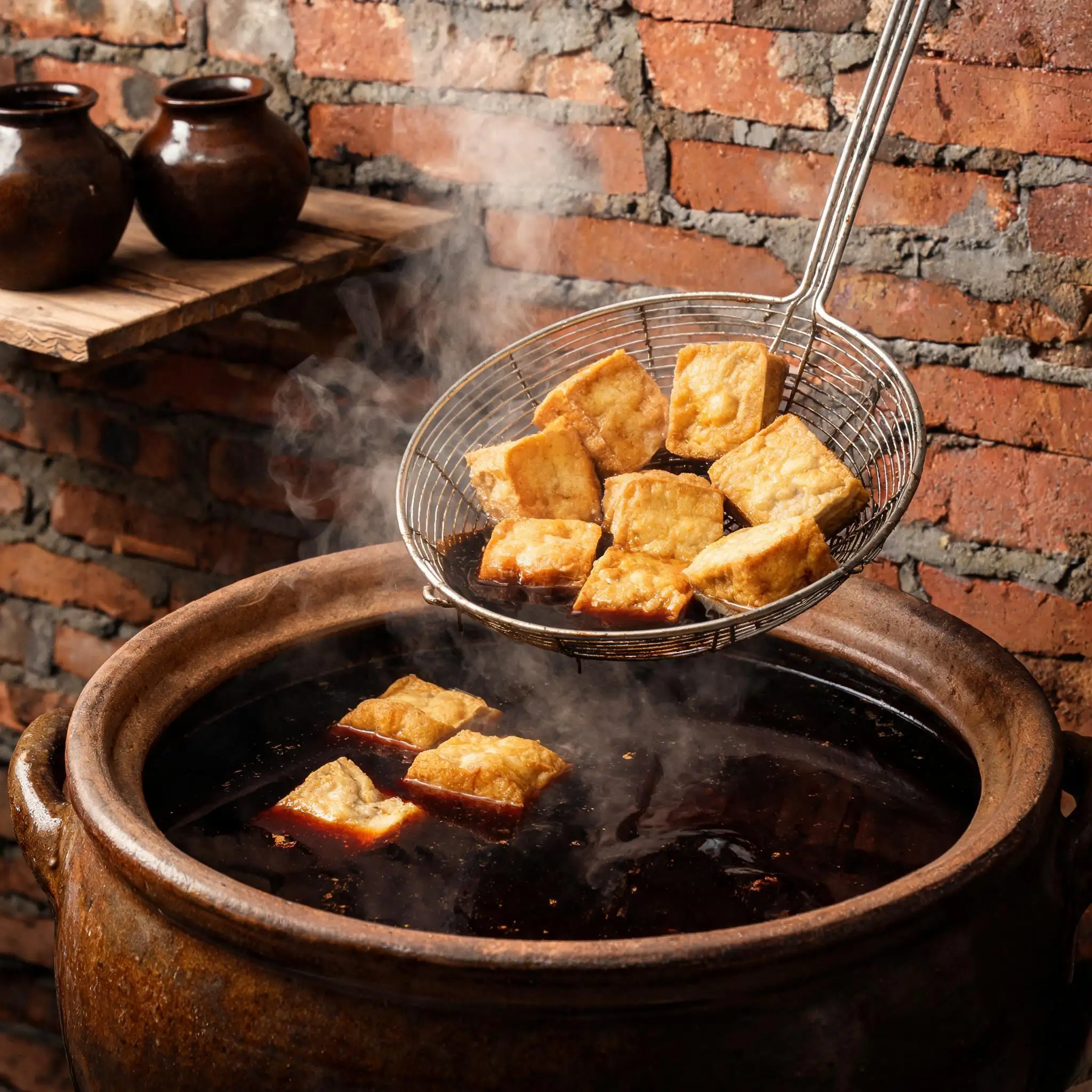
Lu zha doufu begins with firm Beijing-style tofu — 北豆腐, the dense, relatively low-moisture variety pressed to remove excess water. It is cut into rectangles, about the size of a thick domino. Into deep, hot oil. The surface of each piece seizes immediately in the heat, the moisture inside turning to steam and pressing outward, causing the exterior to blister and puff while the interior hollows out. Within minutes, what went in as a dense white block comes out as something entirely different: golden-brown, wrinkled, slightly swollen, the surface crusted and crisp. Held up and torn open, the cross-section shows the transformation — a thin, dark gold shell around a pale, spongy, honeycombed interior, most of the original density replaced by air.
The fried pieces drain on a wire rack. At this stage, they are their own food — you could eat them with a dipping sauce and call it done. But they are not done.
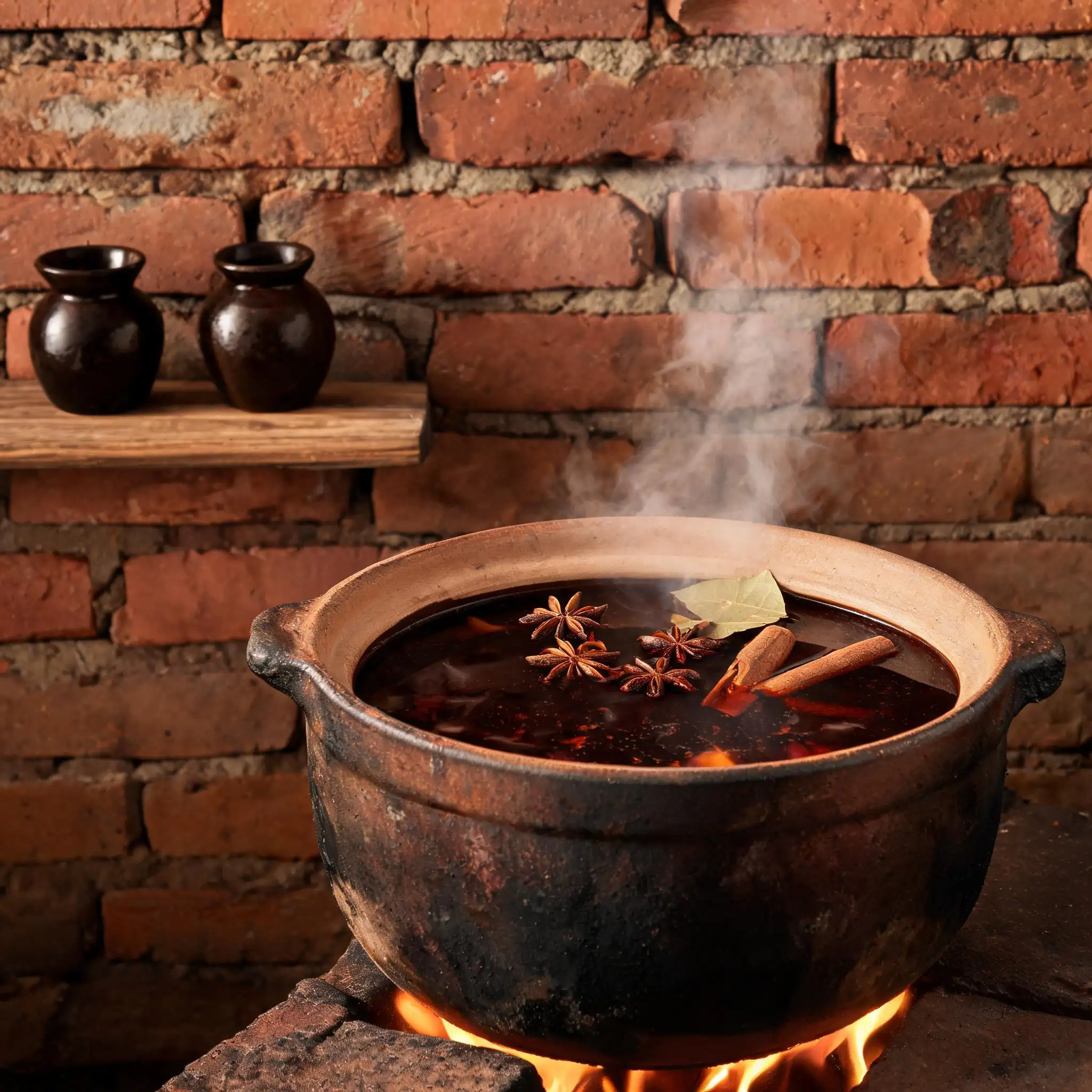
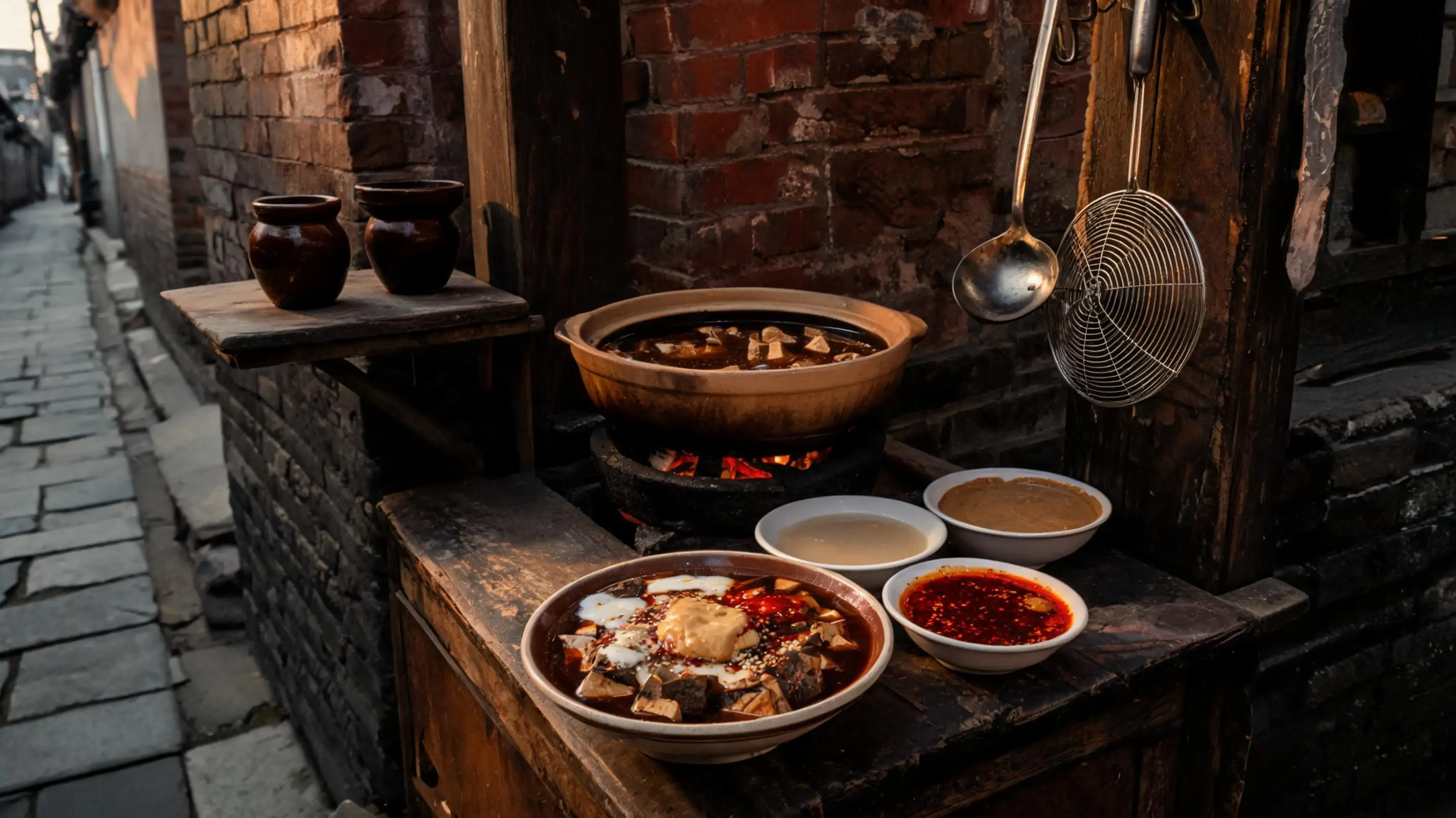
The lu broth is a separate preparation, ongoing. In a large clay pot over a coal fire, water is seasoned with dark soy sauce, star anise, cinnamon, bay leaves, dried tangerine peel, Sichuan peppercorns, and whatever else the particular vendor has been adding to their pot over the years. The broth simmers low and slow — not boiling, never boiling, always just at the edge of a simmer. Over time it darkens: first deep brown, then mahogany, then a color that is almost black in low light, transparent only when you hold a spoonful up to the light. Spices float on the surface. The smell is of anise and soy and something earthy and old.
The fried tofu pieces go into the broth while it is still warm. The spongy interior that formed during frying now works in reverse — instead of pushing moisture out, it pulls the broth in. The tofu absorbs the dark, spiced liquid through every pore, swelling slightly, its exterior changing color from gold to amber to the same deep mahogany as the broth itself. By the time a piece is ready, it looks like it was never white. It looks like it was born in the pot.
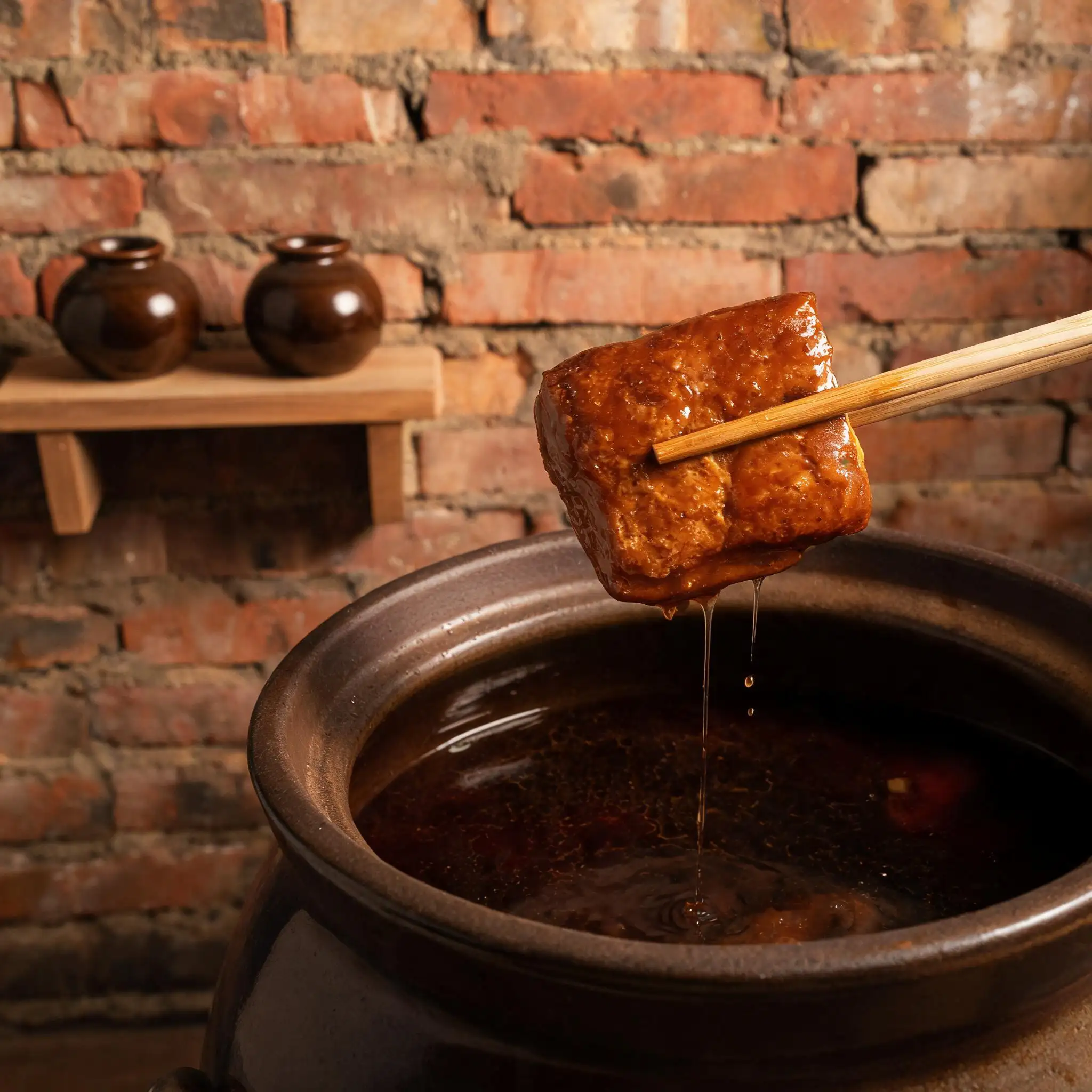
A piece lifted out by chopsticks drips steadily — the broth it has absorbed now seeping back out slowly, thin dark threads falling back into the pot.
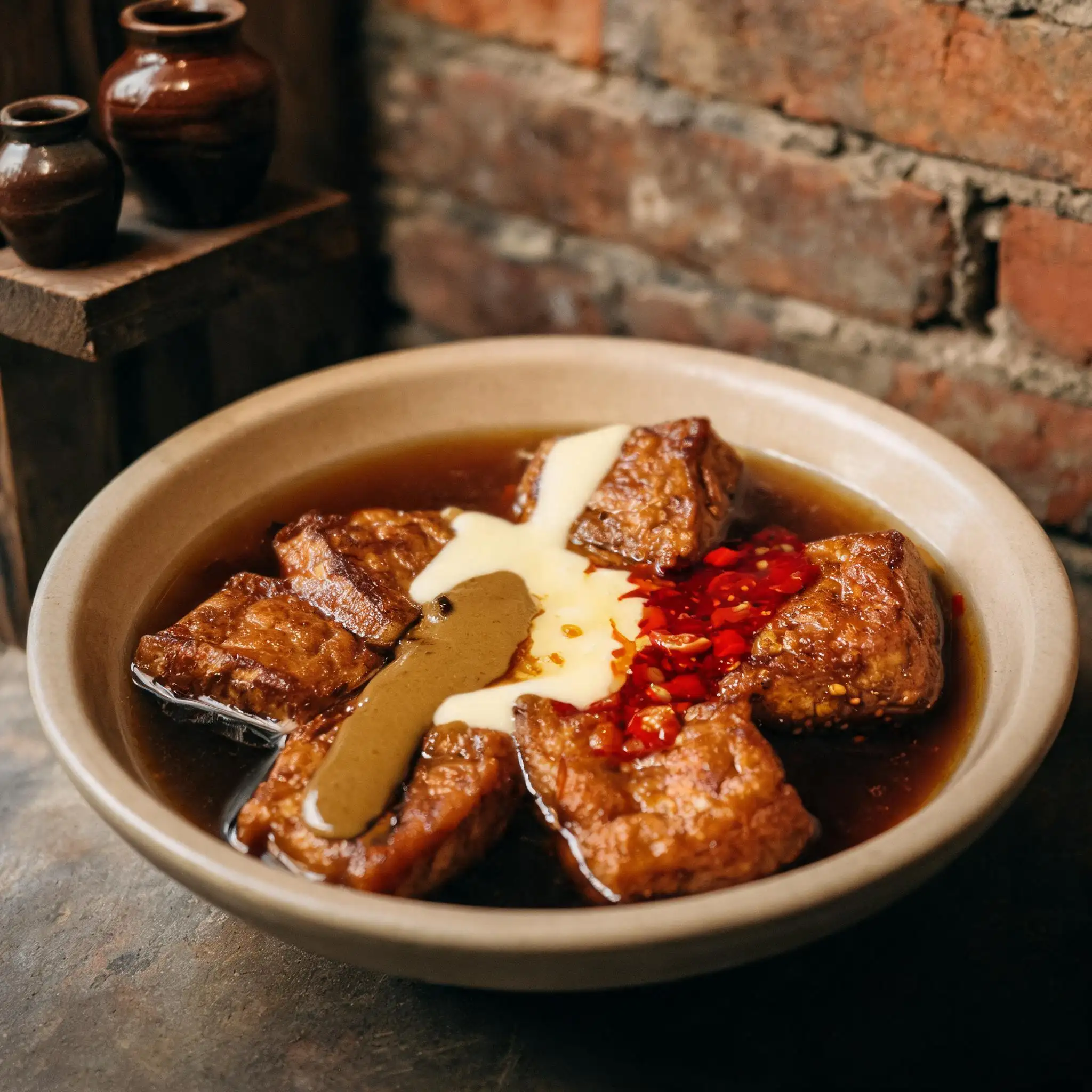
It is served in a wide ceramic bowl with a ladleful of the broth. Three condiments go on top in sequence: garlic water first — pale, sharp, pooling into the broth; then sesame paste, dark gold and thick, falling in a slow ribbon; then chili oil, red and oil-slicked, settling over the surface. The three condiments sit in distinct zones on top of the deep brown broth, their colors and temperatures layering over the tofu beneath.
There is no single way to eat it. Most people work through the pieces with chopsticks, breaking each one open so the broth inside releases. The spongy interior, now fully saturated with lu broth, collapses slightly when bitten — dense with absorbed flavor, softer than the fried exterior would suggest, the tofu's own mild flavor completely replaced by the long-simmered spice.
The garlic water cuts. The sesame paste coats. The chili oil adds heat and fragrance without weight.
Lu zha doufu vendors in the hutong streets of Beijing typically maintained their lu broth continuously — adding water and seasoning as it reduced, keeping the pot on the fire through the cold months when business was heaviest. The longer a lu broth runs without interruption, the more complex it becomes, the spices cycling through cycles of intensity and mellowing, the soy caramelizing slowly, the pot accumulating depth that a freshly made broth cannot replicate. Some vendors claimed their lu broth had been running for decades. Whether or not that was literally true, the claim was understood: this broth has history in it.
The clay pot on the coal stove, the three condiment bowls arranged to one side, the ladle and wire skimmer hanging from a nail — this is the complete visual vocabulary of a lu zha doufu stall.
One piece, lifted by chopsticks, held over the dark surface of the pot: the broth drips from it for a long moment before it reaches the bowl.
---
**Ingredients**
- Firm Beijing-style tofu (北豆腐) — dense, low-moisture; cut into rectangles
- Neutral oil — for deep-frying
- Dark soy sauce — the base color of the lu broth
- Star anise, cinnamon, dried tangerine peel, Sichuan peppercorns, bay leaves — whole spices for the broth
- Garlic water (蒜汁) — raw garlic pounded and dissolved in cold water
- Chili oil (辣椒油) — red, oil-based, with chili flakes
- Sesame paste (麻酱) — Beijing-style, made from roasted sesame
---
The tofu goes through two transformations before it reaches the bowl. The first is frying. The second is drowning.
Lu zha doufu begins with firm Beijing-style tofu — 北豆腐, the dense, relatively low-moisture variety pressed to remove excess water. It is cut into rectangles, about the size of a thick domino. Into deep, hot oil. The surface of each piece seizes immediately in the heat, the moisture inside turning to steam and pressing outward, causing the exterior to blister and puff while the interior hollows out. Within minutes, what went in as a dense white block comes out as something entirely different: golden-brown, wrinkled, slightly swollen, the surface crusted and crisp. Held up and torn open, the cross-section shows the transformation — a thin, dark gold shell around a pale, spongy, honeycombed interior, most of the original density replaced by air.
The fried pieces drain on a wire rack. At this stage, they are their own food — you could eat them with a dipping sauce and call it done. But they are not done.
The lu broth is a separate preparation, ongoing. In a large clay pot over a coal fire, water is seasoned with dark soy sauce, star anise, cinnamon, bay leaves, dried tangerine peel, Sichuan peppercorns, and whatever else the particular vendor has been adding to their pot over the years. The broth simmers low and slow — not boiling, never boiling, always just at the edge of a simmer. Over time it darkens: first deep brown, then mahogany, then a color that is almost black in low light, transparent only when you hold a spoonful up to the light. Spices float on the surface. The smell is of anise and soy and something earthy and old.
The fried tofu pieces go into the broth while it is still warm. The spongy interior that formed during frying now works in reverse — instead of pushing moisture out, it pulls the broth in. The tofu absorbs the dark, spiced liquid through every pore, swelling slightly, its exterior changing color from gold to amber to the same deep mahogany as the broth itself. By the time a piece is ready, it looks like it was never white. It looks like it was born in the pot.
A piece lifted out by chopsticks drips steadily — the broth it has absorbed now seeping back out slowly, thin dark threads falling back into the pot.
It is served in a wide ceramic bowl with a ladleful of the broth. Three condiments go on top in sequence: garlic water first — pale, sharp, pooling into the broth; then sesame paste, dark gold and thick, falling in a slow ribbon; then chili oil, red and oil-slicked, settling over the surface. The three condiments sit in distinct zones on top of the deep brown broth, their colors and temperatures layering over the tofu beneath.
There is no single way to eat it. Most people work through the pieces with chopsticks, breaking each one open so the broth inside releases. The spongy interior, now fully saturated with lu broth, collapses slightly when bitten — dense with absorbed flavor, softer than the fried exterior would suggest, the tofu's own mild flavor completely replaced by the long-simmered spice.
The garlic water cuts. The sesame paste coats. The chili oil adds heat and fragrance without weight.
Lu zha doufu vendors in the hutong streets of Beijing typically maintained their lu broth continuously — adding water and seasoning as it reduced, keeping the pot on the fire through the cold months when business was heaviest. The longer a lu broth runs without interruption, the more complex it becomes, the spices cycling through cycles of intensity and mellowing, the soy caramelizing slowly, the pot accumulating depth that a freshly made broth cannot replicate. Some vendors claimed their lu broth had been running for decades. Whether or not that was literally true, the claim was understood: this broth has history in it.
The clay pot on the coal stove, the three condiment bowls arranged to one side, the ladle and wire skimmer hanging from a nail — this is the complete visual vocabulary of a lu zha doufu stall.
One piece, lifted by chopsticks, held over the dark surface of the pot: the broth drips from it for a long moment before it reaches the bowl.