·5/20/2026
from
Mian Cha
# Mian Cha
---
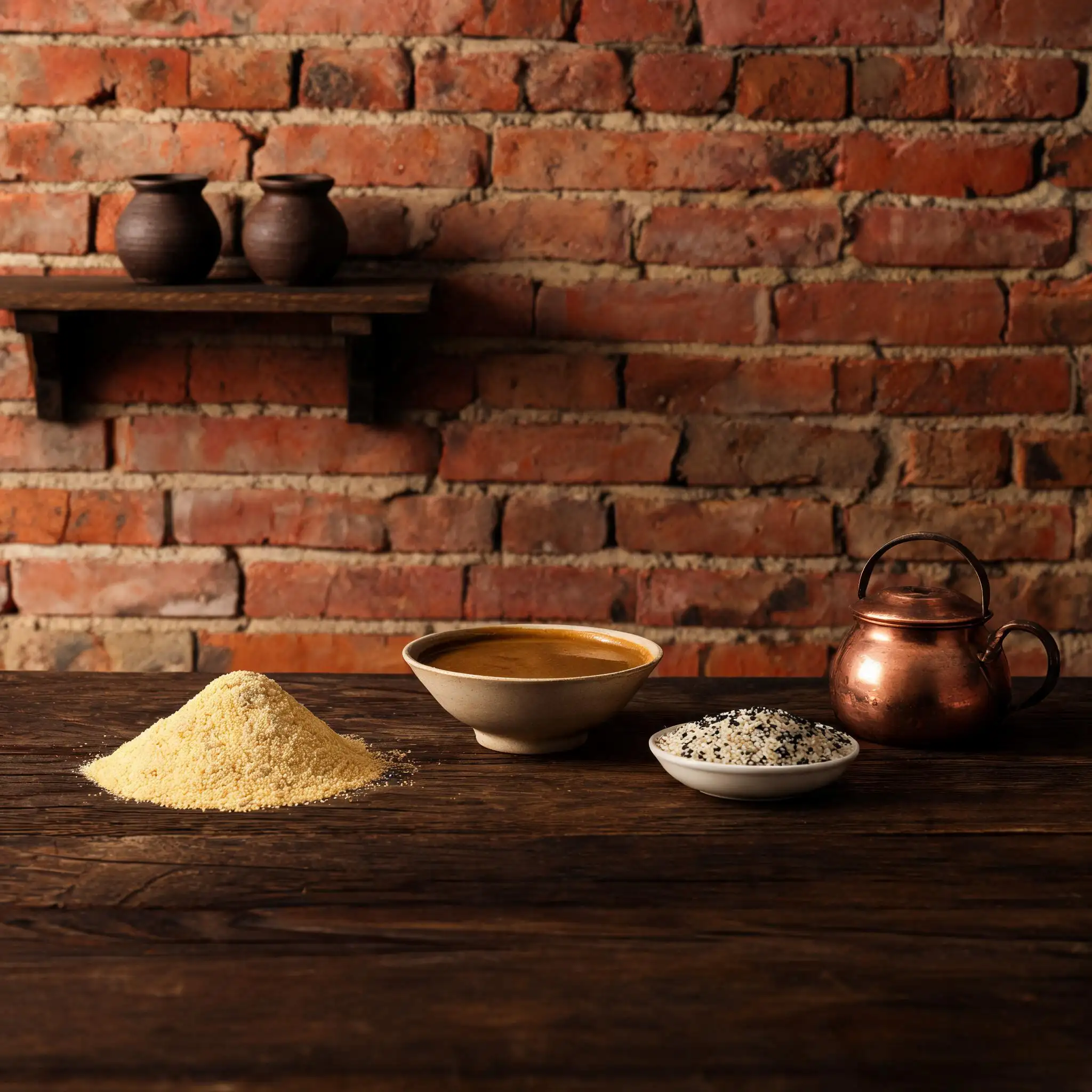
**Ingredients**
- Millet flour (小米面) — dry-toasted before use
- Sesame paste (芝麻酱) — tahini-style, made from roasted white sesame seeds; darker and more bitter than the pale Middle Eastern variety
- Sesame salt (椒盐) — mixed salt and toasted sesame seeds, coarsely ground
- Water — boiling
- Jiao quan (焦圈) — Beijing fried dough rings, for serving
---
There is a specific way to eat mian cha, and it is not with a spoon.
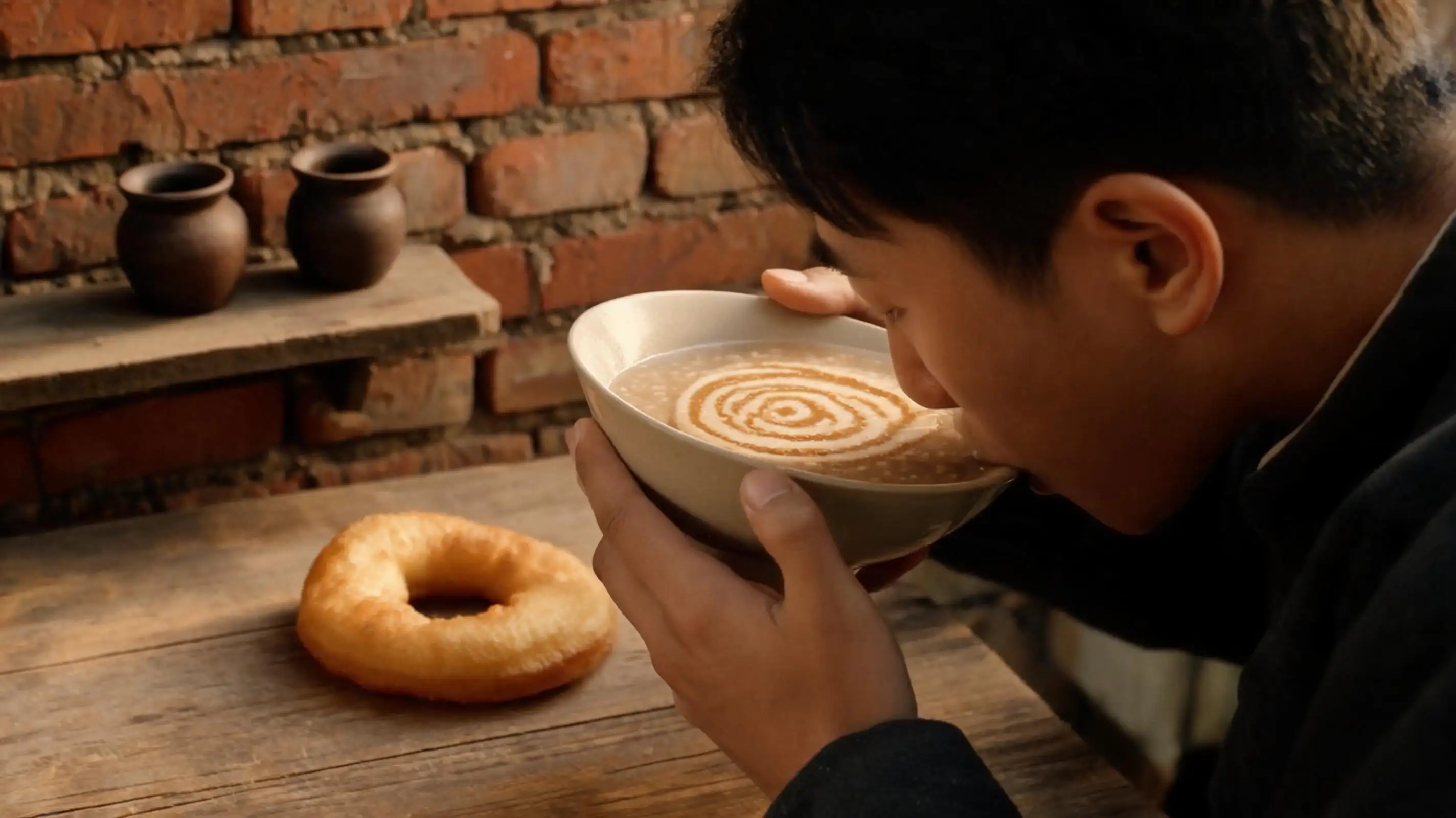
You hold the bowl with both hands. You tilt it toward your mouth and you drink from the rim, rotating the bowl slowly as you go, working your way around the edge. The sesame paste on the surface comes with each sip — not mixed in, but floating, so that every mouthful carries both the warm, lightly toasted porridge and the cold, dense, nutty paste together. A spoon would mix everything into a uniform texture. The rim-drinking technique keeps the two elements separate until the last possible moment.
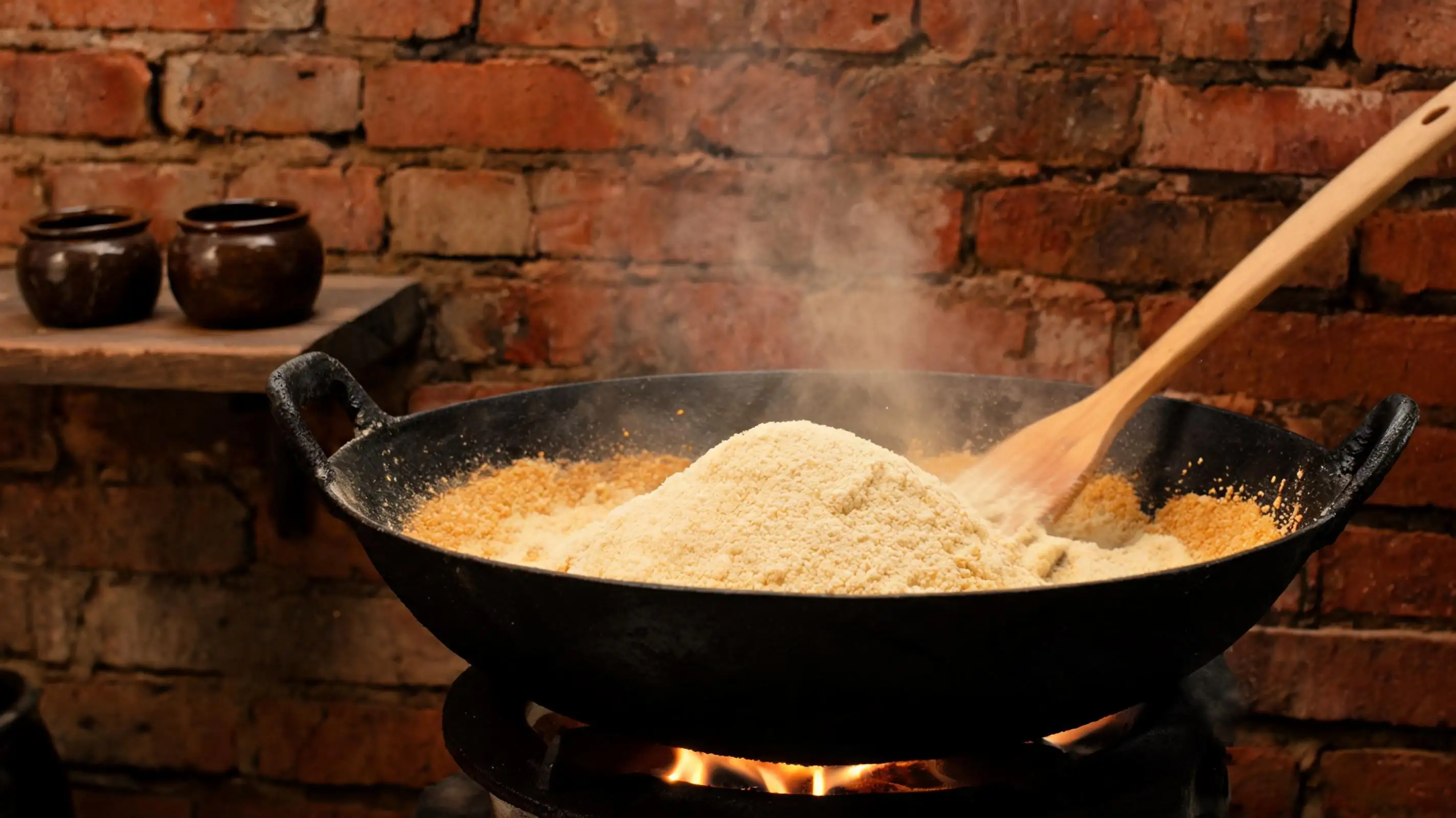
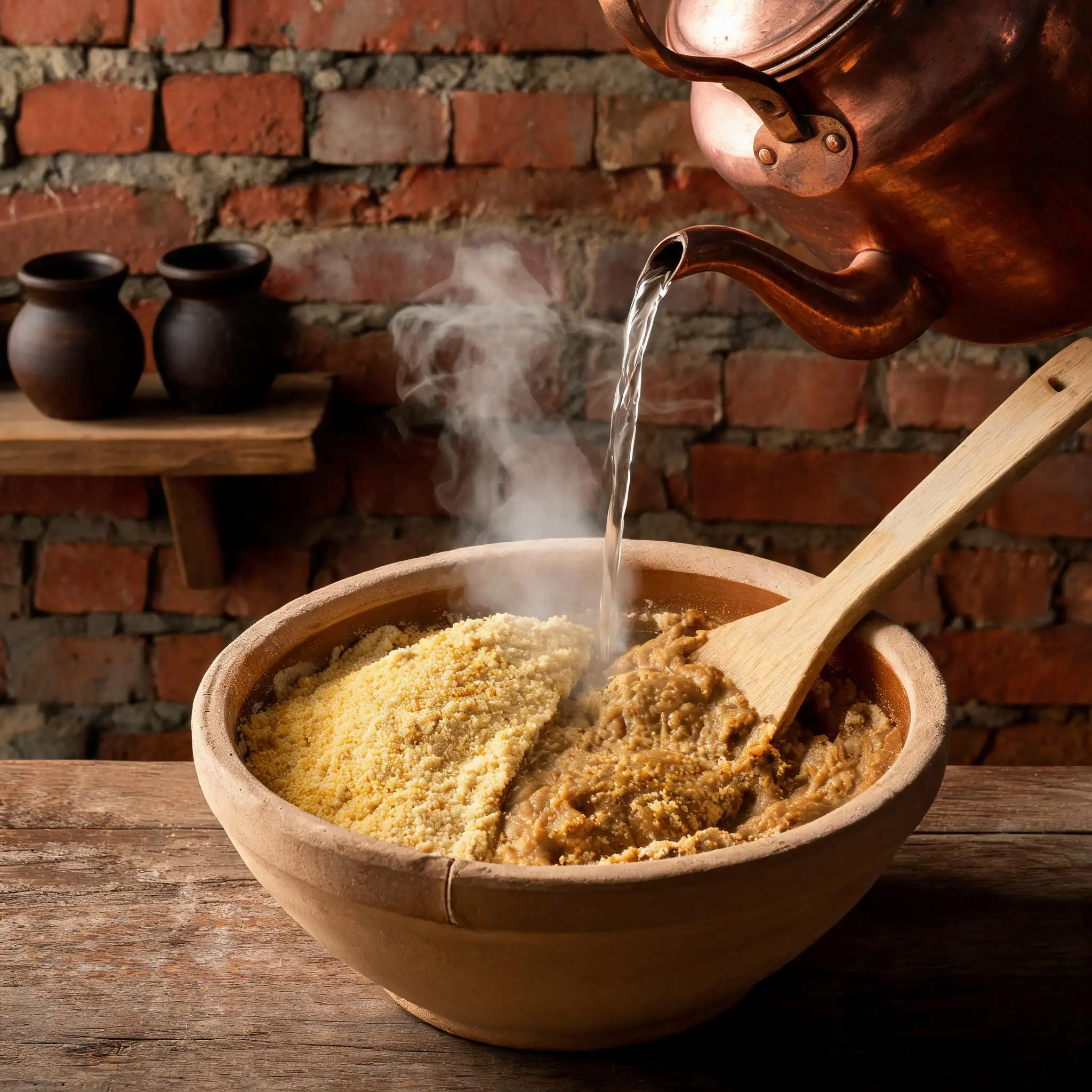
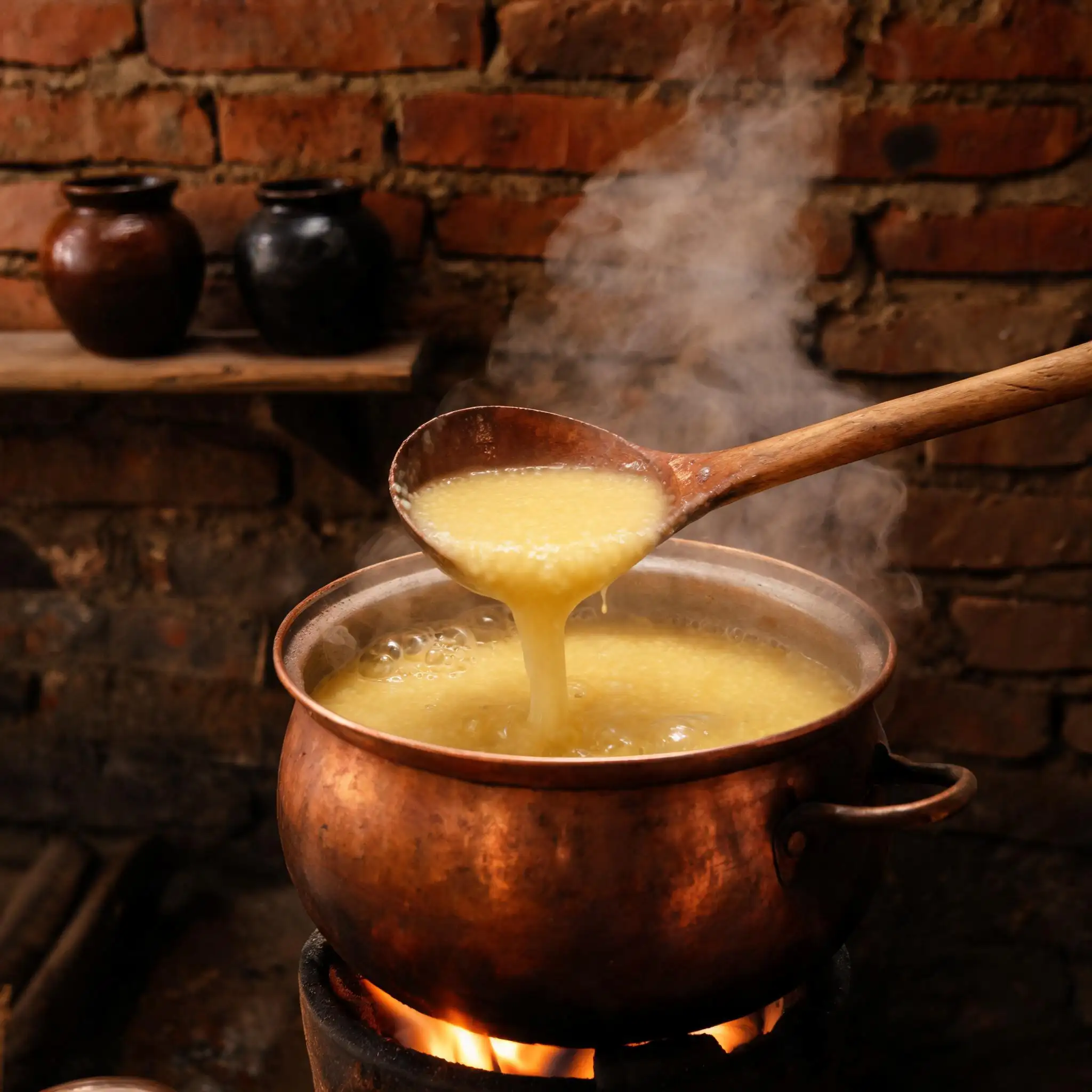
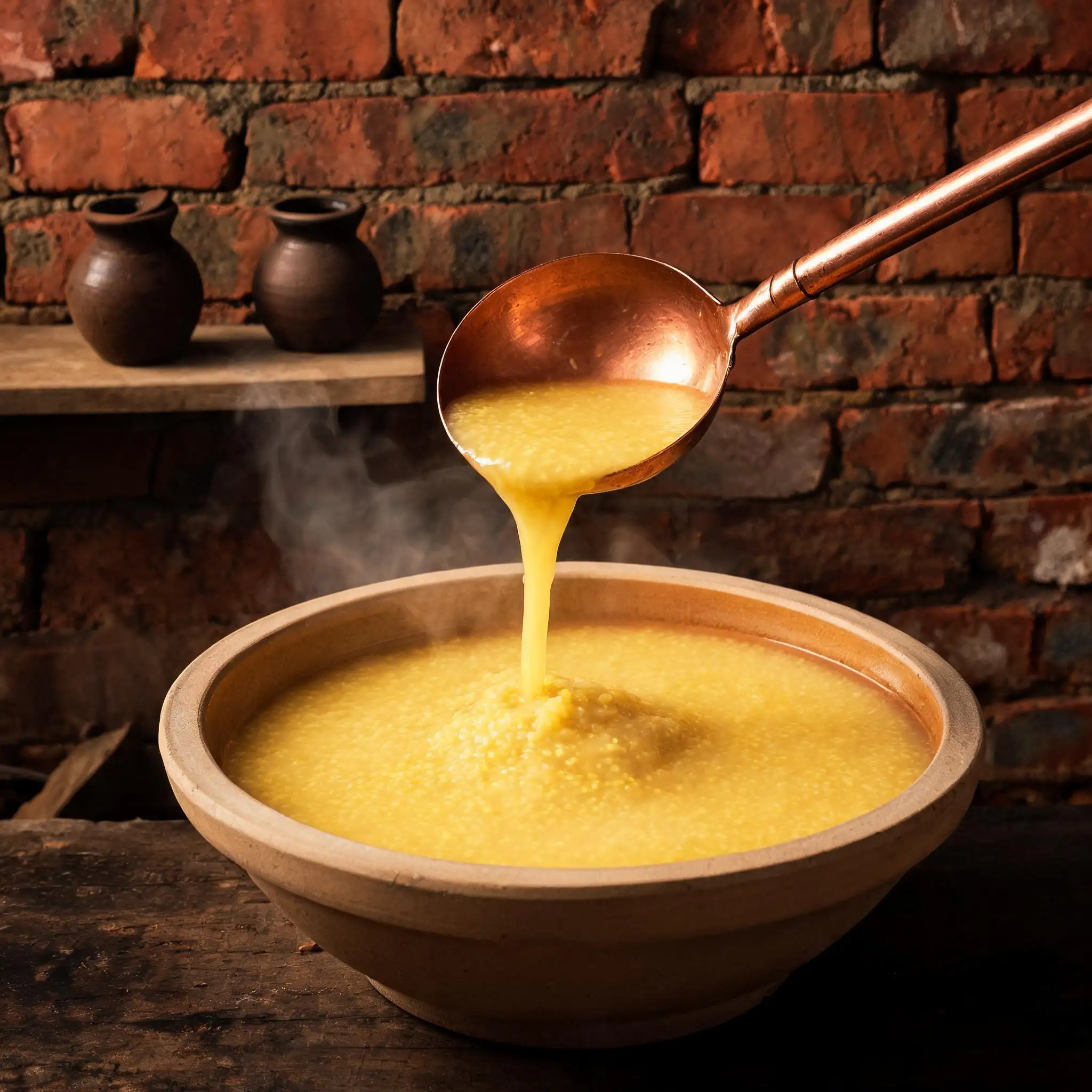
Mian cha is a cooked paste made from millet flour that has been dry-toasted and then combined with boiling water. The toasting happens first, in a dry iron wok over low heat, the flour stirred continuously as it heats — pale gold at the start, deepening slightly at the edges as the starch begins to caramelize. The smell that rises during toasting is of warm grain, faintly nutty, the kind of smell that belongs to early morning. When the flour is ready, boiling water goes in: a rapid pour from a copper kettle, stirring as it lands, the dry flour immediately seizing and thickening into a rough paste that is then transferred to a pot and simmered low until smooth and uniformly thick.
The result is something between a porridge and a thick liquid — pale golden, grainy in texture from the millet, warm but not hot. It is mild on its own. Almost plain.
Then the sesame paste.
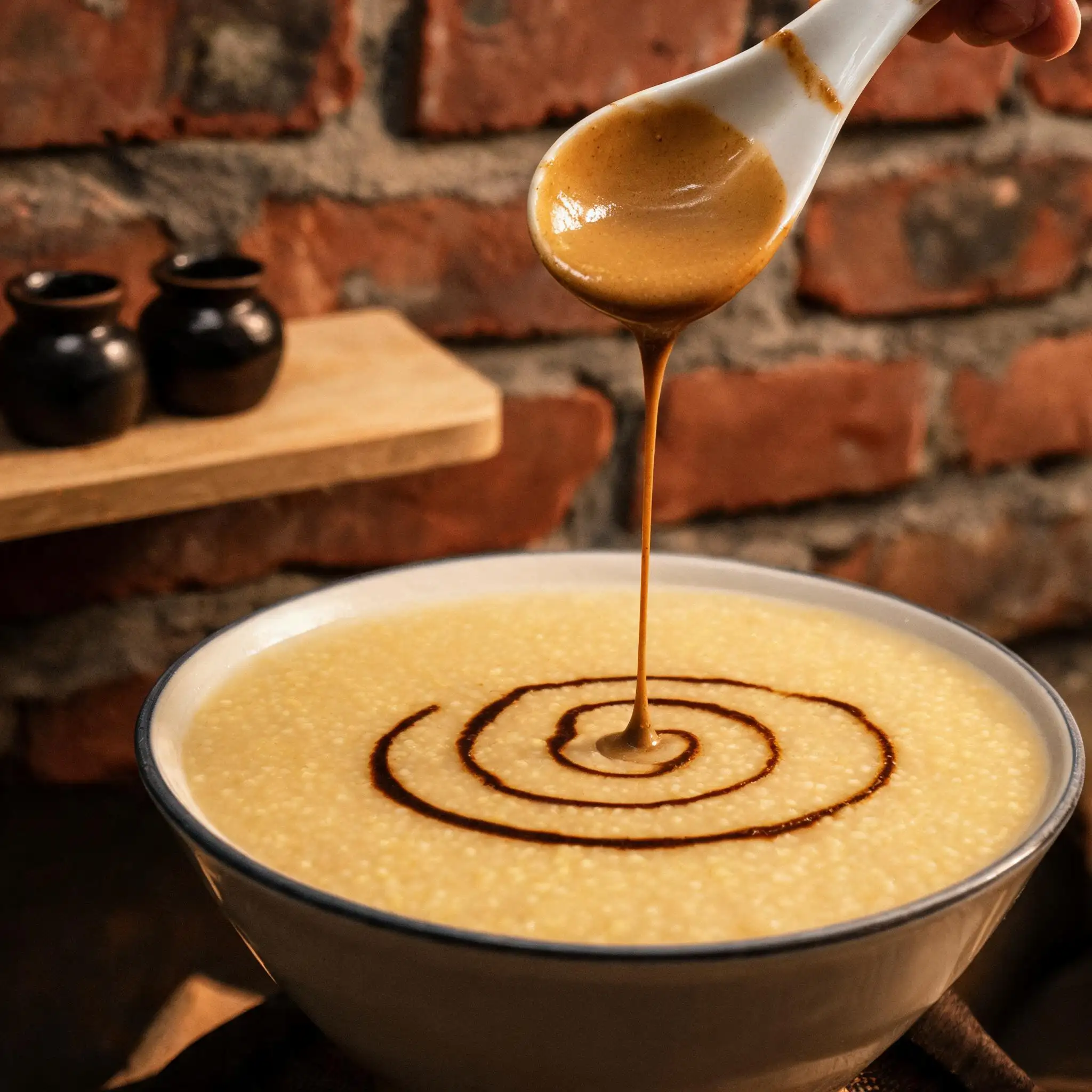
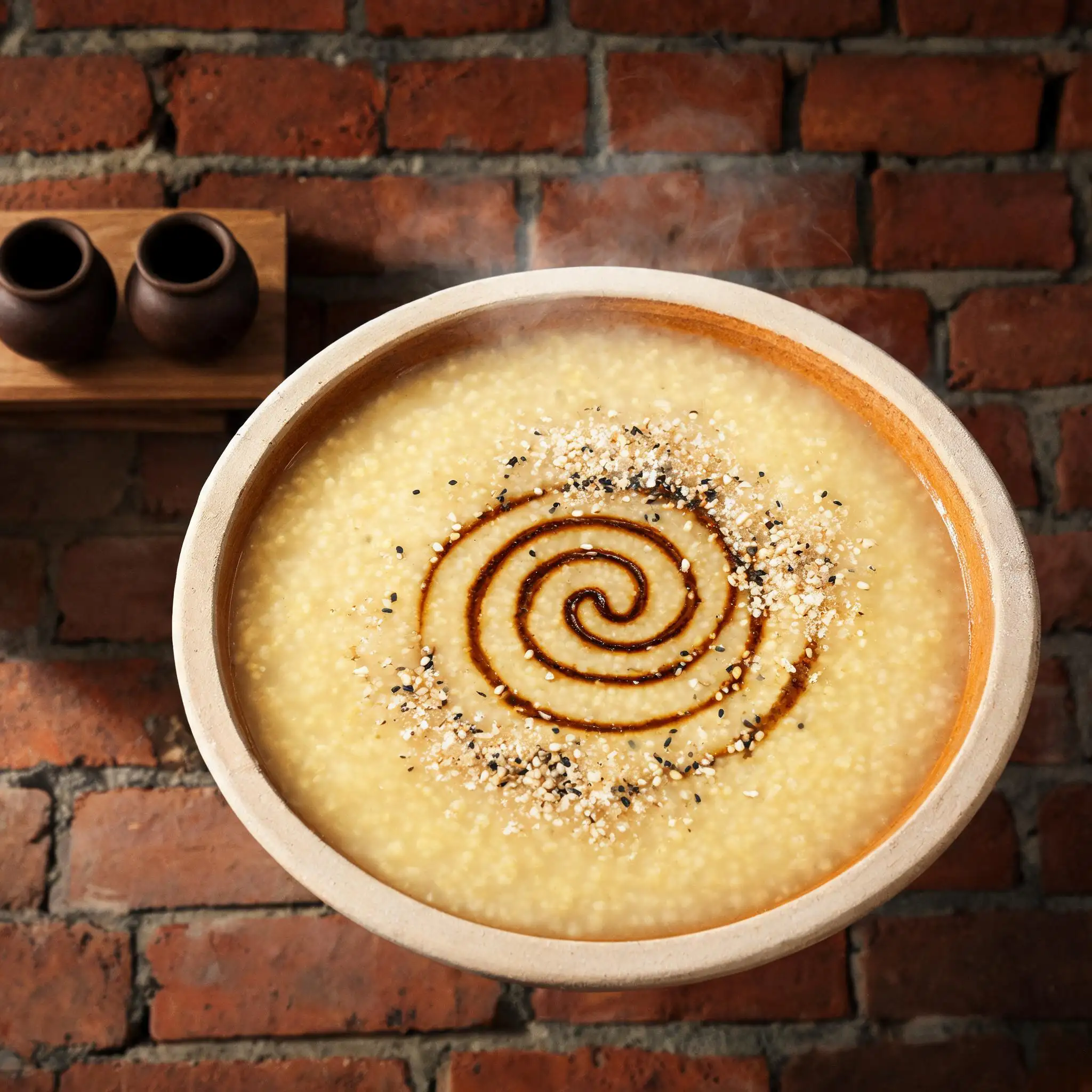
Beijing sesame paste is darker than the kind used in Middle Eastern cooking — made from roasted sesame seeds rather than raw, the color deep gold to amber, the flavor more assertive, slightly bitter, with a roasted depth that raw paste lacks. It is spooned directly onto the surface of the warm mian cha and drizzled in a slow spiral, starting from the center and working outward. Because the paste is dense and cold and the porridge beneath it is warm and fluid, the spiral holds its shape on the surface. It does not sink. For a moment the bowl holds a precise dark line coiling outward against the pale gold ground.
Sesame salt goes on last: a light scatter of coarsely ground toasted sesame and salt across the surface, landing on both the porridge and the spiral, adding a faint crunch and a sharp punctuation to each sip.
Jiao quan are served alongside — small, ring-shaped fried dough, golden-brown, crunchy on the outside with a slight chew inside, seasoned with a trace of salt. You hold the ring and take a bite, then a sip of mian cha. The textures work together: crispy fried dough and smooth warm paste, cold sesame and hot millet, the bitterness of roasted sesame and the clean grain flavor of the porridge.
The copper pot is traditional — the metal conducts heat evenly and, over years of use, develops a patina that vendors take some pride in. A worn copper pot, blackened at the base from years of open flame, filled with pale golden porridge: this is the visual signature of a mian cha stall.
You drink it before seven in the morning. You don't use a spoon. You rotate the bowl.
---
**Ingredients**
- Millet flour (小米面) — dry-toasted before use
- Sesame paste (芝麻酱) — tahini-style, made from roasted white sesame seeds; darker and more bitter than the pale Middle Eastern variety
- Sesame salt (椒盐) — mixed salt and toasted sesame seeds, coarsely ground
- Water — boiling
- Jiao quan (焦圈) — Beijing fried dough rings, for serving
---
There is a specific way to eat mian cha, and it is not with a spoon.
You hold the bowl with both hands. You tilt it toward your mouth and you drink from the rim, rotating the bowl slowly as you go, working your way around the edge. The sesame paste on the surface comes with each sip — not mixed in, but floating, so that every mouthful carries both the warm, lightly toasted porridge and the cold, dense, nutty paste together. A spoon would mix everything into a uniform texture. The rim-drinking technique keeps the two elements separate until the last possible moment.
Mian cha is a cooked paste made from millet flour that has been dry-toasted and then combined with boiling water. The toasting happens first, in a dry iron wok over low heat, the flour stirred continuously as it heats — pale gold at the start, deepening slightly at the edges as the starch begins to caramelize. The smell that rises during toasting is of warm grain, faintly nutty, the kind of smell that belongs to early morning. When the flour is ready, boiling water goes in: a rapid pour from a copper kettle, stirring as it lands, the dry flour immediately seizing and thickening into a rough paste that is then transferred to a pot and simmered low until smooth and uniformly thick.
The result is something between a porridge and a thick liquid — pale golden, grainy in texture from the millet, warm but not hot. It is mild on its own. Almost plain.
Then the sesame paste.
Beijing sesame paste is darker than the kind used in Middle Eastern cooking — made from roasted sesame seeds rather than raw, the color deep gold to amber, the flavor more assertive, slightly bitter, with a roasted depth that raw paste lacks. It is spooned directly onto the surface of the warm mian cha and drizzled in a slow spiral, starting from the center and working outward. Because the paste is dense and cold and the porridge beneath it is warm and fluid, the spiral holds its shape on the surface. It does not sink. For a moment the bowl holds a precise dark line coiling outward against the pale gold ground.
Sesame salt goes on last: a light scatter of coarsely ground toasted sesame and salt across the surface, landing on both the porridge and the spiral, adding a faint crunch and a sharp punctuation to each sip.
Jiao quan are served alongside — small, ring-shaped fried dough, golden-brown, crunchy on the outside with a slight chew inside, seasoned with a trace of salt. You hold the ring and take a bite, then a sip of mian cha. The textures work together: crispy fried dough and smooth warm paste, cold sesame and hot millet, the bitterness of roasted sesame and the clean grain flavor of the porridge.
The copper pot is traditional — the metal conducts heat evenly and, over years of use, develops a patina that vendors take some pride in. A worn copper pot, blackened at the base from years of open flame, filled with pale golden porridge: this is the visual signature of a mian cha stall.
You drink it before seven in the morning. You don't use a spoon. You rotate the bowl.