·5/20/2026
from
Chao Gan
#Chao Gan
---
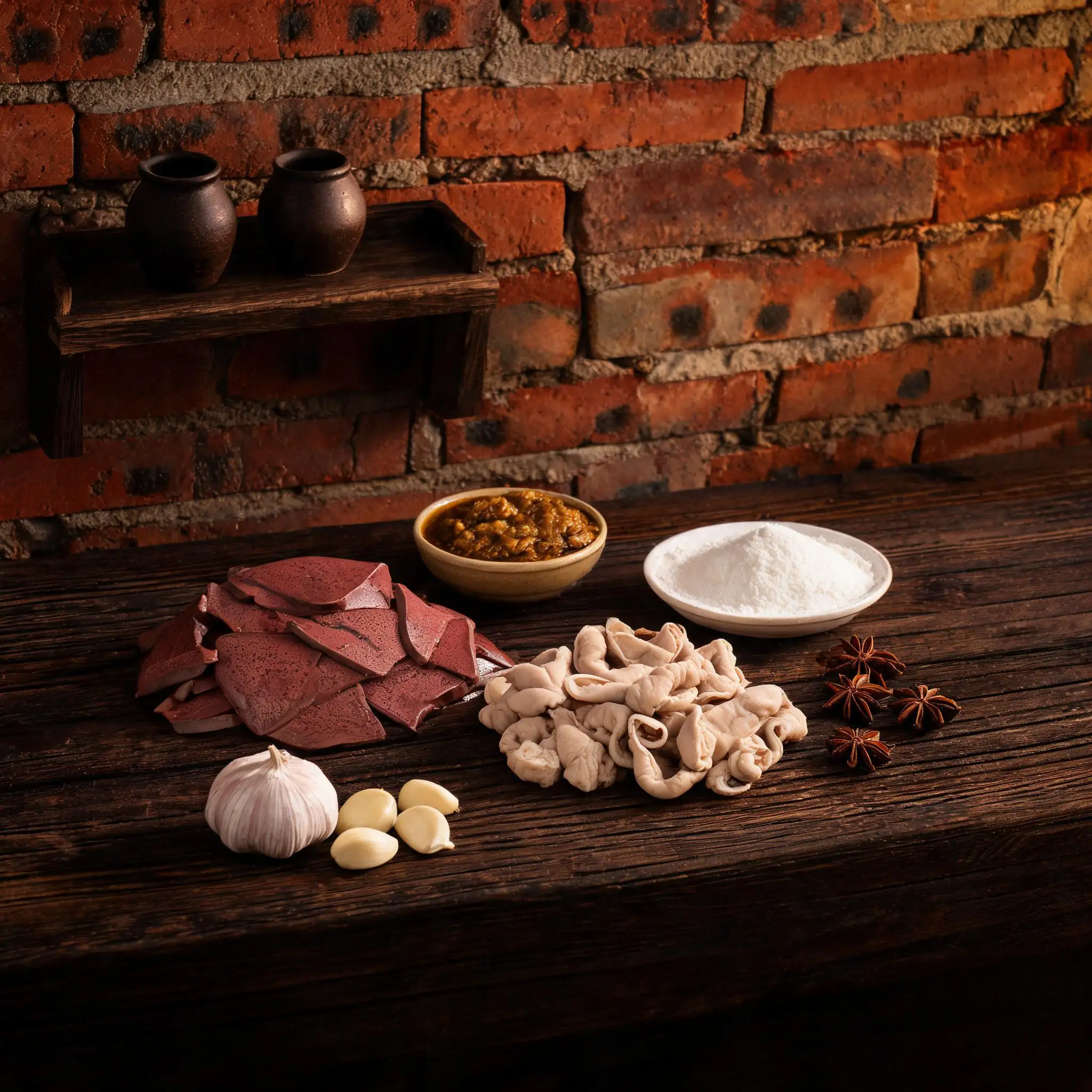
**Ingredients**
- Pork liver — sliced thin
- Pork large intestine — cleaned, cut into sections
- Garlic — a full head, raw, minced fine for finishing
- Yellow bean paste (黄酱) — fermented soybean paste
- Potato starch — for thickening
- Star anise, soy sauce, aromatics — for the broth
- Beijing shaobing (烧饼) — sesame flatbread, for serving
---
The name means fried liver. Nothing is fried.
This is one of those cases where a name records a moment in the history of a dish rather than its current form. At some point in the evolution of what is now chao gan, the liver was probably fried — quickly, in a hot wok, in the manner of a stir-fry. By the time the dish settled into its permanent form, the technique had changed. The liver is now simmered. The name stayed.
What you get is this: a bowl of pork liver and pork intestine in a thick, deeply savory, dark amber broth, thickened with starch to the consistency of a loose gel, finished with a generous amount of raw minced garlic scattered across the surface. It is eaten at breakfast. It is eaten by holding the bowl with both hands and drinking from the rim, working your way around the edge, a technique specific to this dish.
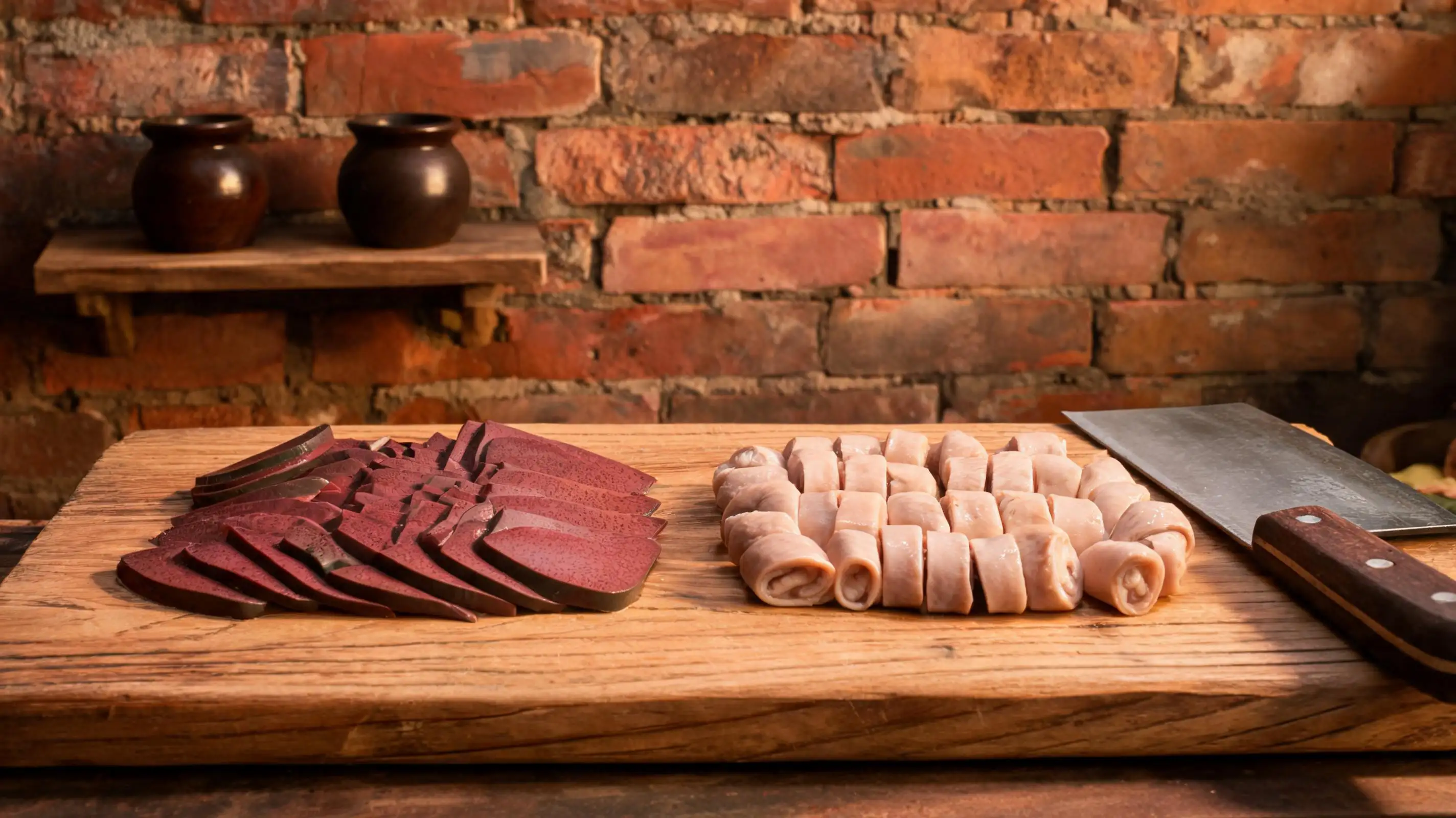
The preparation begins the night before. Pork intestine must be cleaned — thoroughly, repeatedly — before it can be used. The process is not quick and does not smell pleasant, which is perhaps one reason that chao gan has largely moved out of home kitchens and into the hands of specialized vendors who do it every day. By morning, the intestine is clean, pre-cooked, and cut into sections. The liver is sliced.
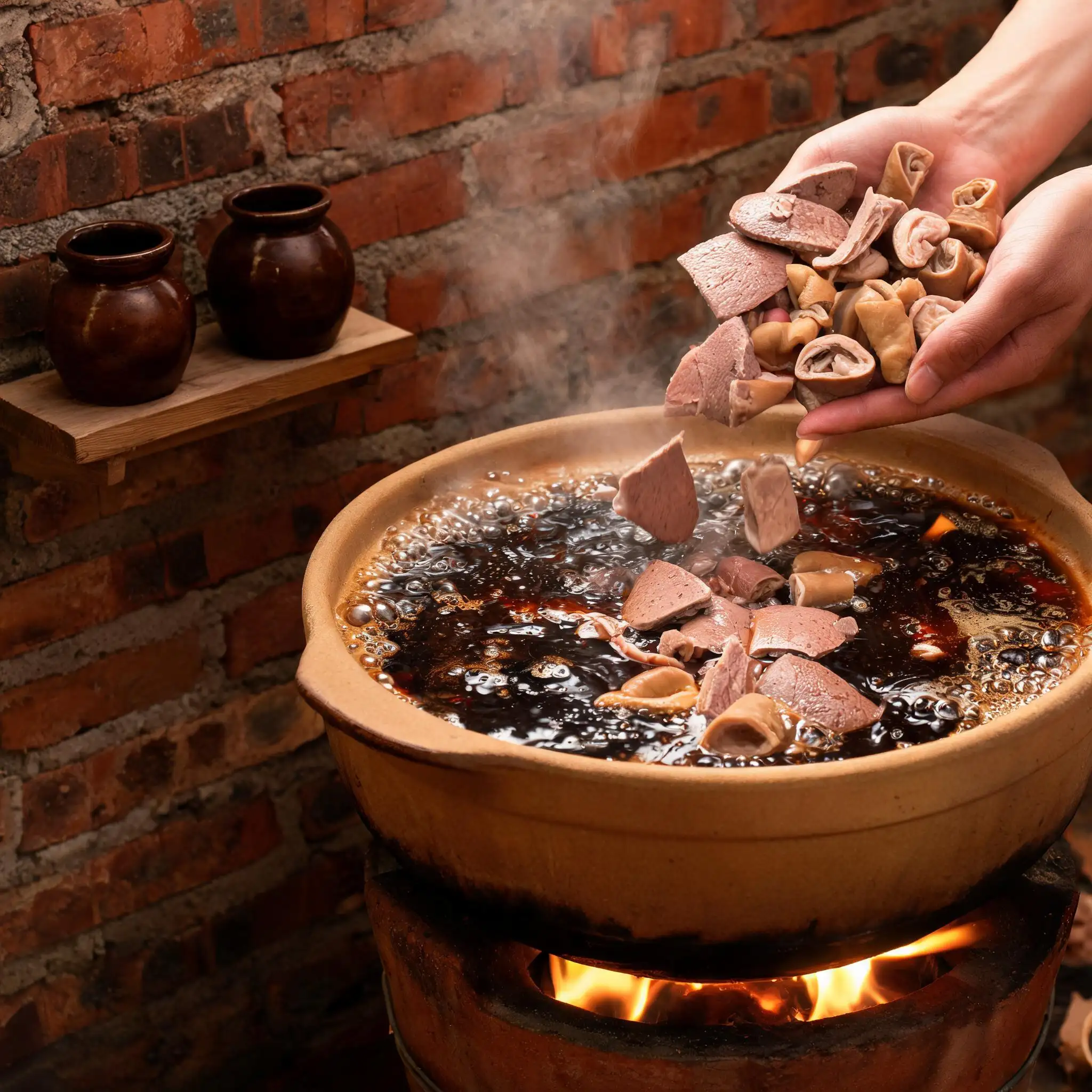
A large pot of broth is prepared: water with soy sauce, yellow bean paste, star anise, and other aromatics, brought to a simmer and allowed to develop color and depth. The liver goes in first — it cooks quickly, and the timing matters; overcooked liver is grainy and bitter. The intestine sections go in around the same time, needing slightly longer. When both are just cooked through, the thickening begins.
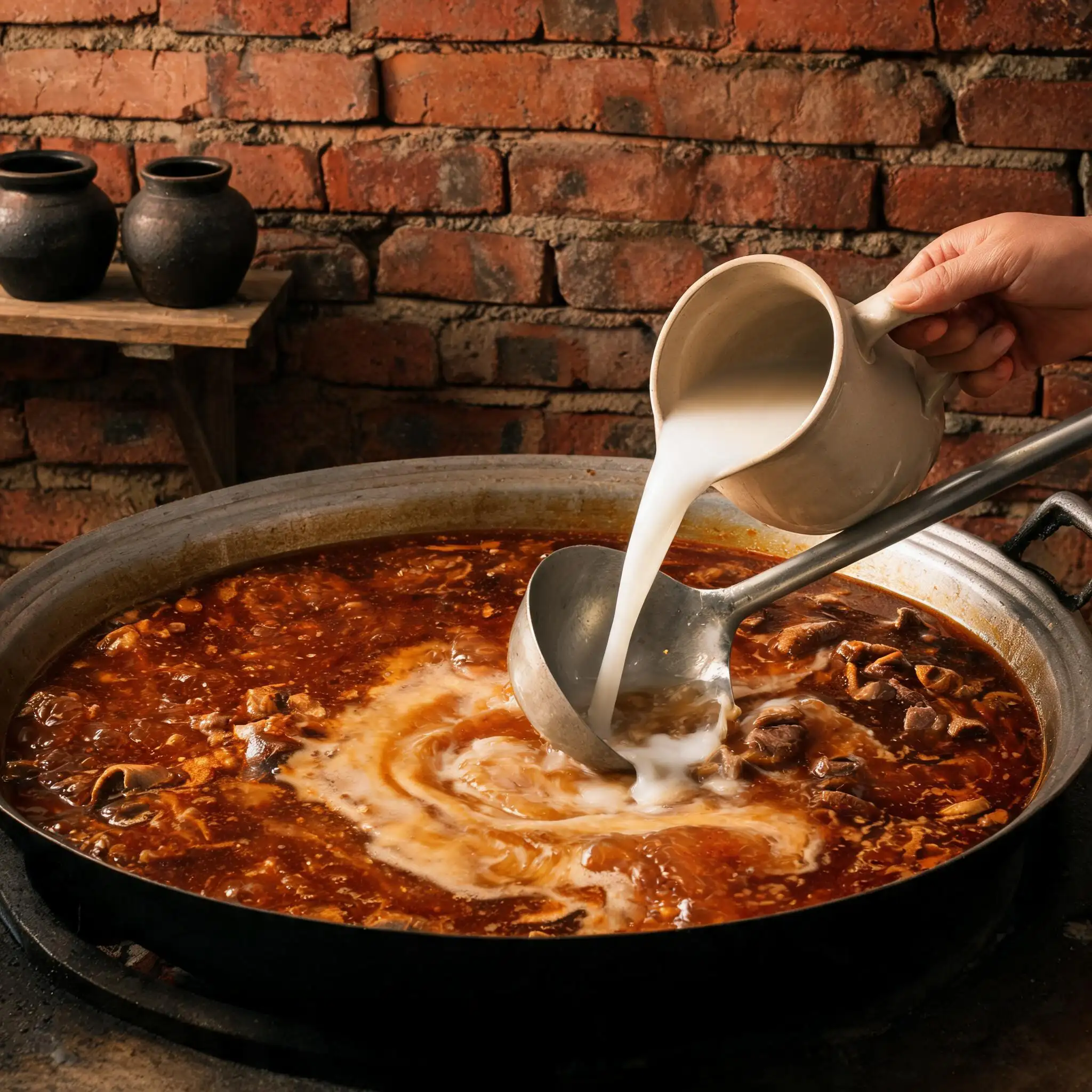
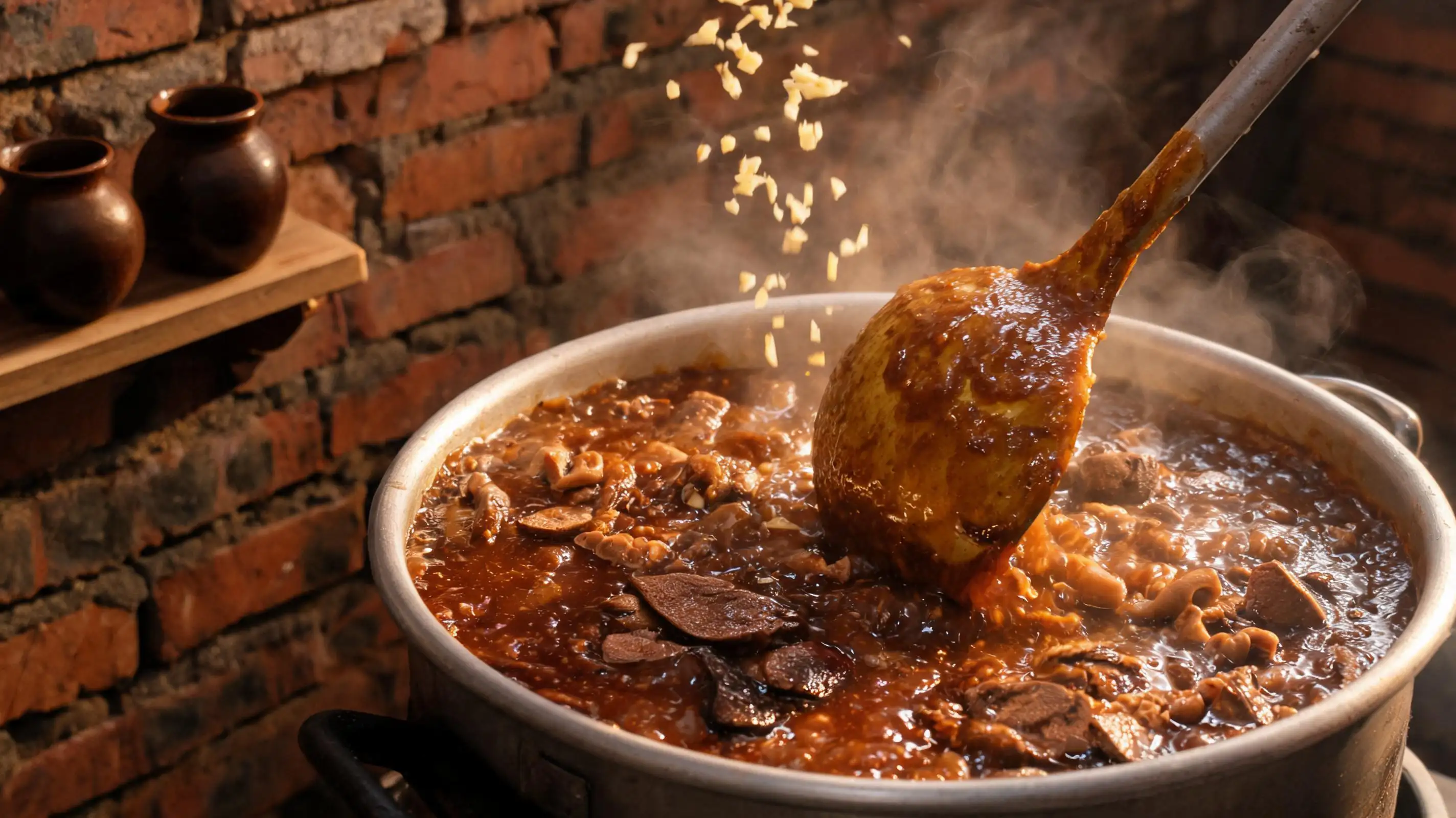
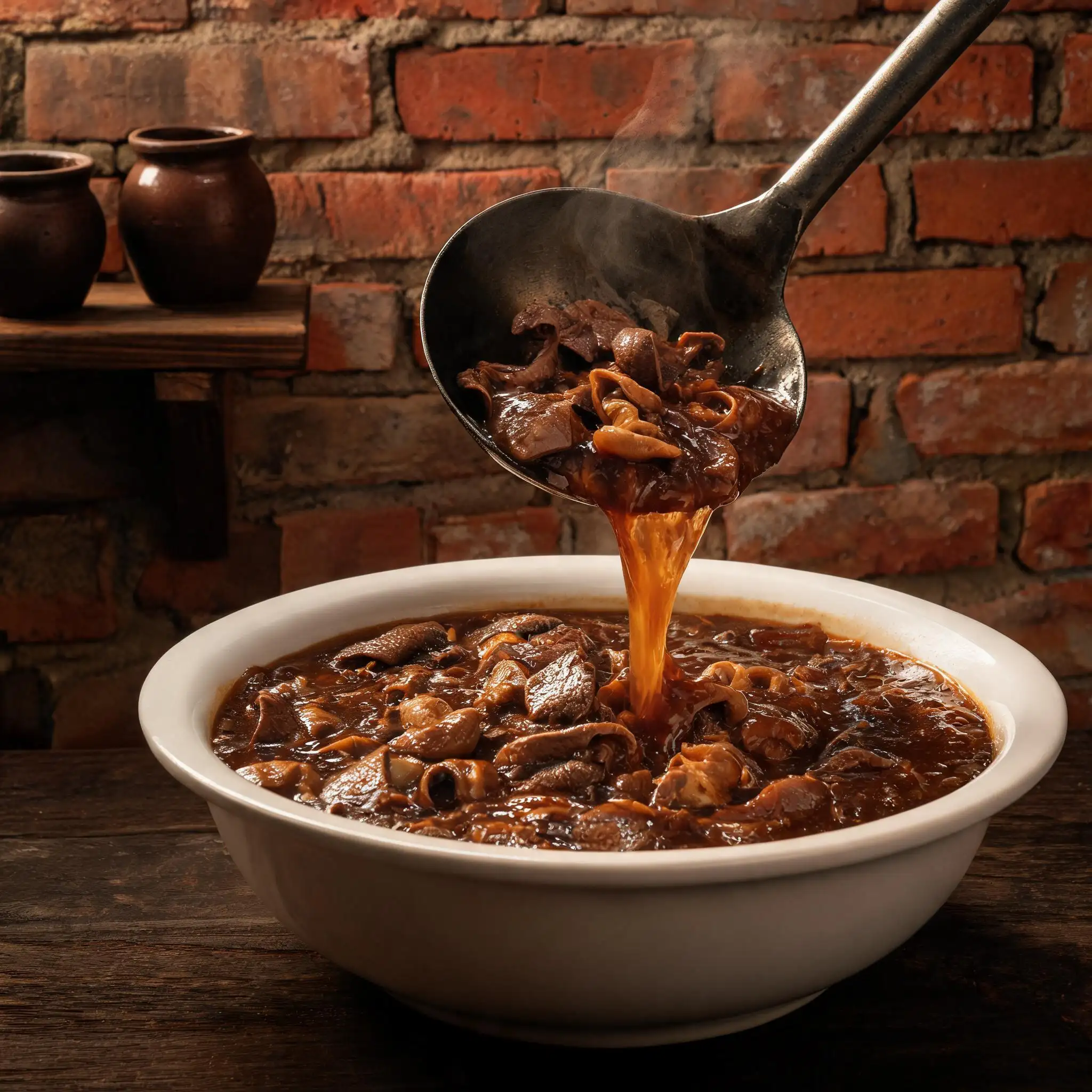
Starch slurry — potato starch dissolved in cold water — is poured in a steady stream while the broth is stirred continuously. The liquid transforms visibly: it begins to turn glossy and viscous, pulling away from the sides of the pot differently than before, coating the ladle when lifted. The starch is added until the broth has become a thick, semi-translucent gel — dark, glossy, amber-brown, barely fluid enough to pour.
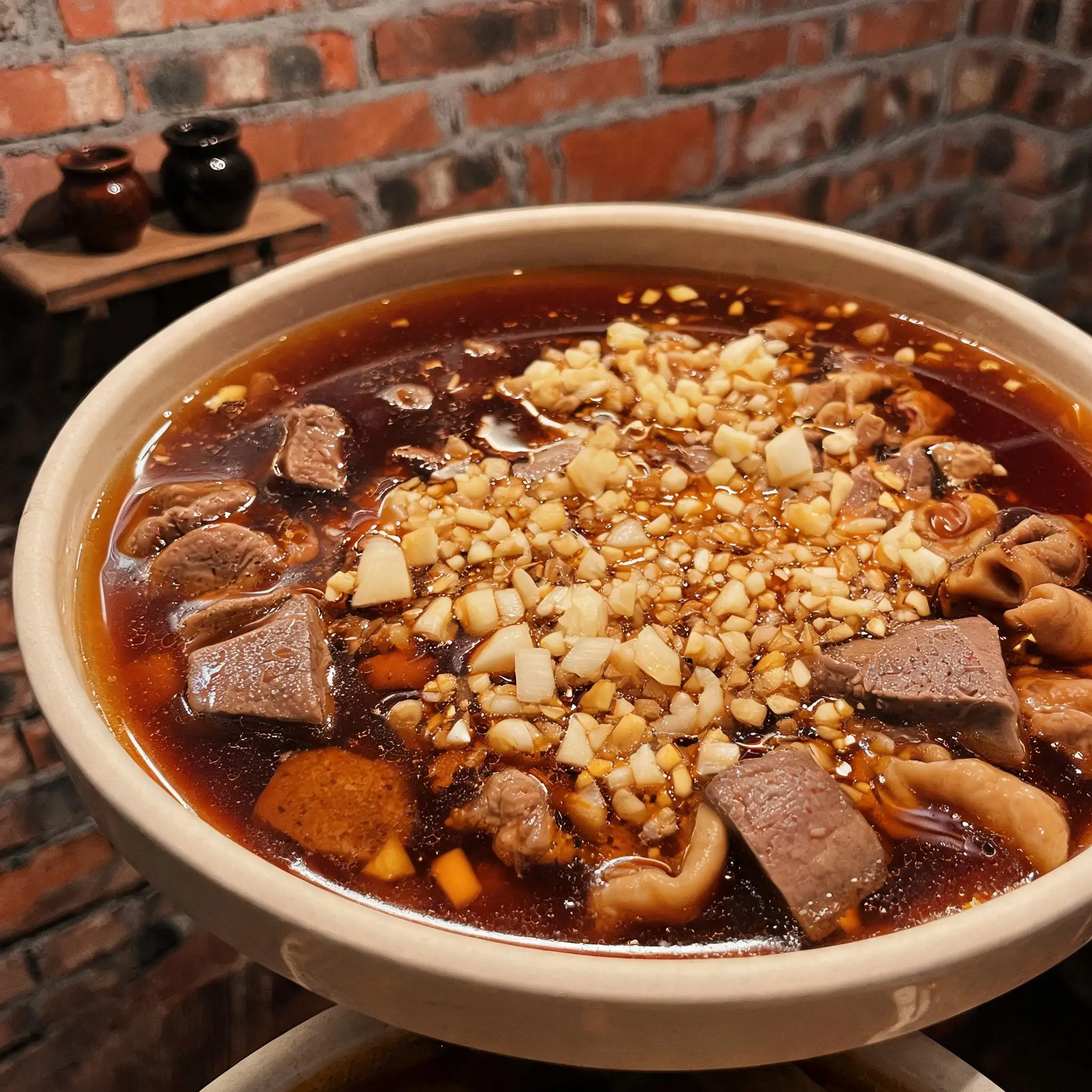
Raw garlic goes on last, after the bowl is filled. A full tablespoon of fine-minced raw garlic, dropped into the center of the surface, where it floats on the glossy gel. It does not dissolve. It sits there, white and sharp, slowly sinking as the starch beneath it warms it slightly. The garlic is not a garnish. It is structural — its raw pungency is what cuts through the richness of the liver and intestine and the heaviness of the thickened broth.
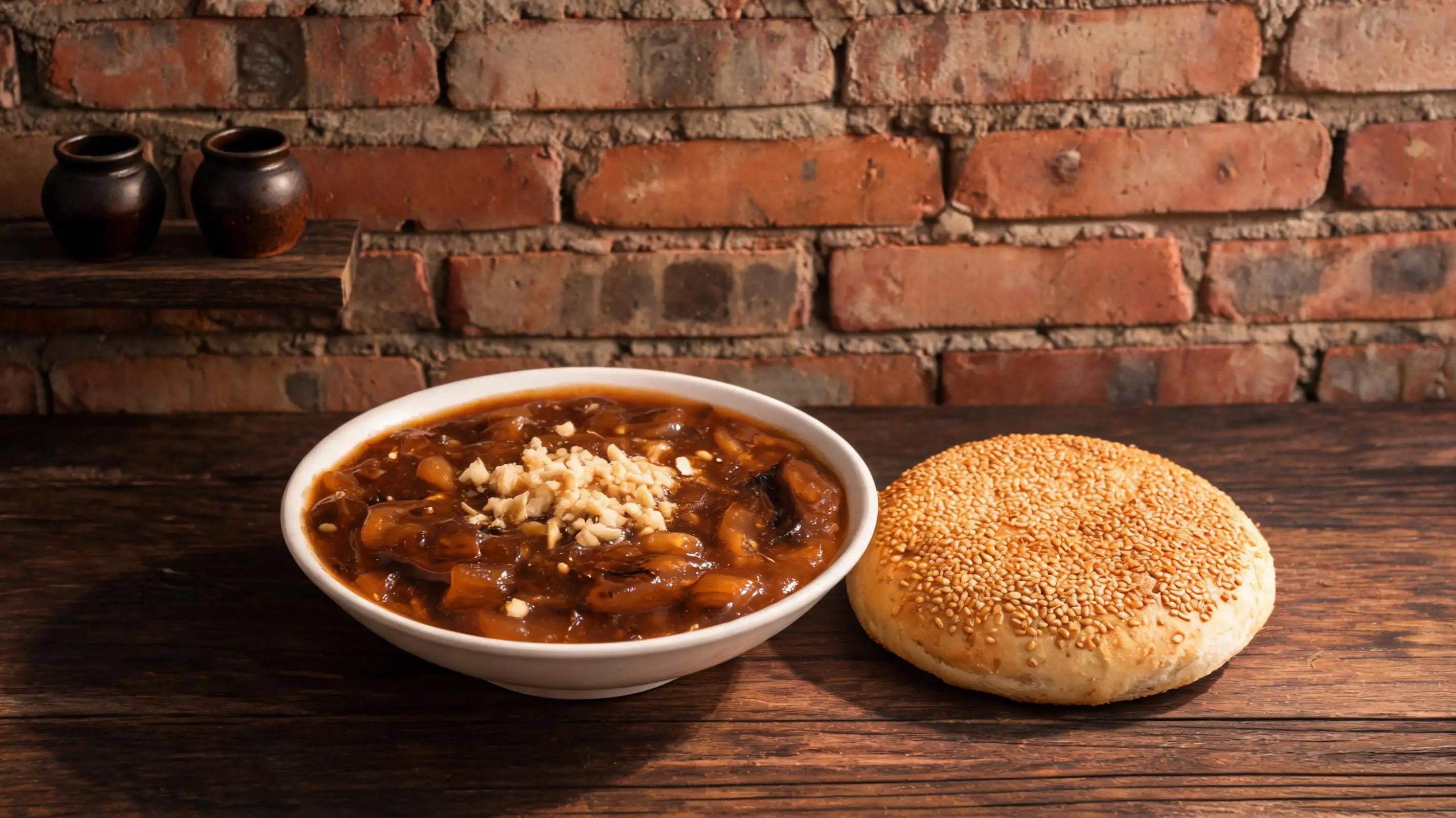
Chao gan is served with shaobing, a round sesame-covered flatbread baked in a cylindrical clay oven until golden. You break the shaobing into pieces and use it to scoop the thick stew from the bowl, or simply eat it alongside, alternating bites.
The flavor is assertive. The liver has a mineral depth that softens slightly in the simmering broth but does not disappear. The intestine is gelatinous, slightly chewy, with a clean flavor that carries the seasoning of the broth. The thickened sauce coats everything heavily — warm, dark, faintly sweet from the bean paste, aromatic from the spices. Then the garlic arrives, sudden and sharp, cutting through everything else.
It is a breakfast food in the way that certain breakfasts in certain cities are really a meal for people who have already been awake for several hours. The vendors who specialize in chao gan start their preparations before dawn. By six in the morning, the pot is ready. The queue forms early.
In a few places in Beijing, it still works this way.
---
**Ingredients**
- Pork liver — sliced thin
- Pork large intestine — cleaned, cut into sections
- Garlic — a full head, raw, minced fine for finishing
- Yellow bean paste (黄酱) — fermented soybean paste
- Potato starch — for thickening
- Star anise, soy sauce, aromatics — for the broth
- Beijing shaobing (烧饼) — sesame flatbread, for serving
---
The name means fried liver. Nothing is fried.
This is one of those cases where a name records a moment in the history of a dish rather than its current form. At some point in the evolution of what is now chao gan, the liver was probably fried — quickly, in a hot wok, in the manner of a stir-fry. By the time the dish settled into its permanent form, the technique had changed. The liver is now simmered. The name stayed.
What you get is this: a bowl of pork liver and pork intestine in a thick, deeply savory, dark amber broth, thickened with starch to the consistency of a loose gel, finished with a generous amount of raw minced garlic scattered across the surface. It is eaten at breakfast. It is eaten by holding the bowl with both hands and drinking from the rim, working your way around the edge, a technique specific to this dish.
The preparation begins the night before. Pork intestine must be cleaned — thoroughly, repeatedly — before it can be used. The process is not quick and does not smell pleasant, which is perhaps one reason that chao gan has largely moved out of home kitchens and into the hands of specialized vendors who do it every day. By morning, the intestine is clean, pre-cooked, and cut into sections. The liver is sliced.
A large pot of broth is prepared: water with soy sauce, yellow bean paste, star anise, and other aromatics, brought to a simmer and allowed to develop color and depth. The liver goes in first — it cooks quickly, and the timing matters; overcooked liver is grainy and bitter. The intestine sections go in around the same time, needing slightly longer. When both are just cooked through, the thickening begins.
Starch slurry — potato starch dissolved in cold water — is poured in a steady stream while the broth is stirred continuously. The liquid transforms visibly: it begins to turn glossy and viscous, pulling away from the sides of the pot differently than before, coating the ladle when lifted. The starch is added until the broth has become a thick, semi-translucent gel — dark, glossy, amber-brown, barely fluid enough to pour.
Raw garlic goes on last, after the bowl is filled. A full tablespoon of fine-minced raw garlic, dropped into the center of the surface, where it floats on the glossy gel. It does not dissolve. It sits there, white and sharp, slowly sinking as the starch beneath it warms it slightly. The garlic is not a garnish. It is structural — its raw pungency is what cuts through the richness of the liver and intestine and the heaviness of the thickened broth.
Chao gan is served with shaobing, a round sesame-covered flatbread baked in a cylindrical clay oven until golden. You break the shaobing into pieces and use it to scoop the thick stew from the bowl, or simply eat it alongside, alternating bites.
The flavor is assertive. The liver has a mineral depth that softens slightly in the simmering broth but does not disappear. The intestine is gelatinous, slightly chewy, with a clean flavor that carries the seasoning of the broth. The thickened sauce coats everything heavily — warm, dark, faintly sweet from the bean paste, aromatic from the spices. Then the garlic arrives, sudden and sharp, cutting through everything else.
It is a breakfast food in the way that certain breakfasts in certain cities are really a meal for people who have already been awake for several hours. The vendors who specialize in chao gan start their preparations before dawn. By six in the morning, the pot is ready. The queue forms early.
In a few places in Beijing, it still works this way.