·5/20/2026
from
Ma Dou Fu
# Ma Dou Fu
---
**Ingredients**
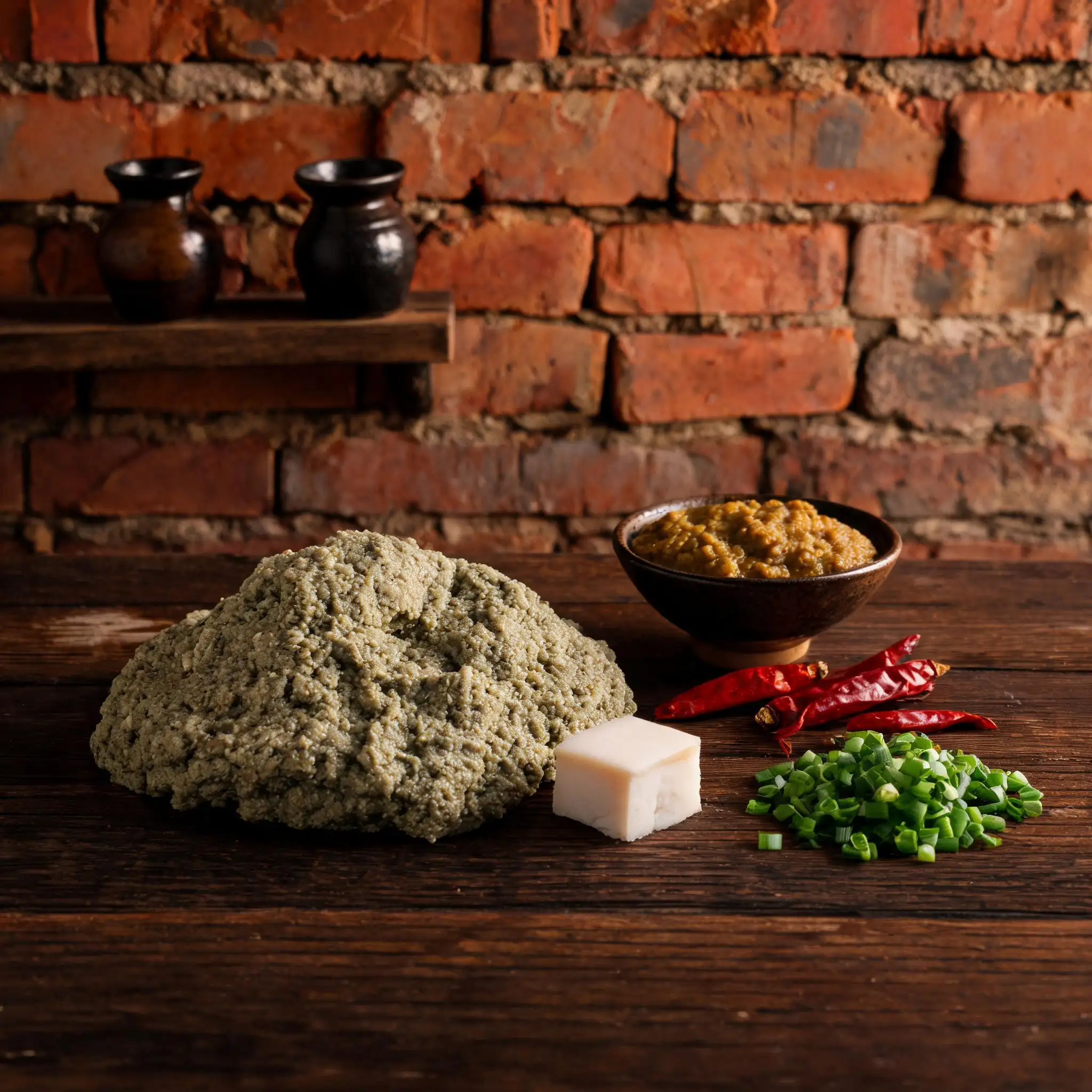
- Ma dou fu (麻豆腐) — fermented mung bean paste, the byproduct of making mung bean starch noodles; grayish-green, dense, slightly sour
- Mutton tail fat (羊尾油) — or lard; the traditional fat for this dish
- Yellow bean paste (黄酱) — fermented soybean paste, dark and savory
- Dried red chili peppers
- Scallion greens — chopped
- Chili oil — for finishing
- Beijing shaobing (烧饼) — sesame flatbread, for serving
---
Ma dou fu is what is left over.
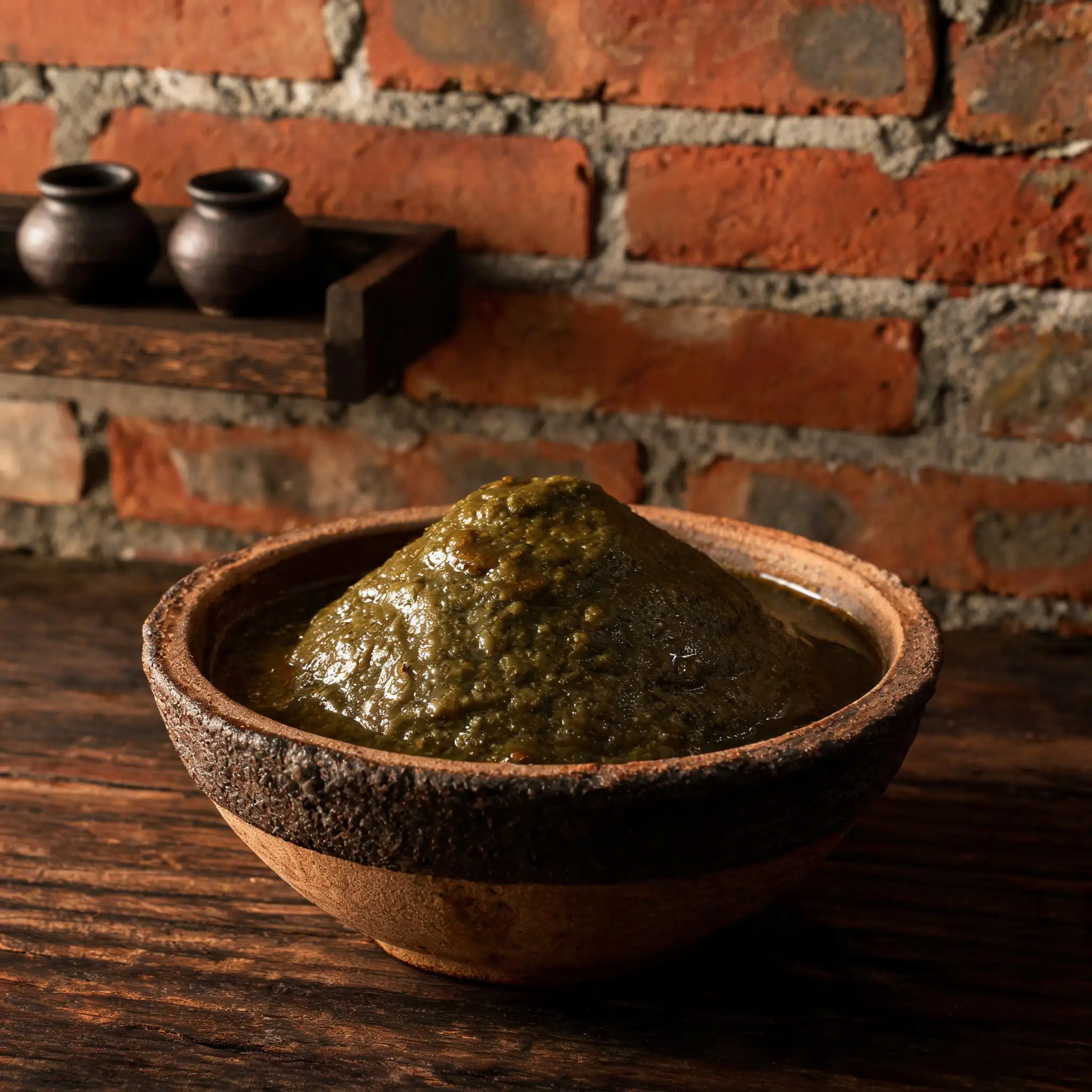
When mung beans are soaked, ground, and processed to make the starch used in liang fen — the firm, cool, translucent jelly that Beijing street vendors sell in summer — the liquid that gets strained away carries with it the insoluble fiber and protein from the beans. That liquid is allowed to settle. The solid that precipitates out is ma dou fu: a grayish-green paste, coarse-textured, faintly sour from the fermentation that happens during soaking, with a smell that is earthy and slightly funky in the way that fermented things sometimes are.
It is not, at first glance, an obvious thing to eat.
The Beijing cooks who found a use for it were working in the tradition of waste-not cooking that characterized the city's food culture for centuries — the same tradition that turned offal into lu zhu huo shao, fish scraps into home-style braises, and stale bread into something worth eating with vinegar and garlic. The question was not whether ma dou fu was worth using, but how to cook it in a way that justified its place on the table.
The answer, eventually, was fat and fire.
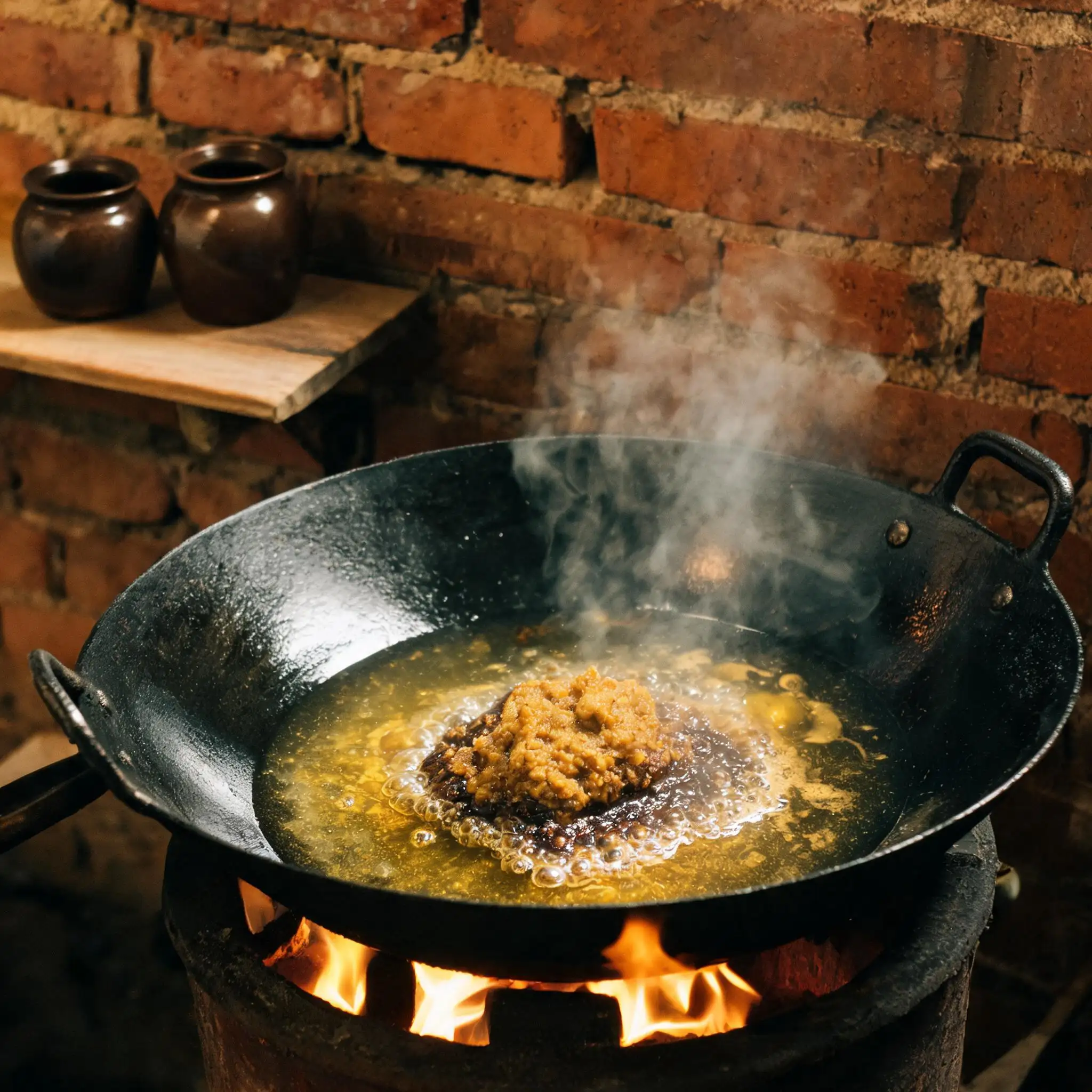
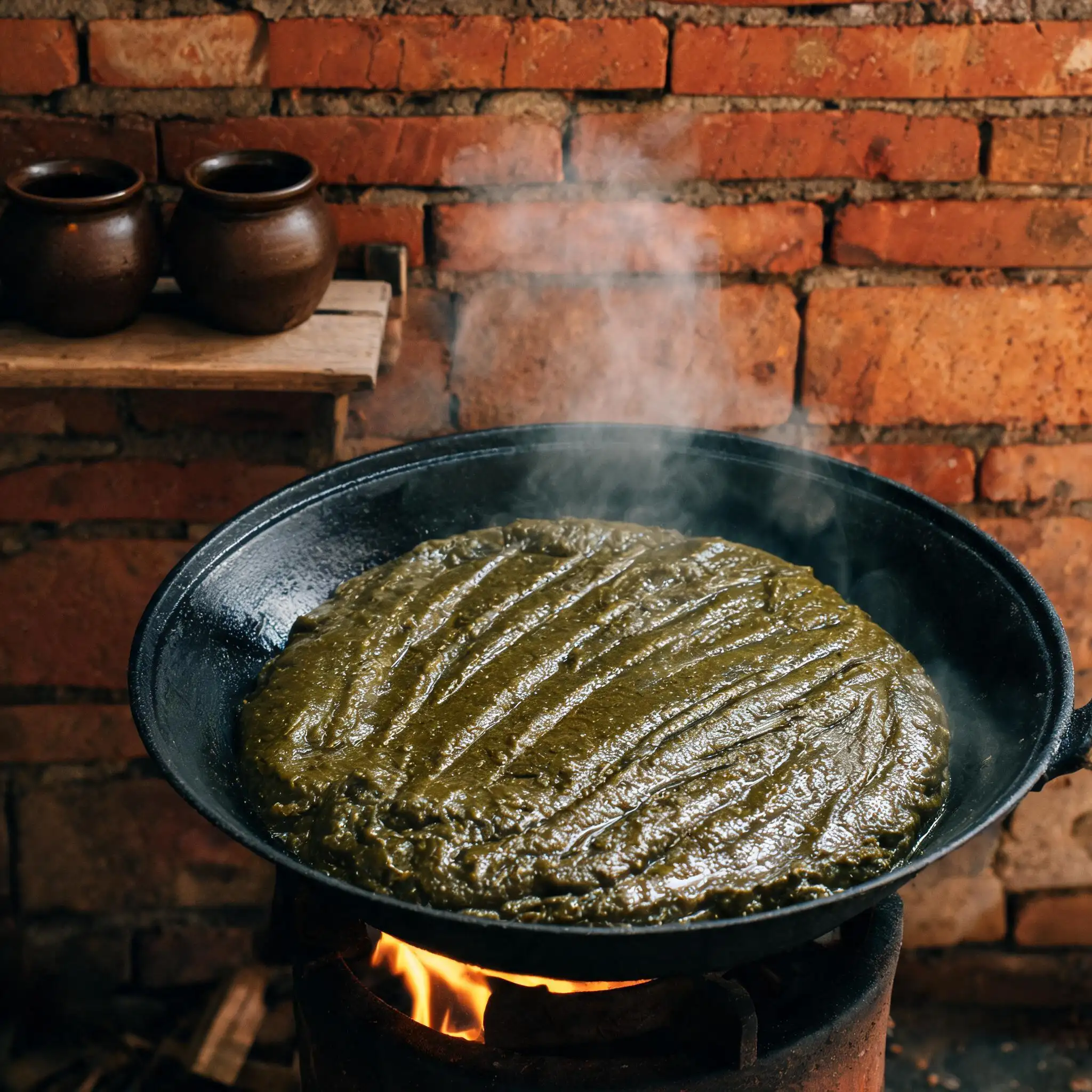
A heavy iron wok is placed over a high flame until it smokes. Mutton tail fat goes in and renders until clear. Then yellow bean paste: it hits the hot fat and immediately begins to sizzle and caramelize, releasing a deep, savory, slightly sweet aroma. This is the flavor base.
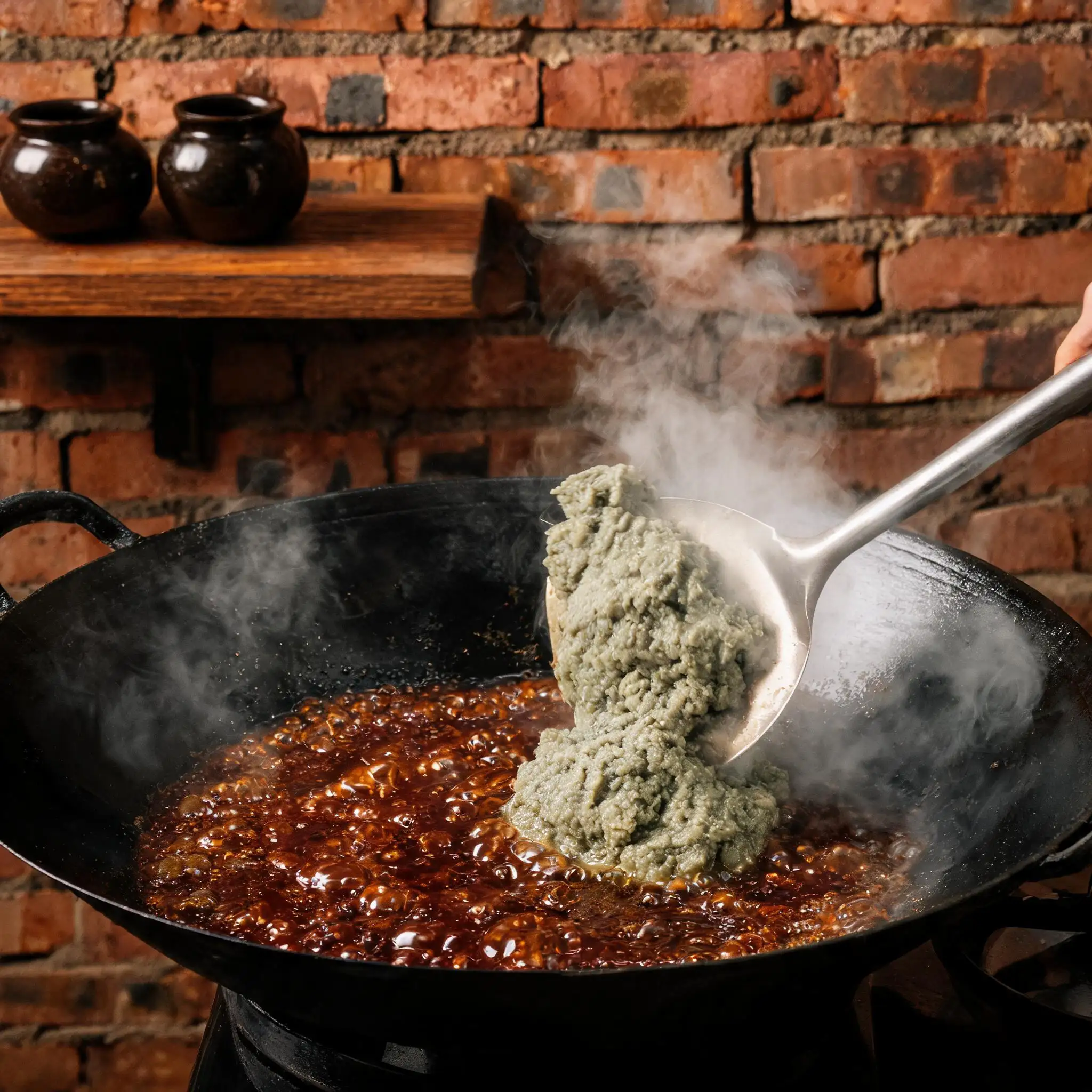
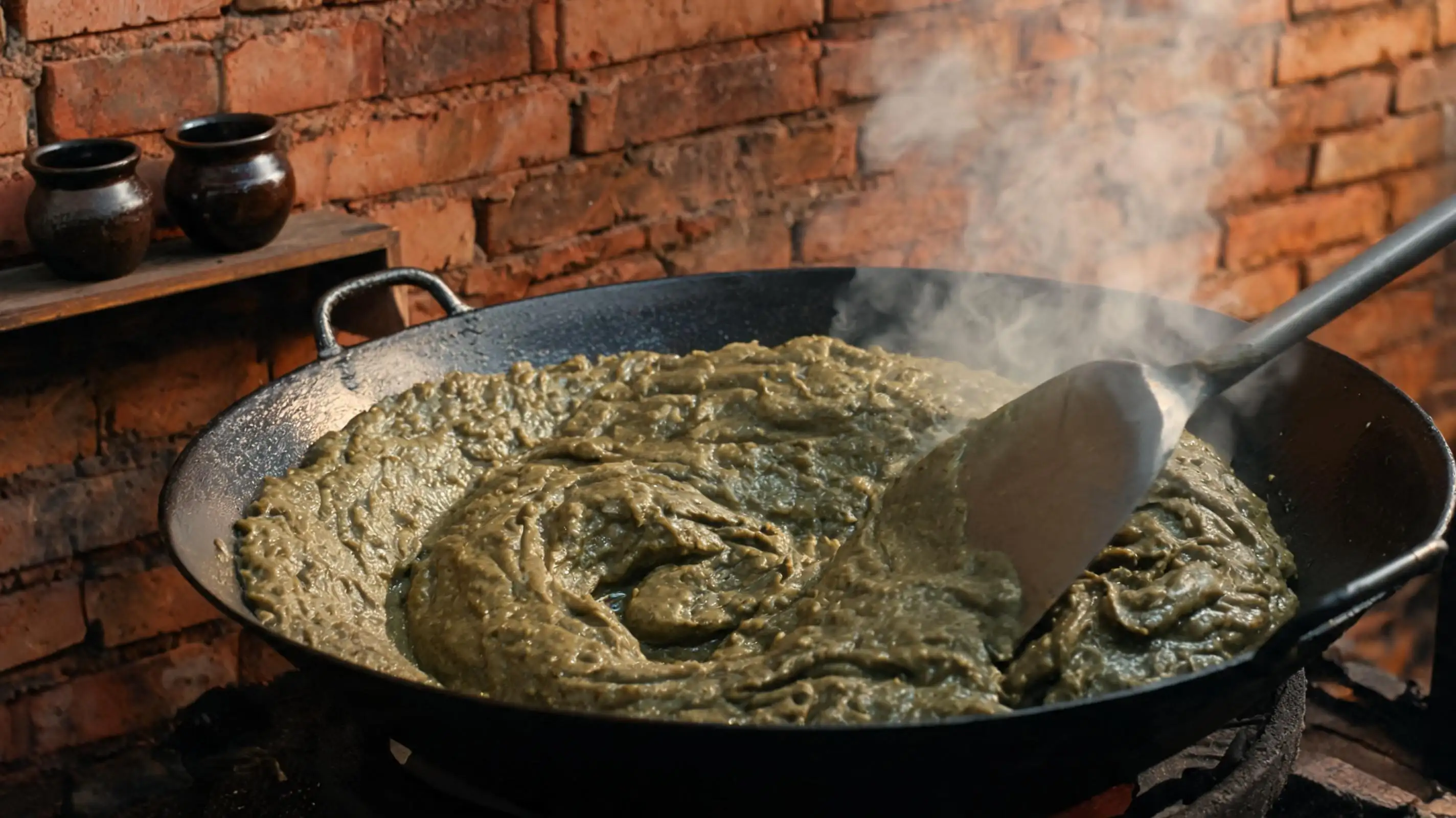
The ma dou fu goes in next, all at once — a large, unglamorous mass of grayish-green paste dropped into a wok that smells of rendered fat and fermented beans. The spatula folds and presses and scrapes. The paste absorbs the fat, darkening slowly toward a deeper olive. The cooking is not fast. It takes sustained heat and sustained movement. There is a point at which the spatula leaves distinct marks on the surface — clear ridges that hold their shape briefly before the paste settles back. That is when the cooking is nearly done.
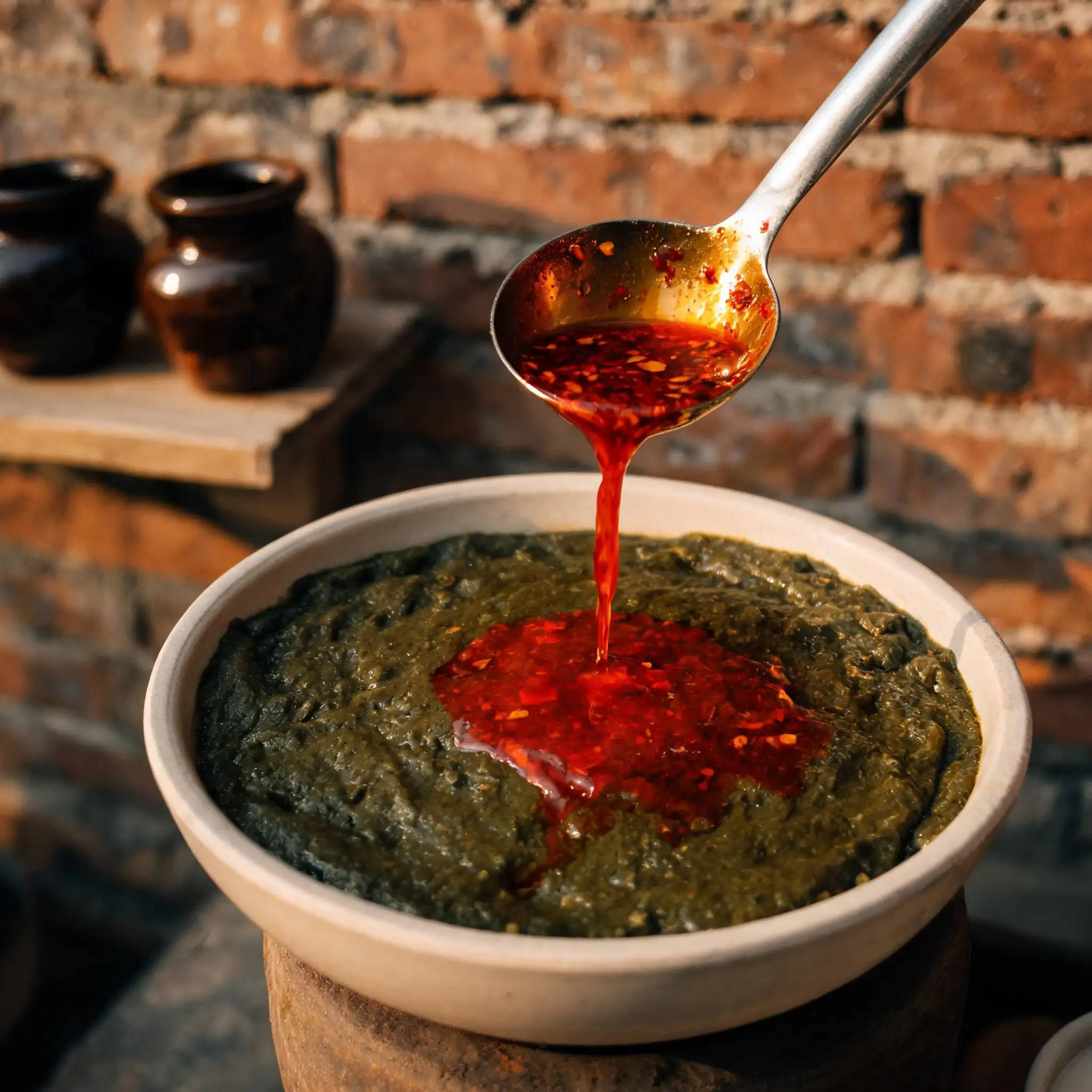
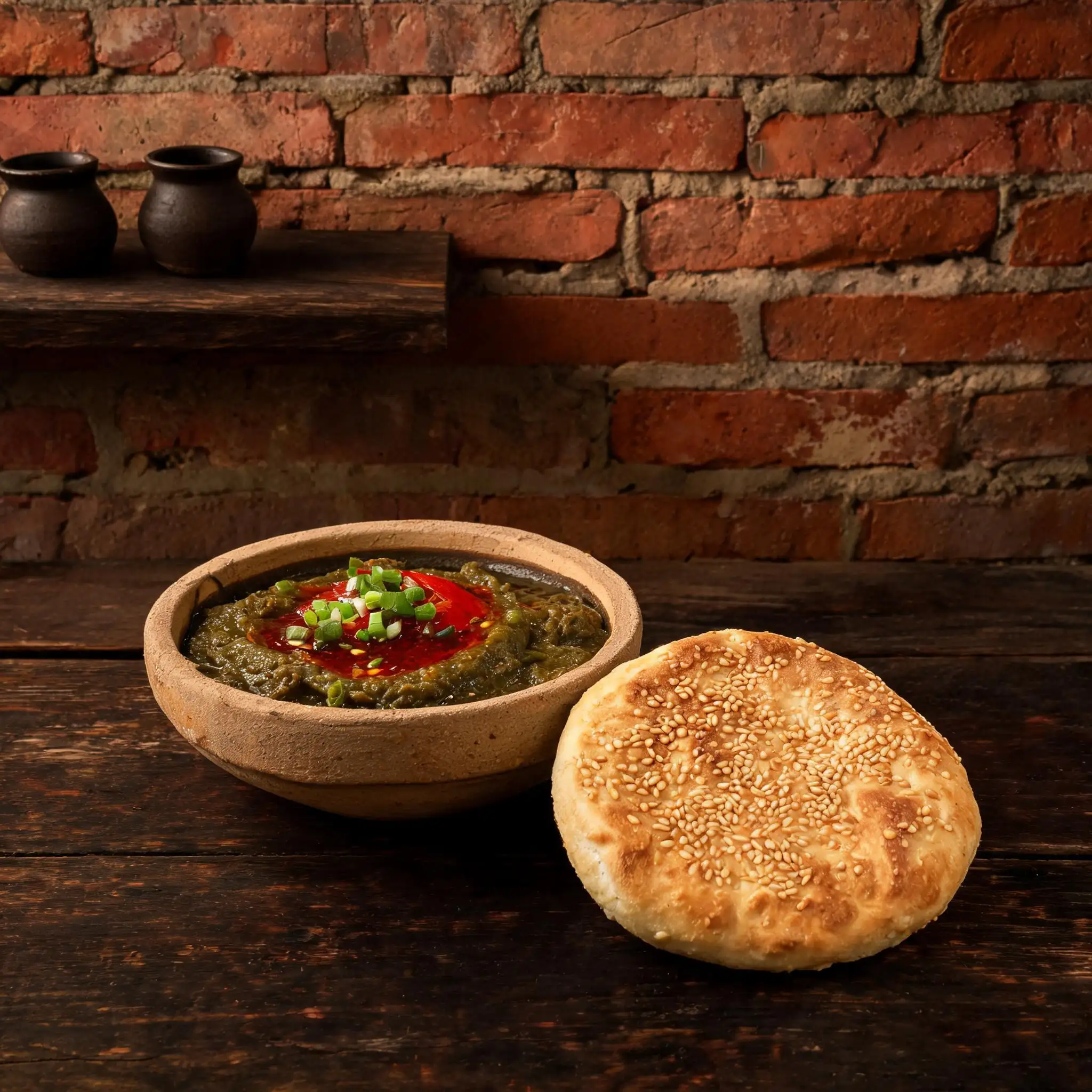
It is served in a wide, shallow earthenware bowl. The paste fills the bowl and is smoothed slightly at the surface. Then the finishing: a ladleful of bright red chili oil poured into the center. The red spreads outward across the dark grey-green surface, slower than water. Chopped scallion greens go on last.
A shaobing is served on the side. You tear a piece and drag it through the ma dou fu, picking up paste and oil together.
The flavor is difficult to describe to someone who has not eaten it. Savory in a fermented, layered way — not clean umami but something older and stranger, the sourness of the beans still present underneath the fat and the sauce, the chili oil cutting through with heat. Filling in the way that food made from byproducts and fat tends to be filling: efficiently, completely, without elegance.
Ma dou fu is a food of the morning. The old vendors who sold it worked the outer hutongs before sunrise, setting up iron woks on coal stoves while the city was still waking. By seven or eight, the wok would be ready. By noon, it would be gone.
Most of those vendors are gone now. Finding authentic ma dou fu in Beijing requires some looking.
But the dish itself is still there — in a few restaurants, in some home kitchens, in the memory of the people who ate it before things changed.
Grayish-green, red-oiled, served with flatbread at dawn.
---
**Ingredients**
- Ma dou fu (麻豆腐) — fermented mung bean paste, the byproduct of making mung bean starch noodles; grayish-green, dense, slightly sour
- Mutton tail fat (羊尾油) — or lard; the traditional fat for this dish
- Yellow bean paste (黄酱) — fermented soybean paste, dark and savory
- Dried red chili peppers
- Scallion greens — chopped
- Chili oil — for finishing
- Beijing shaobing (烧饼) — sesame flatbread, for serving
---
Ma dou fu is what is left over.
When mung beans are soaked, ground, and processed to make the starch used in liang fen — the firm, cool, translucent jelly that Beijing street vendors sell in summer — the liquid that gets strained away carries with it the insoluble fiber and protein from the beans. That liquid is allowed to settle. The solid that precipitates out is ma dou fu: a grayish-green paste, coarse-textured, faintly sour from the fermentation that happens during soaking, with a smell that is earthy and slightly funky in the way that fermented things sometimes are.
It is not, at first glance, an obvious thing to eat.
The Beijing cooks who found a use for it were working in the tradition of waste-not cooking that characterized the city's food culture for centuries — the same tradition that turned offal into lu zhu huo shao, fish scraps into home-style braises, and stale bread into something worth eating with vinegar and garlic. The question was not whether ma dou fu was worth using, but how to cook it in a way that justified its place on the table.
The answer, eventually, was fat and fire.
A heavy iron wok is placed over a high flame until it smokes. Mutton tail fat goes in and renders until clear. Then yellow bean paste: it hits the hot fat and immediately begins to sizzle and caramelize, releasing a deep, savory, slightly sweet aroma. This is the flavor base.
The ma dou fu goes in next, all at once — a large, unglamorous mass of grayish-green paste dropped into a wok that smells of rendered fat and fermented beans. The spatula folds and presses and scrapes. The paste absorbs the fat, darkening slowly toward a deeper olive. The cooking is not fast. It takes sustained heat and sustained movement. There is a point at which the spatula leaves distinct marks on the surface — clear ridges that hold their shape briefly before the paste settles back. That is when the cooking is nearly done.
It is served in a wide, shallow earthenware bowl. The paste fills the bowl and is smoothed slightly at the surface. Then the finishing: a ladleful of bright red chili oil poured into the center. The red spreads outward across the dark grey-green surface, slower than water. Chopped scallion greens go on last.
A shaobing is served on the side. You tear a piece and drag it through the ma dou fu, picking up paste and oil together.
The flavor is difficult to describe to someone who has not eaten it. Savory in a fermented, layered way — not clean umami but something older and stranger, the sourness of the beans still present underneath the fat and the sauce, the chili oil cutting through with heat. Filling in the way that food made from byproducts and fat tends to be filling: efficiently, completely, without elegance.
Ma dou fu is a food of the morning. The old vendors who sold it worked the outer hutongs before sunrise, setting up iron woks on coal stoves while the city was still waking. By seven or eight, the wok would be ready. By noon, it would be gone.
Most of those vendors are gone now. Finding authentic ma dou fu in Beijing requires some looking.
But the dish itself is still there — in a few restaurants, in some home kitchens, in the memory of the people who ate it before things changed.
Grayish-green, red-oiled, served with flatbread at dawn.