·5/20/2026
from
Sachima
# Sachima
---
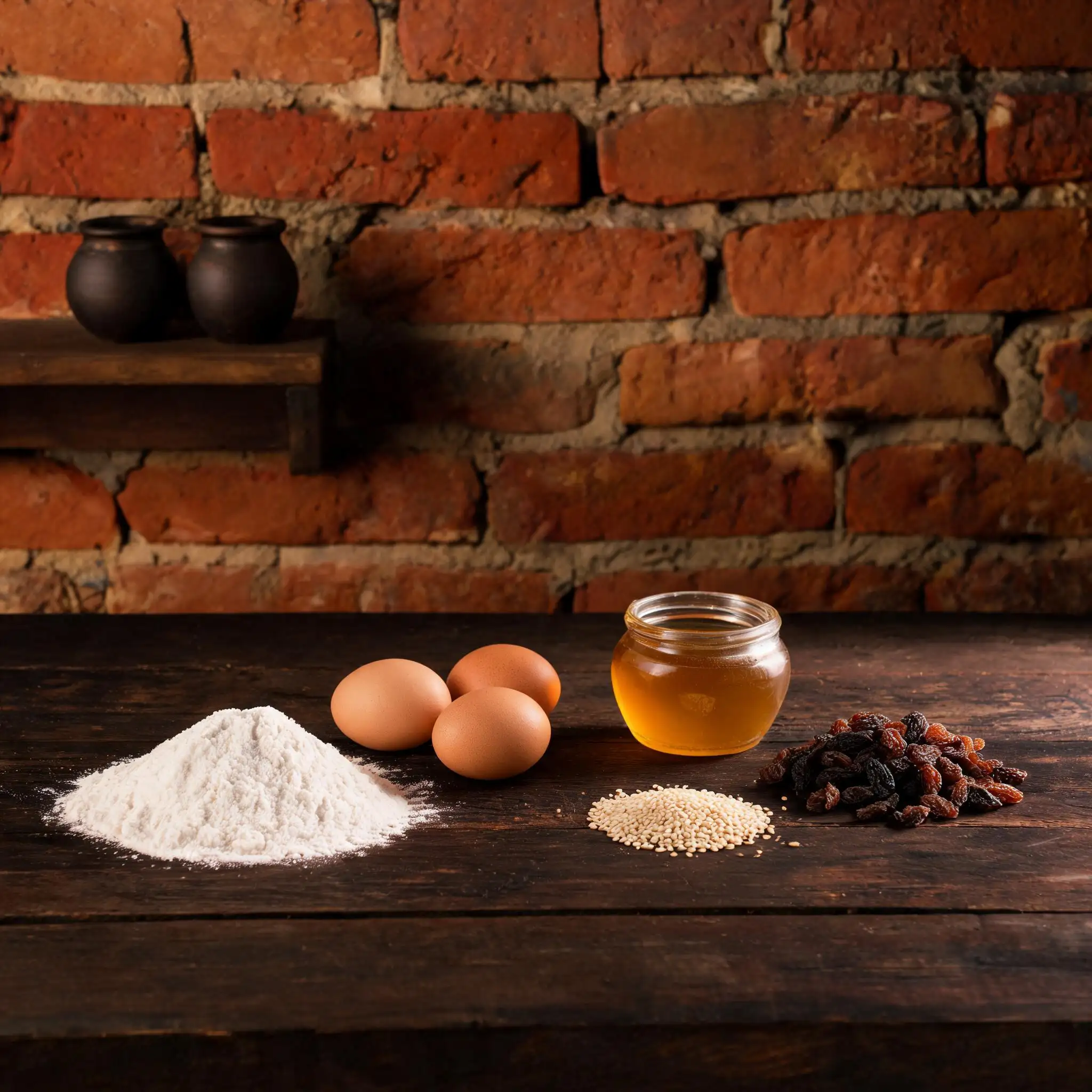
**Ingredients**
- All-purpose flour
- Eggs — three or four, for a rich dough
- Honey — amber, fragrant
- White sesame seeds
- Raisins
- Neutral frying oil
- Sugar (for the syrup, combined with honey)
---
Sachima arrived in Beijing with the Manchu.
When the Qing dynasty established its rule in 1644, it brought with it a northern tradition of fried dough sweets — portable, calorie-dense foods suited to the rhythms of cavalry and court. In Manchu, the original name is sometimes rendered as "sacima," and the meaning, or at least one proposed meaning, is something like "cut the sugar-coated strips" — a description of the final step rather than the food itself. By the time the name settled into its current Mandarin pronunciation, the sweet had already traveled from military provisions to imperial kitchens to the streets of Beijing, where it became one of the city's most recognizable confections.
The method is specific.
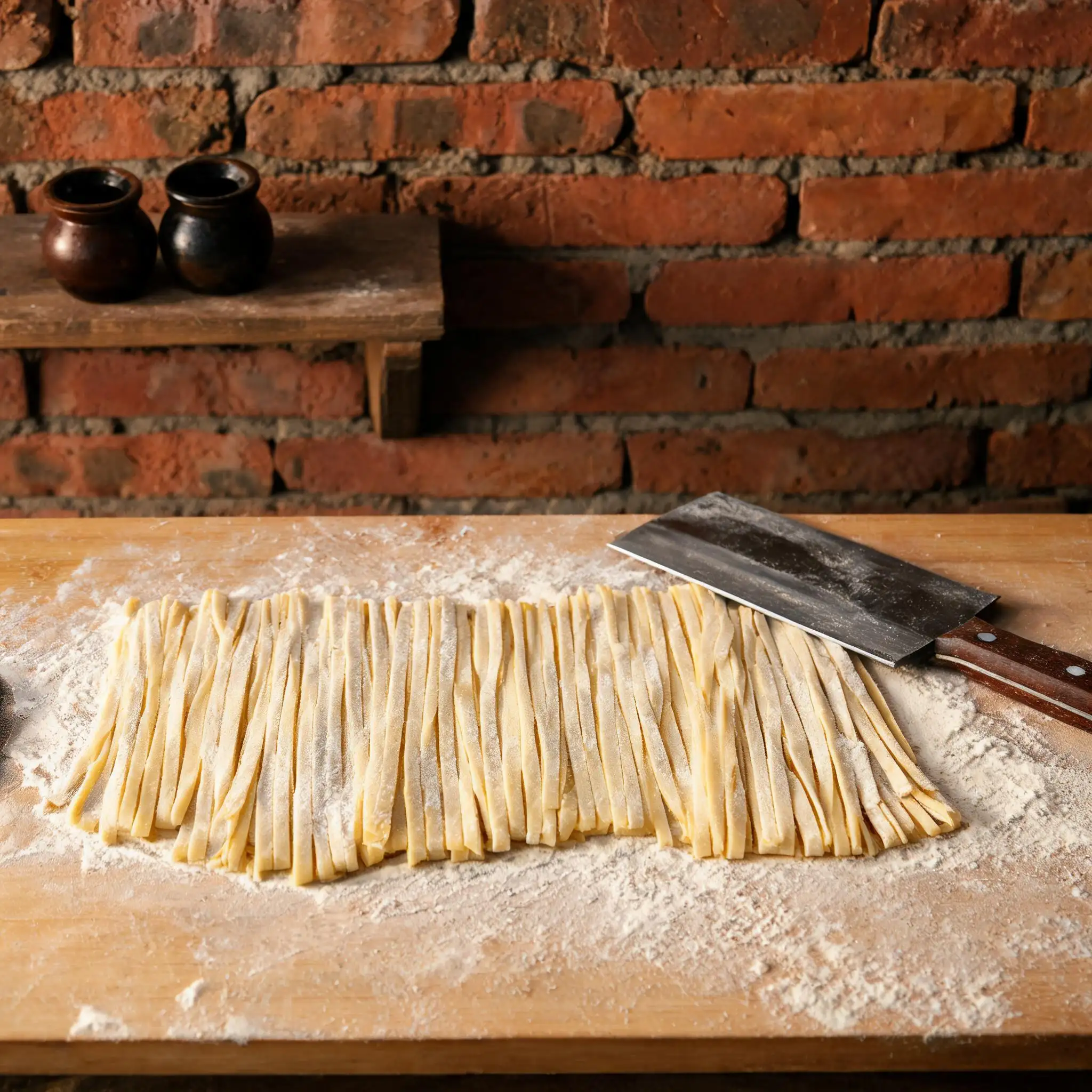
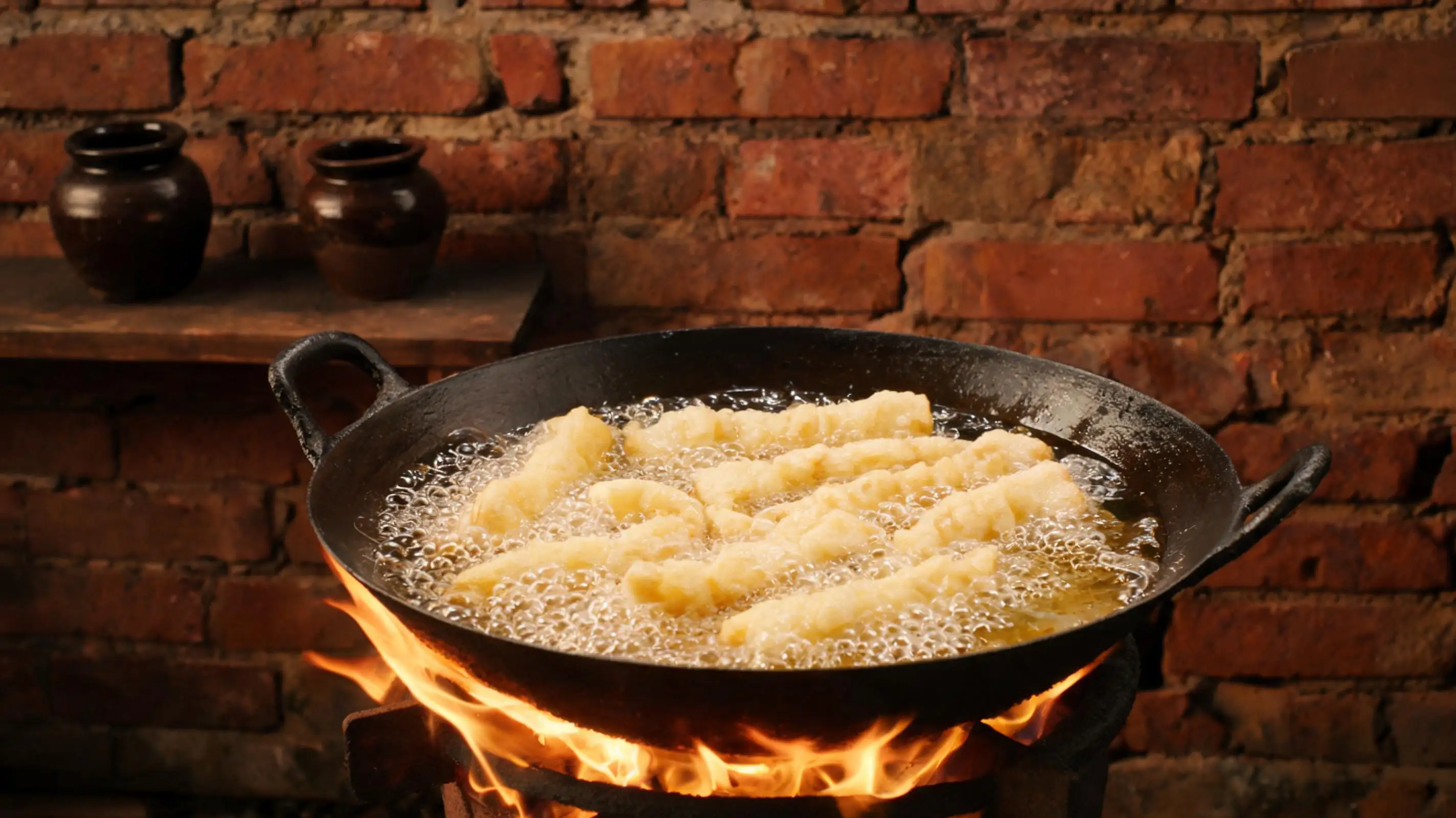
Eggs and flour are worked into a firm dough, rolled thin, and cut into strips — each about the width of a chopstick, each a few centimeters long. The strips are fried in batches in hot oil. In the oil, something happens: the moisture in the dough converts to steam rapidly, and each strip puffs up and expands, becoming light and hollow, its surface crisped to a pale gold.
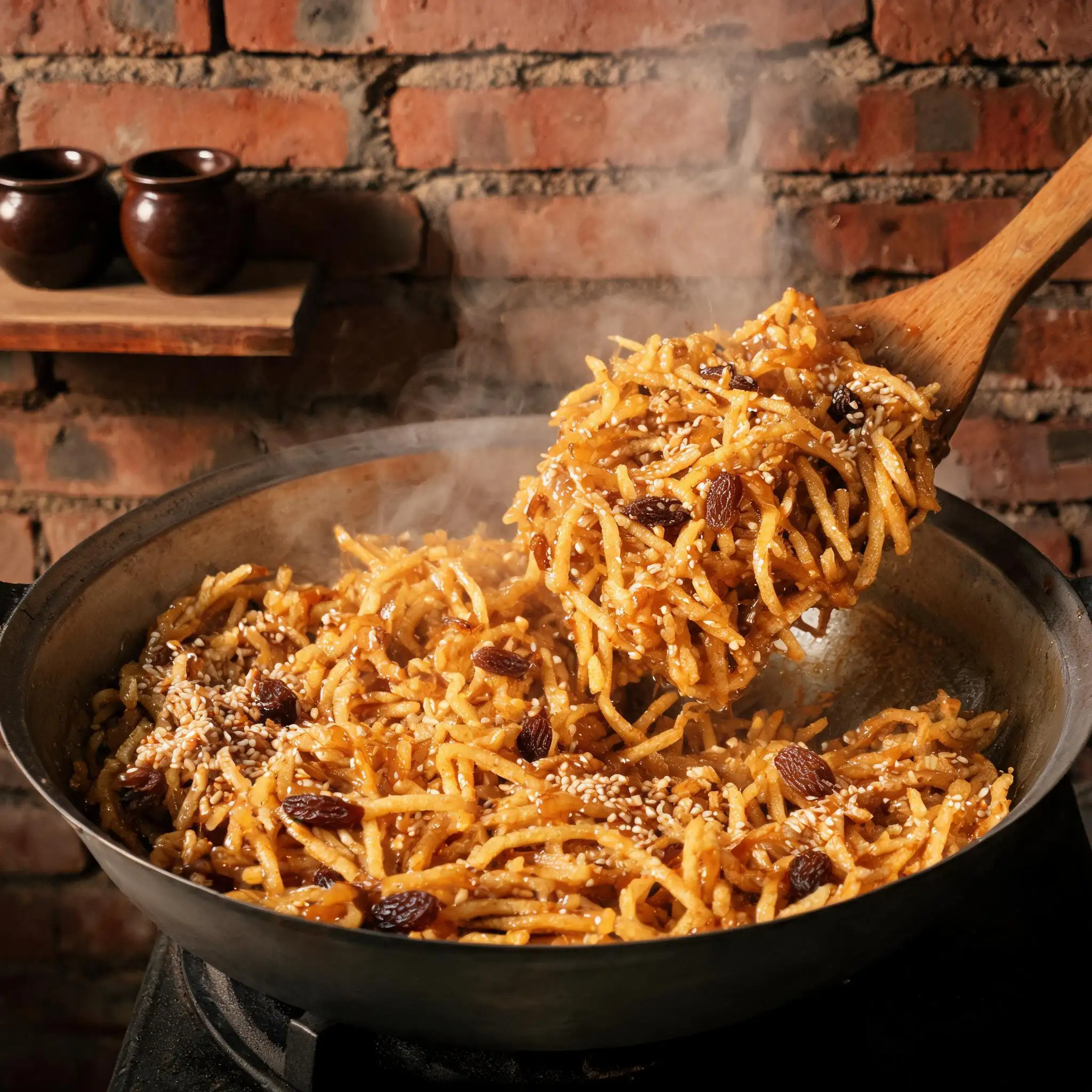
The syrup is made separately. Honey and sugar are cooked until they reach the soft-crack stage — hot enough to bond but not so hot that they turn brittle. The fried strips go in while the syrup is still liquid, tossed quickly to coat every strand. White sesame seeds and raisins go in at this stage. The window is short: the syrup cools fast, and once it starts to set the mixture becomes difficult to work.
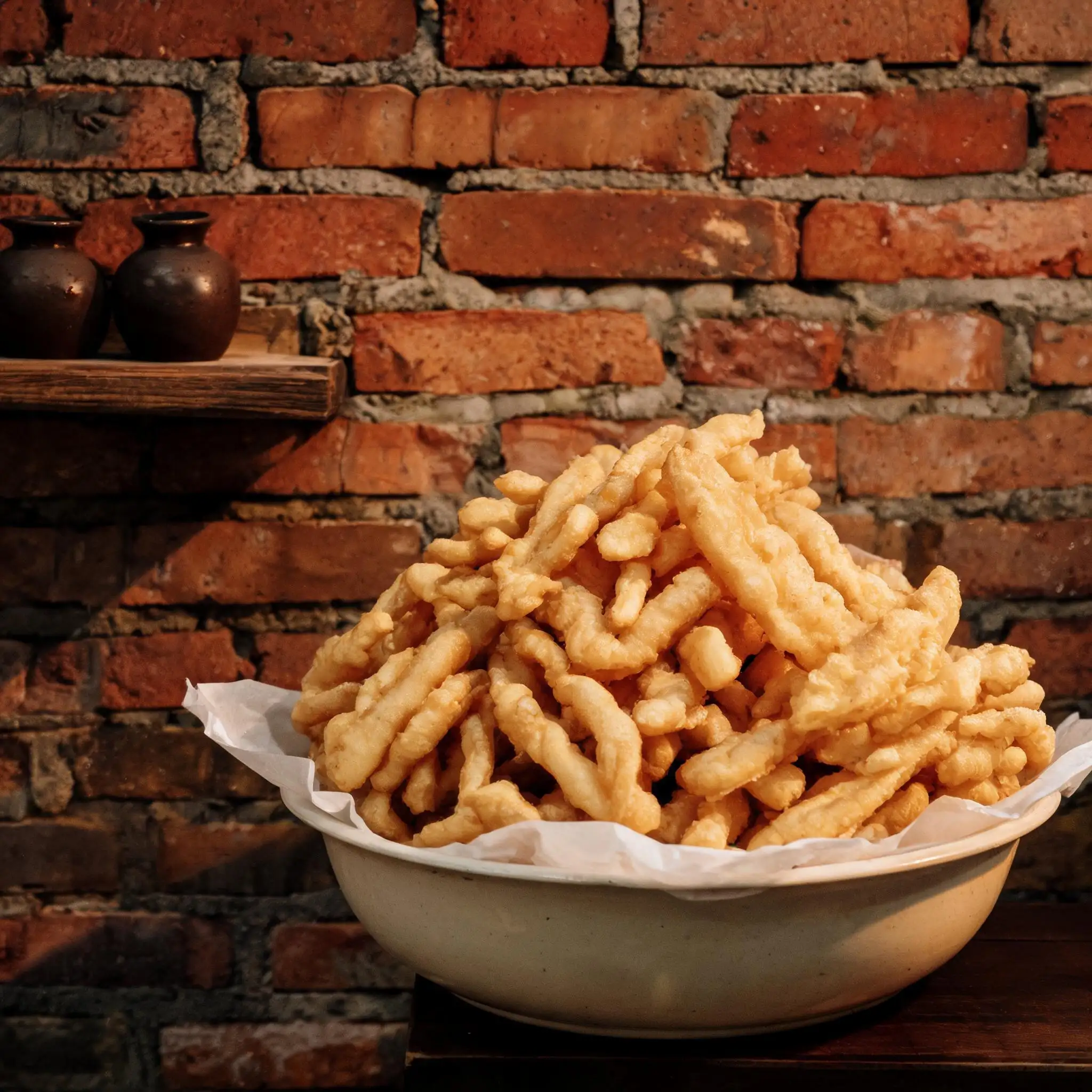
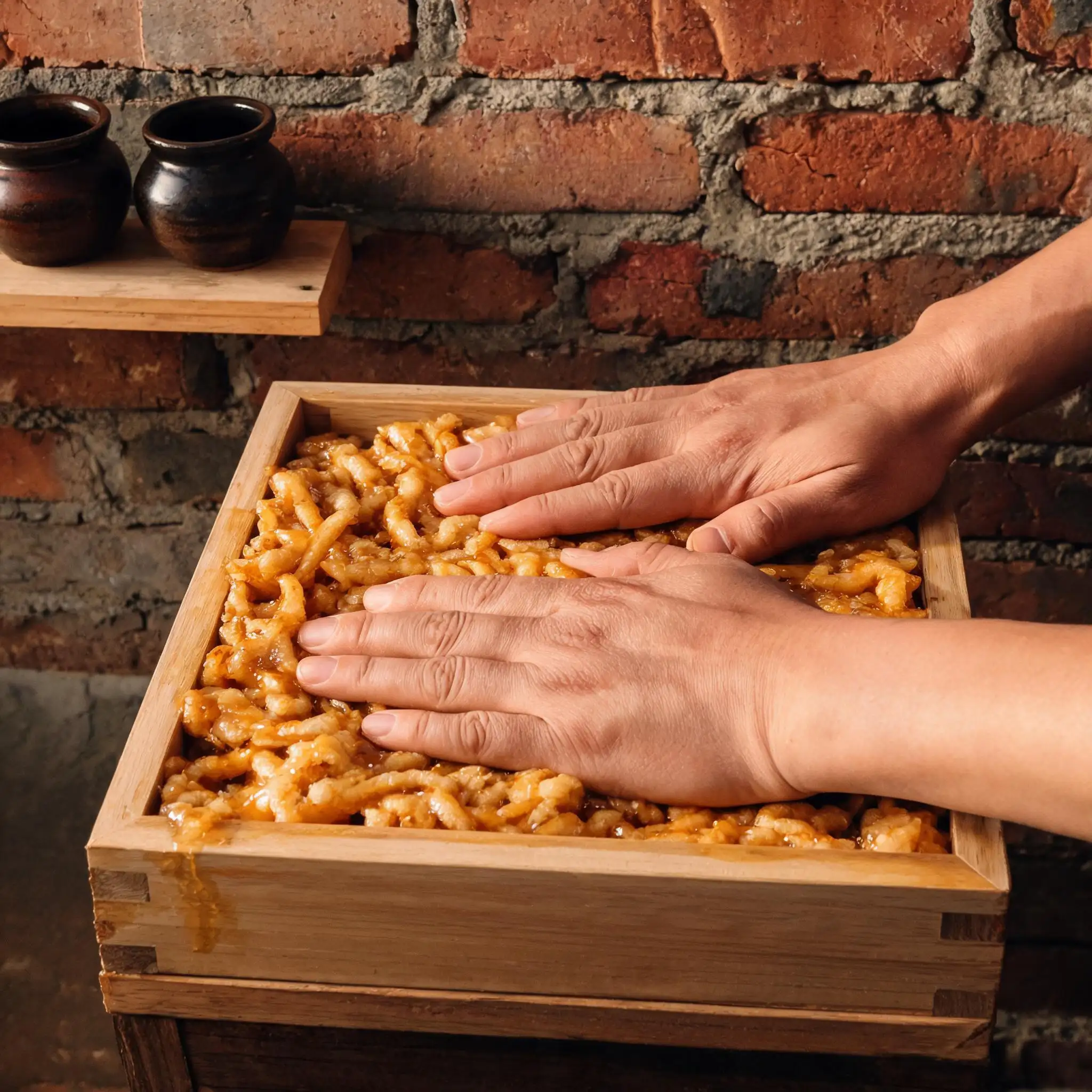
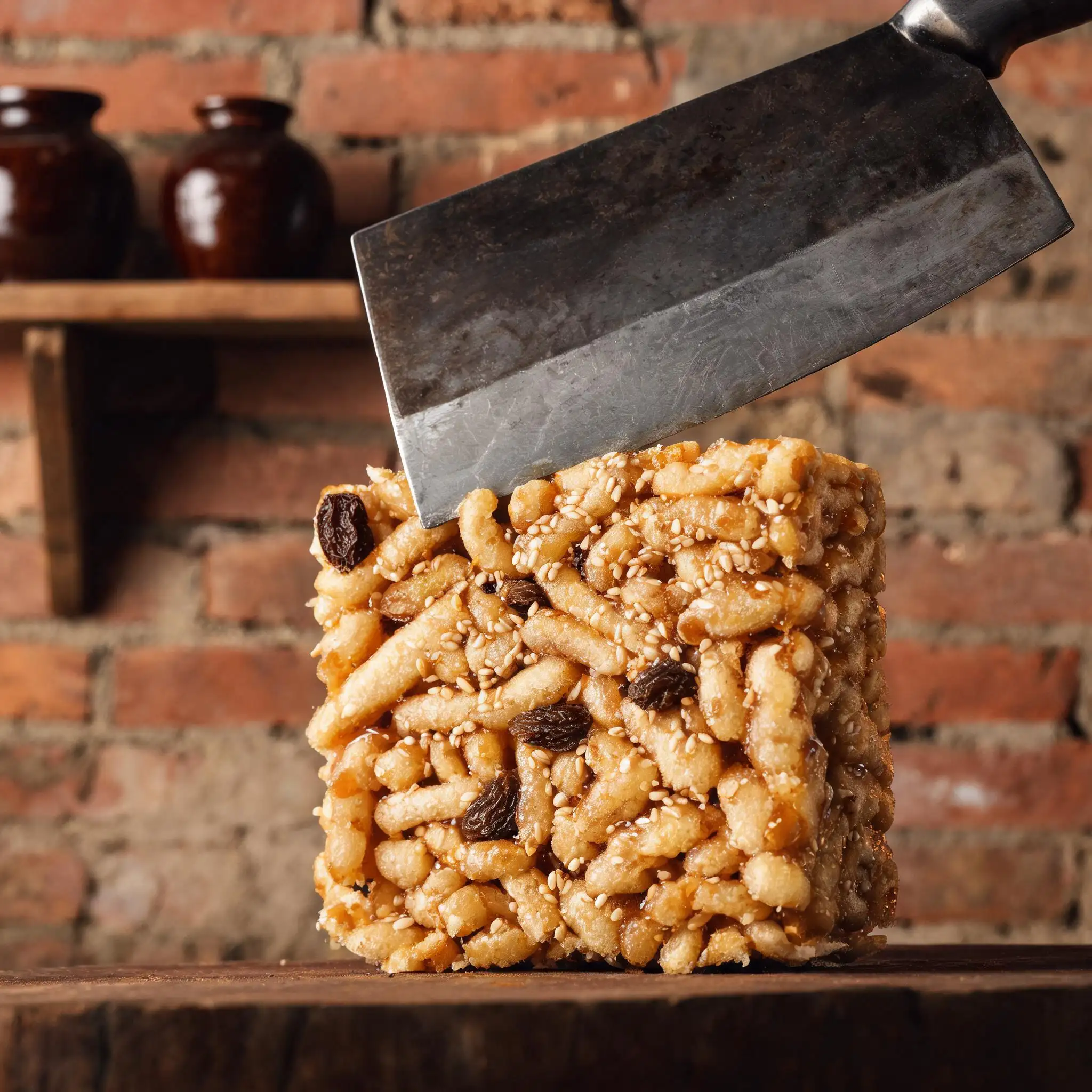
Everything is poured immediately into a wooden mold and pressed down firmly with both hands. When the block has cooled and set, it is cut into portions with a heavy knife. The cut reveals the interior — hundreds of golden fried strands held together by amber syrup, raisins dark against the gold, sesame seeds white at the surface.
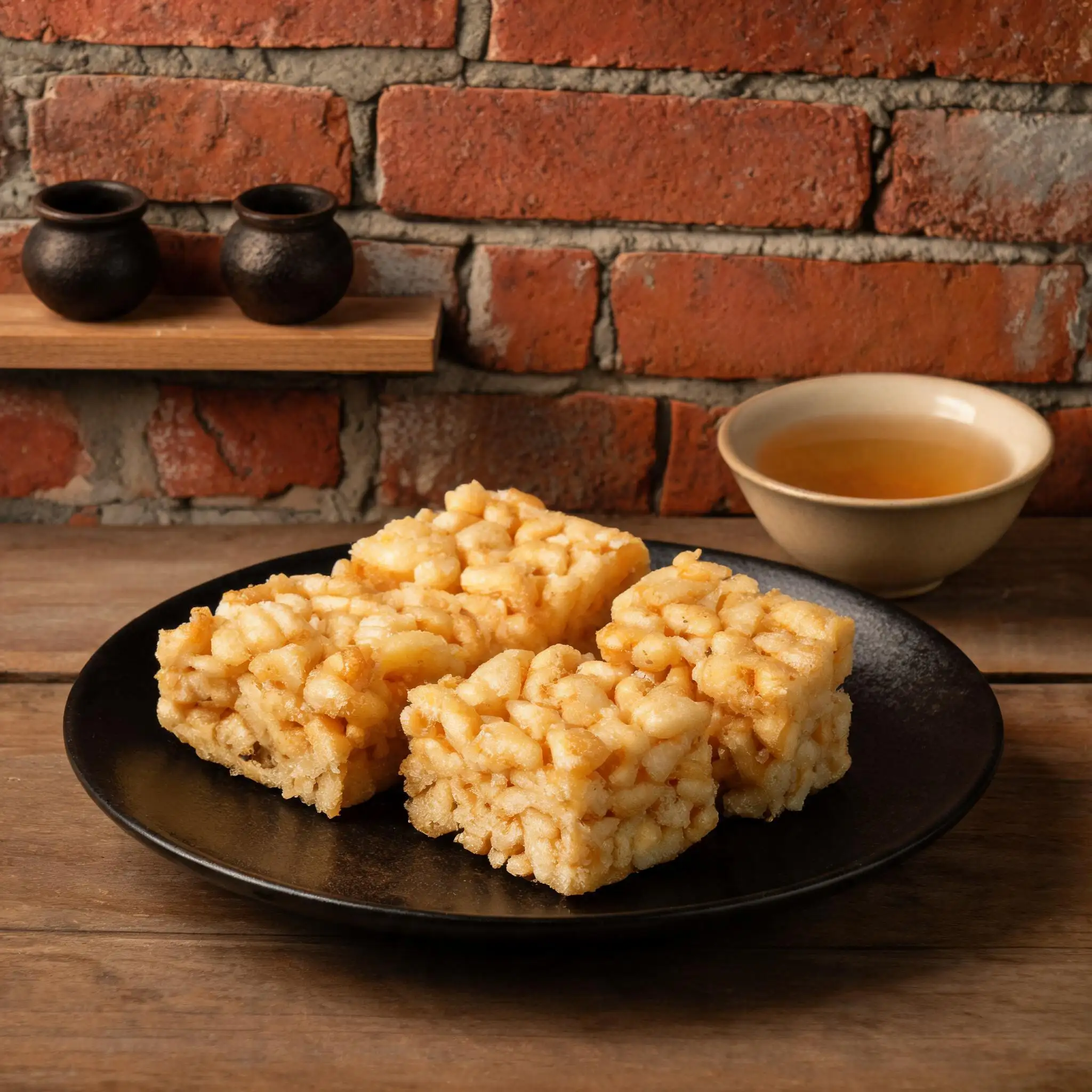
It is eaten at room temperature, with tea.
The flavor is straightforward: sweet from the honey, rich from the egg dough, slightly nutty from the sesame, the raisins adding an intermittent sourness that keeps the sweetness from becoming flat. Sachima does not build or develop — it is immediate, generous, complete.
In Beijing, it is a food of occasions and of ordinary afternoons in equal measure. It was served at imperial banquets and sold from wooden trays at temple fairs. It is still made by hand in the older pastry shops, still cut with a cleaver, still wrapped in paper and sold by the piece.
The Manchu are mostly gone from the streets of Beijing. Their language is nearly extinct. But sachima is still there, still golden, still sweet.
---
**Ingredients**
- All-purpose flour
- Eggs — three or four, for a rich dough
- Honey — amber, fragrant
- White sesame seeds
- Raisins
- Neutral frying oil
- Sugar (for the syrup, combined with honey)
---
Sachima arrived in Beijing with the Manchu.
When the Qing dynasty established its rule in 1644, it brought with it a northern tradition of fried dough sweets — portable, calorie-dense foods suited to the rhythms of cavalry and court. In Manchu, the original name is sometimes rendered as "sacima," and the meaning, or at least one proposed meaning, is something like "cut the sugar-coated strips" — a description of the final step rather than the food itself. By the time the name settled into its current Mandarin pronunciation, the sweet had already traveled from military provisions to imperial kitchens to the streets of Beijing, where it became one of the city's most recognizable confections.
The method is specific.
Eggs and flour are worked into a firm dough, rolled thin, and cut into strips — each about the width of a chopstick, each a few centimeters long. The strips are fried in batches in hot oil. In the oil, something happens: the moisture in the dough converts to steam rapidly, and each strip puffs up and expands, becoming light and hollow, its surface crisped to a pale gold.
The syrup is made separately. Honey and sugar are cooked until they reach the soft-crack stage — hot enough to bond but not so hot that they turn brittle. The fried strips go in while the syrup is still liquid, tossed quickly to coat every strand. White sesame seeds and raisins go in at this stage. The window is short: the syrup cools fast, and once it starts to set the mixture becomes difficult to work.
Everything is poured immediately into a wooden mold and pressed down firmly with both hands. When the block has cooled and set, it is cut into portions with a heavy knife. The cut reveals the interior — hundreds of golden fried strands held together by amber syrup, raisins dark against the gold, sesame seeds white at the surface.
It is eaten at room temperature, with tea.
The flavor is straightforward: sweet from the honey, rich from the egg dough, slightly nutty from the sesame, the raisins adding an intermittent sourness that keeps the sweetness from becoming flat. Sachima does not build or develop — it is immediate, generous, complete.
In Beijing, it is a food of occasions and of ordinary afternoons in equal measure. It was served at imperial banquets and sold from wooden trays at temple fairs. It is still made by hand in the older pastry shops, still cut with a cleaver, still wrapped in paper and sold by the piece.
The Manchu are mostly gone from the streets of Beijing. Their language is nearly extinct. But sachima is still there, still golden, still sweet.