·5/19/2026
from
Old Beijing Baodu
# Old Beijing Baodu
---
**Ingredients**
- Beef omasum (牛百叶) — fresh, not water-reconstituted
- Sesame paste (芝麻酱)
- Chinese chive flower paste (韭菜花)
- Fermented red tofu (腐乳)
- Fresh cilantro, sesame oil
---
Ten seconds is not a long time, unless you are watching tripe cook.
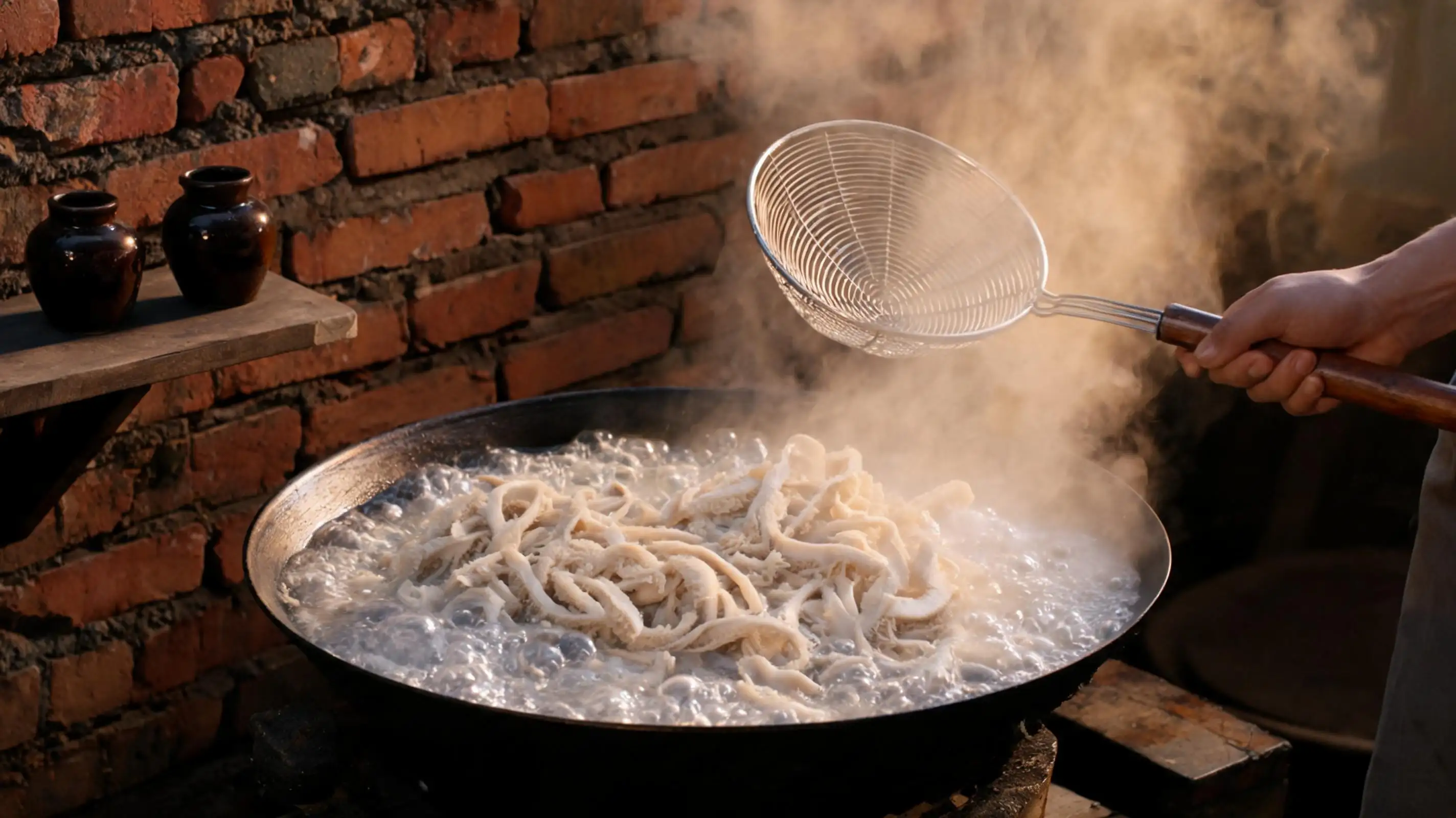
Baodu — literally "explode the tripe" — is one of the oldest street foods in Beijing, sold by Muslim vendors from pushcarts in the hutong neighborhoods for several hundred years before the hutongs themselves began to disappear. The name describes the technique: a handful of tripe is dropped into a wok of violently boiling water, cooked for eight to twelve seconds depending on the cut, and pulled out with a wire strainer before the texture has a chance to tighten. Done correctly, the tripe emerges springy, slightly chewy at the surface but tender through, carrying just enough of its own flavor to hold up against the sauce. Done incorrectly — left in the water ten seconds too long — it turns rubbery in a way no amount of sesame paste can fix.
The preparation begins long before the wok.
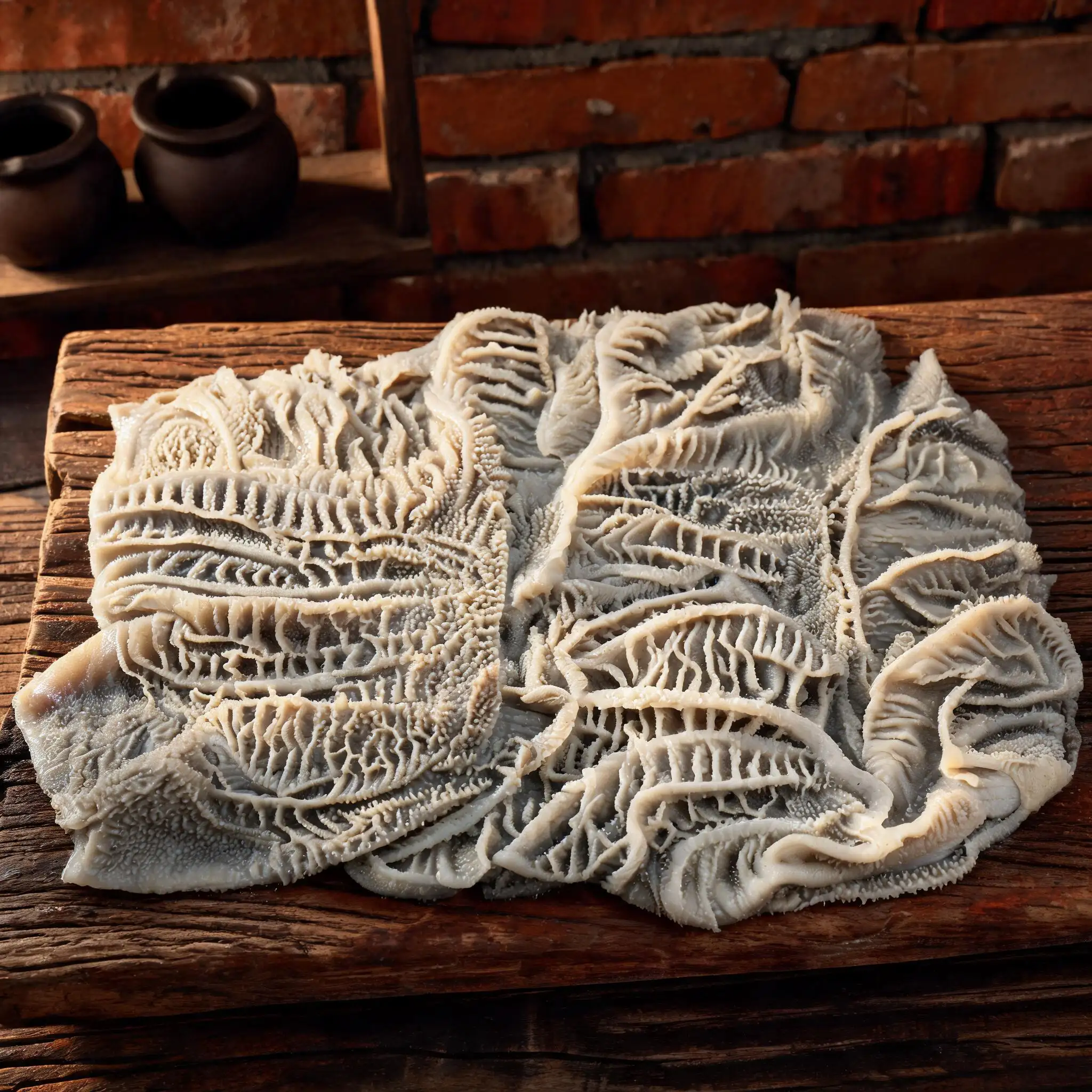
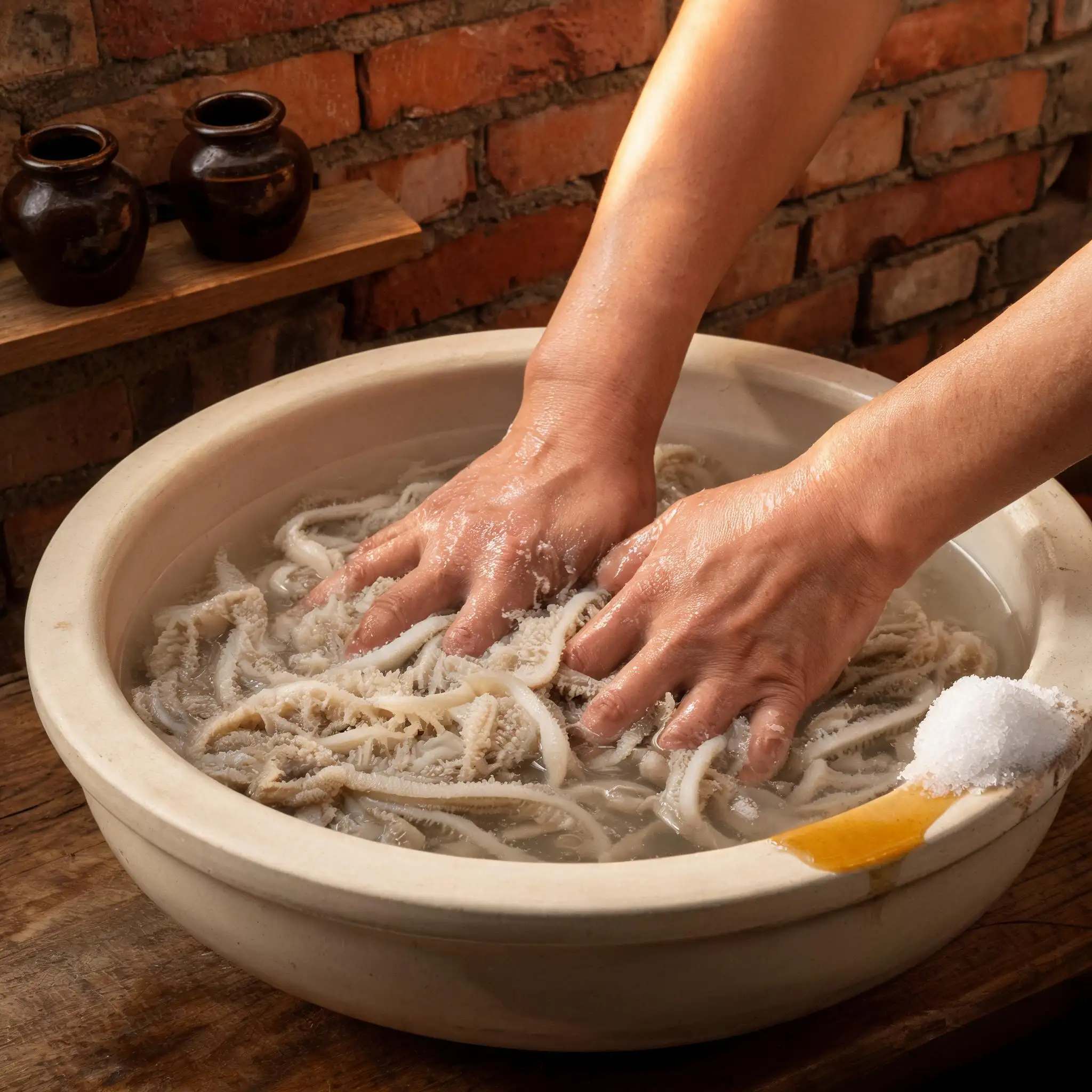
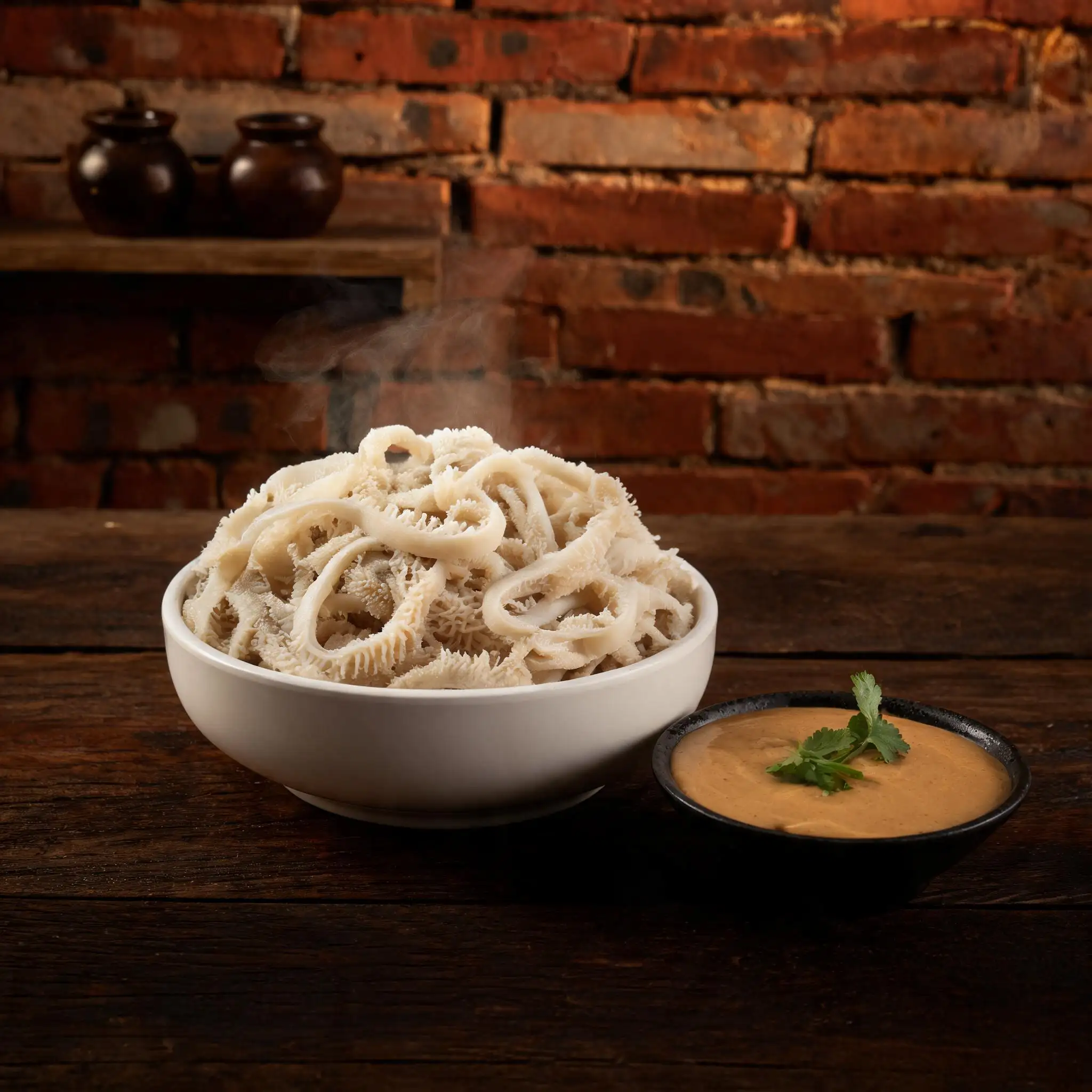
Fresh omasum — the third stomach of the cow, the one with the distinctive layered-leaf texture — must be bought the same morning it is cooked. Water-soaked tripe, sold at a discount, has already lost the springiness that makes baodu worth eating. The fresh omasum is pale grey-white, slightly glistening, its folds dense and fine. You wash it thoroughly: first in plain water, then scrubbed hard with coarse salt and vinegar to remove the surface slime and any residual odor, then worked again with wet starch to draw out remaining impurities. The washing takes longer than the cooking.
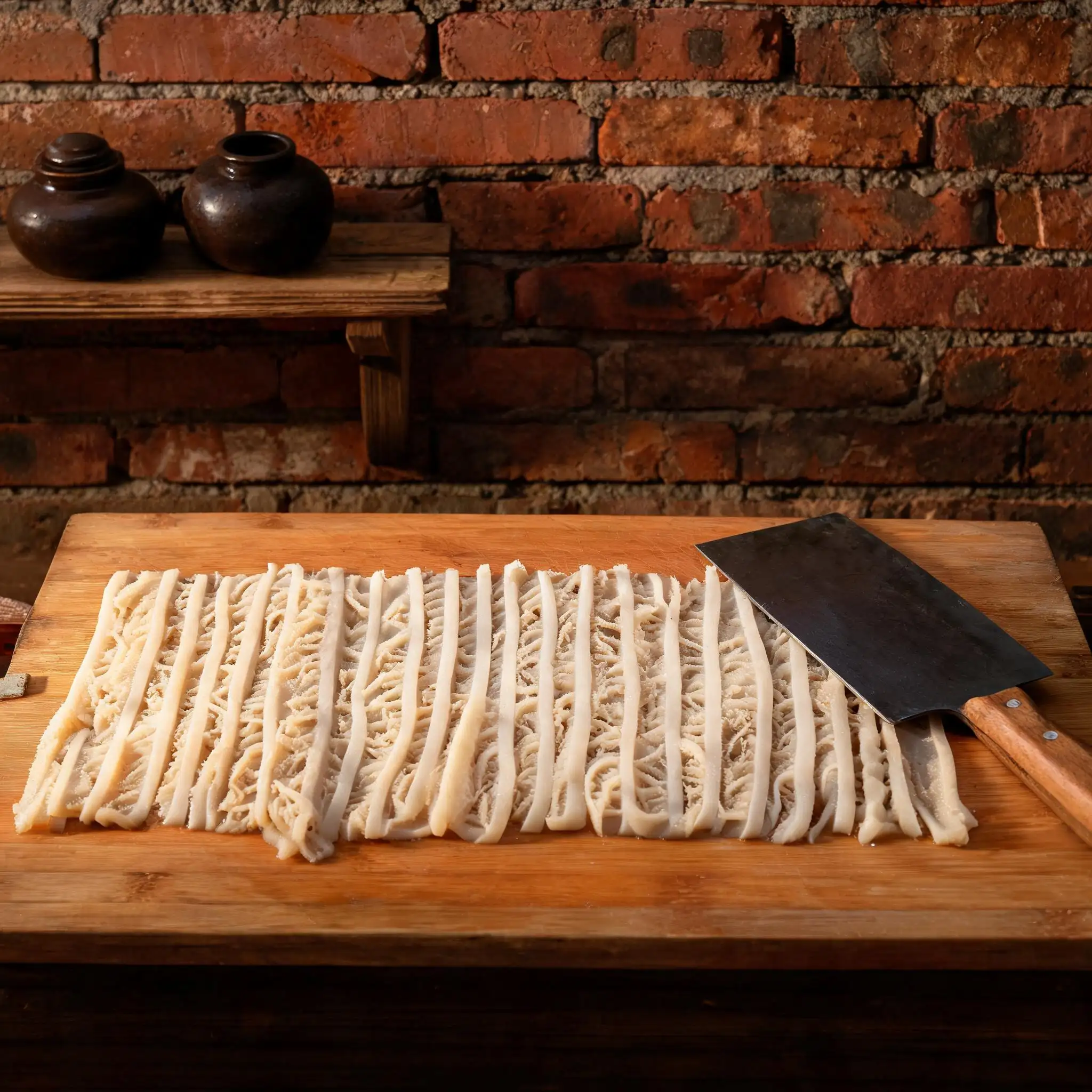
The cutting is precise: strips half a centimeter wide, eight centimeters long, uniform in thickness. The uniformity is not decorative — it ensures the strips cook at the same rate in the boiling water. A thick strip next to a thin one means one is overcooked by the time the other is ready.
The sauce is what makes baodu itself.
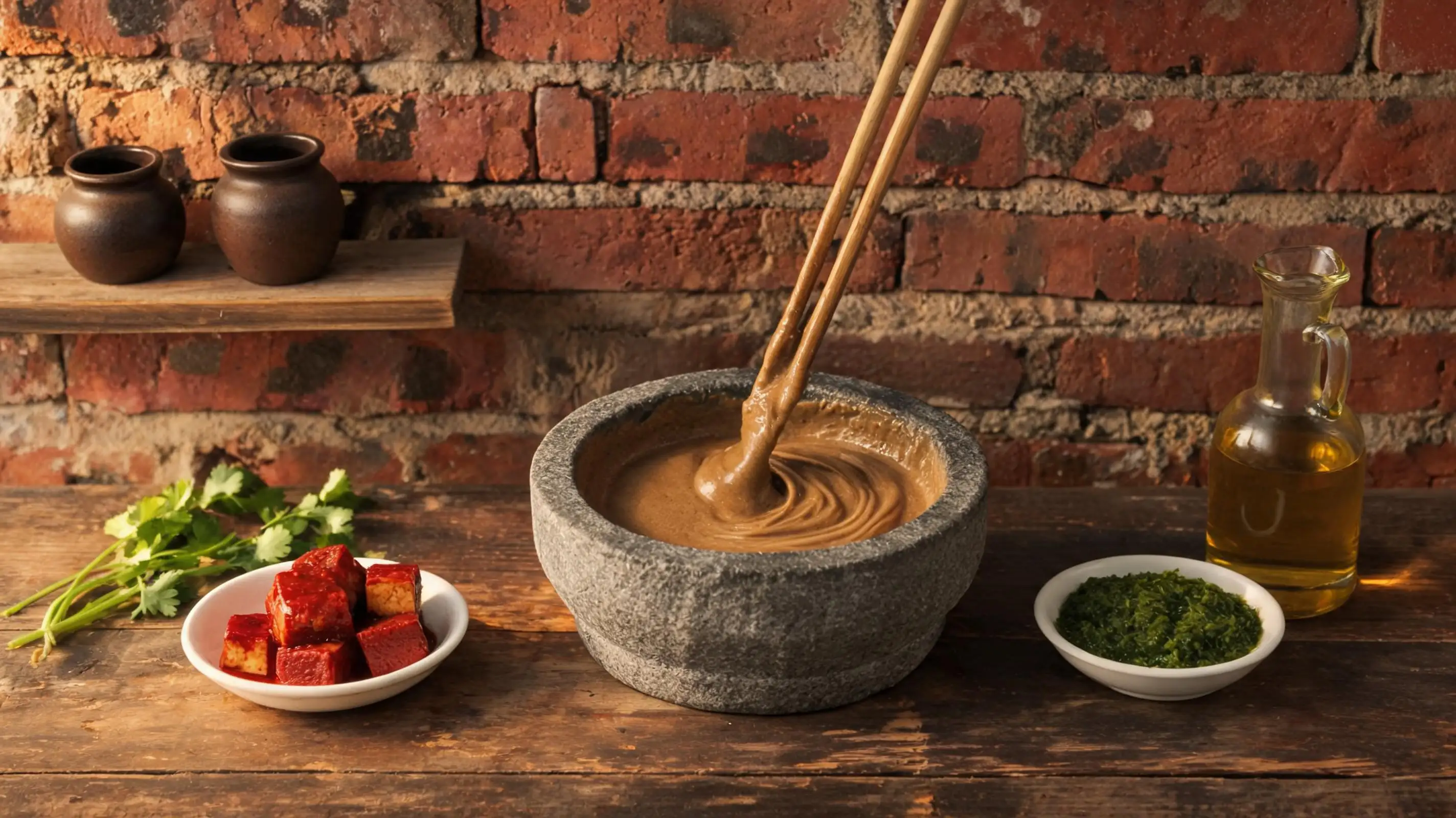
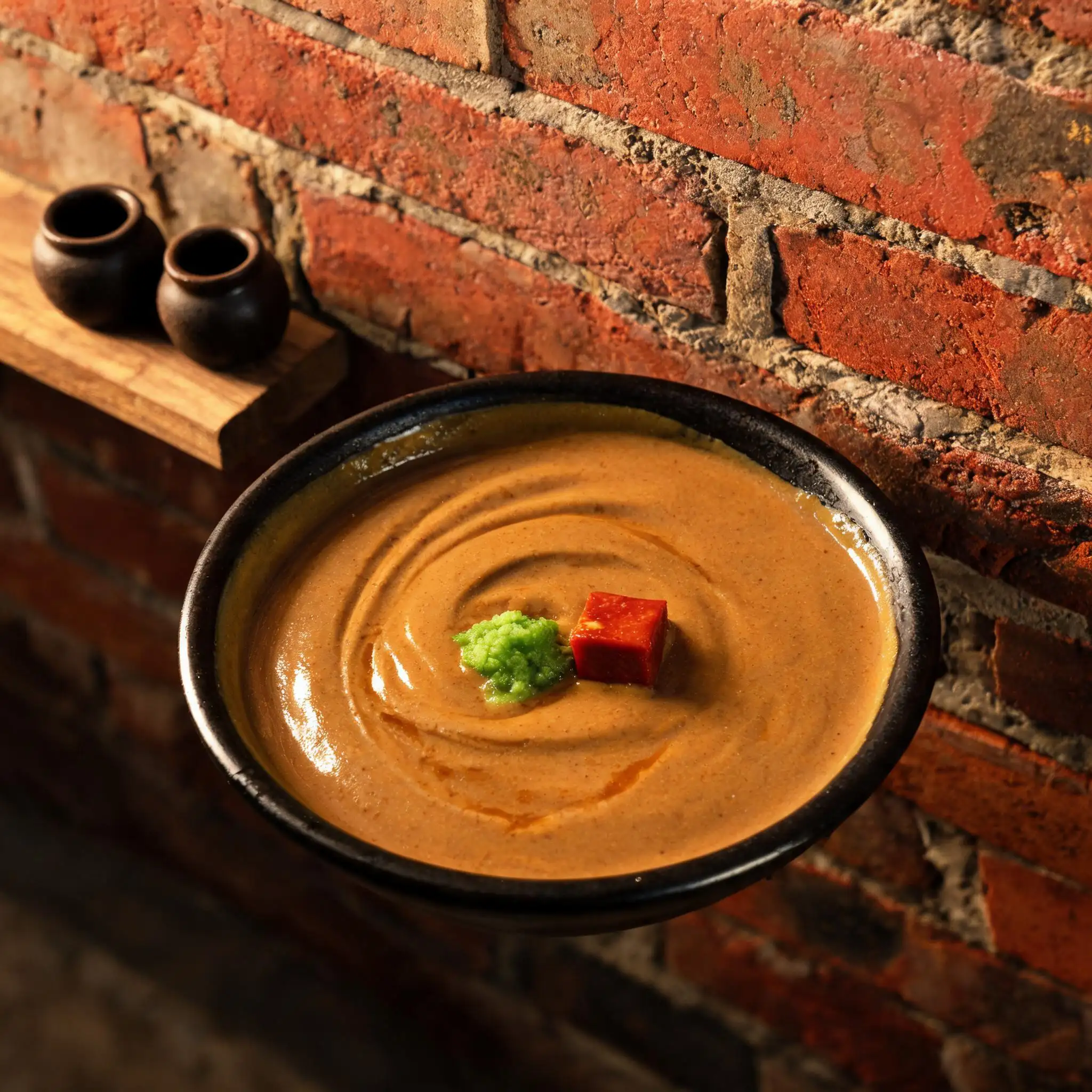
Every baodu vendor in Beijing has a version of the same sesame paste — 芝麻酱 thinned with warm water until it moves slowly off a spoon, combined with fermented red tofu (腐乳), Chinese chive flower paste (韭菜花), and a little sesame oil. The proportions vary and are not shared. The sauce is mixed fresh each day, and a good sauce has a particular quality: thick enough to coat the tripe but fluid enough to flow back into the bowl when the chopsticks lift. Too thick and it sits on top. Too thin and it runs off before you can get the tripe to your mouth.
You eat it immediately. Baodu does not wait. The texture begins changing within two minutes of leaving the water — the tripe firms, the heat dissipates, the window closes. At the best baodu stalls, the vendor cooks each order to order, watching the wok, pulling the strainer at the exact moment, handing the bowl across the counter already sauced and steaming.
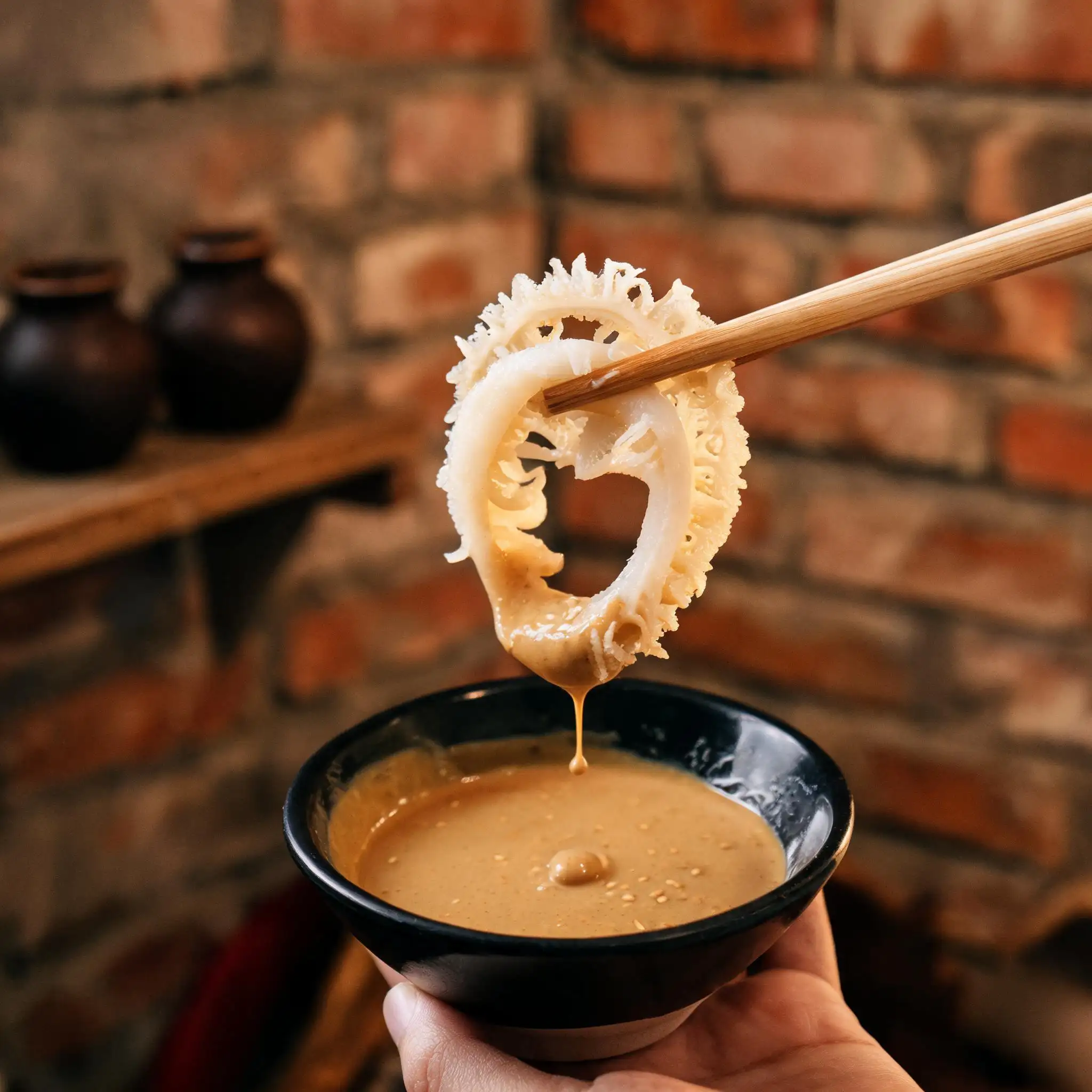
The correct way to eat it: chopsticks to the bowl, lift a piece, dip it through the sesame paste so the sauce coats the underside and clings as you raise it, eat it in one motion. The tripe gives slightly under the teeth, then yields — a clean snap, not rubbery, not soft, somewhere between the two. The sesame paste coats the mouth. The chive flower cuts through it.
This is a food that requires you to pay attention. It rewards nothing done slowly.
---
**Ingredients**
- Beef omasum (牛百叶) — fresh, not water-reconstituted
- Sesame paste (芝麻酱)
- Chinese chive flower paste (韭菜花)
- Fermented red tofu (腐乳)
- Fresh cilantro, sesame oil
---
Ten seconds is not a long time, unless you are watching tripe cook.
Baodu — literally "explode the tripe" — is one of the oldest street foods in Beijing, sold by Muslim vendors from pushcarts in the hutong neighborhoods for several hundred years before the hutongs themselves began to disappear. The name describes the technique: a handful of tripe is dropped into a wok of violently boiling water, cooked for eight to twelve seconds depending on the cut, and pulled out with a wire strainer before the texture has a chance to tighten. Done correctly, the tripe emerges springy, slightly chewy at the surface but tender through, carrying just enough of its own flavor to hold up against the sauce. Done incorrectly — left in the water ten seconds too long — it turns rubbery in a way no amount of sesame paste can fix.
The preparation begins long before the wok.
Fresh omasum — the third stomach of the cow, the one with the distinctive layered-leaf texture — must be bought the same morning it is cooked. Water-soaked tripe, sold at a discount, has already lost the springiness that makes baodu worth eating. The fresh omasum is pale grey-white, slightly glistening, its folds dense and fine. You wash it thoroughly: first in plain water, then scrubbed hard with coarse salt and vinegar to remove the surface slime and any residual odor, then worked again with wet starch to draw out remaining impurities. The washing takes longer than the cooking.
The cutting is precise: strips half a centimeter wide, eight centimeters long, uniform in thickness. The uniformity is not decorative — it ensures the strips cook at the same rate in the boiling water. A thick strip next to a thin one means one is overcooked by the time the other is ready.
The sauce is what makes baodu itself.
Every baodu vendor in Beijing has a version of the same sesame paste — 芝麻酱 thinned with warm water until it moves slowly off a spoon, combined with fermented red tofu (腐乳), Chinese chive flower paste (韭菜花), and a little sesame oil. The proportions vary and are not shared. The sauce is mixed fresh each day, and a good sauce has a particular quality: thick enough to coat the tripe but fluid enough to flow back into the bowl when the chopsticks lift. Too thick and it sits on top. Too thin and it runs off before you can get the tripe to your mouth.
You eat it immediately. Baodu does not wait. The texture begins changing within two minutes of leaving the water — the tripe firms, the heat dissipates, the window closes. At the best baodu stalls, the vendor cooks each order to order, watching the wok, pulling the strainer at the exact moment, handing the bowl across the counter already sauced and steaming.
The correct way to eat it: chopsticks to the bowl, lift a piece, dip it through the sesame paste so the sauce coats the underside and clings as you raise it, eat it in one motion. The tripe gives slightly under the teeth, then yields — a clean snap, not rubbery, not soft, somewhere between the two. The sesame paste coats the mouth. The chive flower cuts through it.
This is a food that requires you to pay attention. It rewards nothing done slowly.