·5/19/2026
from
Botou Huoshizi
# Botou Huoshizi
---
**Ingredients**
- Huoshizi (火柿子) — fire persimmon, Botou, Cangzhou, Hebei
---
By late October, the leaves are gone.
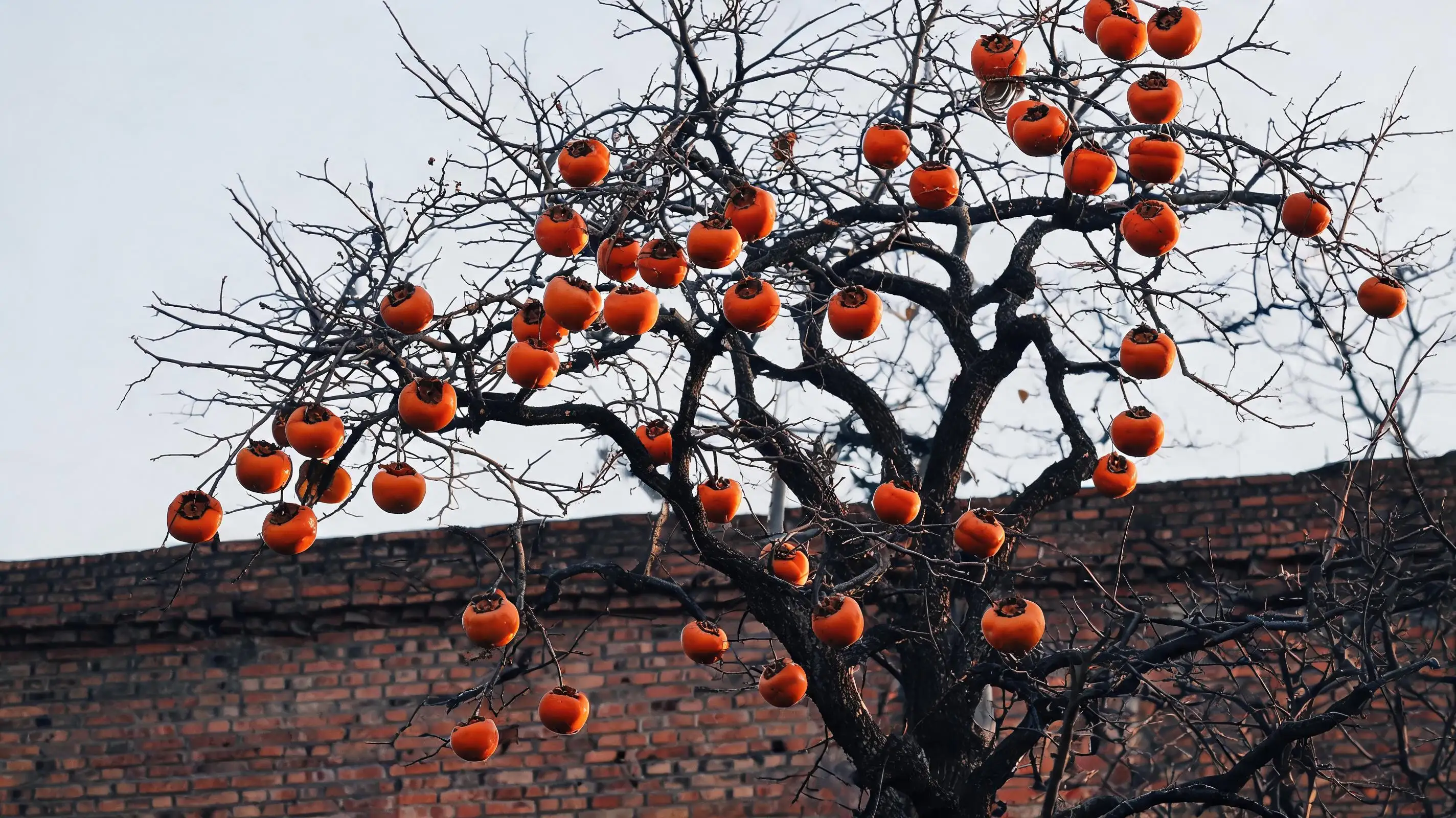
What remains on the persimmon trees in Botou are the fruit — dozens of them on each tree, round and slightly flattened, the color of burning coal before it turns to ash: deep orange shading into red, each one hanging from a bare black branch by a short stem. From a distance, a mature persimmon tree looks like it is still on fire after everything else has gone cold.
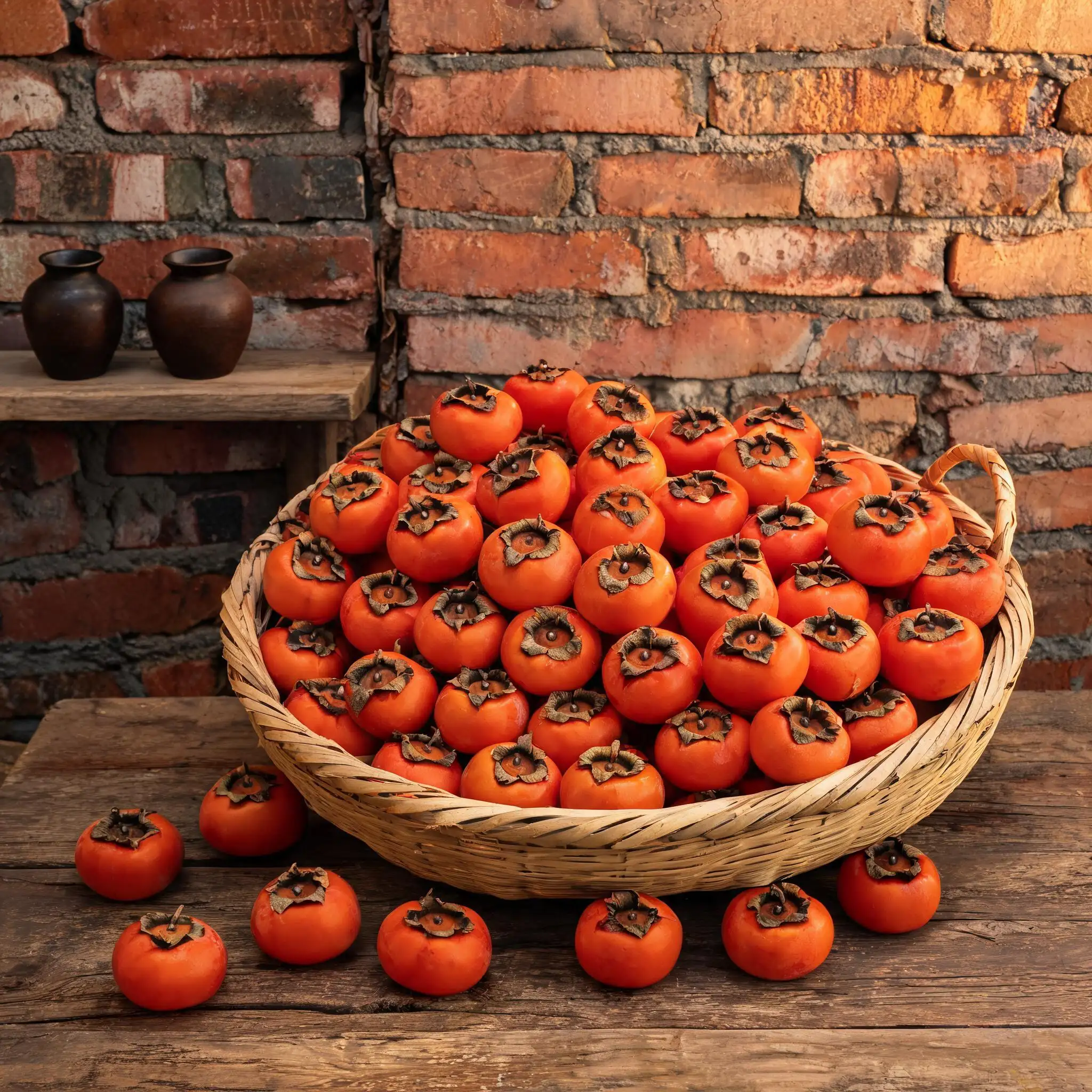
The Botou fire persimmon has been cultivated in this part of the Hebei plain for over a thousand years. The variety is specific to the local soil and groundwater conditions, and attempts to grow it elsewhere have produced fruit that looks similar but does not taste the same. Local growers will tell you this without prompting. The name — huoshizi, fire persimmon — refers to the color, though the intensity of the sweetness, when the fruit is fully ripe, gives the name a secondary meaning that is harder to argue with.
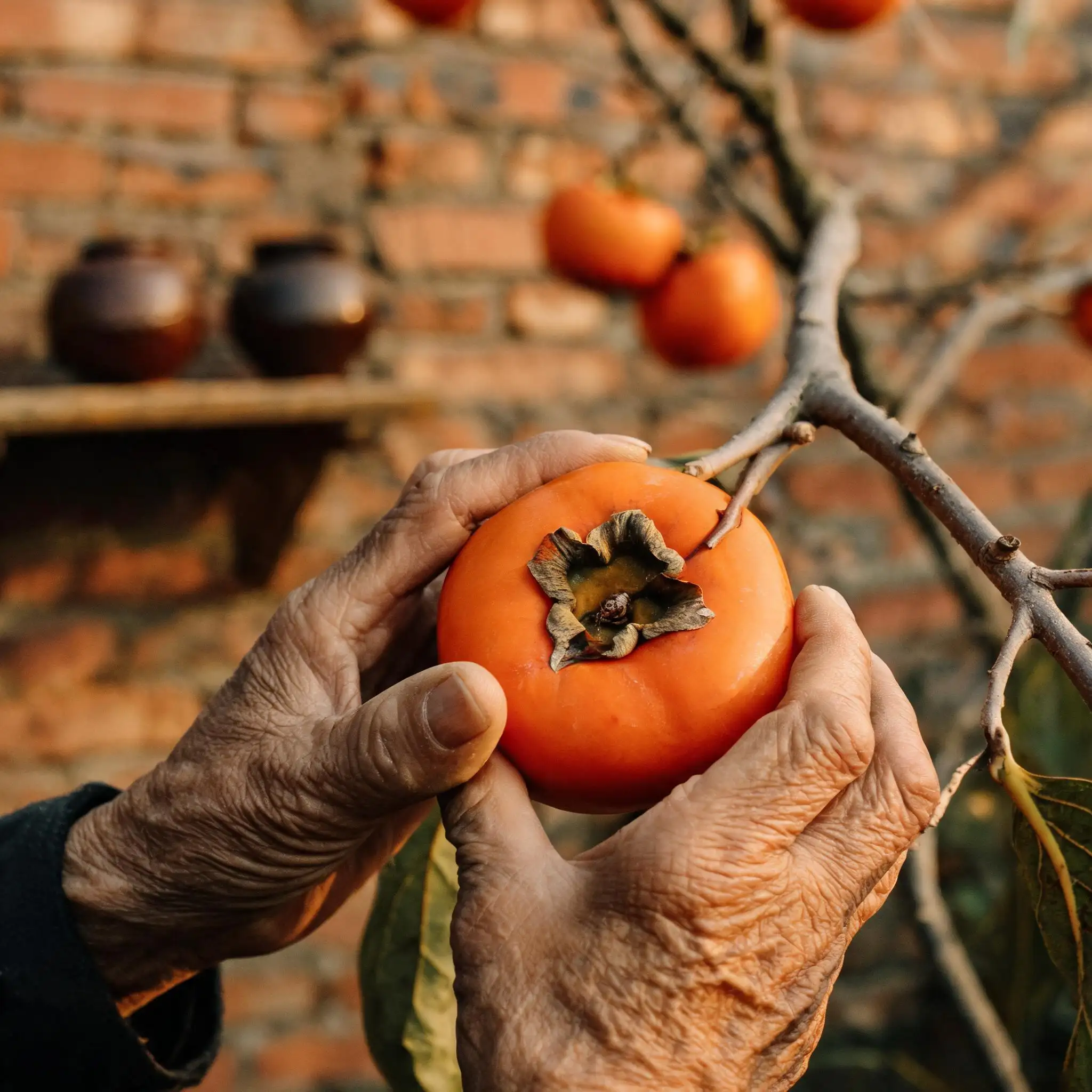
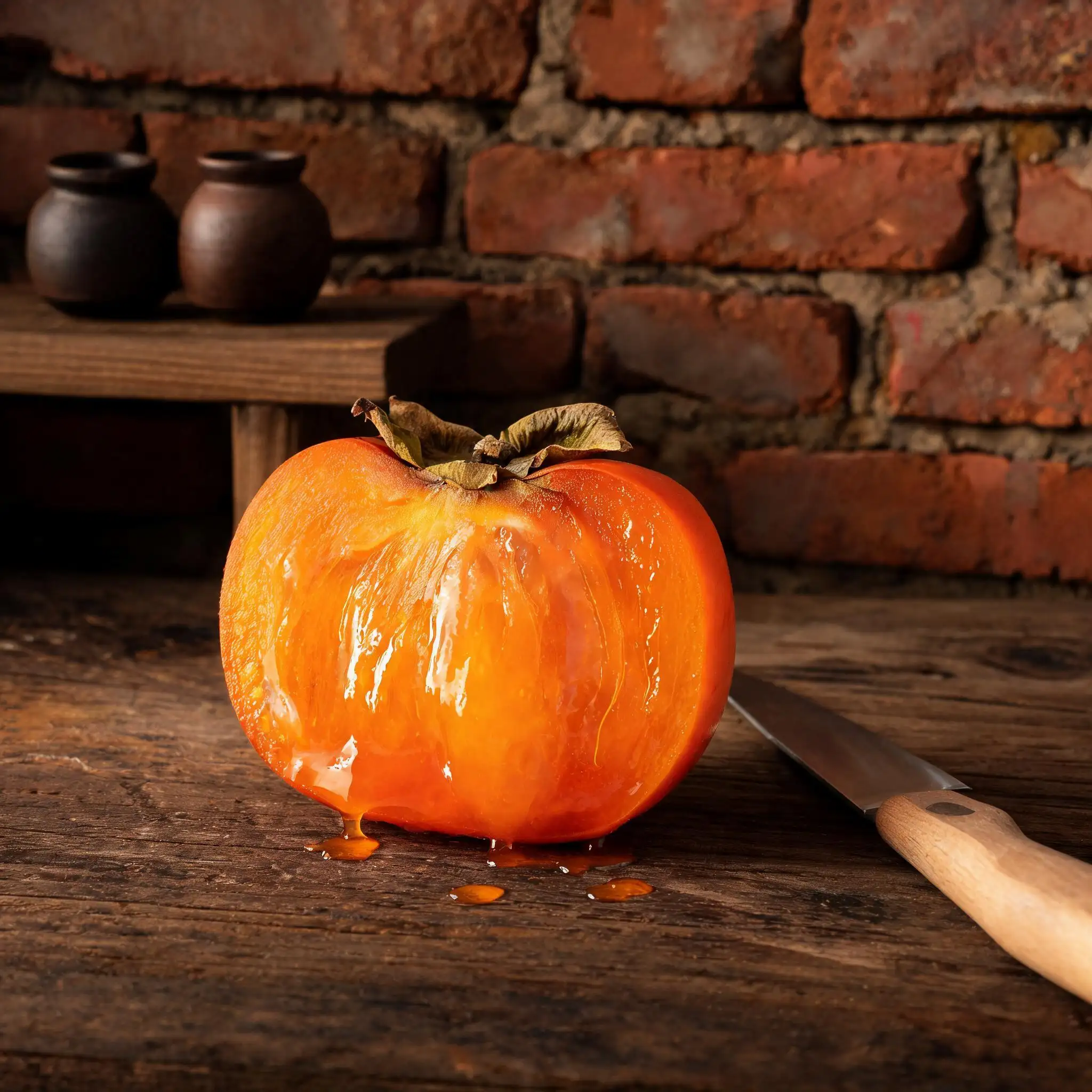
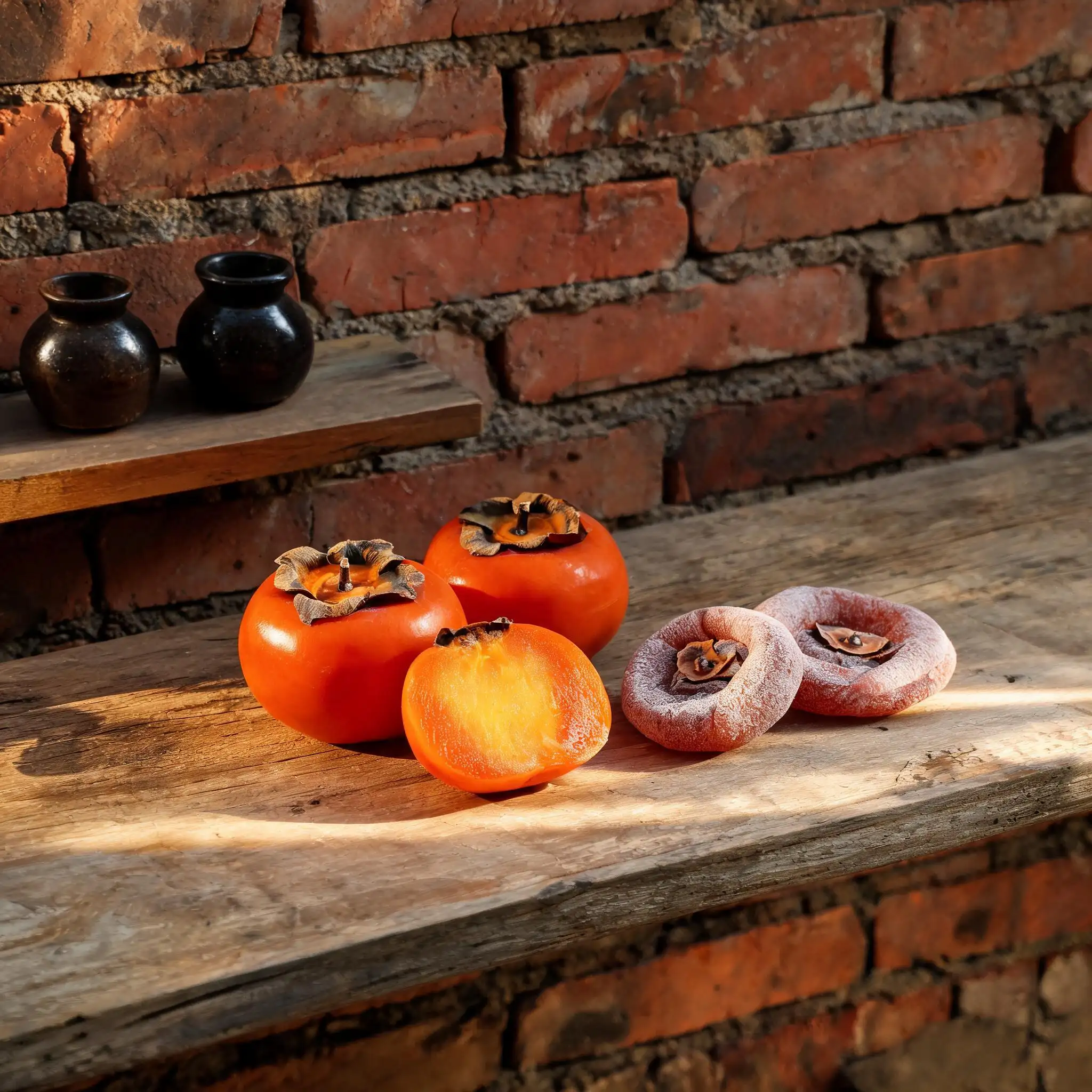
A fully ripe Botou persimmon cannot be eaten like an apple. The skin is thin and the flesh beneath it has become, over the final weeks of ripening, essentially liquid — translucent, deep orange, trembling slightly when the fruit is moved. You pick it up carefully, pierce the skin with a fingernail or a small knife, and drink the interior rather than bite into it. The flavor is intensely sweet with no astringency, no sharpness, nothing to interrupt the sweetness. It coats the mouth.
Some fruit is eaten fresh. Most is dried.
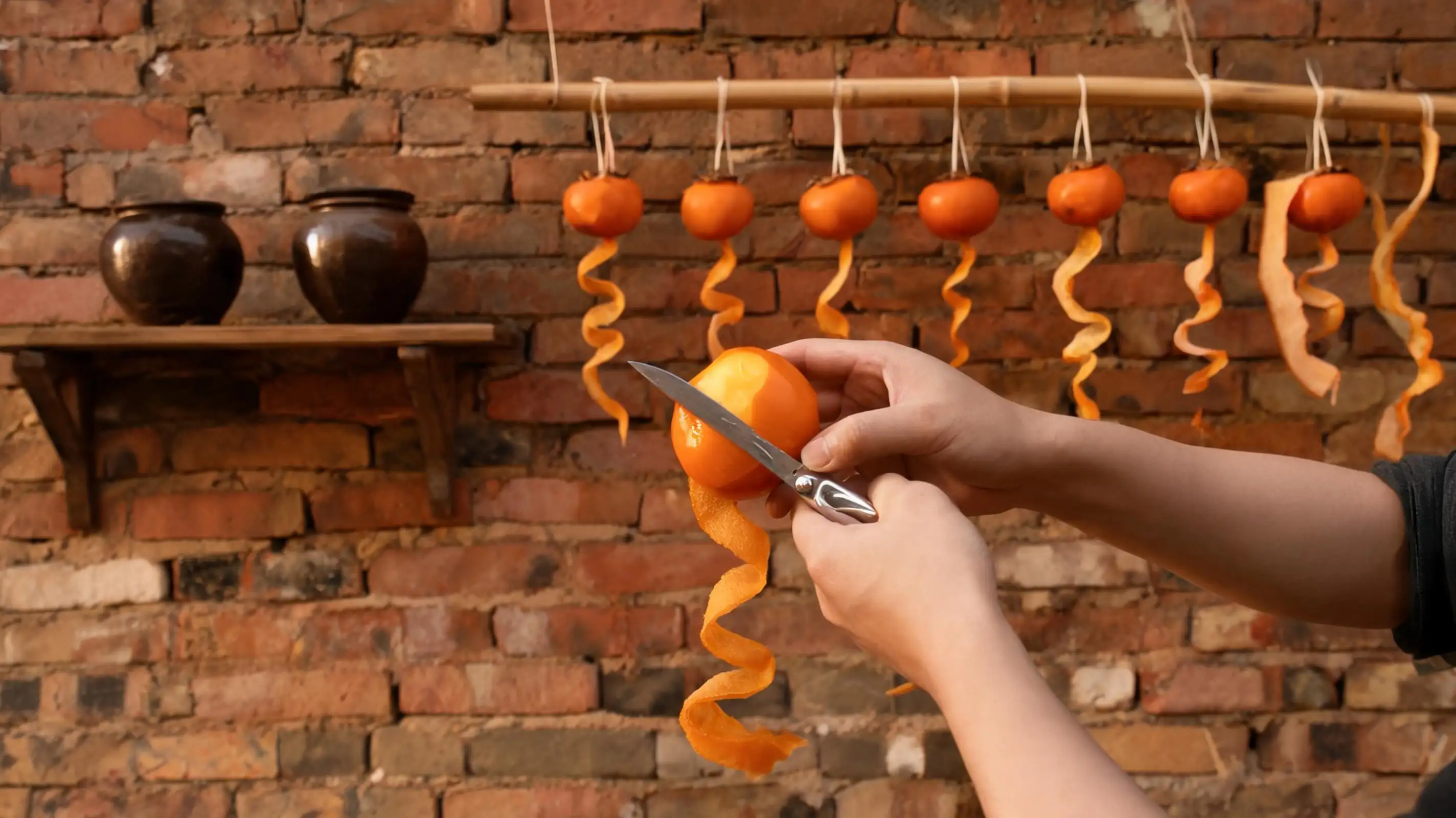
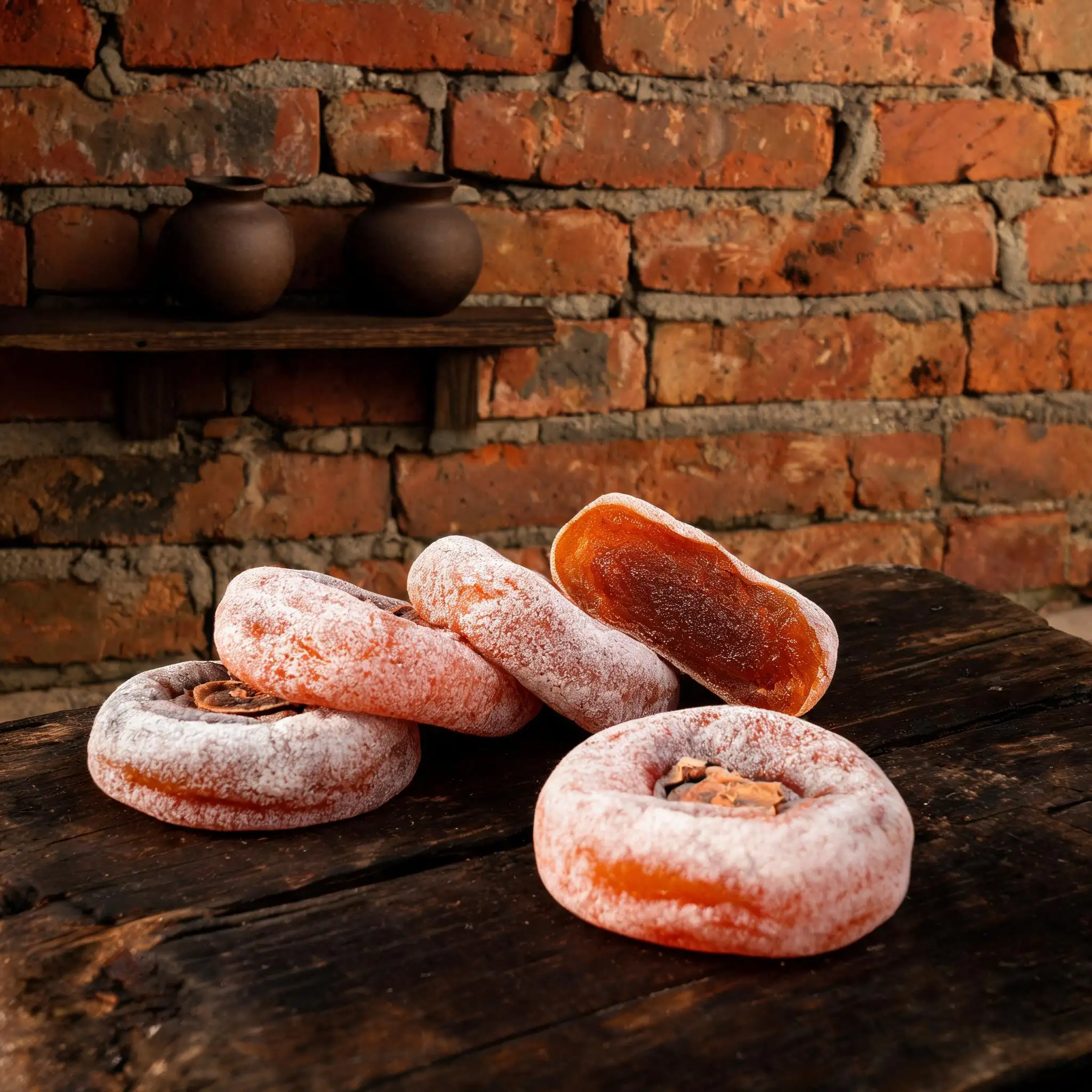
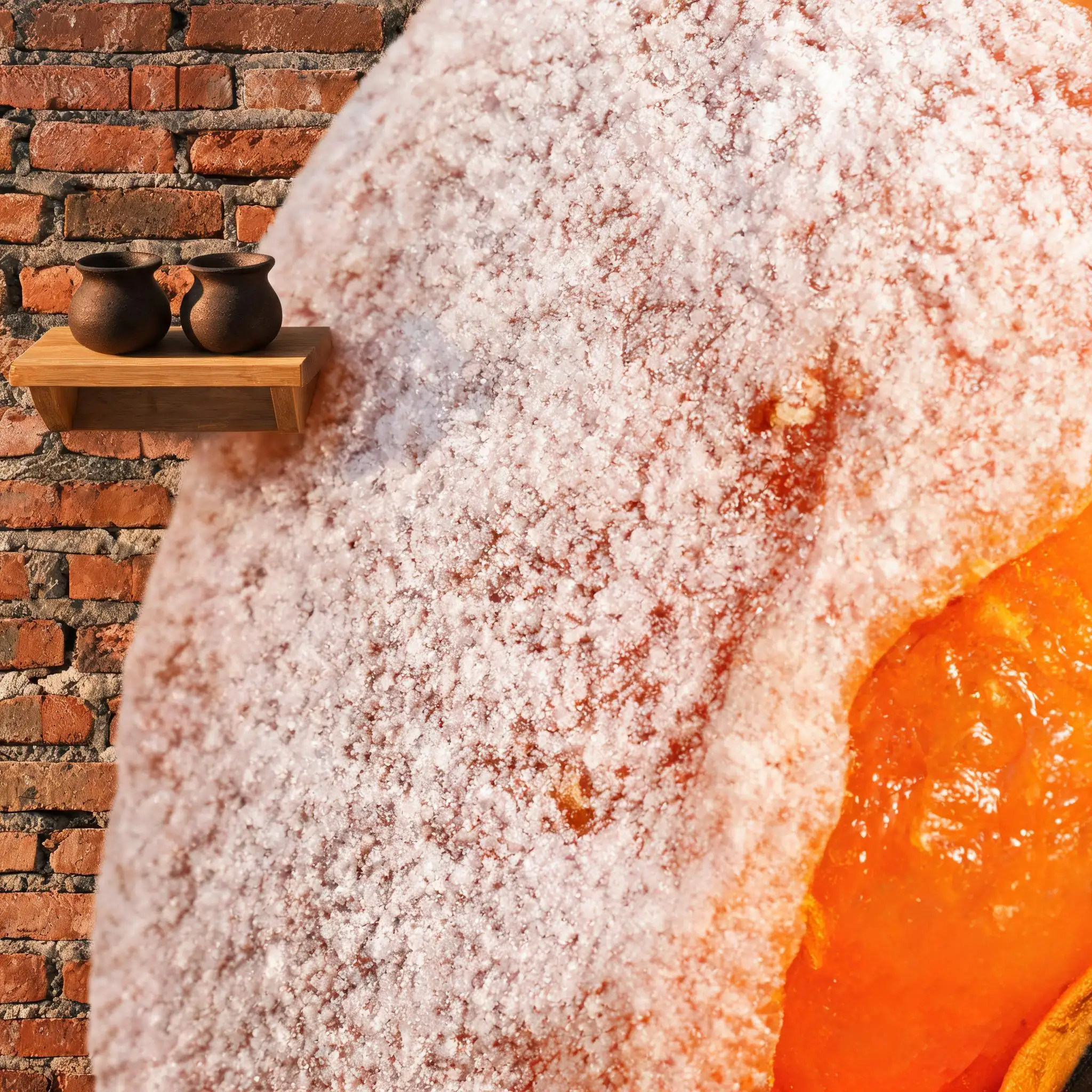
To make persimmon cakes — shizhibing — the fruit is harvested slightly before peak ripeness, when it is still firm enough to handle. The skin is removed in a single long spiral with a small knife, exposing the orange flesh. The peeled fruit is threaded on strings and hung in the open air to dry, the skins spiraling down below each fruit. Over the following weeks, as the moisture leaves the flesh, the fruit collapses and flattens. Sugar migrates to the surface and crystallizes into a fine white powder — the persimmon frost, shishuang — soft and chalky, entirely natural, tasting of concentrated sweetness. The finished cakes are flat discs, pale white on the outside, dark amber within, dense and chewy and very sweet.
The white frost is considered the marker of quality. It only develops when the fruit is dried slowly, in cold air, with adequate ventilation. Fruit dried too fast, at too high a temperature, will not frost.
In Botou, persimmon trees grow in courtyards and along field edges, planted generations ago by families who still harvest them. The trees are long-lived. Some of the oldest ones in the county are over three hundred years old, still producing fruit each autumn, their trunks thick and gnarled and dark, their branches bare by October except for the fire.
---
**Ingredients**
- Huoshizi (火柿子) — fire persimmon, Botou, Cangzhou, Hebei
---
By late October, the leaves are gone.
What remains on the persimmon trees in Botou are the fruit — dozens of them on each tree, round and slightly flattened, the color of burning coal before it turns to ash: deep orange shading into red, each one hanging from a bare black branch by a short stem. From a distance, a mature persimmon tree looks like it is still on fire after everything else has gone cold.
The Botou fire persimmon has been cultivated in this part of the Hebei plain for over a thousand years. The variety is specific to the local soil and groundwater conditions, and attempts to grow it elsewhere have produced fruit that looks similar but does not taste the same. Local growers will tell you this without prompting. The name — huoshizi, fire persimmon — refers to the color, though the intensity of the sweetness, when the fruit is fully ripe, gives the name a secondary meaning that is harder to argue with.
A fully ripe Botou persimmon cannot be eaten like an apple. The skin is thin and the flesh beneath it has become, over the final weeks of ripening, essentially liquid — translucent, deep orange, trembling slightly when the fruit is moved. You pick it up carefully, pierce the skin with a fingernail or a small knife, and drink the interior rather than bite into it. The flavor is intensely sweet with no astringency, no sharpness, nothing to interrupt the sweetness. It coats the mouth.
Some fruit is eaten fresh. Most is dried.
To make persimmon cakes — shizhibing — the fruit is harvested slightly before peak ripeness, when it is still firm enough to handle. The skin is removed in a single long spiral with a small knife, exposing the orange flesh. The peeled fruit is threaded on strings and hung in the open air to dry, the skins spiraling down below each fruit. Over the following weeks, as the moisture leaves the flesh, the fruit collapses and flattens. Sugar migrates to the surface and crystallizes into a fine white powder — the persimmon frost, shishuang — soft and chalky, entirely natural, tasting of concentrated sweetness. The finished cakes are flat discs, pale white on the outside, dark amber within, dense and chewy and very sweet.
The white frost is considered the marker of quality. It only develops when the fruit is dried slowly, in cold air, with adequate ventilation. Fruit dried too fast, at too high a temperature, will not frost.
In Botou, persimmon trees grow in courtyards and along field edges, planted generations ago by families who still harvest them. The trees are long-lived. Some of the oldest ones in the county are over three hundred years old, still producing fruit each autumn, their trunks thick and gnarled and dark, their branches bare by October except for the fire.