·5/19/2026
from
Yangchang Tang
# Cangzhou Yangchang Tang
---
**Ingredients**
- Yangchang Tang (羊肠汤) — sheep intestine soup, Cangzhou, Hebei
---
The intestines arrive before dawn.
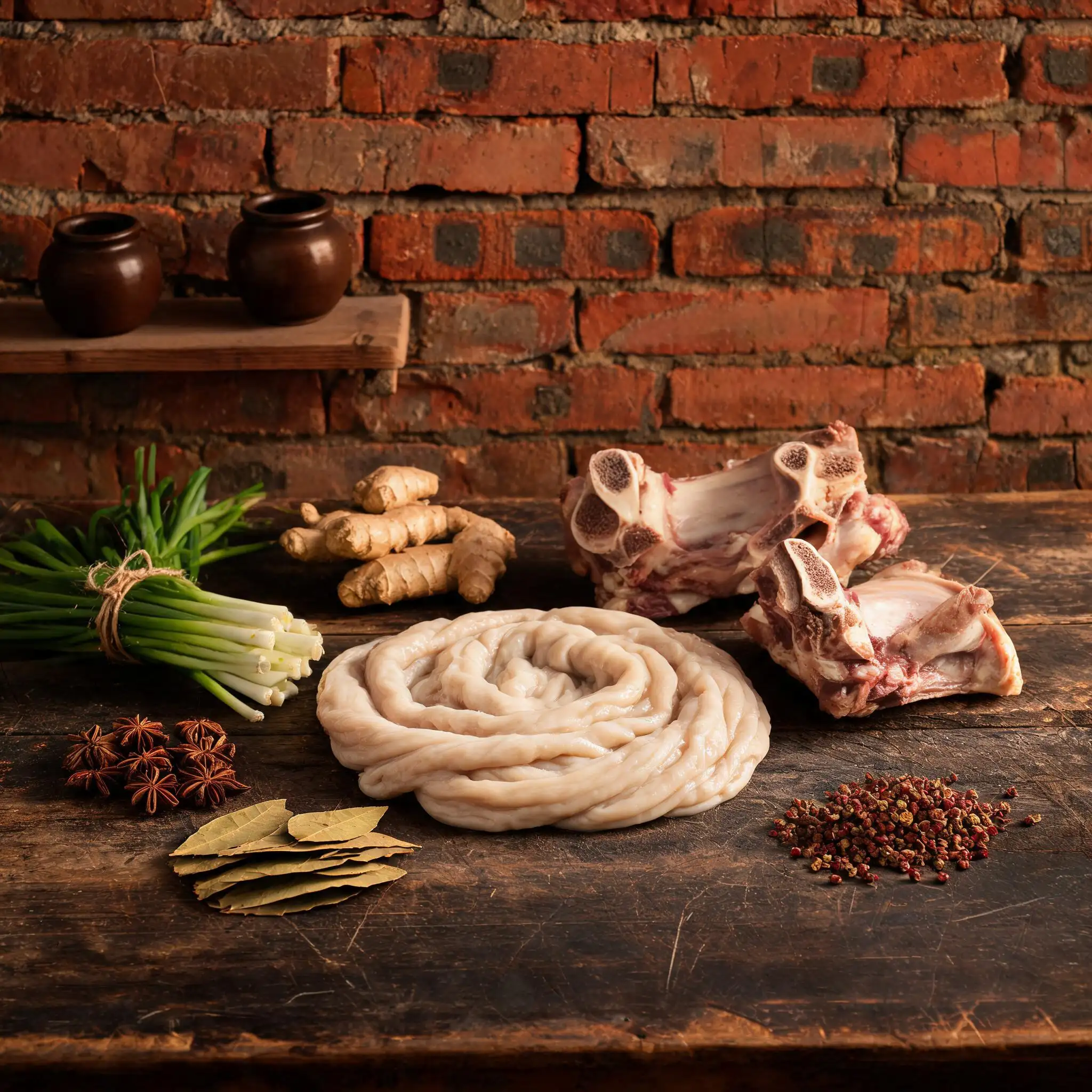
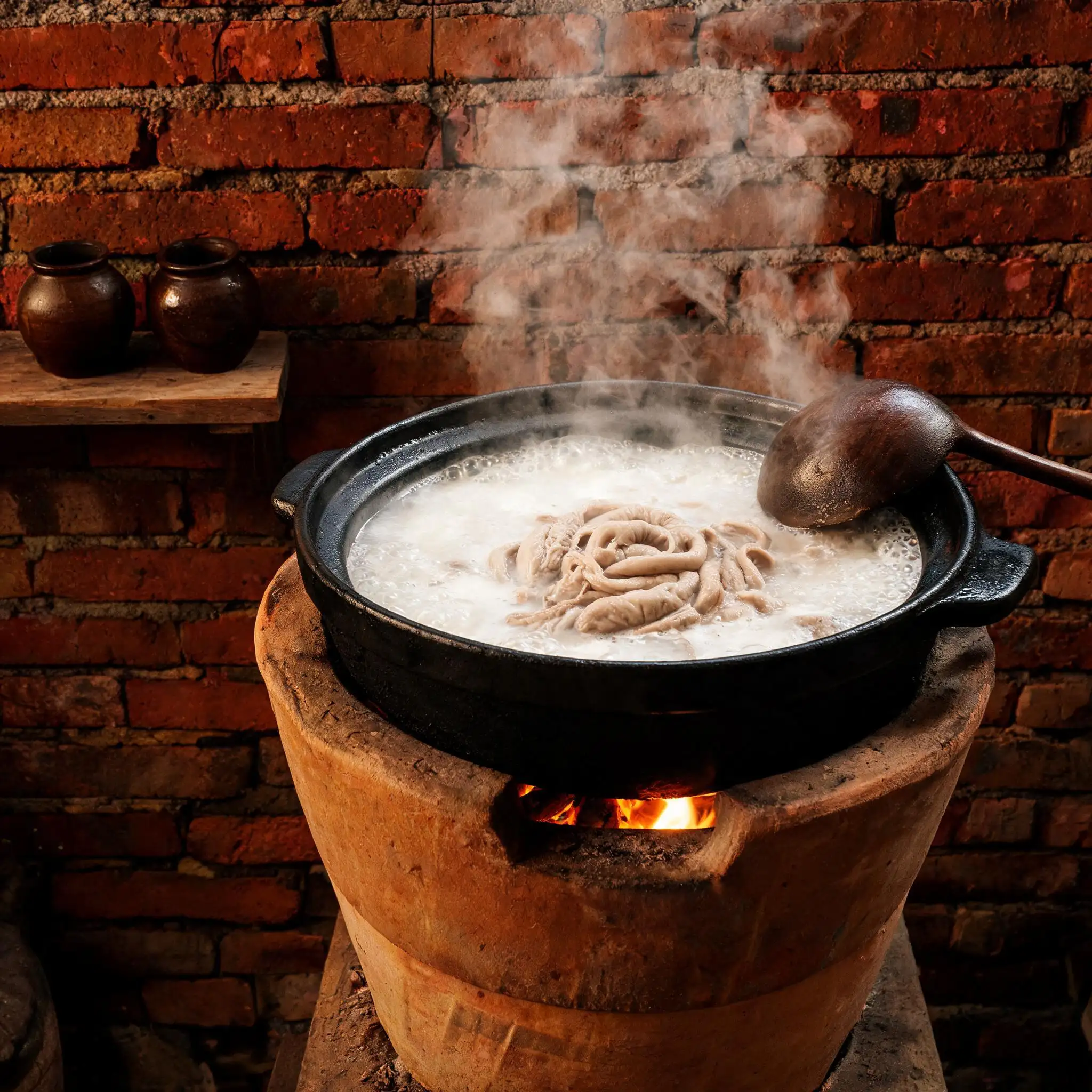
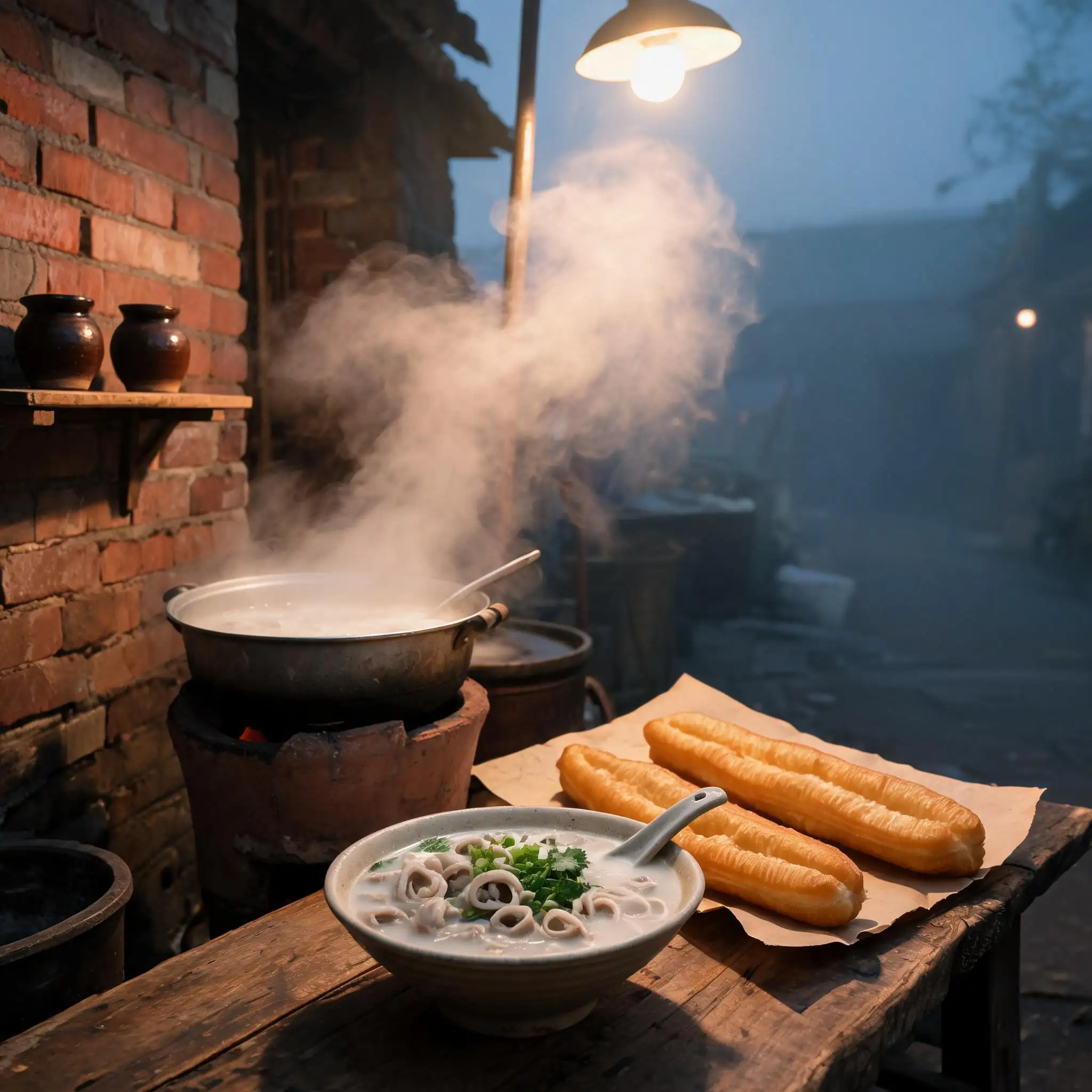
By four in the morning, the stall owner has already started the broth. Split sheep bones go into cold water in a large black iron pot, the pot set over a clay stove and brought slowly to a boil. As the temperature rises, the surface turns murky, then gradually white — the collagen and marrow releasing into the liquid, thickening it, turning it opaque. This is the base.
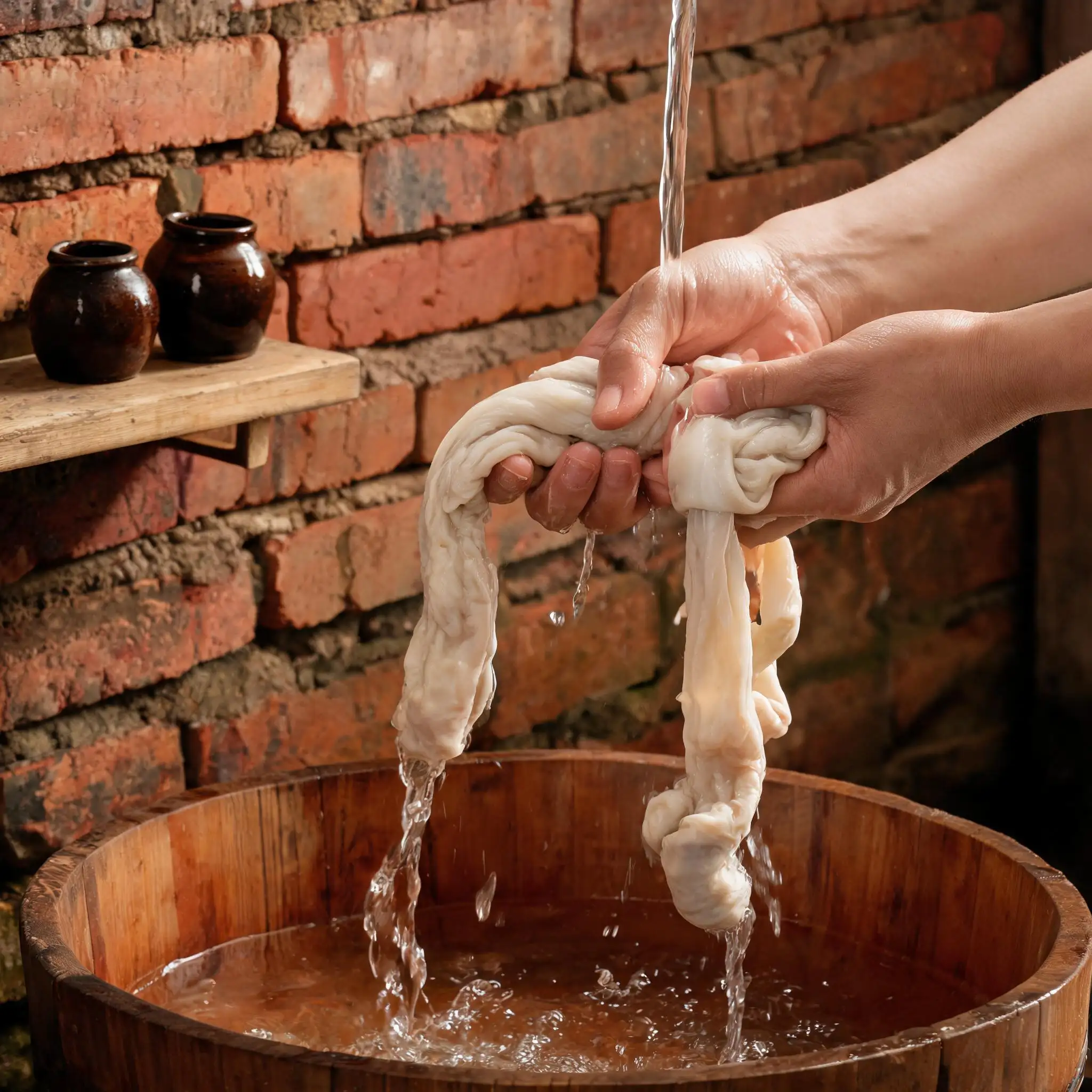
The intestines themselves require time before they ever reach the pot. They are cleaned by hand, turned inside out, scraped, rinsed under running water, scraped again, rinsed again. The process is unglamorous and essential. There is no shortcut to a clean intestine, and an unclean one would ruin the soup. The hands doing this work are usually the same hands that will serve the finished bowl three hours later.
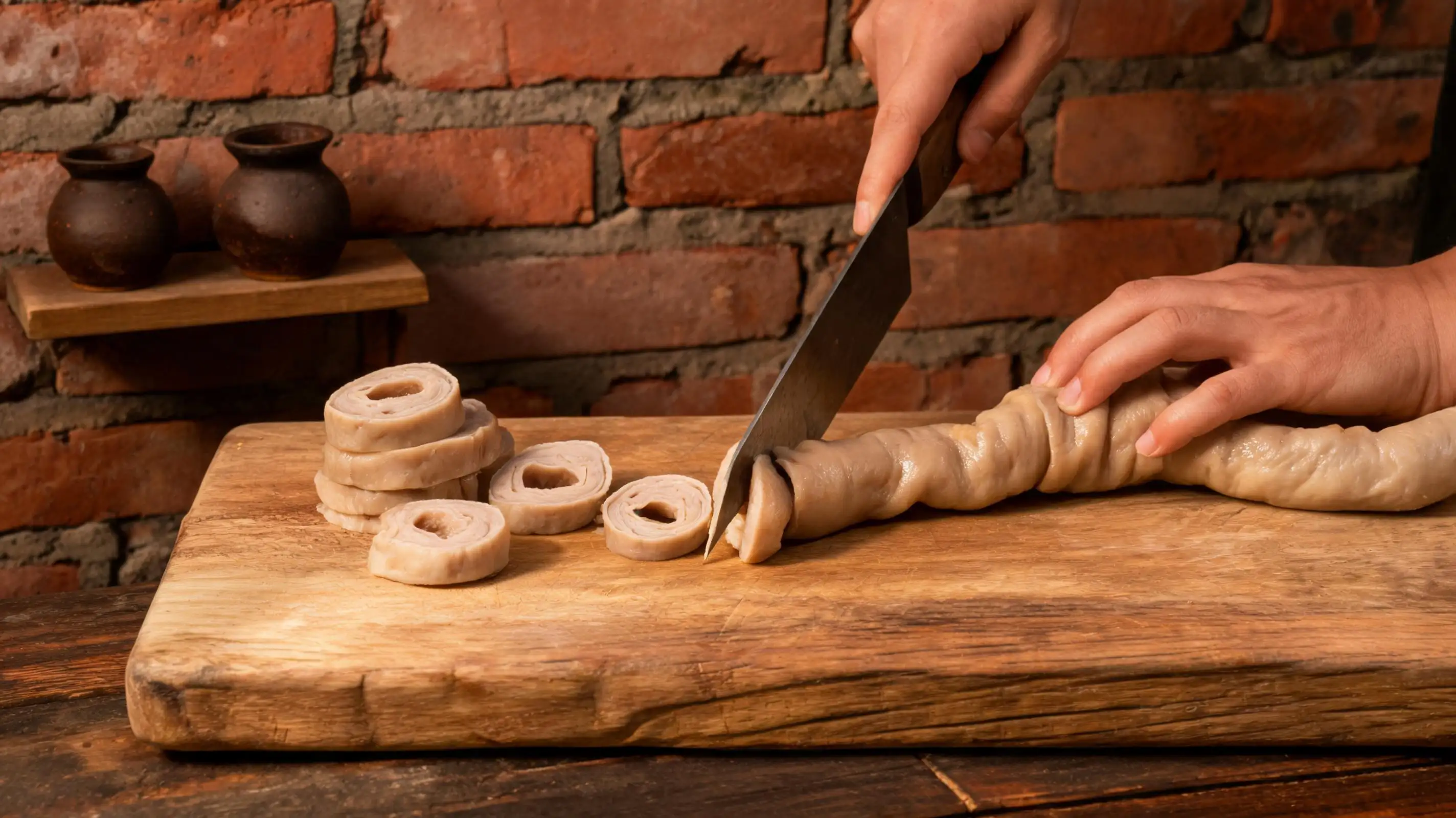
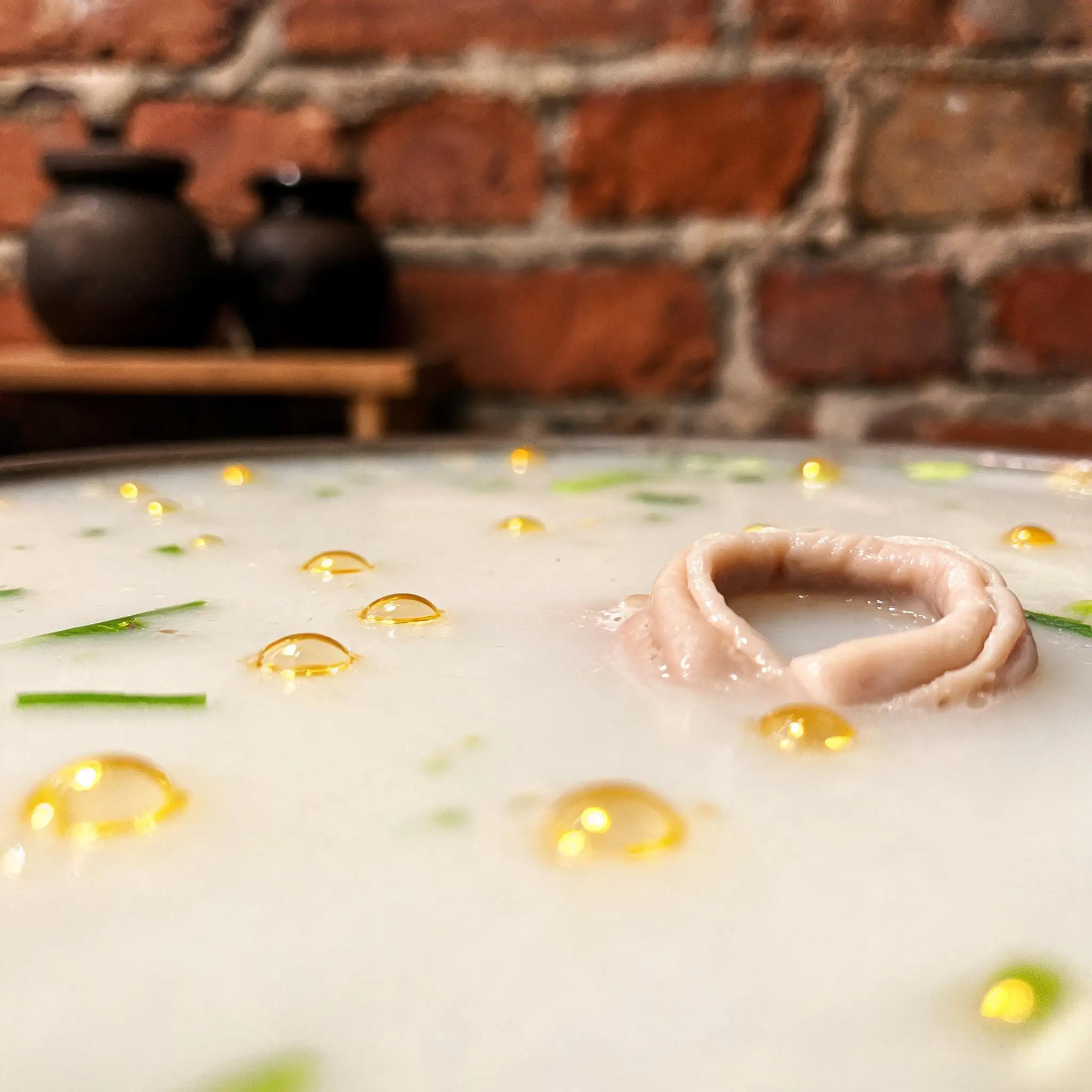
Once cleaned, the intestines are added to the simmering broth and left to cook slowly — forty minutes to an hour — until they are tender all the way through but still have resistance when pressed between the fingers. They are then lifted out, allowed to cool slightly, and cut into rings on a thick wooden board: each piece two centimeters wide, the cut face showing a small hollow center surrounded by pale, faintly corrugated intestine wall.
The rings go back into the hot broth to serve.
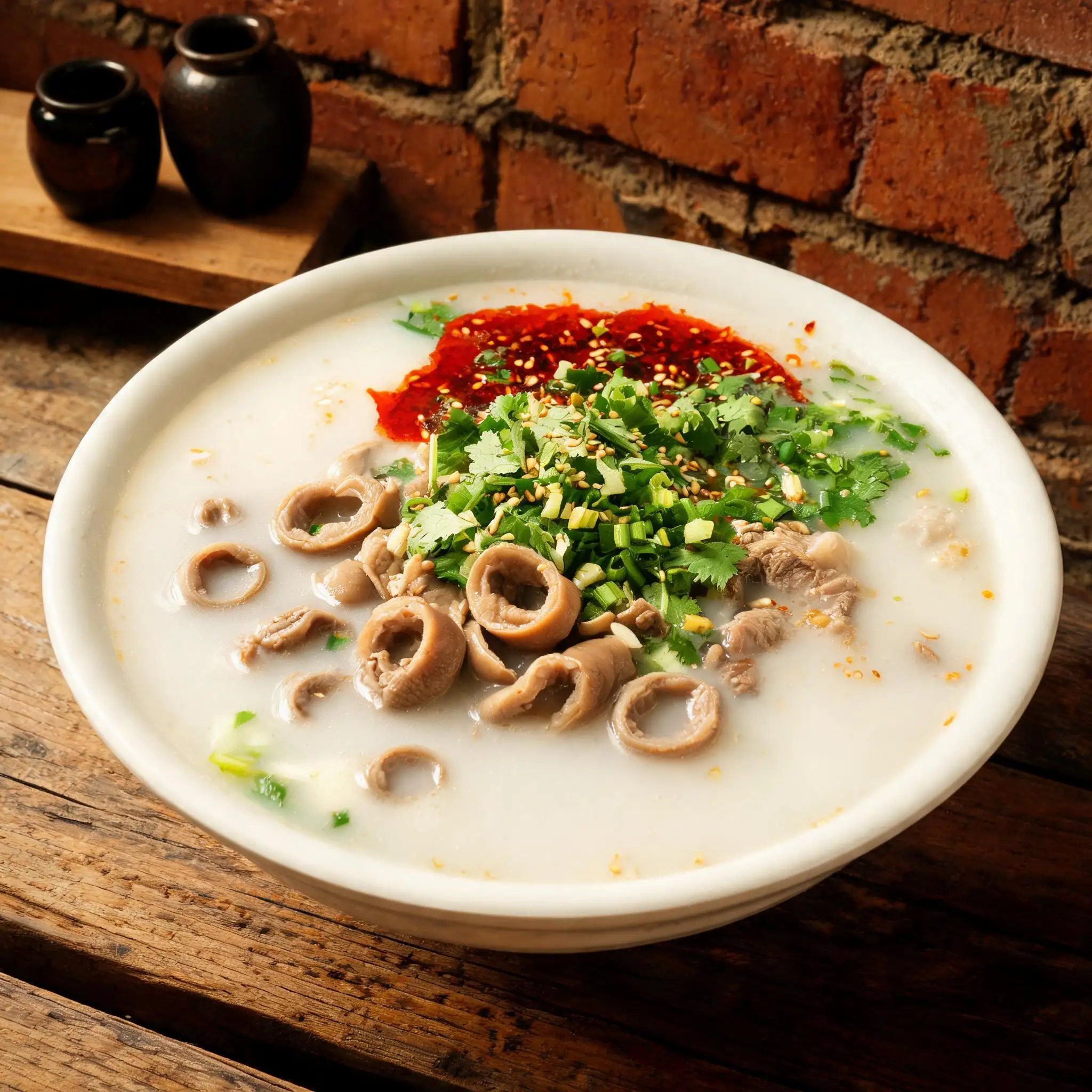
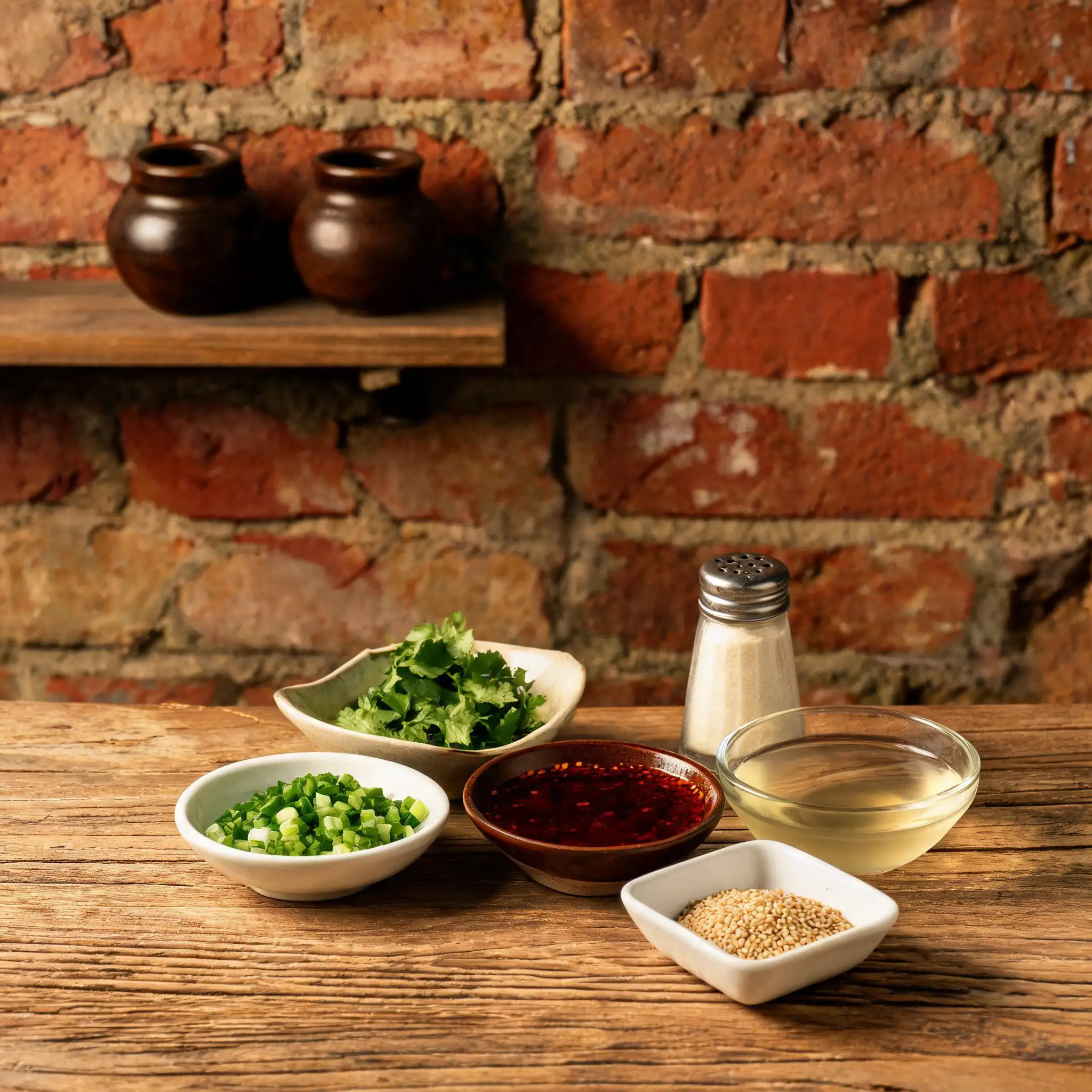
A bowl of yangchang tang is assembled at the moment of ordering. A ladle of milky broth is poured into a white ceramic bowl, deep enough to hold volume, wide enough to let the steam escape. A portion of intestine rings is added. Then: chopped scallion, fresh cilantro, a pinch of toasted sesame seeds, a pour of chili oil that blooms red across the white surface, and — optionally, for those who want it — a splash of rice vinegar from a small ceramic jug on the table.
It is eaten in the morning, before work. It is eaten standing up at a street counter, or seated at a rough wooden table, or carrying the bowl a few steps to squat against a wall. On the table beside it: youtiao — fried crullers, golden and airy — for tearing and dipping into the broth.
The soup is warming without being heavy. The intestines are mild and slightly gelatinous. The broth coats the inside of the mouth. The chili oil provides heat; the scallion provides freshness; the vinegar, if you use it, cuts through the richness and makes the whole thing taste lighter and sharper. By seven in the morning, the pot is usually half gone. By nine, the stall is closed.
Some foods are designed to be eaten at a particular time of day. This is one of them.
---
**Ingredients**
- Yangchang Tang (羊肠汤) — sheep intestine soup, Cangzhou, Hebei
---
The intestines arrive before dawn.
By four in the morning, the stall owner has already started the broth. Split sheep bones go into cold water in a large black iron pot, the pot set over a clay stove and brought slowly to a boil. As the temperature rises, the surface turns murky, then gradually white — the collagen and marrow releasing into the liquid, thickening it, turning it opaque. This is the base.
The intestines themselves require time before they ever reach the pot. They are cleaned by hand, turned inside out, scraped, rinsed under running water, scraped again, rinsed again. The process is unglamorous and essential. There is no shortcut to a clean intestine, and an unclean one would ruin the soup. The hands doing this work are usually the same hands that will serve the finished bowl three hours later.
Once cleaned, the intestines are added to the simmering broth and left to cook slowly — forty minutes to an hour — until they are tender all the way through but still have resistance when pressed between the fingers. They are then lifted out, allowed to cool slightly, and cut into rings on a thick wooden board: each piece two centimeters wide, the cut face showing a small hollow center surrounded by pale, faintly corrugated intestine wall.
The rings go back into the hot broth to serve.
A bowl of yangchang tang is assembled at the moment of ordering. A ladle of milky broth is poured into a white ceramic bowl, deep enough to hold volume, wide enough to let the steam escape. A portion of intestine rings is added. Then: chopped scallion, fresh cilantro, a pinch of toasted sesame seeds, a pour of chili oil that blooms red across the white surface, and — optionally, for those who want it — a splash of rice vinegar from a small ceramic jug on the table.
It is eaten in the morning, before work. It is eaten standing up at a street counter, or seated at a rough wooden table, or carrying the bowl a few steps to squat against a wall. On the table beside it: youtiao — fried crullers, golden and airy — for tearing and dipping into the broth.
The soup is warming without being heavy. The intestines are mild and slightly gelatinous. The broth coats the inside of the mouth. The chili oil provides heat; the scallion provides freshness; the vinegar, if you use it, cuts through the richness and makes the whole thing taste lighter and sharper. By seven in the morning, the pot is usually half gone. By nine, the stall is closed.
Some foods are designed to be eaten at a particular time of day. This is one of them.