·5/19/2026
from
Hejian Lürou Huoshao
# Hejian Lürou Huoshao
---
**Ingredients**
- Lürou Huoshao (驴肉火烧) — braised donkey meat in a layered flatbread, from Hejian, Hebei
---
The flatbread is rectangular. This is the first thing people from Hejian will tell you if you confuse their version with the one from Baoding, ninety kilometers to the northwest, where they make the same thing in a round shape. The difference in form reflects a difference in method, and both parties consider the distinction important.
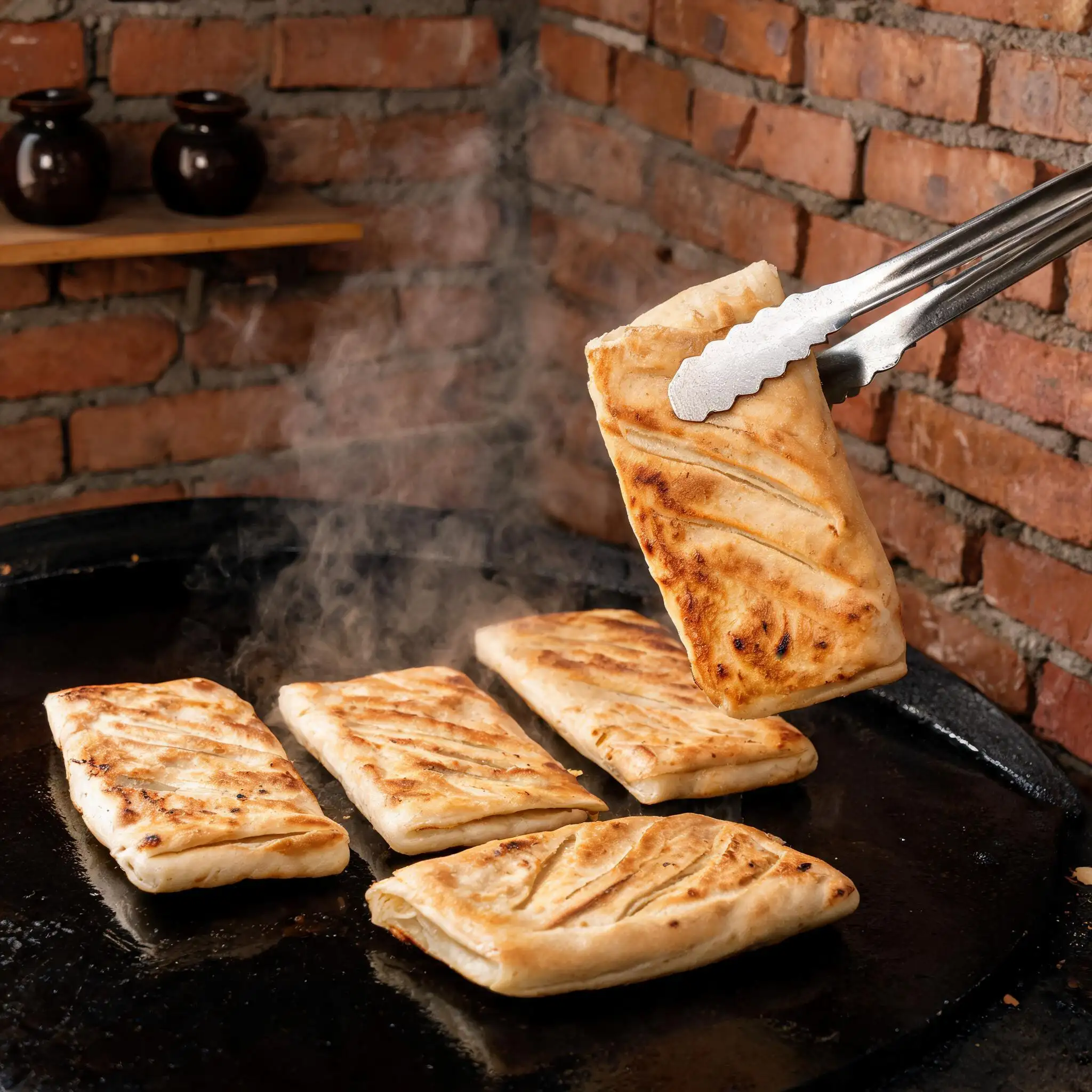
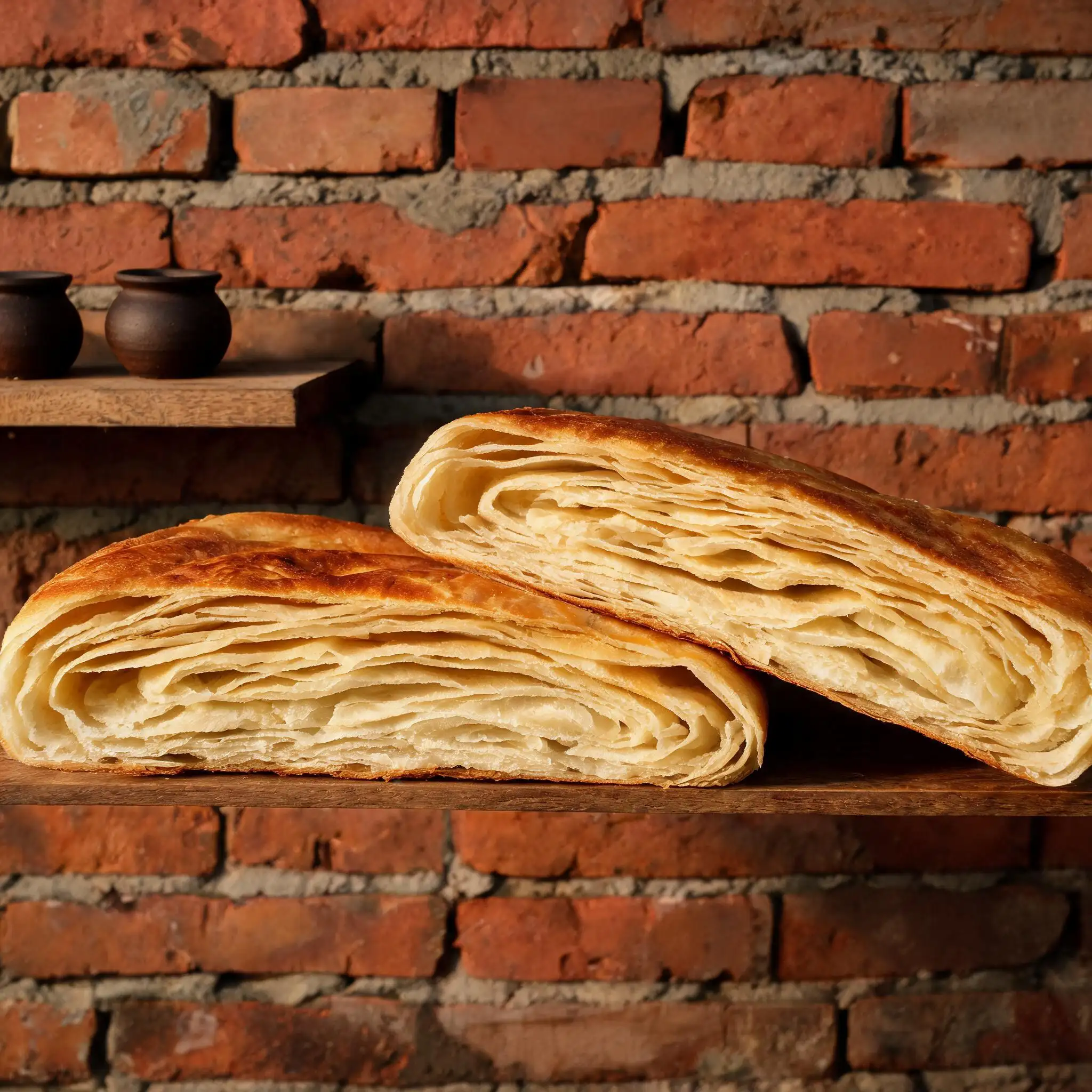
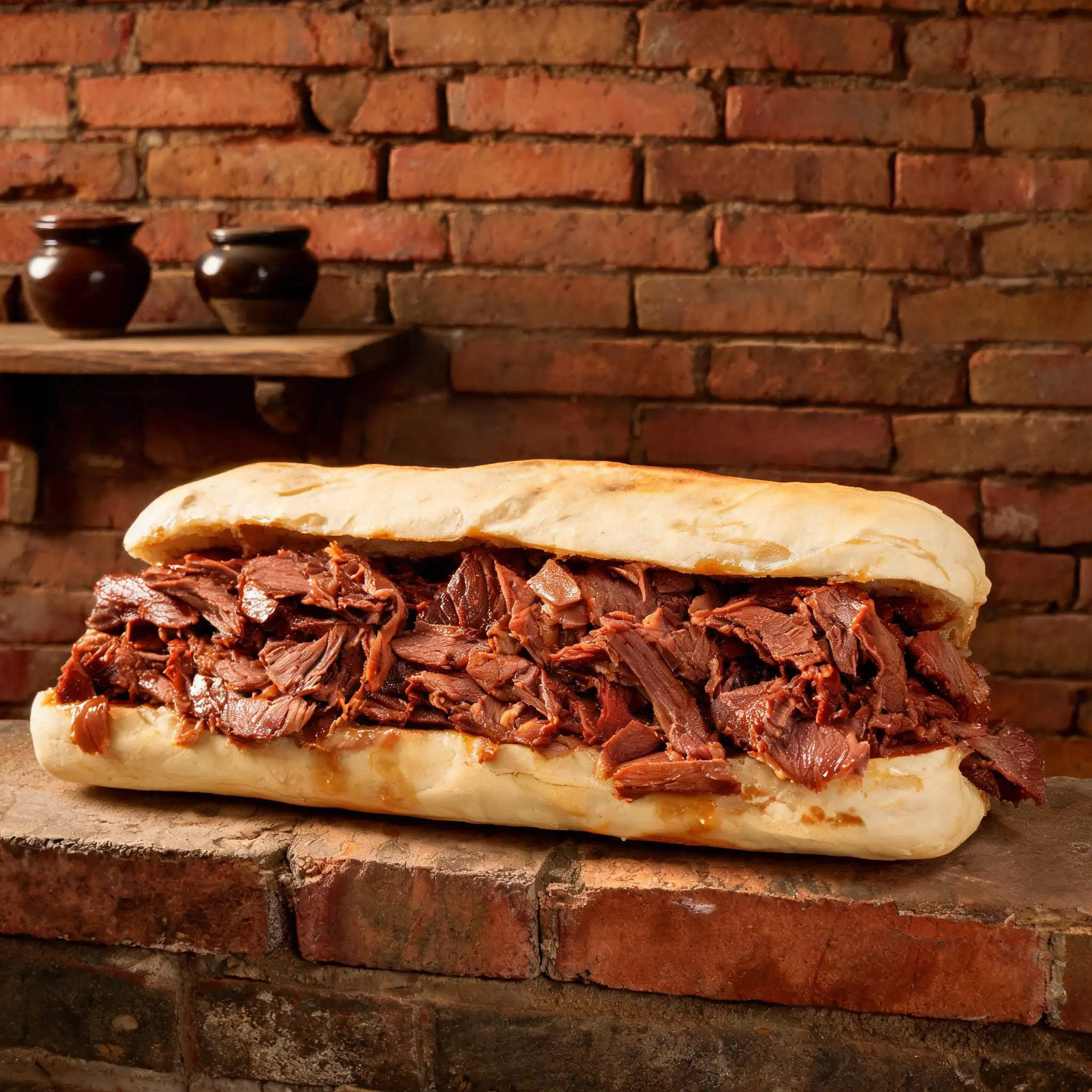
The Hejian huoshao is made from unleavened dough — flour, water, salt — rolled flat and folded over itself several times with a thin layer of oil between each fold, then pressed flat again and set on a large iron griddle over a wood or coal fire. As it cooks, the folded layers separate slightly and the outside crisps to a golden-brown. The interior remains soft and flaky, layered like rough puff pastry, pale and slightly chewy. Each finished piece is roughly palm-sized and no thicker than two or three centimeters, with a shape that is more envelope than pillow.
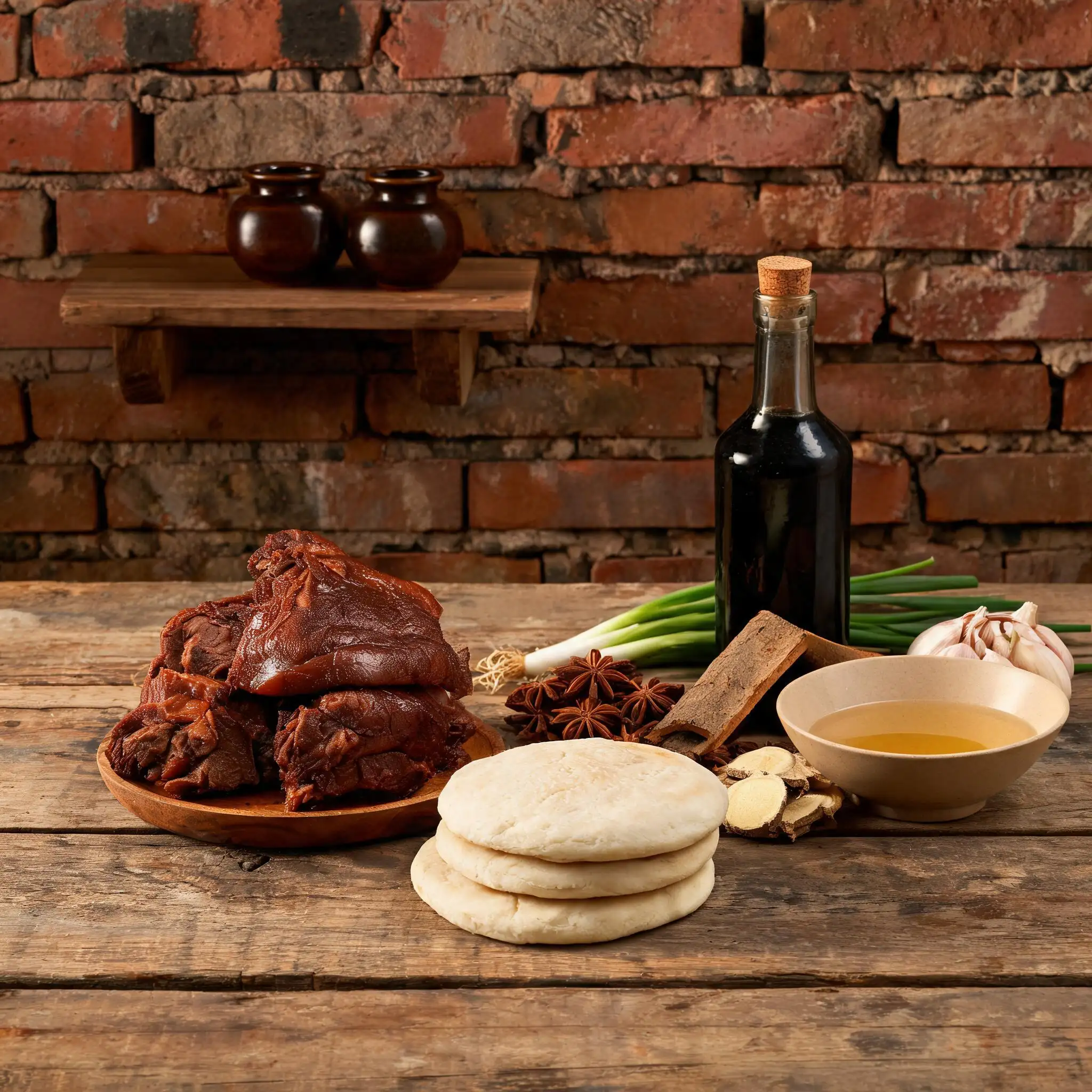
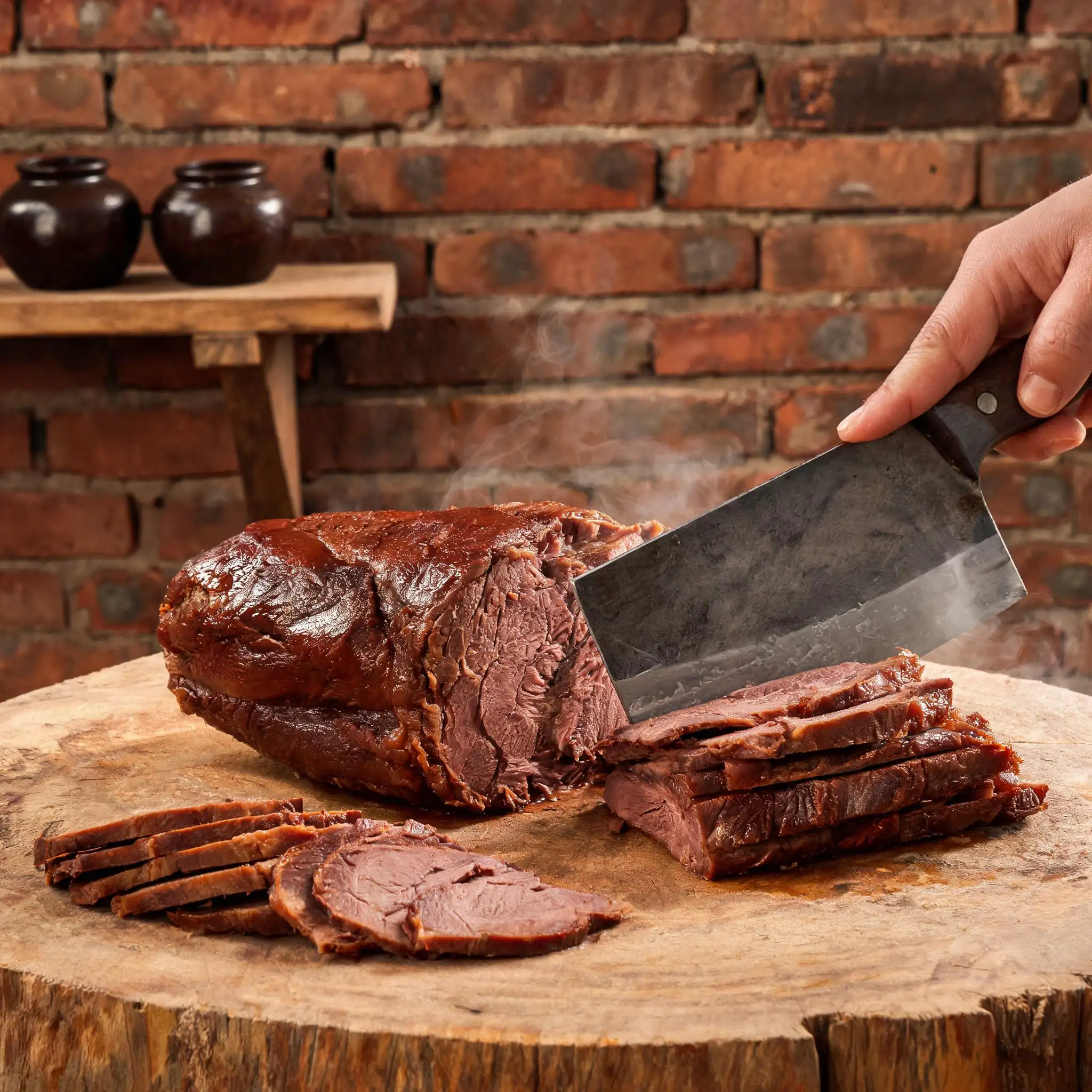
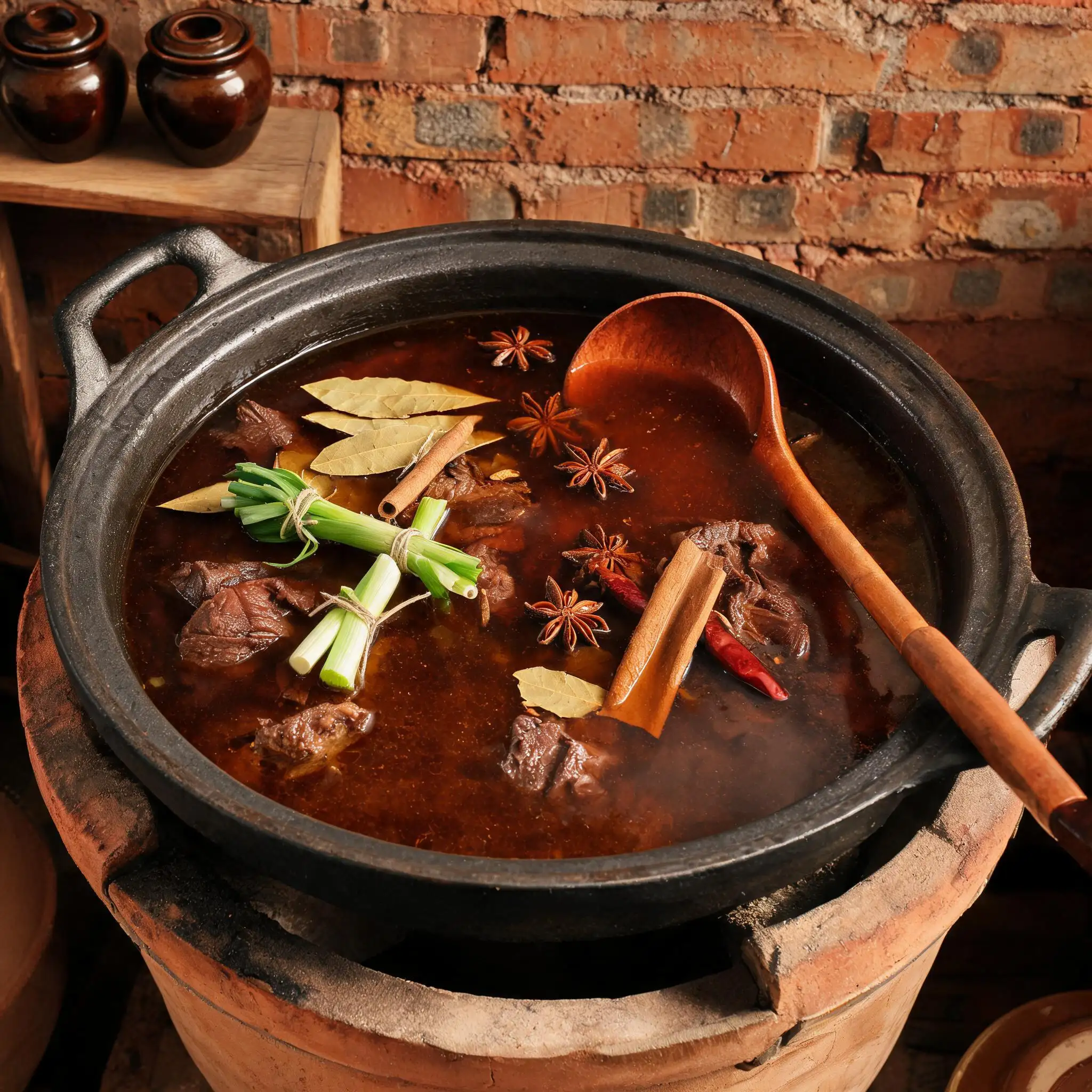
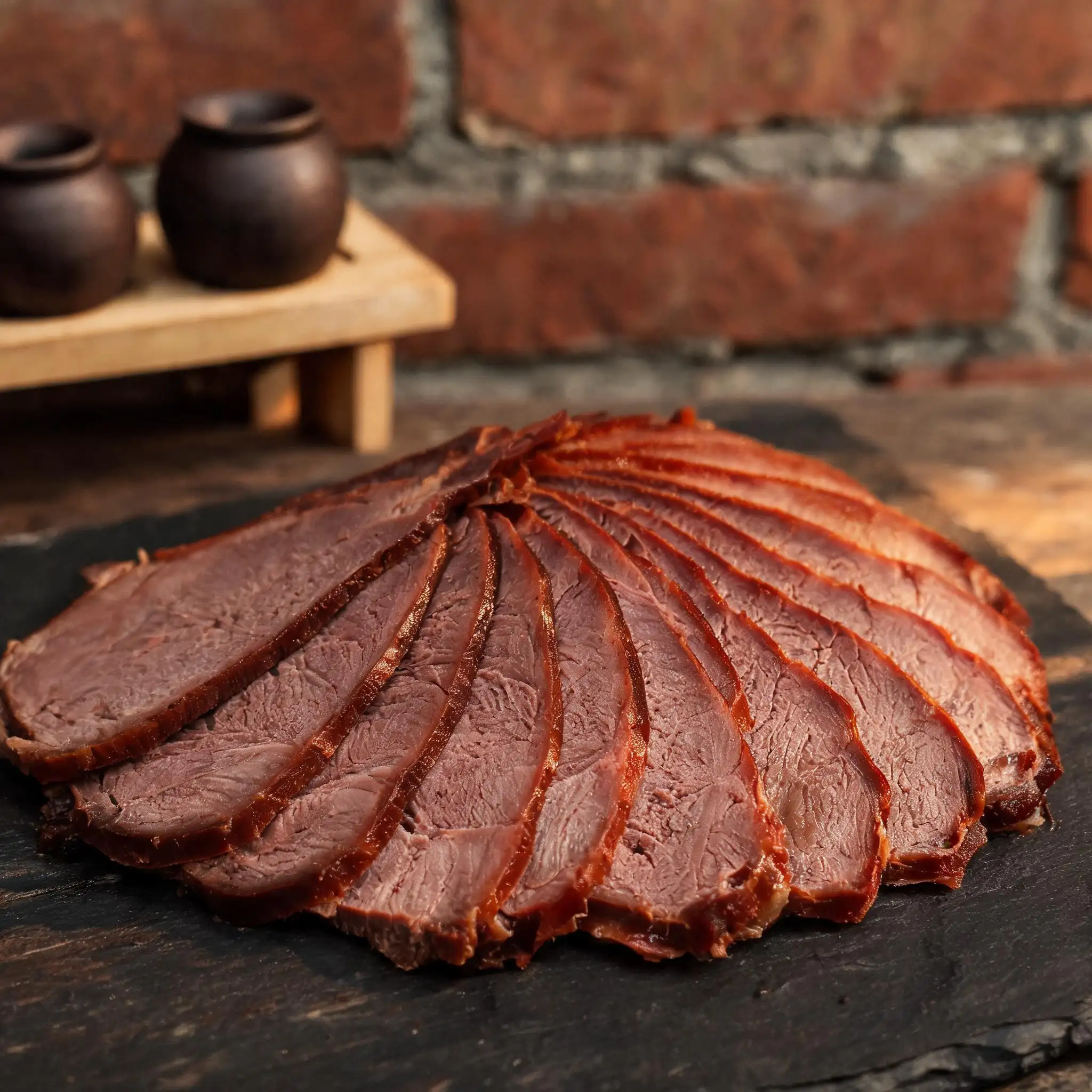
The donkey meat is prepared separately. The animal — typically a local Dezhou donkey, a breed associated with this part of Hebei for centuries — is braised whole in a large iron pot with soy sauce, cooking wine, star anise, cinnamon, ginger, scallion and dried chili. The braise runs for several hours until the meat is tender all the way through but still holds its structure. After cooking it is pressed, cooled, and sliced thin. The color it takes from the braise liquid is a deep mahogany-brown. The grain of the meat is fine and dense — tighter than beef brisket, with almost no visible fat — and the flavor is mild and savory with a faint residual sweetness from the braising liquid.
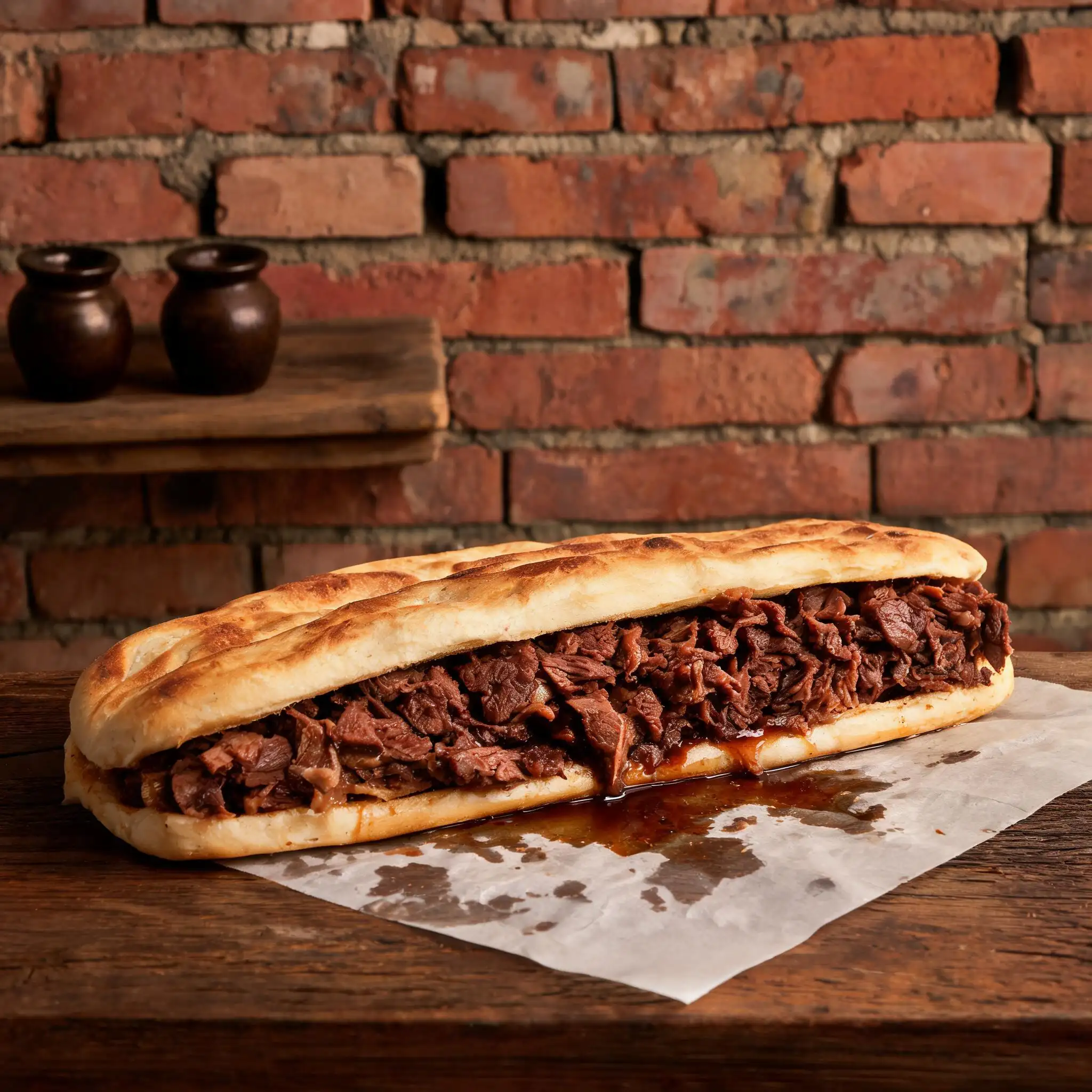
To assemble, the flatbread is split open along its length. A generous quantity of cold sliced donkey meat is pressed inside. The inner surface of the bread, still warm from the griddle, absorbs the juices from the meat at the edges, turning slightly translucent and dark where the two surfaces meet. The result is eaten immediately, held in two hands, the long axis of the bread horizontal.
There is a saying in Hebei: 天上龙肉,地下驴肉 — in the sky, dragon meat; on earth, donkey meat. The saying predates the huoshao by centuries. What the huoshao adds is the bread: a delivery mechanism that is also, in its own right, something worth eating. The layers hold the meat juice without going soggy. The outer crust provides resistance. The mild, slightly oily flavor of the flatbread sits cleanly behind the stronger flavor of the braise, present but not competing.
The shops that make it well open early and close when the meat is gone.
---
**Ingredients**
- Lürou Huoshao (驴肉火烧) — braised donkey meat in a layered flatbread, from Hejian, Hebei
---
The flatbread is rectangular. This is the first thing people from Hejian will tell you if you confuse their version with the one from Baoding, ninety kilometers to the northwest, where they make the same thing in a round shape. The difference in form reflects a difference in method, and both parties consider the distinction important.
The Hejian huoshao is made from unleavened dough — flour, water, salt — rolled flat and folded over itself several times with a thin layer of oil between each fold, then pressed flat again and set on a large iron griddle over a wood or coal fire. As it cooks, the folded layers separate slightly and the outside crisps to a golden-brown. The interior remains soft and flaky, layered like rough puff pastry, pale and slightly chewy. Each finished piece is roughly palm-sized and no thicker than two or three centimeters, with a shape that is more envelope than pillow.
The donkey meat is prepared separately. The animal — typically a local Dezhou donkey, a breed associated with this part of Hebei for centuries — is braised whole in a large iron pot with soy sauce, cooking wine, star anise, cinnamon, ginger, scallion and dried chili. The braise runs for several hours until the meat is tender all the way through but still holds its structure. After cooking it is pressed, cooled, and sliced thin. The color it takes from the braise liquid is a deep mahogany-brown. The grain of the meat is fine and dense — tighter than beef brisket, with almost no visible fat — and the flavor is mild and savory with a faint residual sweetness from the braising liquid.
To assemble, the flatbread is split open along its length. A generous quantity of cold sliced donkey meat is pressed inside. The inner surface of the bread, still warm from the griddle, absorbs the juices from the meat at the edges, turning slightly translucent and dark where the two surfaces meet. The result is eaten immediately, held in two hands, the long axis of the bread horizontal.
There is a saying in Hebei: 天上龙肉,地下驴肉 — in the sky, dragon meat; on earth, donkey meat. The saying predates the huoshao by centuries. What the huoshao adds is the bread: a delivery mechanism that is also, in its own right, something worth eating. The layers hold the meat juice without going soggy. The outer crust provides resistance. The mild, slightly oily flavor of the flatbread sits cleanly behind the stronger flavor of the braise, present but not competing.
The shops that make it well open early and close when the meat is gone.