·5/19/2026
from
Jinsi Xiaozao
# Cangzhou Jinsi Xiaozao
---
**Ingredients**
- Jinsi Xiaozao (金丝小枣) — small Chinese jujubes from Cangzhou, Hebei
---
The name translates literally as golden thread small date. Both halves of the name are accurate.
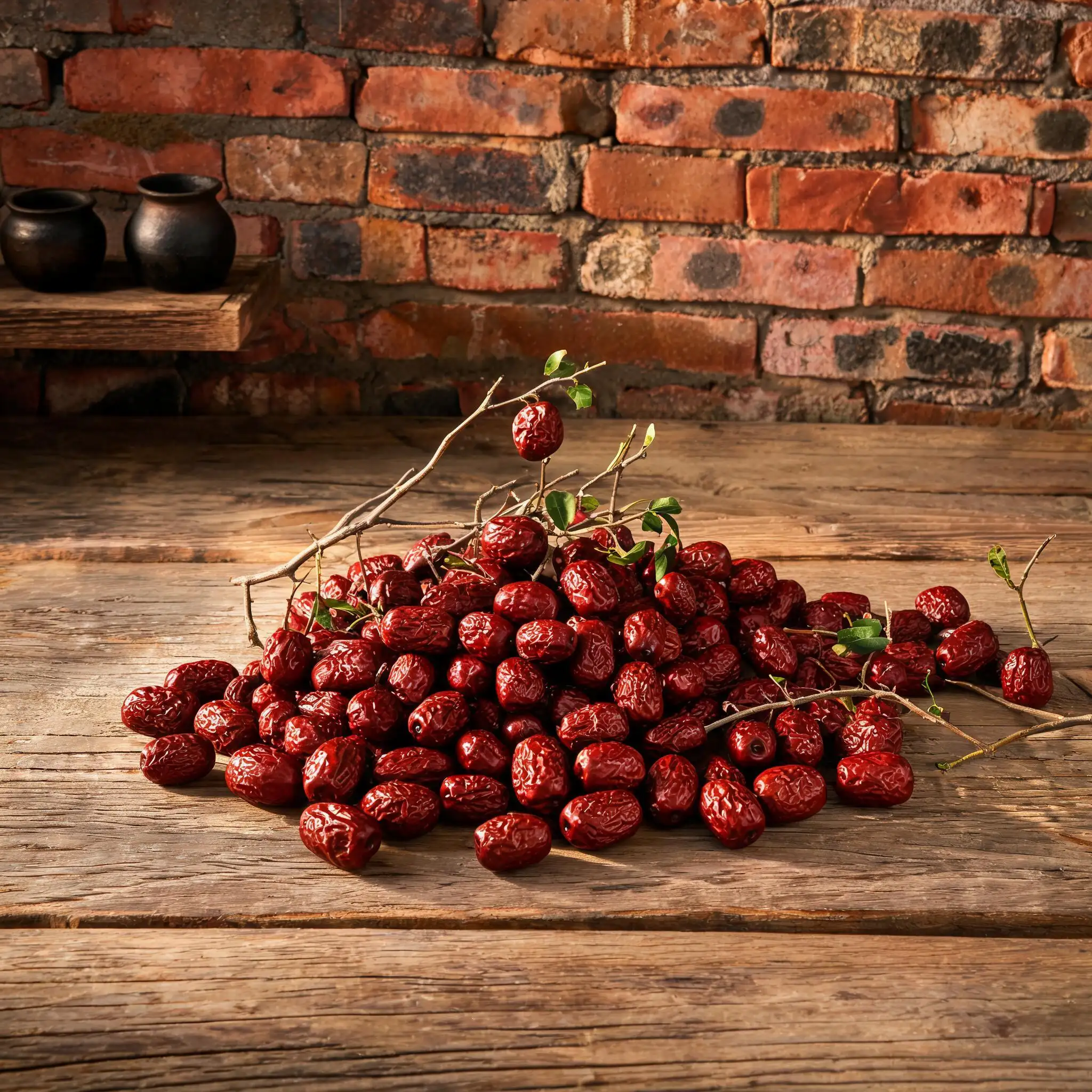
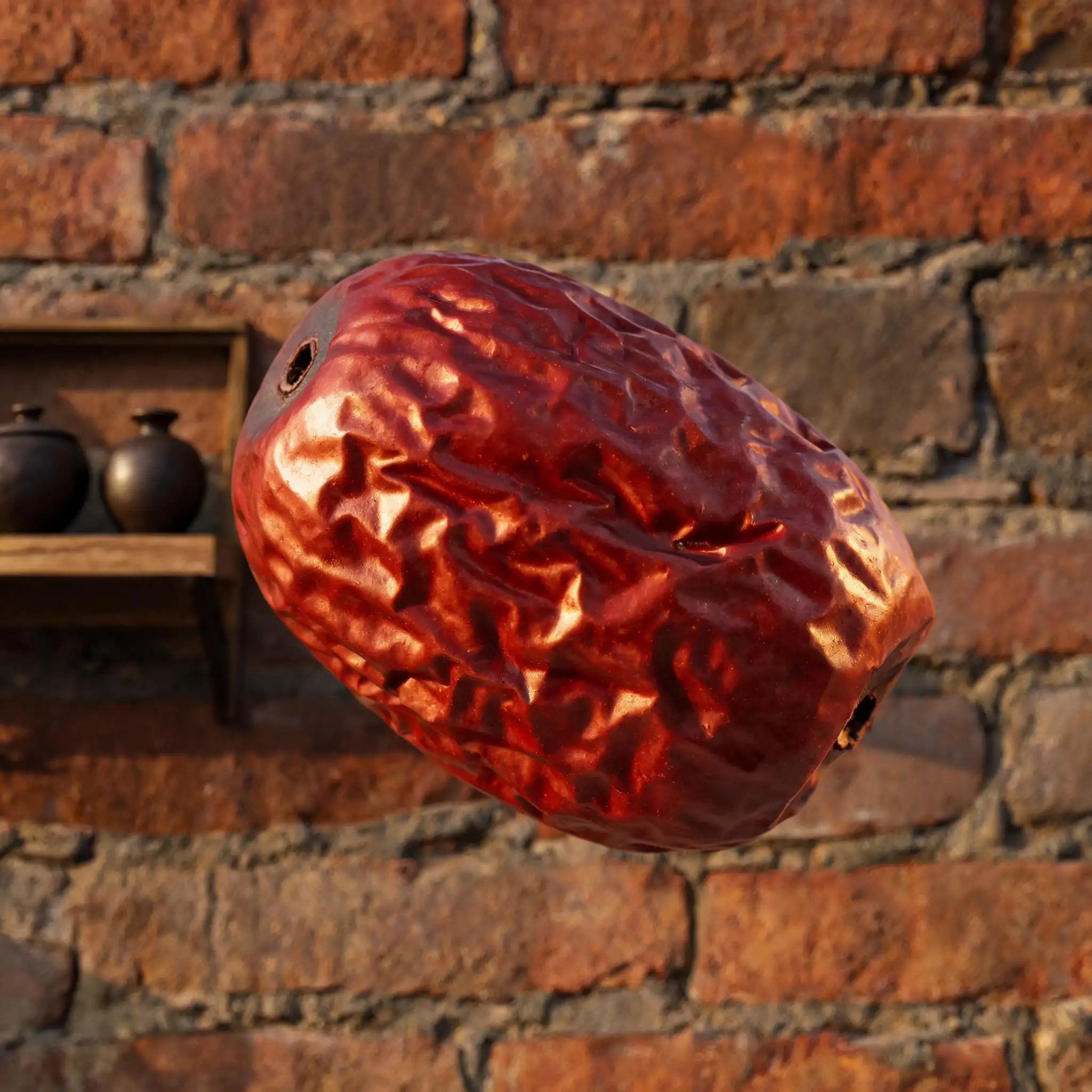
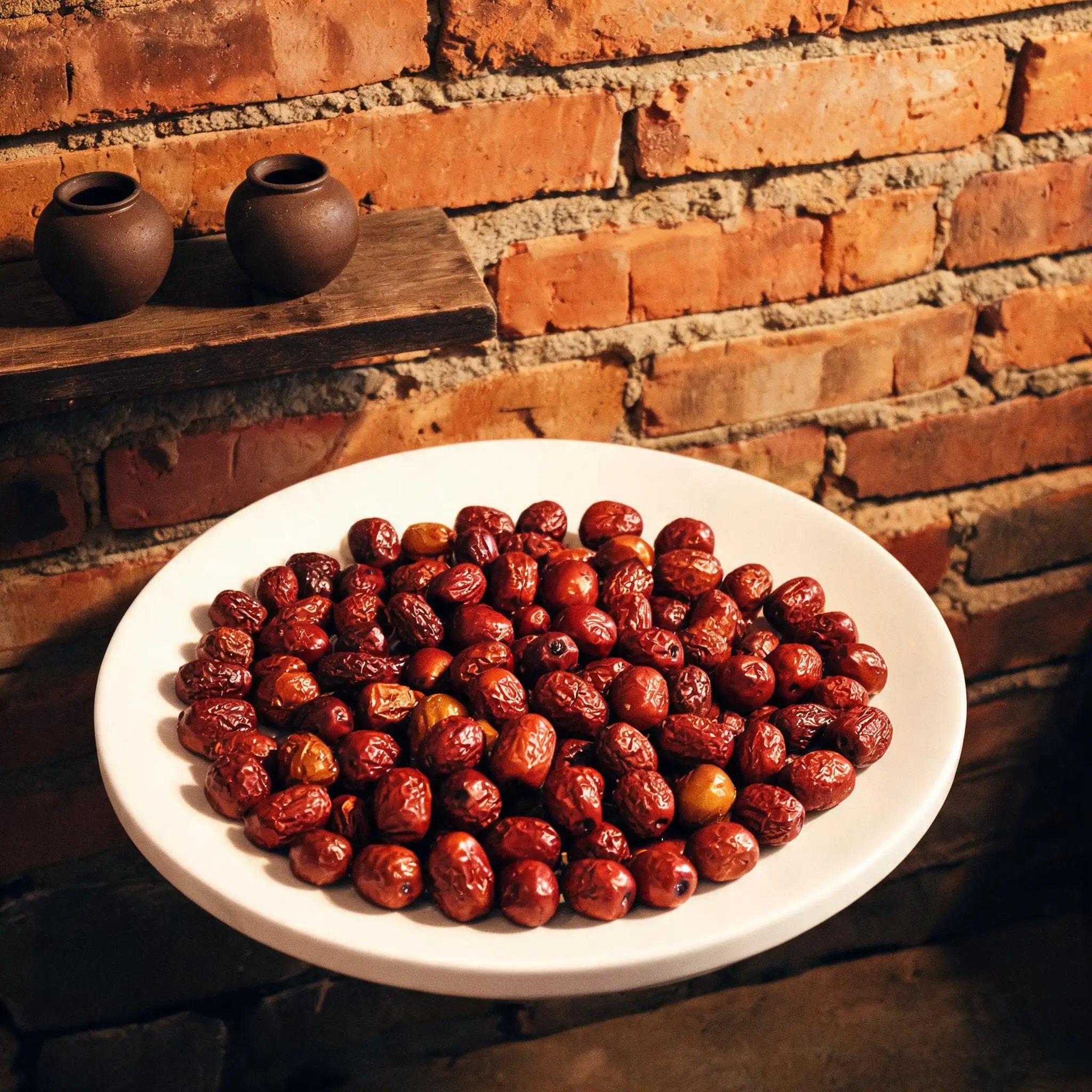
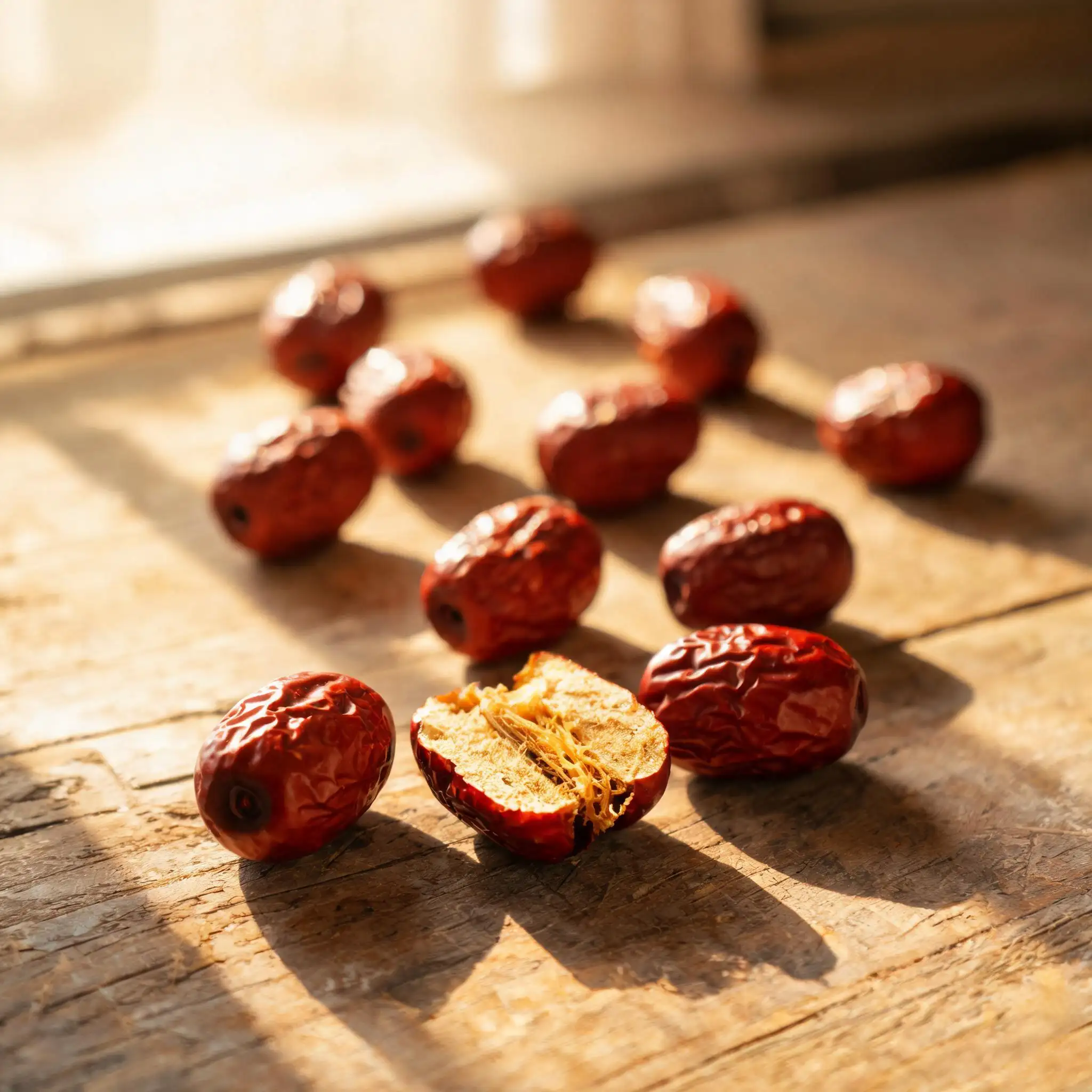
The date is small — each one between two and three centimeters long, oval, with a point at either end and a thin woody stem scar at the top. The skin is deep red when dried, almost the color of dried blood, slightly wrinkled and taut against the flesh beneath. Fresh from the tree in early autumn it is softer, the skin a brighter scarlet, the flesh still crisp and yielding like a firm apple. Dried, it becomes dense and chewy, sweet and slightly tannic, with a concentrated richness that takes time to develop in the mouth.
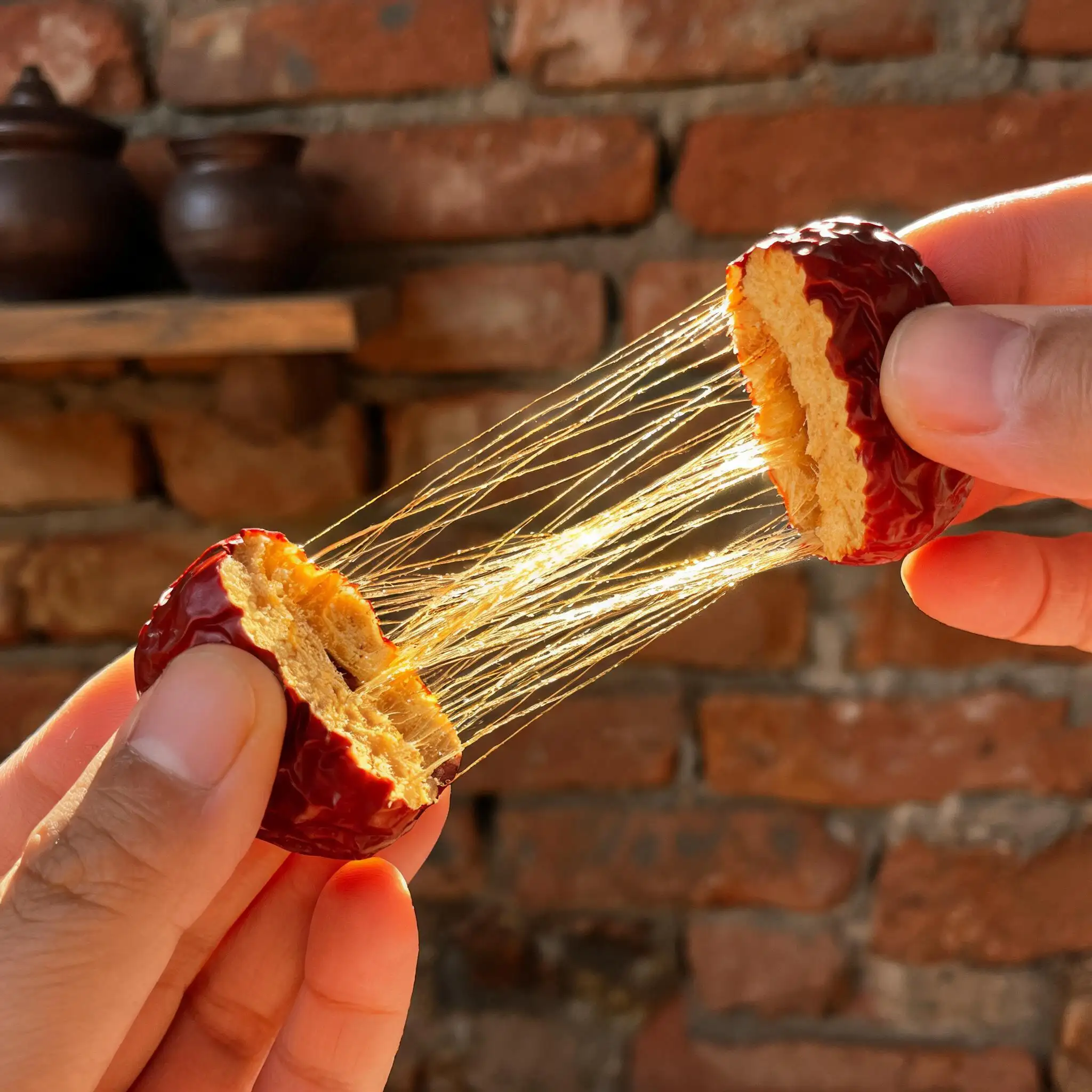
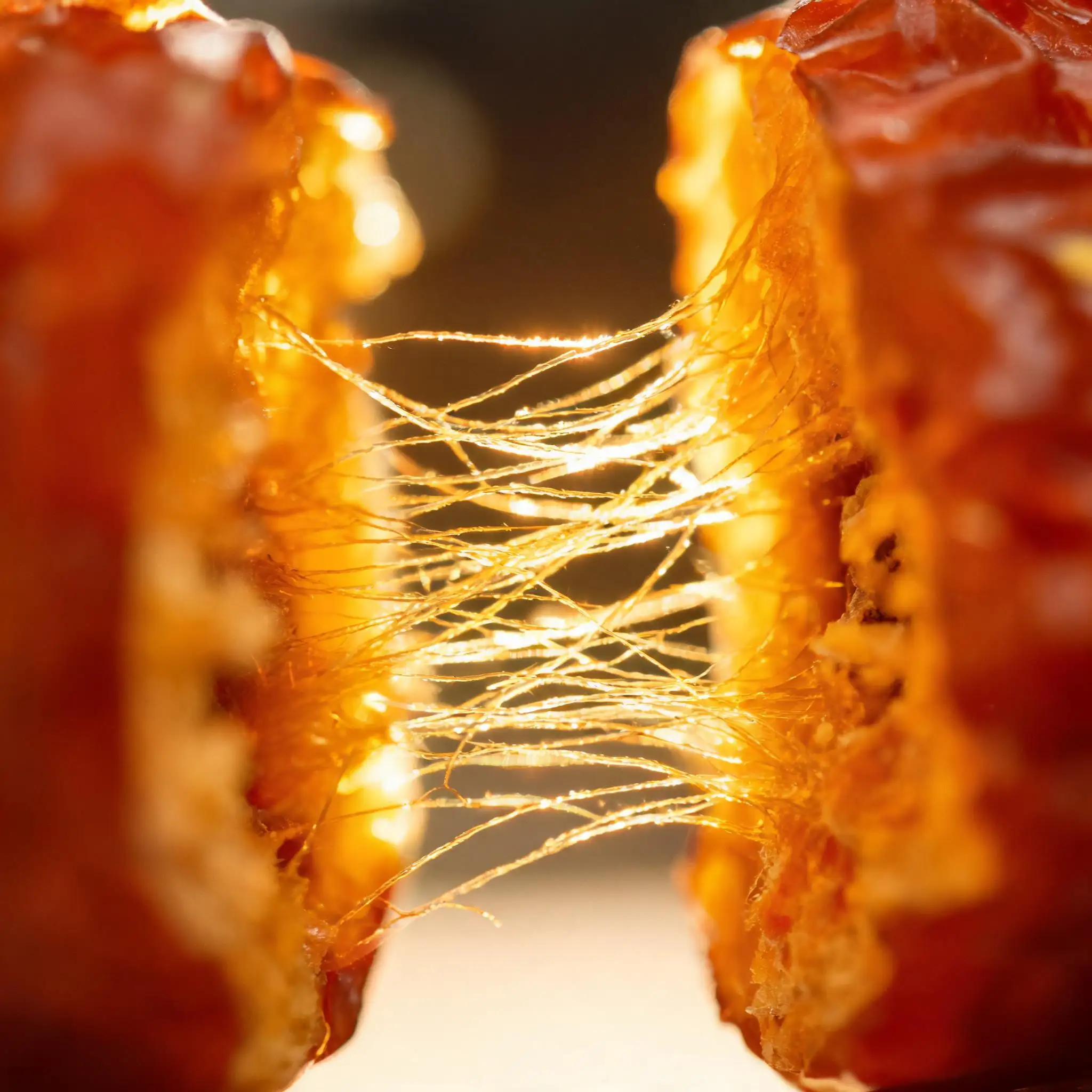
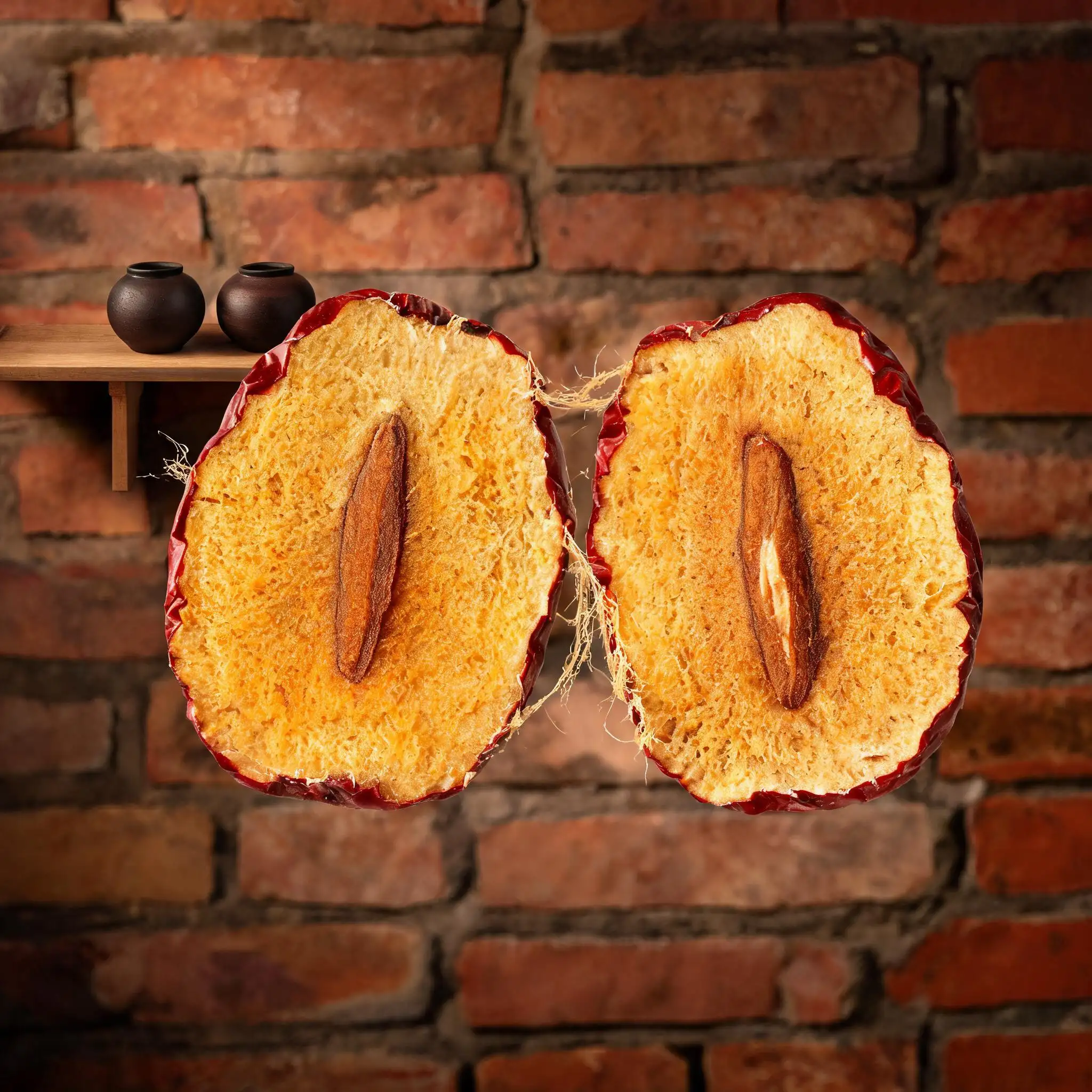
The golden thread is not metaphor. Pull a dried date slowly in half — grip one end in each hand and draw them apart — and between the two pieces, as the flesh tears, thin filaments of fiber stretch across the gap. They are amber-colored, nearly transparent, and in direct light they catch the sun and glow. The threads are a structural feature of the date's flesh: long-chain plant fibers that have concentrated as the fruit dried, becoming visible and distinct as the moisture left. In other jujube varieties they are shorter or absent; in the Jinsi Xiaozao of Cangzhou they are particularly long and numerous, which is what gives the variety its name.
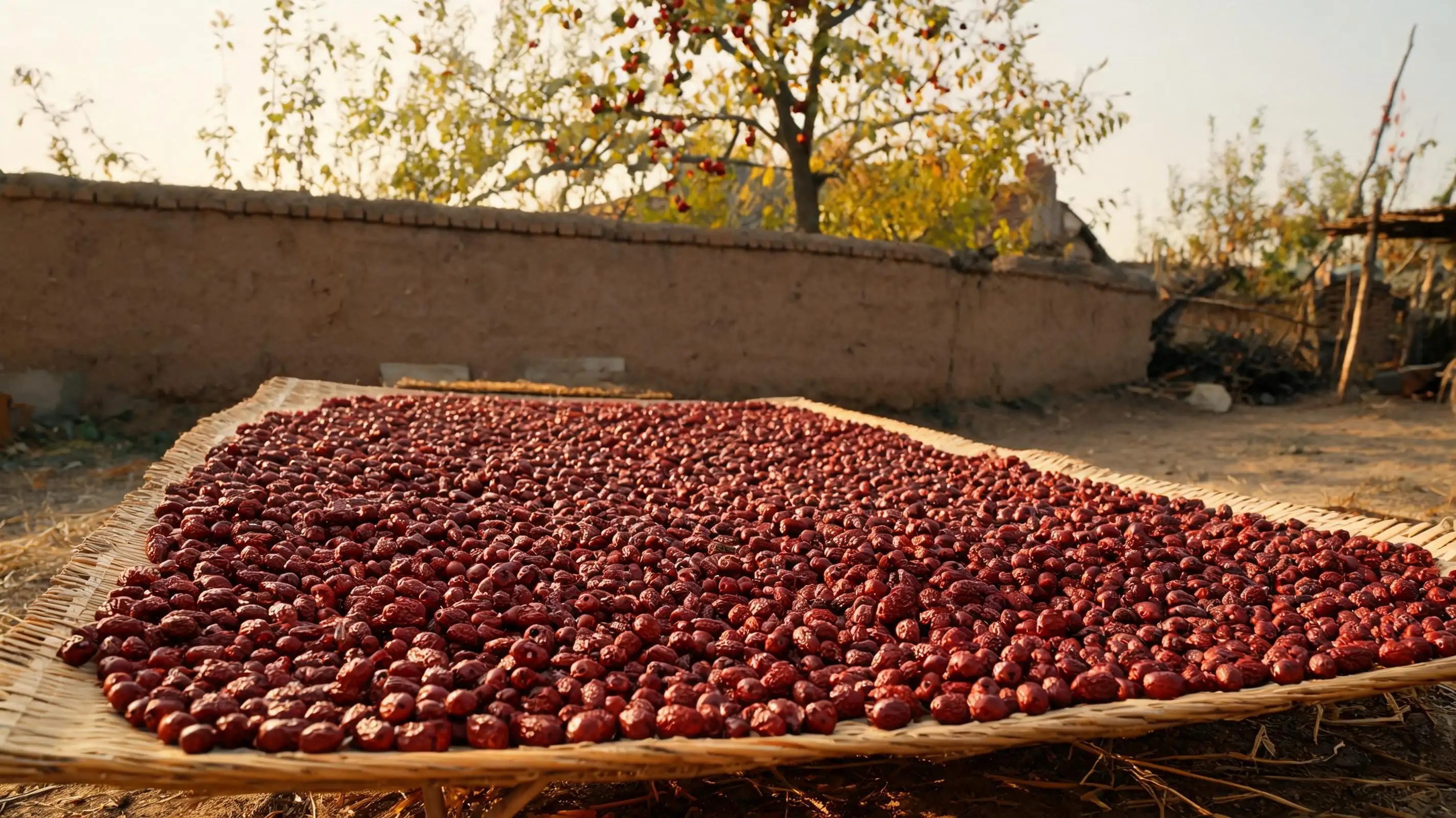
Cangzhou has been growing jujubes for more than two thousand years. The climate — dry, with long frost-free seasons and high daily temperature variation — suits the tree. The soil along the Hai River plain holds water without becoming waterlogged. The dates are harvested in September and October, the trees shaken by hand or pole so the fruit falls onto spread cloth below. A portion is sold fresh and eaten immediately; the rest is dried in the open air on woven bamboo trays or on the packed-earth floors of farmyards, turning over the course of several weeks from bright red to the deep color of dried lacquer.
They are eaten plain, used in rice porridge, braised with pork, stewed into soups, pressed into cakes, and dried into candied slices. The simplest and most common preparation is no preparation at all: a handful taken from a bag, pulled apart one by one, the threads catching the light between the fingers.
The thread is not functional. It contributes nothing to the flavor, adds no texture you would notice if you didn't look. But looking is the point. Pulling a Jinsi Xiaozao apart and watching the golden threads stretch and glow is a small thing that people in Cangzhou do the same way people everywhere do small things that are particular to their place — without thinking about it, until someone from outside notices and asks what that is.
---
**Ingredients**
- Jinsi Xiaozao (金丝小枣) — small Chinese jujubes from Cangzhou, Hebei
---
The name translates literally as golden thread small date. Both halves of the name are accurate.
The date is small — each one between two and three centimeters long, oval, with a point at either end and a thin woody stem scar at the top. The skin is deep red when dried, almost the color of dried blood, slightly wrinkled and taut against the flesh beneath. Fresh from the tree in early autumn it is softer, the skin a brighter scarlet, the flesh still crisp and yielding like a firm apple. Dried, it becomes dense and chewy, sweet and slightly tannic, with a concentrated richness that takes time to develop in the mouth.
The golden thread is not metaphor. Pull a dried date slowly in half — grip one end in each hand and draw them apart — and between the two pieces, as the flesh tears, thin filaments of fiber stretch across the gap. They are amber-colored, nearly transparent, and in direct light they catch the sun and glow. The threads are a structural feature of the date's flesh: long-chain plant fibers that have concentrated as the fruit dried, becoming visible and distinct as the moisture left. In other jujube varieties they are shorter or absent; in the Jinsi Xiaozao of Cangzhou they are particularly long and numerous, which is what gives the variety its name.
Cangzhou has been growing jujubes for more than two thousand years. The climate — dry, with long frost-free seasons and high daily temperature variation — suits the tree. The soil along the Hai River plain holds water without becoming waterlogged. The dates are harvested in September and October, the trees shaken by hand or pole so the fruit falls onto spread cloth below. A portion is sold fresh and eaten immediately; the rest is dried in the open air on woven bamboo trays or on the packed-earth floors of farmyards, turning over the course of several weeks from bright red to the deep color of dried lacquer.
They are eaten plain, used in rice porridge, braised with pork, stewed into soups, pressed into cakes, and dried into candied slices. The simplest and most common preparation is no preparation at all: a handful taken from a bag, pulled apart one by one, the threads catching the light between the fingers.
The thread is not functional. It contributes nothing to the flavor, adds no texture you would notice if you didn't look. But looking is the point. Pulling a Jinsi Xiaozao apart and watching the golden threads stretch and glow is a small thing that people in Cangzhou do the same way people everywhere do small things that are particular to their place — without thinking about it, until someone from outside notices and asks what that is.