·5/19/2026
from
Tie Bobo Ao Xiaoyu
# Tianjin Tie Bobo Ao Xiaoyu
---
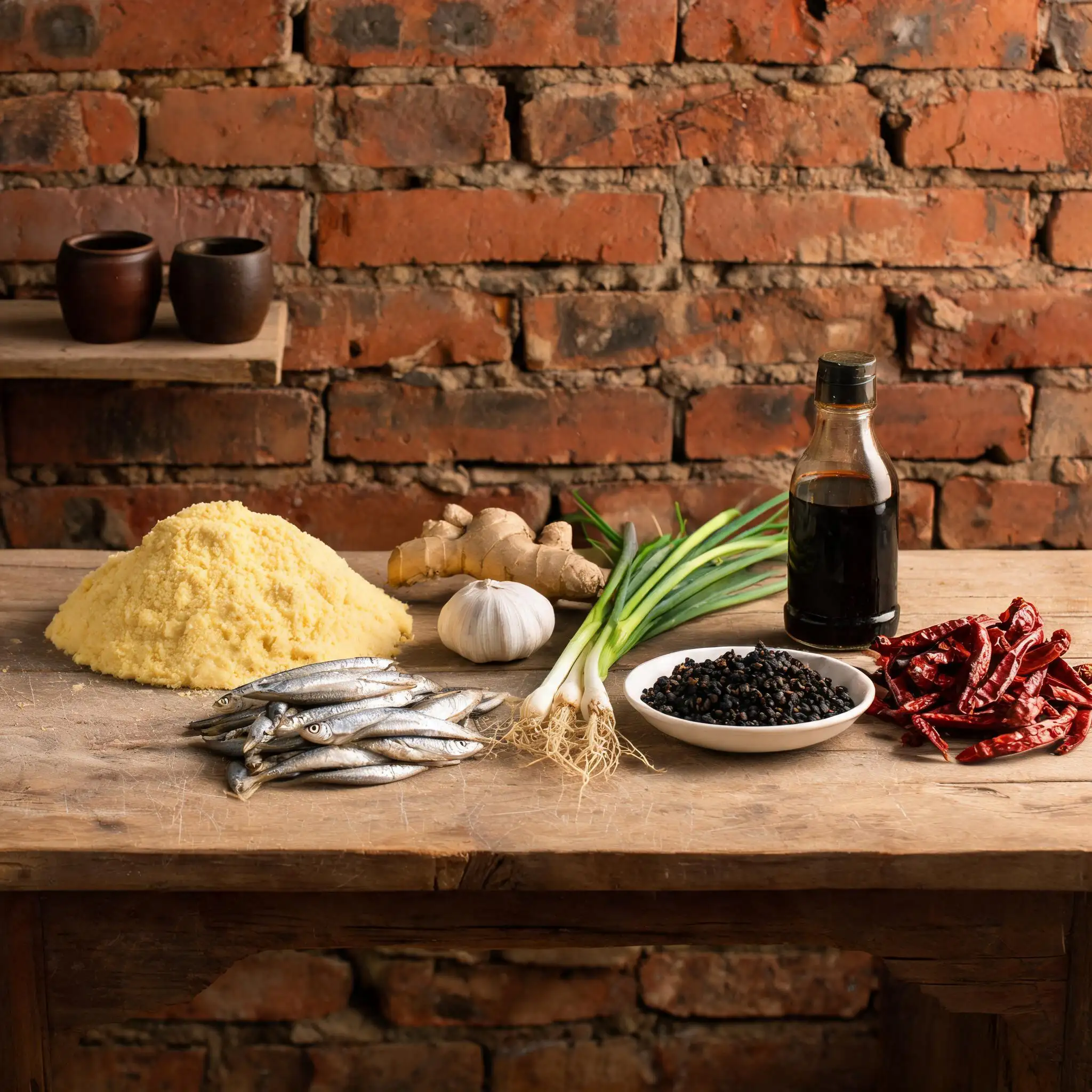
**Ingredients**
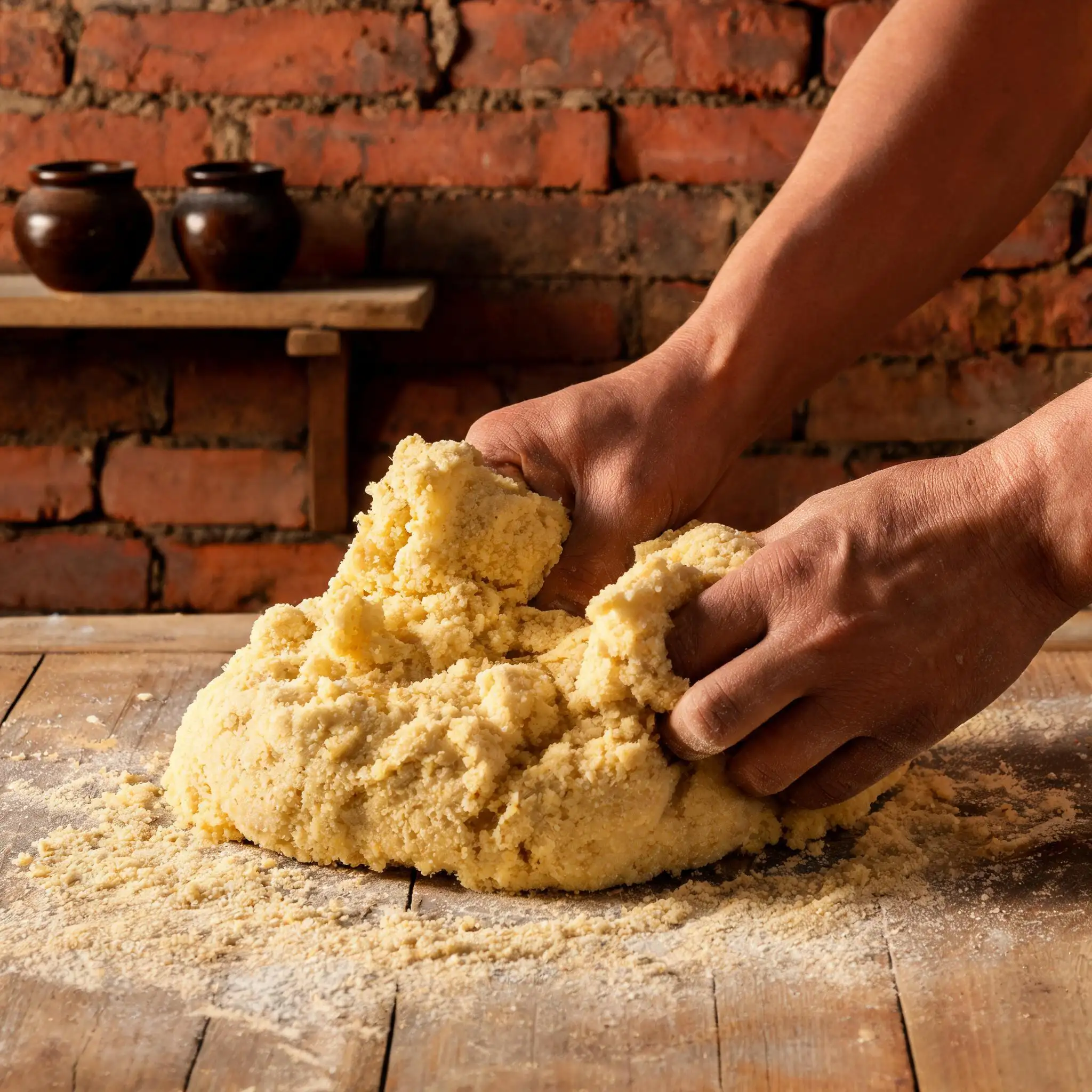
- Yellow cornmeal (玉米面), kneaded with hot water into a stiff dough
- Small whole river fish (白河小鱼) — typically 8–10 cm, uncleaned
- Fresh ginger, sliced
- Scallions, cut into segments
- Garlic cloves
- Fermented black beans (豆豉)
- Soy sauce
- Dried chili peppers
- Cooking oil
---
The name is two separate things pressed into one dish.
Tie (贴) means to press against. Bobo (饽饽) is the northeastern word for a thick bread or cake, usually made from cornmeal. So tiebobo is a cornmeal cake that has been pressed — specifically, pressed by hand against the inner wall of a hot iron pot and left there to cook from both sides at once. The bottom bakes against the iron; the top steams from whatever is cooking below.
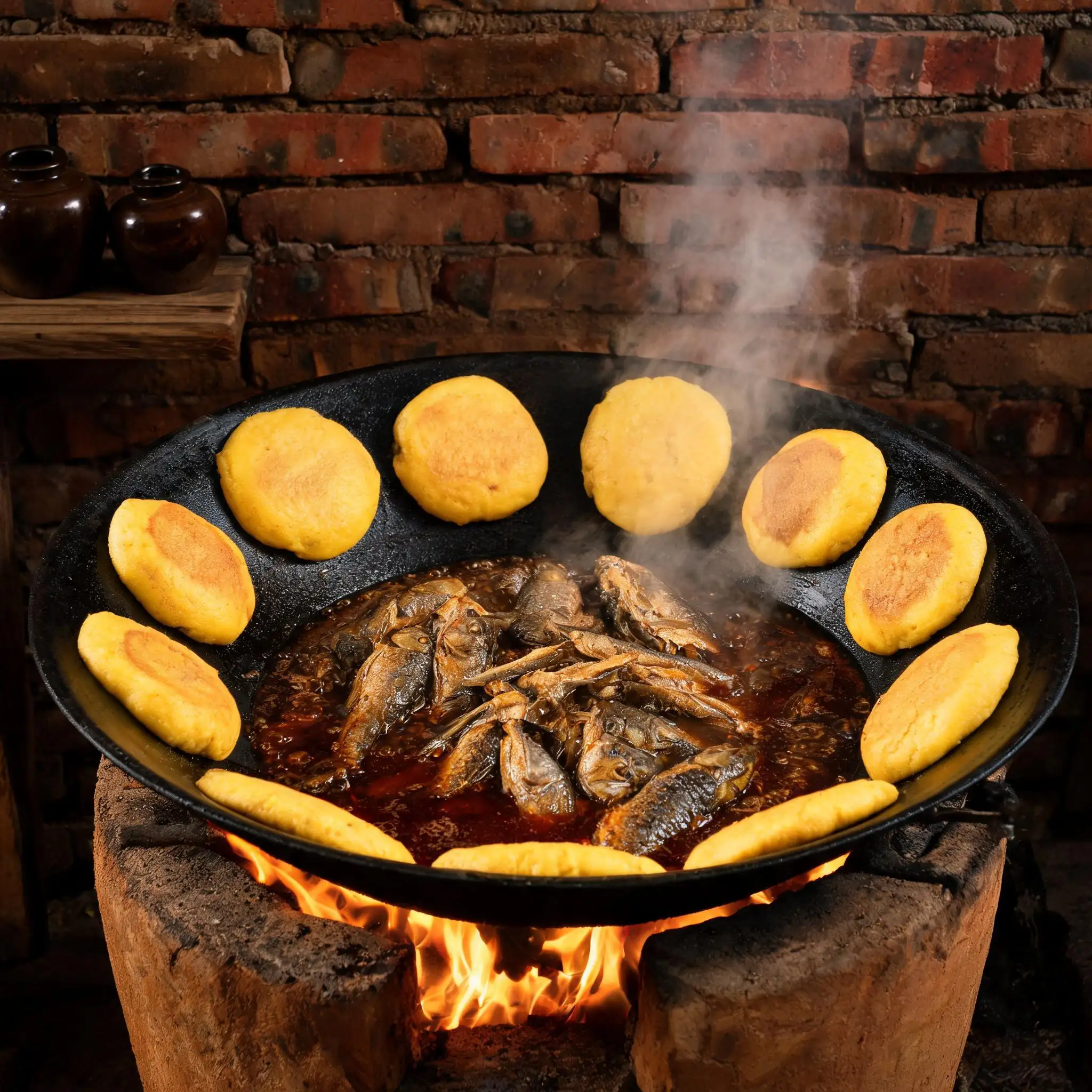
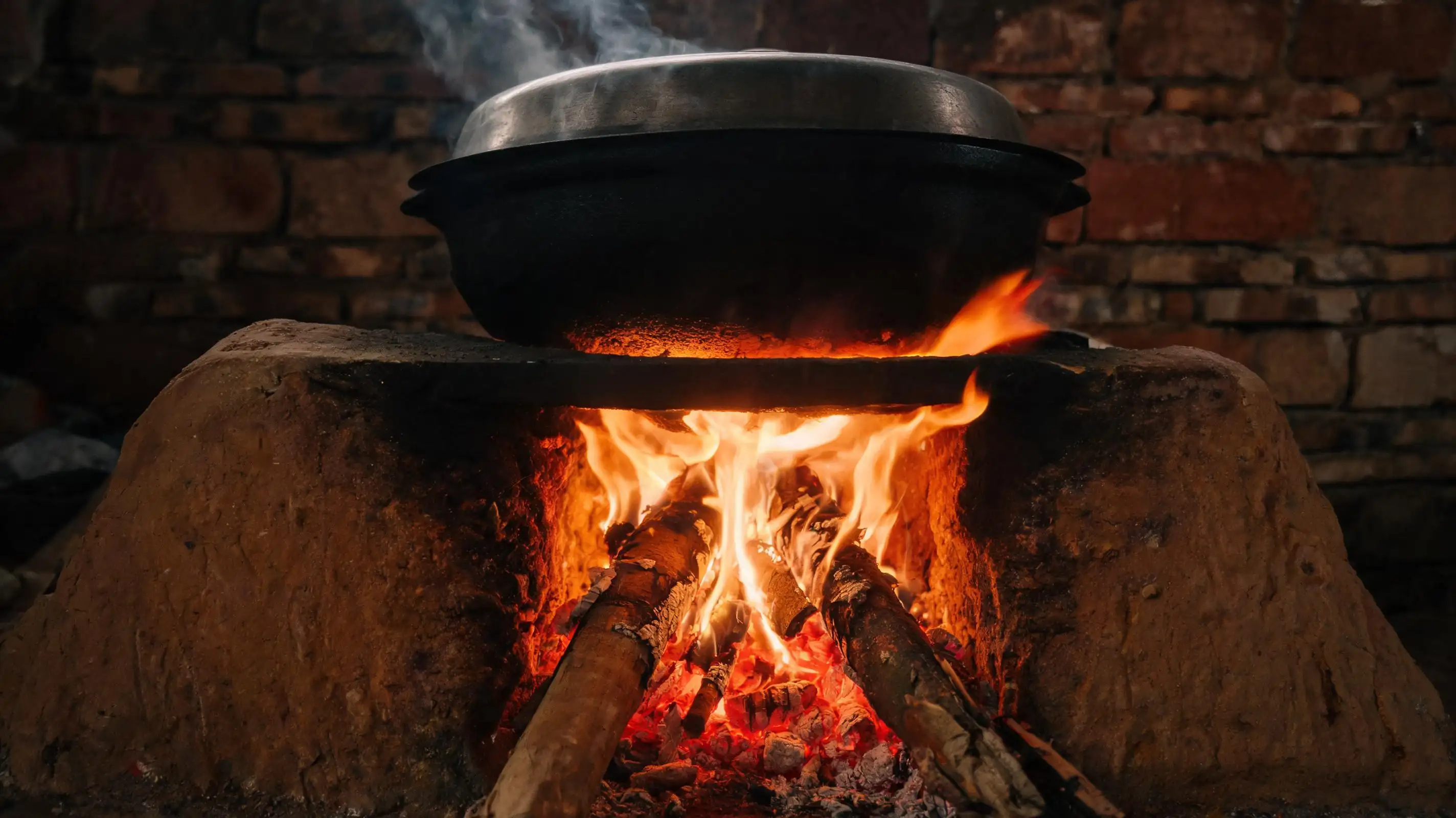
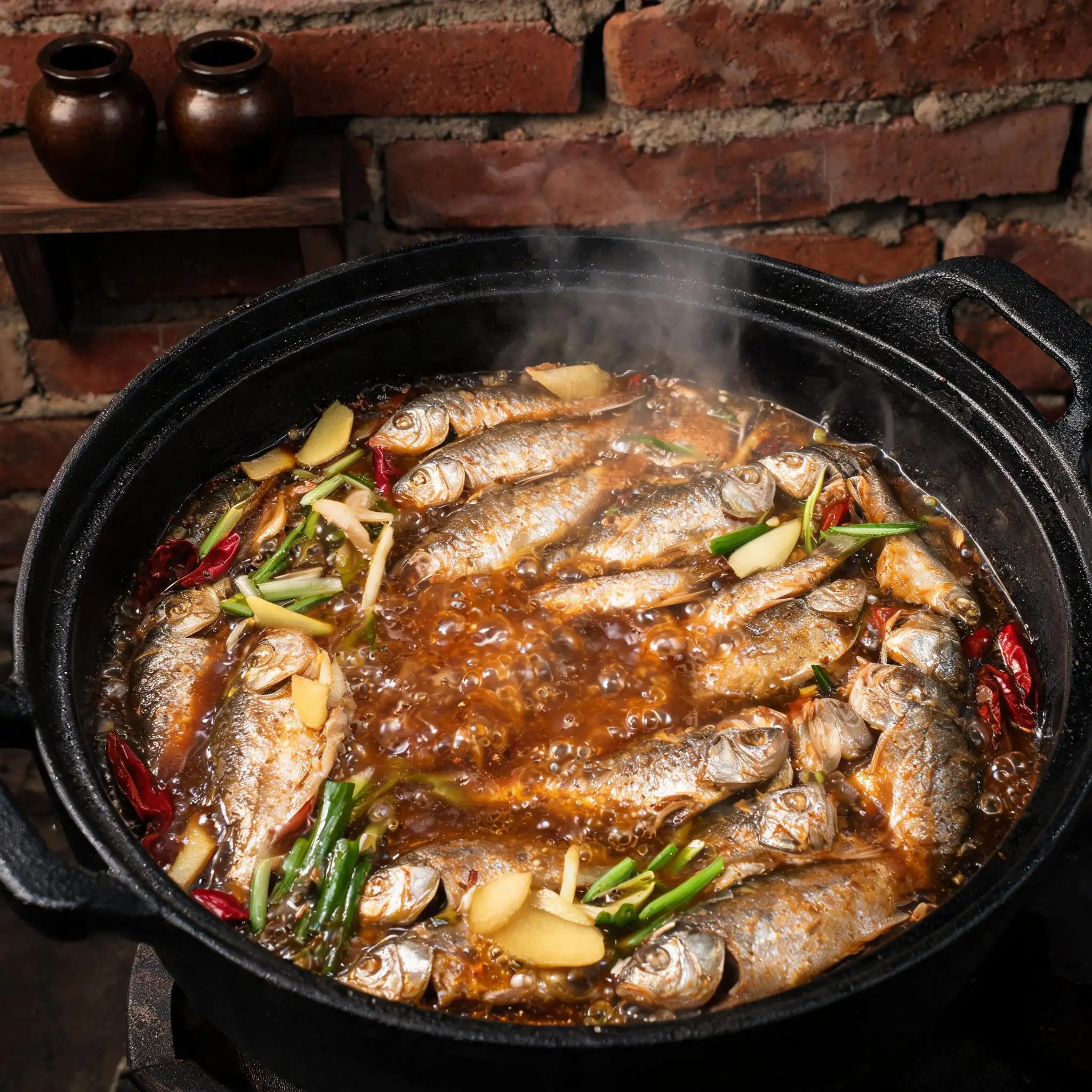
What is cooking below is ao xiaoyu: long-braised small fish. The fish go into the pot first. They are small river fish — the kind that come from the Hai River and its tributaries, each one barely longer than a hand — packed together in a layer and covered with soy sauce, ginger, scallion, garlic, fermented black beans, dried chili, and enough water to braise. The pot goes over a wood fire and the fish cook slowly, the liquid reducing until it becomes a dark, thick glaze that coats every fish.
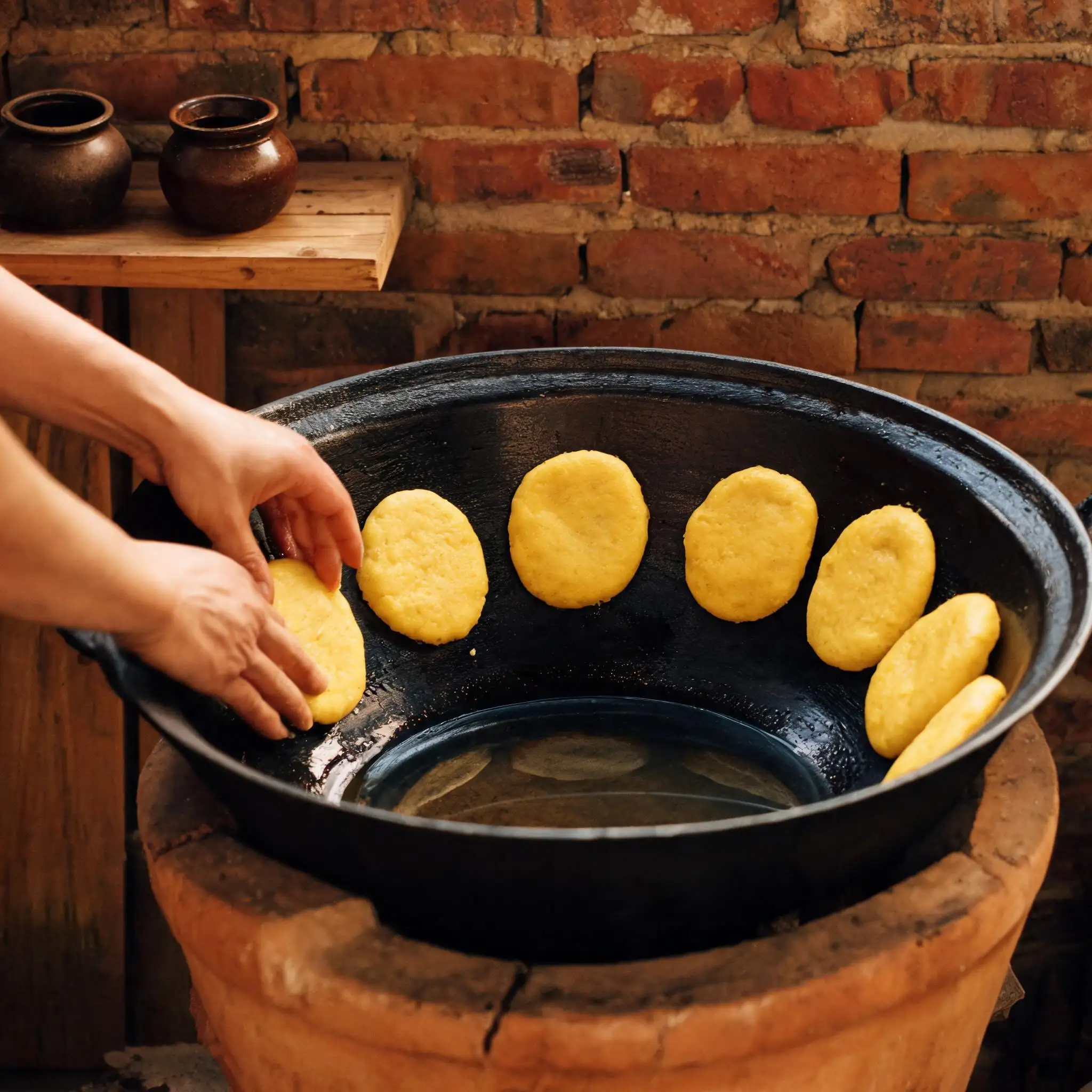
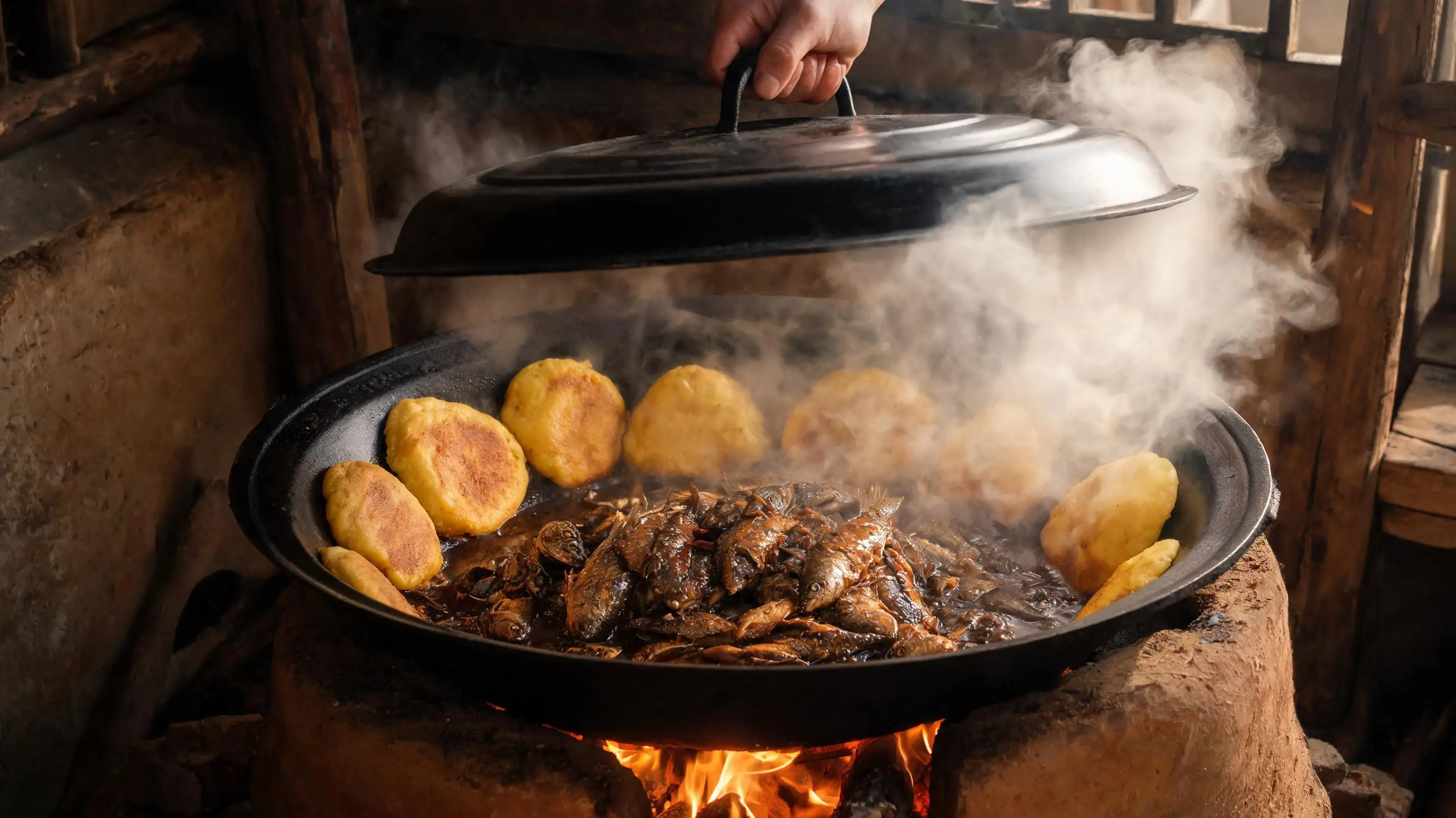
Once the fish are simmering, the cornmeal cakes go on the walls. The dough is stiff — made with hot water to bind the coarse meal — and each piece is pressed flat with the palm, then slapped against the iron above the waterline. In a large pot, ten or twelve cakes fit around the circumference, forming a ring. The pot is covered and left to cook.
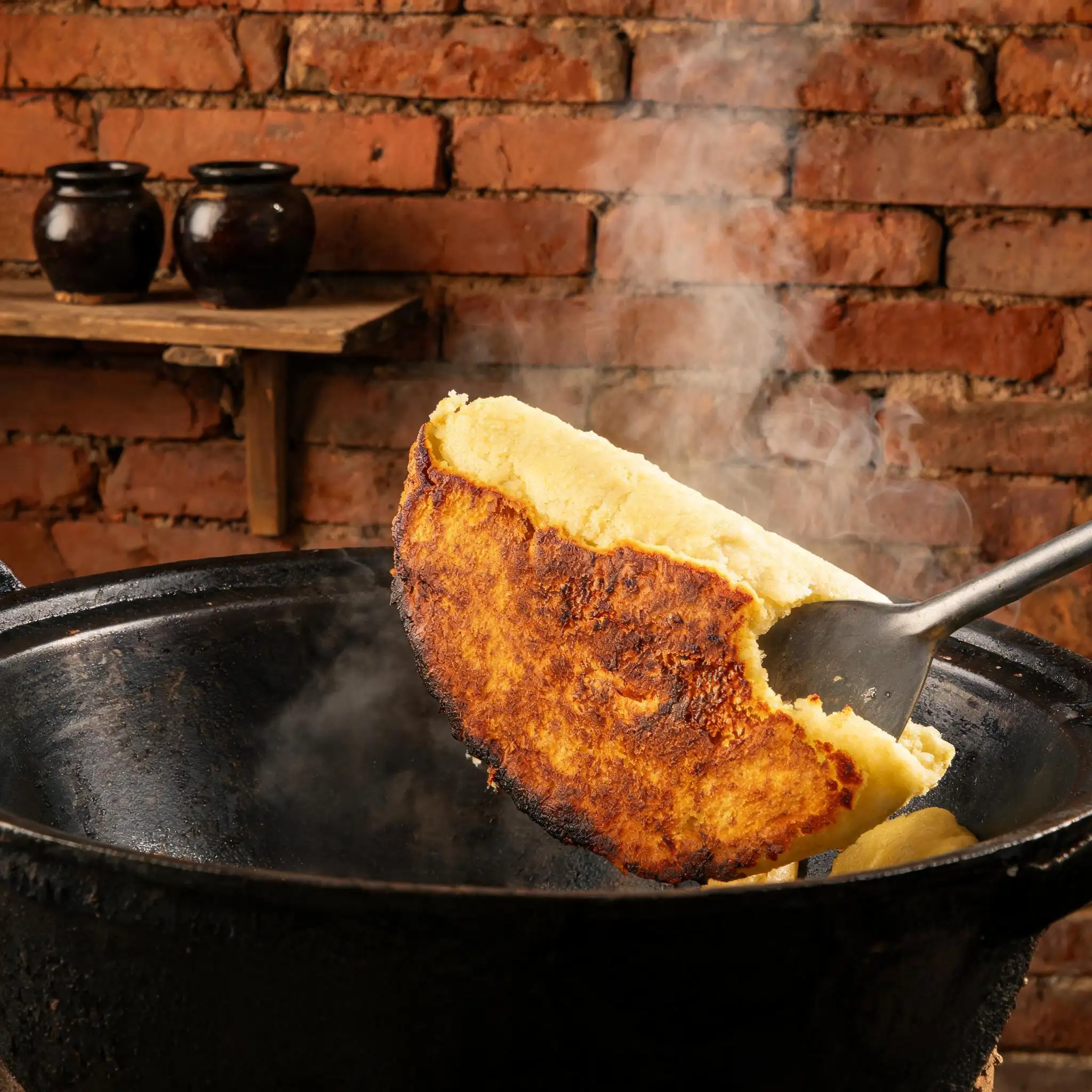
The two things cook simultaneously but through different mechanisms. The fish braise in liquid below. The cakes bake from the iron on one side and steam from the rising fish vapors on the other. When the lid comes off, the cakes have developed two distinct faces: the bottom, pressed against the pot, is hard and dark and crackled like bread left too long in an oven; the top, facing inward, is pale gold and soft, swollen with steam. To eat them together is the point — a piece of cake broken in half, dipped into the fish braising liquid, the crust shattering where the soft inside yields.
This is a farmhouse dish. It requires a wood fire and a large iron pot, and it takes patience. No restaurant version reproduces the particular quality of the crust that comes from sustained radiant heat at the base of a clay stove. The fish flavor penetrates the cake through steam over a long cook. The clay stove holds heat differently than gas. These things matter and cannot be replicated on demand.
In the countryside outside Tianjin it was a daily meal, cooked in the same pot every evening. In the city it became a restaurant specialty, served in large woks set on propane flames, approximating but not quite reaching the original. The people who grew up eating it from a wood-fire stove can tell the difference immediately, and they will tell you, unprompted.
---
**Ingredients**
- Yellow cornmeal (玉米面), kneaded with hot water into a stiff dough
- Small whole river fish (白河小鱼) — typically 8–10 cm, uncleaned
- Fresh ginger, sliced
- Scallions, cut into segments
- Garlic cloves
- Fermented black beans (豆豉)
- Soy sauce
- Dried chili peppers
- Cooking oil
---
The name is two separate things pressed into one dish.
Tie (贴) means to press against. Bobo (饽饽) is the northeastern word for a thick bread or cake, usually made from cornmeal. So tiebobo is a cornmeal cake that has been pressed — specifically, pressed by hand against the inner wall of a hot iron pot and left there to cook from both sides at once. The bottom bakes against the iron; the top steams from whatever is cooking below.
What is cooking below is ao xiaoyu: long-braised small fish. The fish go into the pot first. They are small river fish — the kind that come from the Hai River and its tributaries, each one barely longer than a hand — packed together in a layer and covered with soy sauce, ginger, scallion, garlic, fermented black beans, dried chili, and enough water to braise. The pot goes over a wood fire and the fish cook slowly, the liquid reducing until it becomes a dark, thick glaze that coats every fish.
Once the fish are simmering, the cornmeal cakes go on the walls. The dough is stiff — made with hot water to bind the coarse meal — and each piece is pressed flat with the palm, then slapped against the iron above the waterline. In a large pot, ten or twelve cakes fit around the circumference, forming a ring. The pot is covered and left to cook.
The two things cook simultaneously but through different mechanisms. The fish braise in liquid below. The cakes bake from the iron on one side and steam from the rising fish vapors on the other. When the lid comes off, the cakes have developed two distinct faces: the bottom, pressed against the pot, is hard and dark and crackled like bread left too long in an oven; the top, facing inward, is pale gold and soft, swollen with steam. To eat them together is the point — a piece of cake broken in half, dipped into the fish braising liquid, the crust shattering where the soft inside yields.
This is a farmhouse dish. It requires a wood fire and a large iron pot, and it takes patience. No restaurant version reproduces the particular quality of the crust that comes from sustained radiant heat at the base of a clay stove. The fish flavor penetrates the cake through steam over a long cook. The clay stove holds heat differently than gas. These things matter and cannot be replicated on demand.
In the countryside outside Tianjin it was a daily meal, cooked in the same pot every evening. In the city it became a restaurant specialty, served in large woks set on propane flames, approximating but not quite reaching the original. The people who grew up eating it from a wood-fire stove can tell the difference immediately, and they will tell you, unprompted.