·5/19/2026
from
Guoba Cai
# Tianjin Guoba Cai
---
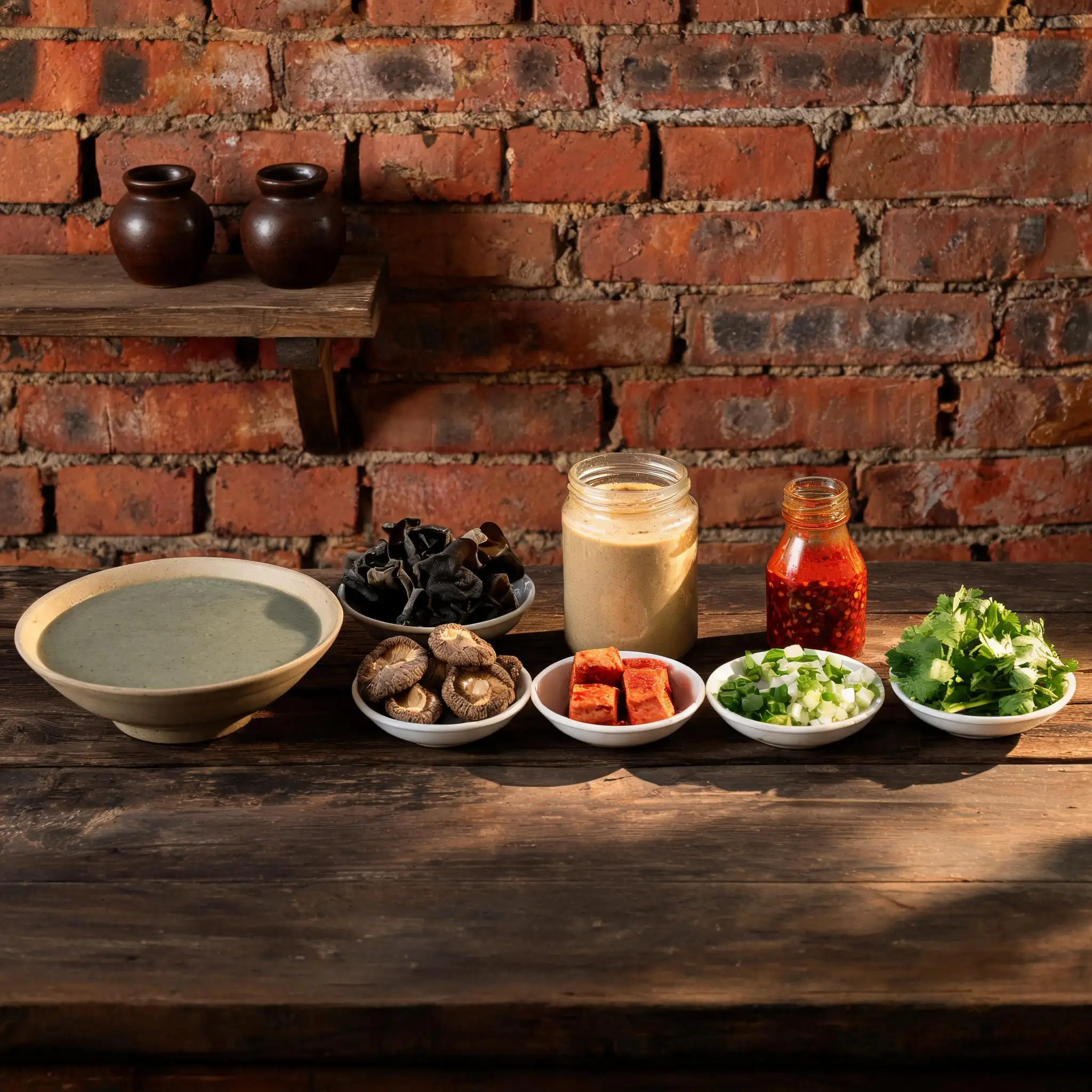
**Ingredients**
- Mung bean flour (绿豆面), thinned into a pourable batter
- Dried wood ear mushrooms (木耳)
- Dried shiitake mushrooms
- Thick sesame paste (麻酱)
- Fermented red tofu (腐乳)
- Chili oil
- Scallions, finely chopped
- Fresh cilantro
---
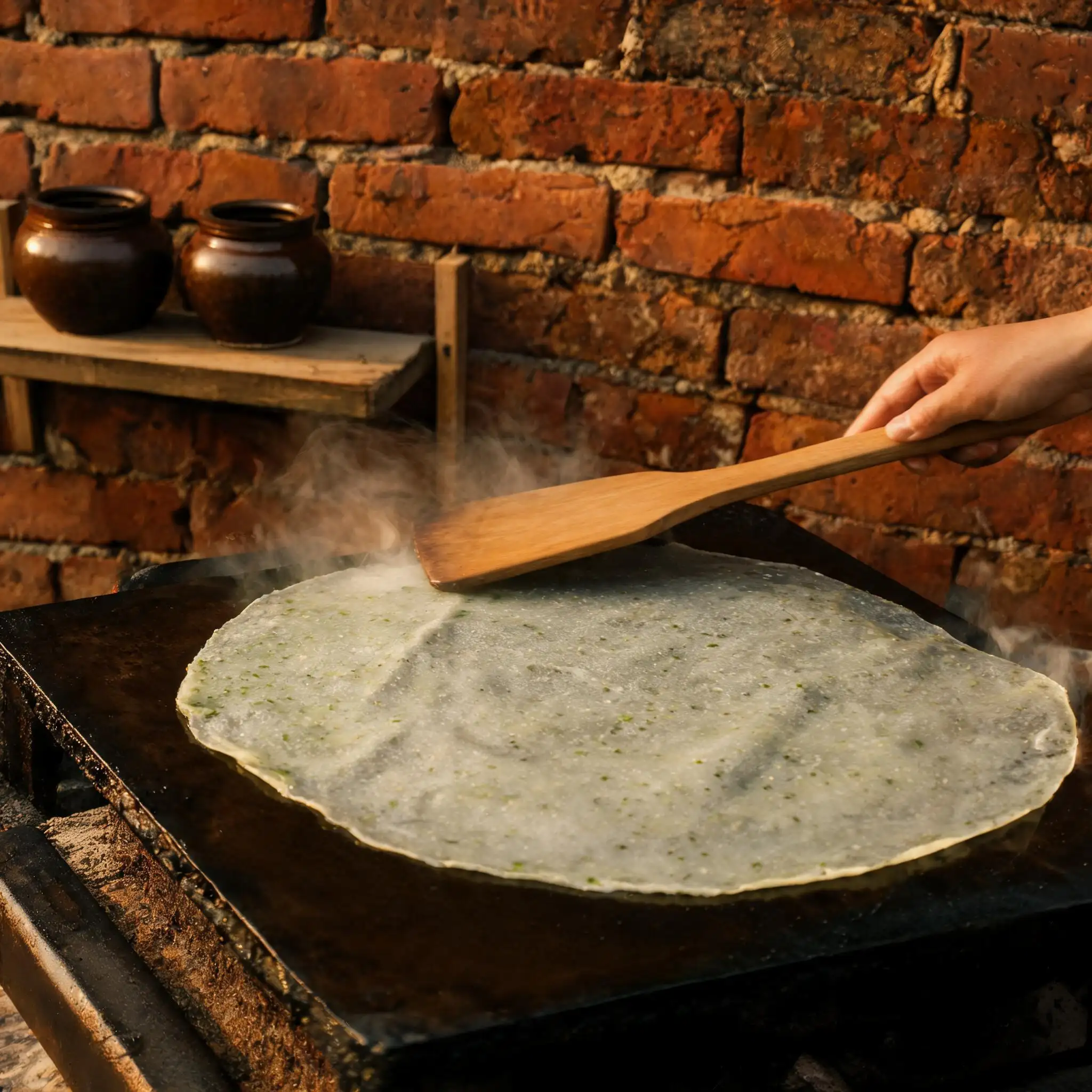
Guoba Cai and jianbing guozi come from the same batter. Both begin with mung bean flour thinned with water, spread on the same iron griddle in the same motion. What happens after that is different.
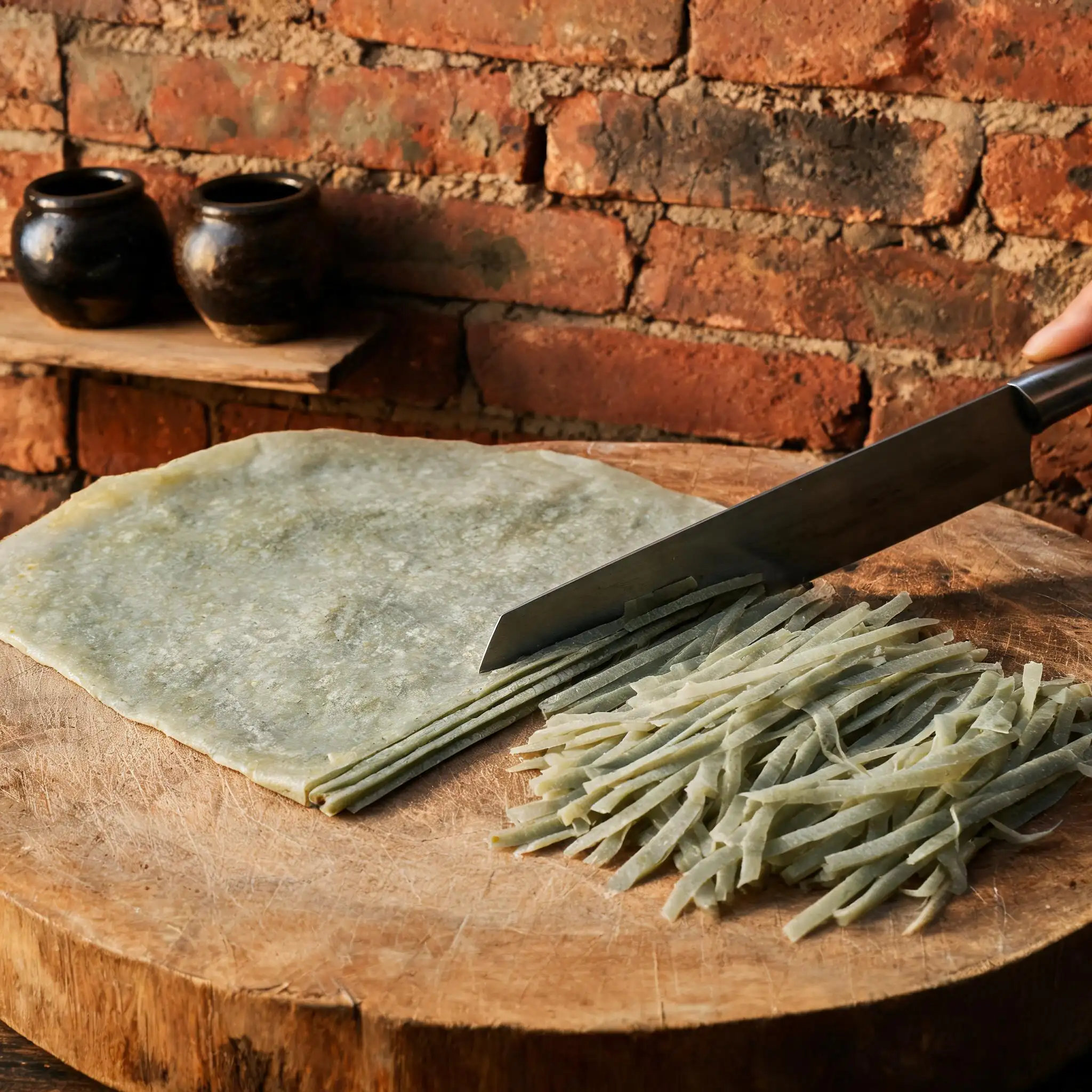
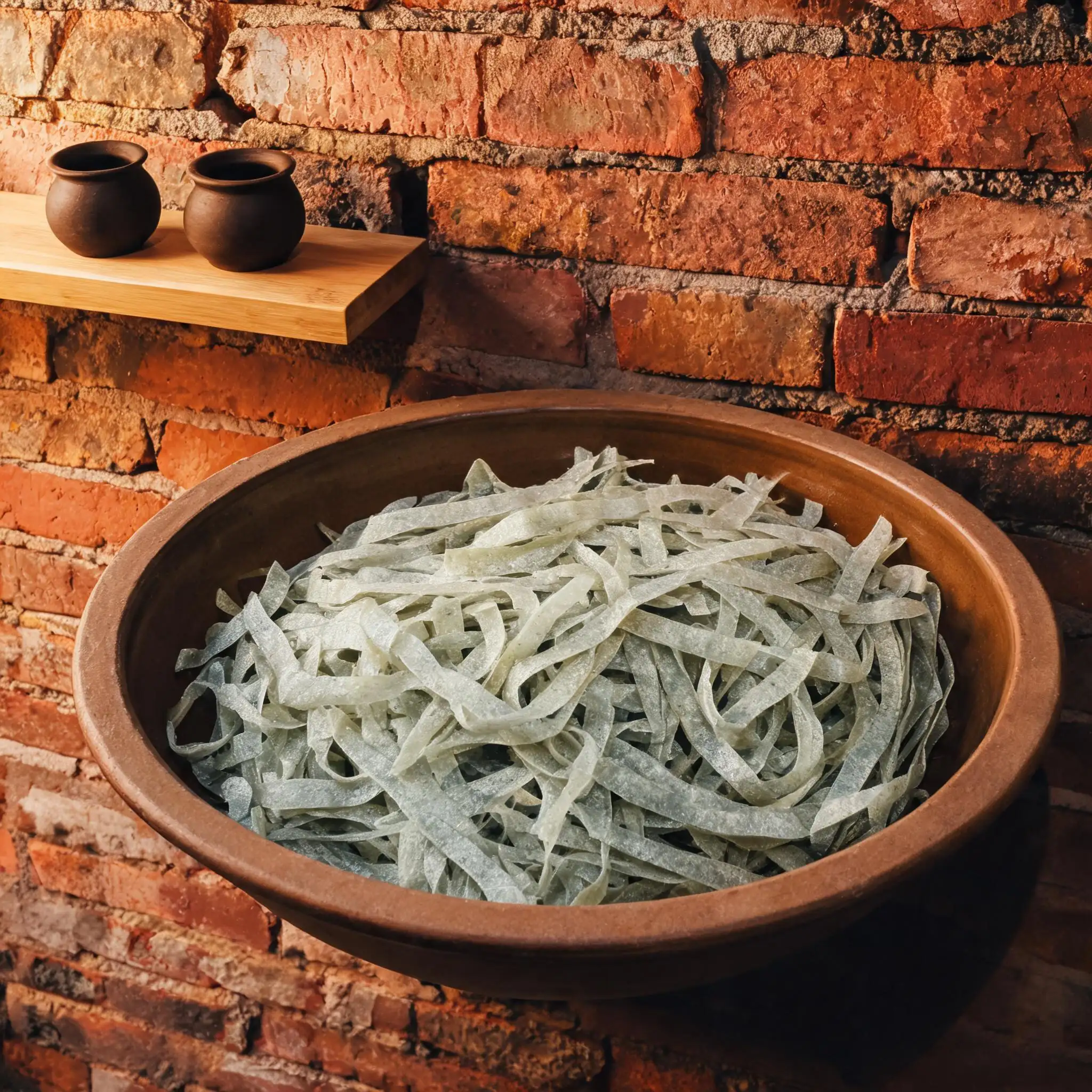
For jianbing guozi, the crepe stays whole. It is dressed while still hot, folded around an egg and a sheet of crispy dough, and eaten immediately in hand. For guoba cai, the crepe is cooked thinner — almost paper-thin — and left to cool completely. When it is cold it goes rigid, and only then is it cut into strips. The strips are called guoba (锅巴): the same word used for scorched rice crust at the bottom of a pot. The texture is analogous — brittle at the edges, yielding slightly at the center, with a faint mineral taste from the mung bean.
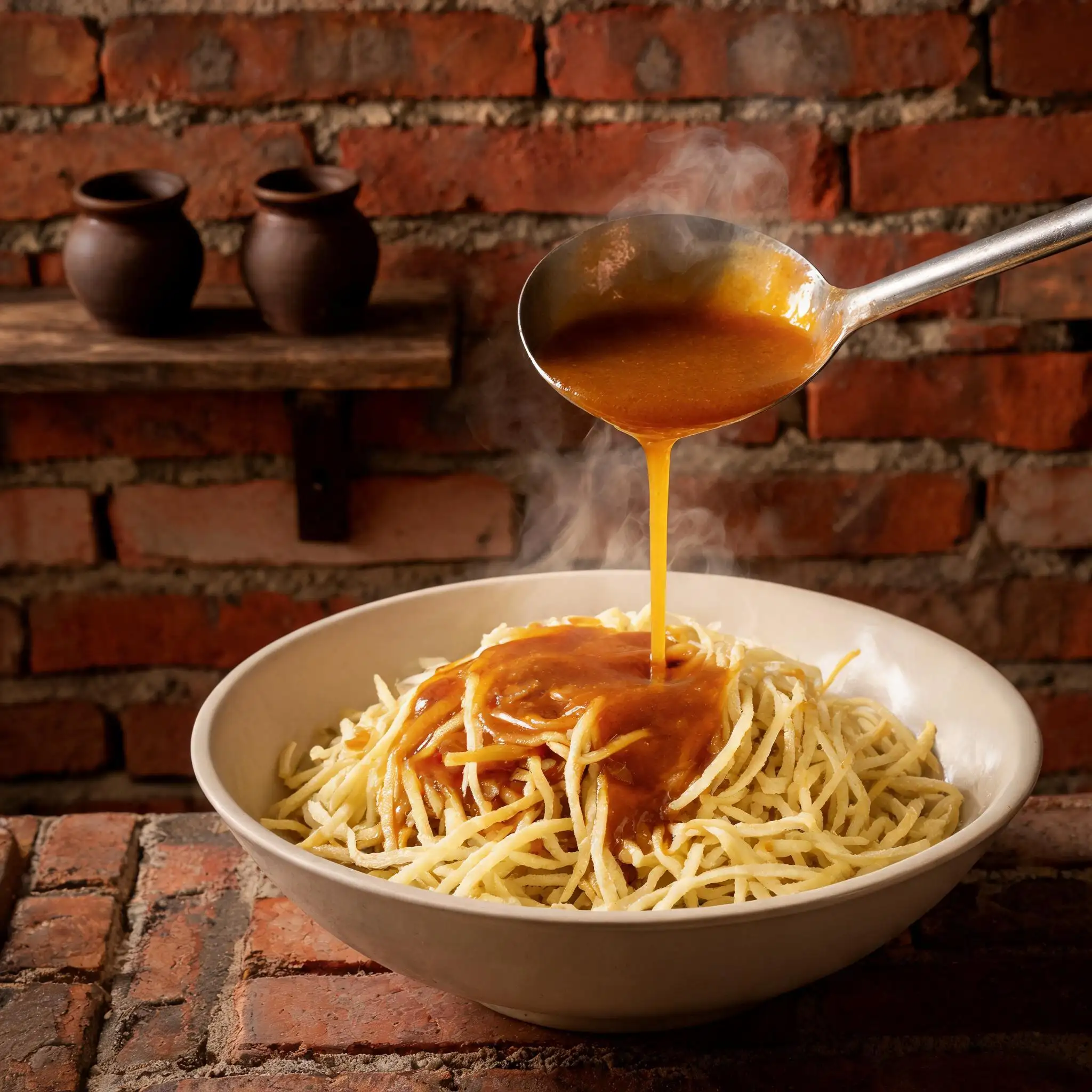
The strips go into a wide bowl and are covered with a hot vegetarian gravy — a starch-thickened broth made from mushroom stock, soy sauce, and whatever aromatics the vendor prefers. The gravy is dark amber and thick enough to coat a spoon. It goes on in quantity, enough to saturate every strip. The guoba softens immediately on contact, absorbing the gravy without dissolving, holding its shape while losing its crispness. This is what the dish is meant to taste like: not crunchy, not soup, but something between.
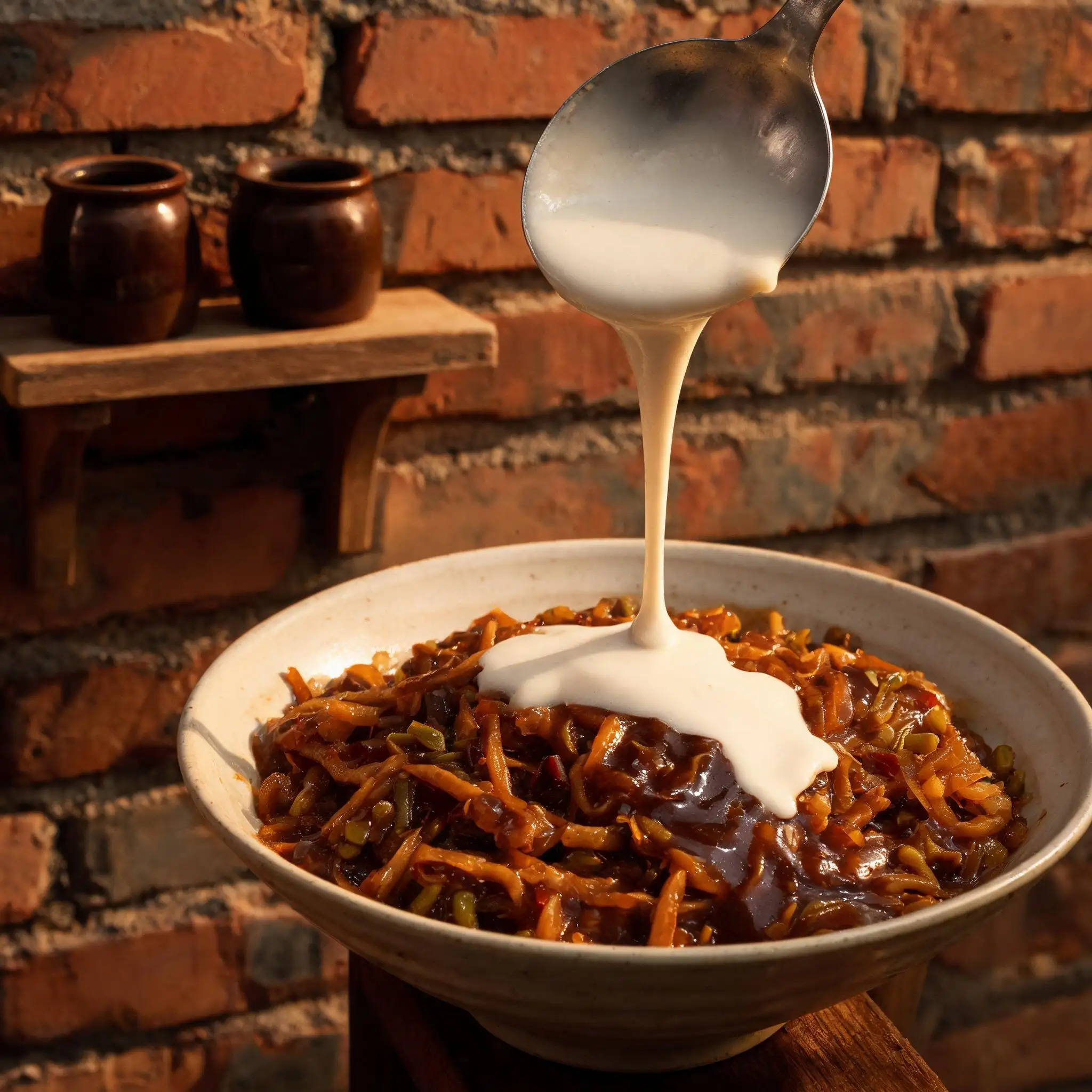
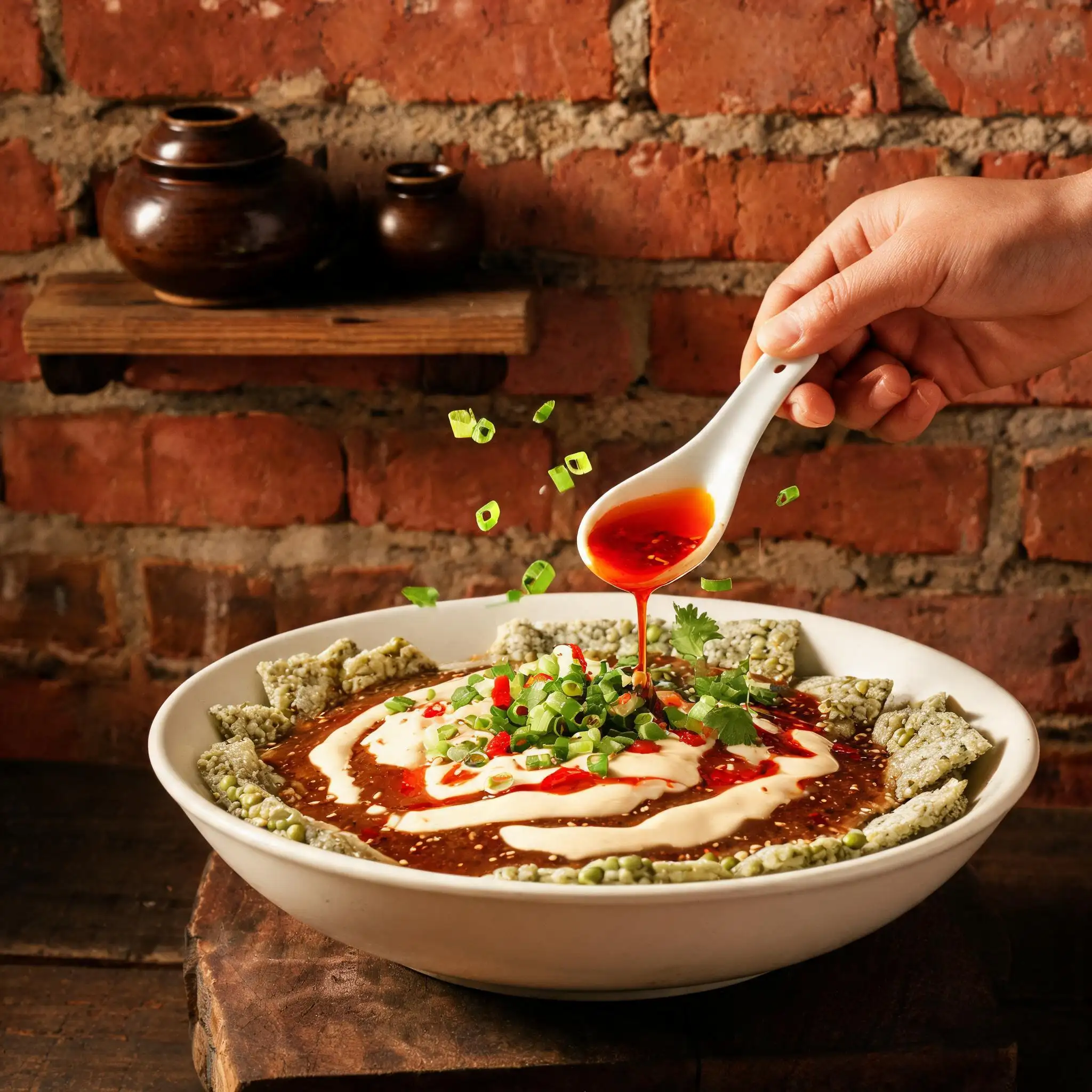
Then the toppings, in order. Sesame paste is spooned over the surface — thick and ivory-colored, it lands in a heavy pool and spreads slowly. Fermented red tofu is added beside it, either whole small cubes or in its liquid, sharp and pungent and slightly sweet. Chili oil goes on last, a thin drizzle that sits on top of everything. Chopped scallions and a few sprigs of cilantro are scattered over the whole bowl.
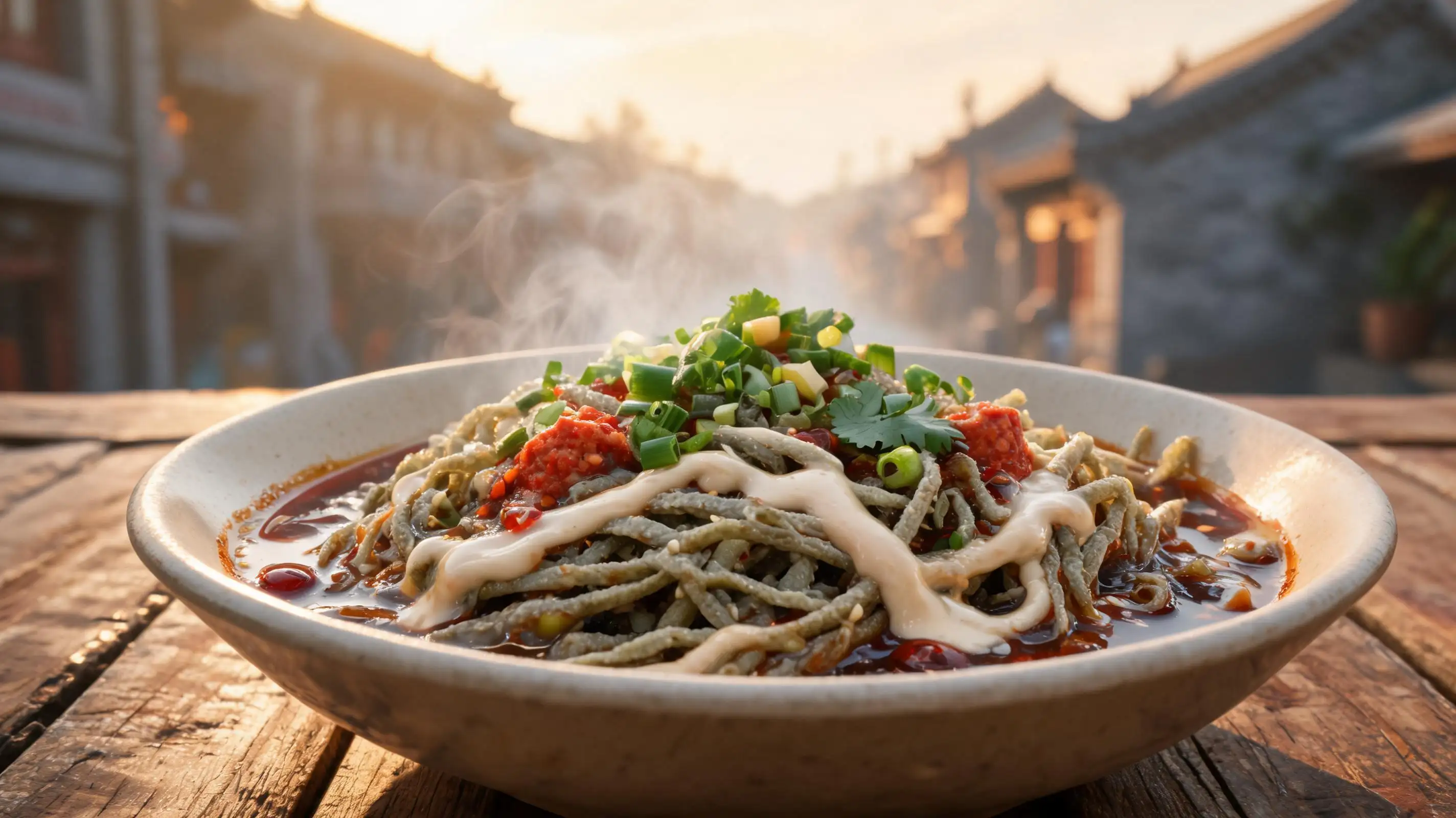
The result is a bowl with four visible color bands: dark amber gravy, white sesame paste, red tofu and chili oil, bright green herbs. Each spoonful pulls from all of them. The sesame paste is the dominant flavor — rich and slightly bitter, it coats the mouth the way it would in a sesame noodle dish. The fermented tofu cuts through it. The gravy underneath is mild and slightly savory, more carrier than flavor.
It is a morning dish. It is not light. In Tianjin it is understood that certain breakfasts are built to last until afternoon, and this is one of them.
---
**Ingredients**
- Mung bean flour (绿豆面), thinned into a pourable batter
- Dried wood ear mushrooms (木耳)
- Dried shiitake mushrooms
- Thick sesame paste (麻酱)
- Fermented red tofu (腐乳)
- Chili oil
- Scallions, finely chopped
- Fresh cilantro
---
Guoba Cai and jianbing guozi come from the same batter. Both begin with mung bean flour thinned with water, spread on the same iron griddle in the same motion. What happens after that is different.
For jianbing guozi, the crepe stays whole. It is dressed while still hot, folded around an egg and a sheet of crispy dough, and eaten immediately in hand. For guoba cai, the crepe is cooked thinner — almost paper-thin — and left to cool completely. When it is cold it goes rigid, and only then is it cut into strips. The strips are called guoba (锅巴): the same word used for scorched rice crust at the bottom of a pot. The texture is analogous — brittle at the edges, yielding slightly at the center, with a faint mineral taste from the mung bean.
The strips go into a wide bowl and are covered with a hot vegetarian gravy — a starch-thickened broth made from mushroom stock, soy sauce, and whatever aromatics the vendor prefers. The gravy is dark amber and thick enough to coat a spoon. It goes on in quantity, enough to saturate every strip. The guoba softens immediately on contact, absorbing the gravy without dissolving, holding its shape while losing its crispness. This is what the dish is meant to taste like: not crunchy, not soup, but something between.
Then the toppings, in order. Sesame paste is spooned over the surface — thick and ivory-colored, it lands in a heavy pool and spreads slowly. Fermented red tofu is added beside it, either whole small cubes or in its liquid, sharp and pungent and slightly sweet. Chili oil goes on last, a thin drizzle that sits on top of everything. Chopped scallions and a few sprigs of cilantro are scattered over the whole bowl.
The result is a bowl with four visible color bands: dark amber gravy, white sesame paste, red tofu and chili oil, bright green herbs. Each spoonful pulls from all of them. The sesame paste is the dominant flavor — rich and slightly bitter, it coats the mouth the way it would in a sesame noodle dish. The fermented tofu cuts through it. The gravy underneath is mild and slightly savory, more carrier than flavor.
It is a morning dish. It is not light. In Tianjin it is understood that certain breakfasts are built to last until afternoon, and this is one of them.