·5/19/2026
from
Zengbeng Carp
# Tianjin Zengbeng Carp
---
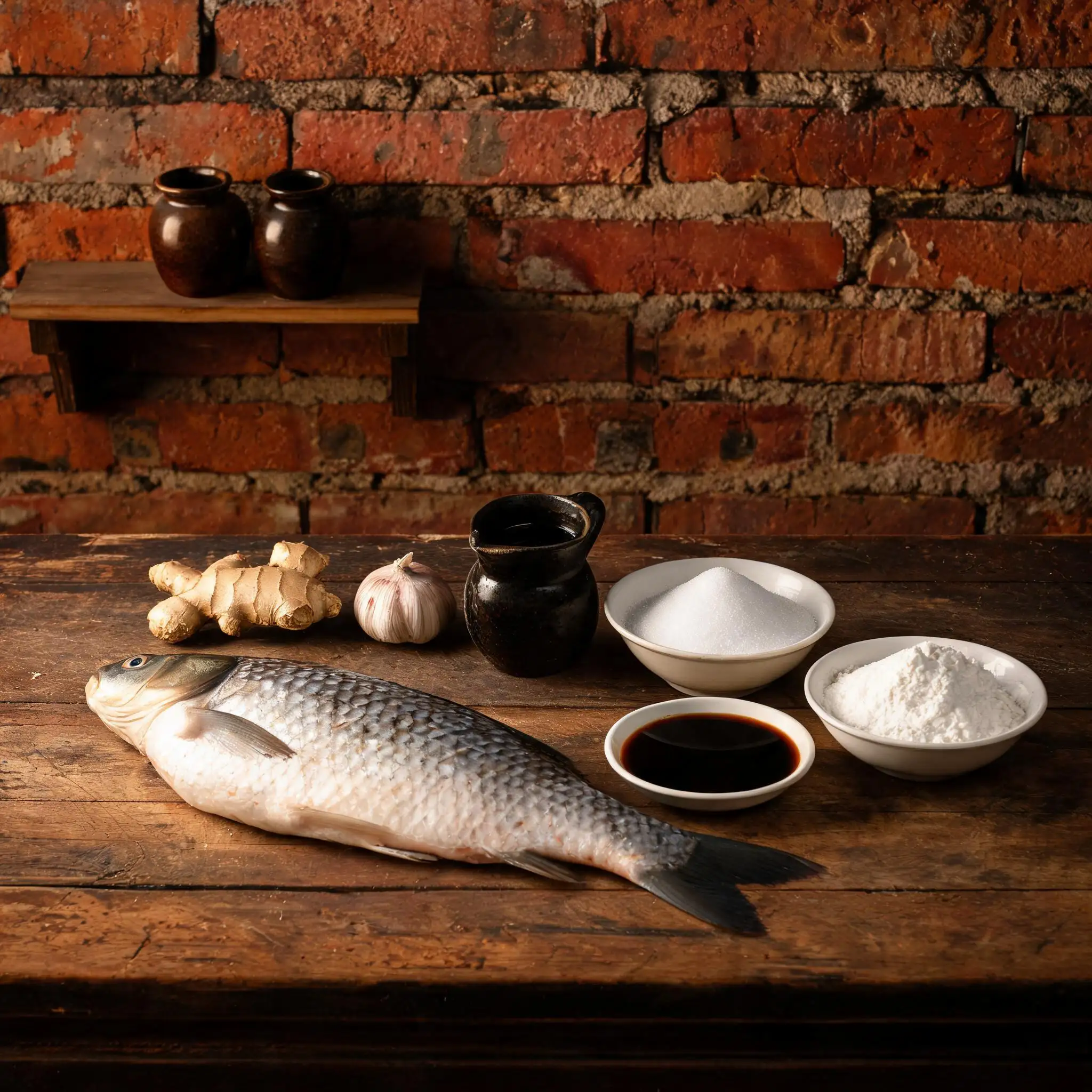
**Ingredients**
- One whole fresh carp (鲤鱼), scales left completely intact
- Fresh ginger
- Garlic
- Aged dark vinegar (陈醋)
- White granulated sugar
- Soy sauce
- Potato starch
---
The name comes from a fishing net. A zēng (罾) is a square net lowered into water on a frame of crossed poles, the kind used on the Hai River for generations. When a fish jumps inside it, the net bounces — bèng (蹦). The dish is named for that motion: the carp leaping.
What the heat does to the scales is the reason this dish exists.
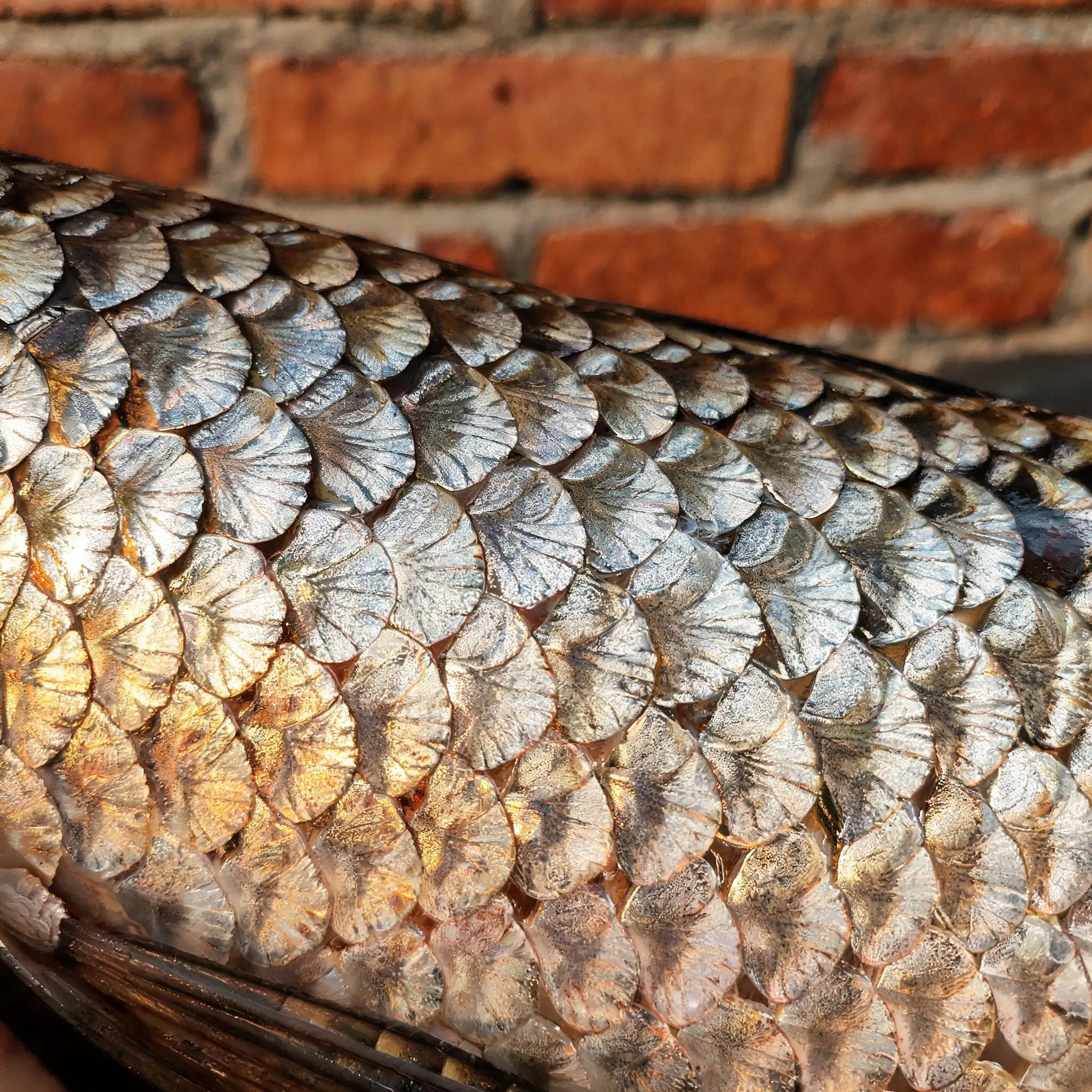
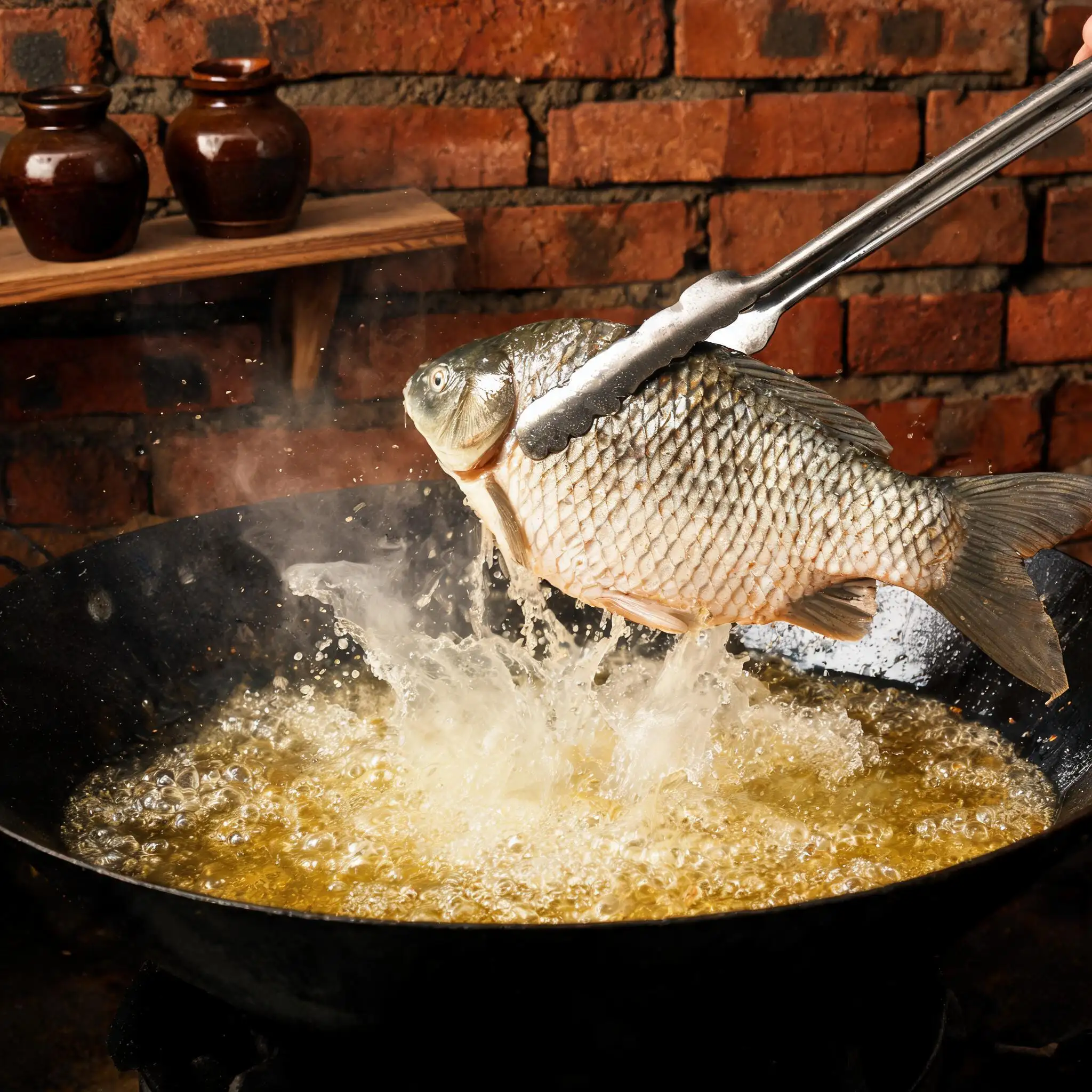
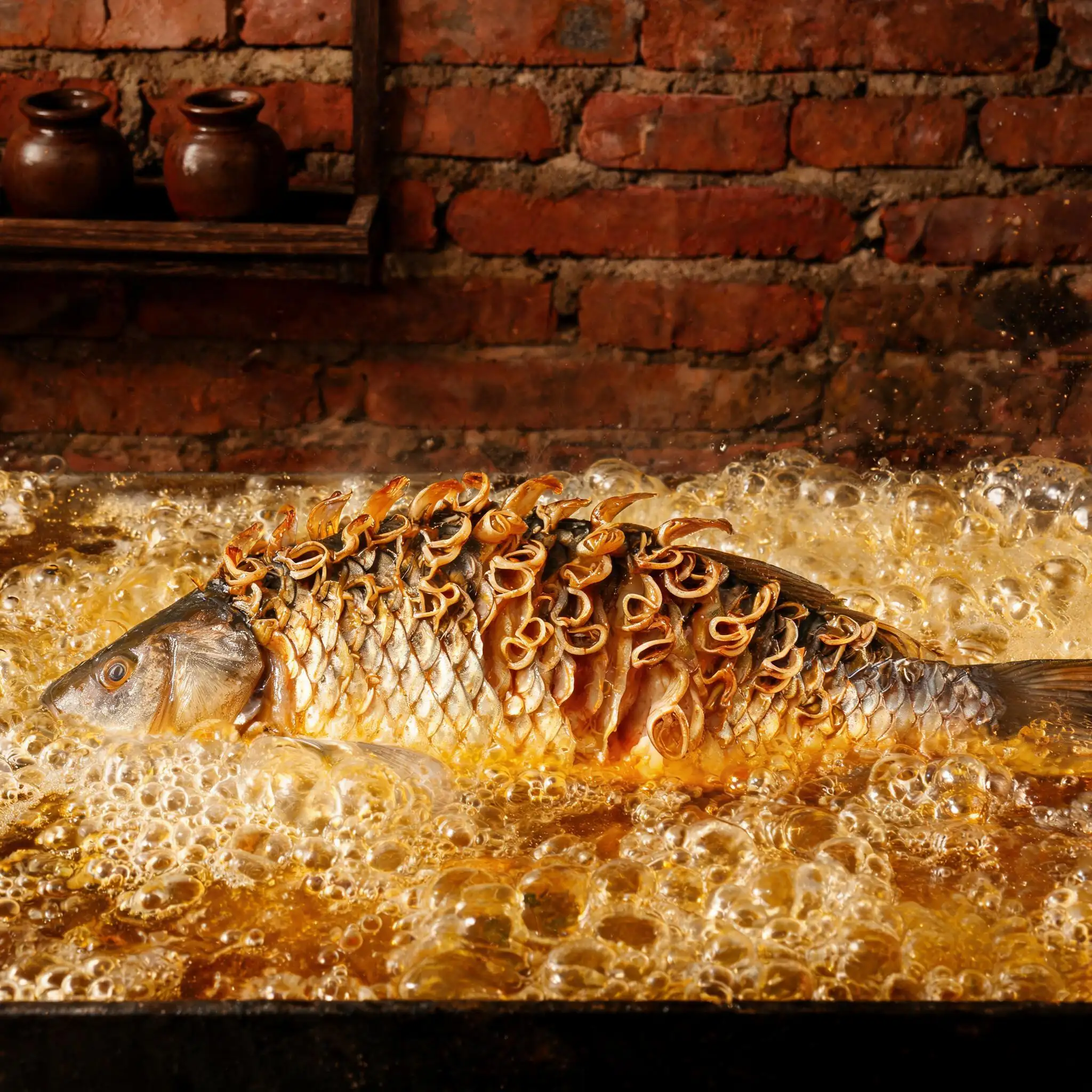
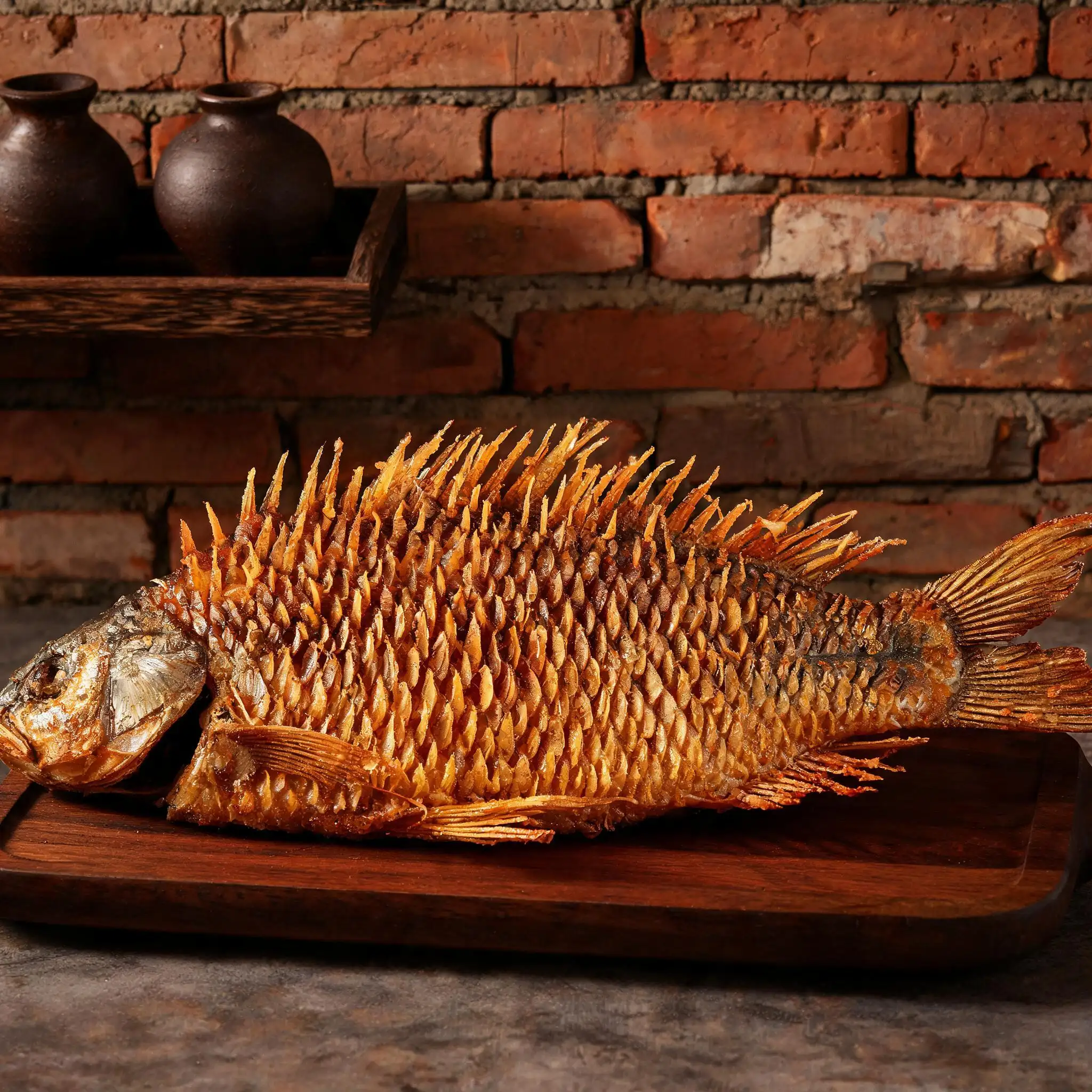
A carp's scales are arranged in overlapping rows, each one a small rigid disc anchored at its base to the skin beneath. When the fish goes into deep oil — the whole fish, uncleaned of its scales — the moisture trapped under each scale turns to steam. The steam has nowhere to go except outward. Each scale lifts away from the body and stands perpendicular to it, rigid and erect, the entire fish suddenly covered in a field of golden spines. It happens in stages: first the scales nearest the spine, then spreading outward and downward as the oil works its way through. By the time the fish is done, every scale is standing.
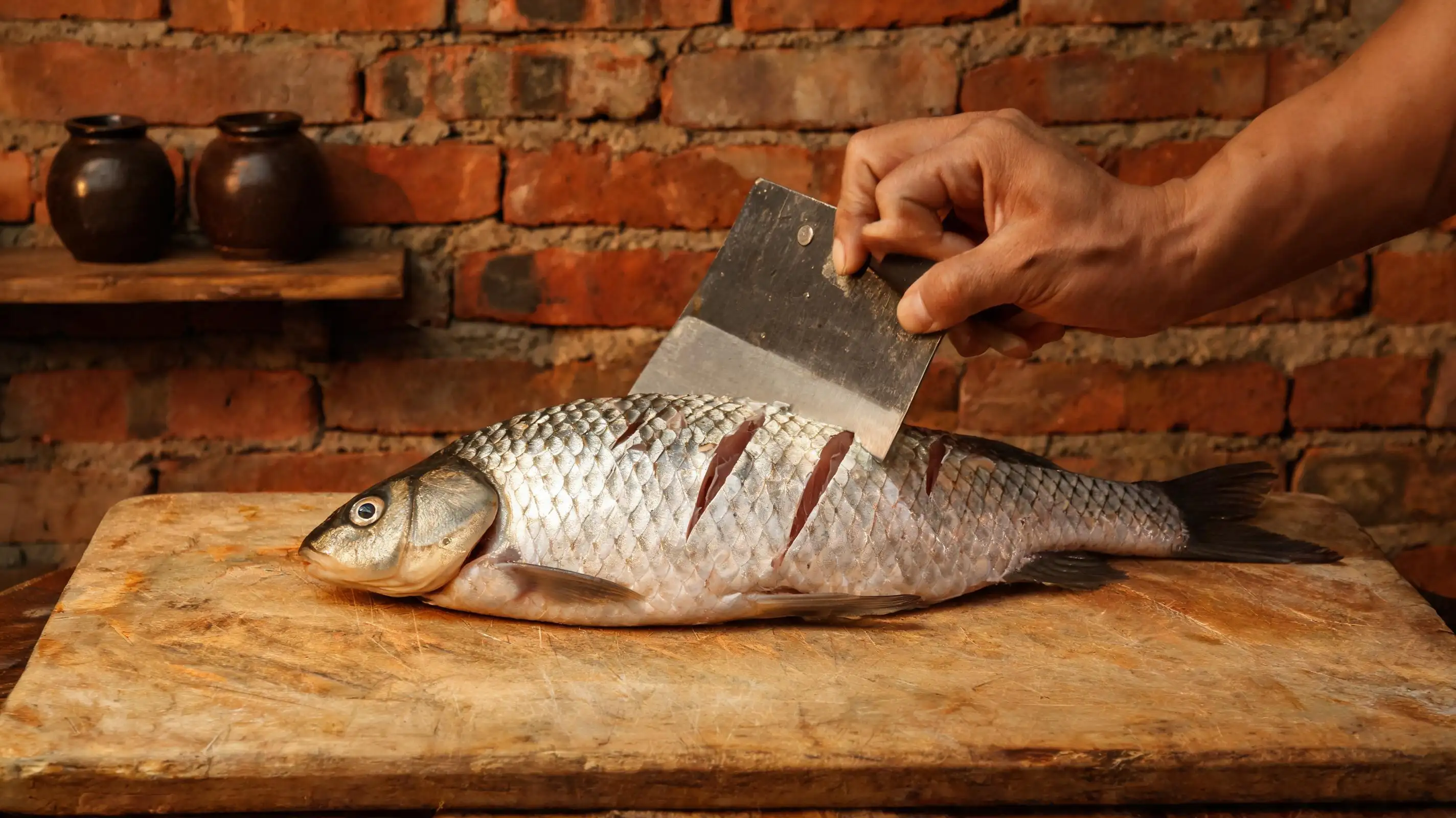
The preparation is specific. The fish is scored on both sides — deep diagonal cuts through the flesh, close enough together to allow the heat to penetrate — but the scales are not touched. They must remain attached at their base. Any scale removed before cooking will not stand. The fish goes into oil hot enough that contact is immediately violent, the surface sealing before the interior has time to lose moisture. The frying takes time and attention; the temperature has to stay consistent.
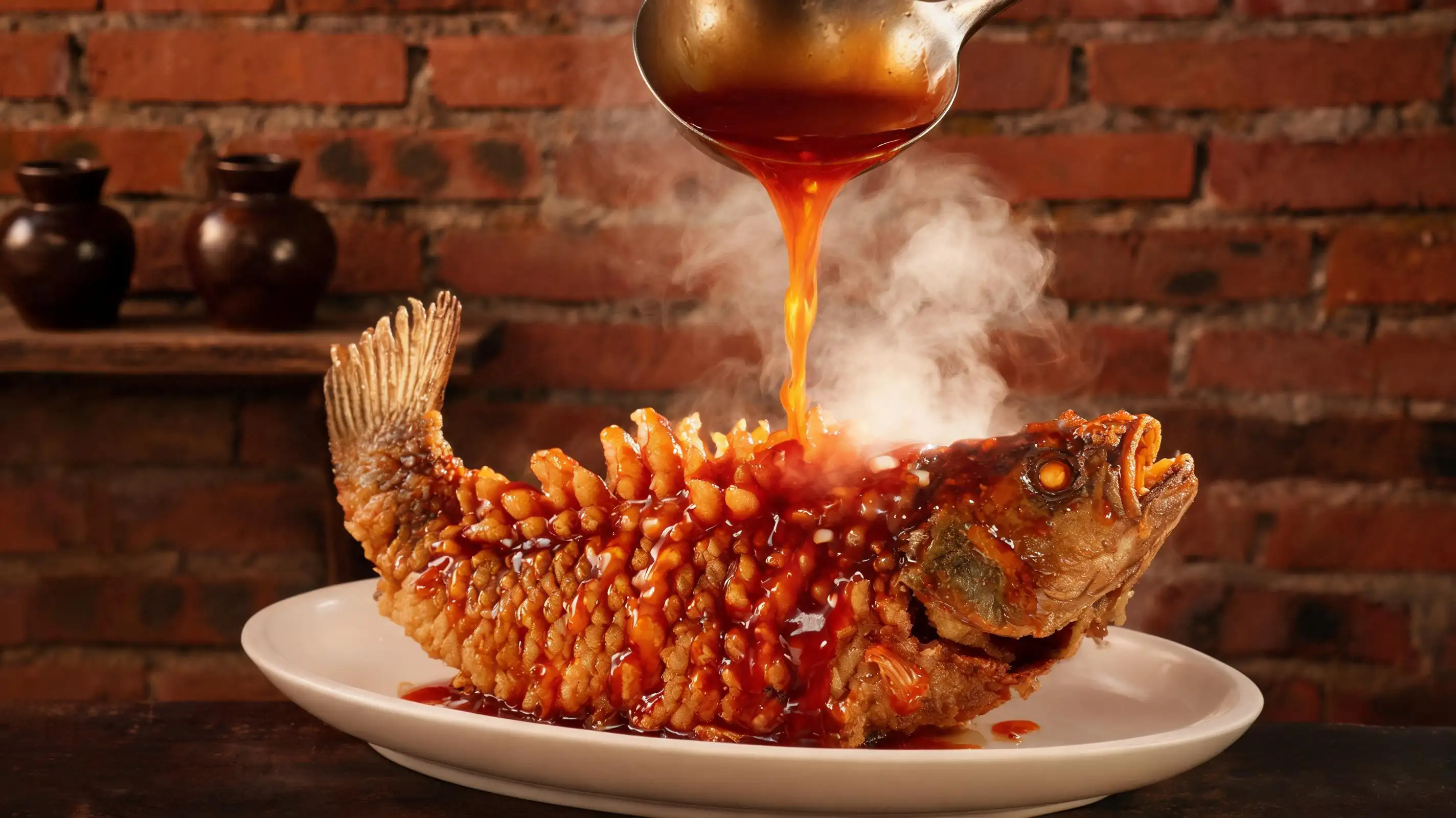
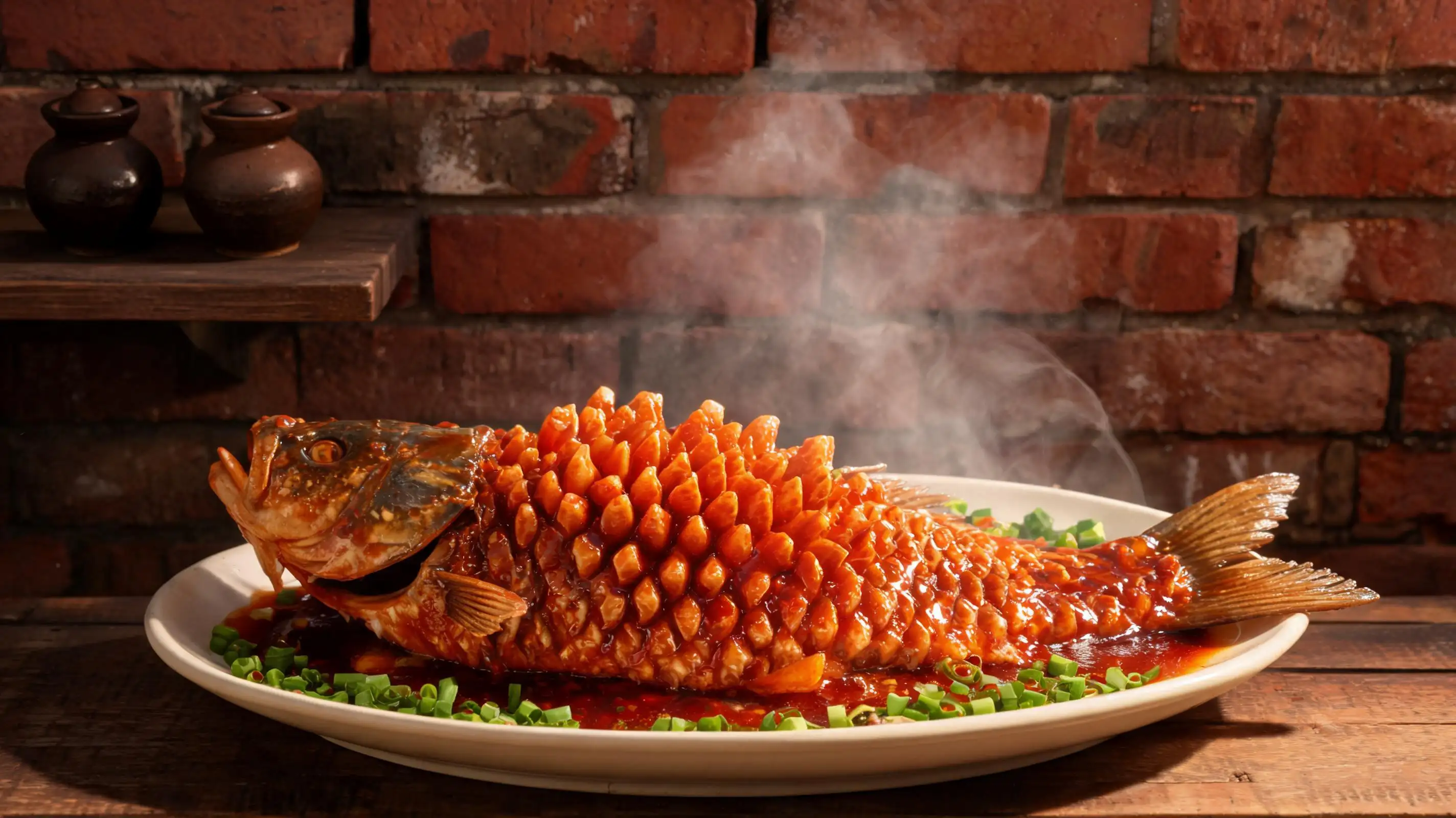
The sauce is made separately. Vinegar, sugar, soy sauce, a little starch to thicken — cooked until glossy and reduced, kept hot. It is poured over the fish at the table, in front of whoever is eating. The hot sauce hitting the hot standing scales produces a sound and a cloud of steam that is part of the dish. The sauce runs down between the scales and pools at the bottom of the platter.
The scales are edible. Fried at this temperature they go crisp — thin, brittle, and almost flavorless on their own, but coated in the sweet-sour sauce they become something worth eating deliberately. The flesh beneath is moist, pulled from the bone at the score lines where the knife went in.
It is served whole. The fish arrives at the table the way it came out of the oil, spines erect, sauce still steaming.
---
**Ingredients**
- One whole fresh carp (鲤鱼), scales left completely intact
- Fresh ginger
- Garlic
- Aged dark vinegar (陈醋)
- White granulated sugar
- Soy sauce
- Potato starch
---
The name comes from a fishing net. A zēng (罾) is a square net lowered into water on a frame of crossed poles, the kind used on the Hai River for generations. When a fish jumps inside it, the net bounces — bèng (蹦). The dish is named for that motion: the carp leaping.
What the heat does to the scales is the reason this dish exists.
A carp's scales are arranged in overlapping rows, each one a small rigid disc anchored at its base to the skin beneath. When the fish goes into deep oil — the whole fish, uncleaned of its scales — the moisture trapped under each scale turns to steam. The steam has nowhere to go except outward. Each scale lifts away from the body and stands perpendicular to it, rigid and erect, the entire fish suddenly covered in a field of golden spines. It happens in stages: first the scales nearest the spine, then spreading outward and downward as the oil works its way through. By the time the fish is done, every scale is standing.
The preparation is specific. The fish is scored on both sides — deep diagonal cuts through the flesh, close enough together to allow the heat to penetrate — but the scales are not touched. They must remain attached at their base. Any scale removed before cooking will not stand. The fish goes into oil hot enough that contact is immediately violent, the surface sealing before the interior has time to lose moisture. The frying takes time and attention; the temperature has to stay consistent.
The sauce is made separately. Vinegar, sugar, soy sauce, a little starch to thicken — cooked until glossy and reduced, kept hot. It is poured over the fish at the table, in front of whoever is eating. The hot sauce hitting the hot standing scales produces a sound and a cloud of steam that is part of the dish. The sauce runs down between the scales and pools at the bottom of the platter.
The scales are edible. Fried at this temperature they go crisp — thin, brittle, and almost flavorless on their own, but coated in the sweet-sour sauce they become something worth eating deliberately. The flesh beneath is moist, pulled from the bone at the score lines where the knife went in.
It is served whole. The fish arrives at the table the way it came out of the oil, spines erect, sauce still steaming.