·5/19/2026
from
Tianjin Jianbing Guozi
# Tianjin Jianbing Guozi
---
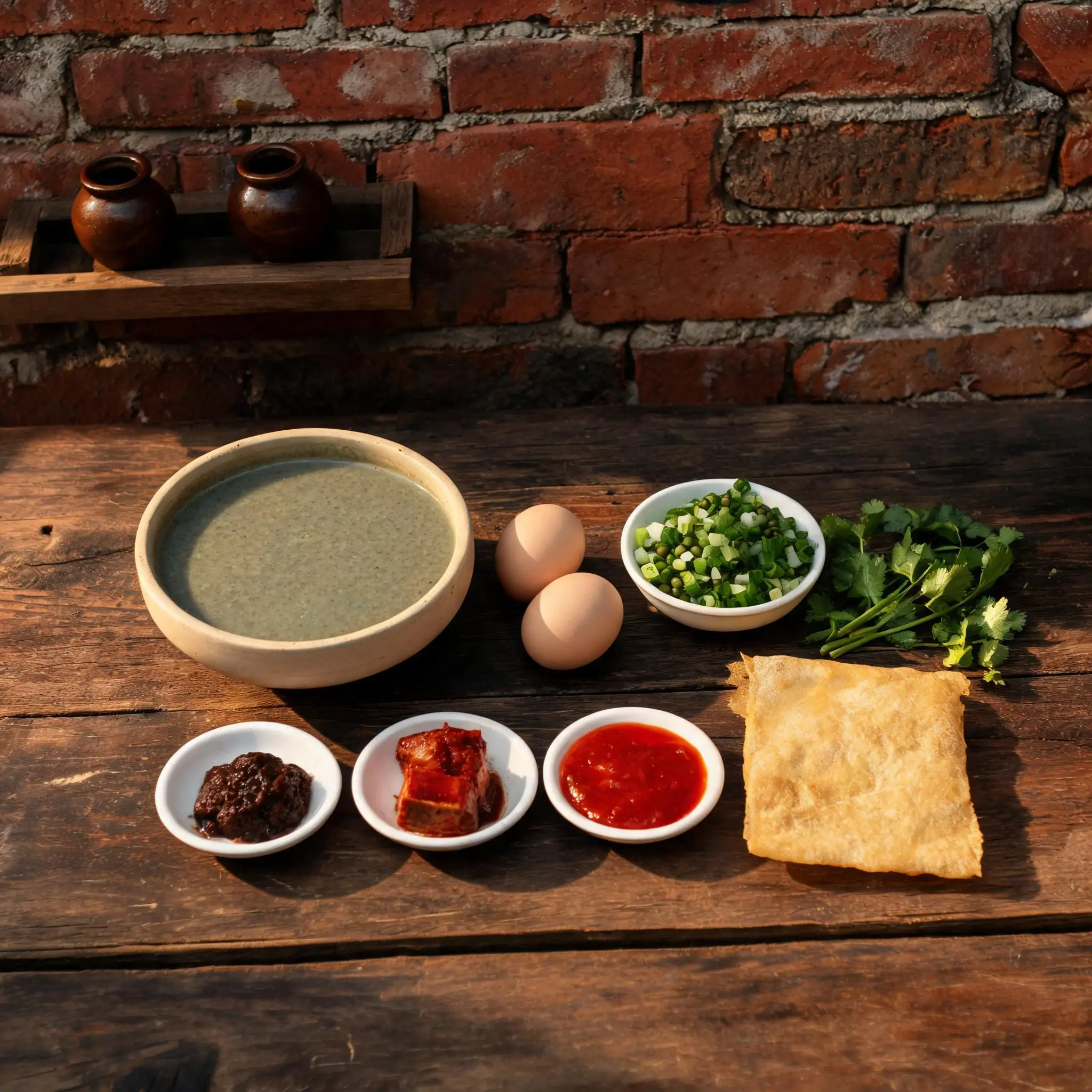
**Ingredients**
- Mung bean flour (绿豆面), thinned with water into a loose batter
- Fresh eggs
- Scallions, finely chopped
- Fresh cilantro
- Fermented soybean paste (面酱)
- Fermented red tofu (腐乳)
- Chili sauce
- Báo cuì — a thin, shatteringly crispy fried wonton wrapper (薄脆)
---
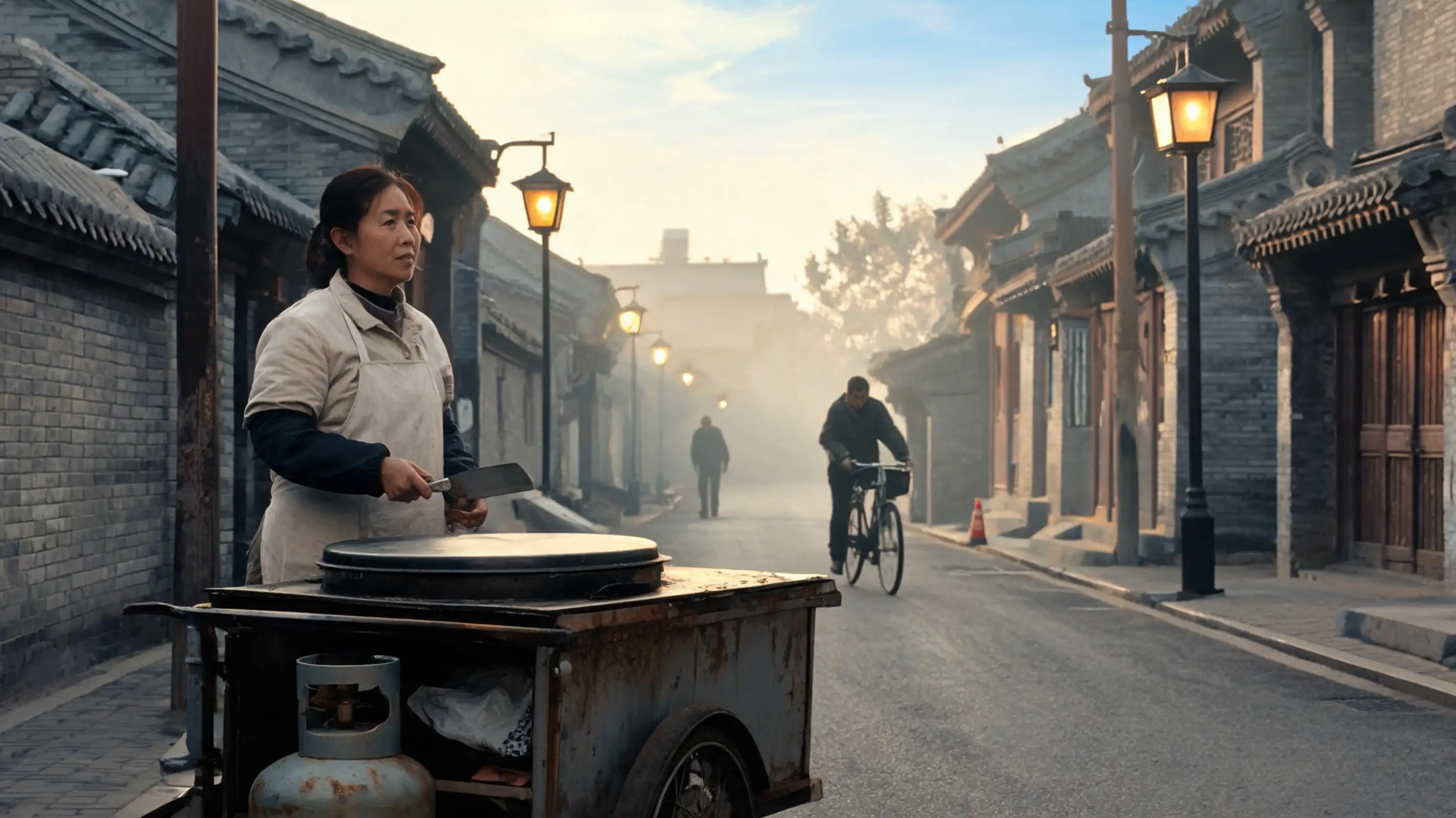
It starts before six in the morning. The cart is already out, the iron griddle already hot, the batter already mixed and resting in its bowl. In Tianjin, this is not a breakfast you plan for — it is the breakfast you find on the way to somewhere else.
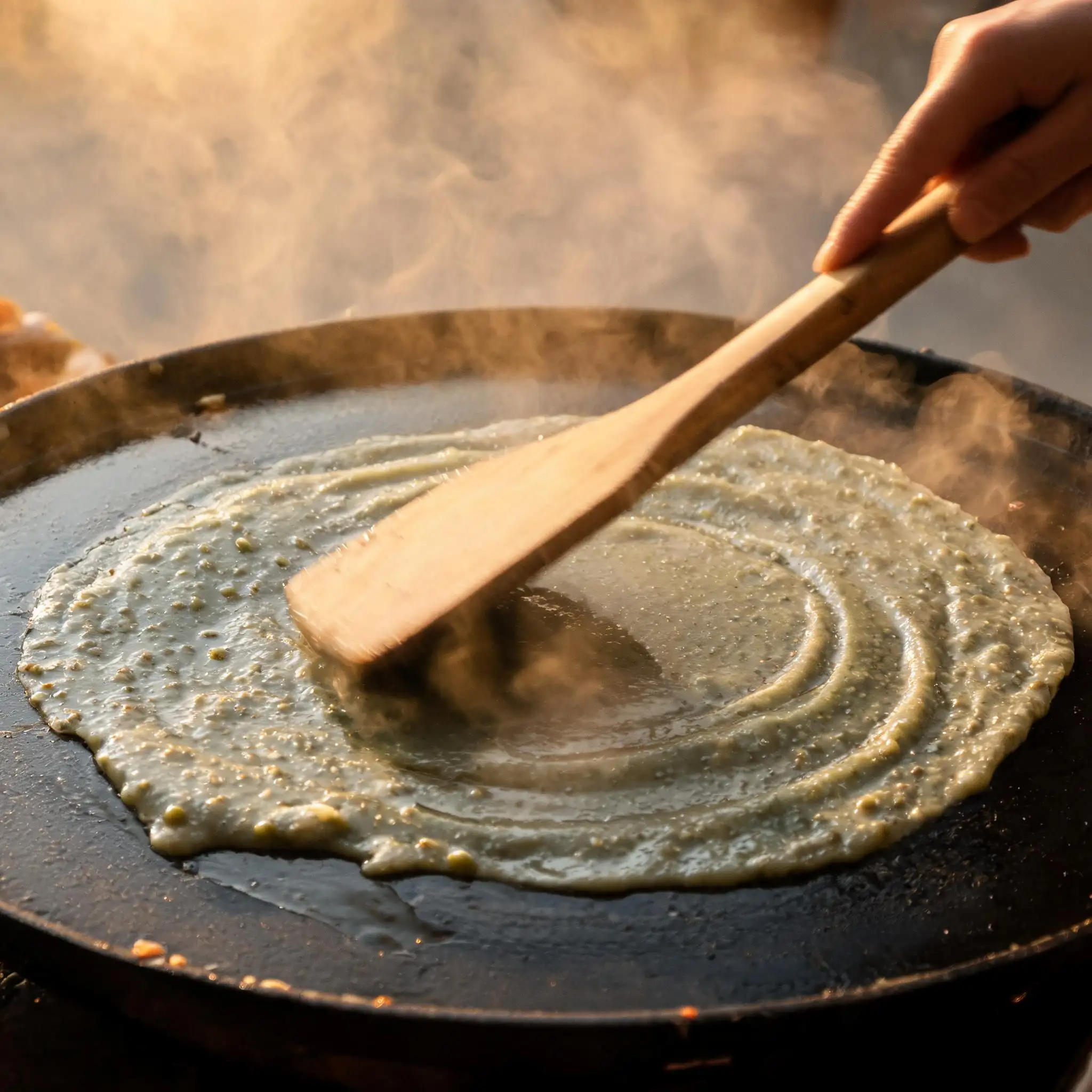
The batter is mung bean flour thinned with water until it pours from a ladle like heavy cream. It goes onto the griddle in a single motion and is immediately spread into a thin, even circle using a flat wooden rake — one continuous sweep outward from the center, following the shape of the pan. The batter sets almost instantly on contact with the hot iron, going from wet grey-green to a pale, faintly speckled sheet in under a minute. The edges curl slightly as it dries.
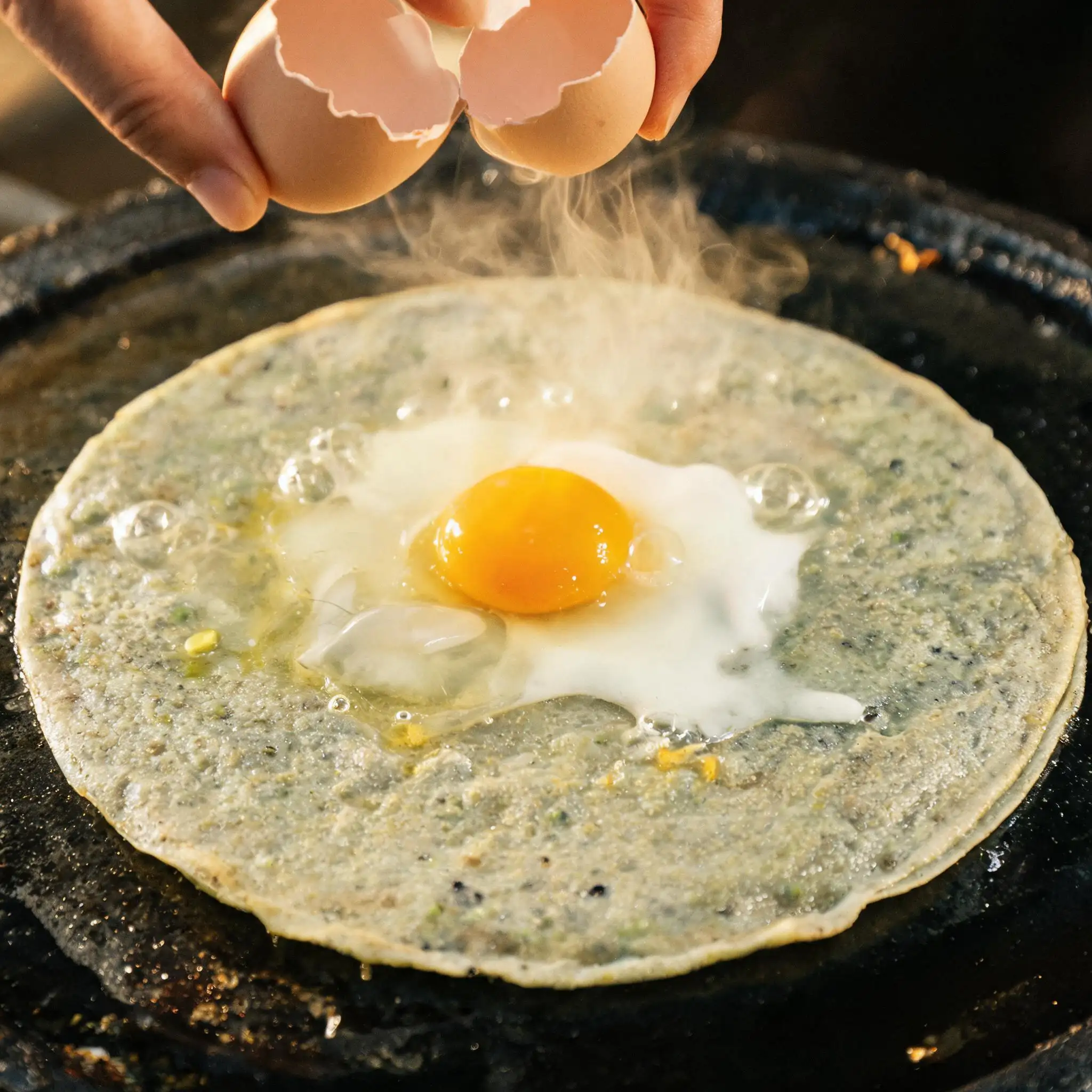
An egg is cracked directly onto the surface while it is still half-raw. The yolk breaks or is left whole depending on the vendor; the white spreads into the crepe and bonds with it as both finish cooking together. The smell at this point — egg, mung bean, iron, hot oil — is the smell of Tianjin in the morning.
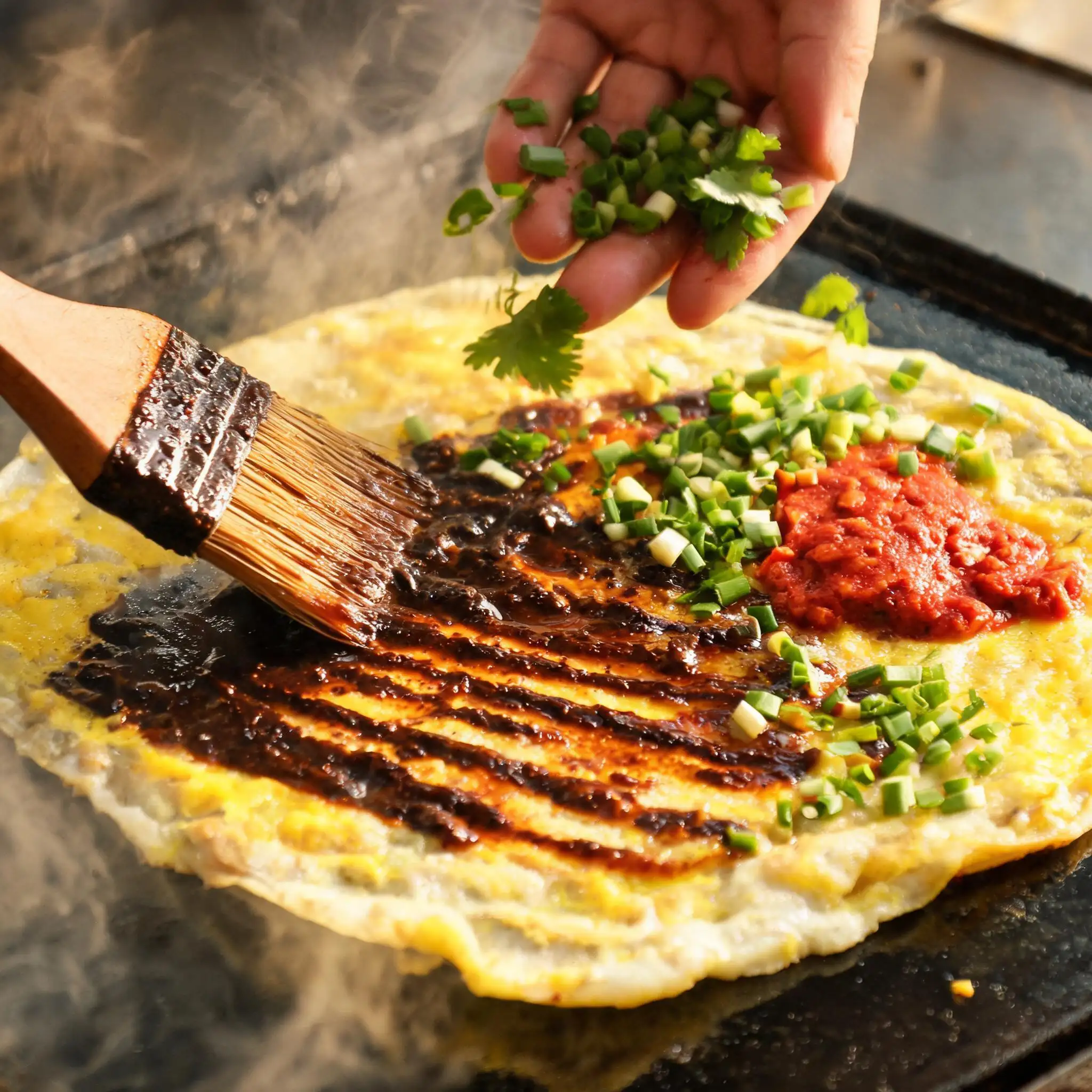
Then the sauces. A brush drags fermented soybean paste across the surface in long strokes, dark and savory. A smear of fermented red tofu beside it, softer and more pungent. Chili sauce if you want it. Chopped scallions and cilantro scattered over everything — the green lands on the dark sauce and stays where it falls.
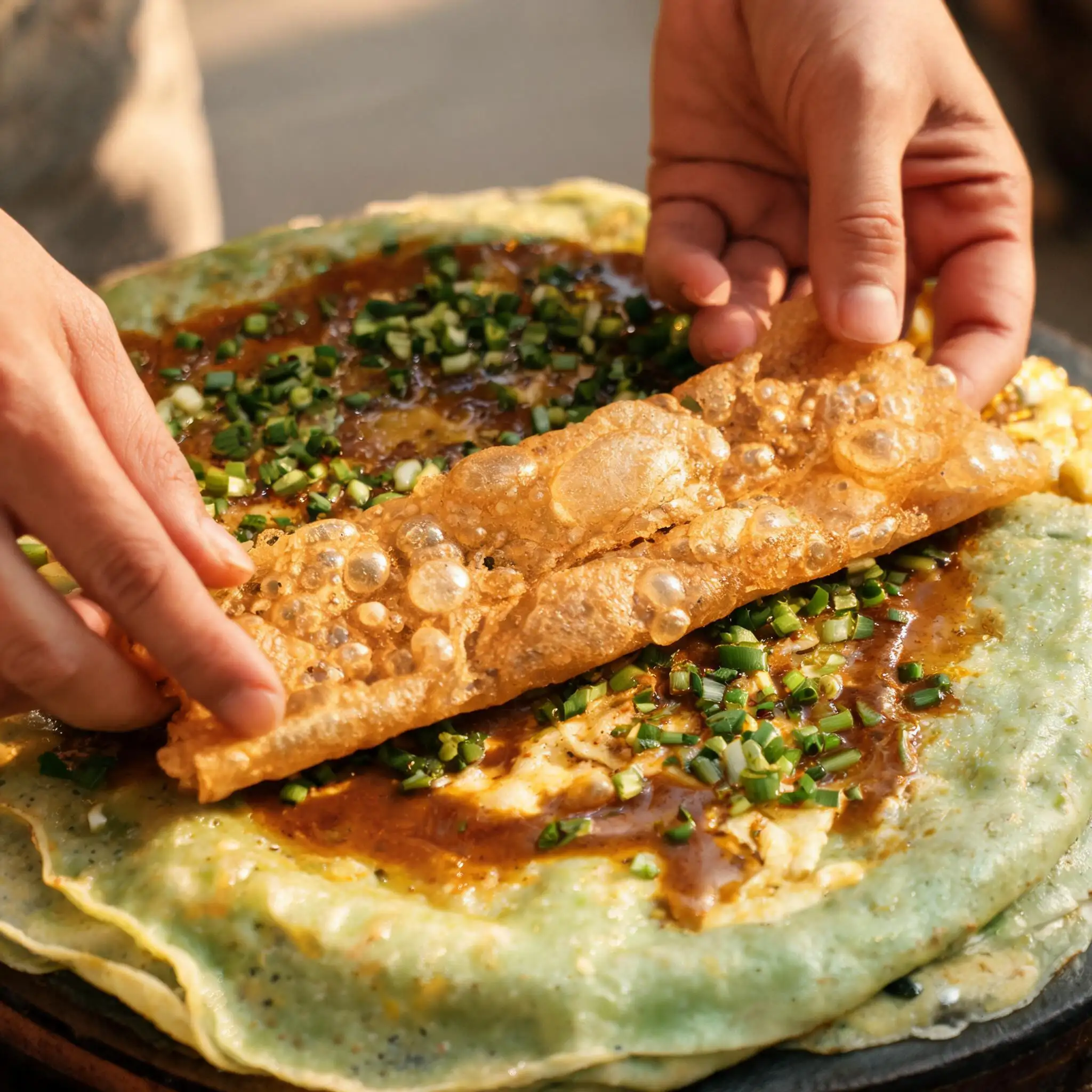
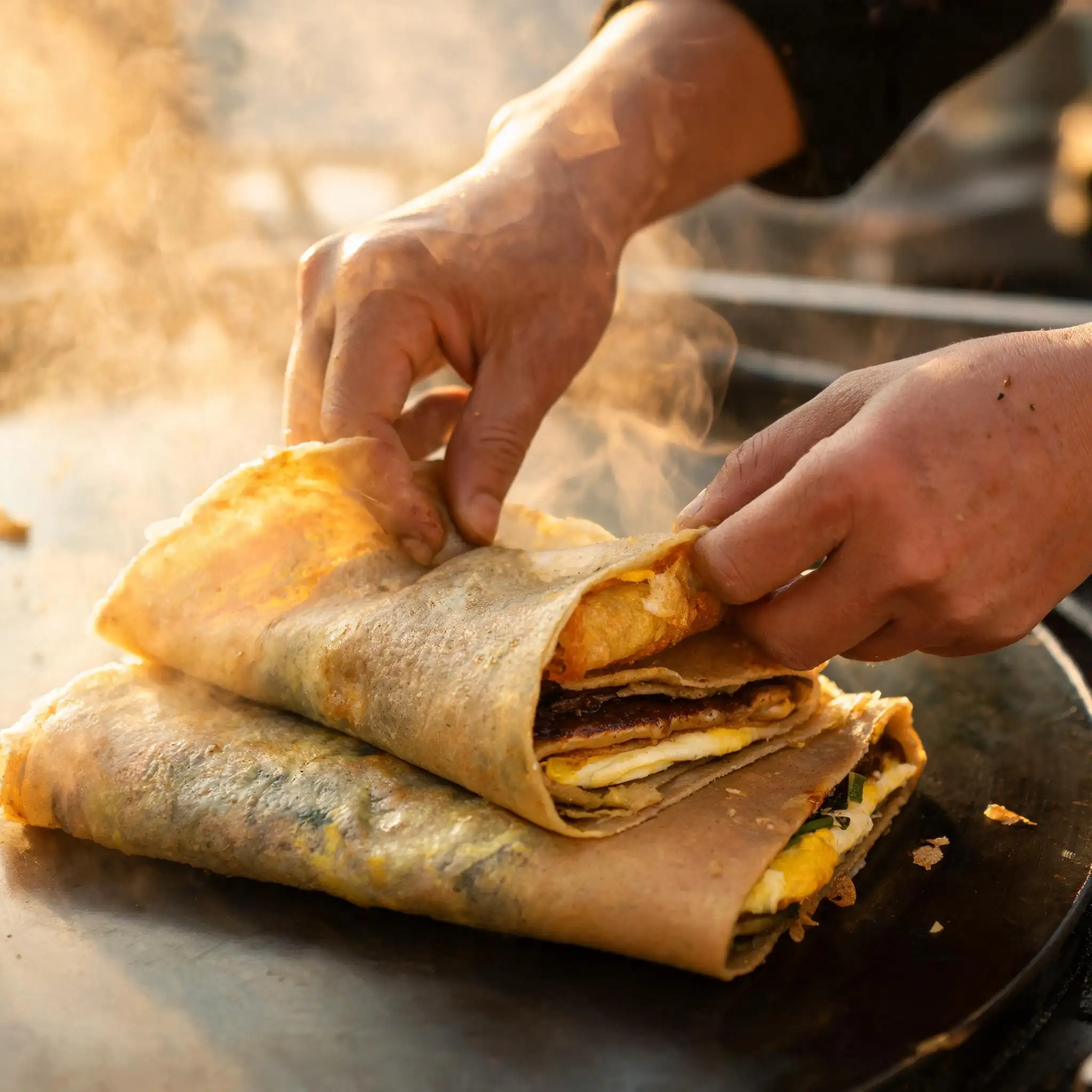
The báo cuì goes on last. It is a large sheet of fried dough — pale gold, blistered with air pockets, so thin it shatters when bent. Laid across the center of the crepe, it provides the structural resistance the soft egg and sauce cannot. The crepe is then folded: bottom up, top down, sides in. Four folds, total. The result is a flat rectangle that fits in one hand.
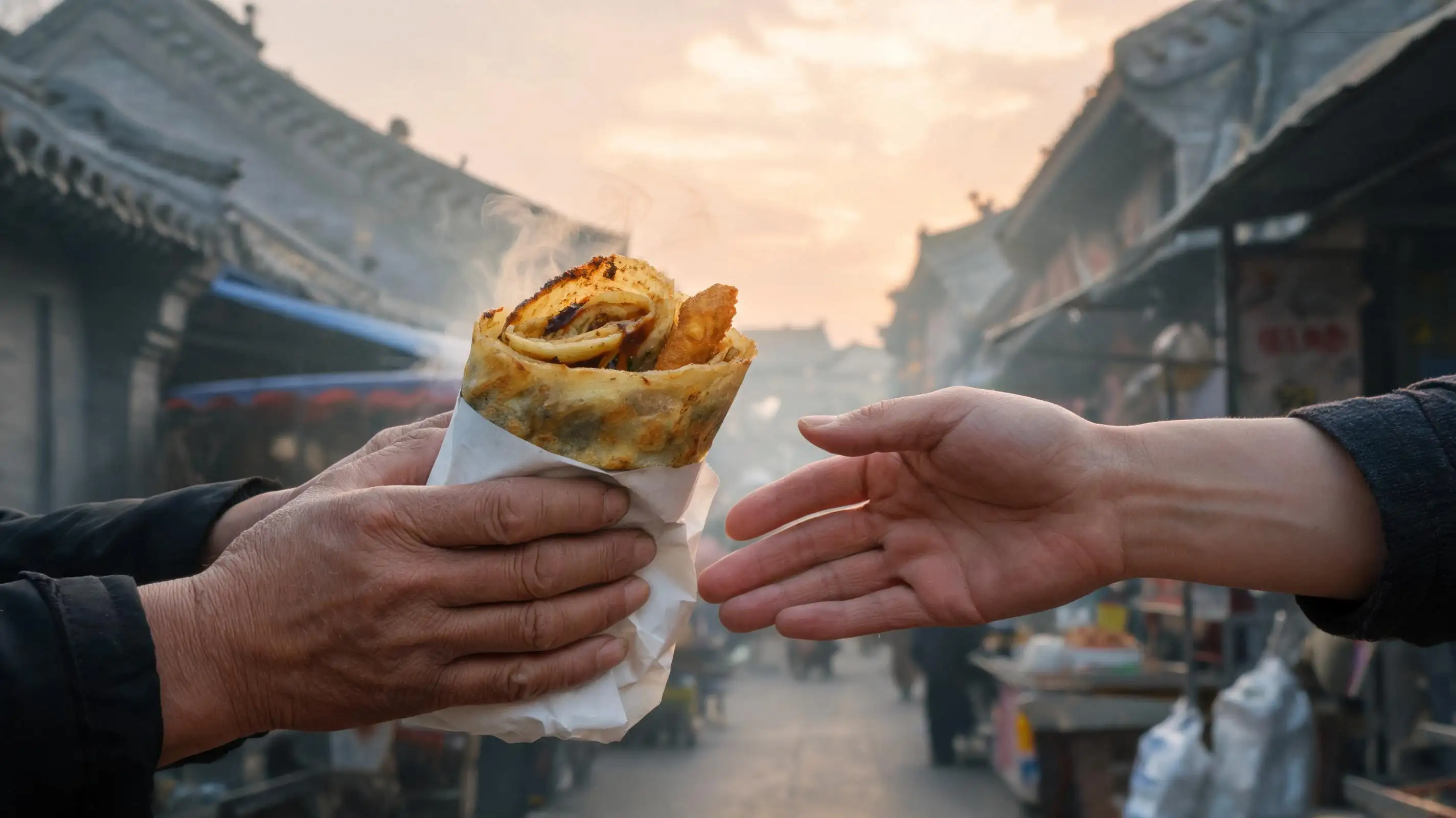
It is handed over wrapped in paper. Most people eat it walking. The crepe is warm and slightly yielding, the báo cuì still audible when you bite through it, the sauce present in every layer. By the time you finish it, you have arrived wherever you were going.
In Tianjin, they are particular about this. Mung bean batter, not wheat. Báo cuì, not yóutiáo. Fermented tofu, not skipped. Change too many things and it becomes something else entirely — something that exists in other cities, but is not this.
---
**Ingredients**
- Mung bean flour (绿豆面), thinned with water into a loose batter
- Fresh eggs
- Scallions, finely chopped
- Fresh cilantro
- Fermented soybean paste (面酱)
- Fermented red tofu (腐乳)
- Chili sauce
- Báo cuì — a thin, shatteringly crispy fried wonton wrapper (薄脆)
---
It starts before six in the morning. The cart is already out, the iron griddle already hot, the batter already mixed and resting in its bowl. In Tianjin, this is not a breakfast you plan for — it is the breakfast you find on the way to somewhere else.
The batter is mung bean flour thinned with water until it pours from a ladle like heavy cream. It goes onto the griddle in a single motion and is immediately spread into a thin, even circle using a flat wooden rake — one continuous sweep outward from the center, following the shape of the pan. The batter sets almost instantly on contact with the hot iron, going from wet grey-green to a pale, faintly speckled sheet in under a minute. The edges curl slightly as it dries.
An egg is cracked directly onto the surface while it is still half-raw. The yolk breaks or is left whole depending on the vendor; the white spreads into the crepe and bonds with it as both finish cooking together. The smell at this point — egg, mung bean, iron, hot oil — is the smell of Tianjin in the morning.
Then the sauces. A brush drags fermented soybean paste across the surface in long strokes, dark and savory. A smear of fermented red tofu beside it, softer and more pungent. Chili sauce if you want it. Chopped scallions and cilantro scattered over everything — the green lands on the dark sauce and stays where it falls.
The báo cuì goes on last. It is a large sheet of fried dough — pale gold, blistered with air pockets, so thin it shatters when bent. Laid across the center of the crepe, it provides the structural resistance the soft egg and sauce cannot. The crepe is then folded: bottom up, top down, sides in. Four folds, total. The result is a flat rectangle that fits in one hand.
It is handed over wrapped in paper. Most people eat it walking. The crepe is warm and slightly yielding, the báo cuì still audible when you bite through it, the sauce present in every layer. By the time you finish it, you have arrived wherever you were going.
In Tianjin, they are particular about this. Mung bean batter, not wheat. Báo cuì, not yóutiáo. Fermented tofu, not skipped. Change too many things and it becomes something else entirely — something that exists in other cities, but is not this.
312