·5/19/2026
from
# Tianjin Erduoyan Fried Glutinous Rice Cake
---
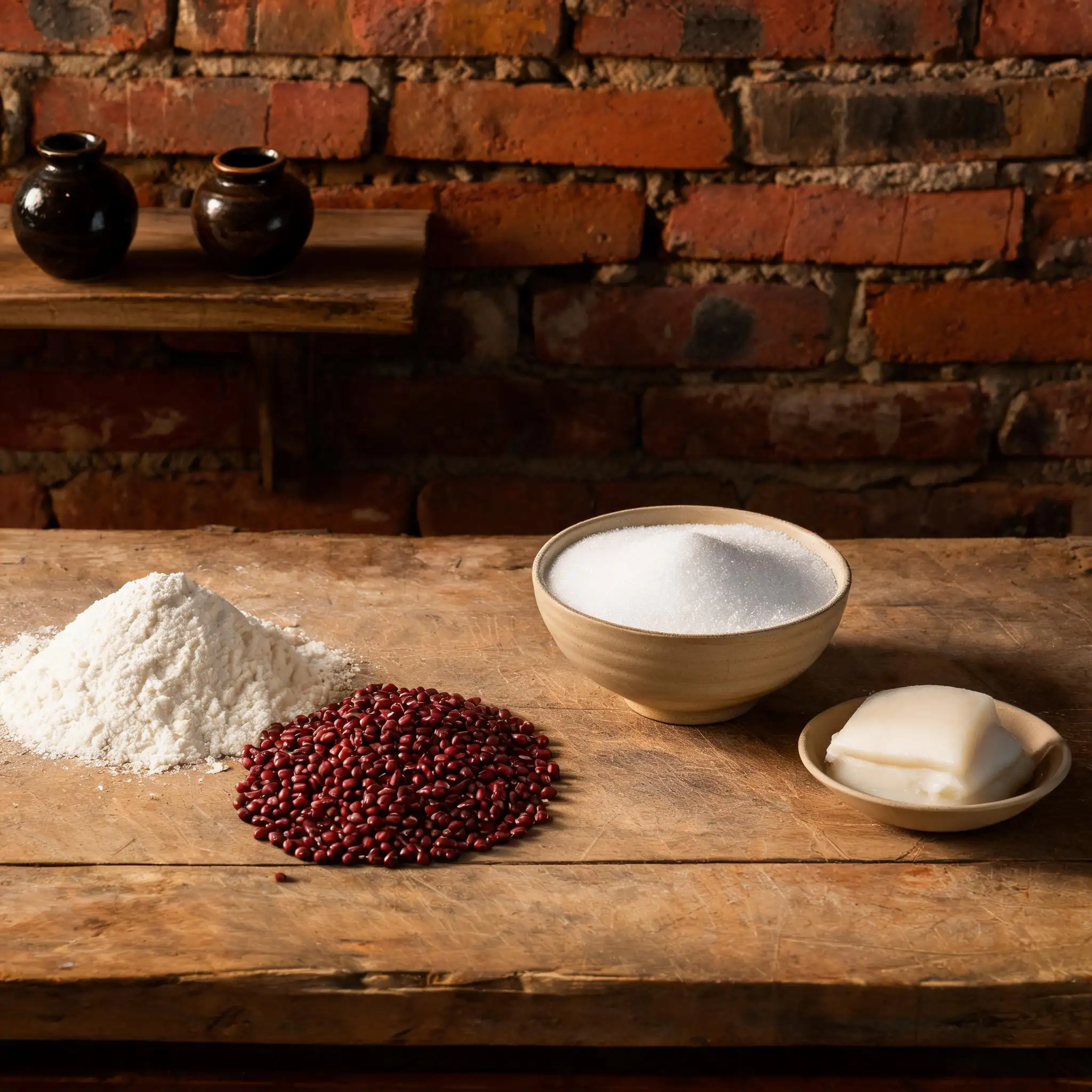
**Ingredients**
- Glutinous rice flour
- Small red beans (adzuki beans), soaked overnight
- White granulated sugar
- Lard
---
The shop opened during the Guangxu reign of the Qing dynasty, sometime in the 1880s. It sat at the entrance of a narrow alley called Erduoyan — Ear Eye Alley — named for how tight the passage was. The shop had no formal name for a long time. People just said they were going to the fried cakes by the Ear Eye. Eventually, that became the name.
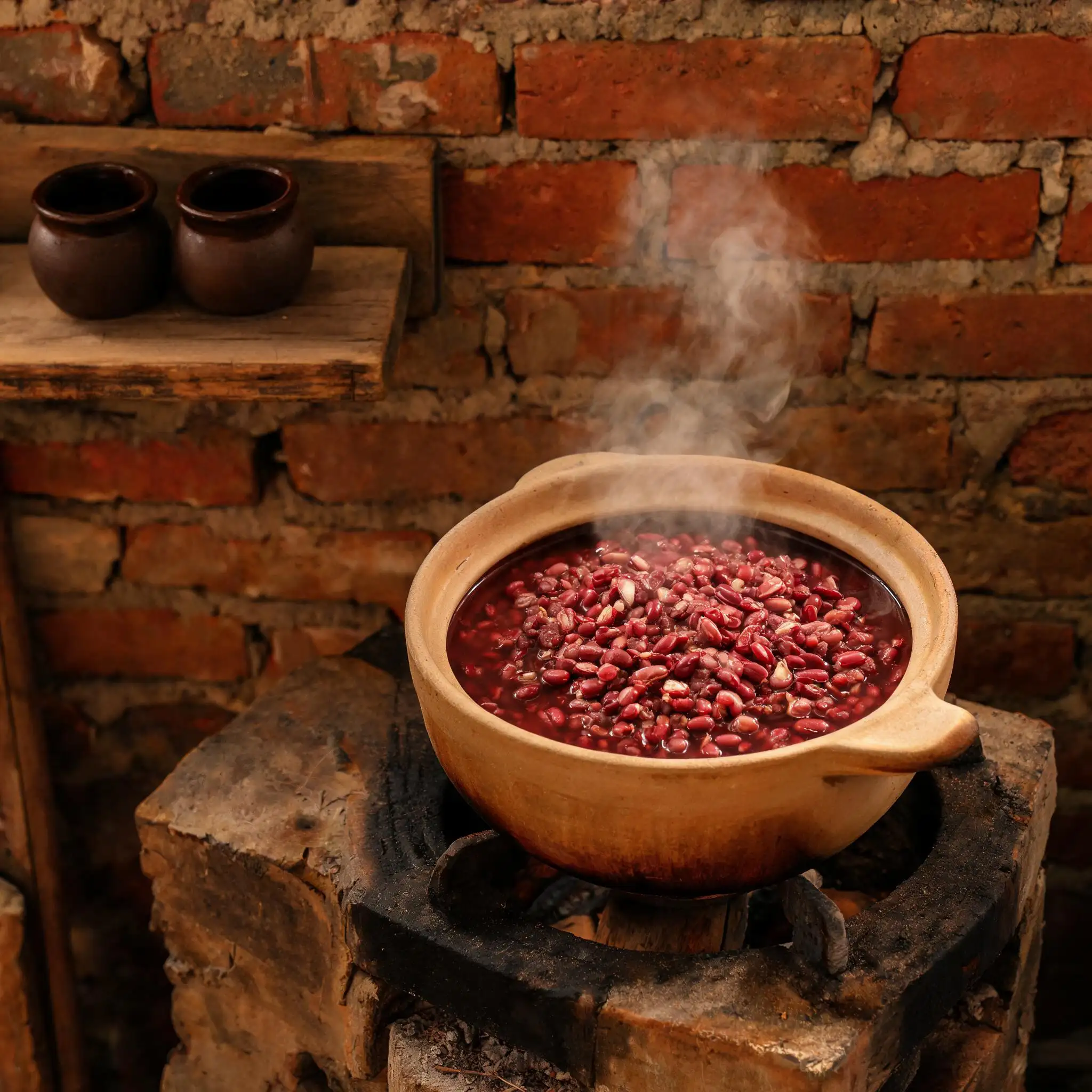
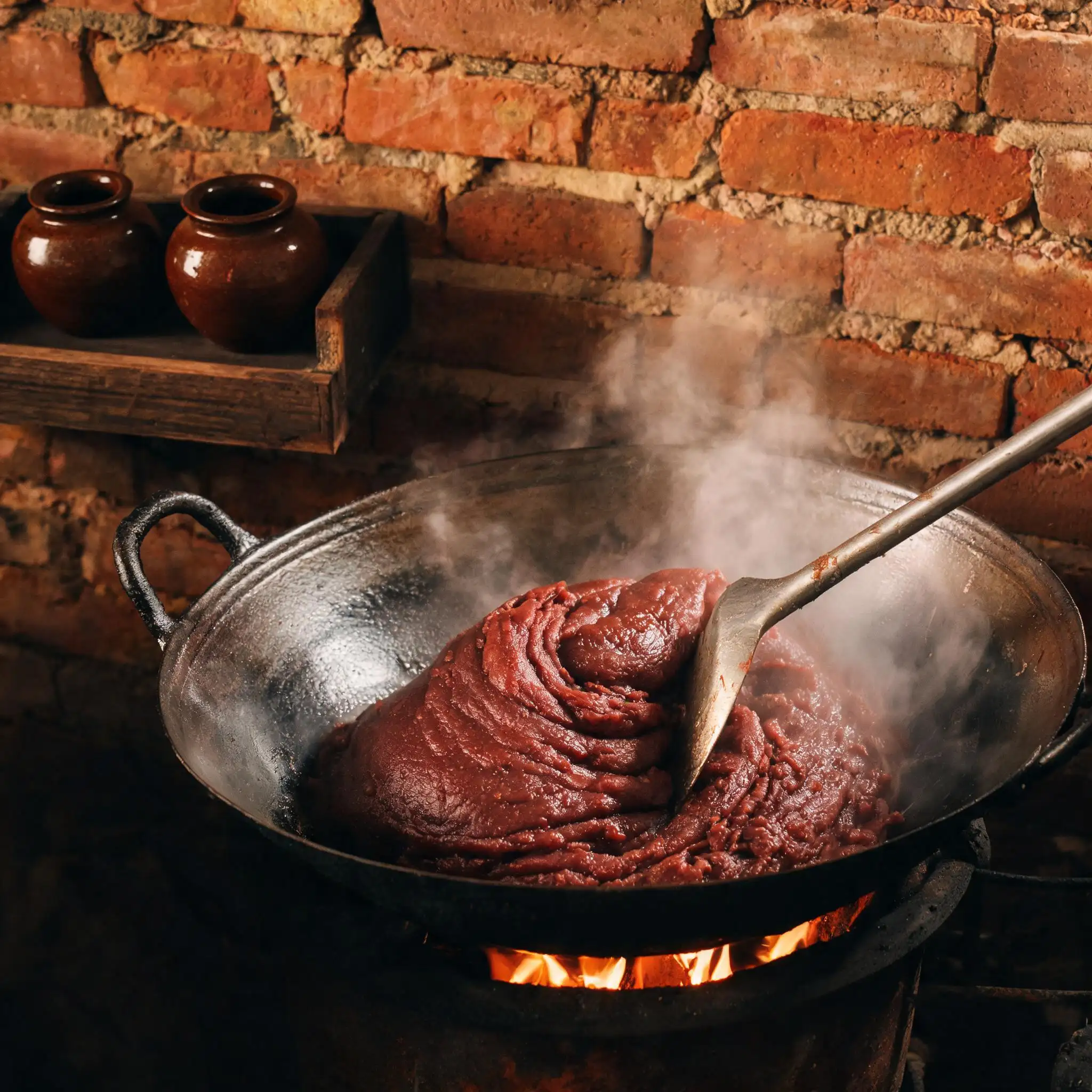
The red beans come first, and they take the longest. Soaked overnight, then simmered for hours until the skins split and the insides go soft. The cooked beans are mashed and pressed, then moved to a dry iron wok over high heat with lard and sugar. You stir constantly. The paste has to dry out enough to hold its shape but stay moist enough not to crack — this takes time and attention and there is no shortcut. The finished paste is deep red-brown, glossy, and holds a slow fold when you push a spatula through it.
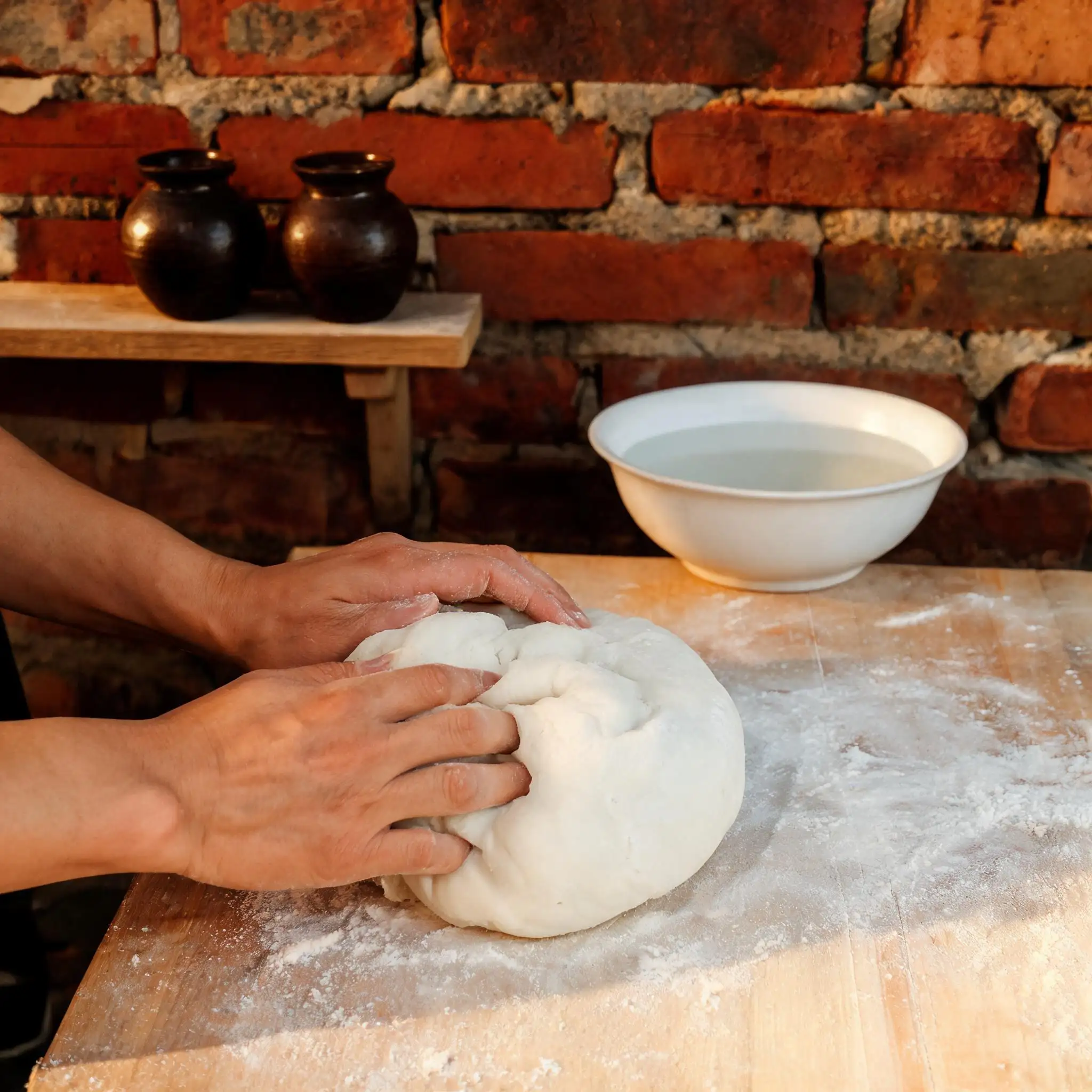
The dough is glutinous rice flour mixed with cold water, worked until it is smooth and slightly sticky. It does not behave like wheat dough. It has no elasticity, only density. You handle it gently and keep your hands wet.
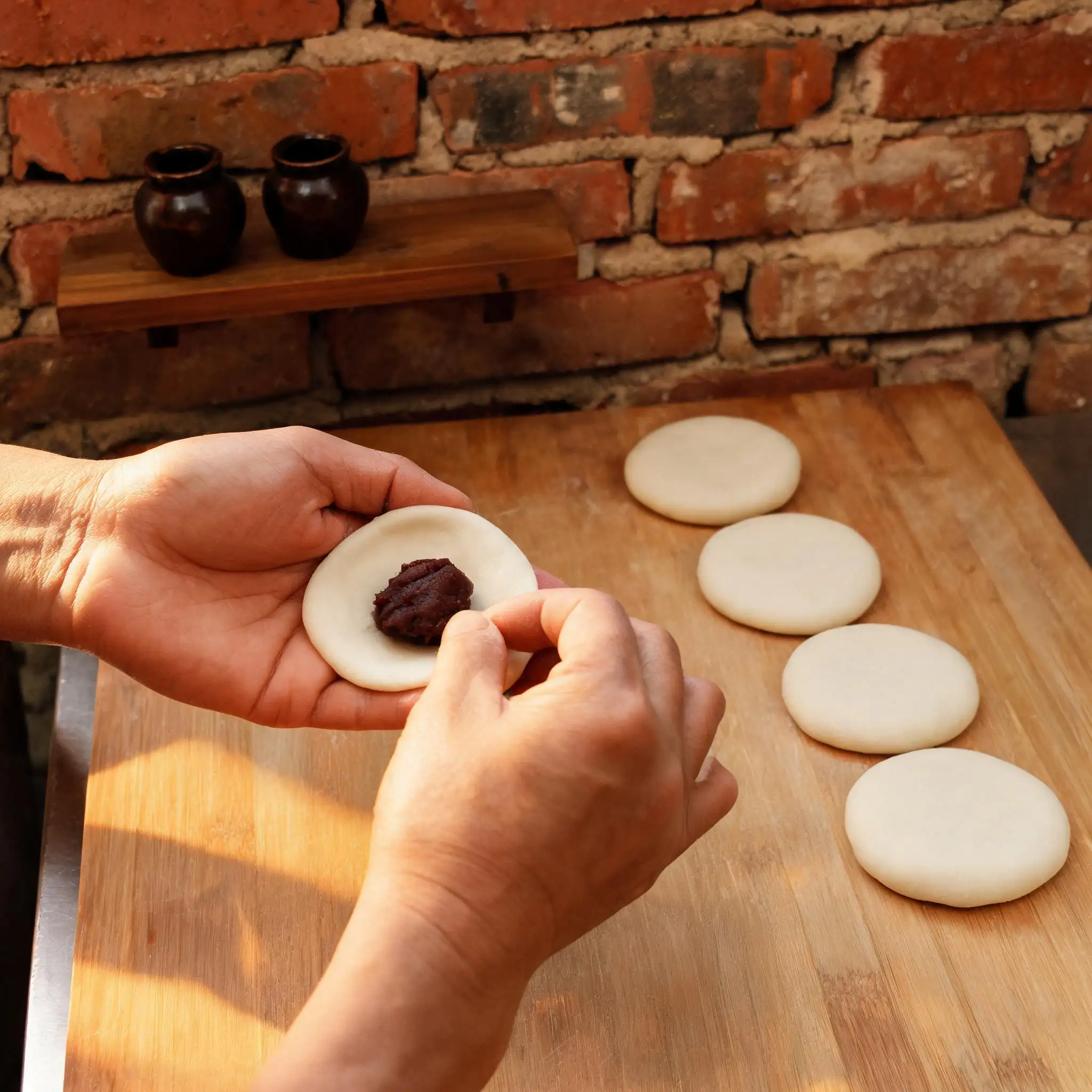
Each piece of dough is flattened into a small round. A portion of bean paste goes in the center. The edges are gathered and sealed, then the ball is pressed flat between the palms into a disc — roughly the size of a large coin, thicker at the center. The seal has to hold cleanly or the filling leaks into the oil and burns.
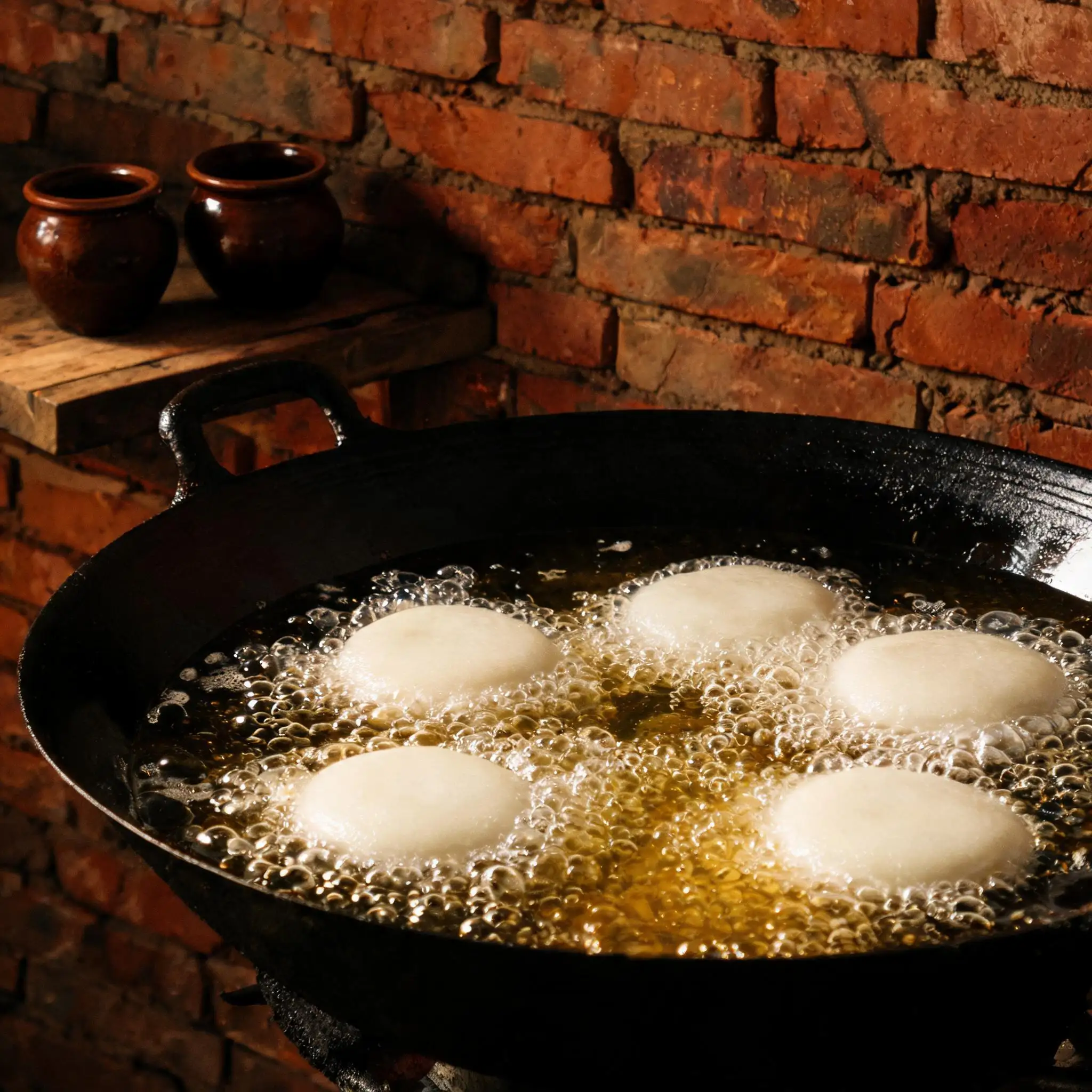
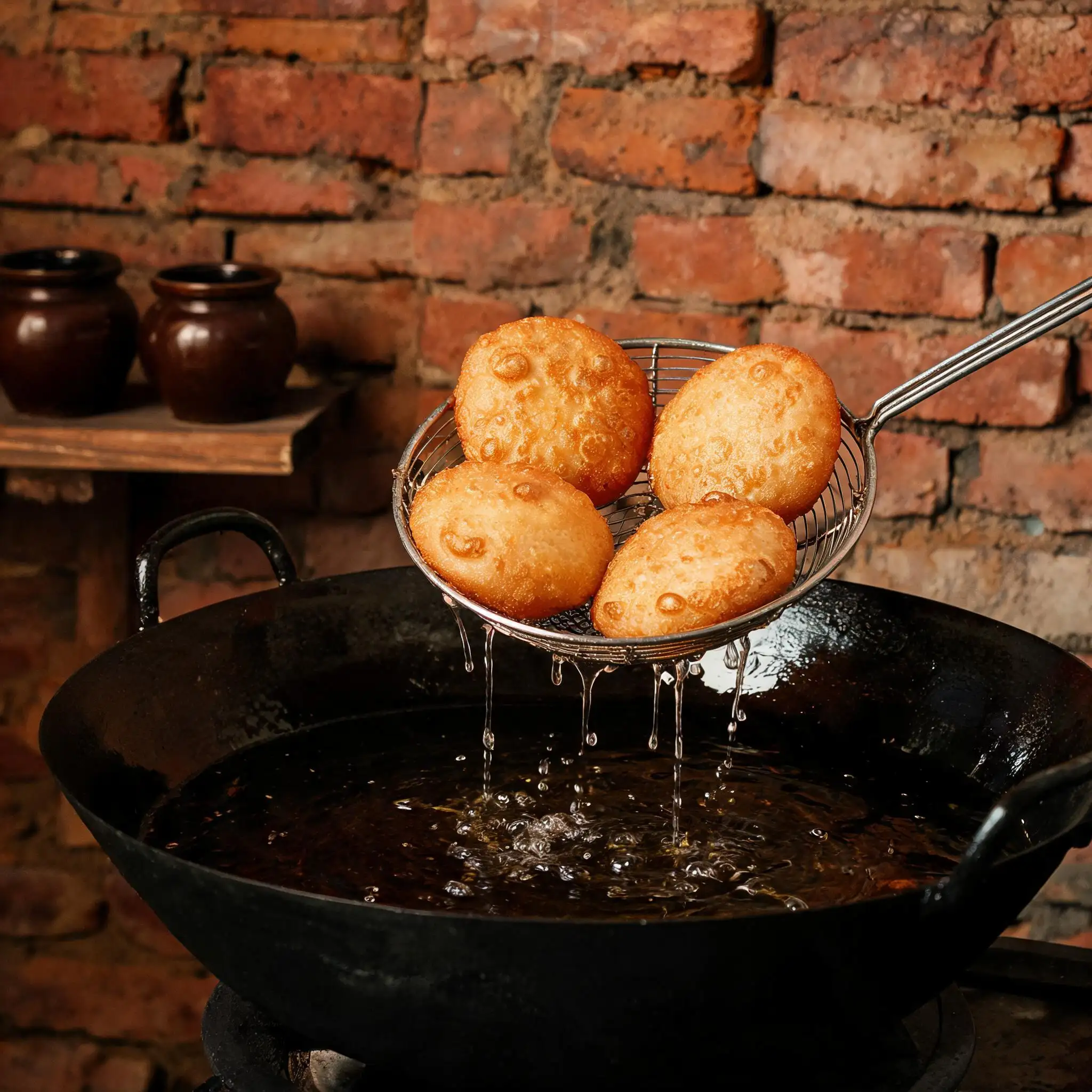
The oil runs hot. The cakes go in pale and come out deep gold, the glutinous rice skin blistering into a rough, irregular surface as the moisture inside expands and pushes against the crust. They float as they fry. When they have taken on enough color — amber shading toward brown — they are scooped out and held over the wok until the excess oil has dripped free.
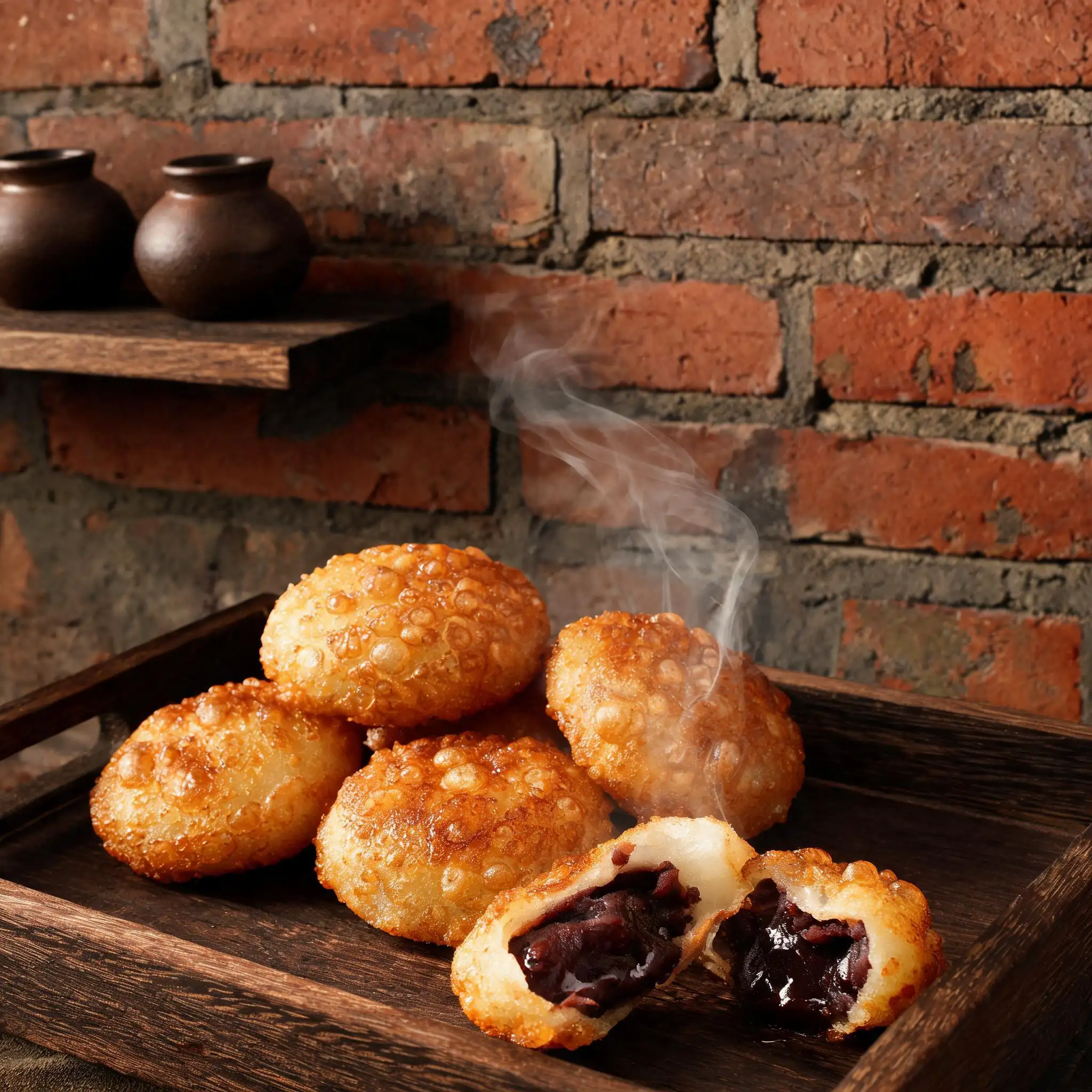
The skin is crisp when it comes out, thin as a shell in the blistered places. The interior is soft and chewy in a way that wheat flour never achieves — dense and slightly resistant, yielding slowly rather than all at once. The bean paste inside is warm and sweet, rich with lard, still faintly steaming when you bite through.
They are at their best within minutes. The crust softens as it cools. Most people eat them standing at the counter.
The alley is still there.
---
**Ingredients**
- Glutinous rice flour
- Small red beans (adzuki beans), soaked overnight
- White granulated sugar
- Lard
---
The shop opened during the Guangxu reign of the Qing dynasty, sometime in the 1880s. It sat at the entrance of a narrow alley called Erduoyan — Ear Eye Alley — named for how tight the passage was. The shop had no formal name for a long time. People just said they were going to the fried cakes by the Ear Eye. Eventually, that became the name.
The red beans come first, and they take the longest. Soaked overnight, then simmered for hours until the skins split and the insides go soft. The cooked beans are mashed and pressed, then moved to a dry iron wok over high heat with lard and sugar. You stir constantly. The paste has to dry out enough to hold its shape but stay moist enough not to crack — this takes time and attention and there is no shortcut. The finished paste is deep red-brown, glossy, and holds a slow fold when you push a spatula through it.
The dough is glutinous rice flour mixed with cold water, worked until it is smooth and slightly sticky. It does not behave like wheat dough. It has no elasticity, only density. You handle it gently and keep your hands wet.
Each piece of dough is flattened into a small round. A portion of bean paste goes in the center. The edges are gathered and sealed, then the ball is pressed flat between the palms into a disc — roughly the size of a large coin, thicker at the center. The seal has to hold cleanly or the filling leaks into the oil and burns.
The oil runs hot. The cakes go in pale and come out deep gold, the glutinous rice skin blistering into a rough, irregular surface as the moisture inside expands and pushes against the crust. They float as they fry. When they have taken on enough color — amber shading toward brown — they are scooped out and held over the wok until the excess oil has dripped free.
The skin is crisp when it comes out, thin as a shell in the blistered places. The interior is soft and chewy in a way that wheat flour never achieves — dense and slightly resistant, yielding slowly rather than all at once. The bean paste inside is warm and sweet, rich with lard, still faintly steaming when you bite through.
They are at their best within minutes. The crust softens as it cools. Most people eat them standing at the counter.
The alley is still there.
111