·5/19/2026
from
# Tianjin 18th Street Small Mahua — Guifaxiang
---
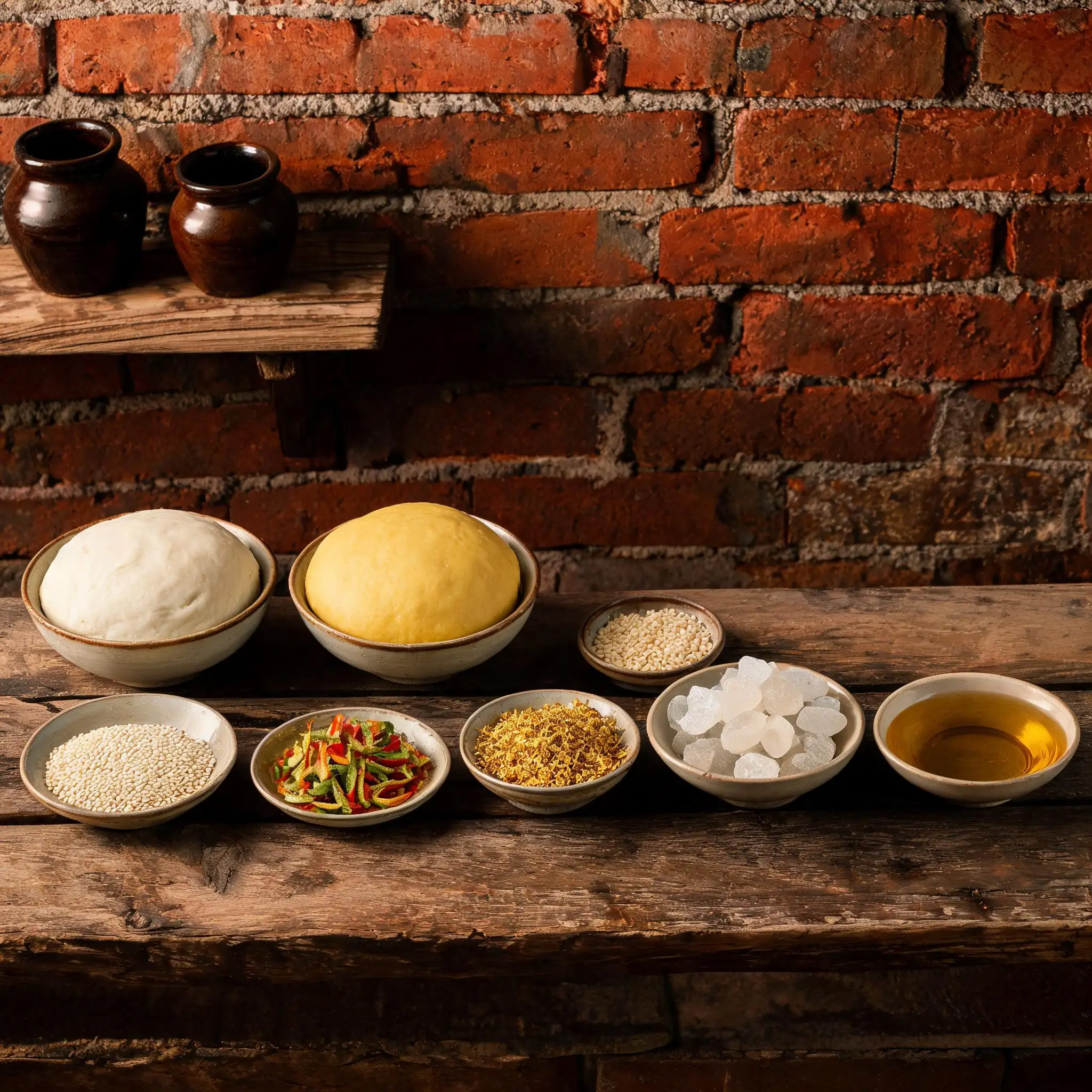
**Ingredients**
- All-purpose wheat flour
- Eggs and sugar — for the soft inner dough
- Lard and flour — for the crispy outer dough
- White sesame seeds
- Green and red preserved citrus peel (青红丝), finely shredded
- Dried osmanthus flowers (桂花)
- Rock sugar, crushed
- Cooking oil, for deep frying
---
Guifaxiang opened on 18th Street in Tianjin in 1925. The mahua they make is not complicated to describe, but it takes years to get right. Most people encounter the large version — the kind that comes in a tin and can sit on a shelf for weeks without going soft. The small one works the same way, just fits in your hand.
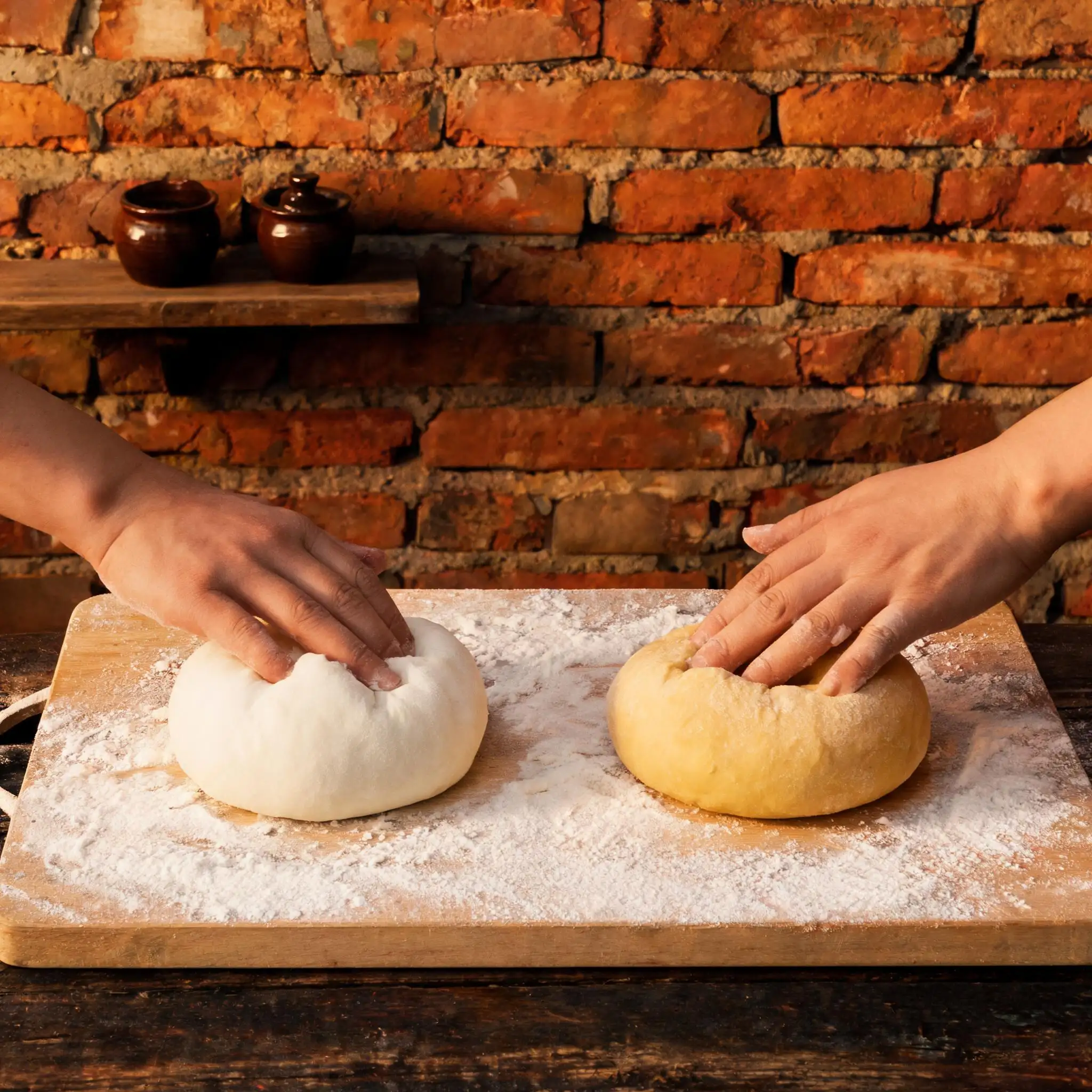
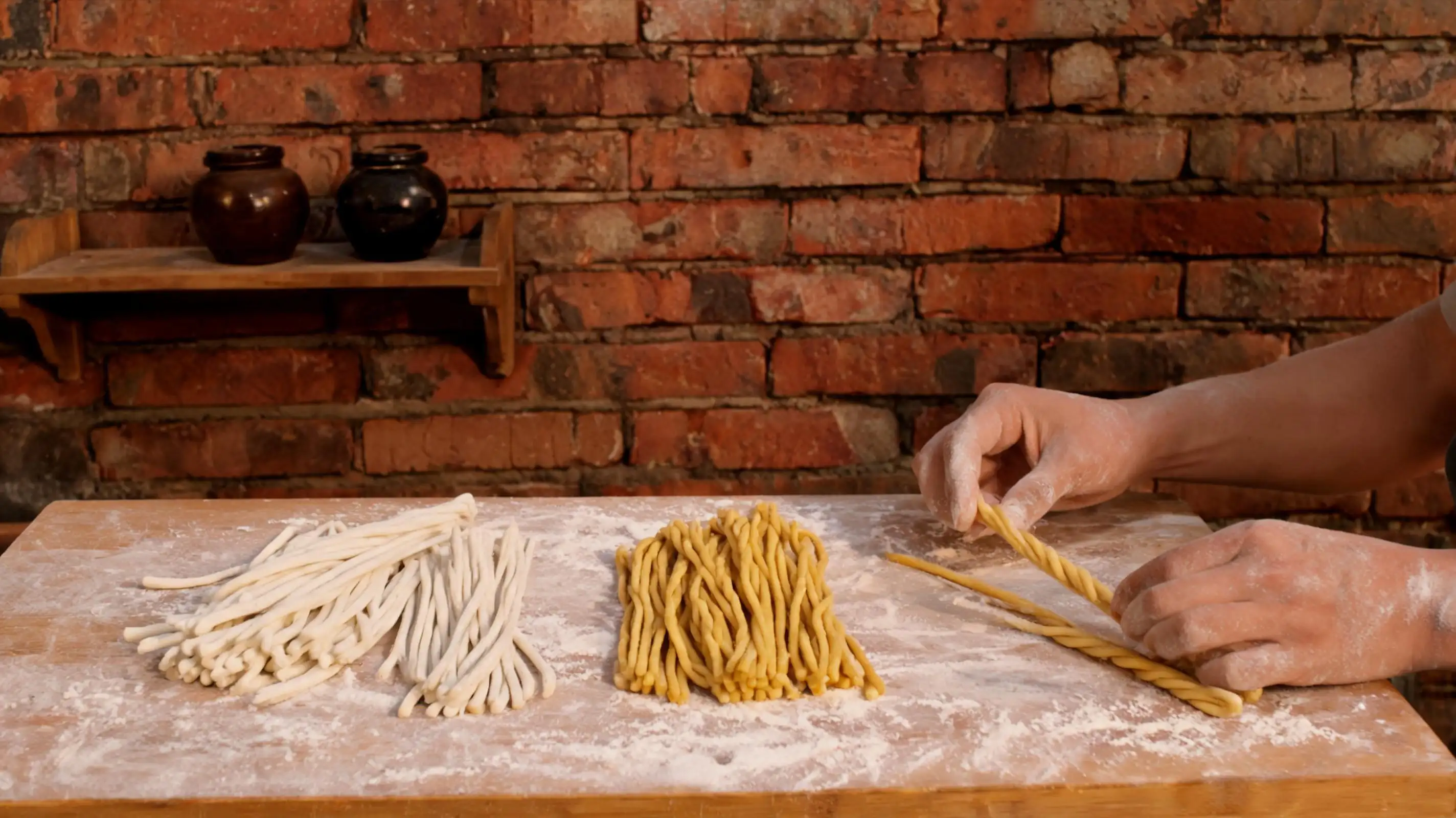
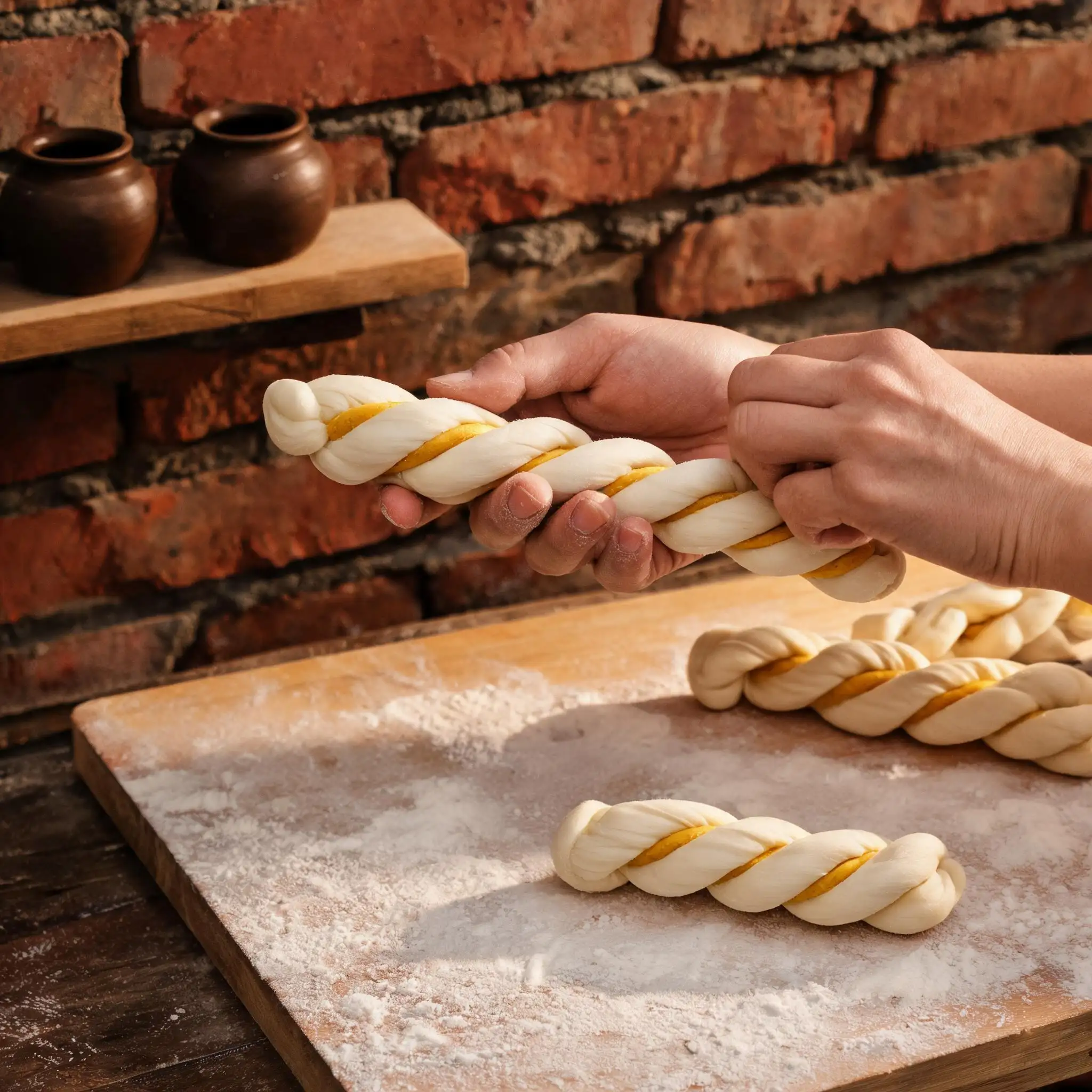
The difference between this and ordinary fried dough starts with the dough itself. There are two. One is soft — made with egg, sugar, and fat, slightly yellow from the yolk. The other is stiff and white, built for crunch. Neither would be interesting on its own. You roll each into thin ropes and then combine them: two white outer strands, one golden center, twisted together into a tight three-strand braid. In the raw dough you can already see what it will become — the soft core wrapped, the crispy shell surrounding it, the two materials locked into each other by the spiral.
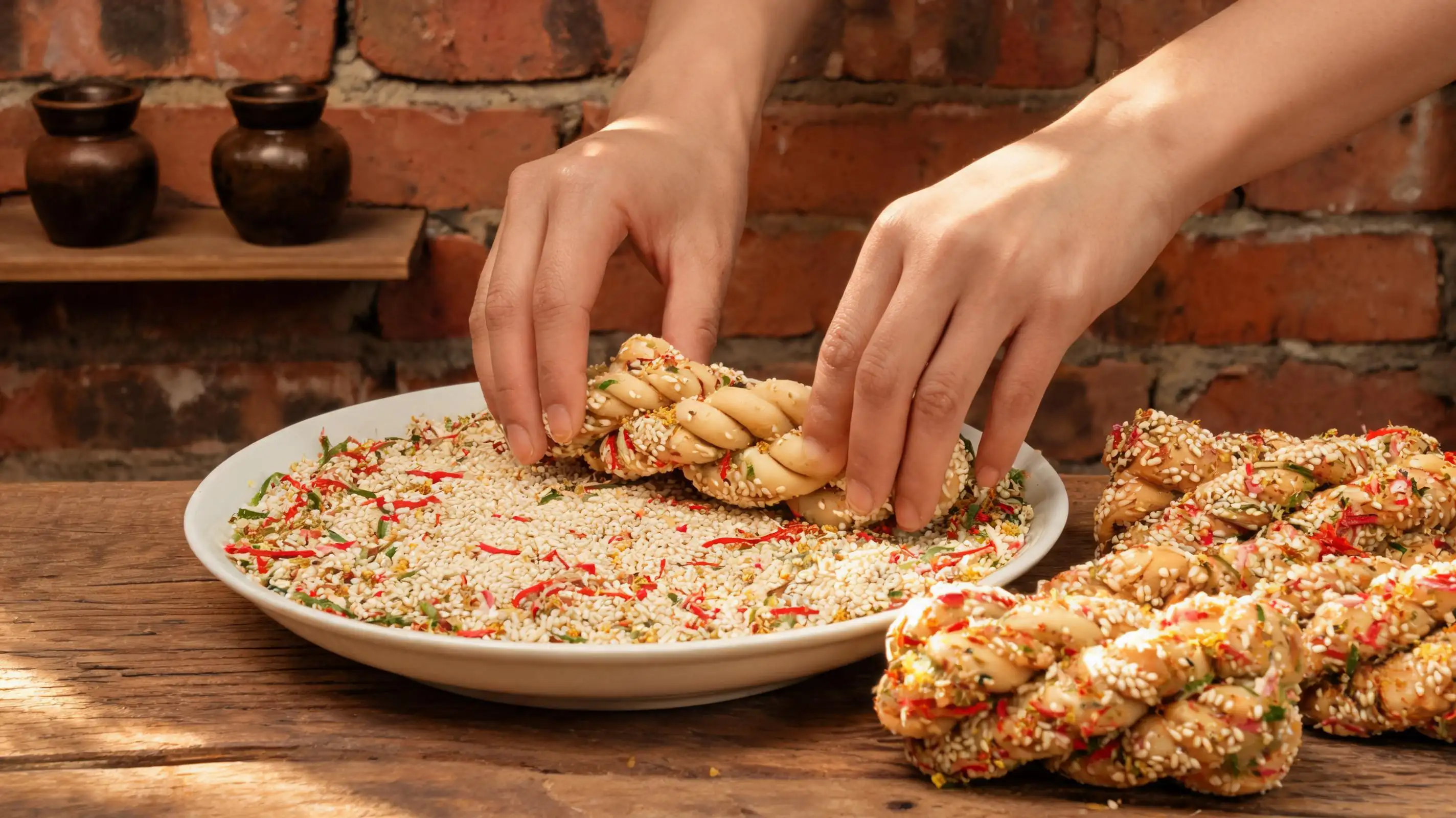
Before frying, the pieces roll through a wide plate of sesame seeds mixed with shredded green and red citrus peel and dried osmanthus. The sesame packs into every groove. The colored peel catches in the ridges. When it comes out of the oil, the surface is not uniform — it has texture and color variation, flecks of green and red and gold against the amber of the sesame.
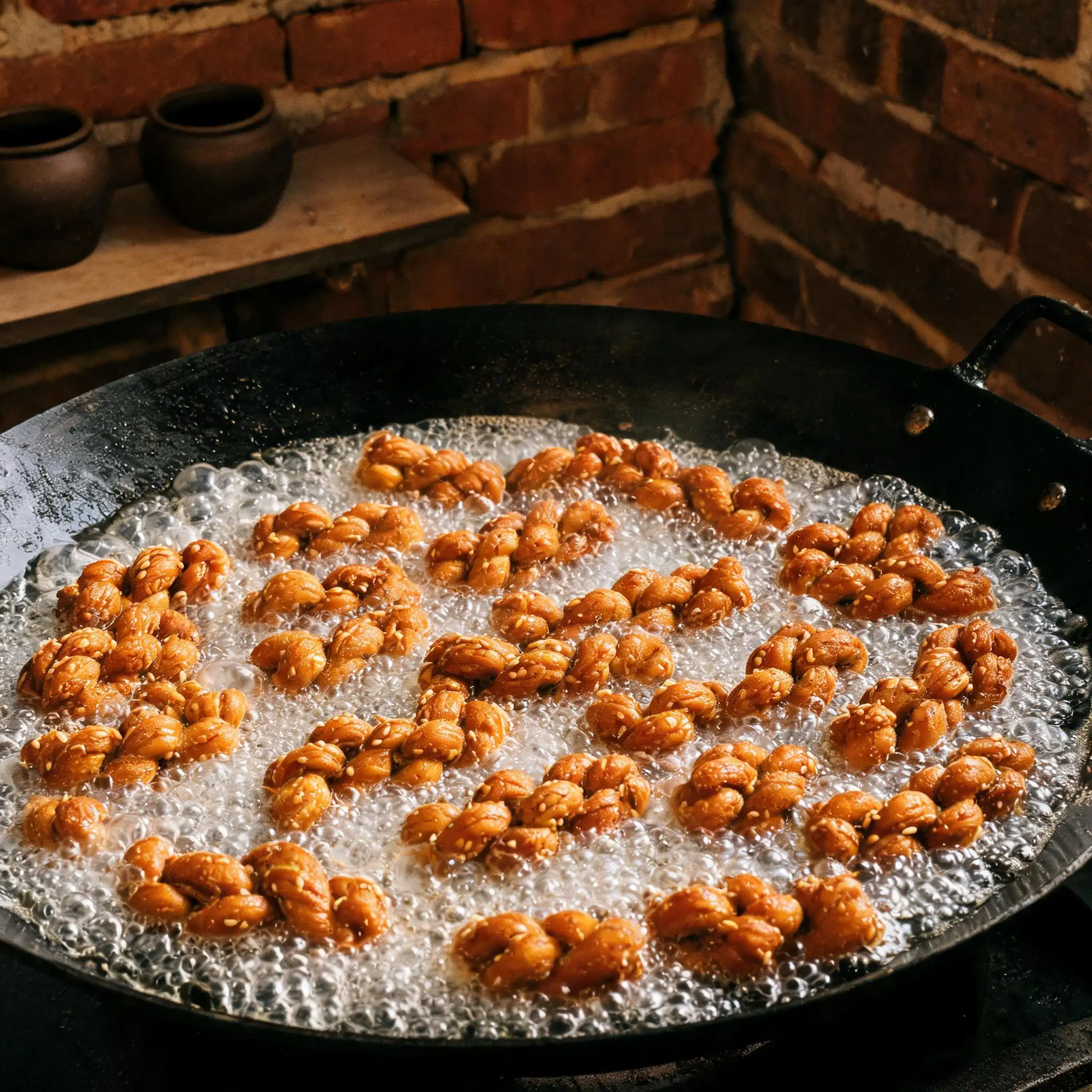
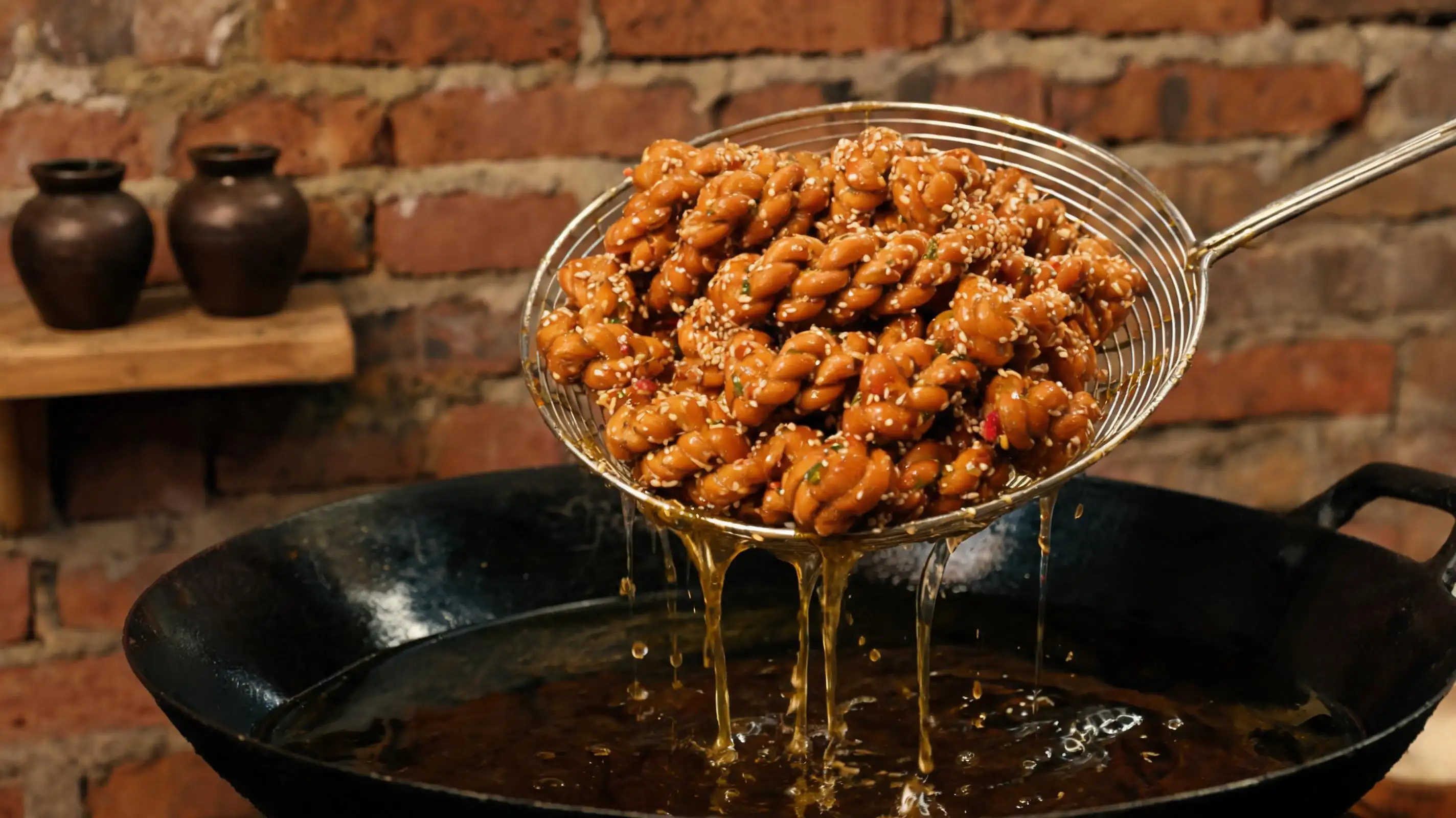
The oil is deep and hot. The pieces float as soon as they go in. They cook quickly once they're the right color, and that color — a dark, even amber with no pale spots — is the only signal you need.
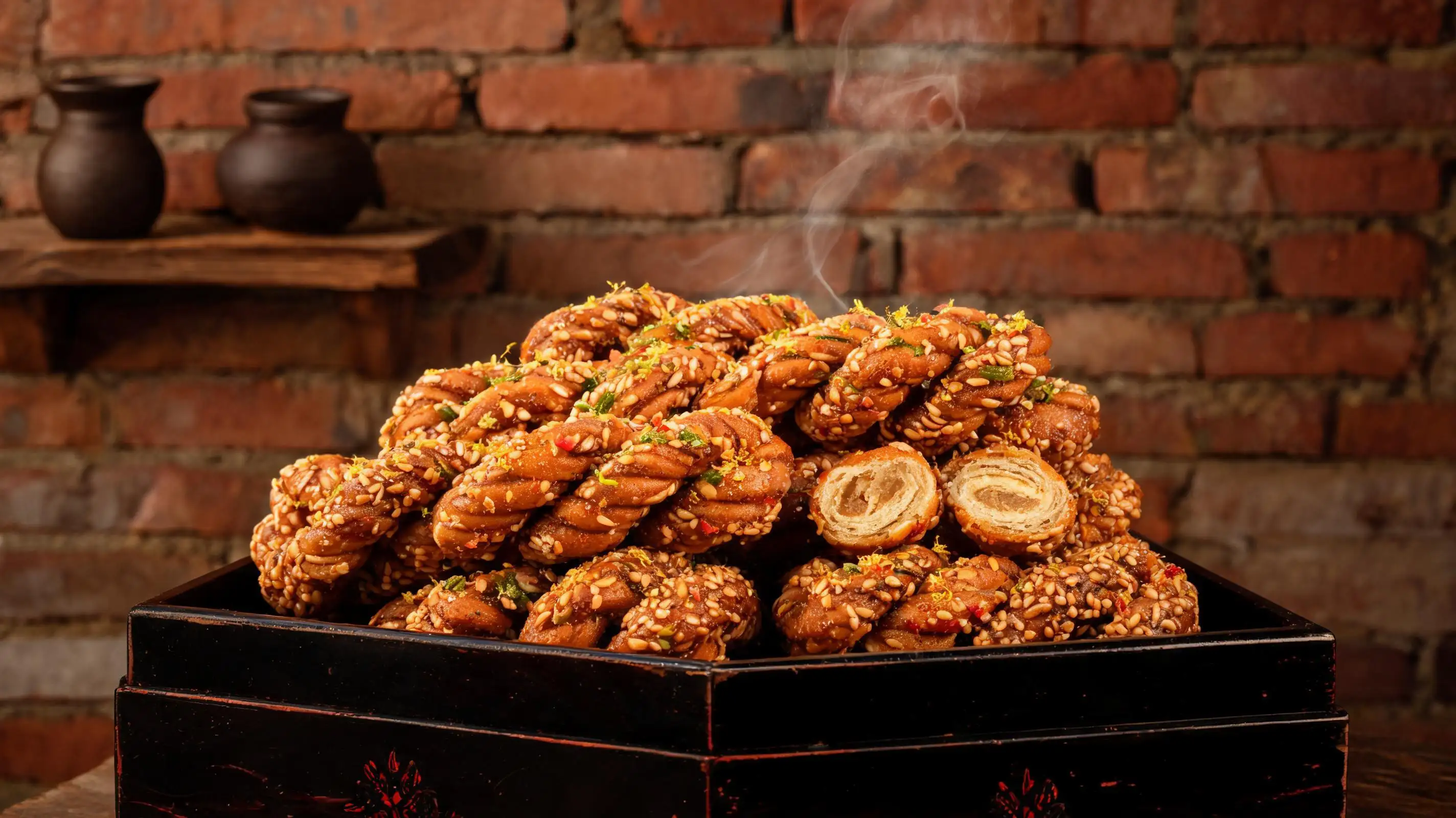
Out of the oil, they cool fast. The outer layer hardens completely within minutes. Bite through it and the inside is still slightly soft, still fragrant from the osmanthus. That contrast — the snap of the crust, the give of the center — is the whole point. It's also why the recipe uses two doughs instead of one, and why the shop has been doing it the same way for a hundred years.
---
**Ingredients**
- All-purpose wheat flour
- Eggs and sugar — for the soft inner dough
- Lard and flour — for the crispy outer dough
- White sesame seeds
- Green and red preserved citrus peel (青红丝), finely shredded
- Dried osmanthus flowers (桂花)
- Rock sugar, crushed
- Cooking oil, for deep frying
---
Guifaxiang opened on 18th Street in Tianjin in 1925. The mahua they make is not complicated to describe, but it takes years to get right. Most people encounter the large version — the kind that comes in a tin and can sit on a shelf for weeks without going soft. The small one works the same way, just fits in your hand.
The difference between this and ordinary fried dough starts with the dough itself. There are two. One is soft — made with egg, sugar, and fat, slightly yellow from the yolk. The other is stiff and white, built for crunch. Neither would be interesting on its own. You roll each into thin ropes and then combine them: two white outer strands, one golden center, twisted together into a tight three-strand braid. In the raw dough you can already see what it will become — the soft core wrapped, the crispy shell surrounding it, the two materials locked into each other by the spiral.
Before frying, the pieces roll through a wide plate of sesame seeds mixed with shredded green and red citrus peel and dried osmanthus. The sesame packs into every groove. The colored peel catches in the ridges. When it comes out of the oil, the surface is not uniform — it has texture and color variation, flecks of green and red and gold against the amber of the sesame.
The oil is deep and hot. The pieces float as soon as they go in. They cook quickly once they're the right color, and that color — a dark, even amber with no pale spots — is the only signal you need.
Out of the oil, they cool fast. The outer layer hardens completely within minutes. Bite through it and the inside is still slightly soft, still fragrant from the osmanthus. That contrast — the snap of the crust, the give of the center — is the whole point. It's also why the recipe uses two doughs instead of one, and why the shop has been doing it the same way for a hundred years.
112