·5/19/2026
from
# Tianjin Small Sesame Mahua
---
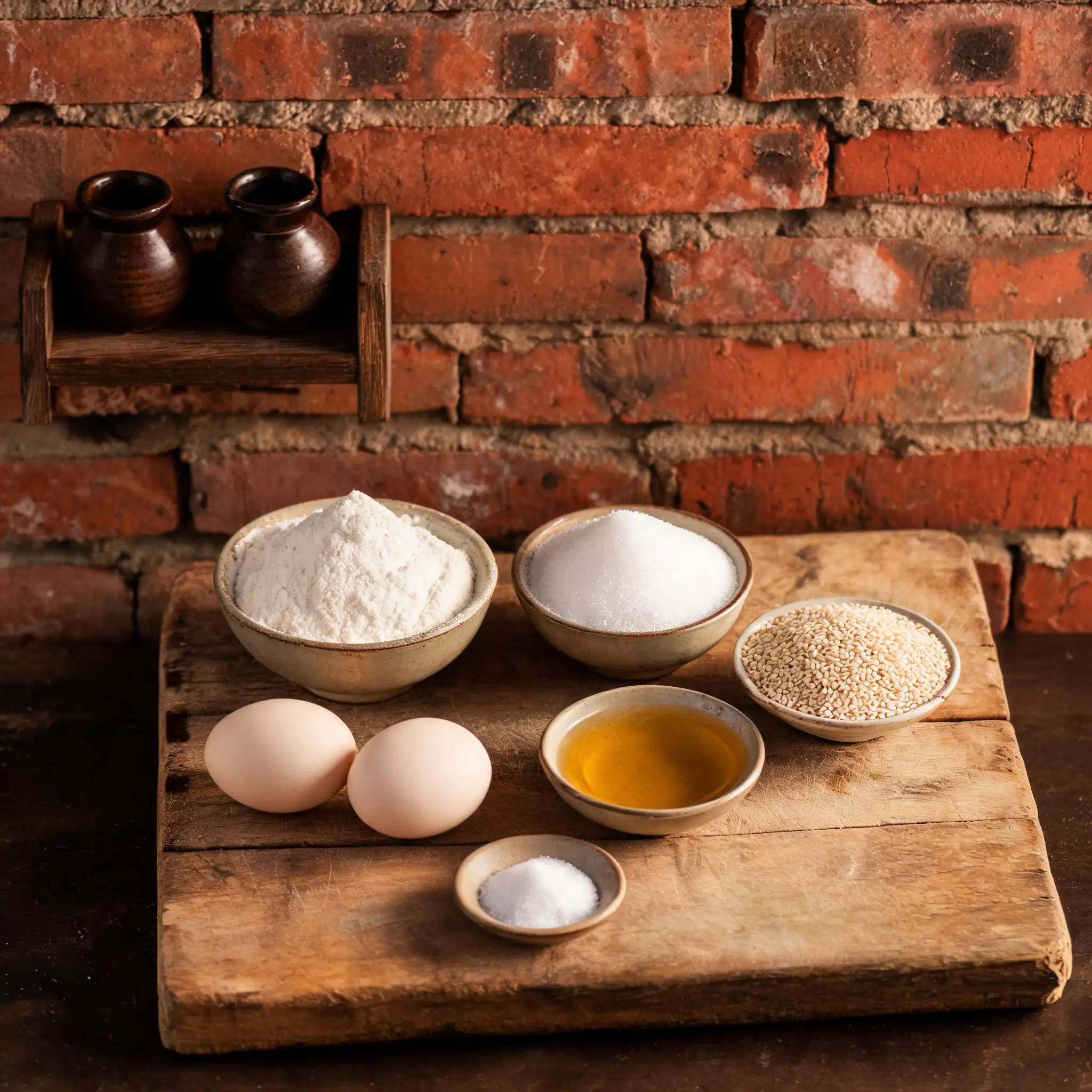
**Ingredients**
- All-purpose wheat flour
- White sugar
- Eggs
- Cooking oil, for frying
- Salt
- White sesame seeds, a generous amount — for coating
---
Tianjin has the big mahua, the kind that comes wrapped in paper and sold by the half-meter. But the small one is a different thing altogether. Bite-sized, dense, fully crisp from outside to center, rolled in sesame before it ever touches the oil. You eat it by the handful without thinking about it.
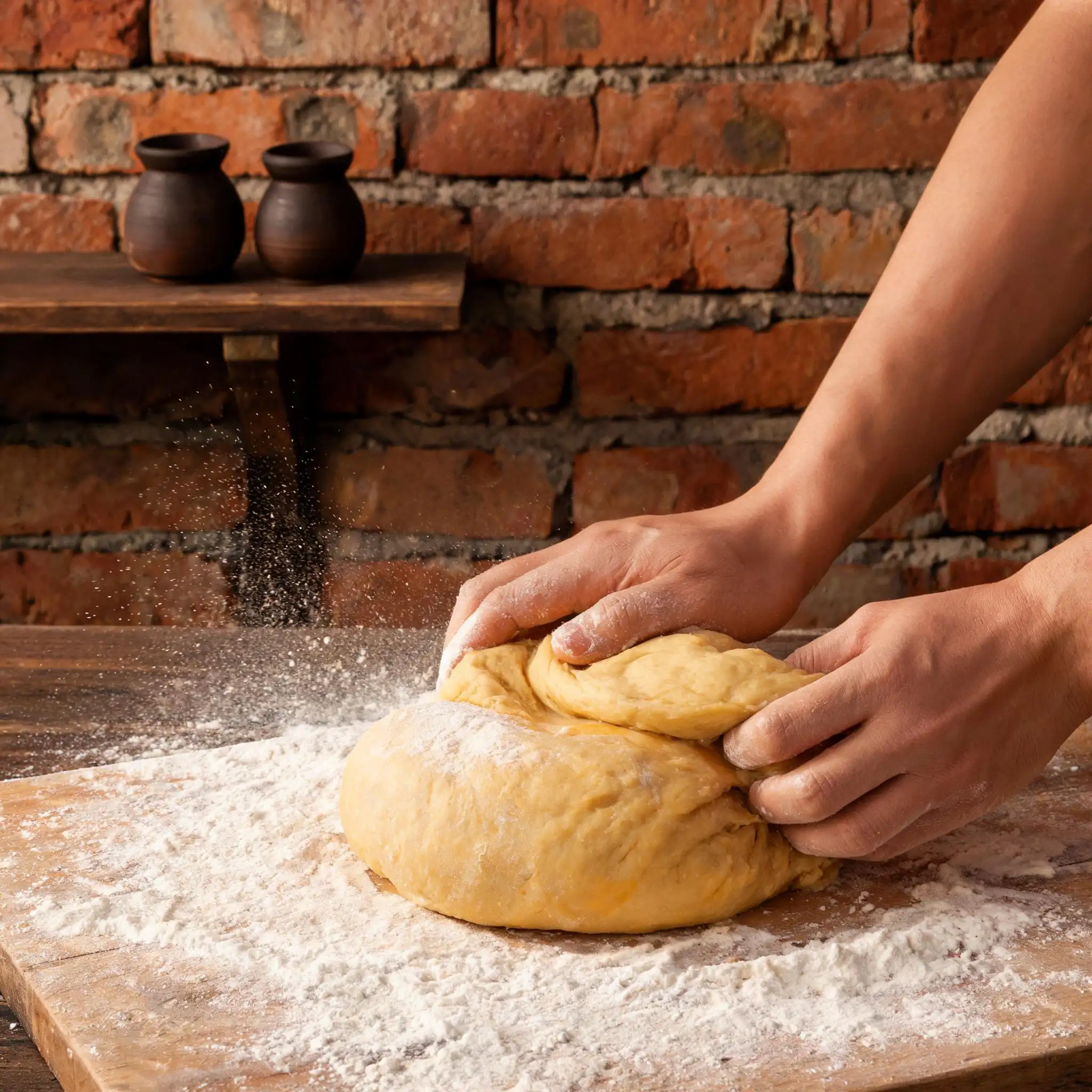
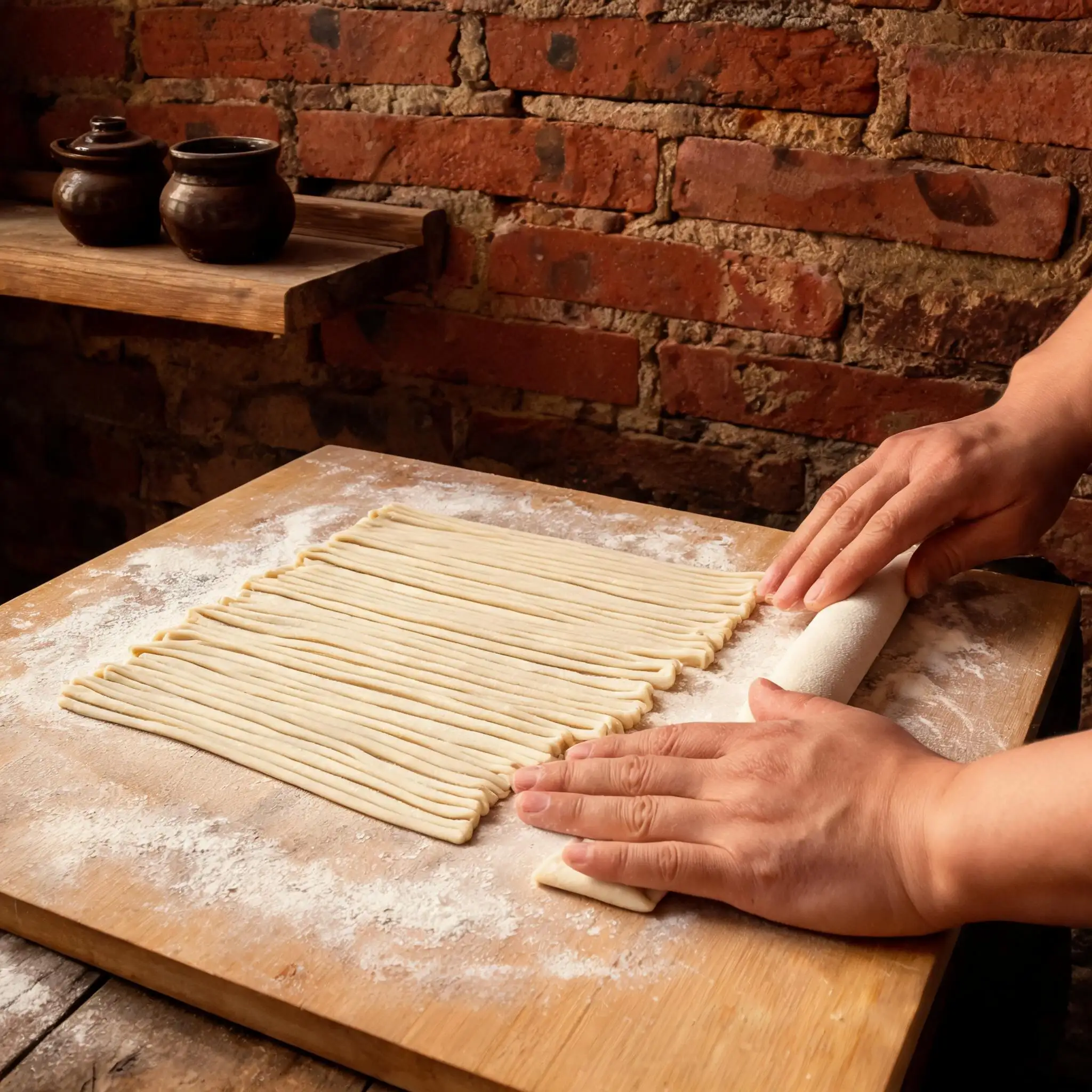
The dough is straightforward: flour, egg, sugar, a little oil and salt, worked together until smooth and slightly stiff. Egg gives it color and richness. Sugar gives it the faint caramel note that develops in the oil. You rest it, then pinch off small pieces and roll them between your palms into thin ropes, each one uniform and about the width of a pencil.
Two ropes go together. You hold one end fixed and use the other hand to rotate both strands in the same direction until they twist tight around each other, then press the ends together so they hold. The spiral should be close and even — the tighter the twist, the more defined the ridges after frying.
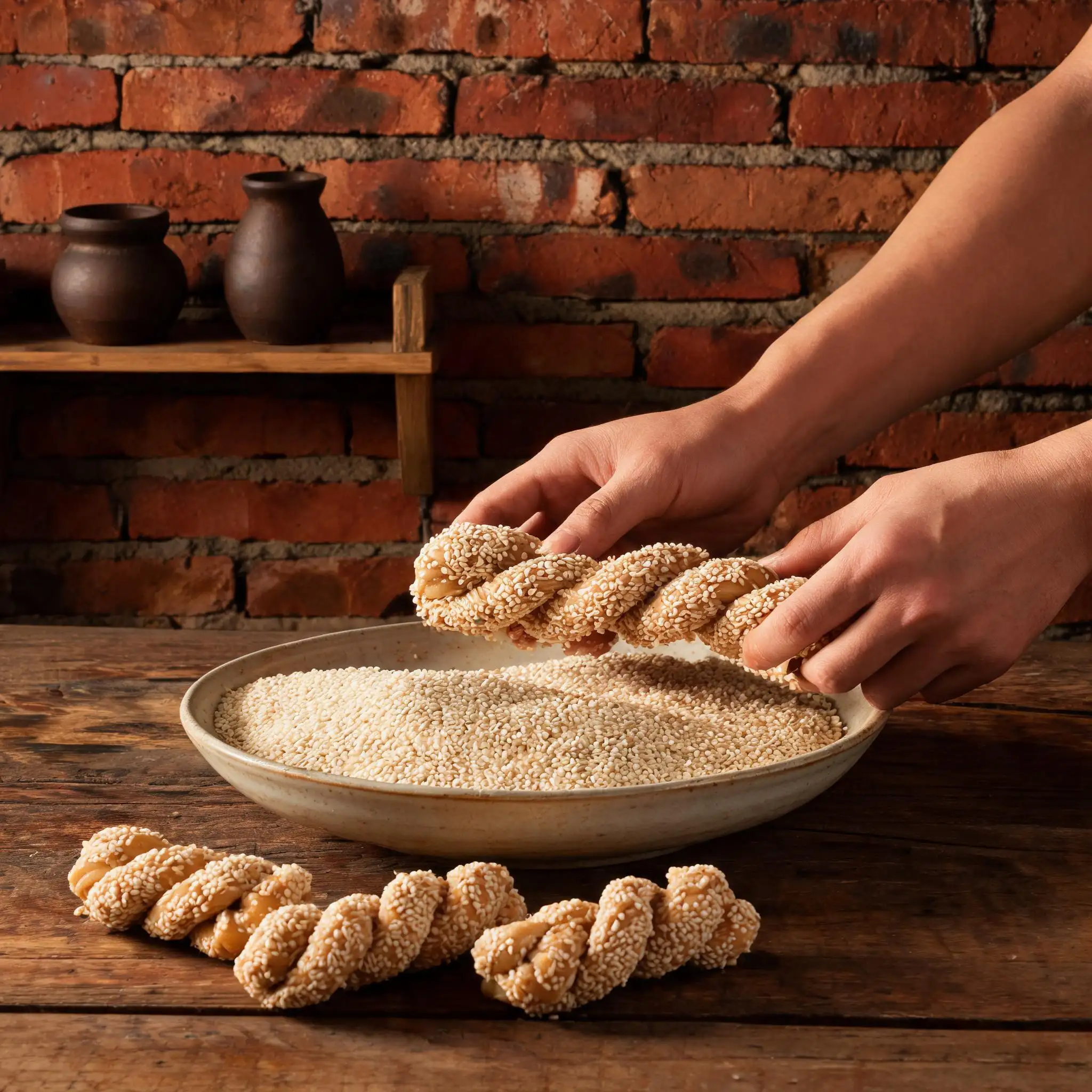
Before the oil, sesame. The twisted piece rolls through a wide dish heaped with raw white sesame seeds, pressing gently so the seeds pack into every groove of the spiral. They will toast in the oil and go golden. They will also make the surface rough in a way that catches light.
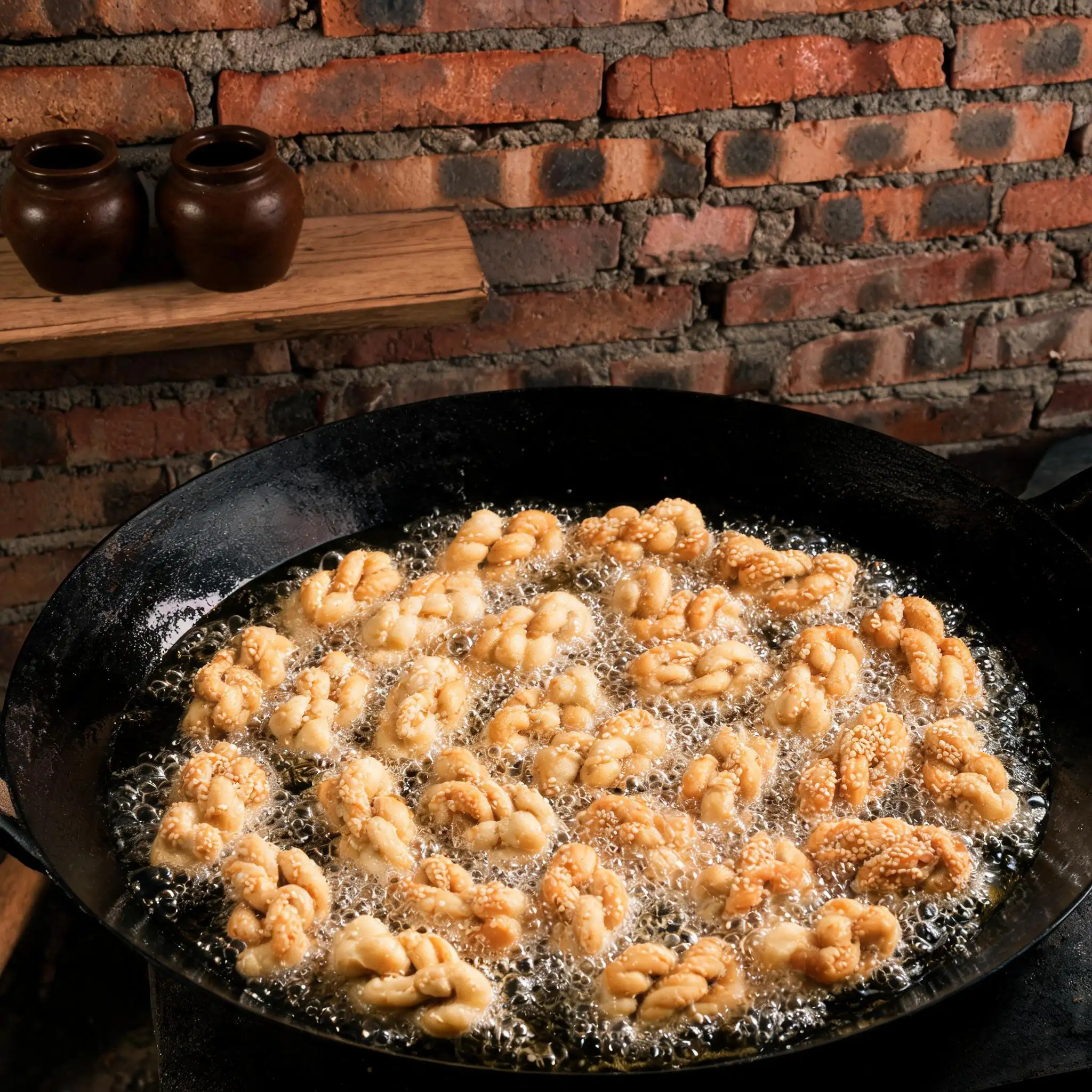
The oil goes in a large iron wok and gets hot — not smoking, but active. The mahua go in by the dozen. They float immediately and bob in the bubbles. Within a few minutes the color shifts from pale to amber to deep gold. You turn them, or just watch them turn themselves in the current of the oil.
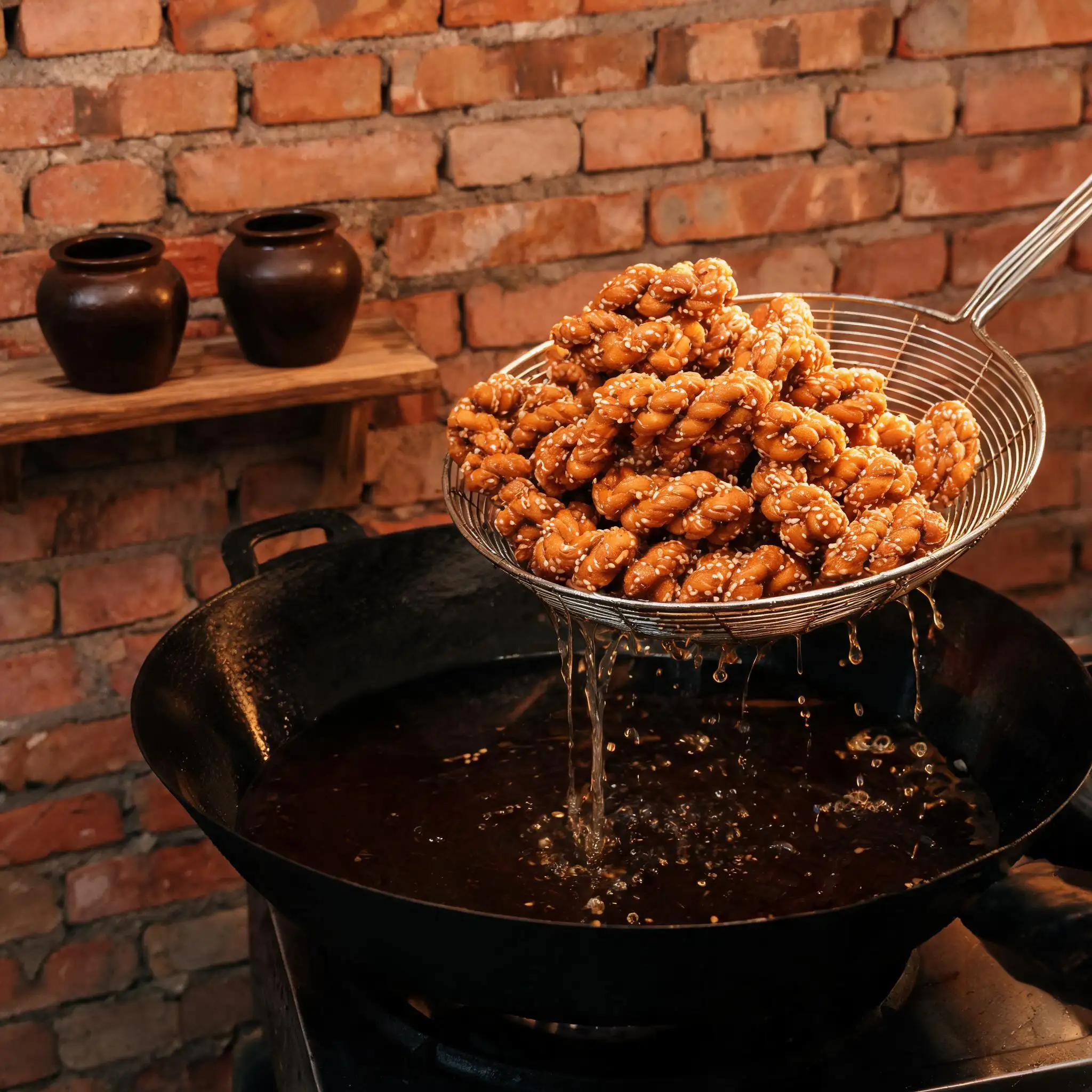
Out with a wide wire strainer. The oil runs back through the mesh in thin streams. The sesame seeds have darkened and set. Each piece is rigid, light, hollow-sounding when you tap it.
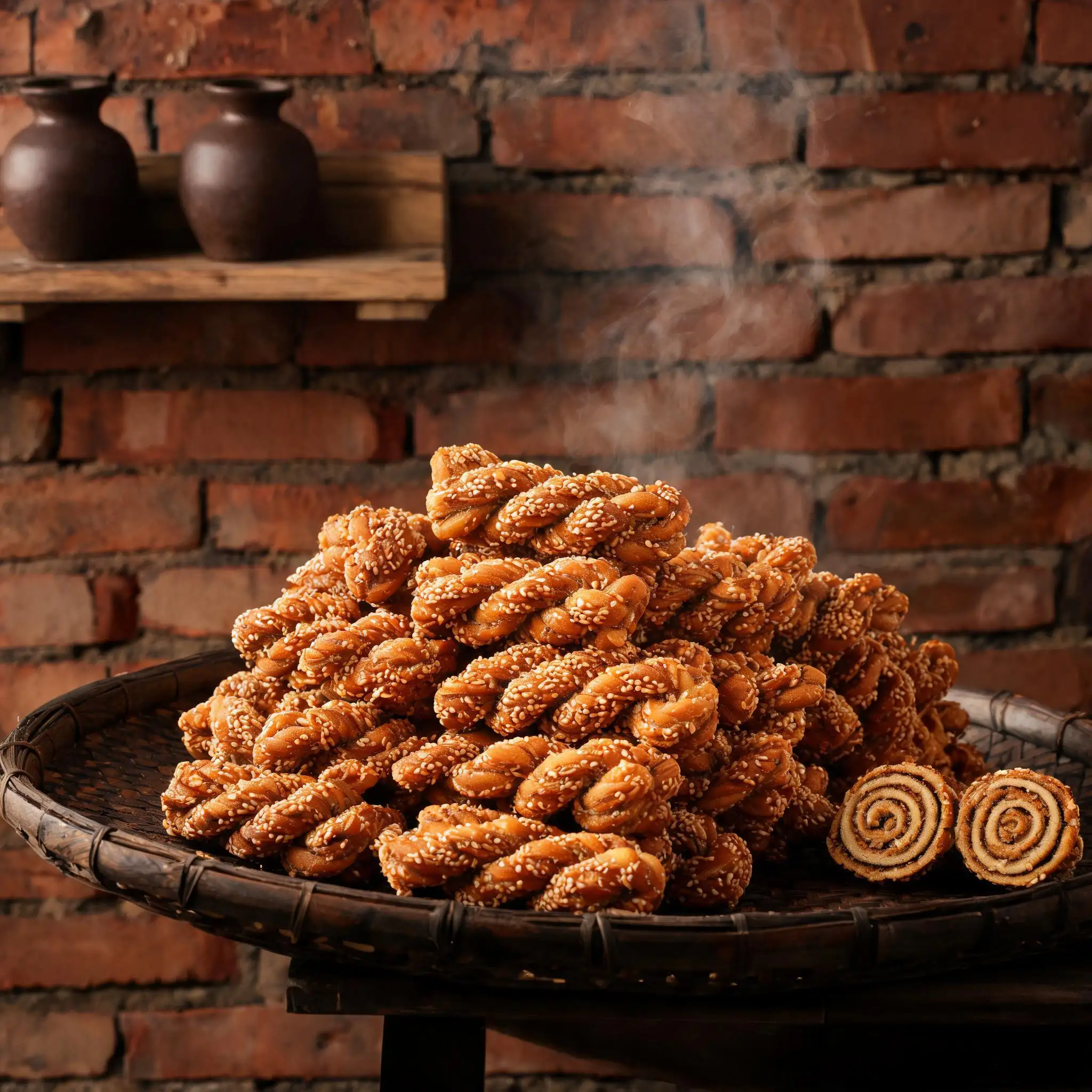
Pile them up while they're still warm. They keep for days in a tin, getting slightly more brittle each day. Most don't last that long.
---
**Ingredients**
- All-purpose wheat flour
- White sugar
- Eggs
- Cooking oil, for frying
- Salt
- White sesame seeds, a generous amount — for coating
---
Tianjin has the big mahua, the kind that comes wrapped in paper and sold by the half-meter. But the small one is a different thing altogether. Bite-sized, dense, fully crisp from outside to center, rolled in sesame before it ever touches the oil. You eat it by the handful without thinking about it.
The dough is straightforward: flour, egg, sugar, a little oil and salt, worked together until smooth and slightly stiff. Egg gives it color and richness. Sugar gives it the faint caramel note that develops in the oil. You rest it, then pinch off small pieces and roll them between your palms into thin ropes, each one uniform and about the width of a pencil.
Two ropes go together. You hold one end fixed and use the other hand to rotate both strands in the same direction until they twist tight around each other, then press the ends together so they hold. The spiral should be close and even — the tighter the twist, the more defined the ridges after frying.
Before the oil, sesame. The twisted piece rolls through a wide dish heaped with raw white sesame seeds, pressing gently so the seeds pack into every groove of the spiral. They will toast in the oil and go golden. They will also make the surface rough in a way that catches light.
The oil goes in a large iron wok and gets hot — not smoking, but active. The mahua go in by the dozen. They float immediately and bob in the bubbles. Within a few minutes the color shifts from pale to amber to deep gold. You turn them, or just watch them turn themselves in the current of the oil.
Out with a wide wire strainer. The oil runs back through the mesh in thin streams. The sesame seeds have darkened and set. Each piece is rigid, light, hollow-sounding when you tap it.
Pile them up while they're still warm. They keep for days in a tin, getting slightly more brittle each day. Most don't last that long.
211