·5/19/2026
from

# Xianghe Meat Pie
---
**Ingredients**
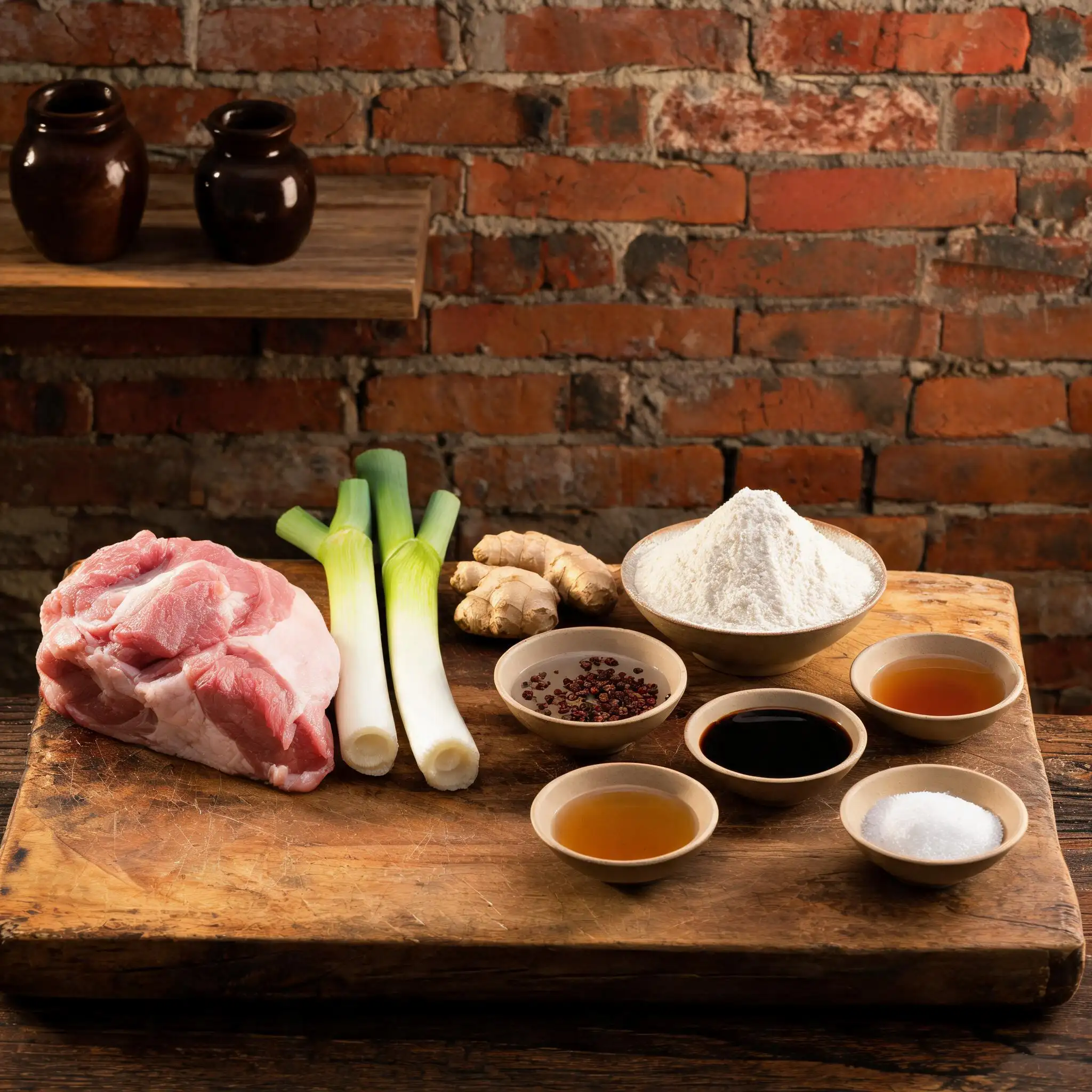
- Pork shoulder, hand-chopped — coarse, not ground
- Large Chinese green onion (大葱), from Xianghe
- Fresh ginger
- Whole Sichuan peppercorns, soaked in warm water
- All-purpose wheat flour, warm and cold water (half and half)
- Light soy sauce, dark soy sauce, sesame oil, salt
- Aged black rice vinegar (老陈醋) and smashed garlic, for dipping
---
Xianghe is a county east of Beijing, along the old highway toward Tianjin. People used to stop there on the drive and eat the meat pie before continuing on. Some still drive out just for it.
The dough is half-scalded with boiling water, half mixed with cold. This makes it soft enough to stretch thin without tearing, and pliable enough to hold up through frying without going hard. You rest it, then roll it out wide — much wider than you think you need.
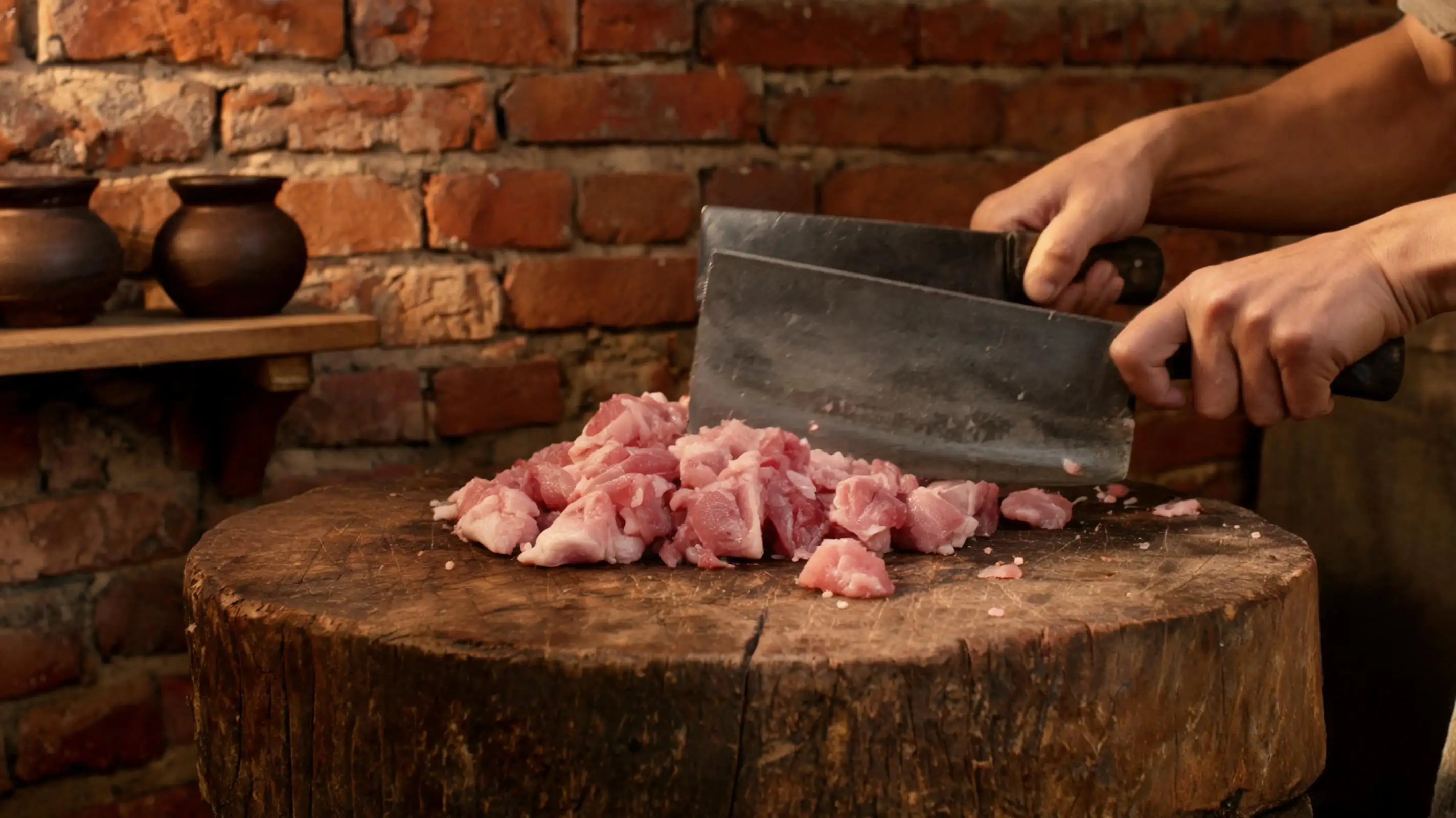
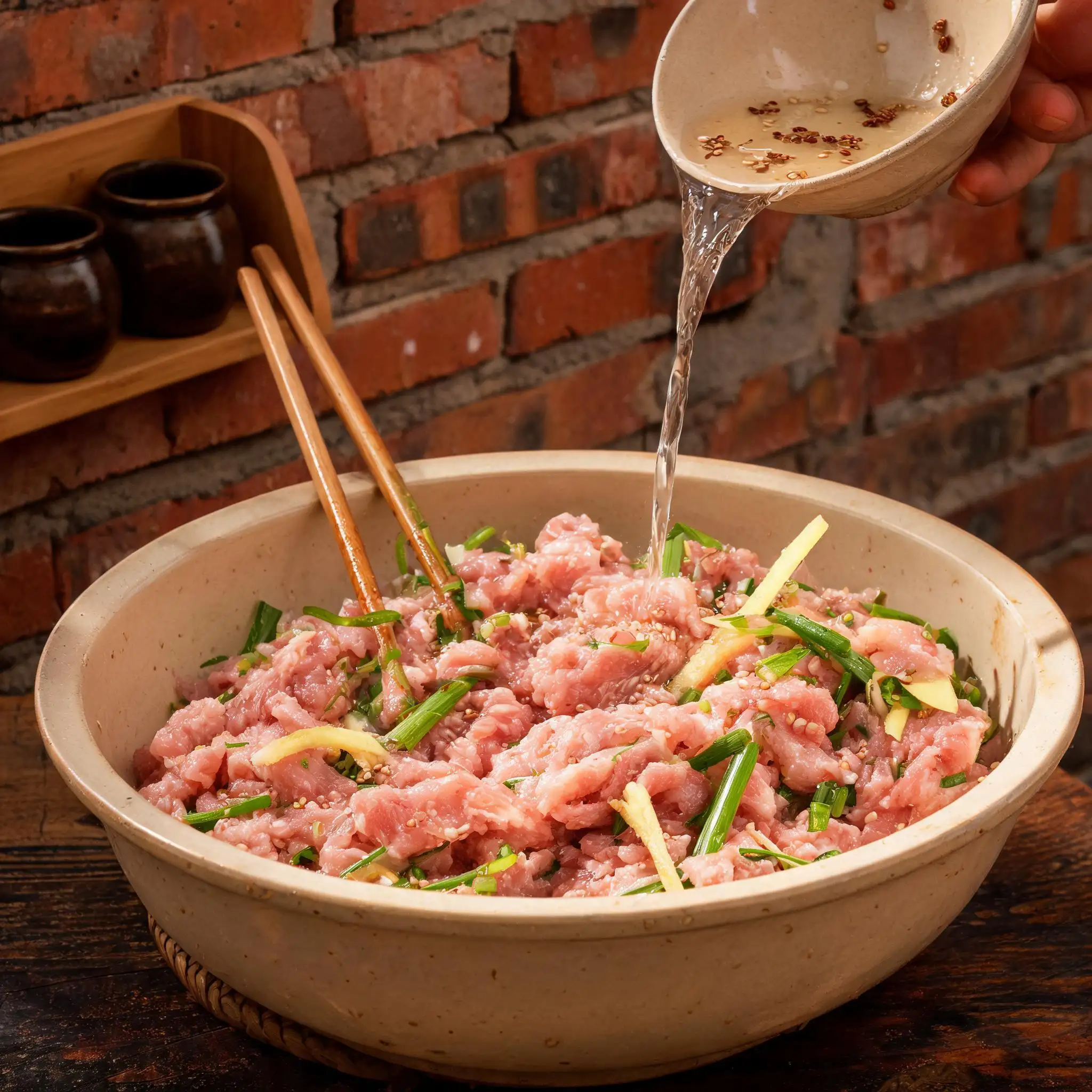
The filling starts with pork chopped by hand, not ground. Texture matters here: the meat needs grain to it, something to hold onto when you add the water. Sichuan peppercorns go into warm water and steep until the water smells like the spice. That liquid — strained, cooled — gets added to the pork a little at a time, stirred always in the same direction, until the meat has absorbed it all and gone from pink to deep, glossy, springy. Green onion and ginger go in last. Season and stop.
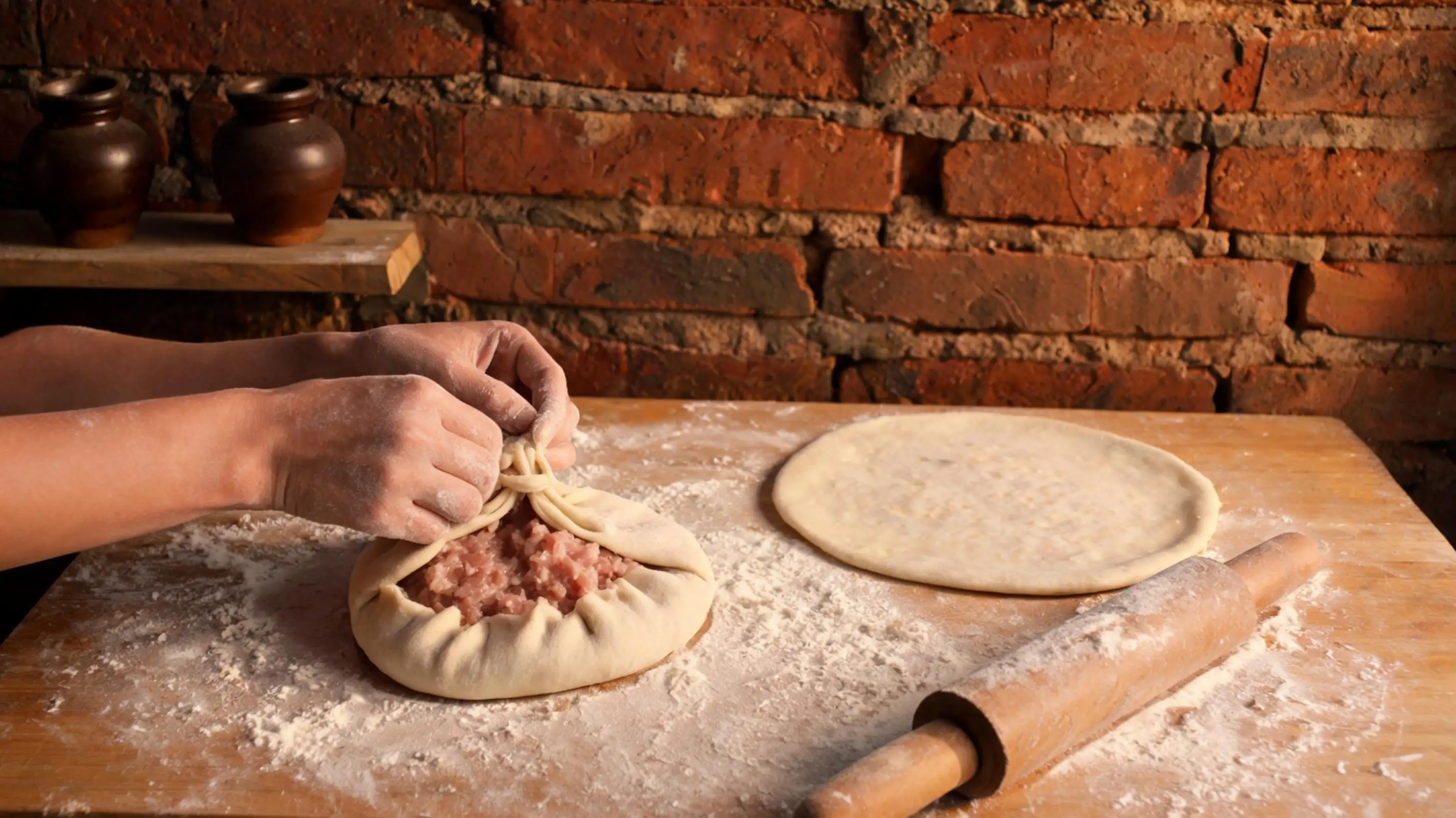
The dough goes flat on the board, filling heaped in the center, and the edges are gathered up and pinched shut at the top — like closing a bundle. Then it flips, seam-side down, and you roll it out again into a large circle, about 35 centimeters across. The skin is thin enough to read through.
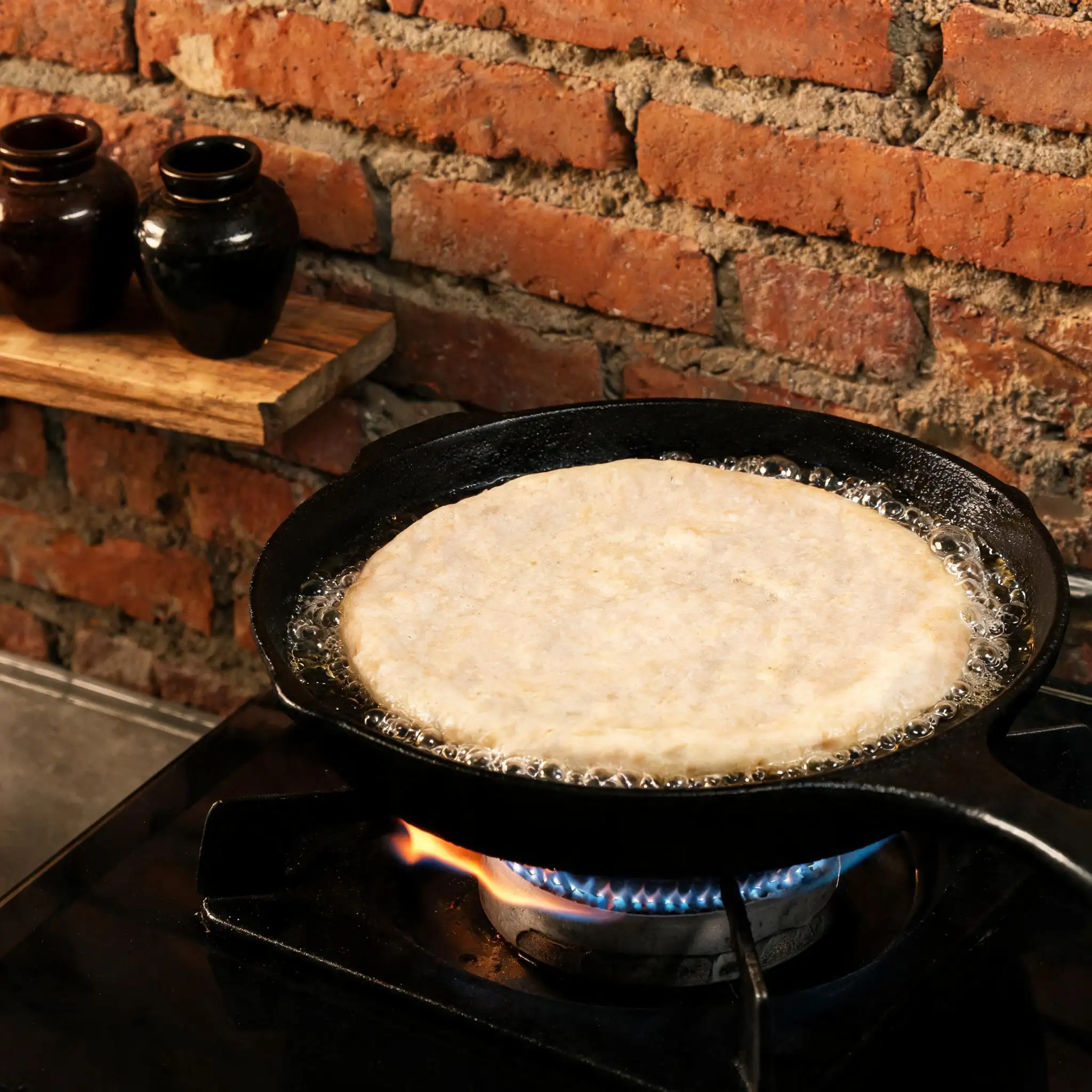
Into a flat iron skillet with oil, low heat, and patience. The first side cooks slowly. Then something happens: the center of the pie begins to push upward. The heat inside builds, the juices start to boil, the trapped steam has nowhere to go — and the middle domes up into a tall, round blister. This is the sign. It means everything inside is alive.
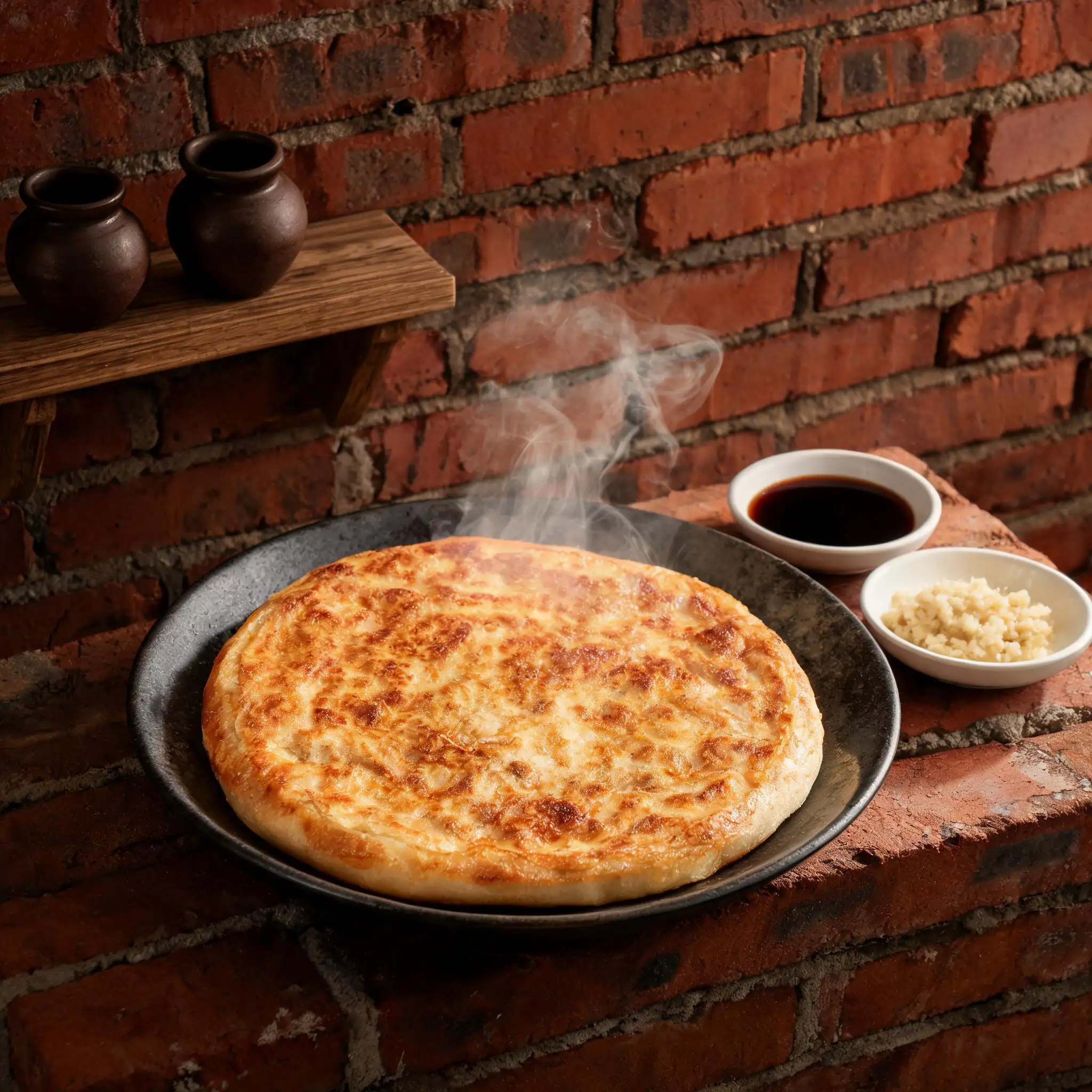
Flip once. Brown the other side. Pull it out.
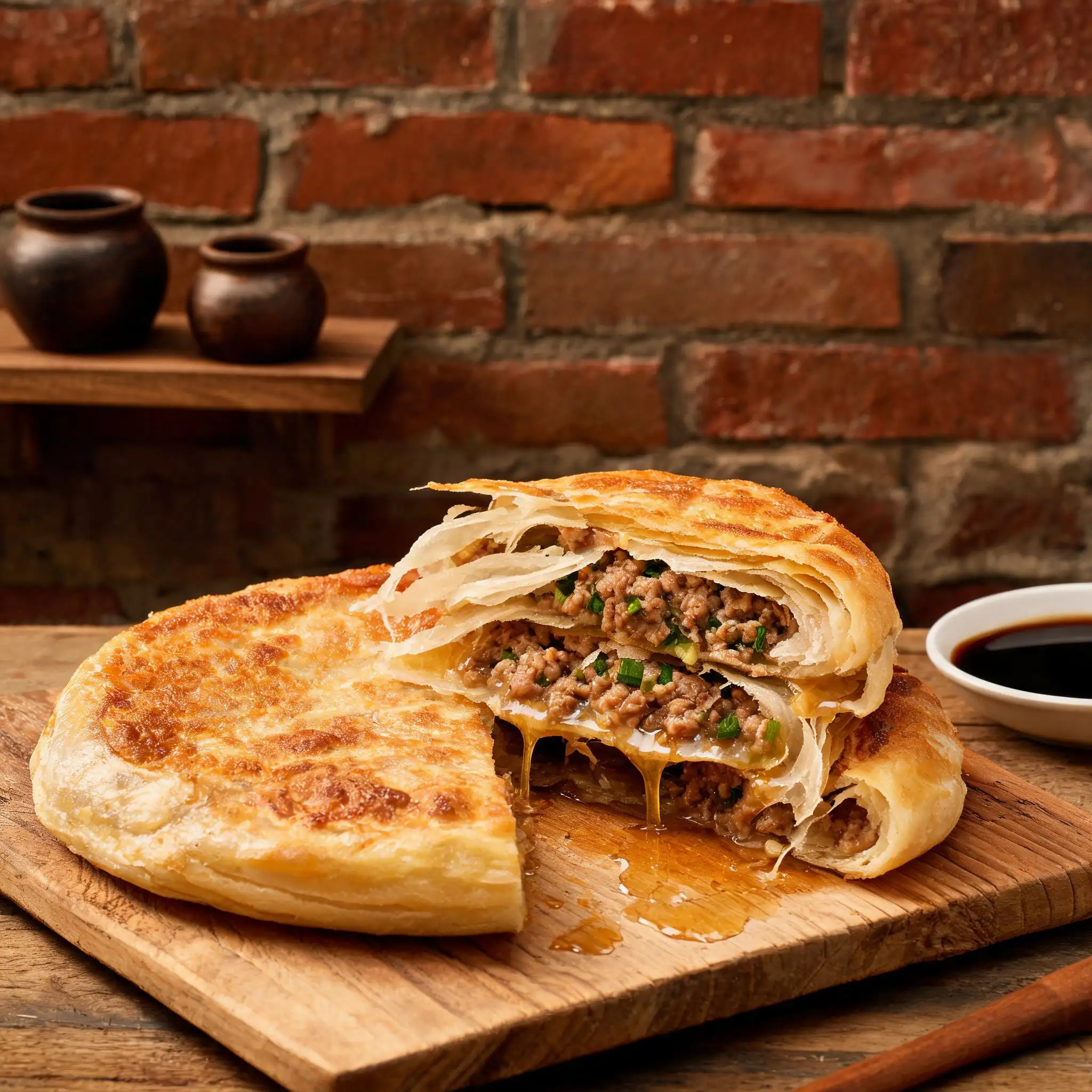
Bite in from the edge. The skin cracks. Then comes the broth.
---
**Ingredients**
- Pork shoulder, hand-chopped — coarse, not ground
- Large Chinese green onion (大葱), from Xianghe
- Fresh ginger
- Whole Sichuan peppercorns, soaked in warm water
- All-purpose wheat flour, warm and cold water (half and half)
- Light soy sauce, dark soy sauce, sesame oil, salt
- Aged black rice vinegar (老陈醋) and smashed garlic, for dipping
---
Xianghe is a county east of Beijing, along the old highway toward Tianjin. People used to stop there on the drive and eat the meat pie before continuing on. Some still drive out just for it.
The dough is half-scalded with boiling water, half mixed with cold. This makes it soft enough to stretch thin without tearing, and pliable enough to hold up through frying without going hard. You rest it, then roll it out wide — much wider than you think you need.
The filling starts with pork chopped by hand, not ground. Texture matters here: the meat needs grain to it, something to hold onto when you add the water. Sichuan peppercorns go into warm water and steep until the water smells like the spice. That liquid — strained, cooled — gets added to the pork a little at a time, stirred always in the same direction, until the meat has absorbed it all and gone from pink to deep, glossy, springy. Green onion and ginger go in last. Season and stop.
The dough goes flat on the board, filling heaped in the center, and the edges are gathered up and pinched shut at the top — like closing a bundle. Then it flips, seam-side down, and you roll it out again into a large circle, about 35 centimeters across. The skin is thin enough to read through.
Into a flat iron skillet with oil, low heat, and patience. The first side cooks slowly. Then something happens: the center of the pie begins to push upward. The heat inside builds, the juices start to boil, the trapped steam has nowhere to go — and the middle domes up into a tall, round blister. This is the sign. It means everything inside is alive.
Flip once. Brown the other side. Pull it out.
Bite in from the edge. The skin cracks. Then comes the broth.
113