·5/15/2026
from
WŌWŌTOU
# Old-School Steamed Cornmeal Buns (Wowotou)
> Wowotou is a cone-shaped steamed bun — pointed top, round base, and a hollow tunnel pressed through the bottom with your thumb. That tunnel is the defining feature. It speeds up steaming, keeps the center from going gummy, and when you split one open from the right angle you can see the cavity sitting inside like a small room. Made from coarse cornmeal, this is the kind of food that used to be everyday — filling, low-fat, no oil, no added sugar. Each 100 g delivers around 7–10 g of dietary fiber, which makes it one of the more honest things you can put on the breakfast table. Suitable for people managing blood sugar, watching weight, or just looking for something that hasn't been stripped of its grain.
**Serves** 8–10 · **Active time** 30 min · **Total time** 1 hr 30 min
---
### Ingredients
**Main**
- 300 g coarse yellow cornmeal
- 60 g all-purpose flour (traditional: soy flour, cornmeal-to-soy ratio 5:1)
- 3 g instant yeast
- Pinch of salt
- 180 ml boiling water (around 80–90°C)
- 50 ml warm water (around 35°C)
---
## 1 · The Ingredients
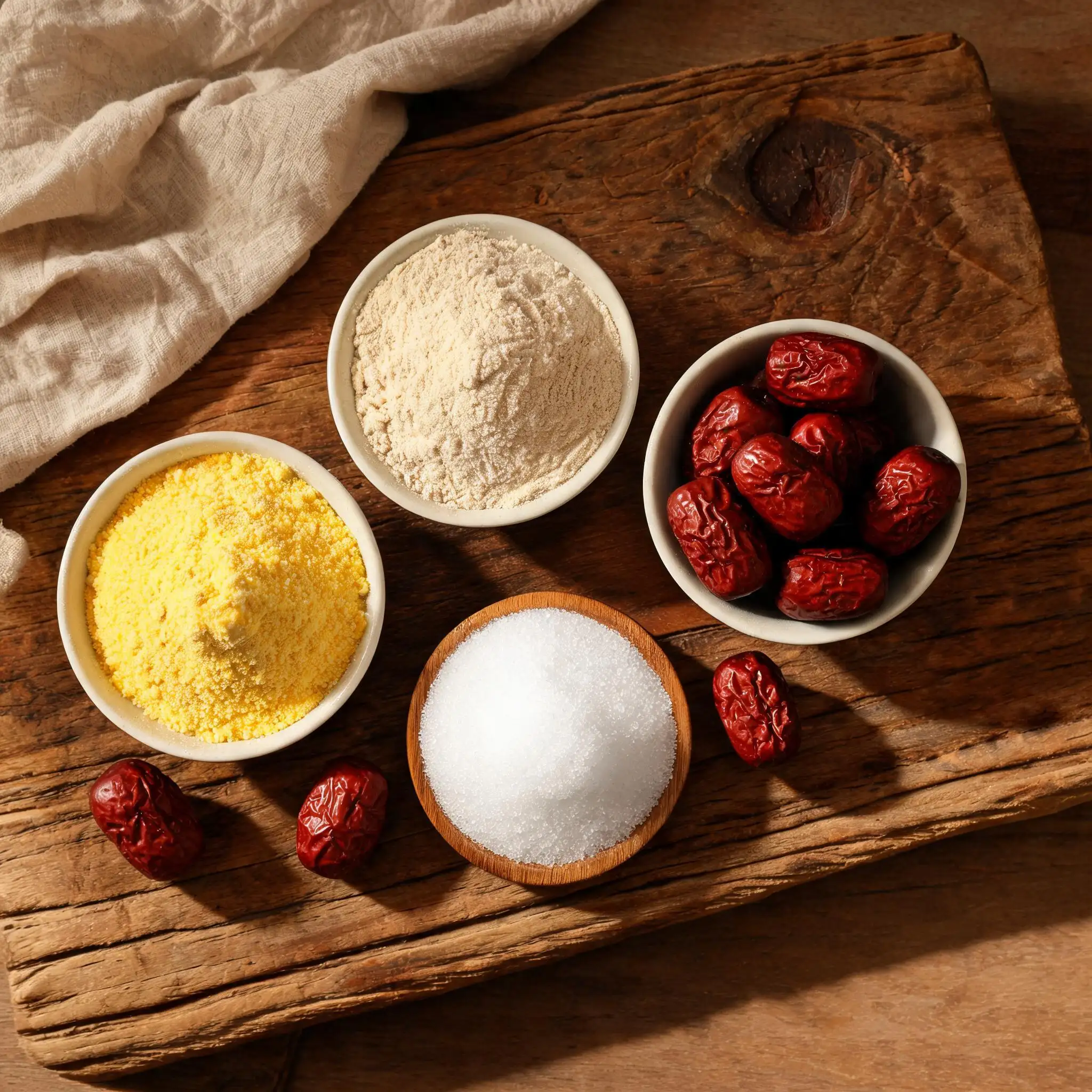
Cornmeal and flour. Yeast, salt, water.
The traditional formula uses five parts cornmeal to one part soy flour — the soy adds protein and helps the dough bind cleanly. This version replaces soy flour with all-purpose wheat flour, which is easier to find and does a similar job. If you can get coarse-ground cornmeal rather than fine-milled, use it — the texture after steaming has more character, a slight grain to each bite that the fine-milled version doesn't give you.
Nutritionally, these are a genuine coarse-grain food rather than a dressed-up white bread. Rich in protein, amino acids, dietary fiber, and trace elements. Low-fat and low-sugar by nature — no oil goes into the dough, and nothing sweet is added. Modern versions sometimes include milk powder or a small amount of sugar to soften the crumb, but the plain version holds its own.
---
## 2 · The Scald
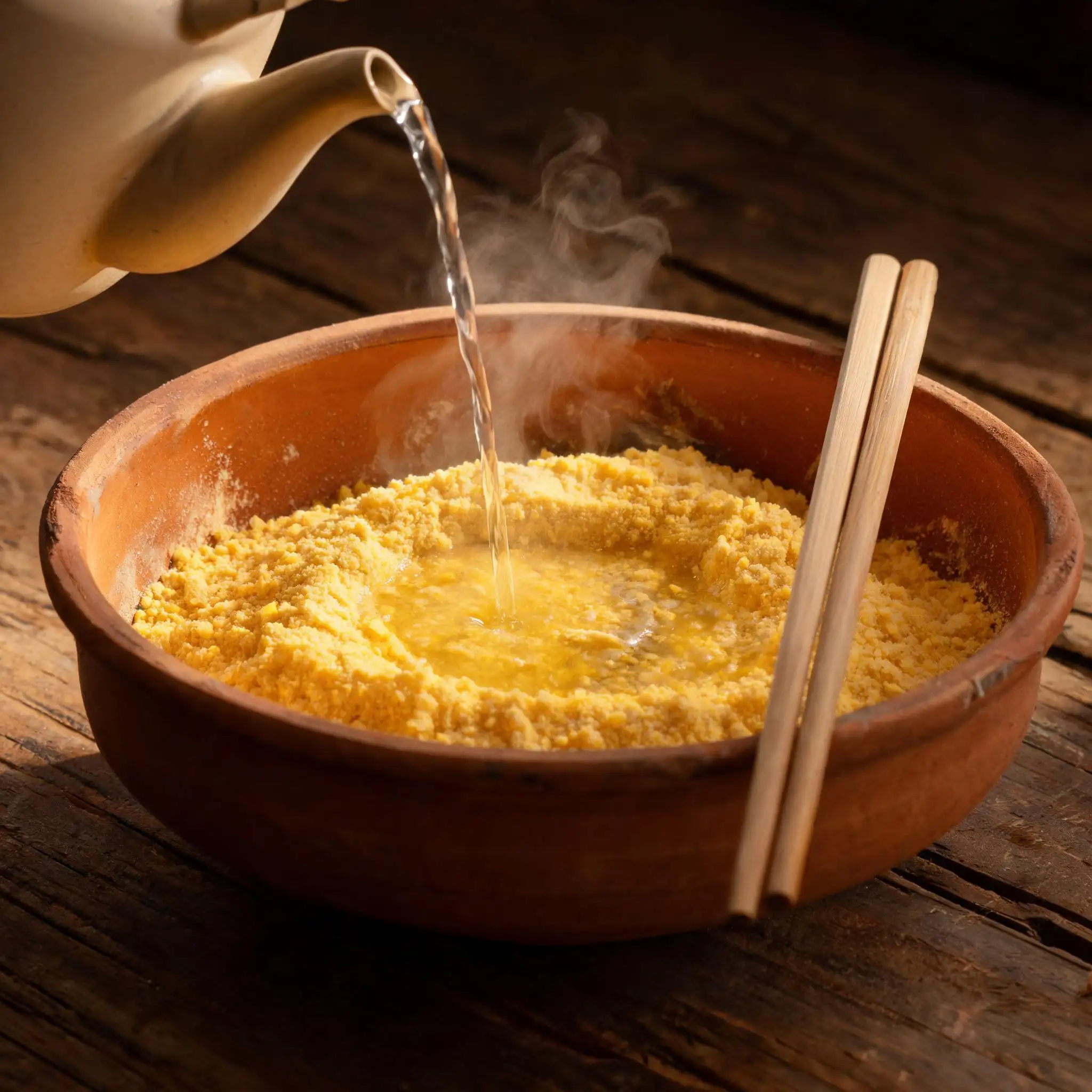
Pour 180 ml of boiling water directly over the cornmeal in the mixing bowl. The water needs to be 80–90°C.
This step is called scalding, and it's what gives wowotou its structure. The heat partially breaks down the cornmeal starch — the result is a dough that holds together after steaming instead of falling apart. If you mix everything with warm water and skip this step, the bun will come out dense and crumbly in the wrong way.
Stir as you pour. Once the scalded cornmeal has cooled for two minutes, add the flour, yeast, and 50 ml warm water. Knead until the dough is smooth and pulls away from the bowl cleanly. It'll feel denser and grainier than regular bread dough — that's exactly what it should feel like.
**Add the yeast only after the mixture has cooled below 40°C.** Hot dough kills yeast, and a dead yeast means a flat, dense bun.
---
## 3 · The Rest
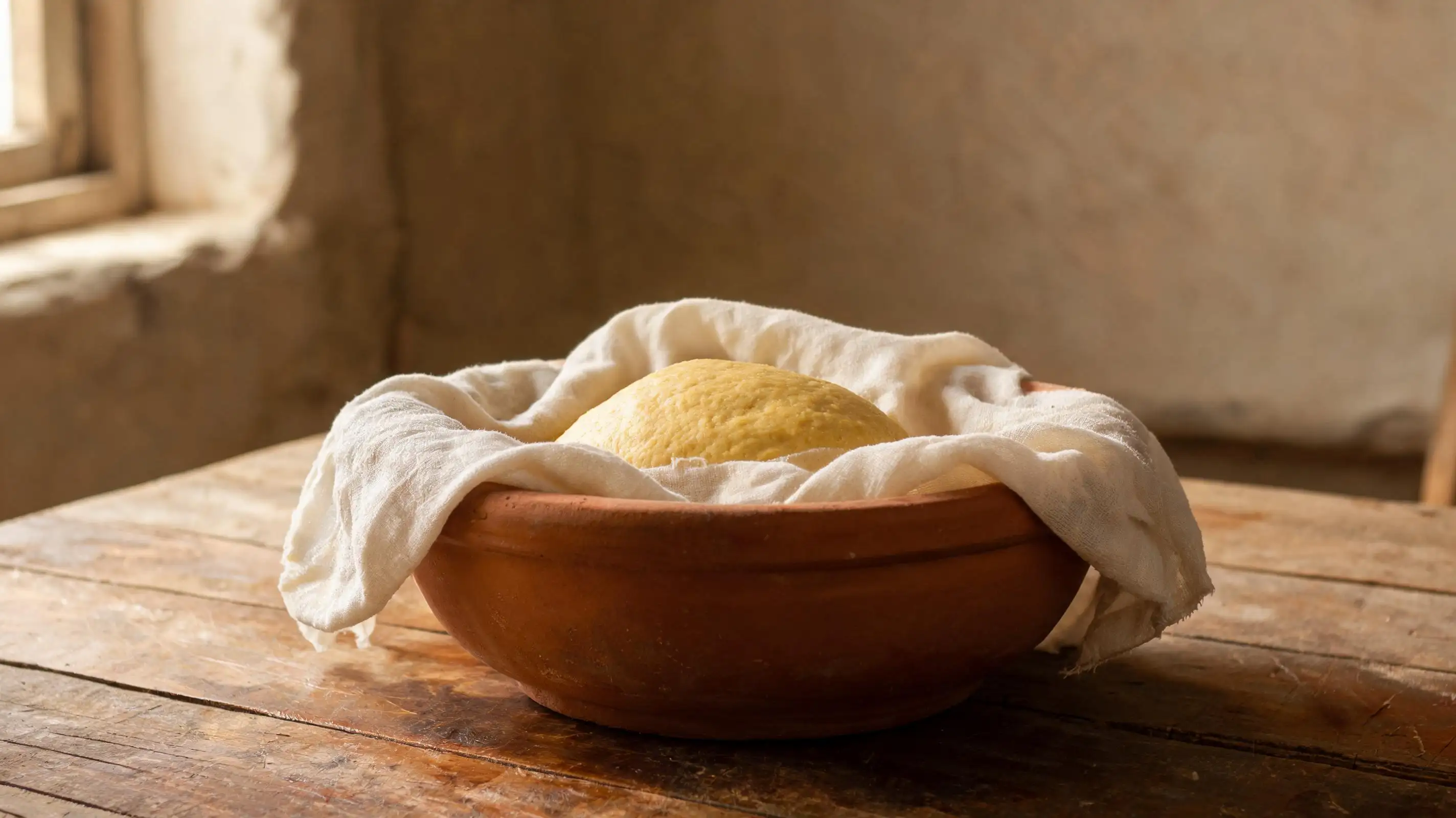
Cover the bowl with a damp cloth or cling wrap. Leave it somewhere warm — 28–35°C — for 20–30 minutes.
Coarse-grain dough doesn't rise like white-flour dough. You won't see it double dramatically in ten minutes. But it will soften, relax, and the crumb after steaming will be noticeably more tender than if you skipped straight to shaping. Wait for the dough to roughly double in volume before moving on.
If your kitchen is cold, set the bowl near a warm stove or inside an oven with just the light on and the door slightly open. A slow rise is fine; an incomplete rise means the buns won't hold their shape.
---
## 4 · The Shape
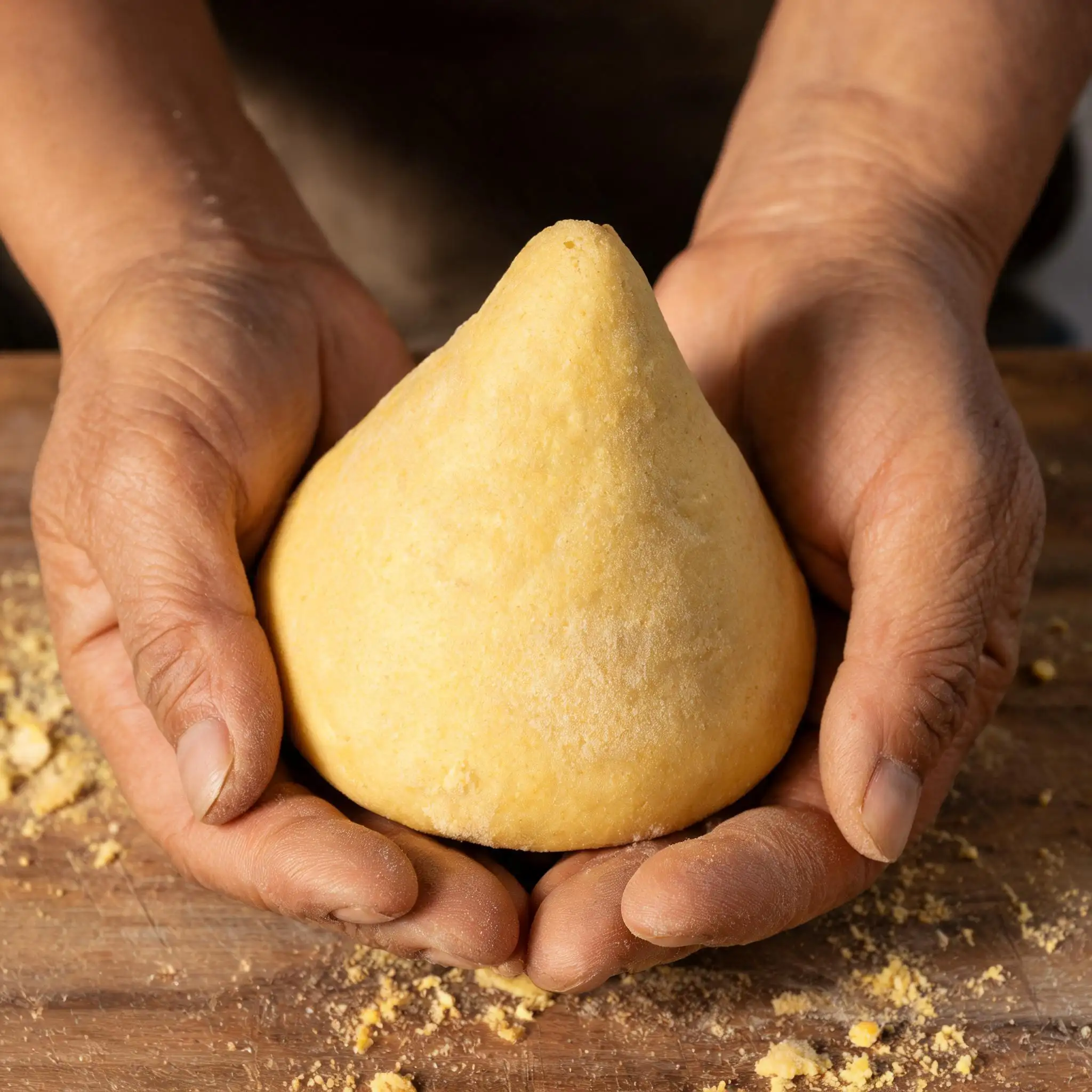
Wet your hands first. Pinch off roughly 70–80 g of dough — about the size of a small tangerine.
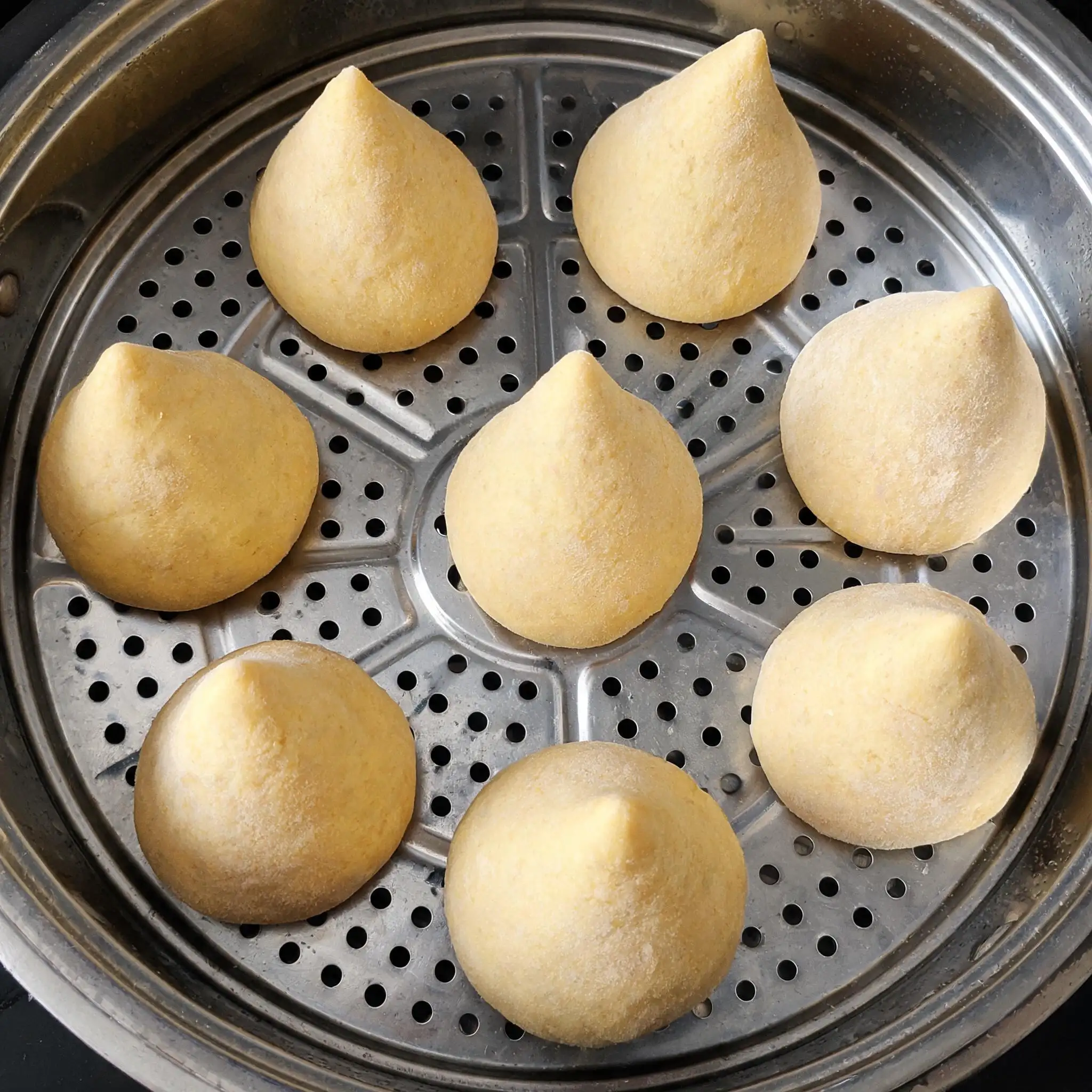
Roll it in your palms until smooth, then press the top while rotating to push the mass into a cone: wide and rounded at the base, tapered and slightly pointed at the top. Once you have the cone shape, press your right thumb into the center of the flat base and rotate — hollowing out a tunnel roughly 2–3 cm deep and about 2 cm wide. The walls around the cavity should be around 1 cm thick.
**This is the move that defines the bun.** The hollow base is not decorative — it lets heat reach the center faster during steaming so the interior cooks evenly instead of staying gummy in the middle. Without the tunnel, the inside takes too long to cook relative to the outside.
Re-wet your hands between each bun. The dough sticks if you give it the chance.
---
## 5 · The Steam
Line the steamer rack with parchment paper or a damp cloth. Place the buns with at least 2 cm of space between them — they expand during cooking. Crowding them means they'll stick together and deform.
Cold water in the pot, lid on, bring to a full rolling boil. Steam on high heat for 15–20 minutes. Keep the heat constant throughout. If your steamer is small, do two batches rather than stacking them in.
**Don't open the lid during the first 15 minutes.** A sudden drop in temperature collapses the structure and the buns stick to the rack. Set a timer, step away, and leave it.
When the time is up, turn off the heat and wait 2 minutes before lifting the lid. This lets the internal pressure equalize gradually so the surface doesn't wrinkle from the sudden cold air.
---
## 6 · The Reveal
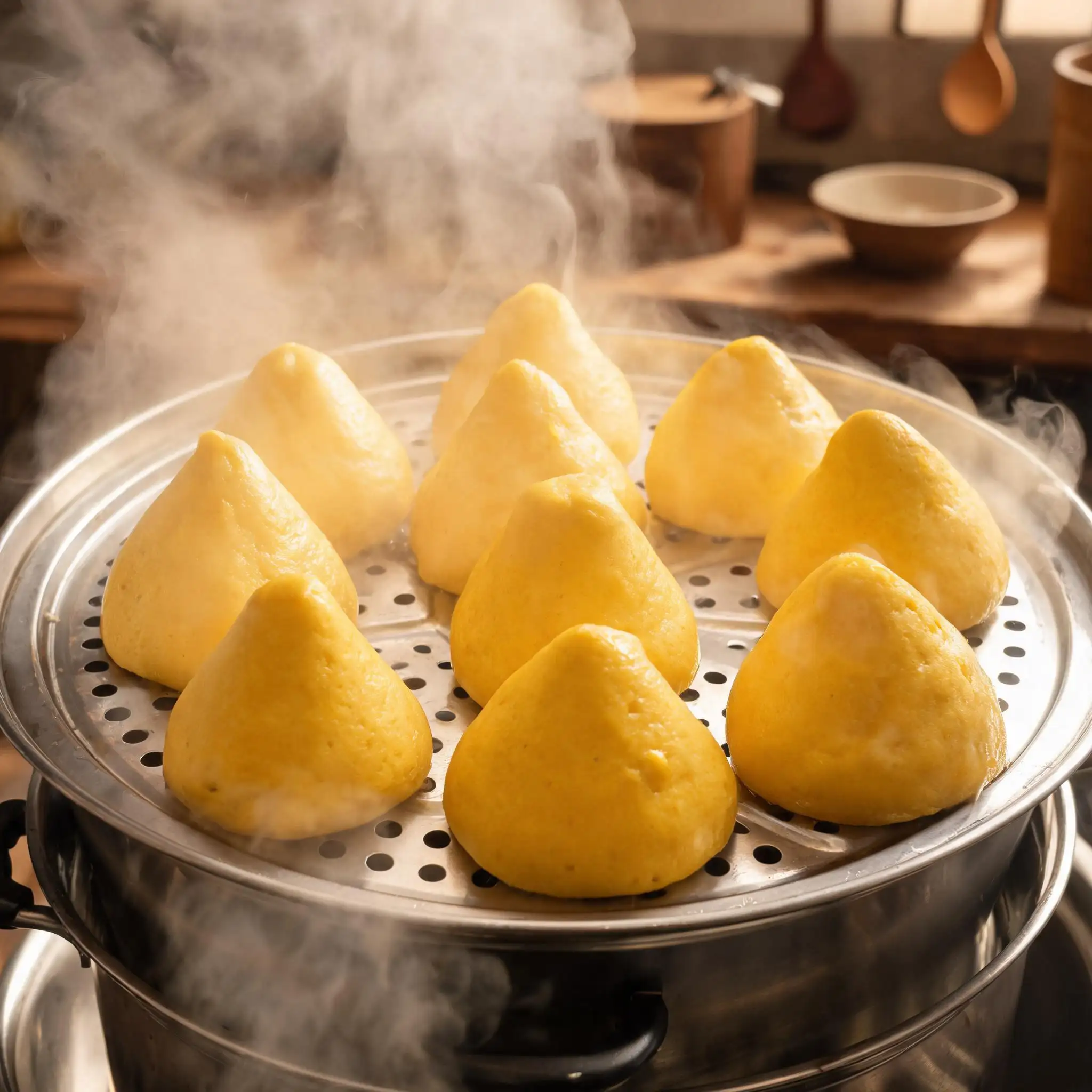
Lift the lid away from you. The steam comes out fast.
The buns will have grown, turned a deeper and more saturated golden-yellow, and the skin will look taut. Tap one gently on the side — if it sounds slightly hollow from the base, it's done. If the surface still looks pale or feels sticky when you touch it, put the lid back and steam another 3–5 minutes.
Well-made wowotou comes out plump and firm with no cracks running down the sides. Heavy cracking usually means the heat was too aggressive or the dough was over-proofed. Minor surface wrinkling on the first attempt is normal — it smooths out with practice.
---
## 7 · The Serve
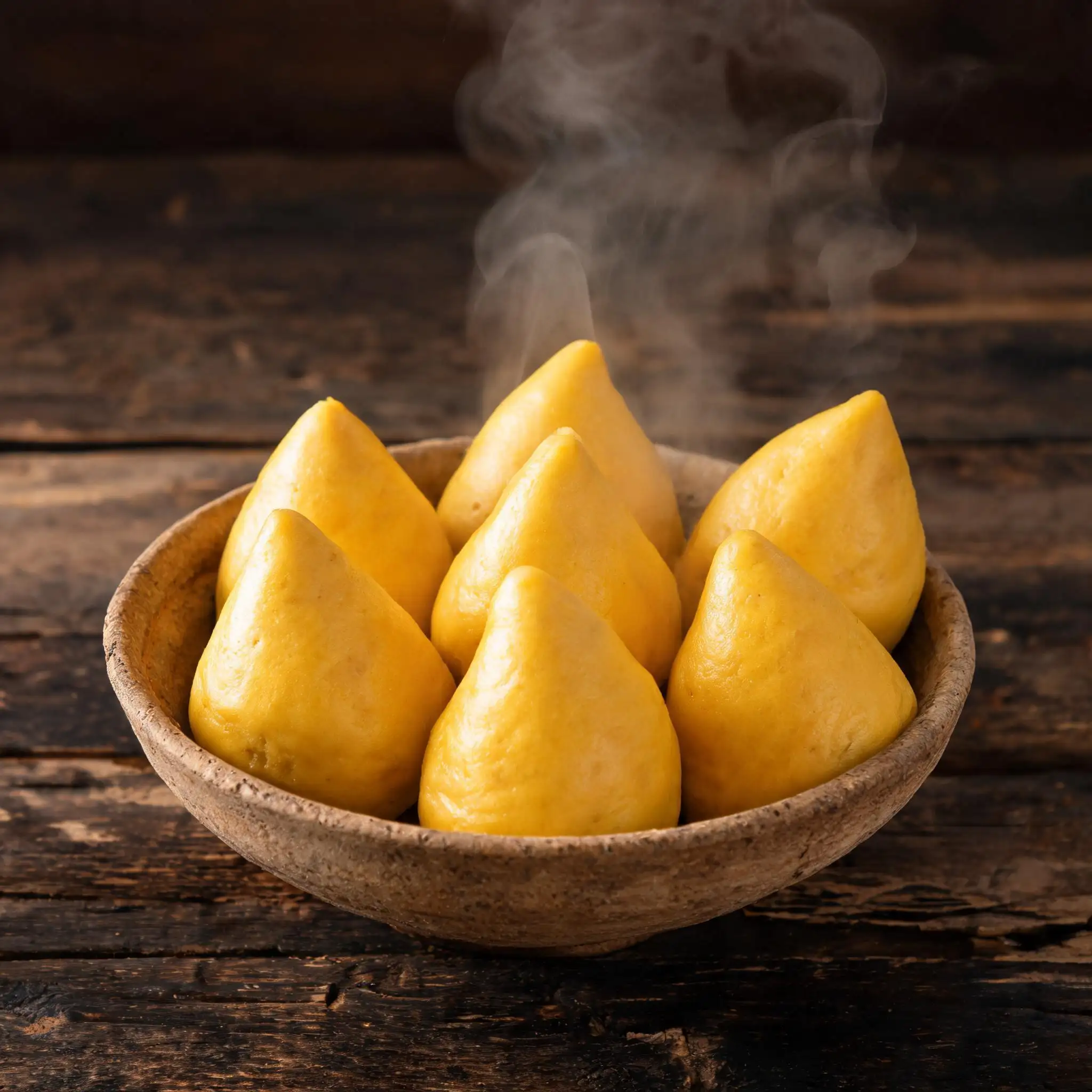
Pile them into a clay bowl while they're still steaming hot.
Eat them as they are — the grain flavor is what you came for. The crumb inside is dense and slightly porous, and if you split one down the side you'll see the hollow cavity at the base with the coarse golden inner wall. That hollow is the mark of the bun being made correctly.
Variations worth trying once you've got the plain version right: press a small amount of sweetened red bean paste or date paste into the cavity before shaping, for a filled version. Or swap 50 g of the cornmeal for black rice flour, sorghum flour, or millet to make a five-grain version with more depth in both flavor and color. A small amount of milk mixed into the warm water produces a noticeably softer crumb if you want that.
High fiber, no added fat, no sugar. Three of these and you've had a real breakfast.
> Wowotou is a cone-shaped steamed bun — pointed top, round base, and a hollow tunnel pressed through the bottom with your thumb. That tunnel is the defining feature. It speeds up steaming, keeps the center from going gummy, and when you split one open from the right angle you can see the cavity sitting inside like a small room. Made from coarse cornmeal, this is the kind of food that used to be everyday — filling, low-fat, no oil, no added sugar. Each 100 g delivers around 7–10 g of dietary fiber, which makes it one of the more honest things you can put on the breakfast table. Suitable for people managing blood sugar, watching weight, or just looking for something that hasn't been stripped of its grain.
**Serves** 8–10 · **Active time** 30 min · **Total time** 1 hr 30 min
---
### Ingredients
**Main**
- 300 g coarse yellow cornmeal
- 60 g all-purpose flour (traditional: soy flour, cornmeal-to-soy ratio 5:1)
- 3 g instant yeast
- Pinch of salt
- 180 ml boiling water (around 80–90°C)
- 50 ml warm water (around 35°C)
---
## 1 · The Ingredients
Cornmeal and flour. Yeast, salt, water.
The traditional formula uses five parts cornmeal to one part soy flour — the soy adds protein and helps the dough bind cleanly. This version replaces soy flour with all-purpose wheat flour, which is easier to find and does a similar job. If you can get coarse-ground cornmeal rather than fine-milled, use it — the texture after steaming has more character, a slight grain to each bite that the fine-milled version doesn't give you.
Nutritionally, these are a genuine coarse-grain food rather than a dressed-up white bread. Rich in protein, amino acids, dietary fiber, and trace elements. Low-fat and low-sugar by nature — no oil goes into the dough, and nothing sweet is added. Modern versions sometimes include milk powder or a small amount of sugar to soften the crumb, but the plain version holds its own.
---
## 2 · The Scald
Pour 180 ml of boiling water directly over the cornmeal in the mixing bowl. The water needs to be 80–90°C.
This step is called scalding, and it's what gives wowotou its structure. The heat partially breaks down the cornmeal starch — the result is a dough that holds together after steaming instead of falling apart. If you mix everything with warm water and skip this step, the bun will come out dense and crumbly in the wrong way.
Stir as you pour. Once the scalded cornmeal has cooled for two minutes, add the flour, yeast, and 50 ml warm water. Knead until the dough is smooth and pulls away from the bowl cleanly. It'll feel denser and grainier than regular bread dough — that's exactly what it should feel like.
**Add the yeast only after the mixture has cooled below 40°C.** Hot dough kills yeast, and a dead yeast means a flat, dense bun.
---
## 3 · The Rest
Cover the bowl with a damp cloth or cling wrap. Leave it somewhere warm — 28–35°C — for 20–30 minutes.
Coarse-grain dough doesn't rise like white-flour dough. You won't see it double dramatically in ten minutes. But it will soften, relax, and the crumb after steaming will be noticeably more tender than if you skipped straight to shaping. Wait for the dough to roughly double in volume before moving on.
If your kitchen is cold, set the bowl near a warm stove or inside an oven with just the light on and the door slightly open. A slow rise is fine; an incomplete rise means the buns won't hold their shape.
---
## 4 · The Shape
Wet your hands first. Pinch off roughly 70–80 g of dough — about the size of a small tangerine.
Roll it in your palms until smooth, then press the top while rotating to push the mass into a cone: wide and rounded at the base, tapered and slightly pointed at the top. Once you have the cone shape, press your right thumb into the center of the flat base and rotate — hollowing out a tunnel roughly 2–3 cm deep and about 2 cm wide. The walls around the cavity should be around 1 cm thick.
**This is the move that defines the bun.** The hollow base is not decorative — it lets heat reach the center faster during steaming so the interior cooks evenly instead of staying gummy in the middle. Without the tunnel, the inside takes too long to cook relative to the outside.
Re-wet your hands between each bun. The dough sticks if you give it the chance.
---
## 5 · The Steam
Line the steamer rack with parchment paper or a damp cloth. Place the buns with at least 2 cm of space between them — they expand during cooking. Crowding them means they'll stick together and deform.
Cold water in the pot, lid on, bring to a full rolling boil. Steam on high heat for 15–20 minutes. Keep the heat constant throughout. If your steamer is small, do two batches rather than stacking them in.
**Don't open the lid during the first 15 minutes.** A sudden drop in temperature collapses the structure and the buns stick to the rack. Set a timer, step away, and leave it.
When the time is up, turn off the heat and wait 2 minutes before lifting the lid. This lets the internal pressure equalize gradually so the surface doesn't wrinkle from the sudden cold air.
---
## 6 · The Reveal
Lift the lid away from you. The steam comes out fast.
The buns will have grown, turned a deeper and more saturated golden-yellow, and the skin will look taut. Tap one gently on the side — if it sounds slightly hollow from the base, it's done. If the surface still looks pale or feels sticky when you touch it, put the lid back and steam another 3–5 minutes.
Well-made wowotou comes out plump and firm with no cracks running down the sides. Heavy cracking usually means the heat was too aggressive or the dough was over-proofed. Minor surface wrinkling on the first attempt is normal — it smooths out with practice.
---
## 7 · The Serve
Pile them into a clay bowl while they're still steaming hot.
Eat them as they are — the grain flavor is what you came for. The crumb inside is dense and slightly porous, and if you split one down the side you'll see the hollow cavity at the base with the coarse golden inner wall. That hollow is the mark of the bun being made correctly.
Variations worth trying once you've got the plain version right: press a small amount of sweetened red bean paste or date paste into the cavity before shaping, for a filled version. Or swap 50 g of the cornmeal for black rice flour, sorghum flour, or millet to make a five-grain version with more depth in both flavor and color. A small amount of milk mixed into the warm water produces a noticeably softer crumb if you want that.
High fiber, no added fat, no sugar. Three of these and you've had a real breakfast.