·5/15/2026
from
QIÁNLÓNG BÁICÀI
# · QIÁNLÓNG BÁICÀI ·
## Imperial Cold Cabbage — A Qing Dynasty Salad That Never Got Old
> Three hundred years ago, an emperor asked for plain cabbage and never forgot it
> No heat, no wok, no technique — just the right leaves and the right sauce
> The kind of dish that makes you wonder why you ever cooked anything else
---
## Ingredients
**Main**
| Item | Amount |
|------|--------|
| Napa cabbage heart (inner yellow leaves only) | 400 g |
**Sauce**
| Item | Amount |
|------|--------|
| Chinese sesame paste (芝麻酱) | 3 tbsp |
| Aged black vinegar (陈醋) | 4 tbsp |
| Honey | 2 tbsp |
| White sugar | 2 tbsp |
| Salt | 2 g |
| Warm water (to loosen the paste) | 2–3 tbsp |
> Yield: 2 servings · Best served immediately · Leftovers wilt fast
---
## Step 1 · The Harvest
### Pull from the heart, not the outer leaves
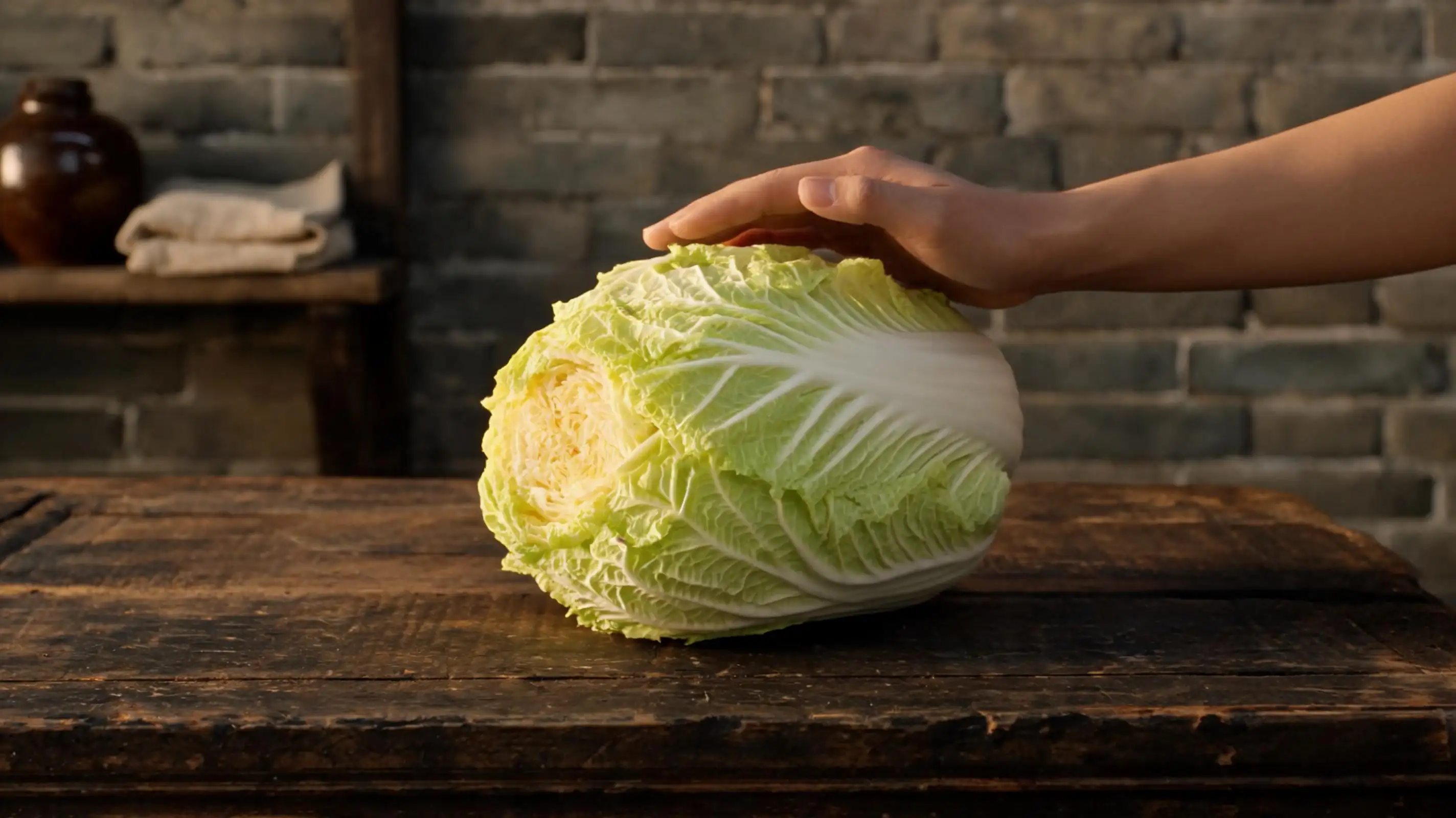
Start by peeling away the dark outer leaves. You want the inner core — pale yellow, tightly packed, sweet and crisp. *Old Beijing cooks insist on Qingkou napa cabbage from Hebei*, grown slow in the cold, dense and low in moisture. A winter field-grown head, not a hothouse one.
Avoid the lush, bright-white inner hearts that look perfect — plump and almost watery. That wateriness is exactly the problem. It dilutes the sauce before it has a chance to coat.
**What you're looking for:**
- **Pale yellow-green**, not bright white — less water, more sweetness
- **Tight, compact layers** — more surface area for the sauce to grip
- **Dense, not spongy** — press a leaf lightly; it should push back
> ⚠️ Hothouse cabbage looks better but bleeds water into your sauce. If you can find a winter field-grown head, use it.
---
## Step 2 · The Heart
### Strip it down to the good part
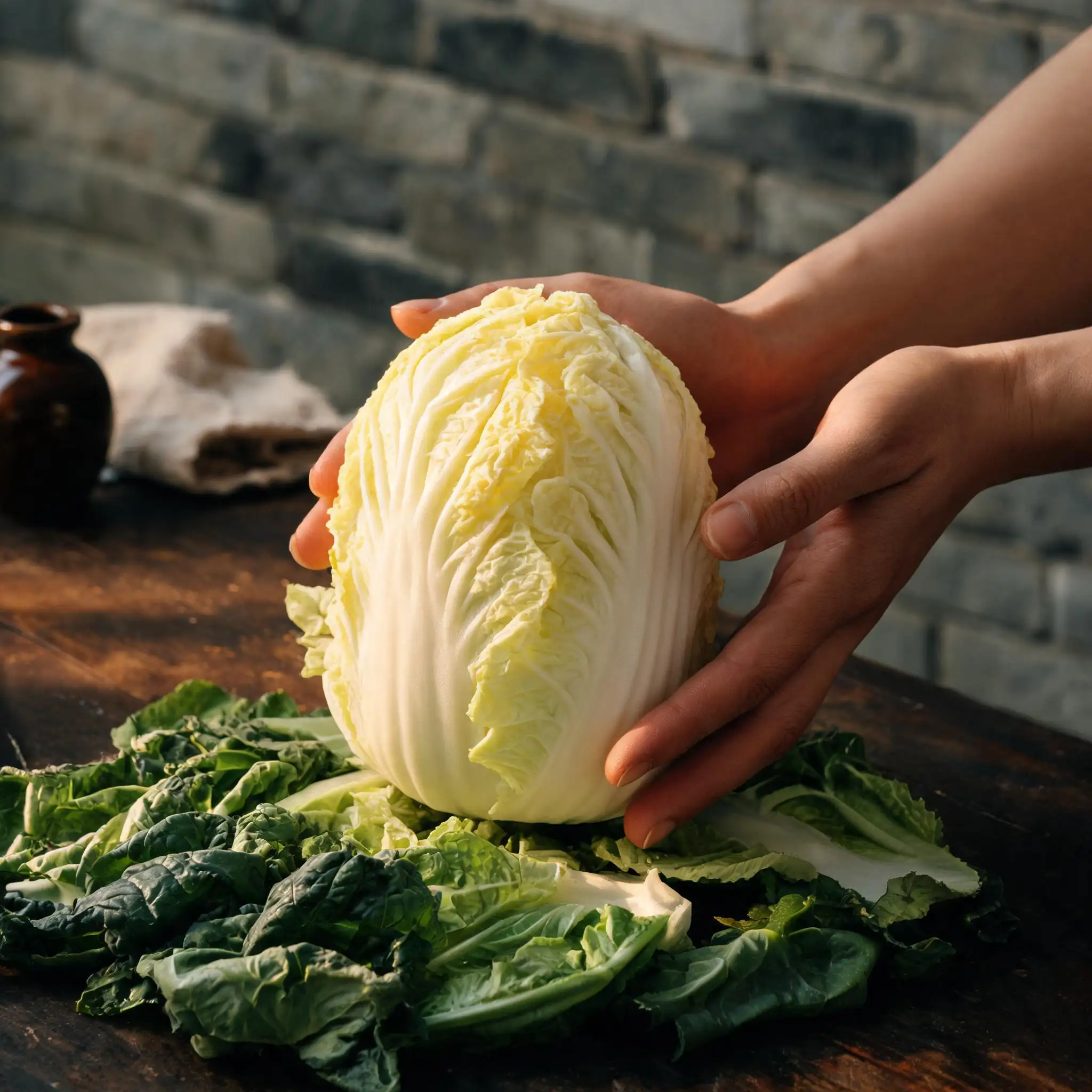
Pull the outer leaves off one by one until you reach the yellow inner heart. The transition is clear — the color shifts from green to pale gold, the texture from coarse to silky. Set the outer leaves aside. Everything from here comes from that pale center.
**Keep the tight inner clusters intact** until you're ready to tear. Once exposed to air they soften quickly. That softness is fine once sauce is on — but you want the crunch still there when you start tearing.
---
## Step 3 · The Tear
### Never use a knife
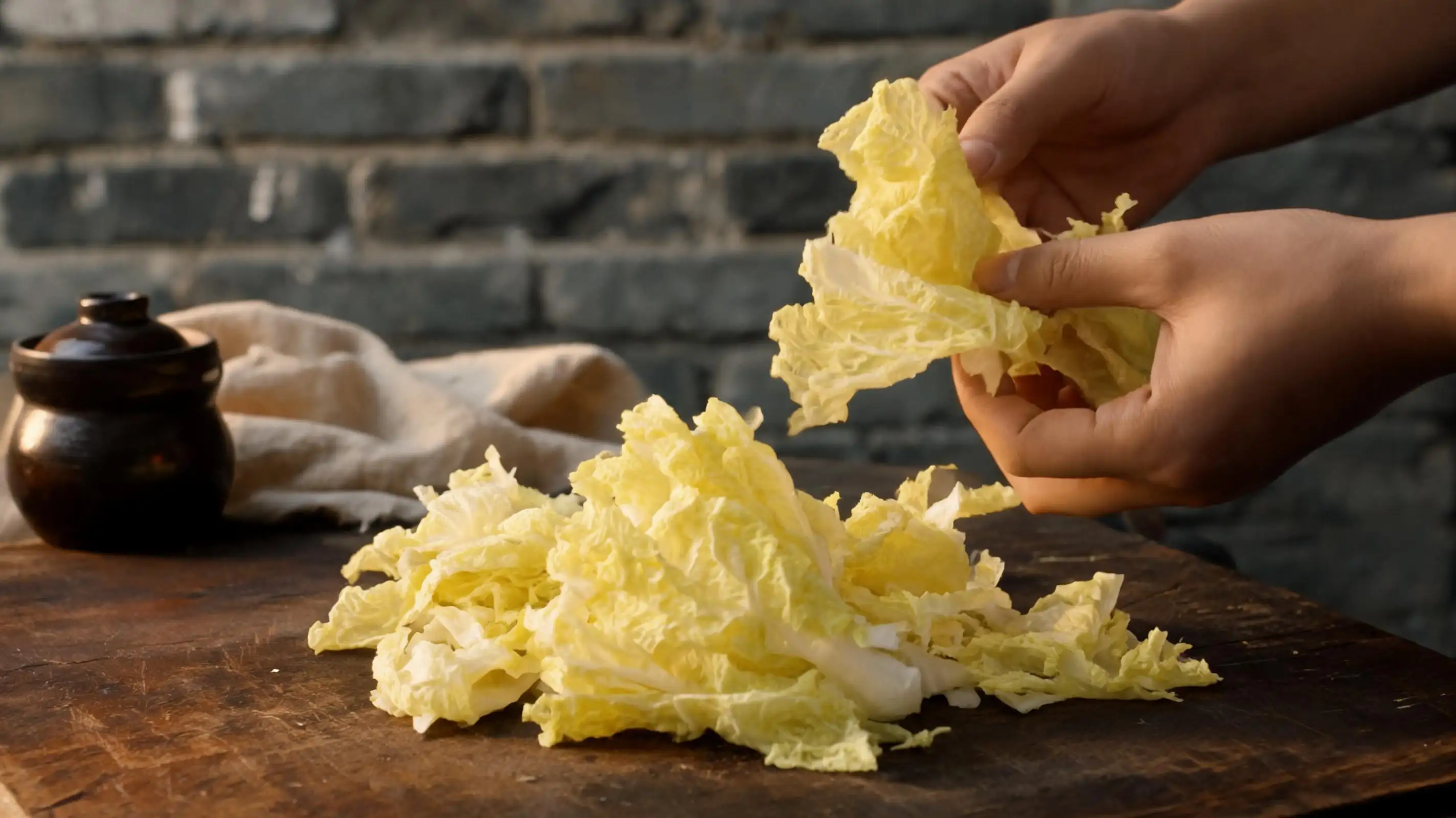
Wash the cabbage heart under cold water, shake off the excess, then tear by hand. *Follow the natural veins of each leaf* — pull along the grain, not across it. The leaves come apart cleanly this way, each piece with a rough, irregular edge. For the stems, tear on a diagonal into thin strips — they need to be thin enough to soften, but the diagonal cut gives them length and texture. Any thick hard core pieces go in the bin, not the bowl.
**Why this matters:**
- **Torn edges are irregular** — rough surfaces hold sauce far better than clean knife cuts
- **Along the vein, not across** — tearing against the grain shreds the leaf, tearing with it keeps pieces intact
- **Diagonal on the stems** — thin enough to eat, long enough to matter
> ⚠️ Don't chop. A knife seals the edge smooth — the sauce has nothing to grip and slides right off.
---
## Step 4 · The Pat Dry
### Water is the enemy of flavor
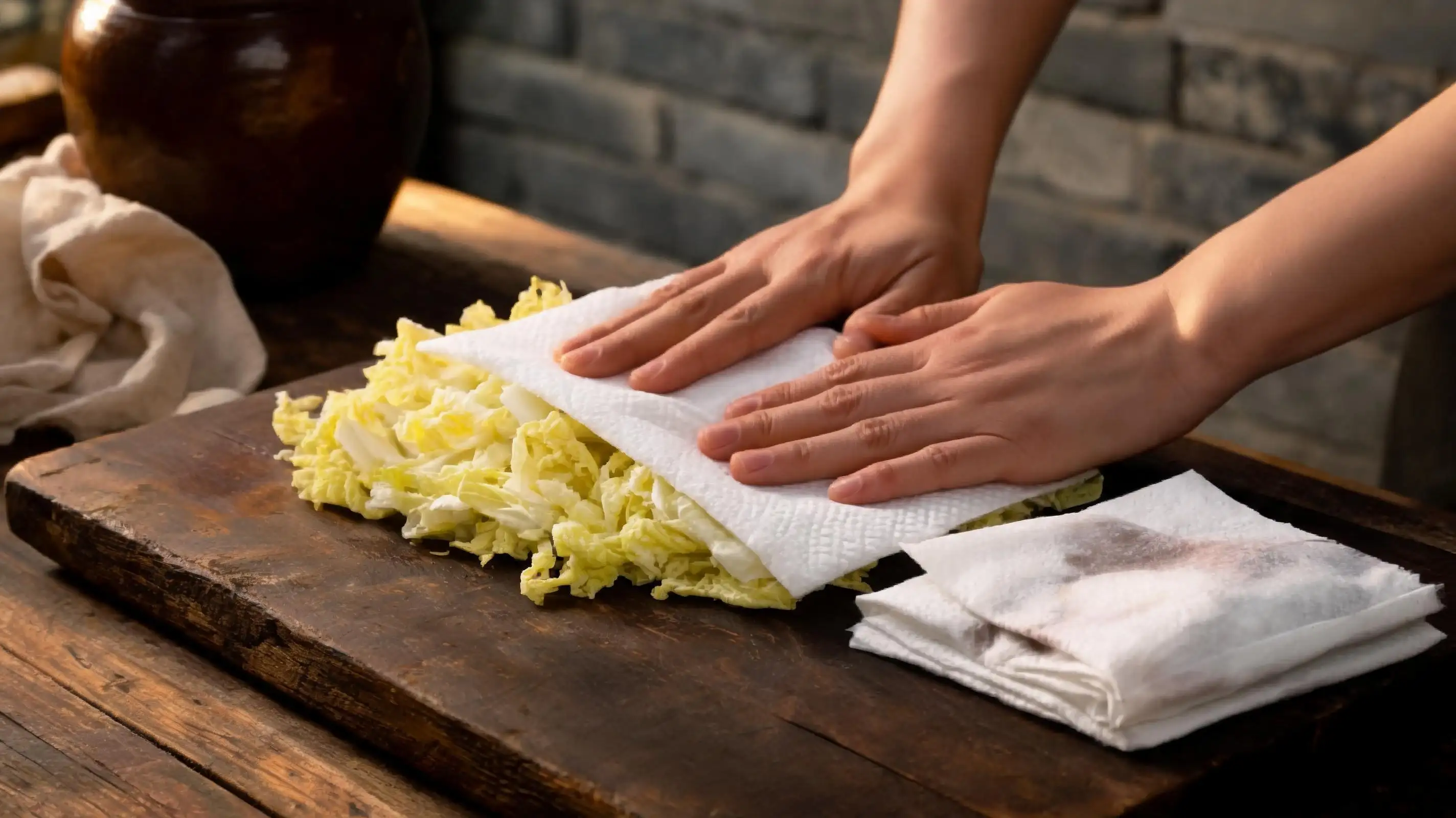
After tearing, spread the leaves on a rack to air-dry for 10–15 minutes, or press kitchen paper towels firmly over them in sections. Pat, flip, pat again with fresh paper. *Either works — what doesn't work is skipping it.* The leaves should feel actually dry to the touch, not just less wet.
| State | Result |
|-------|--------|
| Wet leaves | Sauce dilutes on contact, slides off, pools at the bottom of the bowl |
| Dry leaves | Sauce coats on contact, clings to every crinkled edge, stays concentrated |
> ⚠️ *This step is not optional.* You cannot fix a watery sauce once it's been mixed in.
---
## Step 5 · The Sauce
### Loosen the paste slowly, in one direction
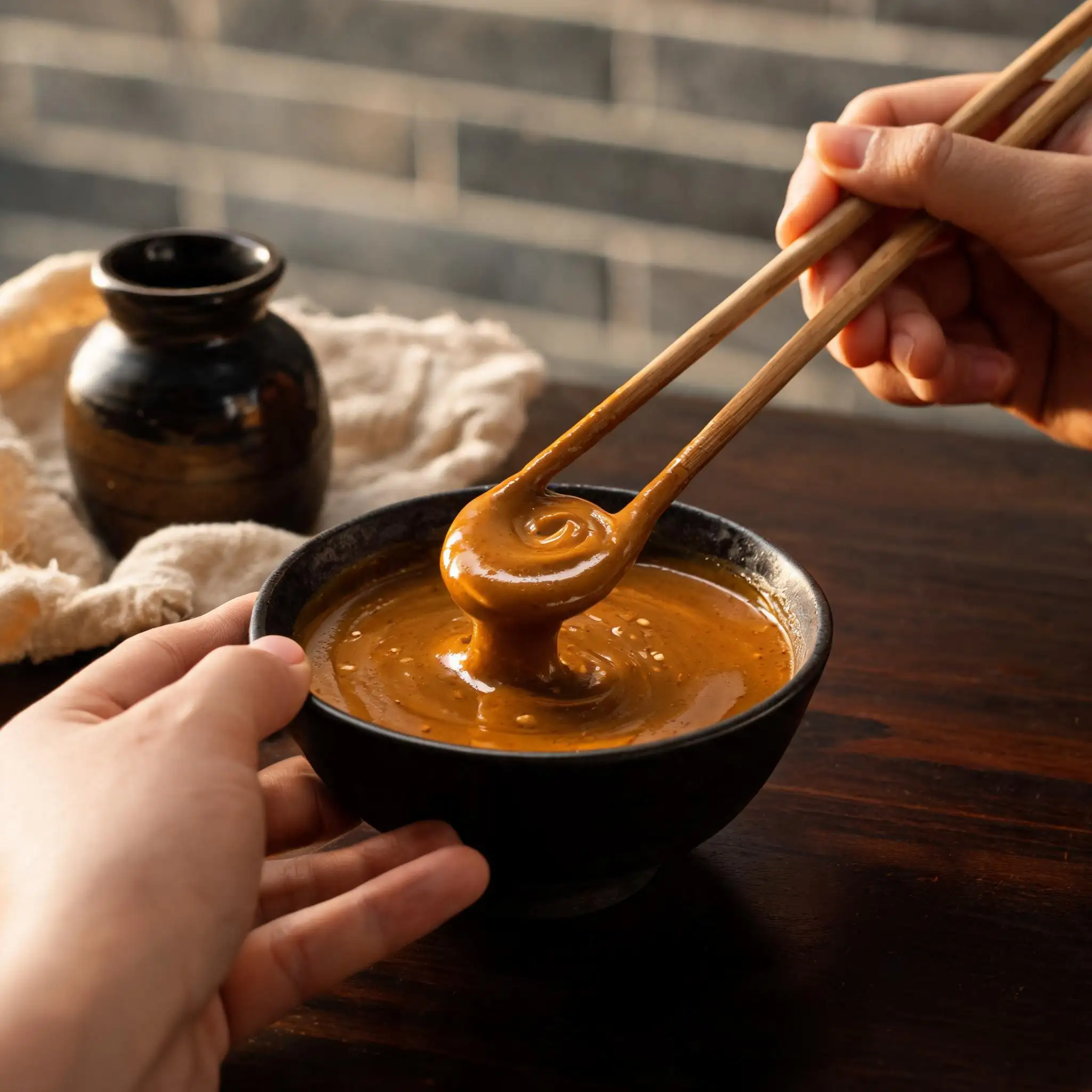
Spoon the sesame paste into a bowl. Add the warm water one tablespoon at a time — or use a splash of the vinegar instead — stirring in tight circles *always in the same direction*. This keeps it smooth and emulsified rather than broken and grainy. Don't rush it. Once the paste moves freely, add the vinegar, honey, sugar, and salt.
The traditional balance runs in three stages: *sweet on the way in, salt closes it, vinegar lifts the whole thing.* Honey and sugar hit first, salt lingers at the back, vinegar works underneath — you smell it as much as taste it. Adjust the ratio, but don't drop any of the three.
Target consistency: thick enough to hold a slow drip off a spoon. Too thick and it clumps; too thin and it runs straight off the leaves and pools at the bottom.
| Ingredient | Role |
|------------|------|
| Sesame paste | Body, nuttiness, fat |
| Aged black vinegar | Brightness, depth, aroma |
| Honey | Rounds the sharp edges of vinegar |
| Sugar | Clean sweetness without acidity |
| Salt | Ties the whole thing, closes the flavor |
> ⚠️ Once mixed with the leaves, you can't rescue a sauce that's too thin. Get the consistency right in the bowl before it touches the cabbage.
---
## Step 6 · The Pour
### Let it fall slowly from above
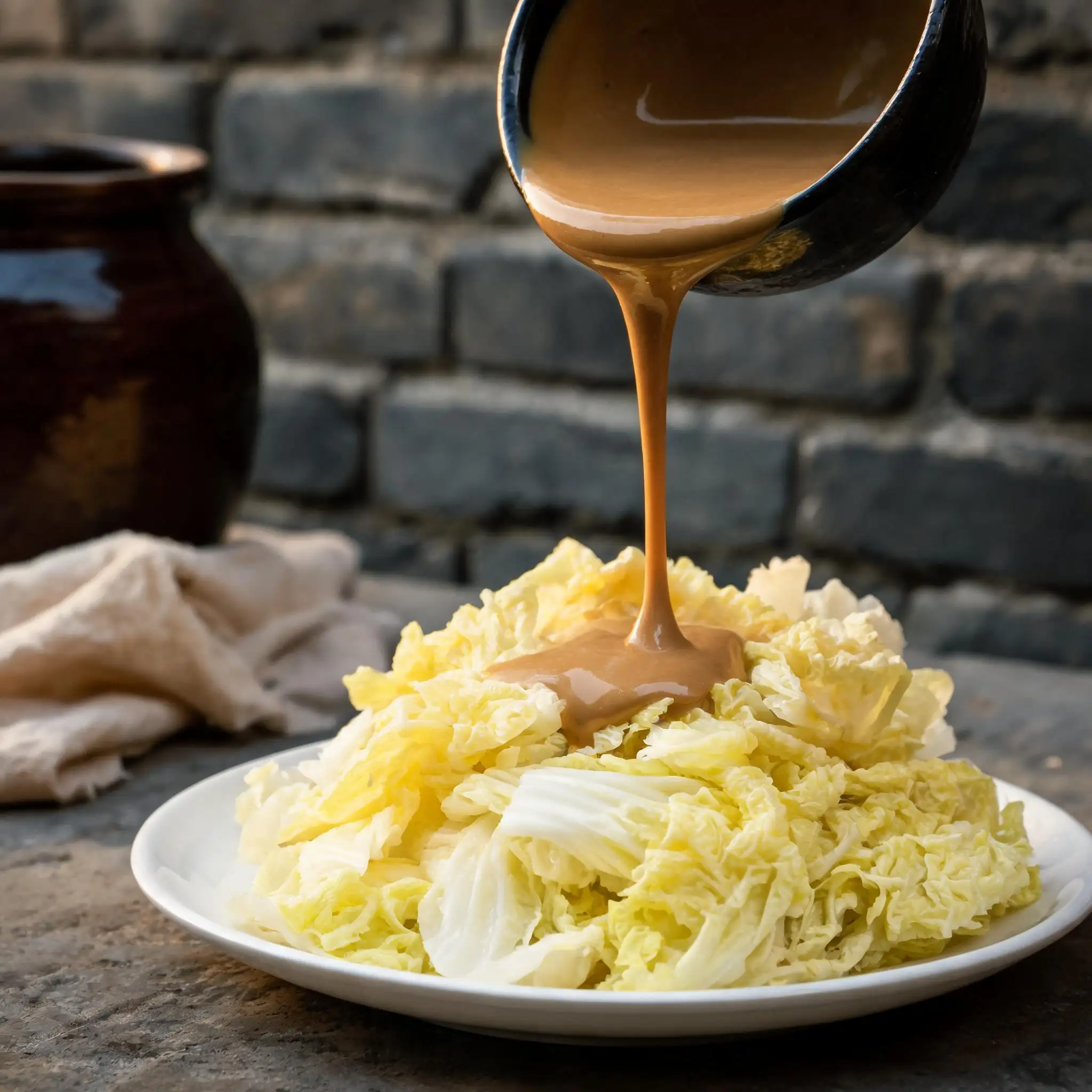
Hold the bowl about 20 cm above the cabbage and pour in a slow, steady stream. Don't rush it. *Watch where it lands and aim to cover the top evenly.* The sauce should settle into the crevices of the crinkled leaves on its own — you're not stirring yet.
**One pour, not a drizzle.** A single generous pour coats better than multiple thin passes that dry before they reach the bottom layers.
---
## Step 7 · The Toss
### Turn it, don't mash it
Use chopsticks to lift and fold — *think of it like turning a salad, not stirring a pot.* Get underneath, bring the bottom leaves up, let the sauce redistribute. Every piece should go from pale yellow to deep amber.
**Signs you're done:**
- **Every leaf glistens** with an even amber coat
- **No pale yellow pieces** left hiding at the bottom
- **Sauce doesn't pool** at the base of the plate
---
## Step 8 · The Sesame
### A pinch, not a pour
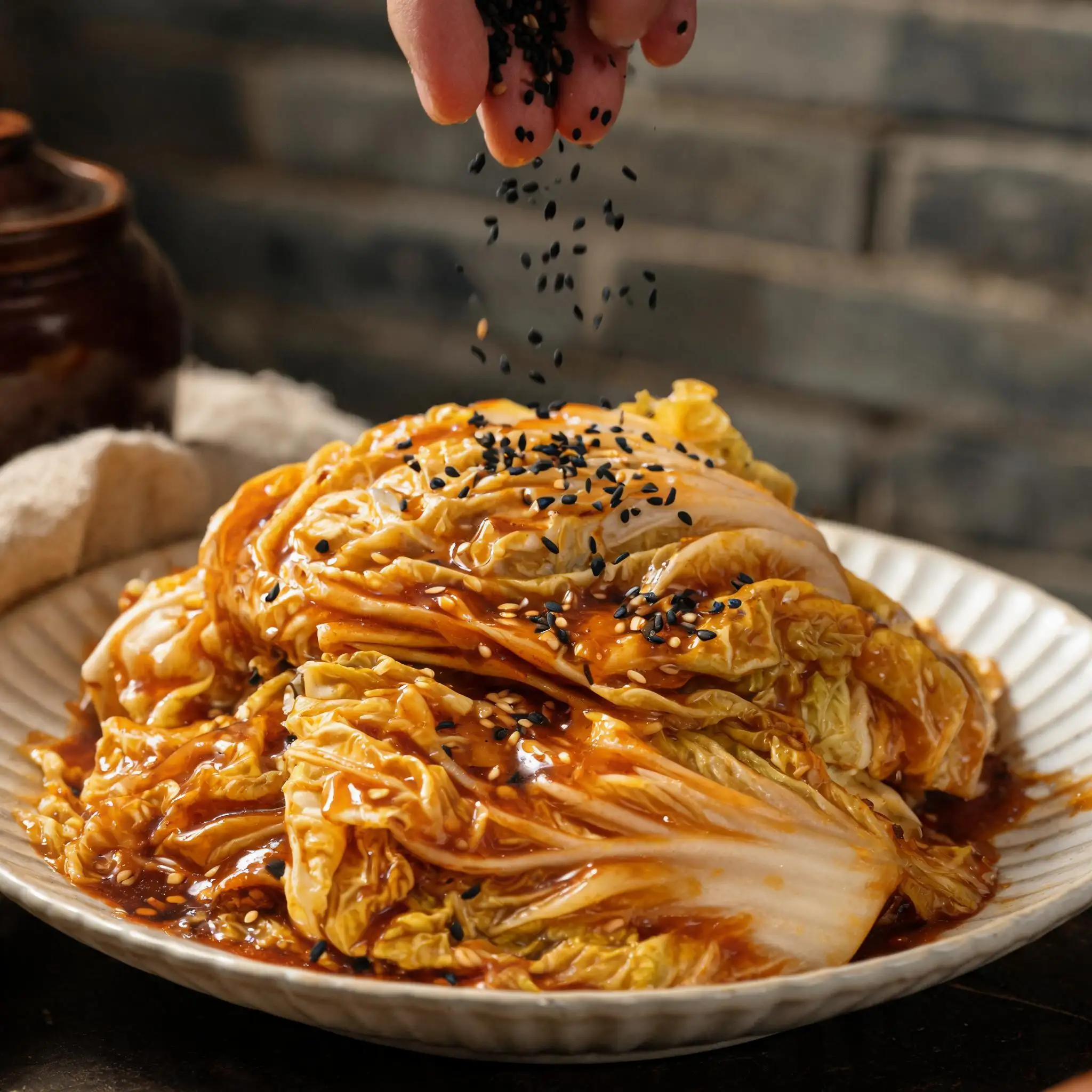
Pinch the black sesame seeds between two fingers and scatter from above. *Move your hand as you release* — you want them spread across the whole surface, not piled in one spot. They should land in the crevices and on the peaks.
**Black sesame here is finish, not flavor.** It's the contrast — tiny dark seeds against the deep amber leaves. It signals the dish is done.
---
## Step 9 · The Dish
### Serve cold, serve now
Plate in a wide shallow bowl, piled loosely so the layers show. *Don't press it flat.* The height and texture are part of it. Eat immediately — this doesn't hold. The leaves will soften within 20 minutes.
**One last check:**
- **Deep amber** all the way through, no pale yellow patches
- **Black sesame** scattered across the surface
- **Sauce clinging**, not pooling at the bottom
*The emperor's cook kept it cold and simple. Some dishes don't need improving — they just need to be made right.*
## Imperial Cold Cabbage — A Qing Dynasty Salad That Never Got Old
> Three hundred years ago, an emperor asked for plain cabbage and never forgot it
> No heat, no wok, no technique — just the right leaves and the right sauce
> The kind of dish that makes you wonder why you ever cooked anything else
---
## Ingredients
**Main**
| Item | Amount |
|------|--------|
| Napa cabbage heart (inner yellow leaves only) | 400 g |
**Sauce**
| Item | Amount |
|------|--------|
| Chinese sesame paste (芝麻酱) | 3 tbsp |
| Aged black vinegar (陈醋) | 4 tbsp |
| Honey | 2 tbsp |
| White sugar | 2 tbsp |
| Salt | 2 g |
| Warm water (to loosen the paste) | 2–3 tbsp |
> Yield: 2 servings · Best served immediately · Leftovers wilt fast
---
## Step 1 · The Harvest
### Pull from the heart, not the outer leaves
Start by peeling away the dark outer leaves. You want the inner core — pale yellow, tightly packed, sweet and crisp. *Old Beijing cooks insist on Qingkou napa cabbage from Hebei*, grown slow in the cold, dense and low in moisture. A winter field-grown head, not a hothouse one.
Avoid the lush, bright-white inner hearts that look perfect — plump and almost watery. That wateriness is exactly the problem. It dilutes the sauce before it has a chance to coat.
**What you're looking for:**
- **Pale yellow-green**, not bright white — less water, more sweetness
- **Tight, compact layers** — more surface area for the sauce to grip
- **Dense, not spongy** — press a leaf lightly; it should push back
> ⚠️ Hothouse cabbage looks better but bleeds water into your sauce. If you can find a winter field-grown head, use it.
---
## Step 2 · The Heart
### Strip it down to the good part
Pull the outer leaves off one by one until you reach the yellow inner heart. The transition is clear — the color shifts from green to pale gold, the texture from coarse to silky. Set the outer leaves aside. Everything from here comes from that pale center.
**Keep the tight inner clusters intact** until you're ready to tear. Once exposed to air they soften quickly. That softness is fine once sauce is on — but you want the crunch still there when you start tearing.
---
## Step 3 · The Tear
### Never use a knife
Wash the cabbage heart under cold water, shake off the excess, then tear by hand. *Follow the natural veins of each leaf* — pull along the grain, not across it. The leaves come apart cleanly this way, each piece with a rough, irregular edge. For the stems, tear on a diagonal into thin strips — they need to be thin enough to soften, but the diagonal cut gives them length and texture. Any thick hard core pieces go in the bin, not the bowl.
**Why this matters:**
- **Torn edges are irregular** — rough surfaces hold sauce far better than clean knife cuts
- **Along the vein, not across** — tearing against the grain shreds the leaf, tearing with it keeps pieces intact
- **Diagonal on the stems** — thin enough to eat, long enough to matter
> ⚠️ Don't chop. A knife seals the edge smooth — the sauce has nothing to grip and slides right off.
---
## Step 4 · The Pat Dry
### Water is the enemy of flavor
After tearing, spread the leaves on a rack to air-dry for 10–15 minutes, or press kitchen paper towels firmly over them in sections. Pat, flip, pat again with fresh paper. *Either works — what doesn't work is skipping it.* The leaves should feel actually dry to the touch, not just less wet.
| State | Result |
|-------|--------|
| Wet leaves | Sauce dilutes on contact, slides off, pools at the bottom of the bowl |
| Dry leaves | Sauce coats on contact, clings to every crinkled edge, stays concentrated |
> ⚠️ *This step is not optional.* You cannot fix a watery sauce once it's been mixed in.
---
## Step 5 · The Sauce
### Loosen the paste slowly, in one direction
Spoon the sesame paste into a bowl. Add the warm water one tablespoon at a time — or use a splash of the vinegar instead — stirring in tight circles *always in the same direction*. This keeps it smooth and emulsified rather than broken and grainy. Don't rush it. Once the paste moves freely, add the vinegar, honey, sugar, and salt.
The traditional balance runs in three stages: *sweet on the way in, salt closes it, vinegar lifts the whole thing.* Honey and sugar hit first, salt lingers at the back, vinegar works underneath — you smell it as much as taste it. Adjust the ratio, but don't drop any of the three.
Target consistency: thick enough to hold a slow drip off a spoon. Too thick and it clumps; too thin and it runs straight off the leaves and pools at the bottom.
| Ingredient | Role |
|------------|------|
| Sesame paste | Body, nuttiness, fat |
| Aged black vinegar | Brightness, depth, aroma |
| Honey | Rounds the sharp edges of vinegar |
| Sugar | Clean sweetness without acidity |
| Salt | Ties the whole thing, closes the flavor |
> ⚠️ Once mixed with the leaves, you can't rescue a sauce that's too thin. Get the consistency right in the bowl before it touches the cabbage.
---
## Step 6 · The Pour
### Let it fall slowly from above
Hold the bowl about 20 cm above the cabbage and pour in a slow, steady stream. Don't rush it. *Watch where it lands and aim to cover the top evenly.* The sauce should settle into the crevices of the crinkled leaves on its own — you're not stirring yet.
**One pour, not a drizzle.** A single generous pour coats better than multiple thin passes that dry before they reach the bottom layers.
---
## Step 7 · The Toss
### Turn it, don't mash it
Use chopsticks to lift and fold — *think of it like turning a salad, not stirring a pot.* Get underneath, bring the bottom leaves up, let the sauce redistribute. Every piece should go from pale yellow to deep amber.
**Signs you're done:**
- **Every leaf glistens** with an even amber coat
- **No pale yellow pieces** left hiding at the bottom
- **Sauce doesn't pool** at the base of the plate
---
## Step 8 · The Sesame
### A pinch, not a pour
Pinch the black sesame seeds between two fingers and scatter from above. *Move your hand as you release* — you want them spread across the whole surface, not piled in one spot. They should land in the crevices and on the peaks.
**Black sesame here is finish, not flavor.** It's the contrast — tiny dark seeds against the deep amber leaves. It signals the dish is done.
---
## Step 9 · The Dish
### Serve cold, serve now
Plate in a wide shallow bowl, piled loosely so the layers show. *Don't press it flat.* The height and texture are part of it. Eat immediately — this doesn't hold. The leaves will soften within 20 minutes.
**One last check:**
- **Deep amber** all the way through, no pale yellow patches
- **Black sesame** scattered across the surface
- **Sauce clinging**, not pooling at the bottom
*The emperor's cook kept it cold and simple. Some dishes don't need improving — they just need to be made right.*