·5/15/2026
from
Jie Mo Dun Er
# Jie Mo Dun Er — Mustard Cabbage Stacks
> Winter in Beijing used to mean a pile of napa cabbage stacked against the wall outside every door. Families bought it by the hundred jin and let the cold keep it through January. This dish came out of that — a cold vegetable pickle made with yellow mustard, rice vinegar, and time. Nothing cooked past a quick blanch. No fire after that. You close a bowl over it and leave the kitchen. You come back the next day and it's done.
**Serves** 4–6 · **Active time** 25 min · **Total time** 24 hr
---
## Ingredients
**Napa Cabbage**
- 1 medium napa cabbage heart, firm and pale yellow, approximately 800 g
**Mustard Sauce**
- 30 g Chinese yellow mustard powder (黄芥末粉)
- 45 ml hot water, just off the boil
- 2 tbsp rice vinegar
- 1½ tbsp sugar
- ½ tsp salt
---
## 1 · The Cabbage
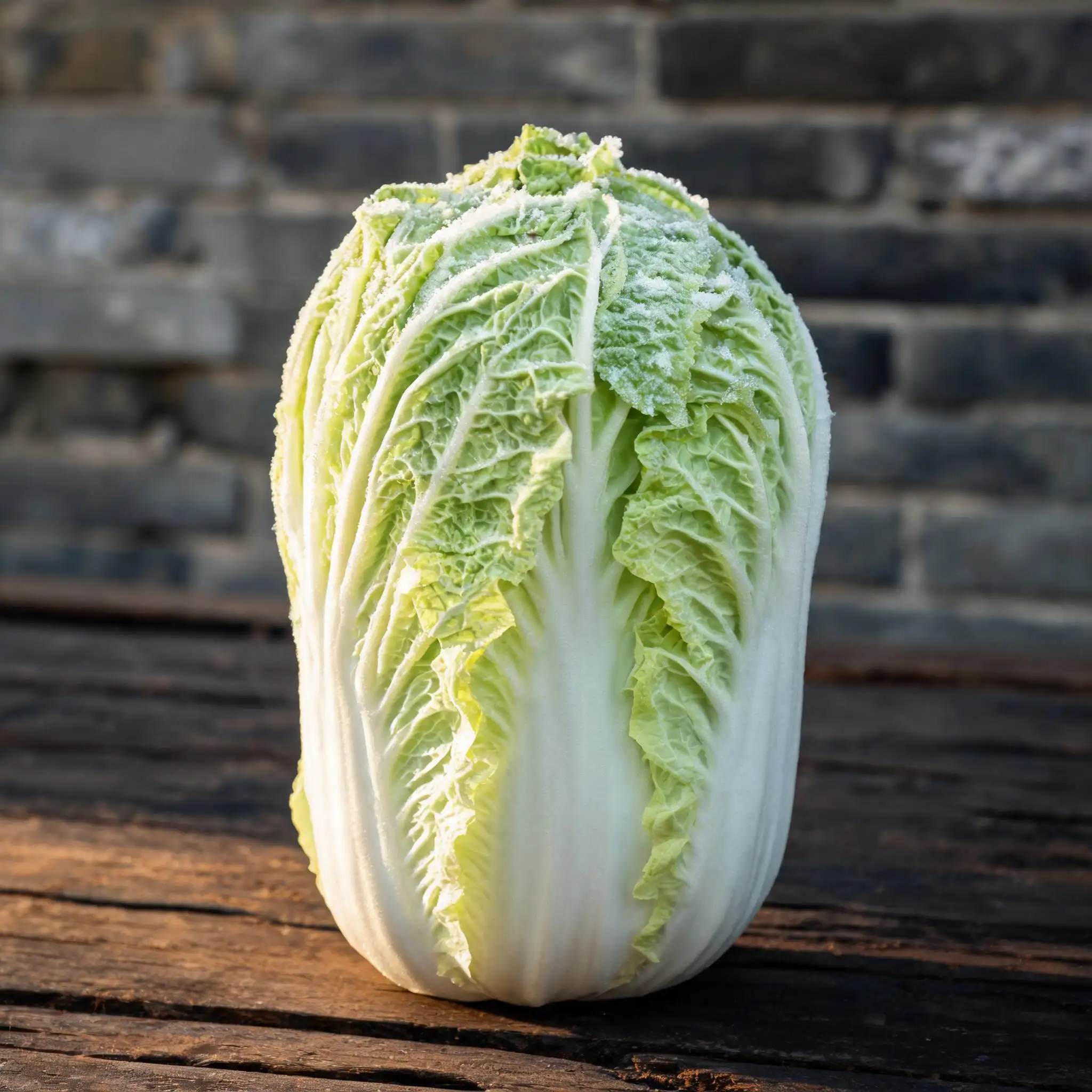
Pick a cabbage that feels heavy for its size. The outer leaves should press tight against each other, no gaps, no soft patches. Cabbages sold after the first hard frost taste noticeably sweeter — the cold converts starch to sugar in the outer leaves, and that natural sweetness will offset the mustard bite later. Peel back one leaf in the shop and check the color inside: the heart should be pale yellow, almost white at the base, with no browning or wet spots along the rib. That compact, dense center is what holds its cylinder shape through the blanch and the long sealed rest. A loose or airy cabbage will collapse before it finishes.
## 2 · The Peel
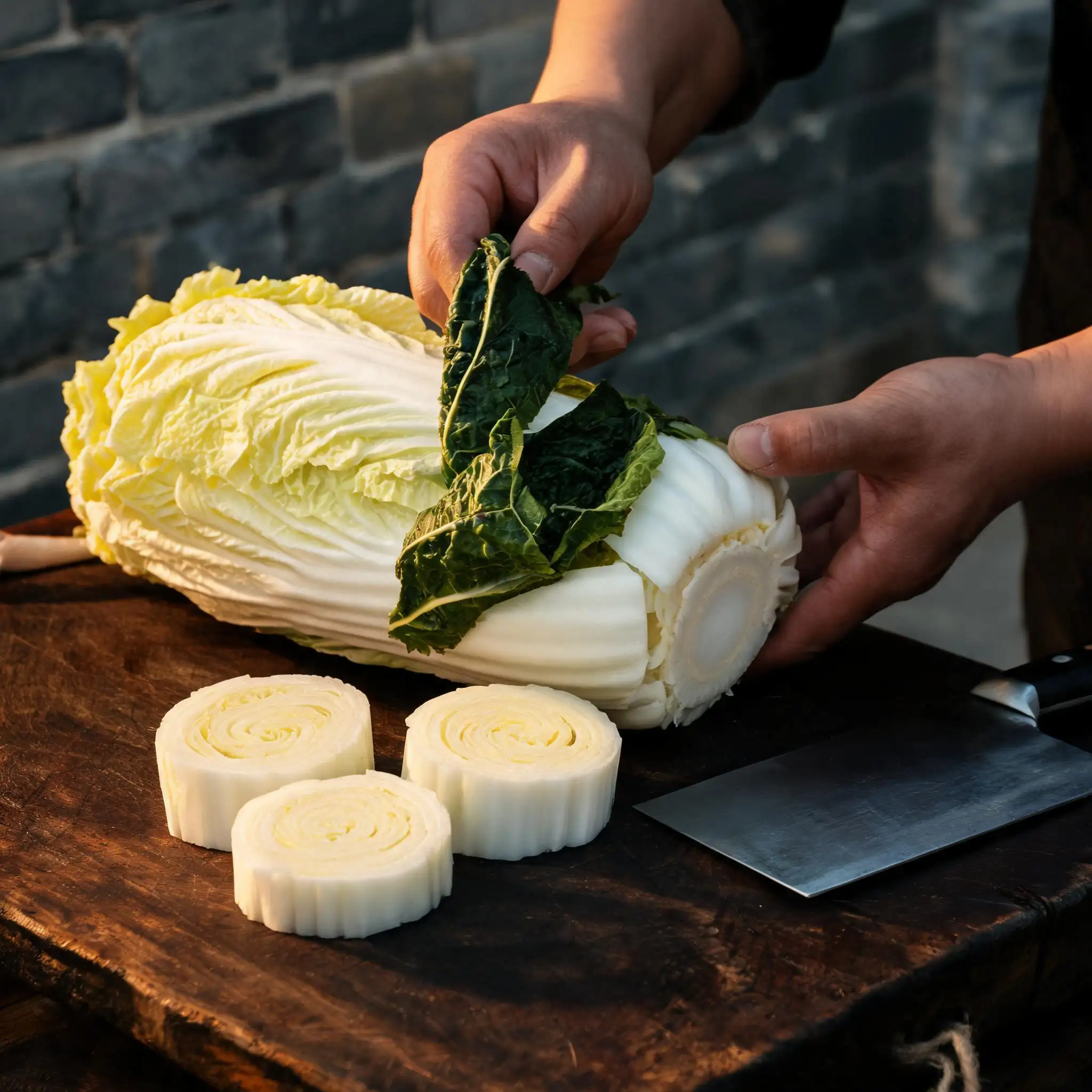
Strip off the outer dark green leaves and discard them — they're too fibrous and won't take the mustard evenly. Keep peeling until you reach the pale, firm heart. Cut it into cylinders about 5 to 6 cm tall. **The cut needs to be clean and perpendicular — not angled.** A flat bottom is what lets each segment stand upright on its own. Each piece should feel dense and solid when you press the top with your palm. If a segment wobbles on the board, trim a thin slice off the base to level it. The flat top face, with its concentric leaf rings, is where most of the mustard will enter.
## 3 · The Blanch
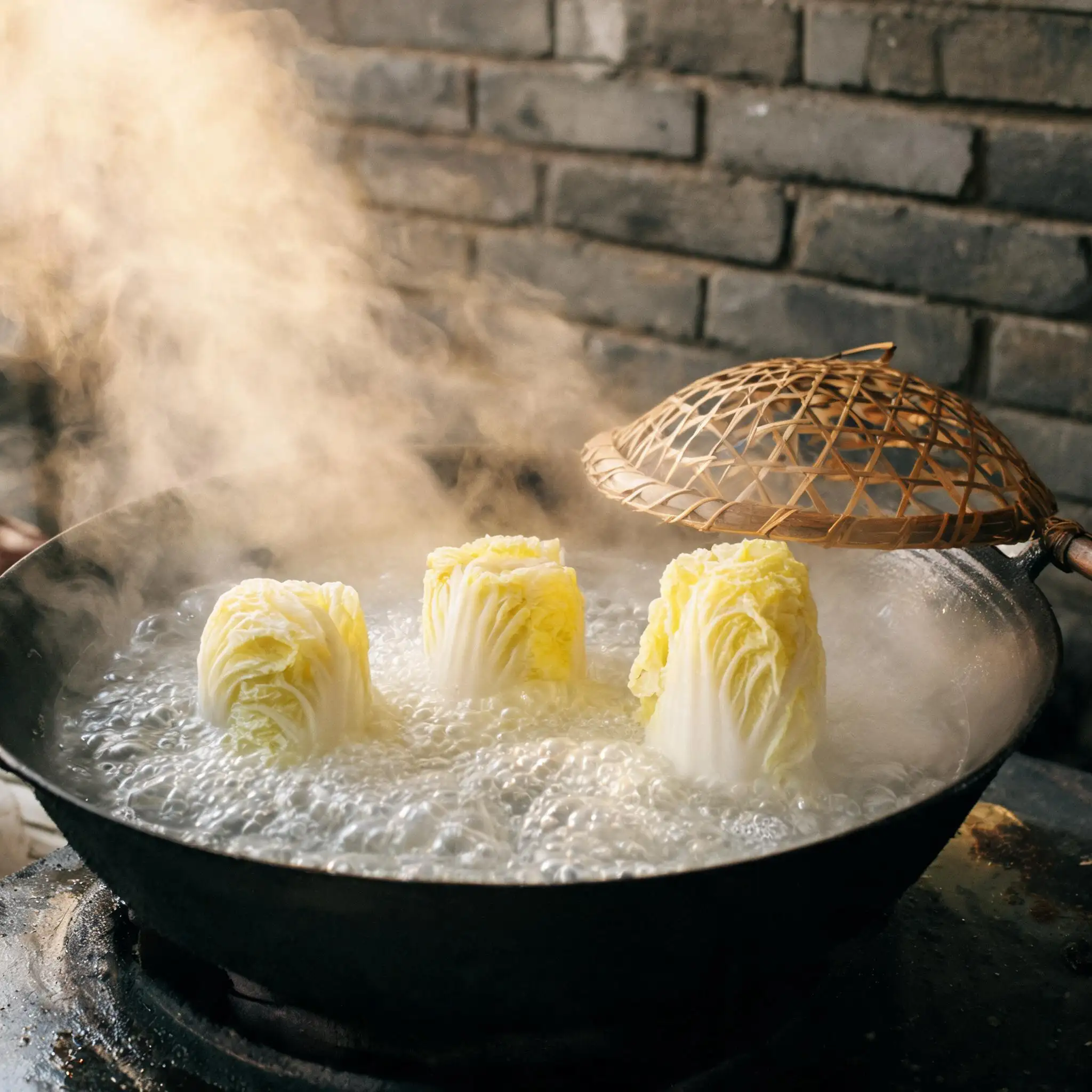
Bring a wide pot of water to a hard, rolling boil. Stand the cylinders upright in the water — don't lay them sideways or the layers will loosen unevenly. **Blanch for 45 seconds to 1 minute.** The outer leaves should turn just translucent and yield slightly to pressure; the core should stay firm. The test: press the side of a cylinder gently with a finger. It should give a little but spring back. If it stays dented, the layers have softened too far and will separate when you spoon the mustard in. Pull them out while they still have structure — they'll continue softening slightly from residual heat after they come out of the water.
## 4 · The Stack
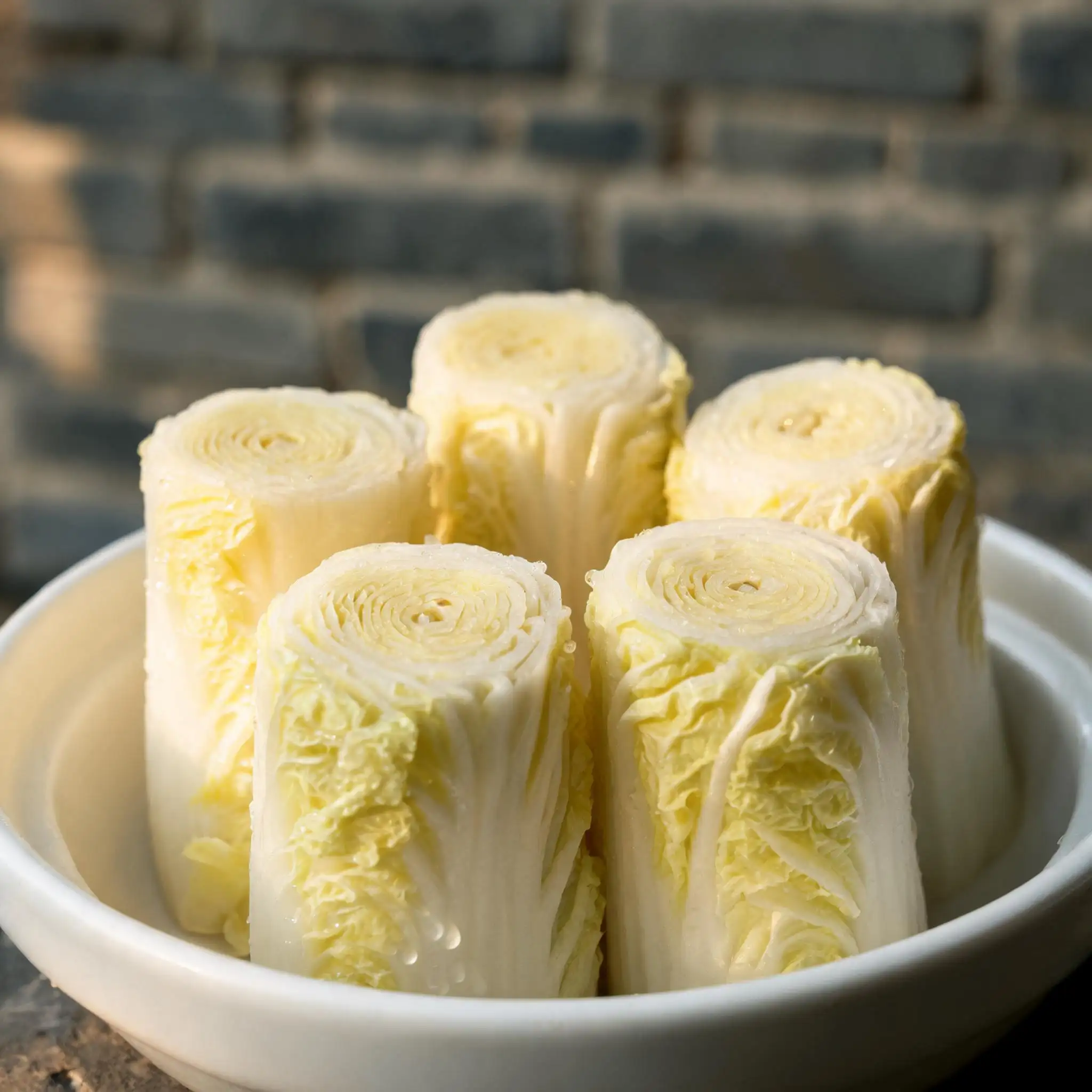
Lift them out with a spider strainer and set them upright on a folded cloth or a wire rack to drain. Give them a full five minutes before touching them. **Do not rinse them with cold water.** Shocking the cabbage would cause the leaf layers to contract and seal shut — the mustard paste needs those layers slightly open to get in. The residual warmth does that. Once they've stopped dripping, transfer them standing upright into a shallow ceramic dish, arranged close enough that they lean against each other slightly and won't tip when you work the mustard between the layers.
## 5 · The Mustard
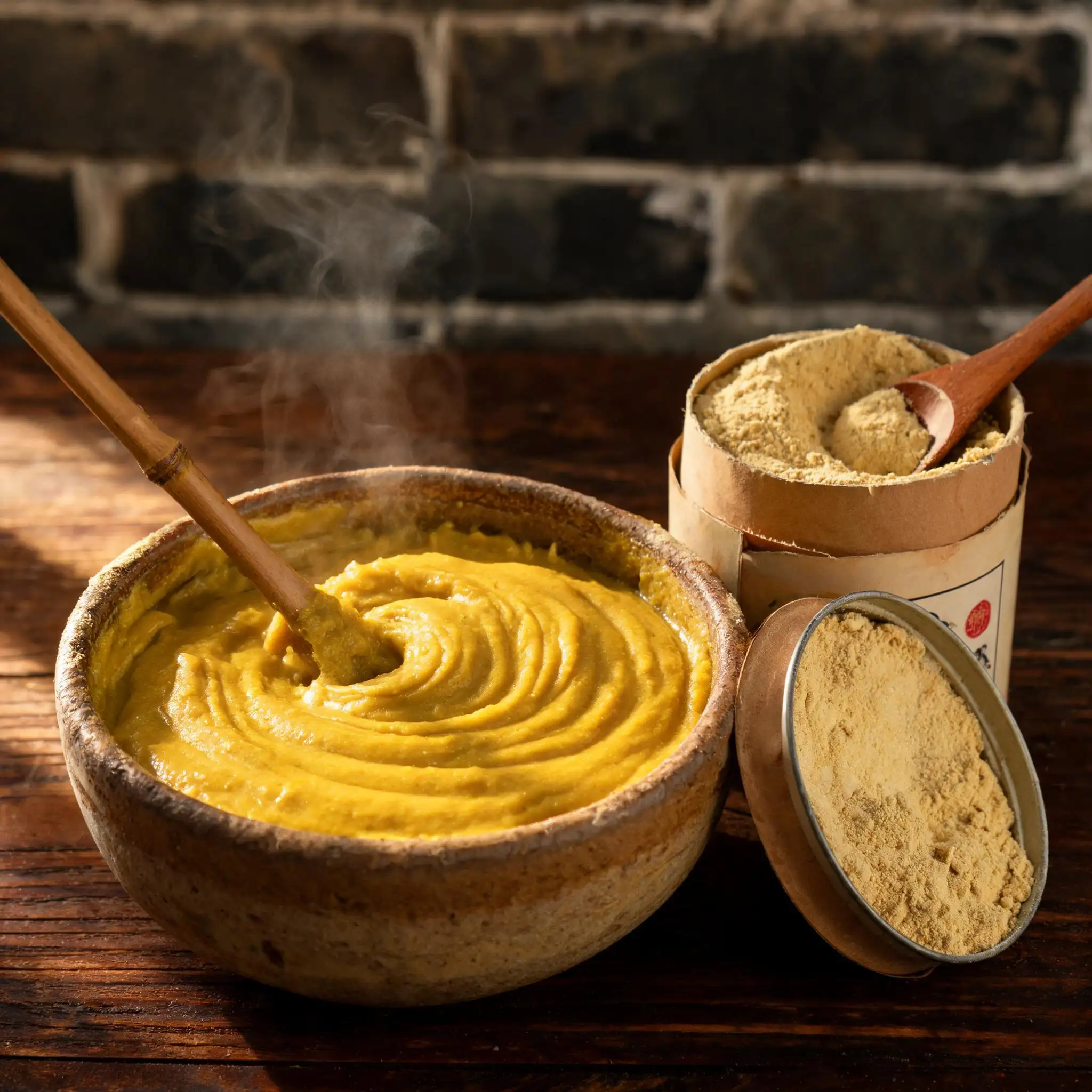
Put the mustard powder into a small rough ceramic bowl — not a metal one. Pour in all the hot water at once, then stir immediately and continuously in one direction until the paste is smooth and thick with no dry streaks. **Cover the bowl with a flat plate and leave it untouched for 5 minutes.** This step is not optional. Mustard's heat comes from a chemical reaction between myrosinase enzymes and glucosinolates in the powder, and that reaction needs heat and time to run. If you add the vinegar too early, the acid drops the pH and shuts the enzymes down before the full heat develops. After 5 minutes, stir in the rice vinegar, sugar, and salt. Taste it: **sharp enough to make your eyes water, softened at the edges by the vinegar and sugar.** If it's flat, the powder was stale — old mustard loses its enzyme activity.
## 6 · The Pour
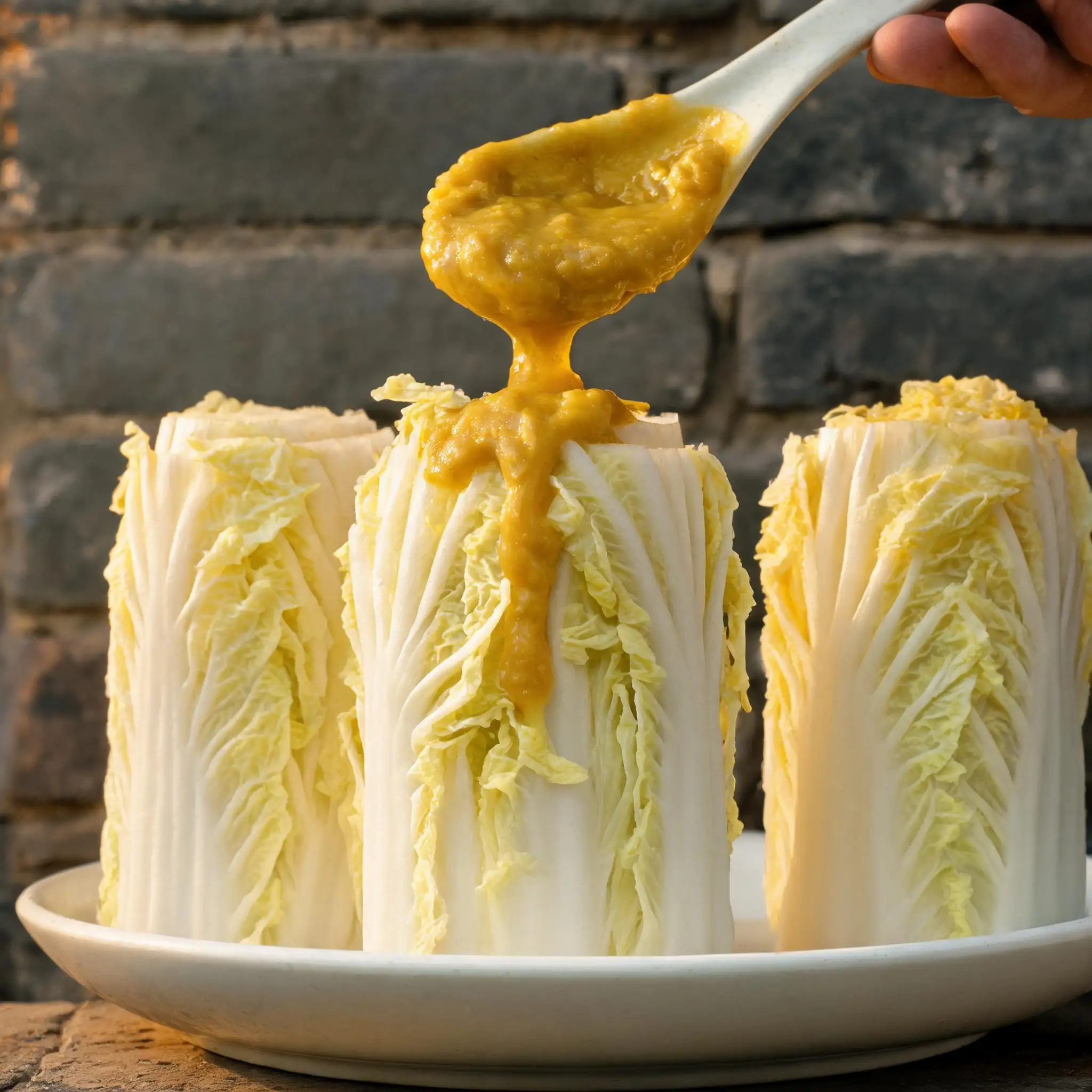
Use a ceramic spoon to work the mustard paste between the leaf layers of each cylinder. Don't drop it on top and expect it to run in on its own — the layers are too tightly packed for that. **Press the back of the spoon into the gaps and push the paste sideways**, working from the outer edge toward the center, layer by layer. The golden paste against the pale white-yellow leaves shows you where you've been. If you can still see large areas of plain white, keep going. Every layer needs to carry some mustard. The outer layers will hold the most heat; the inner ones will stay milder. That difference is intentional — don't try to even it out.
## 7 · The Wait
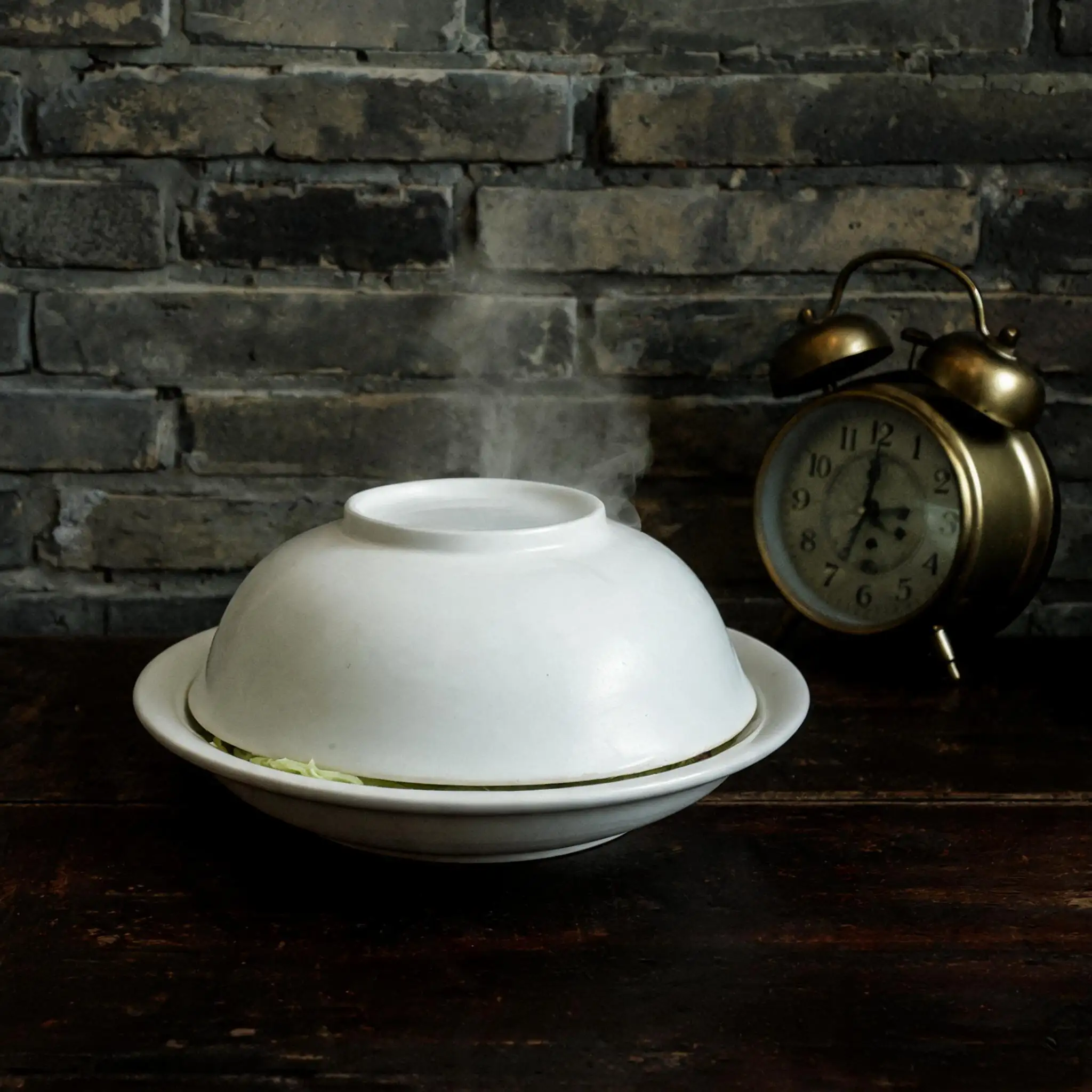
Invert a bowl large enough to cover the entire dish and press it rim to rim over the cabbage. **The seal needs to be reasonably tight** — the mustard vapor that concentrates inside is what pushes the flavor deep into the leaves. A loose cover lets it escape instead. Leave the sealed dish at room temperature for 12 to 24 hours. If you open it at 8 hours, the outer two or three leaves will taste fully seasoned but the inner layers will still be plain cabbage. You have to wait. This is not a dish you can rush by refrigerating it earlier — cold slows the penetration down significantly. Room temperature for the full rest, then refrigerate before serving if you want it cold.
## 8 · The Serve
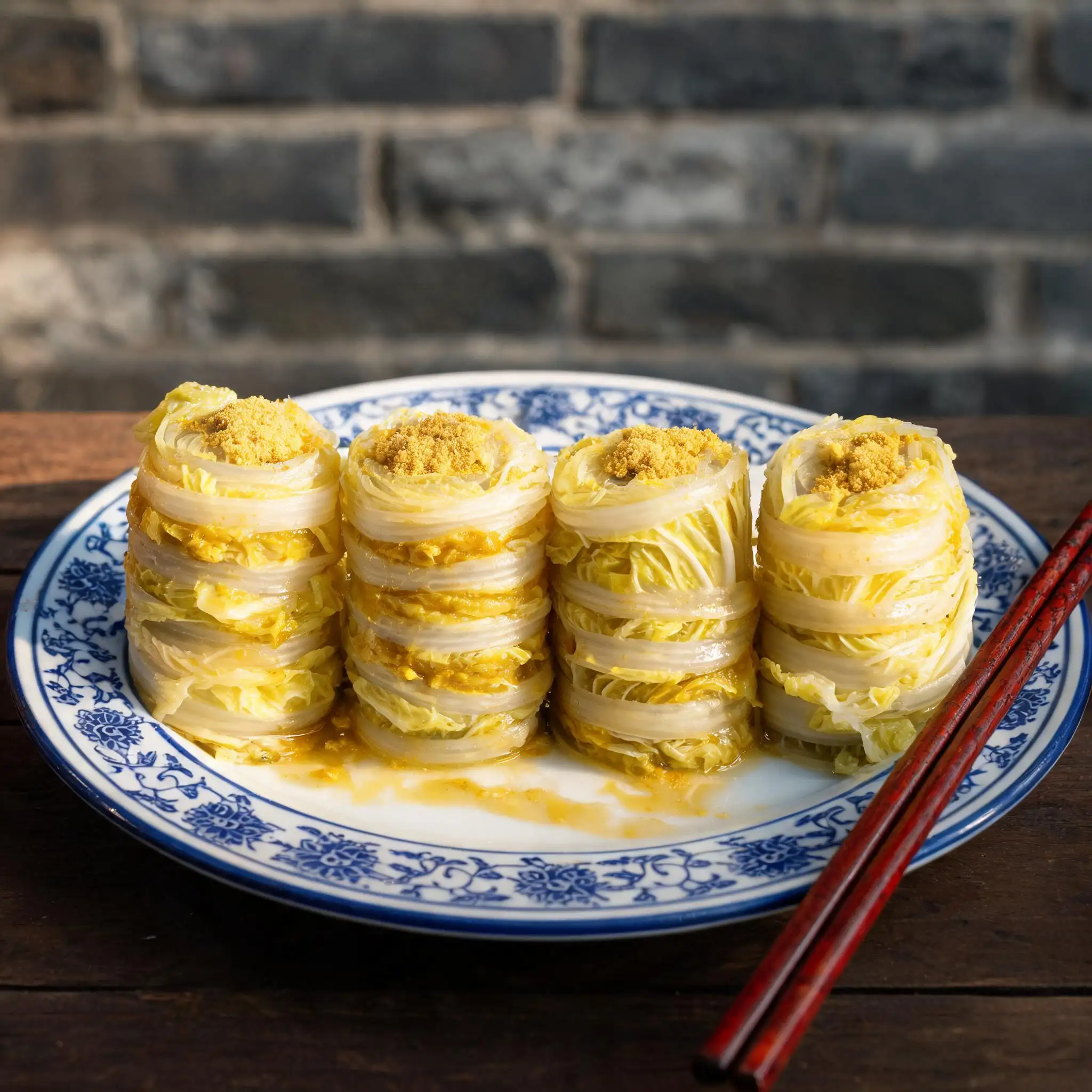
Lift the cover off. The cabbage has shifted color — more golden, more translucent, slightly compressed from its own weight. The mustard smell comes out in a wave when you break the seal. Serve it cold, directly from the dish. Nothing added, no garnish needed. **Eat it one leaf at a time** — pull back the outer layers first. They carry the most heat and the sharpest mustard. The inner leaves are cooler, sweeter, still a little crisp. The contrast between the two is why you cut the cabbage into stacked cylinders instead of shredding it. You eat through the heat to get to the cool center.
The actual work is about twenty-five minutes. The rest is just leaving it alone.
> Winter in Beijing used to mean a pile of napa cabbage stacked against the wall outside every door. Families bought it by the hundred jin and let the cold keep it through January. This dish came out of that — a cold vegetable pickle made with yellow mustard, rice vinegar, and time. Nothing cooked past a quick blanch. No fire after that. You close a bowl over it and leave the kitchen. You come back the next day and it's done.
**Serves** 4–6 · **Active time** 25 min · **Total time** 24 hr
---
## Ingredients
**Napa Cabbage**
- 1 medium napa cabbage heart, firm and pale yellow, approximately 800 g
**Mustard Sauce**
- 30 g Chinese yellow mustard powder (黄芥末粉)
- 45 ml hot water, just off the boil
- 2 tbsp rice vinegar
- 1½ tbsp sugar
- ½ tsp salt
---
## 1 · The Cabbage
Pick a cabbage that feels heavy for its size. The outer leaves should press tight against each other, no gaps, no soft patches. Cabbages sold after the first hard frost taste noticeably sweeter — the cold converts starch to sugar in the outer leaves, and that natural sweetness will offset the mustard bite later. Peel back one leaf in the shop and check the color inside: the heart should be pale yellow, almost white at the base, with no browning or wet spots along the rib. That compact, dense center is what holds its cylinder shape through the blanch and the long sealed rest. A loose or airy cabbage will collapse before it finishes.
## 2 · The Peel
Strip off the outer dark green leaves and discard them — they're too fibrous and won't take the mustard evenly. Keep peeling until you reach the pale, firm heart. Cut it into cylinders about 5 to 6 cm tall. **The cut needs to be clean and perpendicular — not angled.** A flat bottom is what lets each segment stand upright on its own. Each piece should feel dense and solid when you press the top with your palm. If a segment wobbles on the board, trim a thin slice off the base to level it. The flat top face, with its concentric leaf rings, is where most of the mustard will enter.
## 3 · The Blanch
Bring a wide pot of water to a hard, rolling boil. Stand the cylinders upright in the water — don't lay them sideways or the layers will loosen unevenly. **Blanch for 45 seconds to 1 minute.** The outer leaves should turn just translucent and yield slightly to pressure; the core should stay firm. The test: press the side of a cylinder gently with a finger. It should give a little but spring back. If it stays dented, the layers have softened too far and will separate when you spoon the mustard in. Pull them out while they still have structure — they'll continue softening slightly from residual heat after they come out of the water.
## 4 · The Stack
Lift them out with a spider strainer and set them upright on a folded cloth or a wire rack to drain. Give them a full five minutes before touching them. **Do not rinse them with cold water.** Shocking the cabbage would cause the leaf layers to contract and seal shut — the mustard paste needs those layers slightly open to get in. The residual warmth does that. Once they've stopped dripping, transfer them standing upright into a shallow ceramic dish, arranged close enough that they lean against each other slightly and won't tip when you work the mustard between the layers.
## 5 · The Mustard
Put the mustard powder into a small rough ceramic bowl — not a metal one. Pour in all the hot water at once, then stir immediately and continuously in one direction until the paste is smooth and thick with no dry streaks. **Cover the bowl with a flat plate and leave it untouched for 5 minutes.** This step is not optional. Mustard's heat comes from a chemical reaction between myrosinase enzymes and glucosinolates in the powder, and that reaction needs heat and time to run. If you add the vinegar too early, the acid drops the pH and shuts the enzymes down before the full heat develops. After 5 minutes, stir in the rice vinegar, sugar, and salt. Taste it: **sharp enough to make your eyes water, softened at the edges by the vinegar and sugar.** If it's flat, the powder was stale — old mustard loses its enzyme activity.
## 6 · The Pour
Use a ceramic spoon to work the mustard paste between the leaf layers of each cylinder. Don't drop it on top and expect it to run in on its own — the layers are too tightly packed for that. **Press the back of the spoon into the gaps and push the paste sideways**, working from the outer edge toward the center, layer by layer. The golden paste against the pale white-yellow leaves shows you where you've been. If you can still see large areas of plain white, keep going. Every layer needs to carry some mustard. The outer layers will hold the most heat; the inner ones will stay milder. That difference is intentional — don't try to even it out.
## 7 · The Wait
Invert a bowl large enough to cover the entire dish and press it rim to rim over the cabbage. **The seal needs to be reasonably tight** — the mustard vapor that concentrates inside is what pushes the flavor deep into the leaves. A loose cover lets it escape instead. Leave the sealed dish at room temperature for 12 to 24 hours. If you open it at 8 hours, the outer two or three leaves will taste fully seasoned but the inner layers will still be plain cabbage. You have to wait. This is not a dish you can rush by refrigerating it earlier — cold slows the penetration down significantly. Room temperature for the full rest, then refrigerate before serving if you want it cold.
## 8 · The Serve
Lift the cover off. The cabbage has shifted color — more golden, more translucent, slightly compressed from its own weight. The mustard smell comes out in a wave when you break the seal. Serve it cold, directly from the dish. Nothing added, no garnish needed. **Eat it one leaf at a time** — pull back the outer layers first. They carry the most heat and the sharpest mustard. The inner leaves are cooler, sweeter, still a little crisp. The contrast between the two is why you cut the cabbage into stacked cylinders instead of shredding it. You eat through the heat to get to the cool center.
The actual work is about twenty-five minutes. The rest is just leaving it alone.