·5/13/2026
from



Peking Duck-BeiJing
# Peking Duck — The 36-Hour Bird
> Three days before the duck hits the table, someone is already working.
> This is what most people never see.
---
## 1 · The Bird
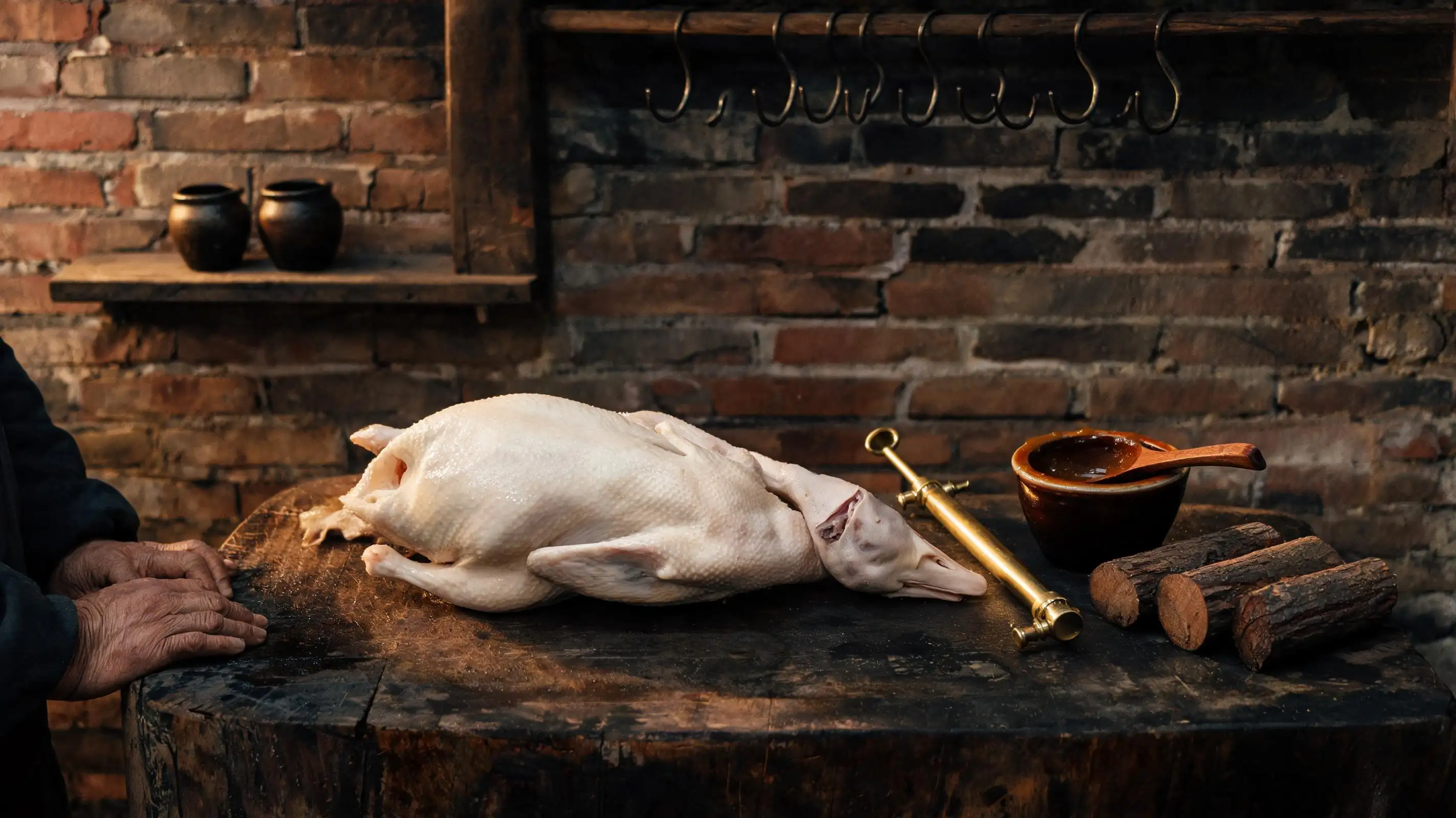
A duck bred specifically for this dish — grain-fed for 65 days, fattened until it sits just under 3 kg. The neck gets a small incision at the base, barely a centimeter wide. Every step that follows depends on that cut staying clean.
The brass pump, the maltose, the fire — none of it matters if the bird isn't right.
---
## 2 · The Pump
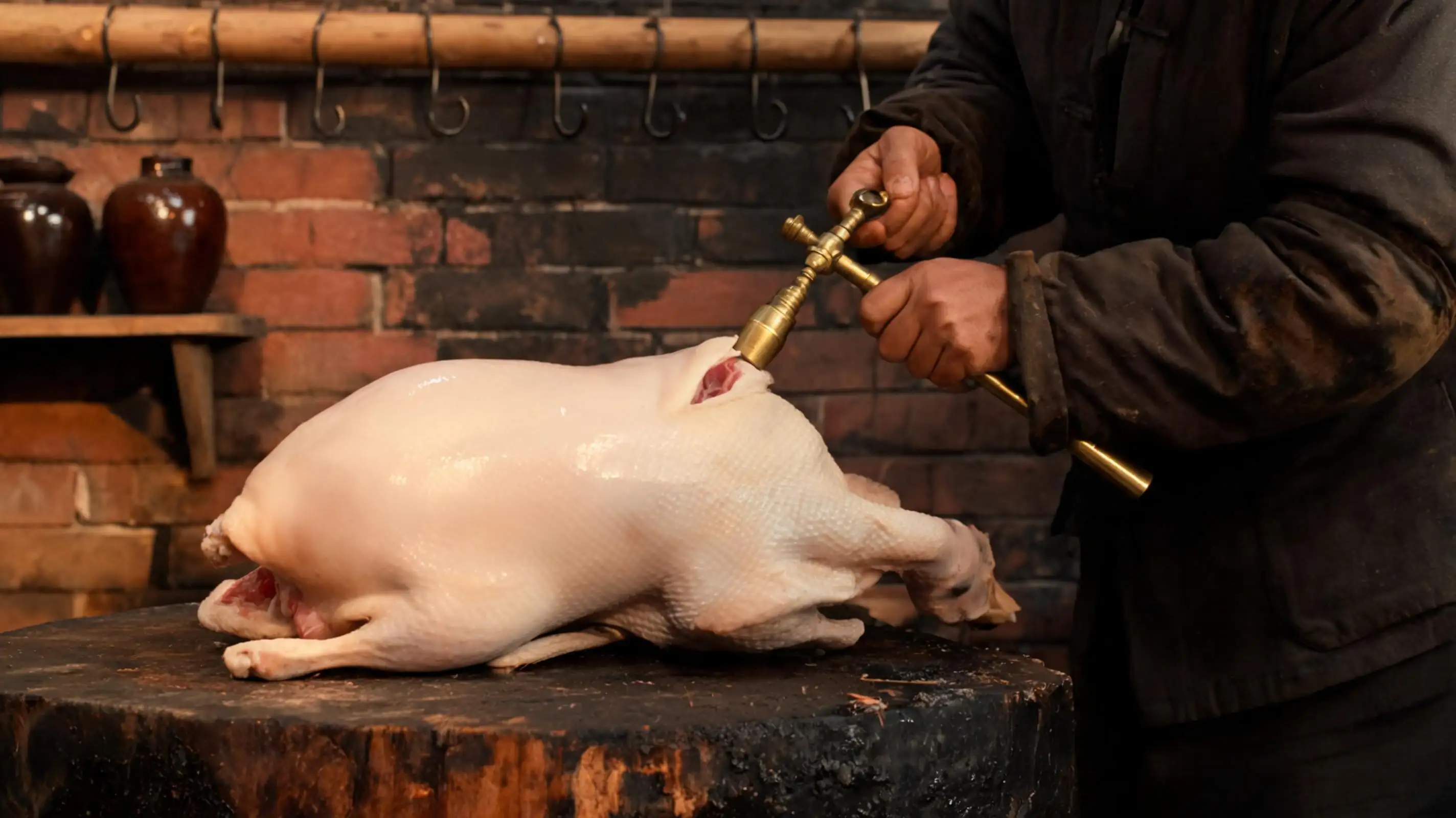
A brass nozzle goes into the neck cut. The cook pumps air in by hand, slow and even, working around the body until the skin pulls away from the meat across the whole surface. **If you skip this step, the skin bonds to the fat layer in the oven and never crisps.** You can feel when it's done — the bird goes round and firm, like a small drum. Press it anywhere and it holds.
---
## 3 · The Scald
Boiling water, ladled from height, poured over the whole bird in one continuous pass. The skin closes fast on contact. Steam comes up hard. **The water has to be at a full rolling boil, not just hot** — a lukewarm pour leaves the pores open and the skin goes soft in the oven. This step takes about 20 seconds. It matters.
---
## 4 · The Glaze
Maltose dissolved in warm water, thin enough to run. Poured over the hanging duck, it flows into every fold and crease, coating the entire surface. **Two coats is the minimum. Most old shops do three.** This is what turns lacquer-red in the oven — the sugars caramelize under high heat and set hard. The color you see on a finished bird starts here.
---
## 5 · The Dry
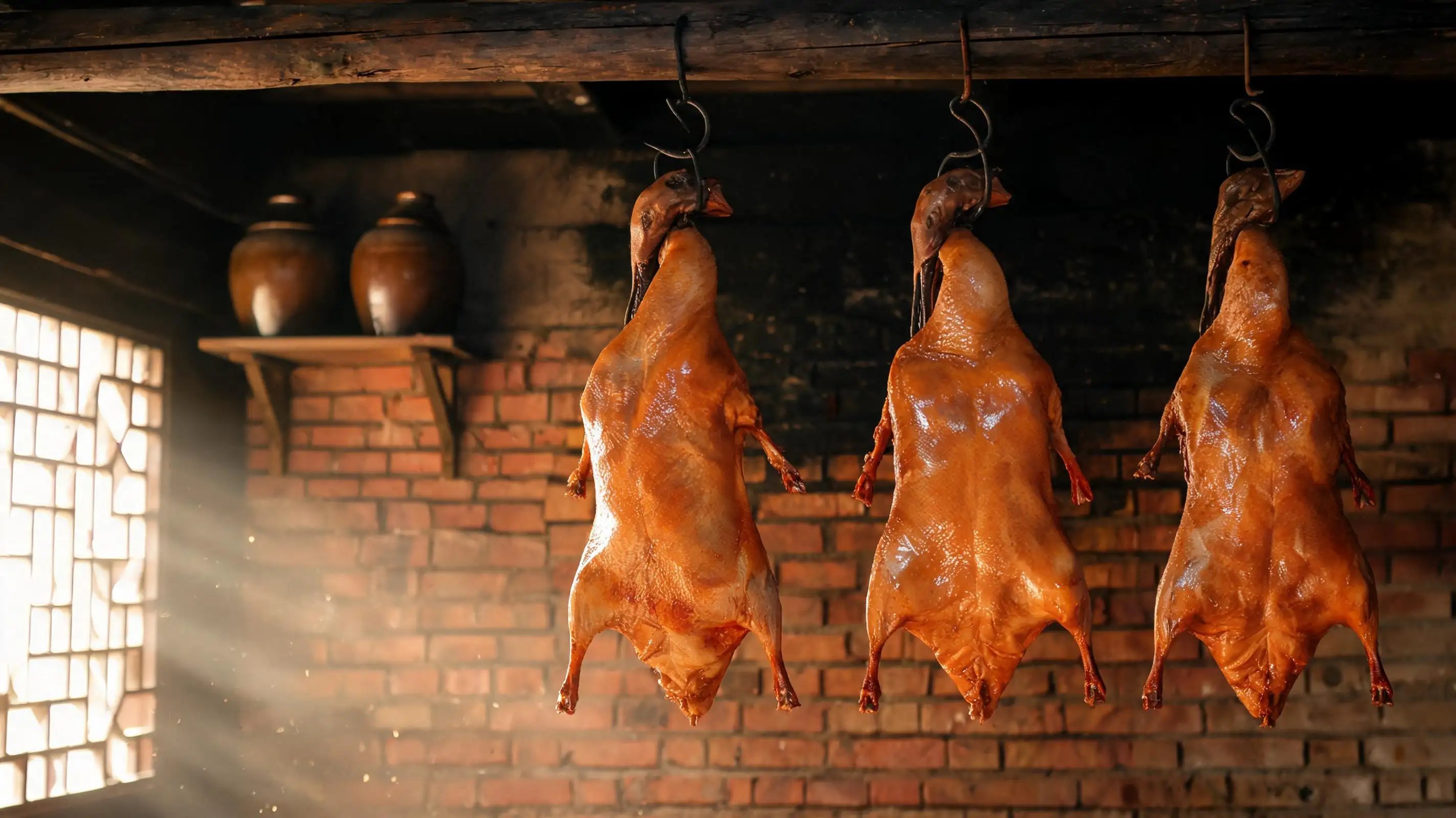
The duck hangs overnight — minimum 12 hours — in moving air. The surface has to be completely dry before it goes near the oven. **Any moisture left in the skin will steam in the heat and soften everything.** A cold room speeds it up. The skin goes from damp and soft to papery and taut. That tautness is what you want going in.
---
## 6 · The Wood
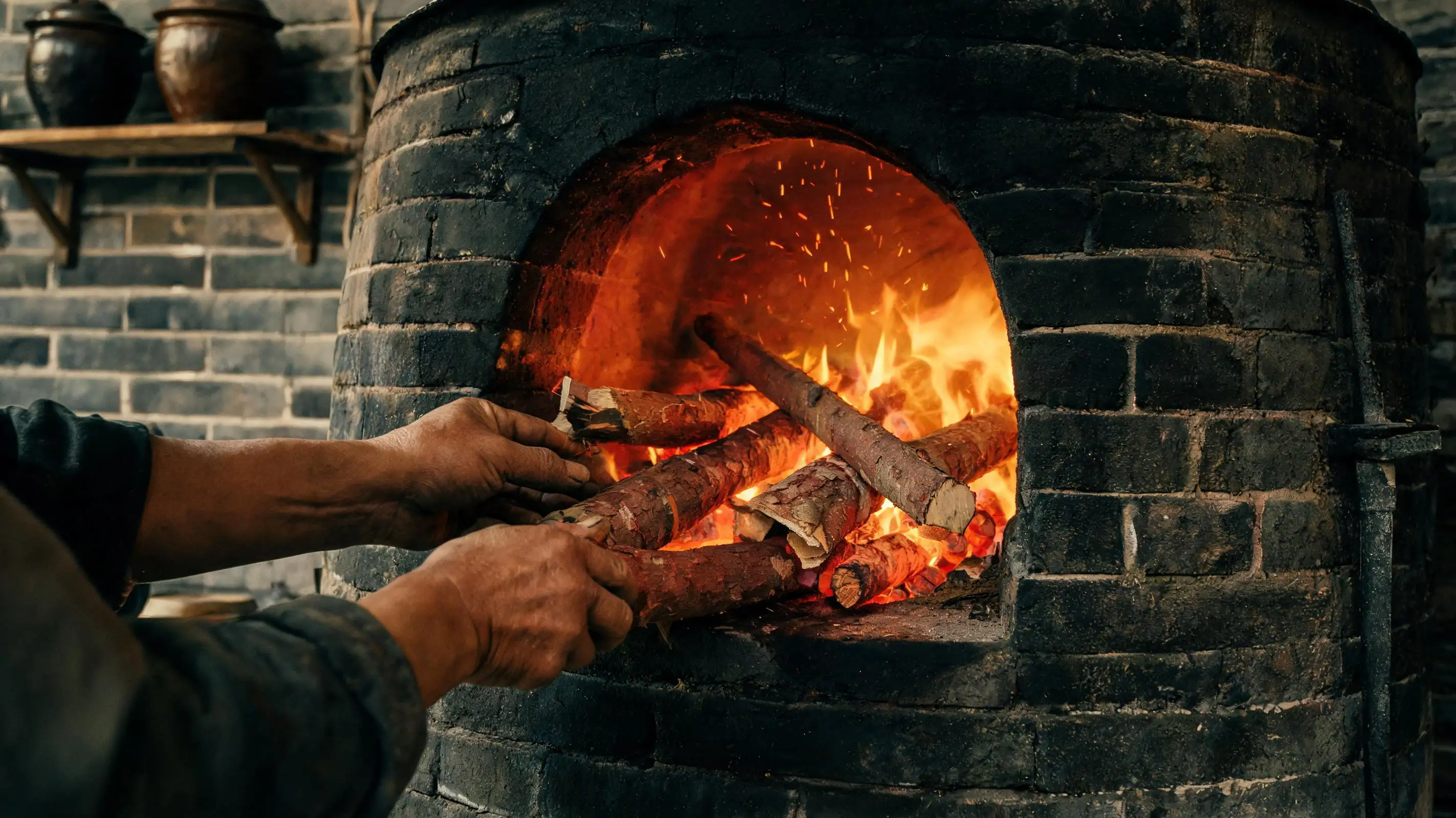
Jujube wood — sometimes pear or peach. Fruitwood burns hot and adds a faint sweetness to the smoke that fills the oven cavity. **Hardwood split thin, not thick logs.** Thick pieces burn uneven and leave cold spots. The fire goes in first, arranged so it burns flat and wide across the oven base. You wait until the brick walls start to glow before the duck goes in.
---
## 7 · The Roast
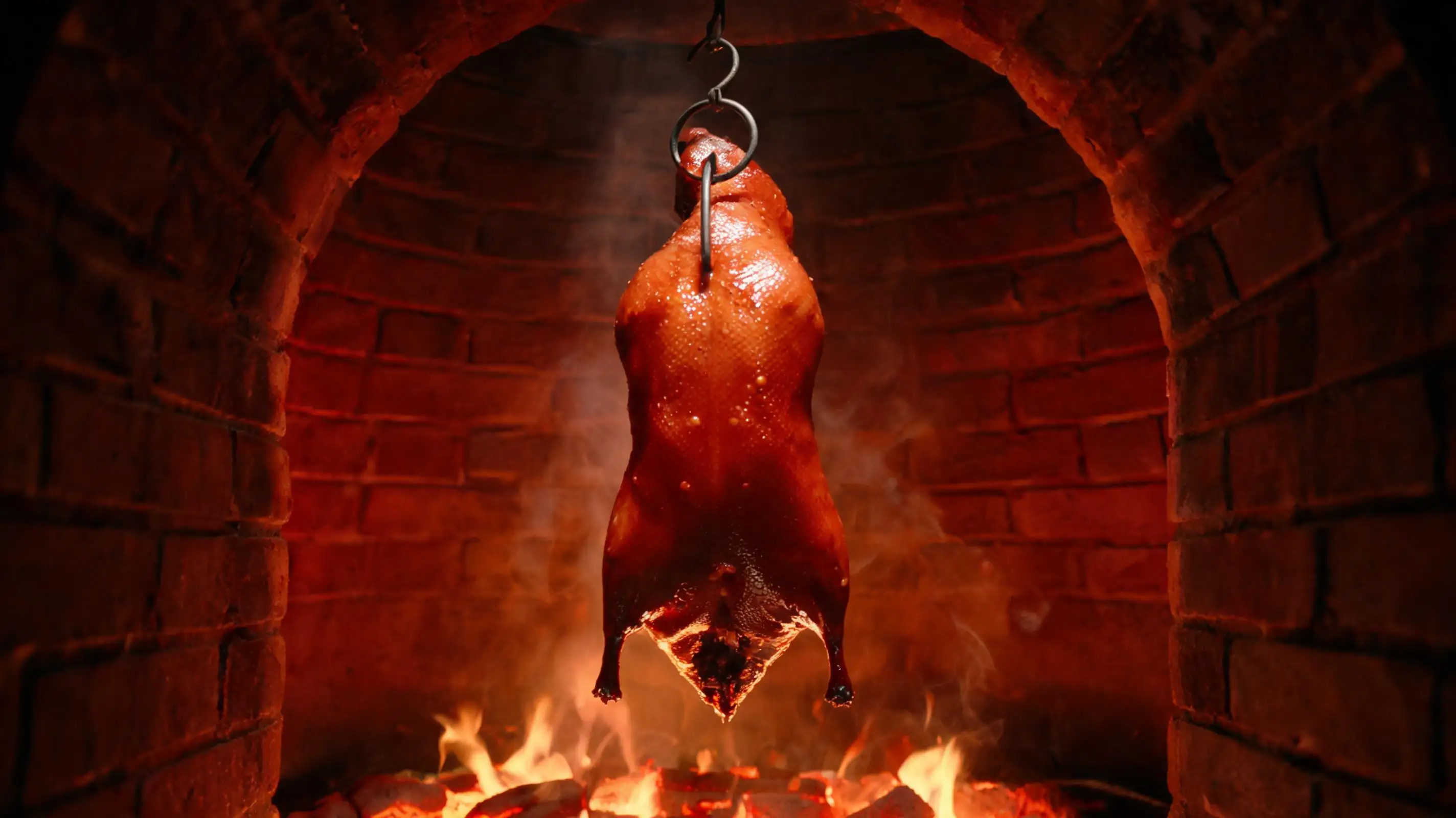
The duck drops into the cylindrical brick oven, hanging by a hook directly over the fire. Around 260°C, roughly 40 minutes. The cook rotates it twice — once at 15 minutes, once at 30. Fat renders out through the skin and drips down toward the coals. You hear it hiss. **The skin blisters slightly and tightens — that's the moment to watch for.** Pull it too early and the skin is still soft. Too late and it chars.
---
## 8 · The Slice
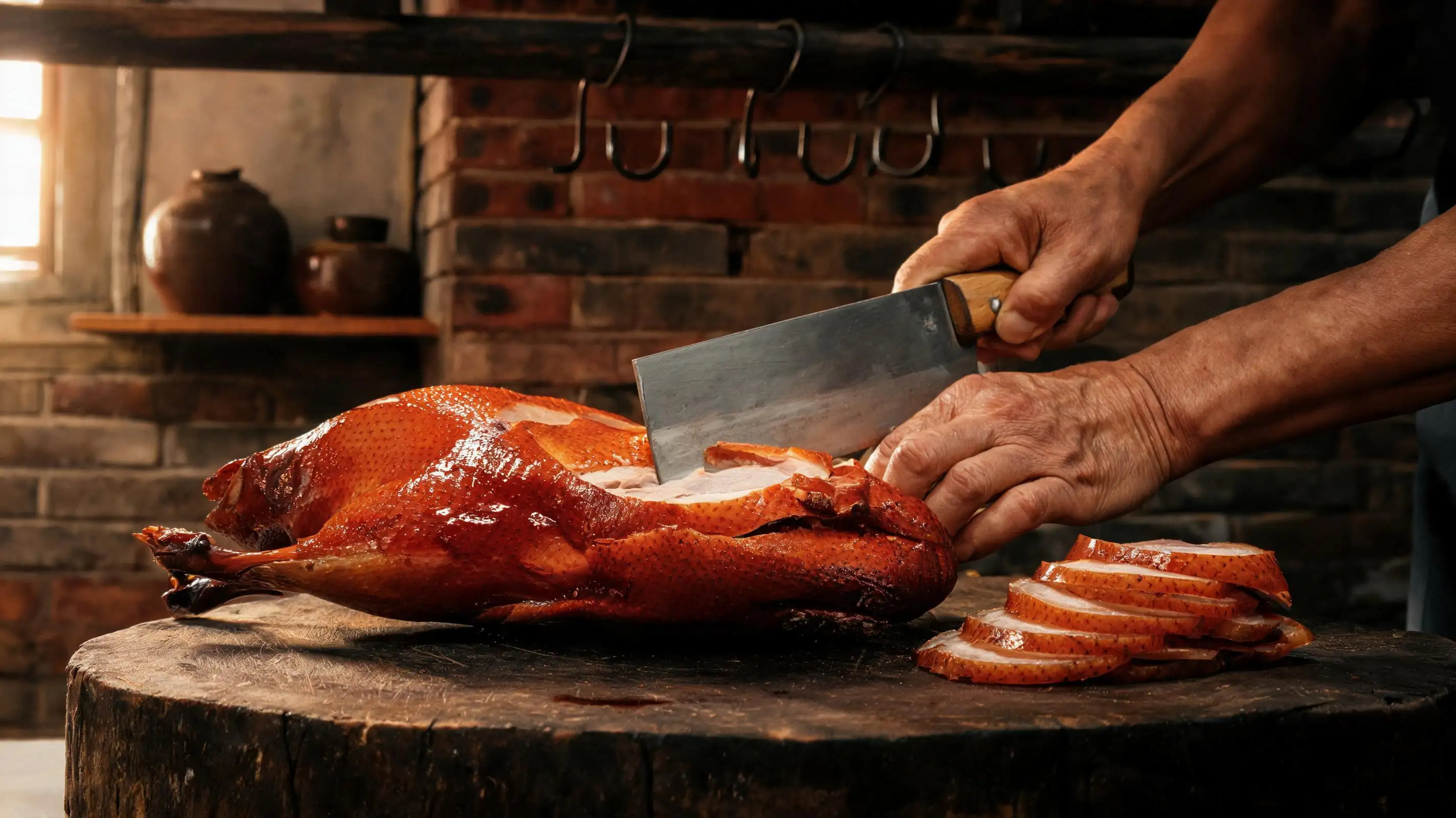
A thin, flexible cleaver. The cook works fast across the breast, angling the blade slightly to lift skin and a thin layer of fat together in each piece. **The first plate is skin only — no meat.** The fat underneath should still be translucent. Press a piece between your fingers and it should crack, not bend. If it bends, the oven wasn't hot enough or the bird came out too early.
---
## 9 · The Table
Pancakes from the steamer, scallion, cucumber, sweet bean paste. Skin goes in first — one or two pieces, not a stack. A thin smear of paste. The greens on top. Roll it closed and press the end. **The whole process, from live bird to this table, takes 65 days of feeding plus 36 hours of prep.** The roll takes about 8 seconds.
Eat it while the skin is still warm.
> Three days before the duck hits the table, someone is already working.
> This is what most people never see.
---
## 1 · The Bird
A duck bred specifically for this dish — grain-fed for 65 days, fattened until it sits just under 3 kg. The neck gets a small incision at the base, barely a centimeter wide. Every step that follows depends on that cut staying clean.
The brass pump, the maltose, the fire — none of it matters if the bird isn't right.
---
## 2 · The Pump
A brass nozzle goes into the neck cut. The cook pumps air in by hand, slow and even, working around the body until the skin pulls away from the meat across the whole surface. **If you skip this step, the skin bonds to the fat layer in the oven and never crisps.** You can feel when it's done — the bird goes round and firm, like a small drum. Press it anywhere and it holds.
---
## 3 · The Scald
Boiling water, ladled from height, poured over the whole bird in one continuous pass. The skin closes fast on contact. Steam comes up hard. **The water has to be at a full rolling boil, not just hot** — a lukewarm pour leaves the pores open and the skin goes soft in the oven. This step takes about 20 seconds. It matters.
---
## 4 · The Glaze
Maltose dissolved in warm water, thin enough to run. Poured over the hanging duck, it flows into every fold and crease, coating the entire surface. **Two coats is the minimum. Most old shops do three.** This is what turns lacquer-red in the oven — the sugars caramelize under high heat and set hard. The color you see on a finished bird starts here.
---
## 5 · The Dry
The duck hangs overnight — minimum 12 hours — in moving air. The surface has to be completely dry before it goes near the oven. **Any moisture left in the skin will steam in the heat and soften everything.** A cold room speeds it up. The skin goes from damp and soft to papery and taut. That tautness is what you want going in.
---
## 6 · The Wood
Jujube wood — sometimes pear or peach. Fruitwood burns hot and adds a faint sweetness to the smoke that fills the oven cavity. **Hardwood split thin, not thick logs.** Thick pieces burn uneven and leave cold spots. The fire goes in first, arranged so it burns flat and wide across the oven base. You wait until the brick walls start to glow before the duck goes in.
---
## 7 · The Roast
The duck drops into the cylindrical brick oven, hanging by a hook directly over the fire. Around 260°C, roughly 40 minutes. The cook rotates it twice — once at 15 minutes, once at 30. Fat renders out through the skin and drips down toward the coals. You hear it hiss. **The skin blisters slightly and tightens — that's the moment to watch for.** Pull it too early and the skin is still soft. Too late and it chars.
---
## 8 · The Slice
A thin, flexible cleaver. The cook works fast across the breast, angling the blade slightly to lift skin and a thin layer of fat together in each piece. **The first plate is skin only — no meat.** The fat underneath should still be translucent. Press a piece between your fingers and it should crack, not bend. If it bends, the oven wasn't hot enough or the bird came out too early.
---
## 9 · The Table
Pancakes from the steamer, scallion, cucumber, sweet bean paste. Skin goes in first — one or two pieces, not a stack. A thin smear of paste. The greens on top. Roll it closed and press the end. **The whole process, from live bird to this table, takes 65 days of feeding plus 36 hours of prep.** The roll takes about 8 seconds.
Eat it while the skin is still warm.