·5/12/2026
from
ShanXI-Dao Xiao Mian
# Dao Xiao Mian — Hand-Shaved Noodles
> The dough is stiff. The knife is curved. The noodles fly.
> This is not something you learn from a video in an afternoon.
> But you can start today.
---
## 01 · The Grain
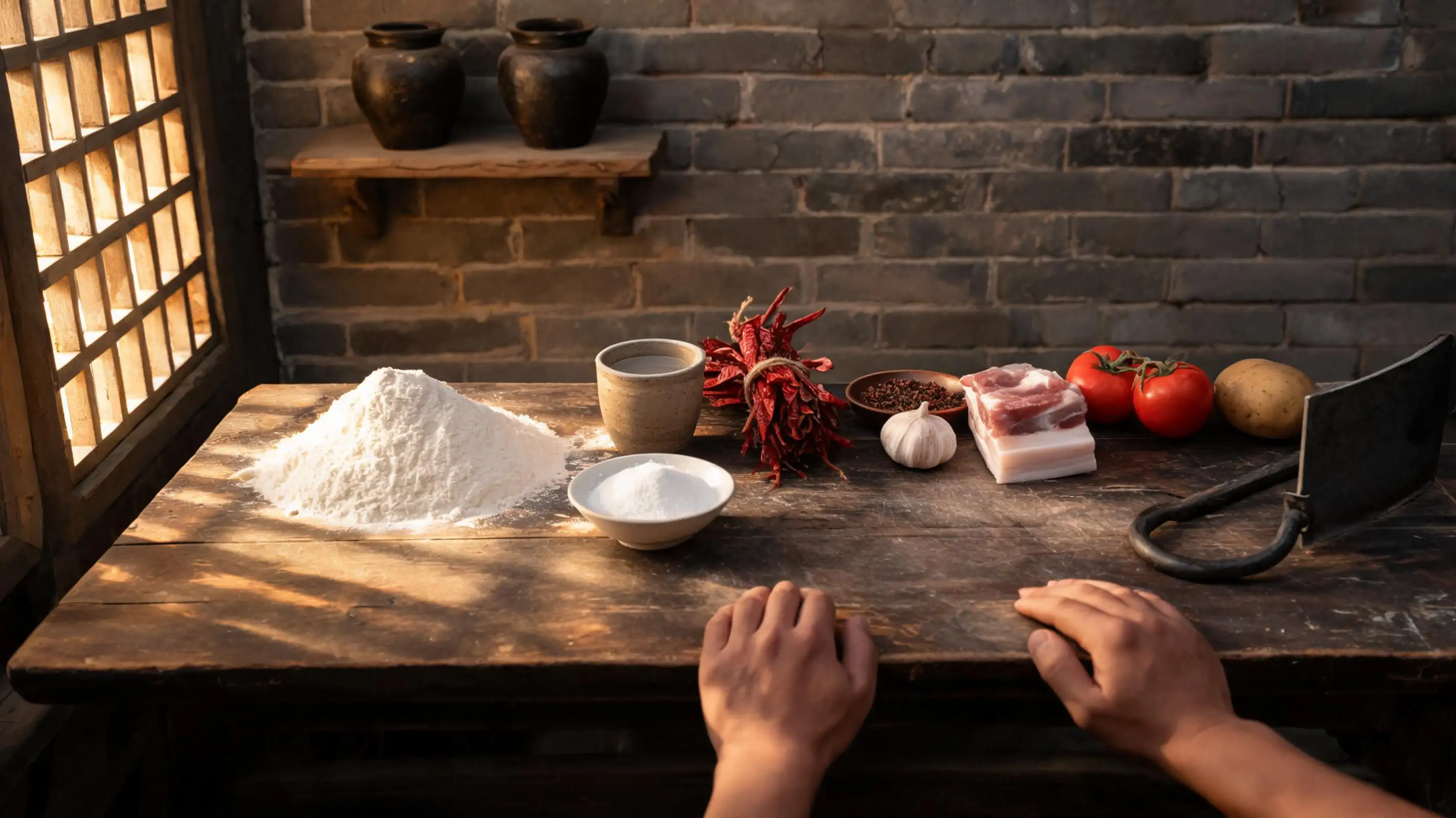
High-gluten flour only. Not all-purpose, not bread flour — **high-gluten**, the kind that pulls back when you knead it.
That resistance is the whole point. Dao xiao mian needs a dough that holds its shape mid-air, not one that flops the moment the knife leaves.
Pour onto the table. Don't sift it. The pile should look like a small hill.
---
## 02 · The Dough
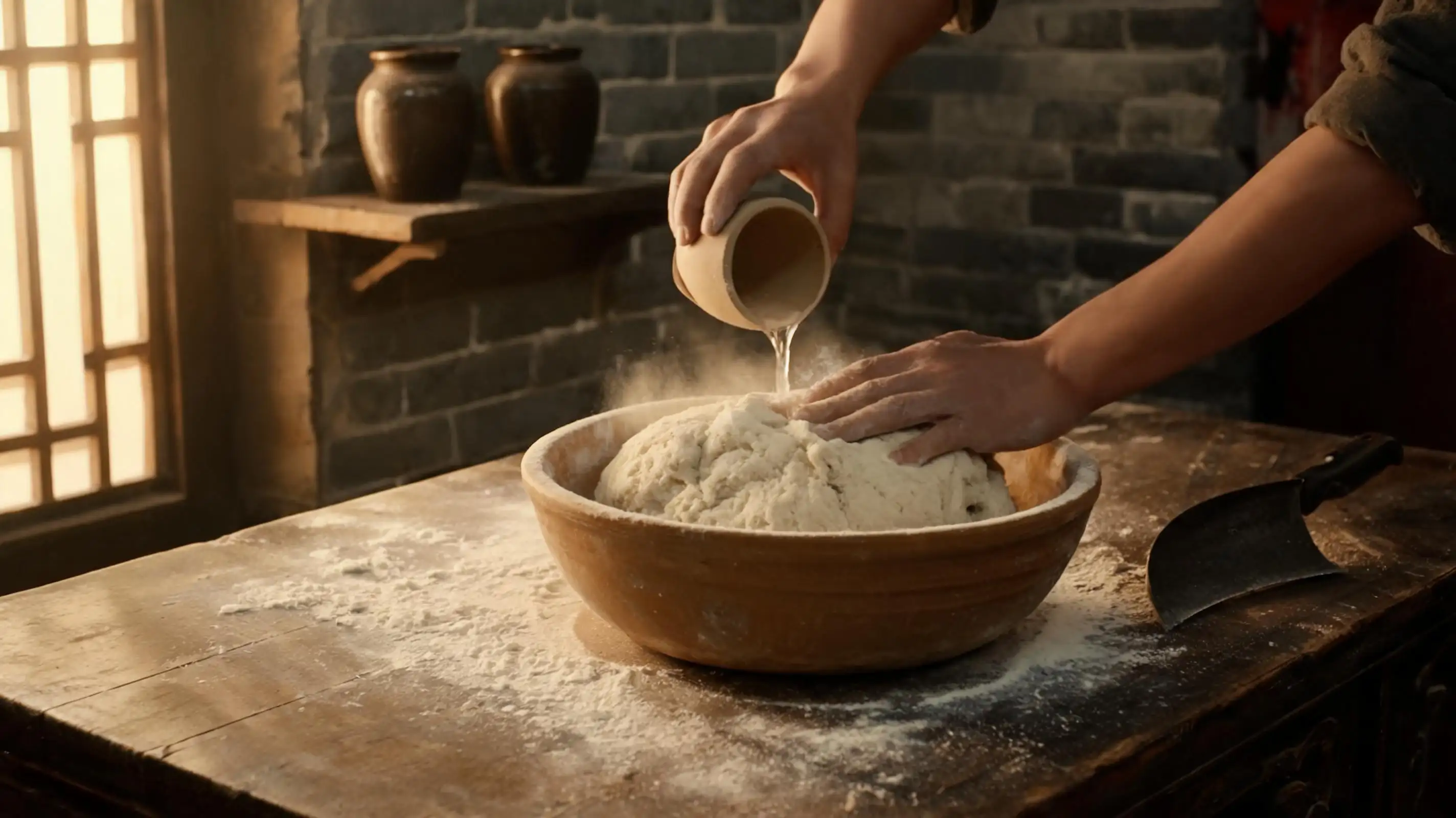
250ml cold water to 500g flour. Not warm, not hot — **cold water**, mixed in slowly.
Knead for at least 15 minutes. The dough should feel like leather by the end: smooth on the surface, no give when you press a thumb in. If it dents and stays dented, keep going.
This is the part most people rush. The dough knows.
---
## 03 · The Rest
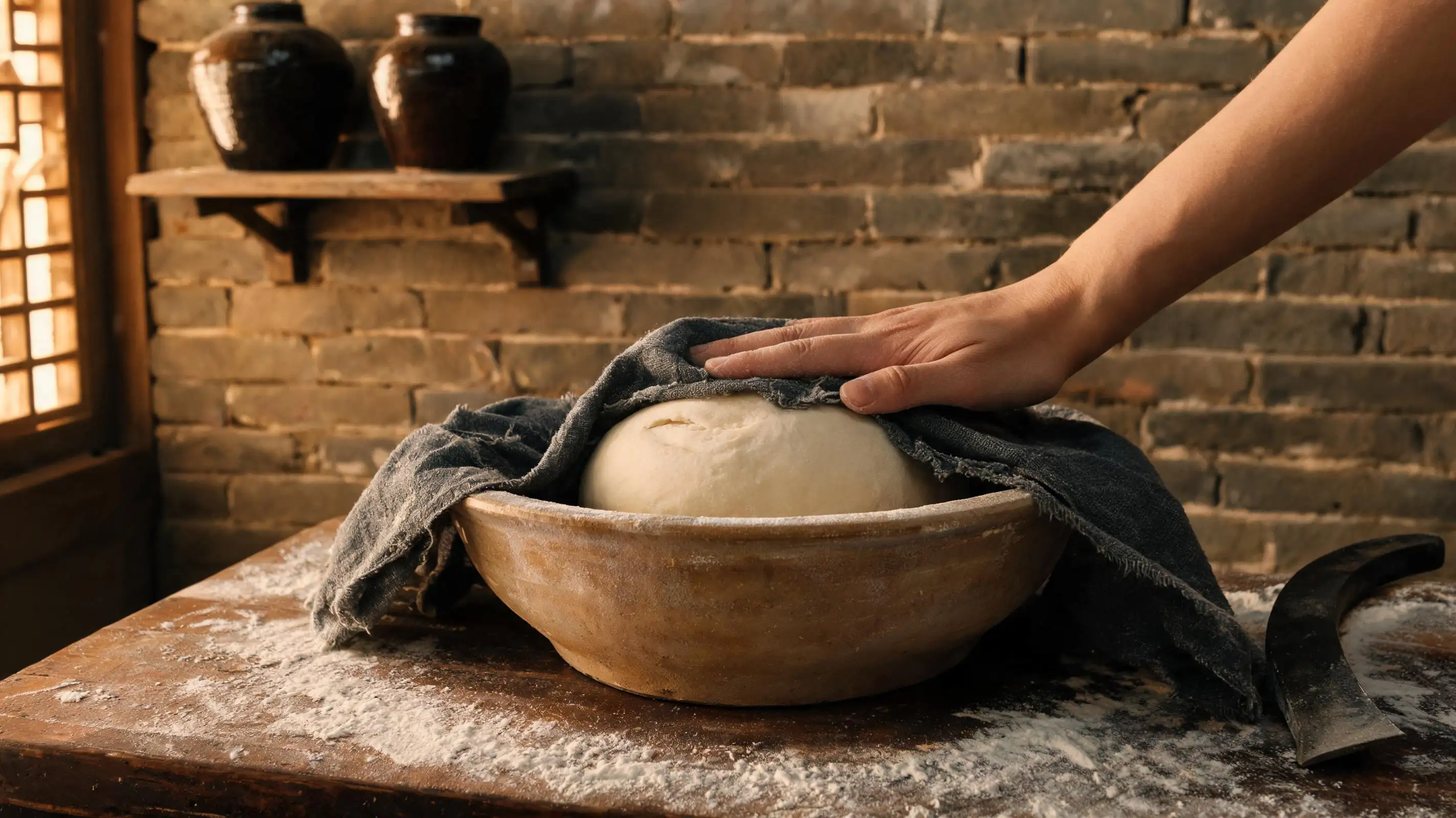
Cover with a damp cloth. **Minimum 30 minutes, ideally an hour.**
The gluten needs to relax after all that kneading or the noodles will snap instead of fly. You'll know it's ready when a finger pressed into the dough holds its impression for a second before slowly filling back in.
Don't skip this. A rested dough shaves clean. An unrested dough tears.
---
## 04 · The Shape
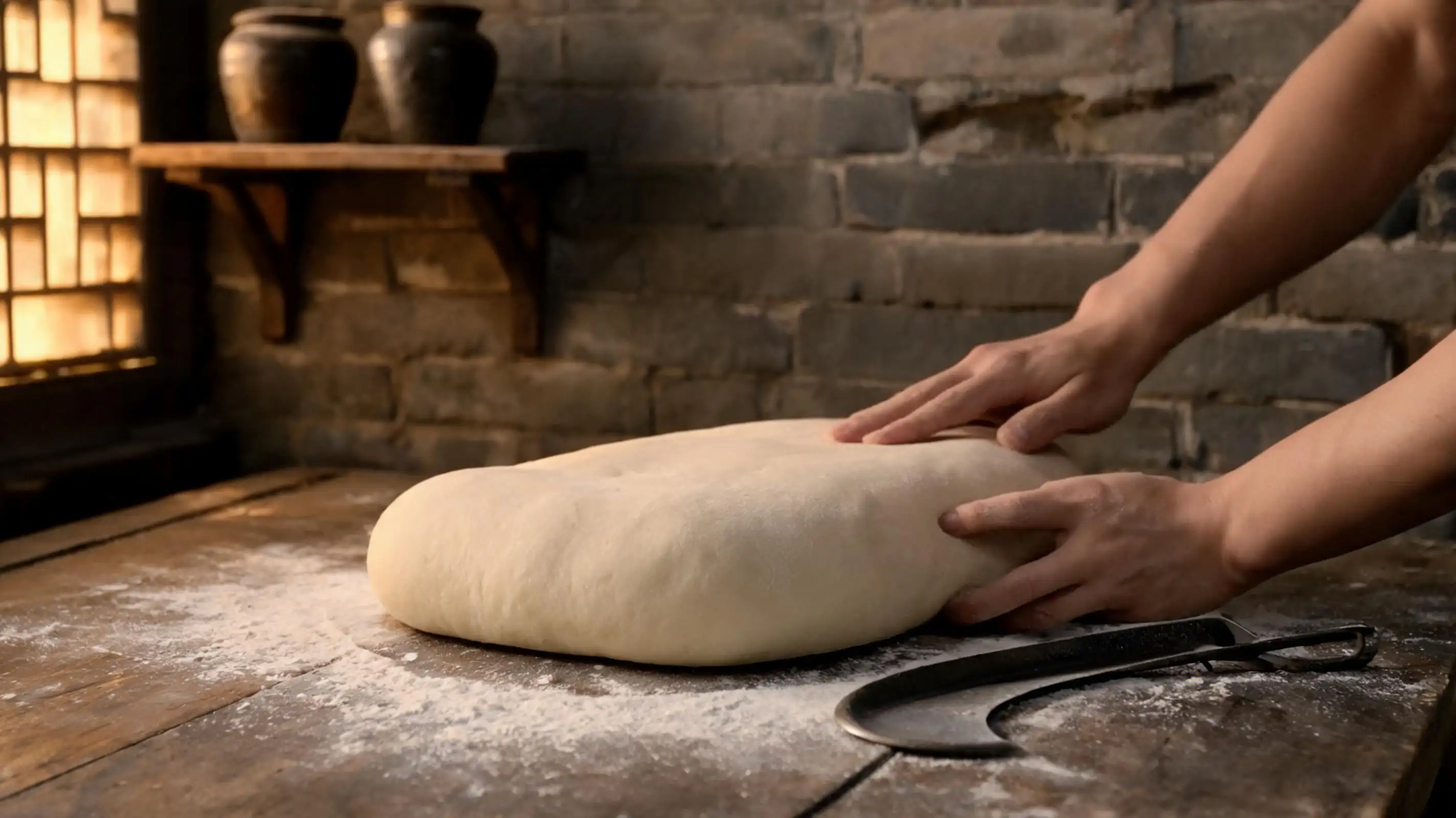
Pat the dough into a thick oval block — roughly the length of your forearm, about 8cm tall. The surface should be smooth and slightly taut.
**This shape matters.** Too round and the knife has nothing to bite. Too flat and the noodles come out thin and break. You're aiming for something between a rugby ball and a brick.
Dust lightly with flour. Set aside the shaving knife. You're almost ready.
---
## 05 · The Shave
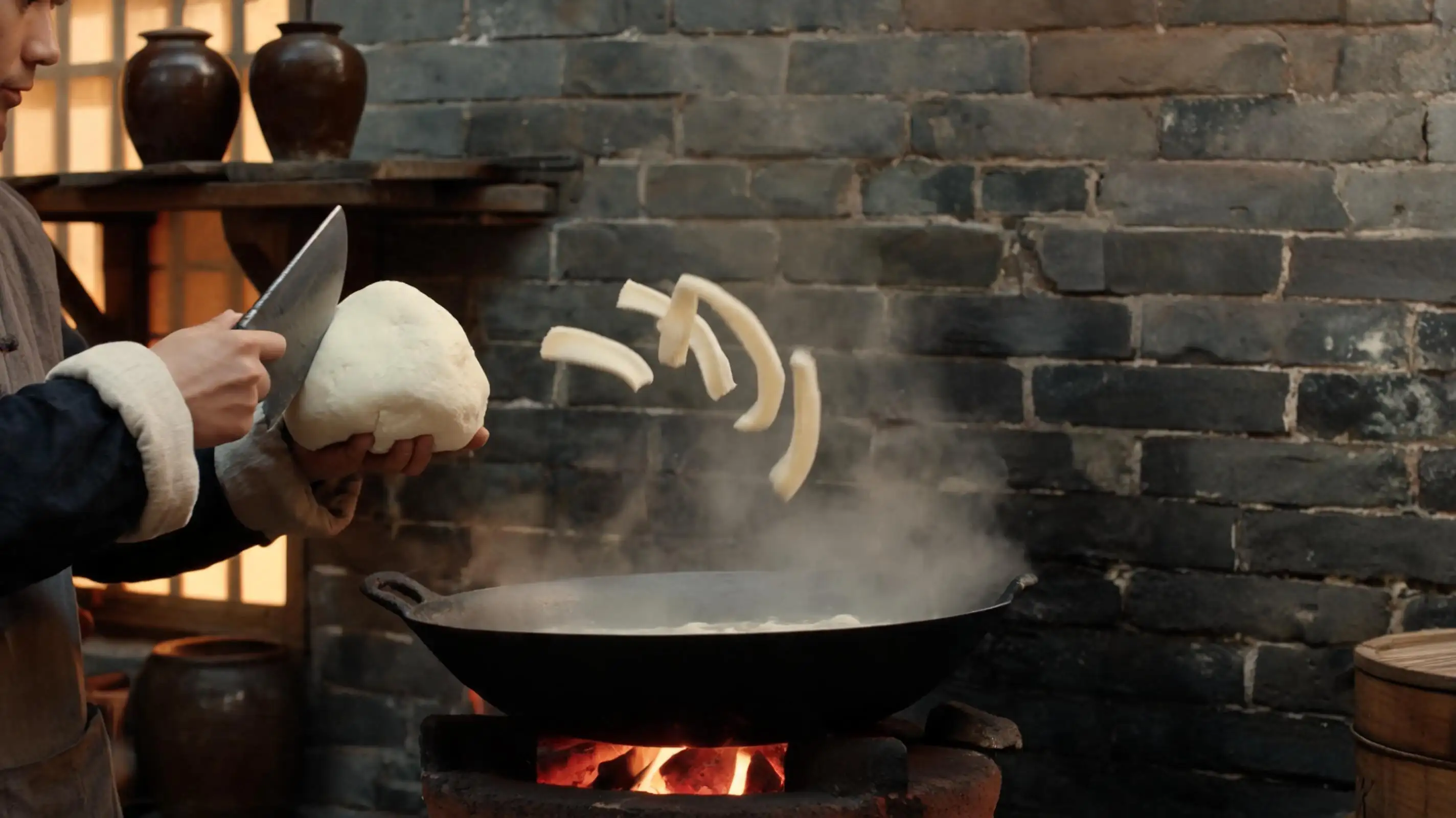
Cradle the dough block against your left forearm and inner elbow. Grip the curved iron knife in your right hand.
The motion is a quick flick from the wrist — **knife at a slight upward angle, blade catching the surface, pulling away fast**. Each stroke should send one noodle strip flying into the boiling water below.
Thick in the middle, tapered at both ends. That's the shape you're after. It takes a few hundred throws to get consistent. Start slow.
---
## 06 · The Boil
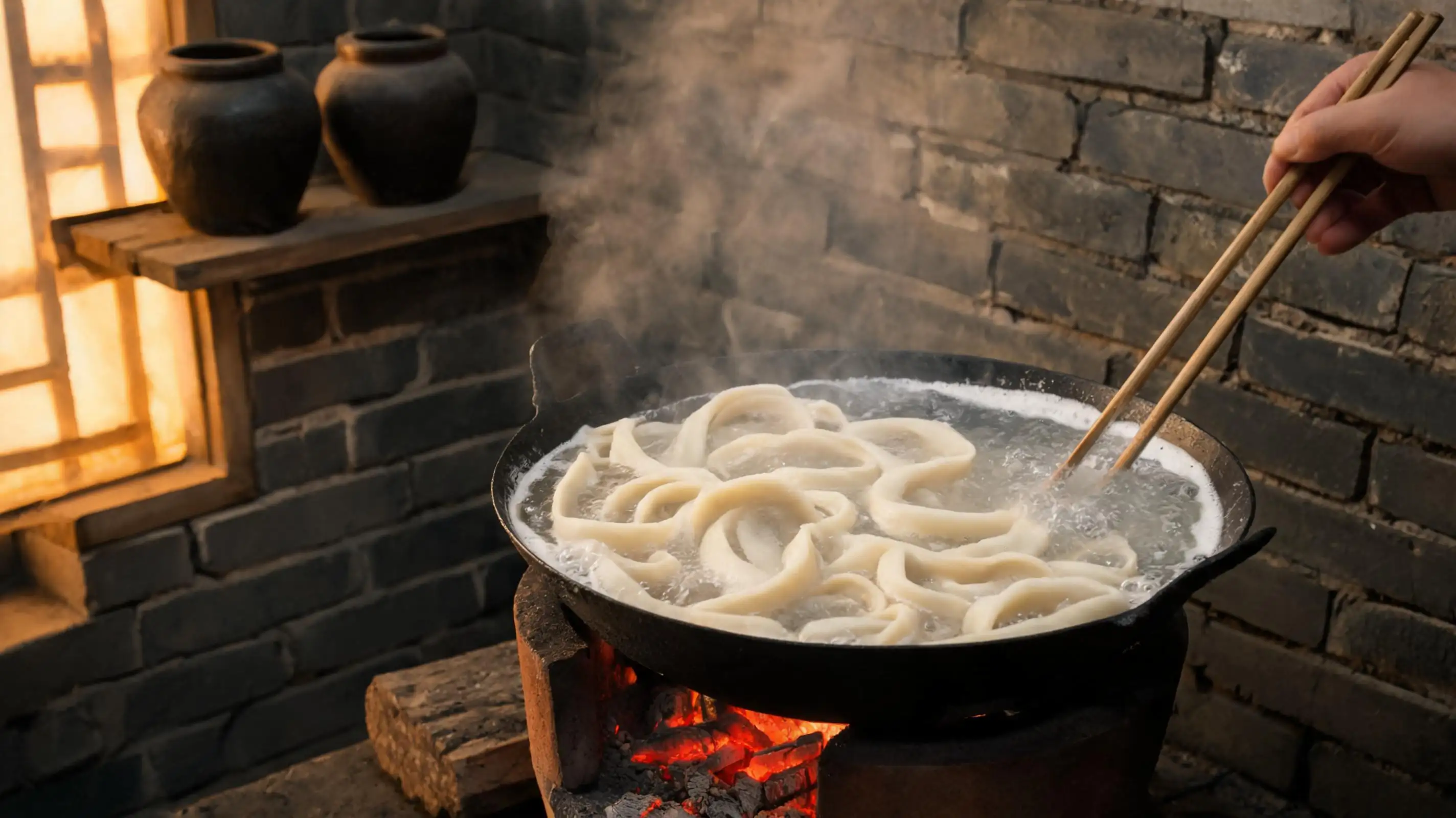
The wok should be at a full rolling boil before the first noodle hits the water.
**Don't crowd the pot.** These noodles are thick — they need room to move. Stir gently with long chopsticks to keep them from sticking at the bottom. The starch foam that rises at the edges is normal; skim it if it bothers you.
Three minutes for al dente. Four for fully cooked through. Pull one out and bite it — you'll know.
---
## 07 · The Sauce
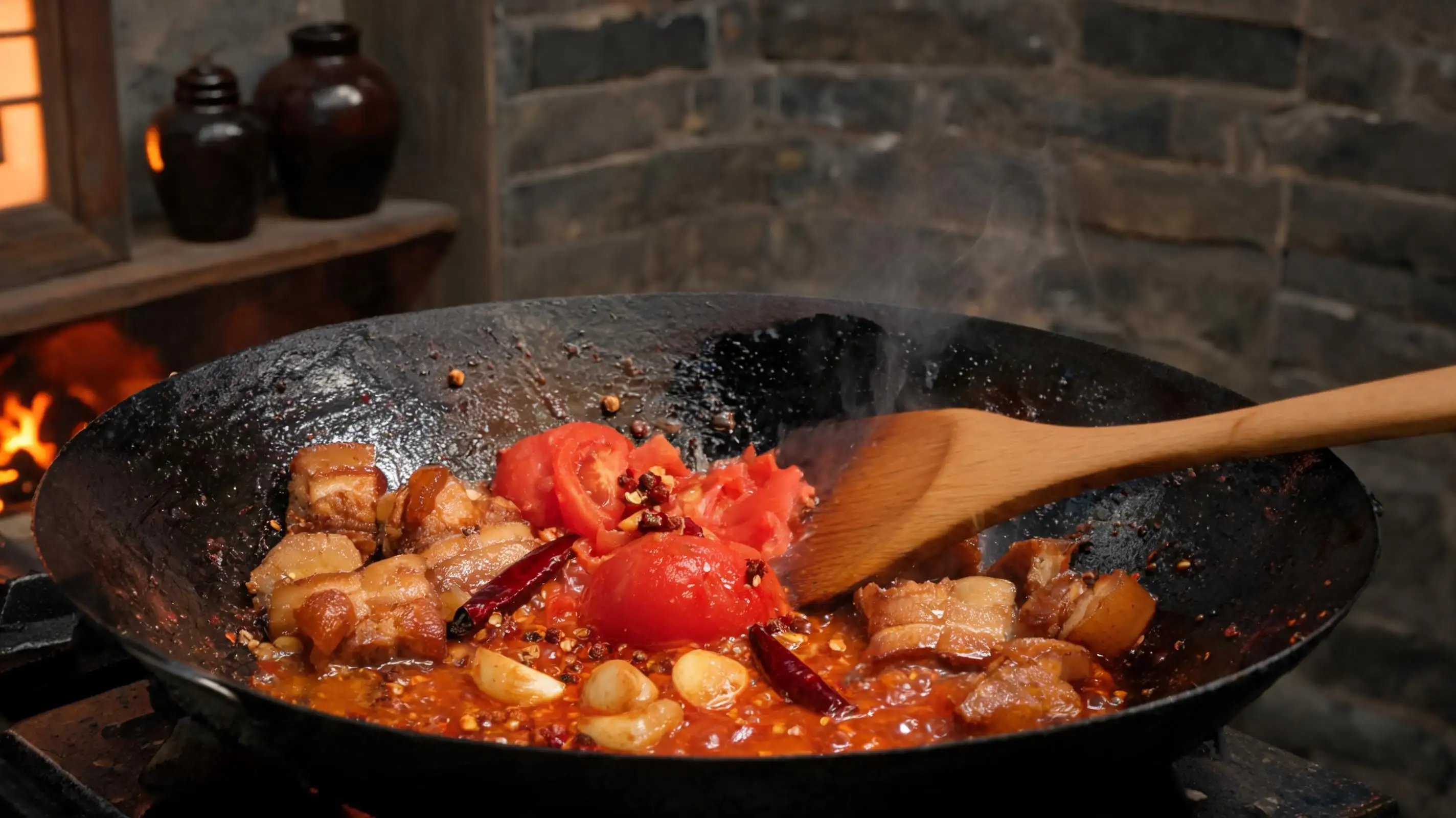
Pork belly, cut into 2cm chunks. Into a smoking hot dry wok first — **no oil needed**, let the fat render out on its own. Once the edges caramelize, push the pork to the sides.
Into that pork fat: smashed garlic, two dried chilies, a scatter of Sichuan peppercorns. Let them sizzle until the garlic turns golden.
Then: two ripe tomatoes, crushed in by hand directly over the wok. **Press them down with the spatula**, let the juice bleed into the fat and reduce until the sauce looks almost jammy — deep orange, glossy, clinging to the back of the spoon. Season with salt and a small pour of dark soy.
This sauce is the reason people come back.
---
## 08 · The Bowl
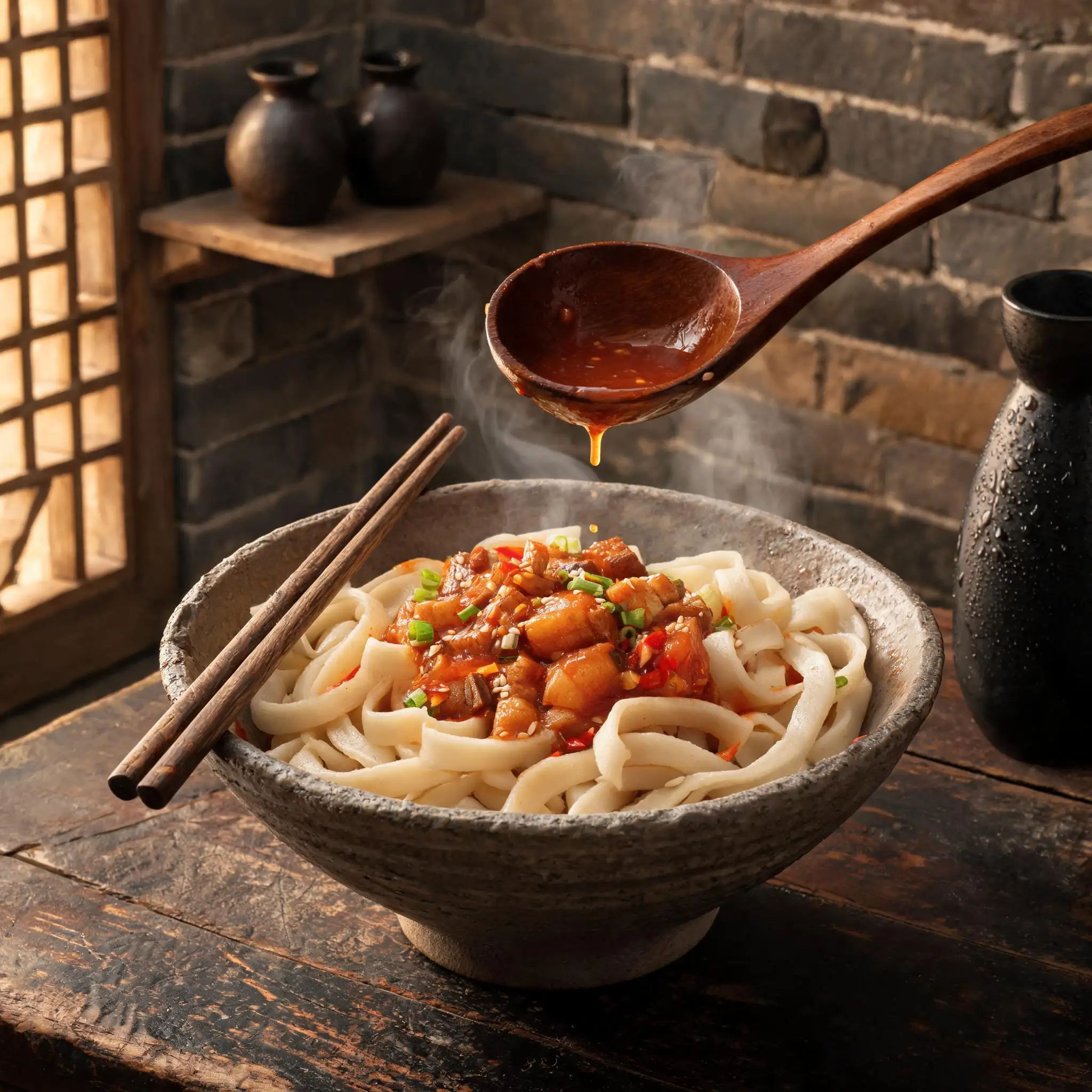
Noodles first, drained well. Then the sauce, ladled heavy — don't be shy with the pork belly.
Scallion rings over the top. White sesame. A crack of chili oil at the edge if you want heat. **A small pour of aged black vinegar on the side** — Shanxi vinegar if you can find it, not balsamic, not rice vinegar. The acidity cuts through the fat in a way nothing else does.
Eat it while it steams. It doesn't wait well, and it doesn't need to.
> The dough is stiff. The knife is curved. The noodles fly.
> This is not something you learn from a video in an afternoon.
> But you can start today.
---
## 01 · The Grain
High-gluten flour only. Not all-purpose, not bread flour — **high-gluten**, the kind that pulls back when you knead it.
That resistance is the whole point. Dao xiao mian needs a dough that holds its shape mid-air, not one that flops the moment the knife leaves.
Pour onto the table. Don't sift it. The pile should look like a small hill.
---
## 02 · The Dough
250ml cold water to 500g flour. Not warm, not hot — **cold water**, mixed in slowly.
Knead for at least 15 minutes. The dough should feel like leather by the end: smooth on the surface, no give when you press a thumb in. If it dents and stays dented, keep going.
This is the part most people rush. The dough knows.
---
## 03 · The Rest
Cover with a damp cloth. **Minimum 30 minutes, ideally an hour.**
The gluten needs to relax after all that kneading or the noodles will snap instead of fly. You'll know it's ready when a finger pressed into the dough holds its impression for a second before slowly filling back in.
Don't skip this. A rested dough shaves clean. An unrested dough tears.
---
## 04 · The Shape
Pat the dough into a thick oval block — roughly the length of your forearm, about 8cm tall. The surface should be smooth and slightly taut.
**This shape matters.** Too round and the knife has nothing to bite. Too flat and the noodles come out thin and break. You're aiming for something between a rugby ball and a brick.
Dust lightly with flour. Set aside the shaving knife. You're almost ready.
---
## 05 · The Shave
Cradle the dough block against your left forearm and inner elbow. Grip the curved iron knife in your right hand.
The motion is a quick flick from the wrist — **knife at a slight upward angle, blade catching the surface, pulling away fast**. Each stroke should send one noodle strip flying into the boiling water below.
Thick in the middle, tapered at both ends. That's the shape you're after. It takes a few hundred throws to get consistent. Start slow.
---
## 06 · The Boil
The wok should be at a full rolling boil before the first noodle hits the water.
**Don't crowd the pot.** These noodles are thick — they need room to move. Stir gently with long chopsticks to keep them from sticking at the bottom. The starch foam that rises at the edges is normal; skim it if it bothers you.
Three minutes for al dente. Four for fully cooked through. Pull one out and bite it — you'll know.
---
## 07 · The Sauce
Pork belly, cut into 2cm chunks. Into a smoking hot dry wok first — **no oil needed**, let the fat render out on its own. Once the edges caramelize, push the pork to the sides.
Into that pork fat: smashed garlic, two dried chilies, a scatter of Sichuan peppercorns. Let them sizzle until the garlic turns golden.
Then: two ripe tomatoes, crushed in by hand directly over the wok. **Press them down with the spatula**, let the juice bleed into the fat and reduce until the sauce looks almost jammy — deep orange, glossy, clinging to the back of the spoon. Season with salt and a small pour of dark soy.
This sauce is the reason people come back.
---
## 08 · The Bowl
Noodles first, drained well. Then the sauce, ladled heavy — don't be shy with the pork belly.
Scallion rings over the top. White sesame. A crack of chili oil at the edge if you want heat. **A small pour of aged black vinegar on the side** — Shanxi vinegar if you can find it, not balsamic, not rice vinegar. The acidity cuts through the fat in a way nothing else does.
Eat it while it steams. It doesn't wait well, and it doesn't need to.