·5/12/2026
from


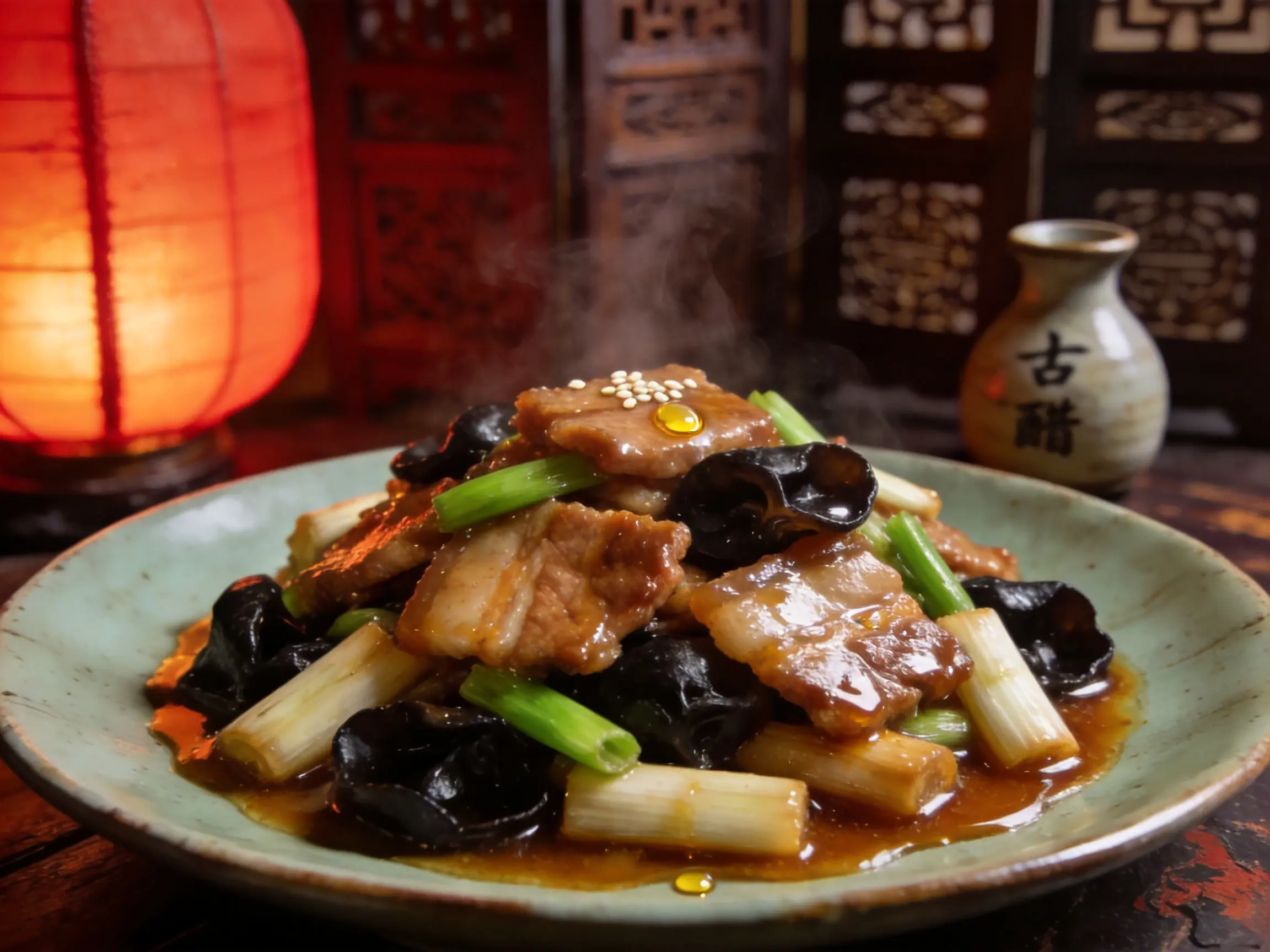
TaiYuan-Guoyourou
> The first thing you smell is vinegar. Then smoke. Then something underneath — fermented, earthy, older than the recipe itself. That's the yellow bean paste in the marinade working its way through the meat. You don't get this from a takeout box.
## 1 · The Ingredients
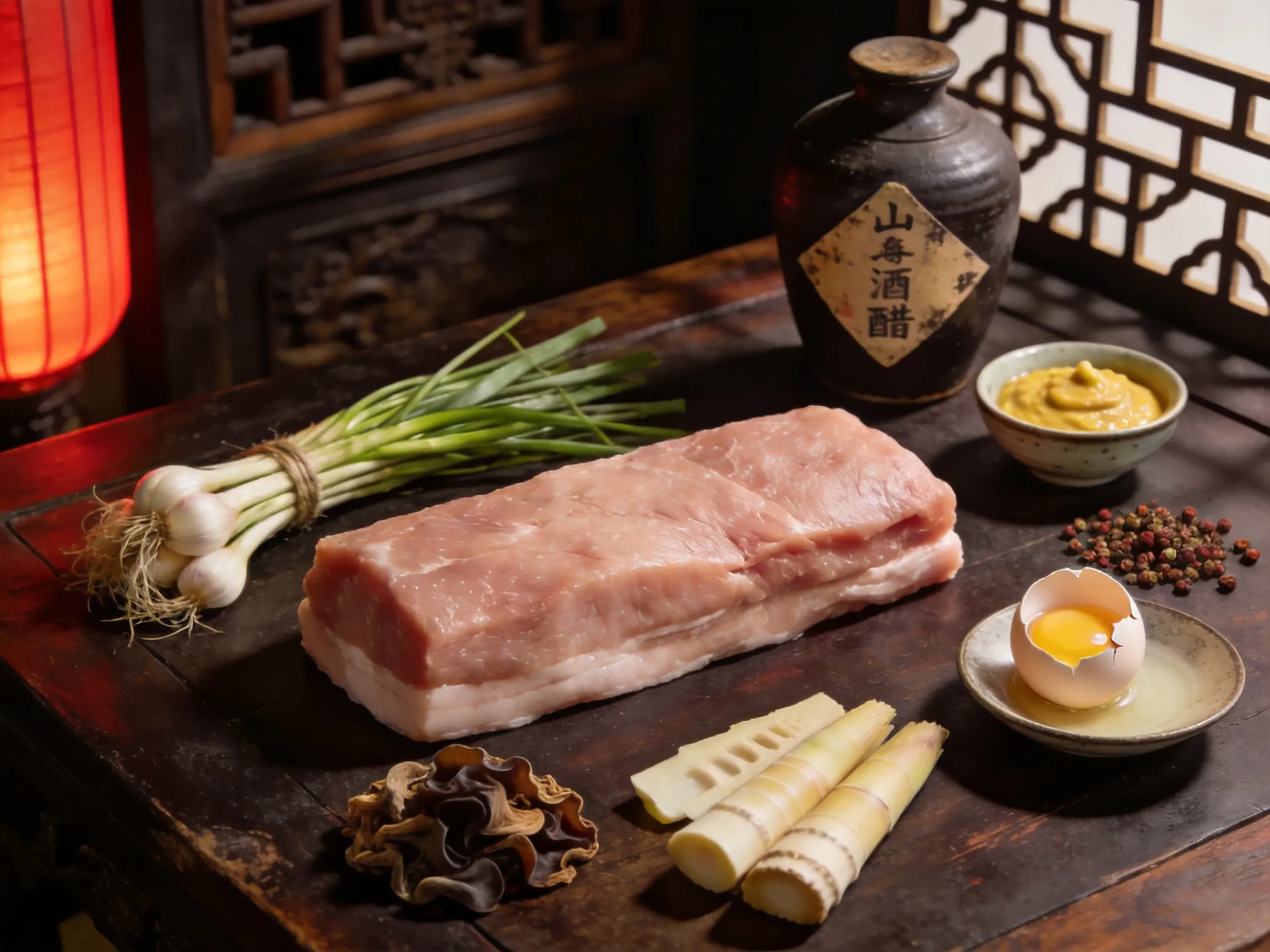
Pork loin, wood ear mushrooms, bamboo shoots, garlic shoots, one egg. Plus two things most recipes quietly skip: **yellow bean paste (黄酱)** and a jar of aged vinegar that's been sitting somewhere dark for at least five years. These aren't seasoning. They are the dish. Everything else just holds them together.
The mushrooms should be dried, then soaked — not fresh. Dried wood ear has a bite to it that fresh can't give you. The bamboo shoots go in pre-blanched to get the bitterness out. Garlic shoots, not garlic cloves. The shoots stay bright and slightly sharp when cooked; cloves would turn sweet and muddy the sauce.
## 2 · The Cut
**Against the grain, about 3mm.** Hold the loin down with your fingers curled back, knife perpendicular to the muscle fibers running lengthwise. You can see them — pale white lines just under the surface. Cut across those lines, not along them. Along the grain and the slice stays chewy no matter what you do to it later. Against the grain and every piece tears clean when you bite through it.
Three millimeters is thinner than you think. Hold a finished slice up to the light — you should almost see through it at the edges. That thinness is what makes the oil pass work. Too thick and the center stays raw while the outside sets.
## 3 · The Marinade
Slice the loin against the grain, thin — about 3mm. Too thick and the oil pass won't reach the center; too thin and you'll lose them in the wok.
Into the bowl: **one spoonful of yellow bean paste**, a splash of peppercorn water, one egg white, and enough wet starch to make everything glossy. Mix with your hands, not chopsticks. You want the starch to coat each slice individually, not clump. When you pull a slice out and hold it up, it should cling to itself slightly and look almost lacquered.
**Then wait. Thirty minutes minimum.** The paste needs time to open up and settle into the meat. Rushing this step means the seasoning sits on the surface instead of through it. You'll taste the difference immediately.
## 4 · The Peppercorn Water
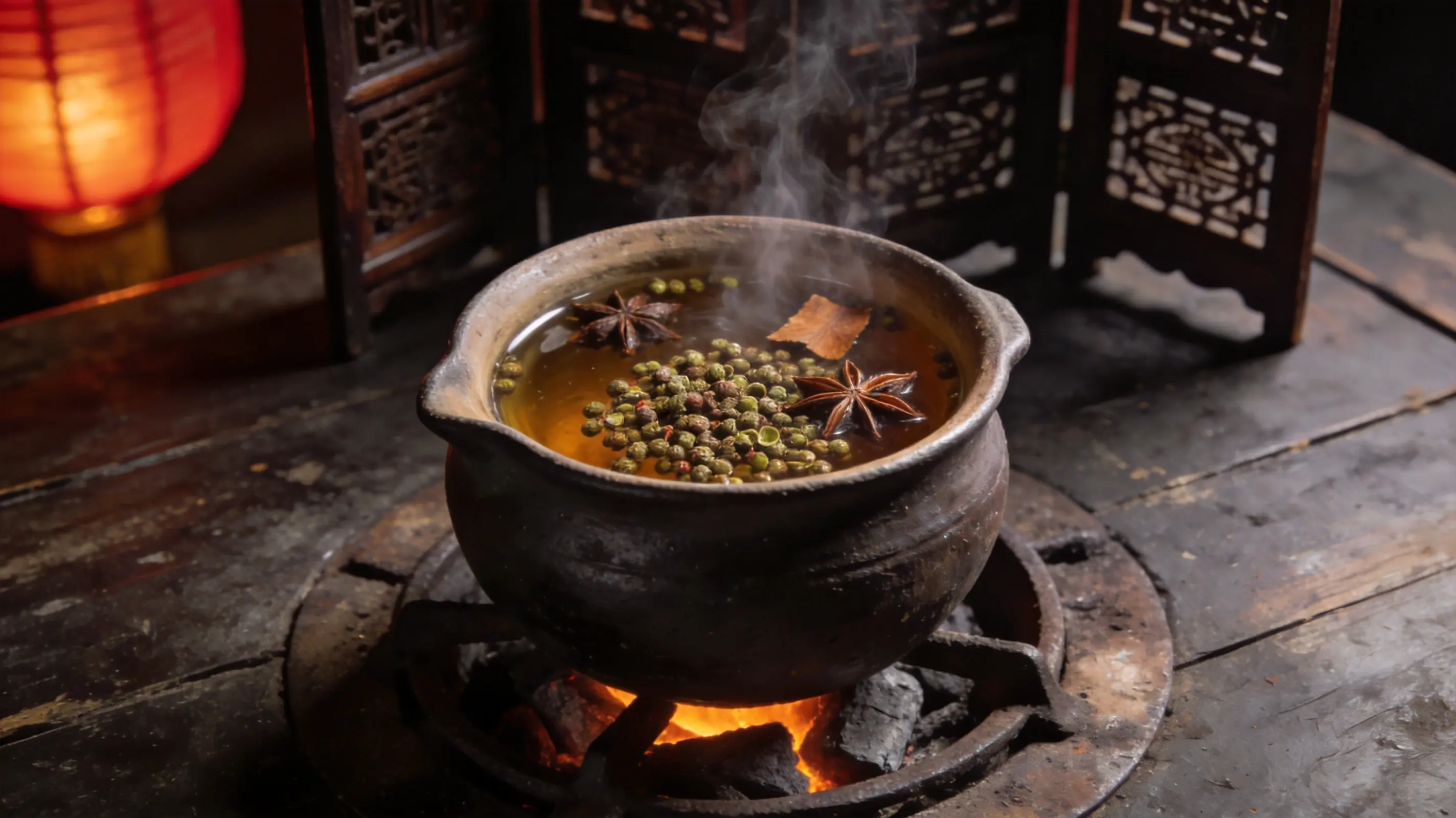
A small pot, a handful of Sichuan peppercorns, two or three star anise. Cover with water, bring to a hard boil, then drop to low and let it go for ten minutes. The water turns cloudy amber. The whole kitchen shifts.
This replaces cooking wine entirely. **It doesn't just lift the raw smell — it leaves something behind.** A faint numbing warmth that runs under the sauce, low and steady. Wine would evaporate clean. This doesn't. Let it cool completely before it goes anywhere near the marinating meat — hot liquid will cook the egg white and break the batter before you even get to the wok.
## 5 · The Oil Pass
This is the step the dish is named for, and it's where most people go wrong by treating it like frying.
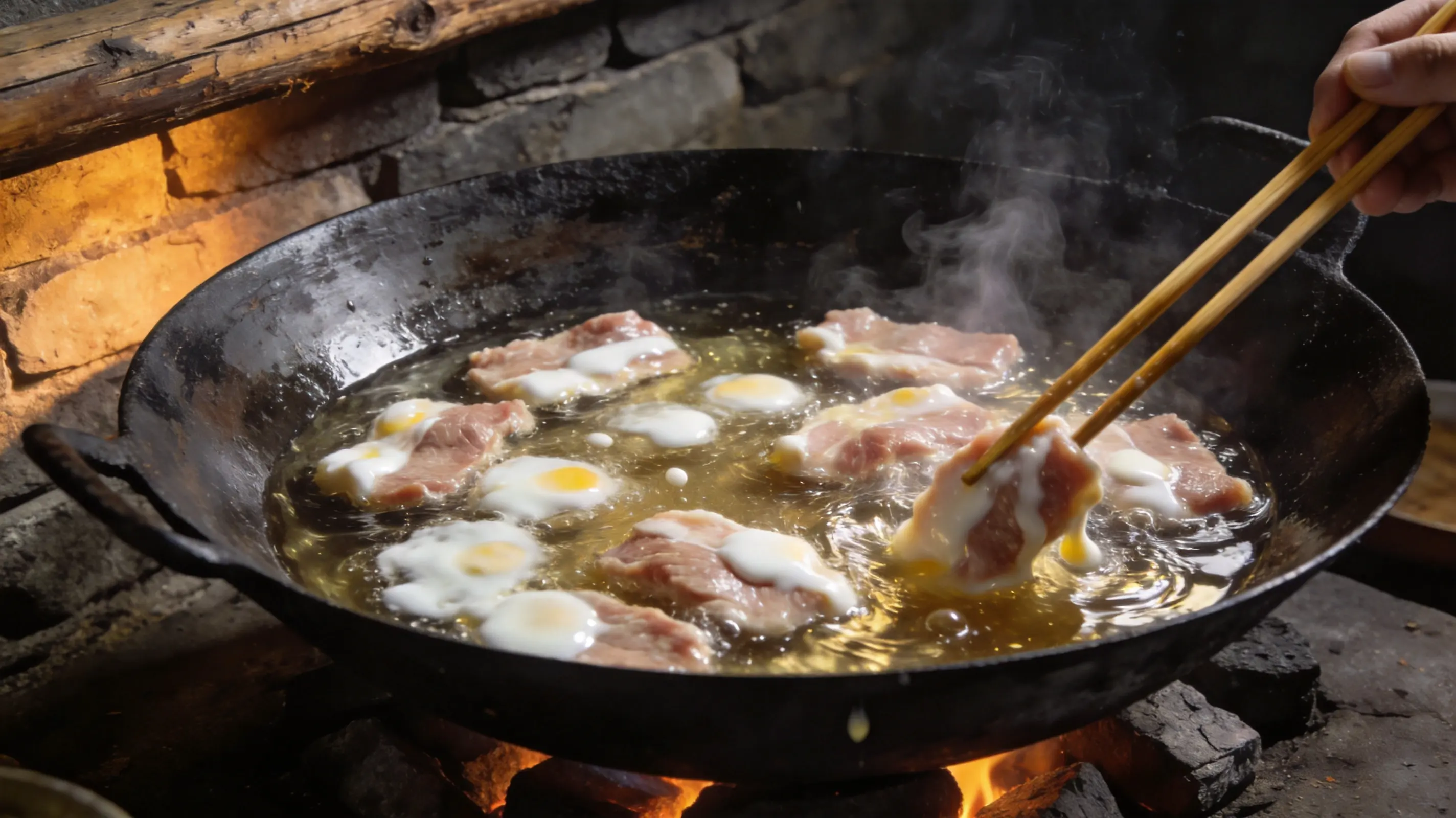
**Fill the wok with enough oil to float the slices — then bring it to four-tenths hot.** That's around 150°C. No smoke, no aggressive sizzling. The oil should look still but shimmer faintly when you tilt the wok. Slide the slices in one by one, not all at once. They'll sink, then slowly rise.
**The moment the surface of each slice turns from pink to white — pull it out.** Ten to fifteen seconds per slice. No more. The egg-white batter should be set and pale, barely golden at the edges, still soft to the touch. At this temperature the inside finishes gently without the outside going hard. That's the whole mechanism. Higher heat collapses it. You'd end up with something that tastes cooked rather than tender.
Drain on a rack, not paper. Paper traps steam and softens the batter you just set.
## 6 · The Vinegar Hit
Bottom oil stays in the wok. Aromatics go in — scallion, ginger, garlic — just long enough to smell them. Then the blanched bamboo shoots, wood ear, garlic shoots. Thirty seconds of high heat.
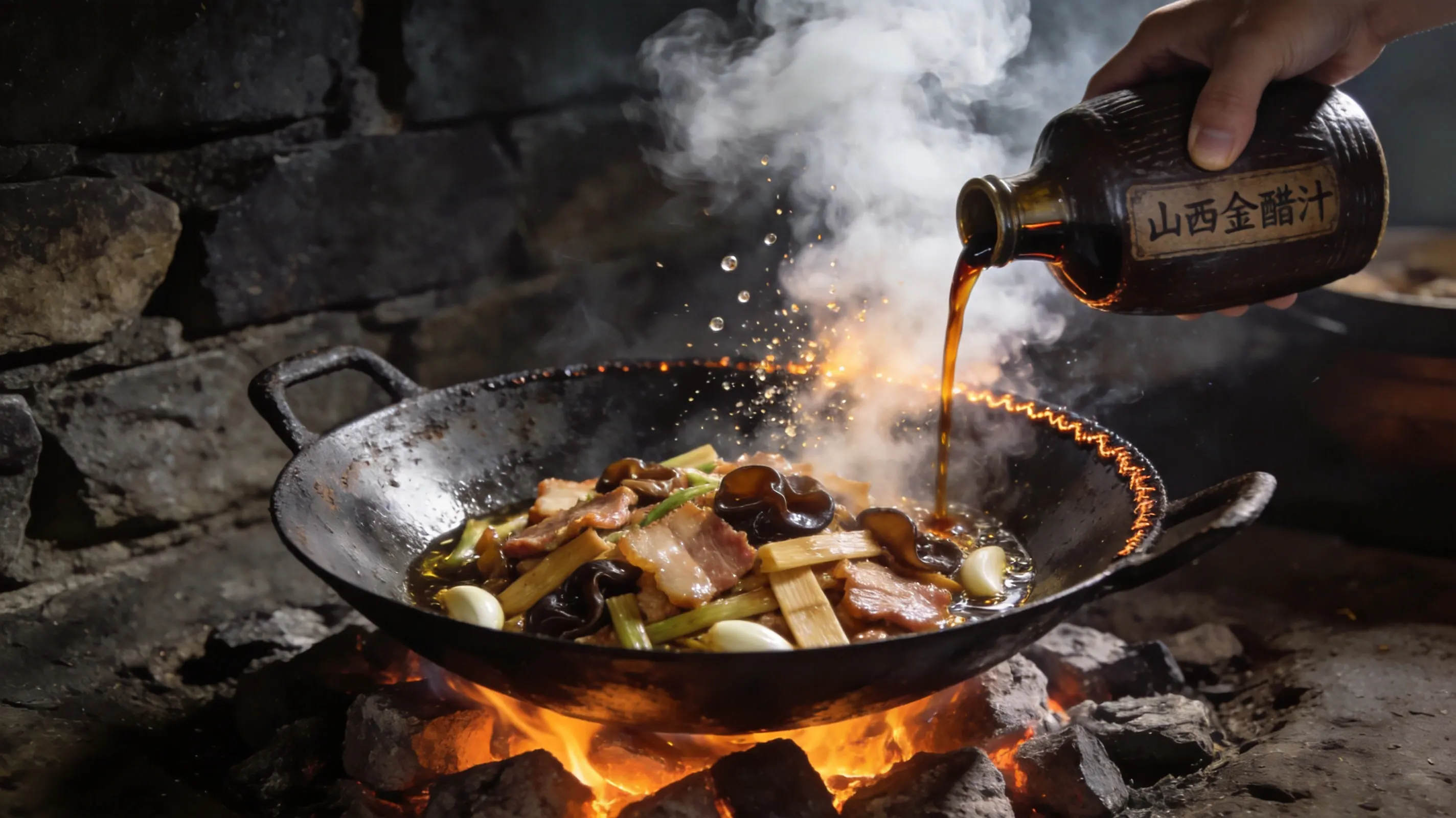
Now the meat goes back in. One toss. Then: **tilt the wok slightly and pour the aged vinegar along the inner edge, not down into the center.** It hits the bare iron and vaporizes before it reaches the food. A white cloud rolls up and out. The whole room changes. The acid bites into the oil residue on the wok surface and pulls out something the direct heat couldn't — a deep, slightly smoky sharpness that layers under the sauce.
This is the first pour. It's for aroma, not flavor. **A second pour comes at the very end, straight into the sauce, raw.** That one's for the acid. Two pours, two different jobs.
## 7 · The Finish
The prepared sauce — soy sauce, yellow wine, water, a little wet starch — goes in now. High heat, constant motion. The starch tightens everything into a loose glaze that moves like it's alive. Not thick, not glossy in a heavy way. **It should coat the back of a spoon and still run off slowly.** If it sits still, you've gone too far.
Last pour of vinegar. A few drops of sesame oil around the edge. Off the heat immediately.
**The sauce should pool slightly at the base of the pile on the plate** — enough to gather at the rim and spoon over rice. This is what people mean when they say the dish is meant to be eaten with rice. The meat and the sauce together are what the dish is. One without the other is just close.
## 1 · The Ingredients
Pork loin, wood ear mushrooms, bamboo shoots, garlic shoots, one egg. Plus two things most recipes quietly skip: **yellow bean paste (黄酱)** and a jar of aged vinegar that's been sitting somewhere dark for at least five years. These aren't seasoning. They are the dish. Everything else just holds them together.
The mushrooms should be dried, then soaked — not fresh. Dried wood ear has a bite to it that fresh can't give you. The bamboo shoots go in pre-blanched to get the bitterness out. Garlic shoots, not garlic cloves. The shoots stay bright and slightly sharp when cooked; cloves would turn sweet and muddy the sauce.
## 2 · The Cut
**Against the grain, about 3mm.** Hold the loin down with your fingers curled back, knife perpendicular to the muscle fibers running lengthwise. You can see them — pale white lines just under the surface. Cut across those lines, not along them. Along the grain and the slice stays chewy no matter what you do to it later. Against the grain and every piece tears clean when you bite through it.
Three millimeters is thinner than you think. Hold a finished slice up to the light — you should almost see through it at the edges. That thinness is what makes the oil pass work. Too thick and the center stays raw while the outside sets.
## 3 · The Marinade
Slice the loin against the grain, thin — about 3mm. Too thick and the oil pass won't reach the center; too thin and you'll lose them in the wok.
Into the bowl: **one spoonful of yellow bean paste**, a splash of peppercorn water, one egg white, and enough wet starch to make everything glossy. Mix with your hands, not chopsticks. You want the starch to coat each slice individually, not clump. When you pull a slice out and hold it up, it should cling to itself slightly and look almost lacquered.
**Then wait. Thirty minutes minimum.** The paste needs time to open up and settle into the meat. Rushing this step means the seasoning sits on the surface instead of through it. You'll taste the difference immediately.
## 4 · The Peppercorn Water
A small pot, a handful of Sichuan peppercorns, two or three star anise. Cover with water, bring to a hard boil, then drop to low and let it go for ten minutes. The water turns cloudy amber. The whole kitchen shifts.
This replaces cooking wine entirely. **It doesn't just lift the raw smell — it leaves something behind.** A faint numbing warmth that runs under the sauce, low and steady. Wine would evaporate clean. This doesn't. Let it cool completely before it goes anywhere near the marinating meat — hot liquid will cook the egg white and break the batter before you even get to the wok.
## 5 · The Oil Pass
This is the step the dish is named for, and it's where most people go wrong by treating it like frying.
**Fill the wok with enough oil to float the slices — then bring it to four-tenths hot.** That's around 150°C. No smoke, no aggressive sizzling. The oil should look still but shimmer faintly when you tilt the wok. Slide the slices in one by one, not all at once. They'll sink, then slowly rise.
**The moment the surface of each slice turns from pink to white — pull it out.** Ten to fifteen seconds per slice. No more. The egg-white batter should be set and pale, barely golden at the edges, still soft to the touch. At this temperature the inside finishes gently without the outside going hard. That's the whole mechanism. Higher heat collapses it. You'd end up with something that tastes cooked rather than tender.
Drain on a rack, not paper. Paper traps steam and softens the batter you just set.
## 6 · The Vinegar Hit
Bottom oil stays in the wok. Aromatics go in — scallion, ginger, garlic — just long enough to smell them. Then the blanched bamboo shoots, wood ear, garlic shoots. Thirty seconds of high heat.
Now the meat goes back in. One toss. Then: **tilt the wok slightly and pour the aged vinegar along the inner edge, not down into the center.** It hits the bare iron and vaporizes before it reaches the food. A white cloud rolls up and out. The whole room changes. The acid bites into the oil residue on the wok surface and pulls out something the direct heat couldn't — a deep, slightly smoky sharpness that layers under the sauce.
This is the first pour. It's for aroma, not flavor. **A second pour comes at the very end, straight into the sauce, raw.** That one's for the acid. Two pours, two different jobs.
## 7 · The Finish
The prepared sauce — soy sauce, yellow wine, water, a little wet starch — goes in now. High heat, constant motion. The starch tightens everything into a loose glaze that moves like it's alive. Not thick, not glossy in a heavy way. **It should coat the back of a spoon and still run off slowly.** If it sits still, you've gone too far.
Last pour of vinegar. A few drops of sesame oil around the edge. Off the heat immediately.
**The sauce should pool slightly at the base of the pile on the plate** — enough to gather at the rim and spoon over rice. This is what people mean when they say the dish is meant to be eaten with rice. The meat and the sauce together are what the dish is. One without the other is just close.