·5/12/2026
from
Xinzhou Fanshi Scar Cake
# Scar Flatbread
> A flatbread named after the burn marks it carries.
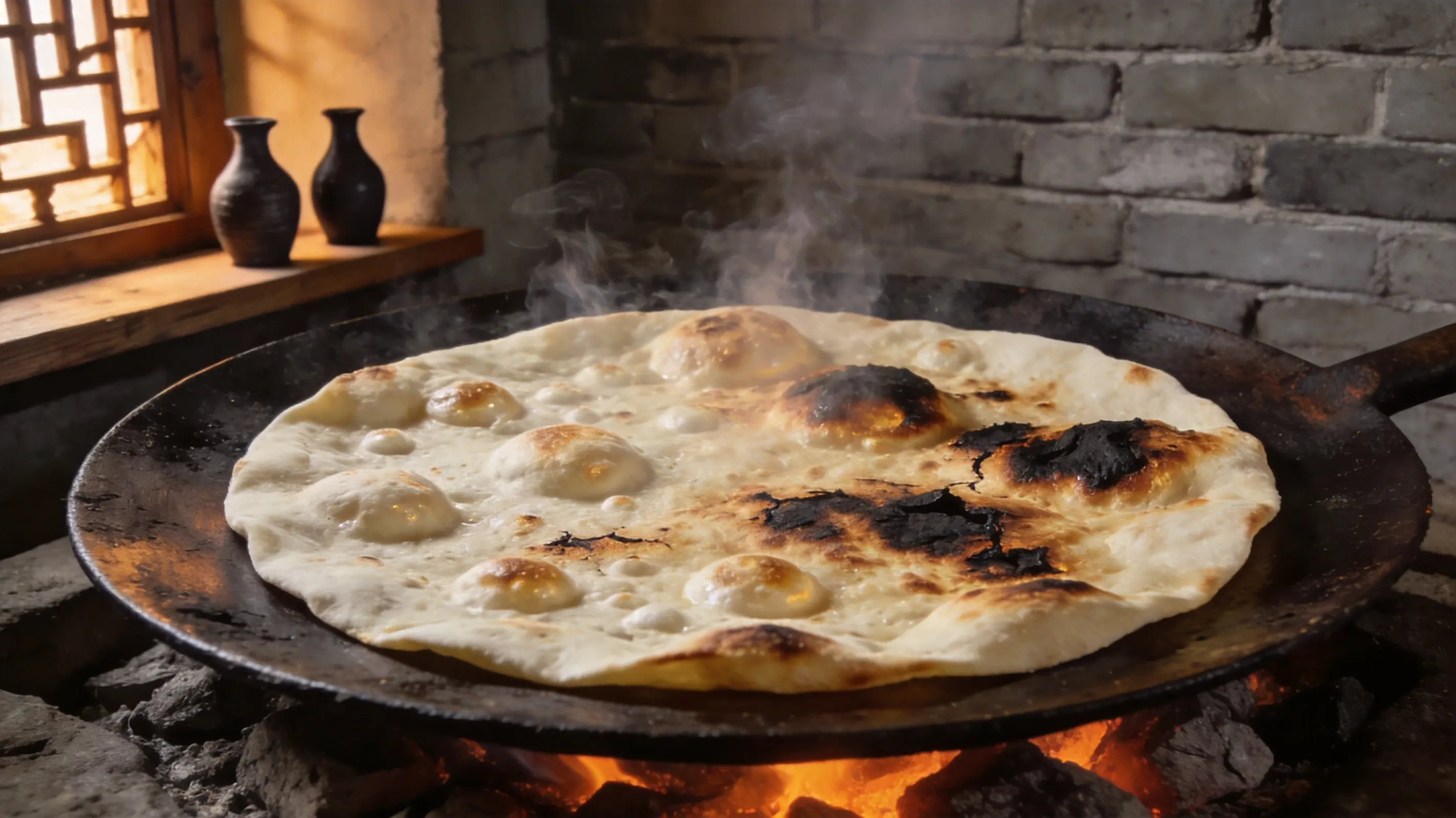
> Made on a convex iron griddle over coal — the hotter the iron, the deeper the scars.
---
## 1 · The Grain
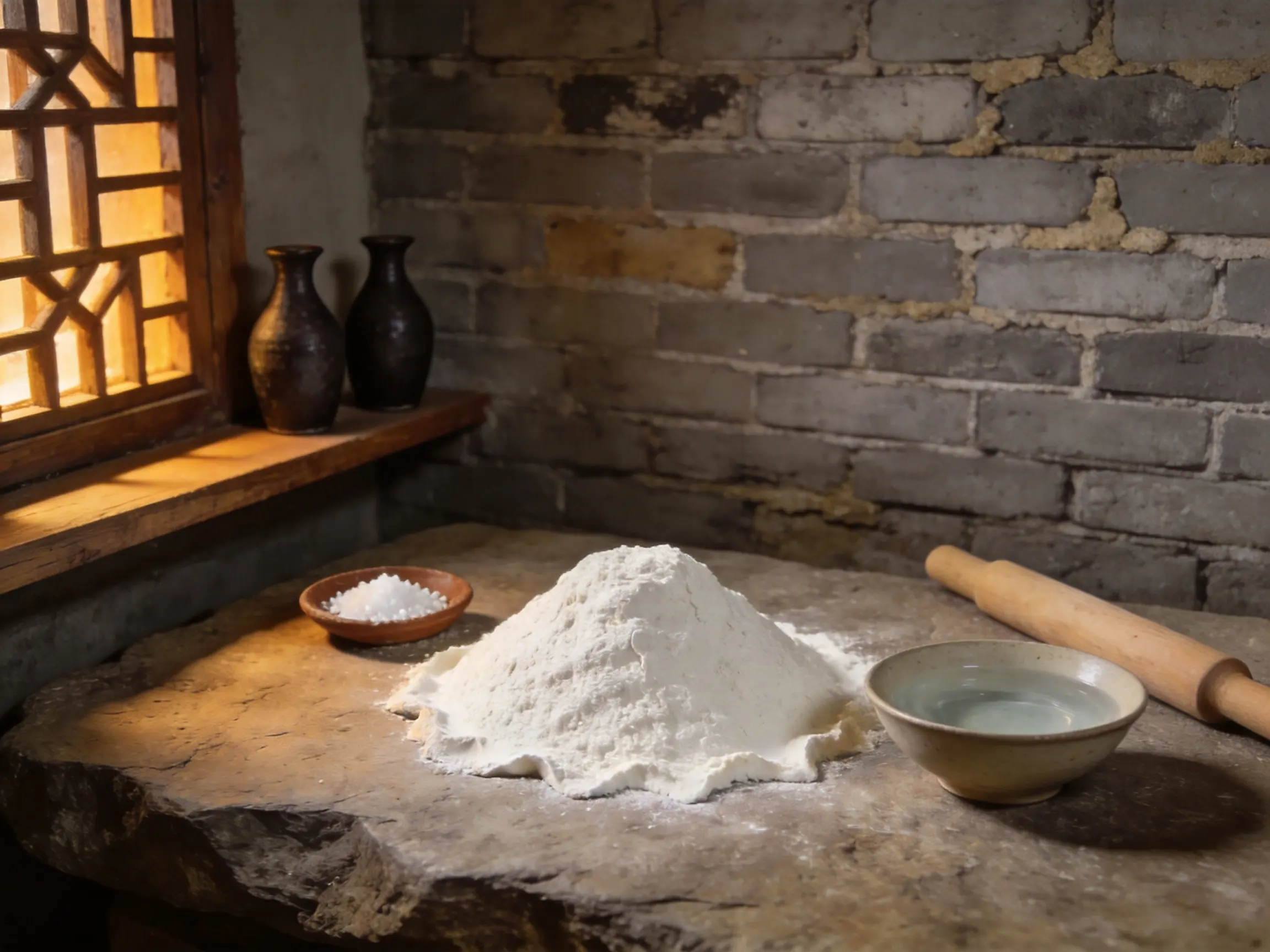
Flour, salt, cold water. That's the whole ingredient list.
**No oil. No yeast. No leavening of any kind.** This is dead dough — stiff on purpose. The toughness is the point.
---
## 2 · The Dough
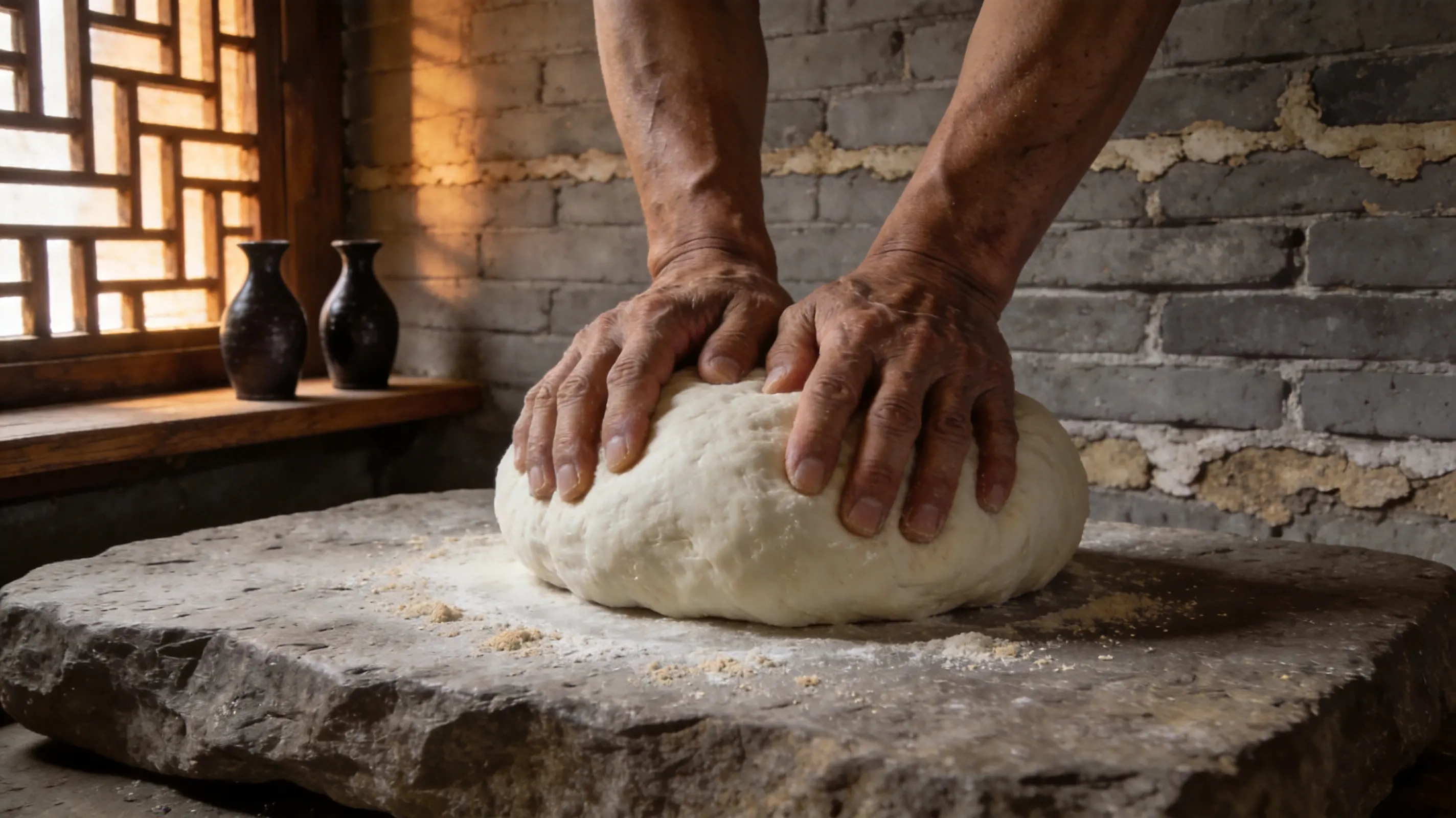
Both palms, full body weight. You press down and the dough pushes back.
**Keep going until the surface is smooth with no visible cracks — about 8 to 10 minutes.** It will stay firm the whole time. That's what you want. Soft dough won't hold up on the iron.
---
## 3 · The Roll
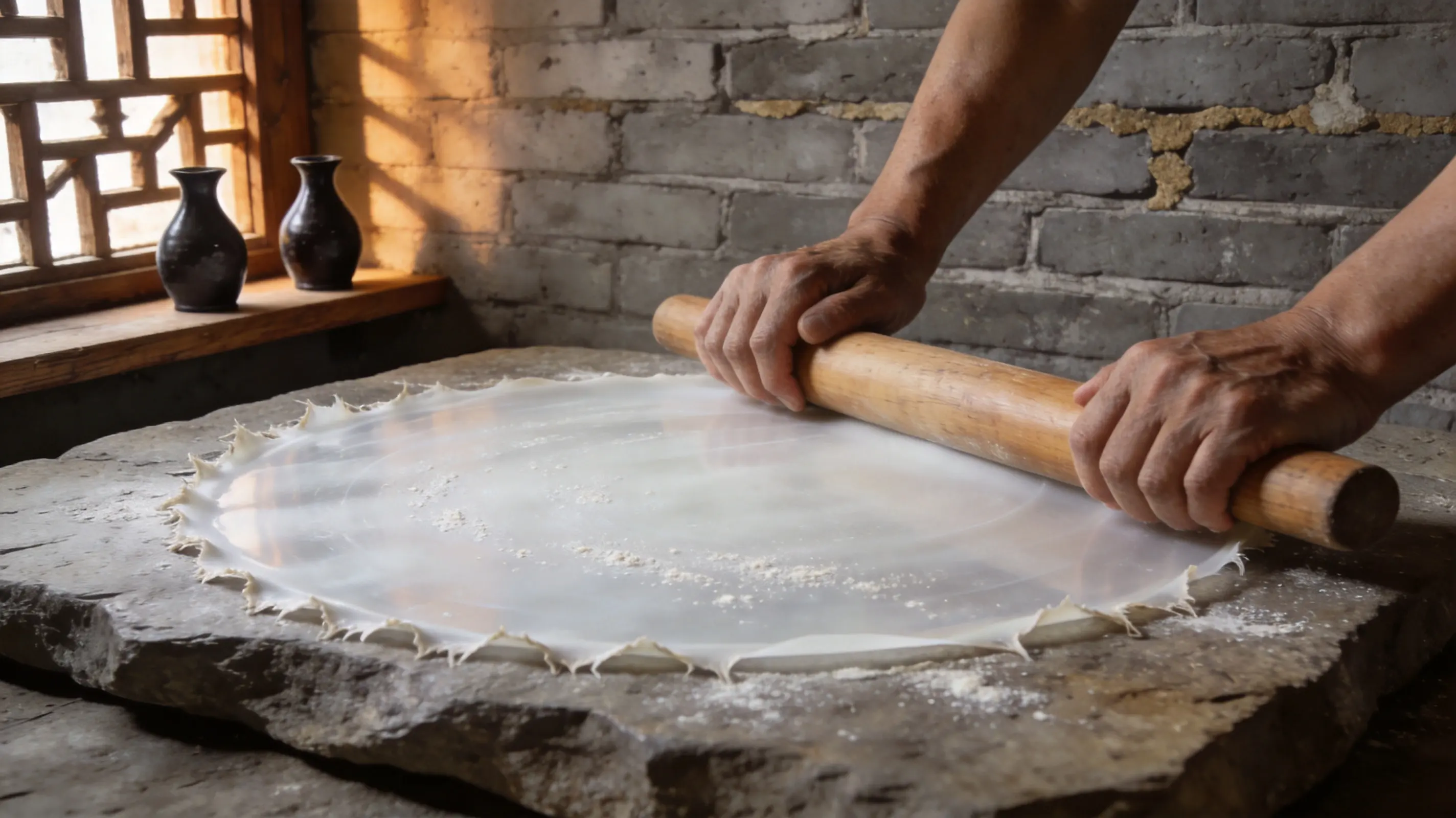
Roll it as thin as you can without tearing it. **The stone surface underneath should almost show through.**
Edges don't need to be round or clean. Uneven is fine. The scars don't care about shape.
---
## 4 · The Griddle
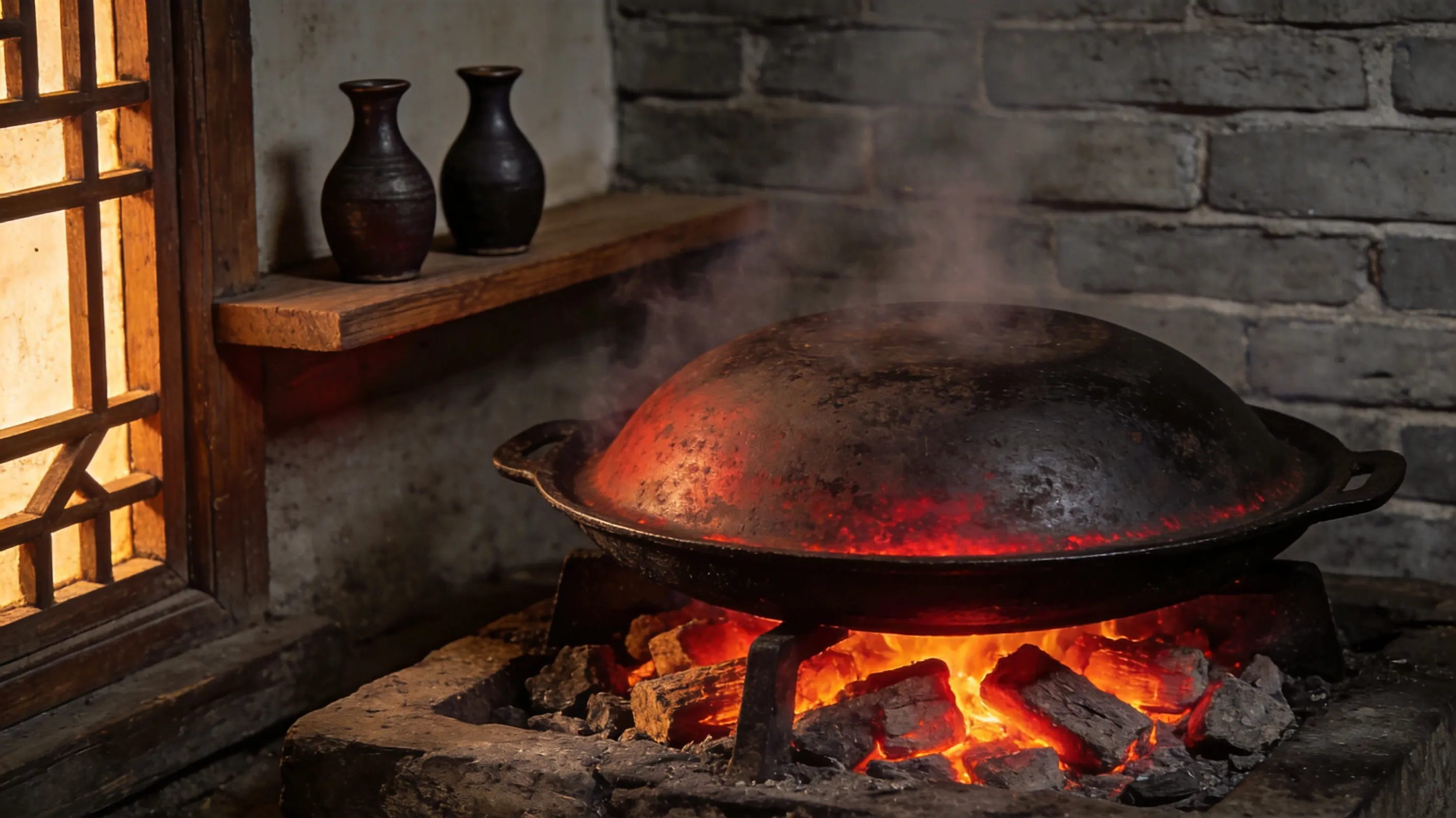
Convex iron griddle, dome-side up, over coal fire. Get it genuinely hot — not medium hot.
**Hold your palm two inches above the iron surface. If you can't hold it there for even one second, it's ready.** No oil goes on this griddle. Not now, not ever.
---
## 5 · The Scar
Lay the dough flat onto the iron. It blisters in the first few seconds — the contact points go gold, then brown, then black.
**Don't press it down. Don't adjust it.** Let the iron work. The white smoke coming off the edges means the temperature is right.
---
## 6 · The Flip
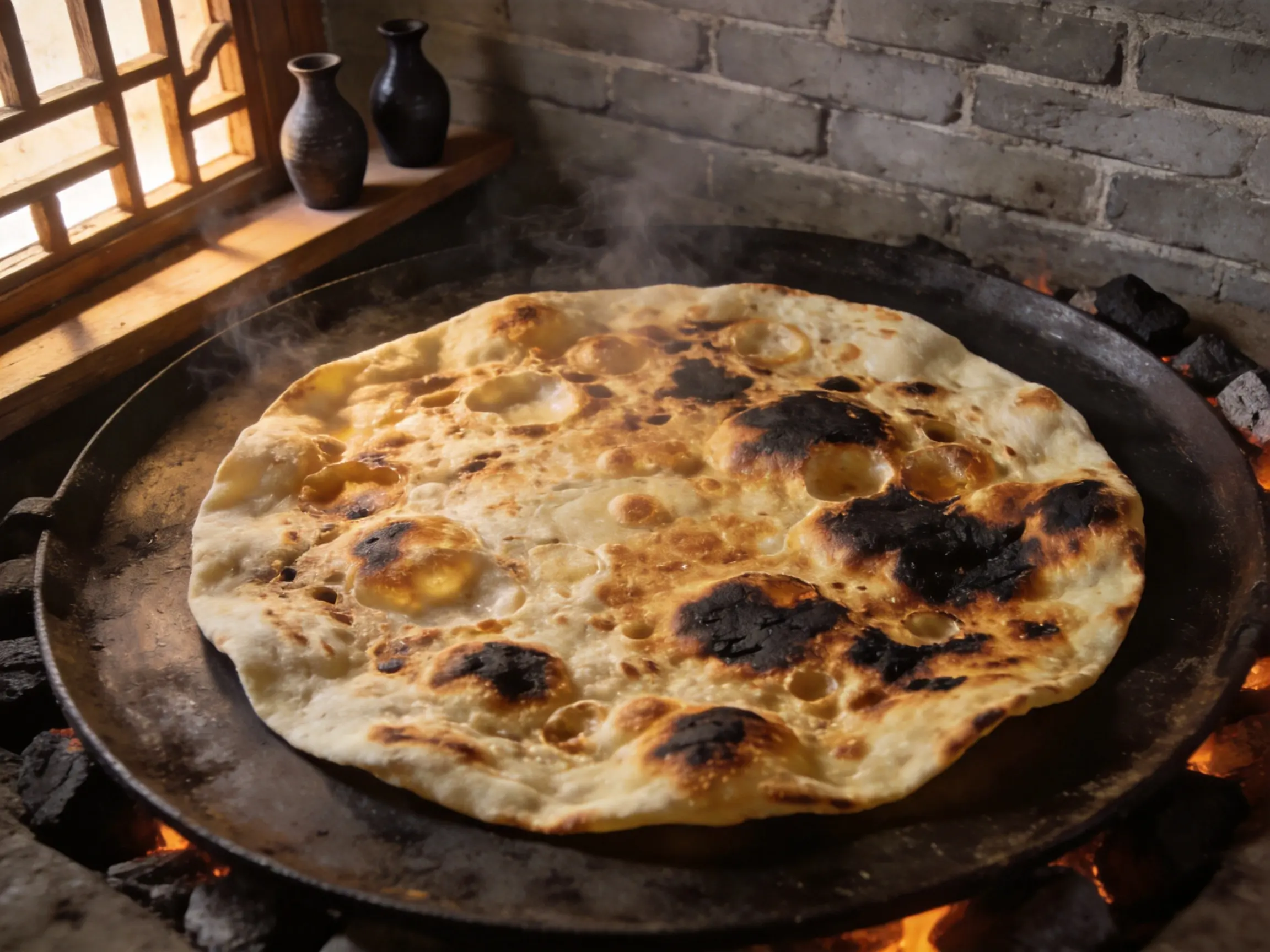
One fast motion. The scar side comes up — uneven patches of black and deep brown scattered across the whole surface.
**This is where the name comes from.** The second side cooks in half the time. Watch the edges, they go fast.
---
## 7 · The Feast
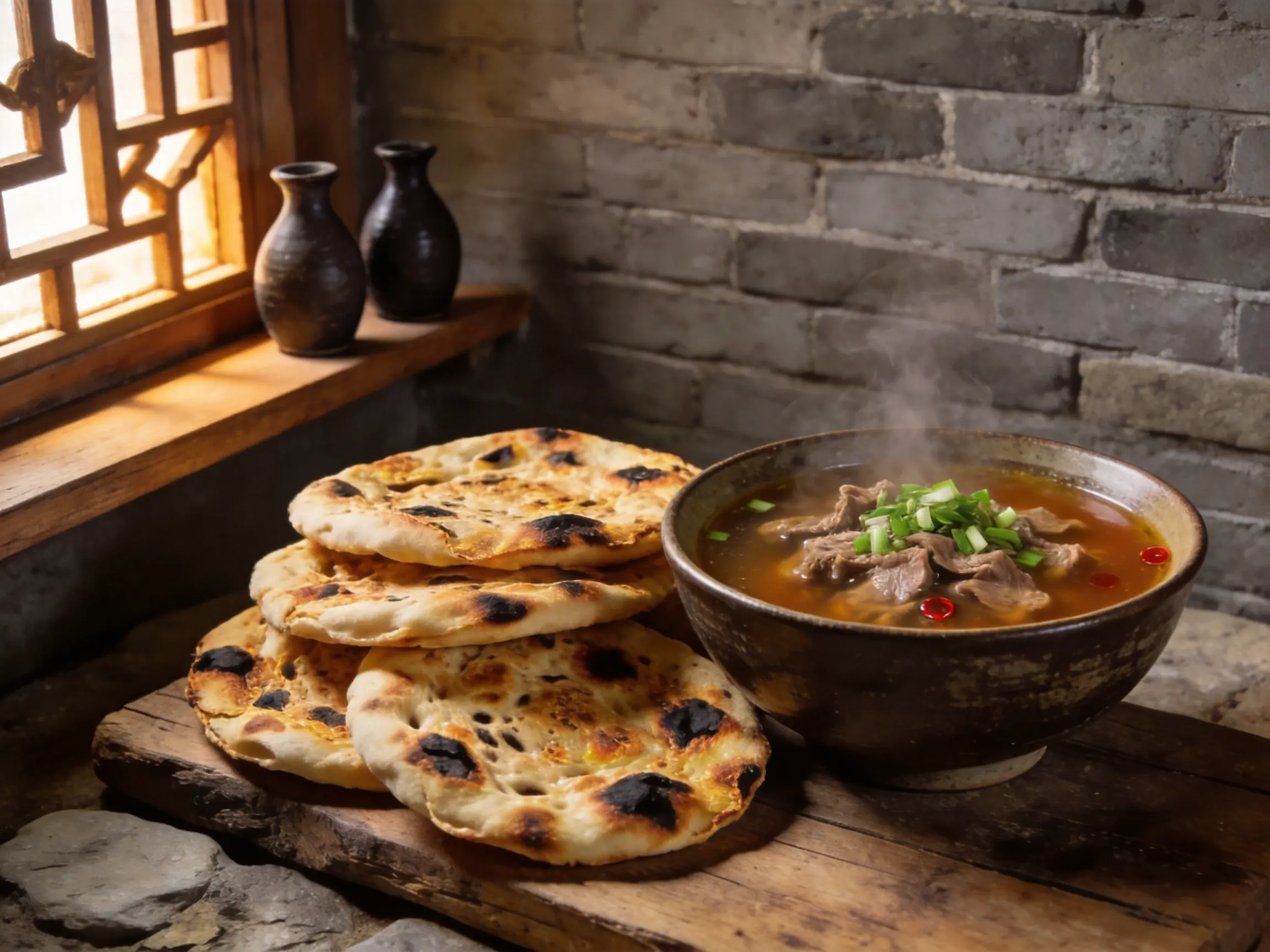
Stack them on a board while still hot. Tear one open — crisp at the char marks, paper-thin everywhere else.
A bowl of lamb offal soup alongside. **Dip the bread into the broth for just a moment, let the edge soften.** The char taste stays. That part doesn't go away.
It's been made this way in the same kitchens for a long time.
> A flatbread named after the burn marks it carries.
> Made on a convex iron griddle over coal — the hotter the iron, the deeper the scars.
---
## 1 · The Grain
Flour, salt, cold water. That's the whole ingredient list.
**No oil. No yeast. No leavening of any kind.** This is dead dough — stiff on purpose. The toughness is the point.
---
## 2 · The Dough
Both palms, full body weight. You press down and the dough pushes back.
**Keep going until the surface is smooth with no visible cracks — about 8 to 10 minutes.** It will stay firm the whole time. That's what you want. Soft dough won't hold up on the iron.
---
## 3 · The Roll
Roll it as thin as you can without tearing it. **The stone surface underneath should almost show through.**
Edges don't need to be round or clean. Uneven is fine. The scars don't care about shape.
---
## 4 · The Griddle
Convex iron griddle, dome-side up, over coal fire. Get it genuinely hot — not medium hot.
**Hold your palm two inches above the iron surface. If you can't hold it there for even one second, it's ready.** No oil goes on this griddle. Not now, not ever.
---
## 5 · The Scar
Lay the dough flat onto the iron. It blisters in the first few seconds — the contact points go gold, then brown, then black.
**Don't press it down. Don't adjust it.** Let the iron work. The white smoke coming off the edges means the temperature is right.
---
## 6 · The Flip
One fast motion. The scar side comes up — uneven patches of black and deep brown scattered across the whole surface.
**This is where the name comes from.** The second side cooks in half the time. Watch the edges, they go fast.
---
## 7 · The Feast
Stack them on a board while still hot. Tear one open — crisp at the char marks, paper-thin everywhere else.
A bowl of lamb offal soup alongside. **Dip the bread into the broth for just a moment, let the edge soften.** The char taste stays. That part doesn't go away.
It's been made this way in the same kitchens for a long time.